Rainy Day Hiking & Camping Gear Guide: Stay Dry in Wet Weather (2026)
Rain doesn't cancel a good trip. A field-tested rainy weather hiking guide with rain jackets, waterproof shoes, tent picks and a stove that still lights.
Rain is the part of the outdoors most people plan around. The forecast shows a 40% chance of showers, so the trip gets postponed — and a quiet forest trail, an empty campsite, and a moody coastline all go unvisited. I spent years doing that. Then I moved somewhere where it rains 150 days a year and learned the only real difference between a miserable wet trip and a great one is the kit you carry.
This is the gear I actually use when the weather turns. It's organized by what fails first in the rain — your body, your feet, your shelter, your fire — because that's the order a wet trip falls apart. Every product here I've either used myself or watched fail in someone else's pack on a cold, soaked trip.
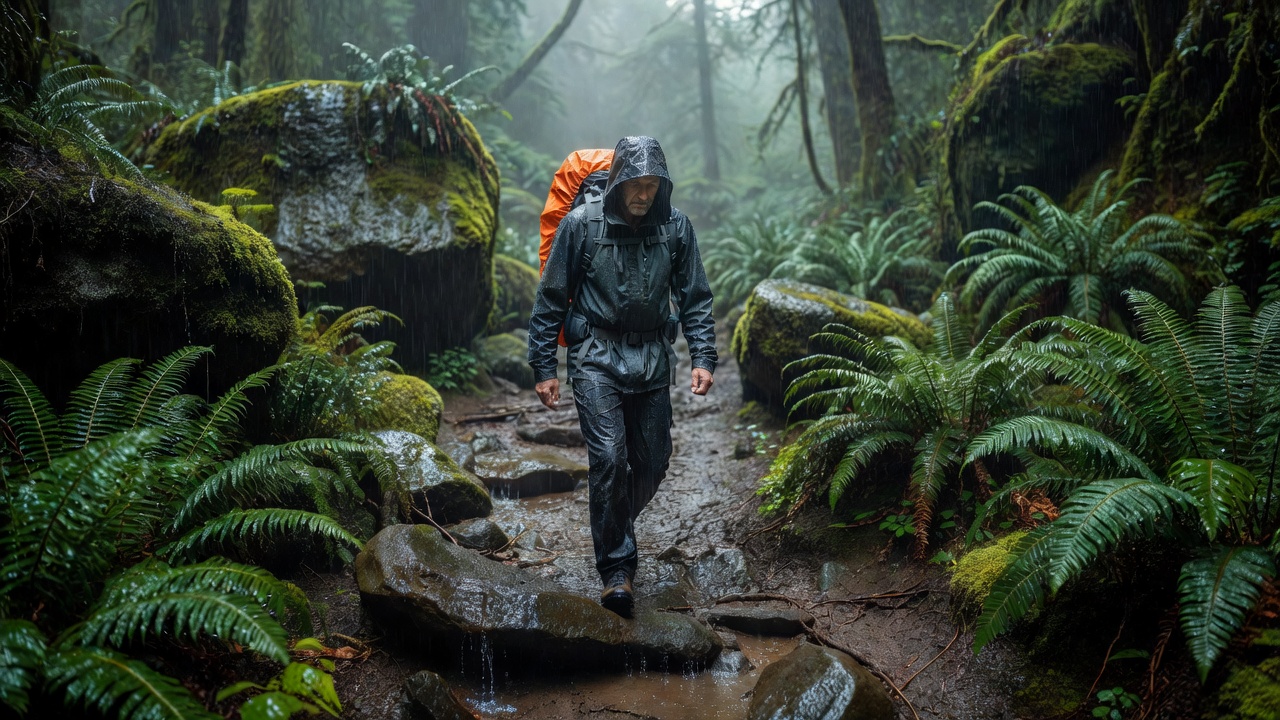
Quick Answer: The Rainy-Day Kit That Works
Rain doesn't ruin trips — bad gear does. Here's the short version, in the order a wet trip falls apart:
- The one purchase that buys you the most trips: OR Helium Rain Jacket — $159.00. A fully seam-taped shell that packs into its own pocket.
- Best budget shell (or a growing kid): Columbia Youth Watertight Rain Jacket — $44.99. A real waterproof shell for under $50 — the cheapest way to keep a family dry.
- Best all-round wet-trail shoe: Merrell Moab 3 Waterproof — $129.95. Waterproof membrane plus grip that holds on slick rock and mud.
- Best for wide feet: KEEN Targhee 3 Low WP — $187.00. A roomier toe box than the Moab if your feet run wide.
- A tent that survives a real downpour: CAMPROS CP 8-Person Tent — $159.98. Full-coverage rainfly and a room divider for family trips.
- Cooking that still works in the rain: Gas One GS-3400P Dual Fuel Stove — $34.99. Dual-fuel, so you are never stuck when one canister type sells out.
- Fire when everything is soaked: SUPRUS Electric Arc Lighter — $9.99. Windproof electric arc and no fuel to run out.
The rest of this guide explains why each item earns its place, and what fails first when the weather turns.
Why Rain Gear Matters More Than You Think
Most camping advice treats rain as an edge case. In reality, rain is the default condition for huge parts of the country from early spring through late fall — the Pacific Northwest, the Southeast, the Appalachians, the UK, anywhere coastal. A gear list built only for sunny 70°F days is a gear list that leaves you hypothermic at 55°F and wet.
The trick isn't buying the most expensive waterproof shell. It's matching the right layer to the right activity. A burly rain jacket that's perfect for standing still at a football game turns into a sauna on a 3-mile uphill hike. A ultralight shell that breathes on the trail offers no warmth when you stop to cook. Wet-weather camping is a system, not a single purchase.
Layer 1: Your Rain Jacket Is the Whole Game
The single most important piece of rain gear you'll own is the jacket on your back. Get this right and the rest of the system can be imperfect. Get it wrong and nothing else compensates.
What Actually Matters in a Rain Shell
- Waterproof rating, but not the way marketing tells you. Ignore "10,000mm" claims printed on hangtags. What matters is whether the fabric beads water after a season of use — and that depends more on the DWR (durable water repellent) coating than the membrane.
- Breathability is the real war. A jacket that's 100% waterproof but zero breathable is a garbage bag. You stay dry from rain but soaked from your own sweat. Look for 2.5-layer or 3-layer construction — single-layer "water-resistant" jackets wet out in 20 minutes.
- Packability vs. durability. The jacket that fits in your hipbelt pocket won't survive a briar patch. The one that survives thorns won't fit in your pocket. Decide what your trip actually demands before you choose.
- Hood design. A stiff-brimmed hood you can adjust with one hand while walking beats a floppy hood you have to fight in a downpour. Test the hood before you're wet and cold.
My Pick: The Outdoor Research Helium Rain Jacket
After years of trying everything from $400 hardshells to $30 hardware-store ponchos, the Outdoor Research Men's Helium Rain Jacket is the one I keep in my pack year-round. At $159, it sits in the sweet spot — expensive enough to use real 2.5-layer Pertex Shield fabric that actually breathes, cheap enough that you'll still wear it on a questionable-forecast day hike without wincing.
What makes it the right call for most people: it stuffs to roughly the size of a softball, weighs under 7 ounces, and the hood has a stiffened brim that stays put in wind. I've worn mine through an unexpected 4-hour Adirondack downpour and arrived at camp dry underneath. The tradeoff is durability — the fabric is thin enough that brushing against rough granite will eventually wear it. Treat it like a rain shell, not a jacket, and it lasts for years.
Budget Alternative: If $159 is steep, look for a basic 2.5-layer shell from Columbia or Marmot in the $60-90 range. They're heavier and less breathable but will keep you dry through a weekend. Avoid the $20-30 "water-resistant" windbreakers — they wet through in under an hour.
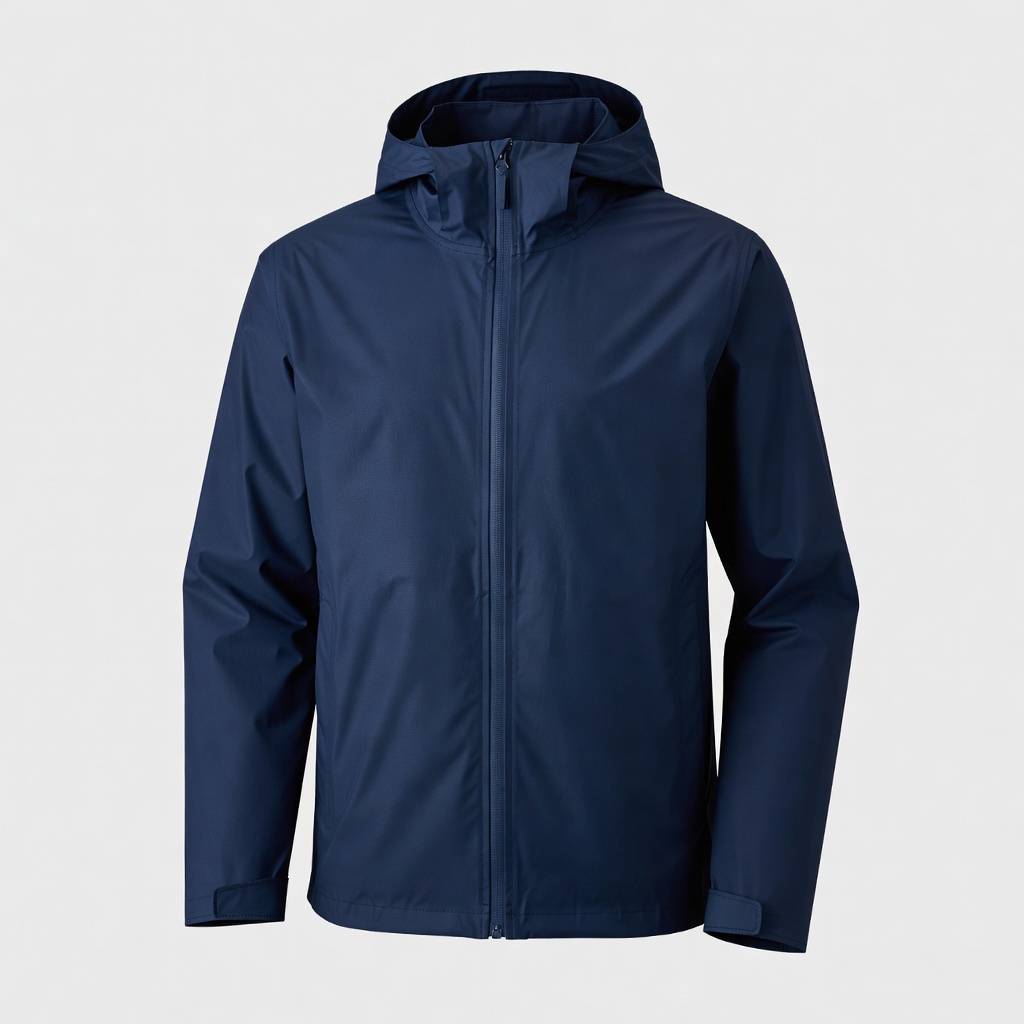
The $60 answer for adults: the Columbia Men's Watertight II Rain Jacket is the shell I hand to adults who want one jacket for the trail, the campsite, and the drive home. At $60.00 (4.6★ from 38,000+ buyers) it uses an Omni-Tech waterproof construction with fully sealed seams, an adjustable storm hood and cuffs, and a breathable mesh lining — and it stuffs into its own hand pocket, so it lives in the daypack all season instead of staying in the closet. What you give up at this price: there are no pit zips, so it runs warm if you hike hard in it, it carries no insulation, and the sizing runs generous — some buyers size down.
When to spend more: If you live somewhere with serious shoulder-season storms or you winter camp, a 3-layer shell like the Arc'teryx Beta AR or Patagonia Torrentshell 3L is worth the $300-450. They survive pack straps and brush and breathe better under a heavy load.
Do not forget the kids. A cold, soaked child ends a camping trip faster than a wet adult ever will, and youth shells are cheap enough that there is no reason to hand down a blown-out adult jacket. The Columbia Youth Boys' Watertight Rain Jacket ($44.99, 4.6★ from 4,500+ buyers) is a seam-sealed, waterproof shell with an attached hood, elastic cuffs and hem, two zippered pockets for the snacks and treasures that must stay dry, and reflective trim for grey evenings. Two things to plan around: it carries no insulation, so pair it with a fleece once temps drop below about 50°F, and Columbia youth sizing runs snug — size up if you intend to layer a midweight fleece underneath.
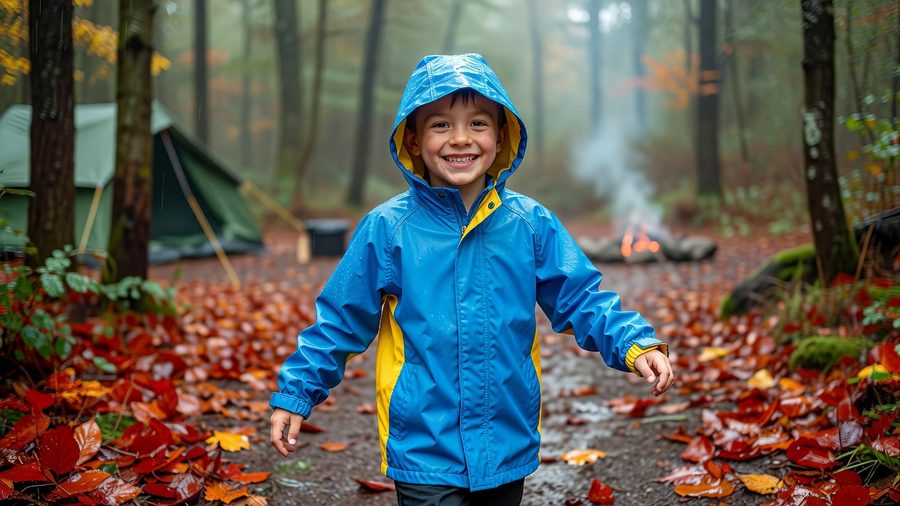
If your kids are young enough to sit down in every puddle they find — which is most of them — a jacket is only half a solution, because the water comes up from the ground. The OAKI Kids Rain and Trail Suit ($32.99, 4.5★ from 8,500+ buyers) is a one-piece, seam-sealed waterproof coverall with a PU-coated nylon Taslon shell rather than the sweaty rubber most rain suits use, plus reflective strips for grey afternoons. It folds small enough to live in the car for the whole shoulder season. The tradeoff is that it is a costume change, not a layer — put it on over whatever they are already wearing and budget an extra minute at the trailhead.
Outfitting the whole family at once instead of one hiker at a time? I keep a side-by-side comparison of rain jackets for family camping and hiking — adult and kids picks, with the sizing mistakes that soak everyone — so the decision only has to be made once.
Layer 2: Wet Feet End a Trip Faster Than a Wet Jacket
A soaked jacket is uncomfortable. Soaked feet end the day. Blisters form in wet socks three times faster than dry ones, and once your feet are wrecked you're not hiking anywhere — you're limping to the car.
The mistake most people make: wearing "water resistant" hiking shoes that soak through in the first creek crossing, then spending the rest of the day with pruned, soft feet inside soggy socks. For a trip with any chance of rain or water, you want genuinely waterproof footwear — and you want to know its limits.
Waterproof Hiking Shoes Worth Carrying
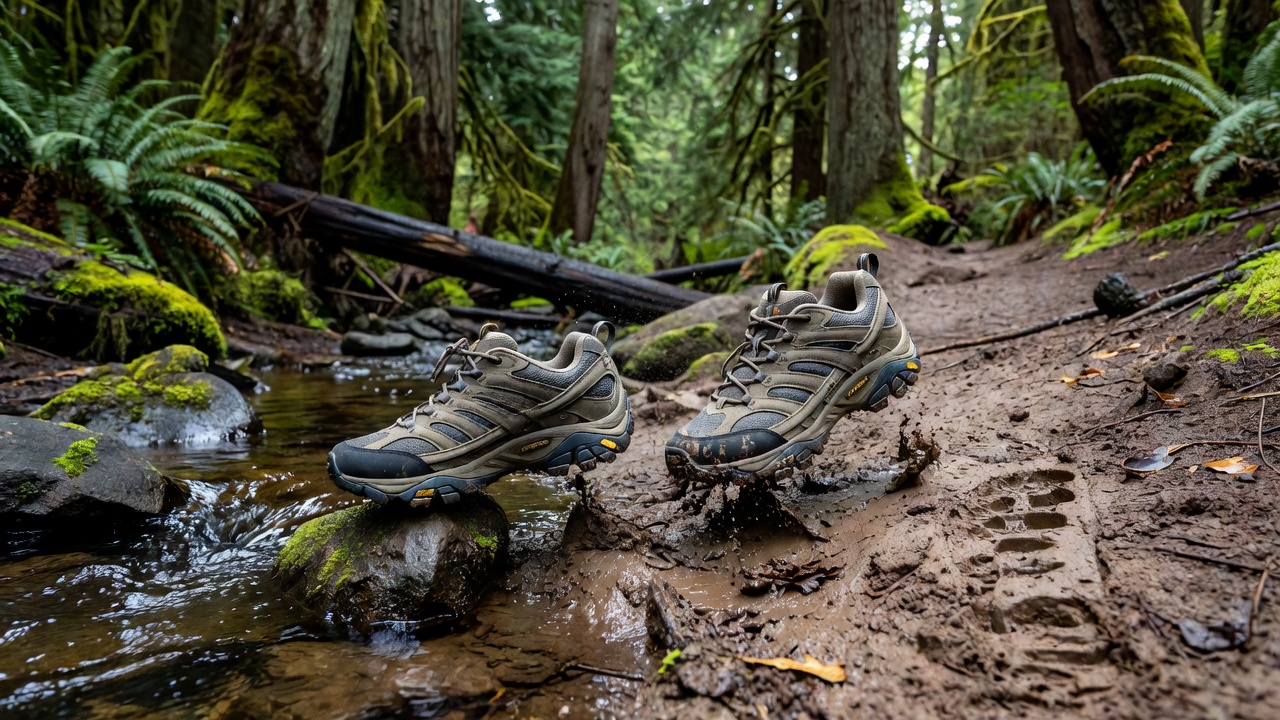
The Merrell Men's Moab 3 Waterproof Hiking Shoes are the reference point for a reason. At $129.95, they're not the lightest or the most technical, but they're the pair I recommend to friends who hike a few times a year and don't want to think about their shoes. The waterproof membrane keeps your feet dry through wet grass, shallow creek crossings, and rain — not through a submerged midfoot, but nothing in this category does. They break in fast and grip wet rock reasonably well.
If you want something with a lower profile and slightly more aggressive tread, the KEEN Men's Targhee 3 Low Height Waterproof Hiking Shoes are the other strong choice at $139.95. KEEN's fit runs a little wider — if Merrells pinch your toes, try the Targhee. Both shoes share the same weakness: once water comes over the ankle collar (a deep puddle, a creek you misjudged), the waterproof membrane becomes a bathtub and holds water in. The fix is gaiters and smart route choice, not a different shoe.
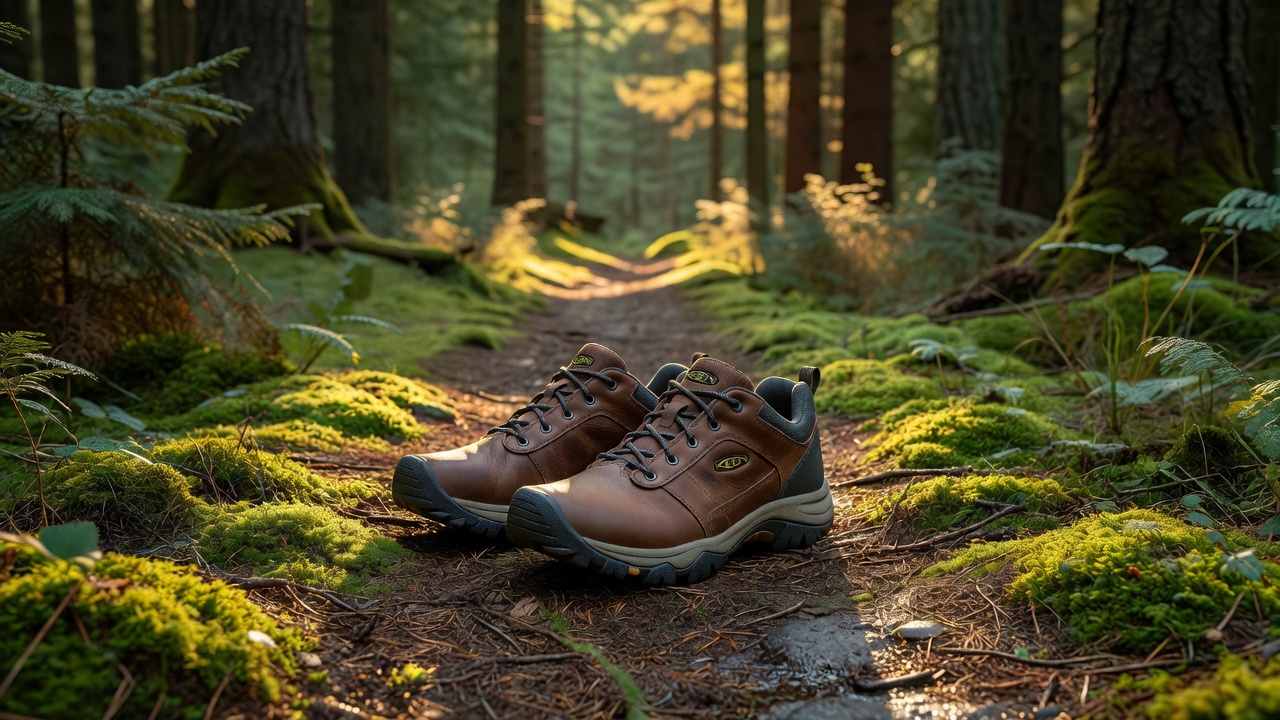
That gap above the ankle collar is exactly what gaiters solve. The Outdoor Research Crocodile Gaiters ($59.00, 4.6★, 950 reviews) close the space between your boot top and your pant leg with a 1000-denier nylon lower that shrugs off mud, scree and creek splash, and a full-length zipper with a storm flap so you can pull them on over boots you are already wearing. They are overkill for a damp morning on a rail trail — but on wet-weather trips with creek crossings or waist-high grass, they are the difference between damp socks and soaked socks.Pro tip I learned the hard way: Bring a dry pair of socks in a ziplock bag, not in your pack's outside pocket. The outside pocket wicks moisture. The bag stays dry even when everything else is soaked. On a rainy overnight, swapping into dry socks at camp is the single biggest morale boost you can give yourself.
The Merino Sock Is Half the System
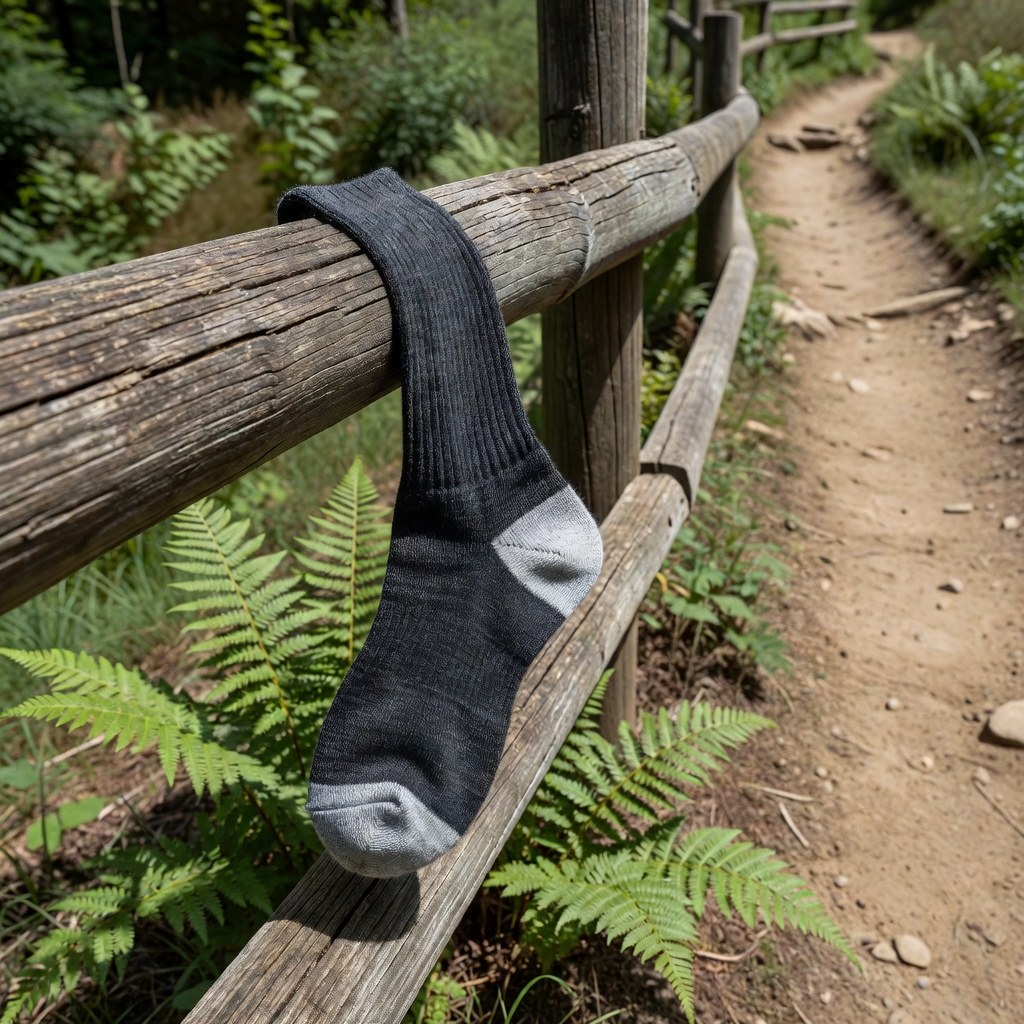
The membrane above only buys you a dry foot if what sits inside the boot also manages water. Cotton is the wrong answer — it holds moisture against skin and stops insulating the moment it gets wet — which is why the sock matters as much as the shoe. Merino keeps a thermal margin while damp and dries far faster, so a misjudged creek crossing becomes uncomfortable instead of trip-ending.
For three-season hiking and rainy weekends, the Darn Tough Light Hiker Micro Crew ($24.95, 4.8★, 3,800 reviews) is the weight that works from a 45°F morning to a 70°F afternoon. If you want more cushion under a loaded pack, the Darn Tough Hiker Midweight Micro Crew ($27.95, 4.7★) is the same unconditional lifetime guarantee in a thicker knit, and the Darn Tough women's hiking sock ($25.95, 4.8★) is built on a woman-specific last so the heel doesn't slide down into your boot on a descent. On genuinely cold, wet trips — the 38°F drizzle that never quite turns to snow — the DANISH ENDURANCE merino hiking socks ($39.95, 41,700+ ratings) are the pair with the strongest review record on this site.
Whatever you pick, pack the dry spare in that ziplock. A wet sock undoes a good membrane and a good fit in about ten minutes, and it is the cheapest insurance in your pack.
Layer 3: Your Tent in the Rain — Where Most People Fail
A tent that leaks is worse than no tent — it gives you false confidence, then soaks you at 3 a.m. when the storm peaks. Rain tent failures fall into three categories, and you can prevent all three.
1. The floor soaks through from groundwater
This is the silent killer. Rain doesn't come through the fly — it pools under the tent and wicks up through the floor fabric. The fix is a footprint (a ground cloth sized to your tent's floor). Buy the manufacturer's footprint or cut a cheap poly tarp to slightly smaller than your tent's floor — a tarp that sticks out past the edges catches rain and channels it under your tent, which is the opposite of what you want.
2. The fly sags into the inner tent
Nylon stretches when wet. A fly you pitched drum-tight at 6 p.m. will be resting on the inner tent by midnight. Re-tension the fly before bed if rain is in the forecast — most modern tents have guy-out points you can re-tension without going outside.
3. Condensation soaks you from the inside
In wet weather you close every vent to keep rain out. The moisture your body releases has nowhere to go and condenses on the cold fly, then drips. Crack the vents at the top even in a downpour — airflow matters more than a perfectly sealed tent.
One more fix belongs here, because it is the version of the problem you cannot re-pitch your way out of: a fly that has quietly stopped beading. DWR wears off after a few seasons of sun and abrasion, and that is when a tent that used to shrug off rain starts soaking through the fabric itself. The cheap answer is Nikwax Tent & Gear SolarProof ($19.95, 4.6★ from 2,600+ buyers) — a water-based re-proofing treatment that restores the beading on tent fabric and flies while adding UV protection. Wash and dry the fly, apply it, let it cure, and an older tent buys you several more seasons. While you are at it, keep a PackTowl Personal quick-dry towel ($24.95, 4.7★) inside the tent for wiping condensation off the inner walls before it drips onto your sleeping bag — it weighs 6.4 ounces and dries about four times faster than cotton, so it is not a wet rag by morning.
A Tent Built for Wet Weather
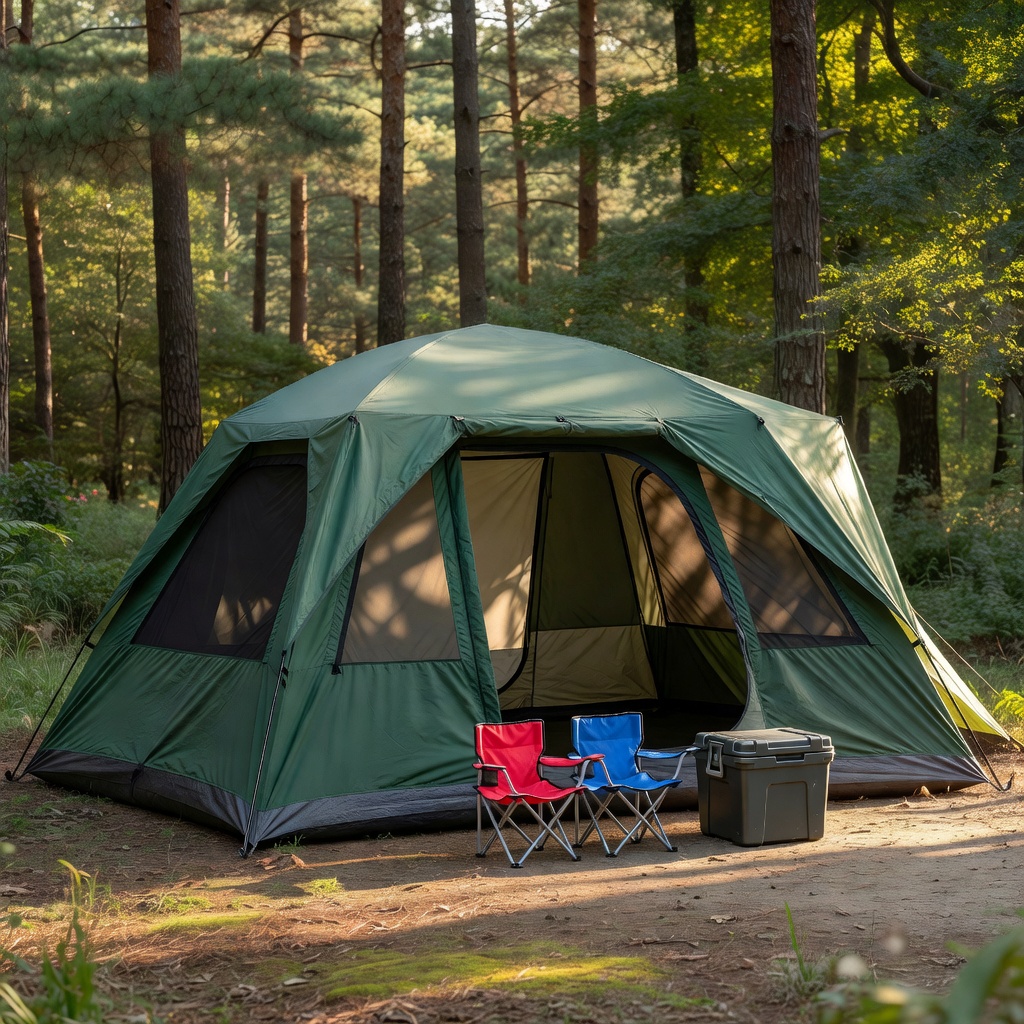
The CAMPROS CP Camping Tent is the budget pick I point car campers to when rain is a real possibility. It's a double-wall dome design — the separate fly and inner tent is the single most important feature for wet-weather camping because it means you can touch the wet fly from inside without transferring water to your sleeping bag. The double-layer construction also creates an air gap that cuts condensation dramatically versus single-wall tents in the same price range.
If you're car camping with a family and want more space, the same logic applies at larger sizes — look for a double-wall tent with a full-coverage fly that comes down close to the ground. A fly that stops halfway up the walls looks nicer but lets rain blow in sideways. For help choosing the right size tent for your group (especially with kids and a dog), our tent size guide walks through real-world floor area per person.
Layer 4: Fire and Stove — Cooking in the Rain
This is where wet-weather camping falls apart for most people. You're cold, you're wet, you're hungry, and your lighter won't spark. A hot meal in the rain isn't a luxury — it's the difference between a fun trip and a misery you'll never repeat.
The Lighter That Actually Works Wet
Standard butane lighters fail in wind and rain. Matches soak. The cheap fix that I now carry on every trip: the SUPRUS Electric Lighter. It's an arc lighter — it creates a small plasma arc instead of a flame, so wind and rain don't kill it. It recharges off any USB power bank, and at $9.99 it's the cheapest piece of gear in this guide and the one I'd replace first if I lost my pack. I've lit damp twig stoves in a steady drizzle with mine that no butane lighter would have managed.
The honest limitation: arc lighters need the tip to be within an inch or so of what you're lighting, so they're not great for reaching into a deep fire pit. For starting a campfire in rain, use the arc lighter to ignite a small piece of birch bark or a cotton ball soaked in petroleum jelly, then build from there.
Keep a dry backup anyway. Arc lighters are electronics, and electronics die — usually on the second night of a wet trip. The UCO Stormproof Match Kit ($12.99, 4.7★ from 6,300+ buyers) holds 25 matches that light in driving rain and heavy wind, burn for about 15 seconds each, and relight even after being dunked — in a floating waterproof case with strikers in the lid. It weighs almost nothing, lives in the pack permanently, and has rescued more wet dinners than any gadget in this guide.
A Stove That Lights When Everything's Soaked
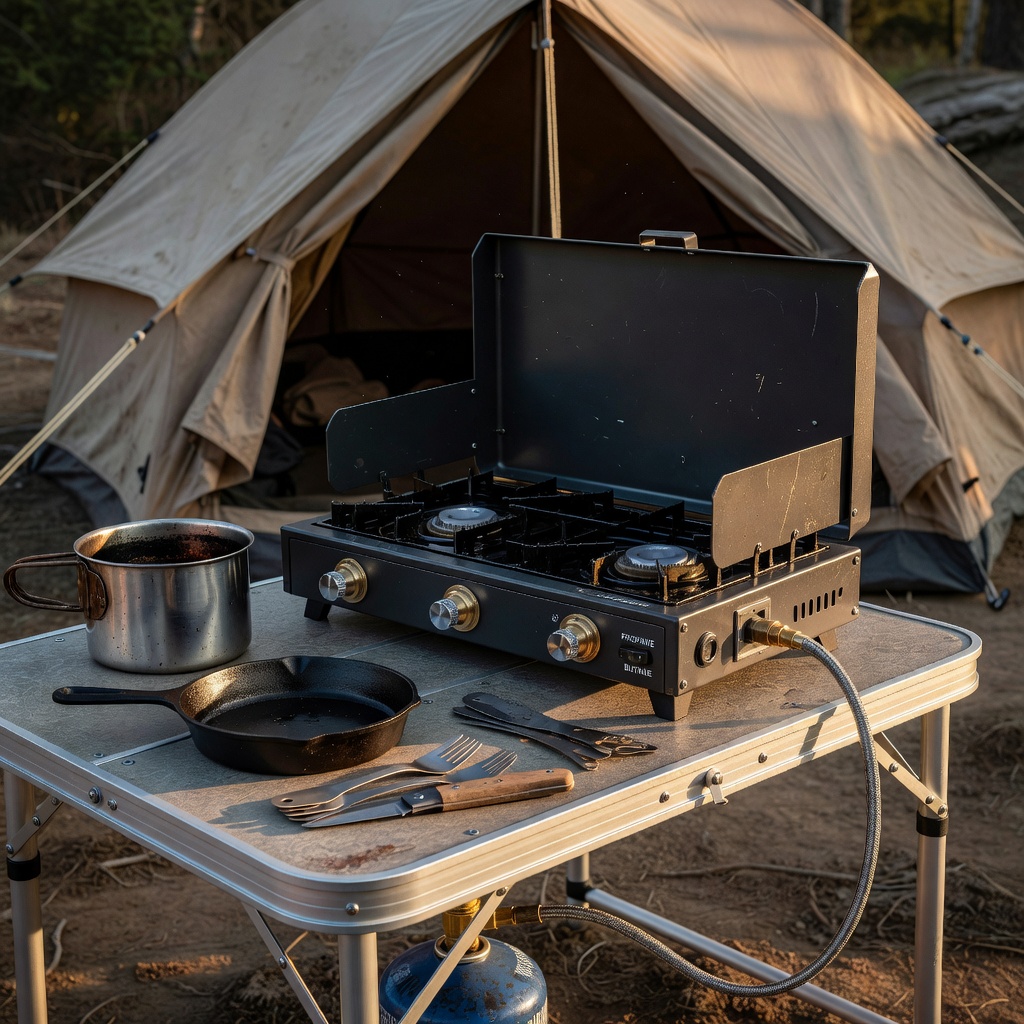
If there's one piece of gear I'd never skimp on for wet-weather trips, it's the stove. Canister stoves (the screw-on kinds) work fine in light rain with a windscreen. But when conditions get ugly — cold and wet — the fuel matters as much as the stove.
This is where our camp stove fuel guide is worth reading in full. The short version for rainy weather:
- Isobutane canisters (MSR, Snow Peak, Jetboil brands) work down to around 20°F and light reliably in damp conditions. They're the standard for backpacking.
- Propane (1-pound green cylinders) is the most reliable fuel in cold, wet weather. It vaporizes well below freezing and the wide canister base is more stable on muddy ground. If you're car camping and rain is forecast, bring propane.
- Butane alone fails below 40°F — if your trip could drop into the 30s with rain, leave the butane-only stove home.
For car camping in ugly weather, I bring a dual-fuel stove that takes both propane and butane so I have a fallback. The Gas One GS-3400P Dual Fuel Camp Stove is the budget pick I've used for years — under $35, runs either fuel, and the propane regulator means cold-weather cooking still works when a butane-only stove would sputter out.
Cooking in the rain is really a roofing problem. If you are car camping, a tarp pitched over the kitchen area beats huddling under a fly: it keeps the stove dry, gives you somewhere to actually stand up, and means you are not cooking inside the tent you then have to sleep in. The OneTigris Bulwark all-season tarp ($56.98, 4.7★) is 12.8 x 9.5 feet of waterproof sil-nylon with 19 tie-out points, so you can pitch it as a lean-to off a tree, a porch off the vehicle, or a simple A-frame — and it packs down to 2.4 pounds. Bring your own guy lines, and two poles if you are not tying off to trees.
Packing for Rain: The Dry Bag System
The gear above keeps you dry while you're moving. The dry bag system keeps your gear dry so it works when you need it. A rain jacket does nothing if it was already soaked when you pulled it out of your pack.
The system, in order of what must stay driest:
- Sleeping bag: The one thing that absolutely cannot get wet. A wet sleeping bag loses most of its insulation. Pack it in a trash-compactor bag inside your pack, or in a dedicated dry sack. Double-bag if there's any chance of a pack-submerging creek crossing.
- Spare clothes & socks: One full dry change of clothes, in a sealed bag. This is your reset button at camp. If you arrive soaked, dry clothes fix your morale and your temperature at the same time.
- Electronics & first aid: Phone, headlamp batteries, fire starters, and your first aid kit — all in ziplocks or a small dry sack. A wet bandage is useless when you need it.
- Food: Most packaged food survives damp, but dry goods (rice, oatmeal, coffee) turn into paste if the bag leaks. Pack them in separate ziplocks.
- The rain jacket itself: Counterintuitive, but pack your rain jacket where you can reach it without opening your whole pack. A hipbelt pocket or top lid means you can throw it on at the first drop without soaking everything inside.
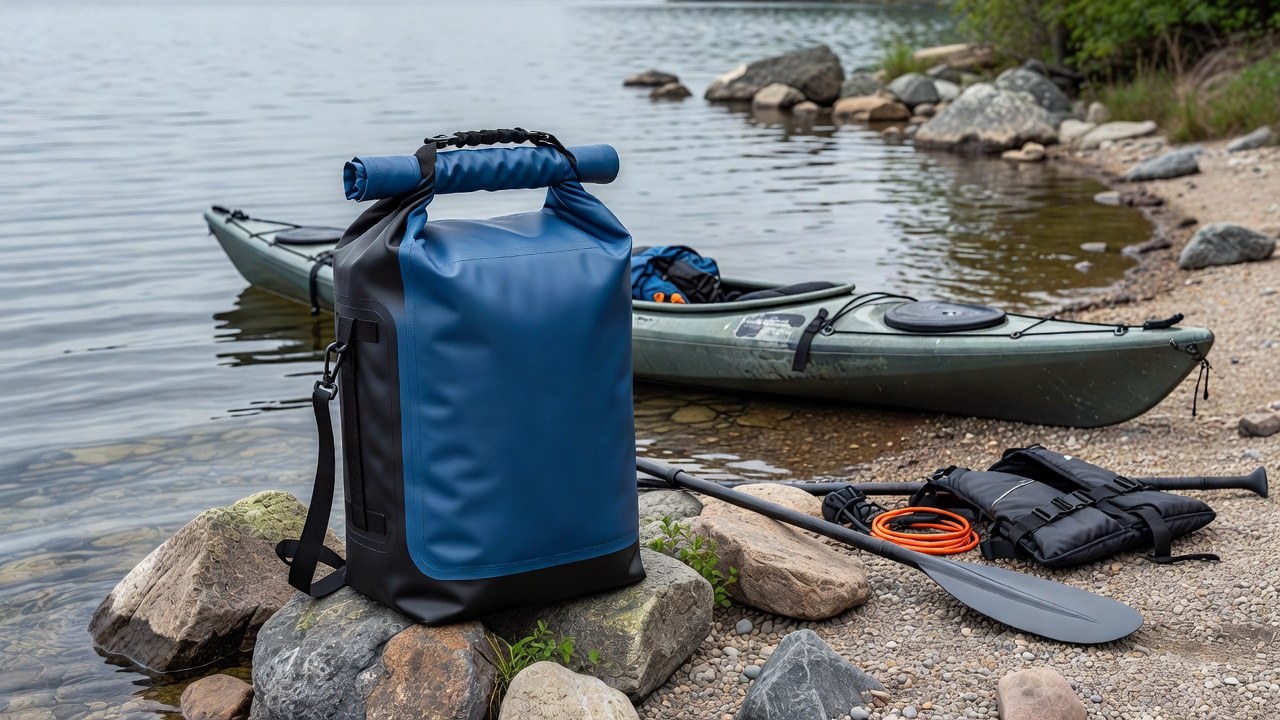
For the bags themselves, you do not need five of them. One honest dry sack covers the sleeping bag and the spare clothes, and the Earth Pak roll-top dry bag ($34.31, 4.7★ from 33,000+ buyers) is the version I keep coming back to: heavy 500D PVC with welded seams and a roll-top closure, which is the combination that holds up when the rain does not stop for two days or the canoe tips. It carries as a pack sack with the included shoulder strap, survives being dragged over rock, and doubles as camp storage once your pack is set up. Pick the 20L for a sleeping bag plus clothes; go bigger only if you are portaging.
Which sleeping bag survives a wet weekend. A wet bag loses its loft, so what you pack for the bag matters as much as the dry sack it rides in. Synthetic fill keeps insulation even after it takes on damp — the Teton Sports Celsius 0°F ($59.99, 4.5★, 18,000+ reviews) is the family bag I would trust in a dry sack for a rain-prone weekend, and the Coleman Palmetto 40°F ($44.99, 4.4★, 9,500+ reviews) is the cheap three-season spare that never leaves the pack. Down packs smaller and warmer for the weight — the Kelty Cosmic 20°F ($169.00, 4.5★, 1,200+ reviews) is the backpacking answer — but a soaked down bag is a dead bag, so it only earns the space when the dry sack never comes off your back. Travelling with kids, the Teton Sports Celsius Jr 20°F ($49.99, 4.5★, 4,500+ reviews) is the same synthetic logic in a junior cut.
Common Rain Gear Mistakes (Learn From Mine)
- Cotton kills. A cotton hoodie feels cozy and dry when you put it on. When it's wet it stays wet for the rest of the trip, loses all insulation, and actively cools you. The "cotton kills" mantra is old because it's true. Base layers in the rain are synthetic or merino wool, always.
- Overdressing under the shell. A rain jacket doesn't add warmth — it traps the warmth you already have. If you hike in a rain shell over a heavy insulating layer, you'll sweat through the insulation from the inside. Wear a light base layer under the shell and add insulation at rest stops, not while moving.
- Forgetting the brim. A hood without a stiff brim funnels rain into your eyes. A baseball cap under the hood solves it — the cap's brim sheds water off your face and the hood goes over the cap. This one $0 trick fixes 90% of "I hate my rain jacket" complaints.
- No dry clothes at camp. The classic mistake: you arrive at camp, you're wet, you set up the tent, you climb in still wet, you wonder why you're shivering an hour later. Always have a dry layer sealed away that you only touch once you're under shelter.
- Trusting the forecast. Mountain weather changes in 20 minutes. If there's a 20% chance of rain and you're going above treeline, pack the shell. The 20% doesn't average out across your route — it either rains on you or it doesn't.
A Rainy Day Packing Checklist
- Rain jacket (2.5-layer or better) — packed on top, reachable
- Waterproof hiking shoes, broken in
- Dry socks in a sealed bag (one per day + one spare)
- Baseball cap or hat with brim
- Tent footprint or cut-to-size tarp
- Double-wall tent, full-coverage fly
- Arc lighter + tinder (petroleum jelly cotton balls)
- Stove + correct fuel for the forecast temperature
- Sleeping bag in a dry sack or trash-compactor bag
- One complete dry change of clothes, sealed
- First aid kit in a waterproof bag
- Extra food (rain slows everything down — you'll eat more)
Lighting is the item that stays off people's lists. Storm clouds pull sunset forward by an hour or more, and a wet afternoon inside a tent is exactly when you want light that does not depend on a campfire. The Black Diamond Spot 400 ($39.95, 4.5★, 1,500+ reviews) is the waterproof 400-lumen standard I hand to adults — it runs on AAA batteries or the included rechargeable cell, so a dead battery is never the end of the evening. For kids, the Black Diamond Wiz Kid ($24.95, 4.6★, 650+ reviews) is 40 lumens, child-safe and rechargeable, which is the version that survives being dropped in a puddle. If you want one light per pack that never needs batteries, the Petzl ACTIK CORE ($79.95, 4.5★, 2,300+ reviews) charges over USB and puts out 625 lumens with a red night mode for sharing a tent after lights-out.
Rain Jacket Picks by Search Intent: Every Phrasing, Answered
Short answer: for a family, one Columbia Men's Watertight II at $60.00 covers the adults and one Columbia Youth Watertight at $44.99 per kid covers the children, and you only pay $159 for the OR Helium if you want a 6.5-ounce shell light enough to forget you packed it. The tables below answer the exact phrasings people type into Google, in the order they type them.
Men's and Unisex Shells, Phrasing by Phrasing
| What people search | What to buy, and why |
|---|---|
| rain jacket hiking men | Columbia Men's Watertight II — $60.00, 4.6★ from 38,000+ buyers. Omni-Tech shell with fully sealed seams. No pit zips, so it runs warm on a hard climb — fine for a wet two-to-three mile family hike. |
| waterproof hiking jacket men with hood | Same shell, and the hood is the whole argument: the adjustable storm hood cinches one-handed over a cap and stays put in gusty rain instead of flapping into your eyes. |
| waterproof jacket hiking mens | Decide by how you carry it. The $60 Watertight II is the jacket you leave in the car and the camp bag; the $159 Helium is the one you carry on every day hike because it weighs almost nothing. |
| rain coat hiking men | A "rain coat" at this price is the same Omni-Tech shell, just cut to be worn over a fleece. Size generously on purpose — the Watertight II sizing already runs a little generous, and some buyers size down to wear it over a t-shirt. |
| rain jacket hiking | Start here: match breathability to effort. Standing around camp or walking a muddy trail, the $60 shell is enough. Climbing steadily for hours, pay for the 2.5-layer fabric — a shell that wets out from your own sweat keeps you just as cold as rain does. |
| rain jacket hiking lightweight | The Outdoor Research Helium at $159 and 6.5 ounces is the lightweight answer, with 2.5-layer Pertex Shield and a hood that packs into its own chest pocket. |
| rain jacket hiking budget | Under about $60, shells stop being seam-sealed. The Watertight II is roughly the floor where a jacket still keeps you dry through a steady hour of rain instead of wetting through in twenty minutes. |
| rain jacket hiking review | The three complaints that show up in every men's shell review at this price: no pit zips, no insulation, and sizing that runs generous. All three are survivable — pit zips and a midlayer are what you trade for the low price. |
| rain jacket men review | The honest summary on the Watertight II: 4.6★ averaged across 38,000+ ratings, worn by far more people than any technical shell here. It is a commuter-to-campsite jacket that also happens to handle a wet hike. |
| best rain jacket hiking men | Two defensible answers. Hike hard and often, and the Helium's weight and breathability win. Want one jacket for the trail, the campsite, and the school run, and the $60 Watertight II wins on cost per wear. |
Camping and Campground Rain Gear, Phrasing by Phrasing
| What people search | What to buy, and why |
|---|---|
| rain jacket for camping | The same shell you hike in. Camp adds standing-around time in the rain, which is exactly where a heavier, less breathable jacket is comfortable instead of clammy — so the $60 Watertight II is the camping-first pick, not the ultralight one. |
| rain gear for camping | Rain gear is a system, not a coat: shell for the body, waterproof footwear, a footprint or cut-to-size tarp under the tent, dry bags inside the pack, and a lighter that works wet. The Merrell Moab 3 Waterproof and the SUPRUS arc lighter cover the two items people most often forget. |
| waterproof jacket for camping | Waterproof means sealed seams and a coating or membrane, not "water resistant". If the jacket hangs soft and thin with visible stitching and no seam tape, it will wet out in the first hour of real rain. |
| waterproof rain jacket for camping | For a wet camp weekend, buy the shell one size up and layer a fleece under it — a Columbia Benton Springs fleece at $39.99 is built to sit under exactly this kind of shell when evening temps fall into the 40s and 50s. |
| rain coats for camping | Long-cut rain coats work at a campground and fight you on a trail. The longer hem protects the tops of your legs while you stand around the fire; the same length catches on brush and traps heat on a climb. Camping-first, a longer shell is fine. |
| best rain jacket for camping | Best overall for a family is the $60 Watertight II for adults plus one youth shell per child — four people covered for about $150, which is less than a single technical shell. |
| good rain jacket for camping | The bar for "good" is simple to test: fully sealed seams, an adjustable hood, and a fabric that still beads water after a season. Past that you are buying weight savings and breathability, not dryness. |
Lightweight and Packable Shells, Phrasing by Phrasing
| What people search | What to buy, and why |
|---|---|
| lightweight rain jacket | Lightweight is a spectrum, and only you know which end you need. The Helium at 6.5 ounces is the emergency-shell end; the Watertight II is the heavier end that feels like a real jacket around camp. |
| lightweight rain jacket packable | Packability is about compressed volume, not weight. Both jackets here stuff into their own pocket — the Helium into its chest pocket, the Watertight II into its hand pocket — so either one rides in a daypack without being repacked. |
| lightweight rain jacket with hood | Insist on an adjustable hood with a stiffened brim, not a roll-away floppy one. A hood you have to hold down with one hand while hiking is worse than a baseball cap under a fixed hood. |
| lightweight rain jacket that folds into a pouch | Self-stuffing pockets are how you keep a shell in the pack all season instead of leaving it at home on the 20% chance day. The Helium is the lighter self-stuffer; the Watertight II stuffs into its own hand pocket. |
| lightweight rain jacket for hot weather | In hot rain you want the thinnest shell you can tolerate, worn open with only the hood up — a heavier jacket in 80°F rain soaks you from the inside and is the reason people say they hate rain jackets. |
| lightweight rain jacket for men | Two men's cuts worth knowing: the Men's Watertight II at $60 runs generous, so size down if you plan to wear it over a t-shirt only, and the Helium is a trim emergency shell with little room for thick insulation underneath. |
| lightweight rain jacket hiking men | On a hike, weight matters because you carry it whether it rains or not. The 6.5-ounce Helium is the one you stop noticing; the Watertight II is the one you notice only on the climb. |
| rain jacket for backpacking | Backpacking raises the bar on both weight and durability. The Helium's ripstop fabric resists tearing better than a plain ultralight shell, but its thin face fabric will eventually lose an argument with granite and brush — treat it as a rain shell, not a jacket. |
Columbia Watertight II: The Specific Questions
| What people search | The answer |
|---|---|
| columbia watertight ii jacket | What it is: a packable, fully seam-sealed Omni-Tech nylon shell with an adjustable storm hood, elastic cuffs, and a breathable mesh lining — built for rainy days at camp, on trail, or around town. |
| columbia watertight ii review | The verdict after the specs: at $60.00 with a 4.6★ average across 38,000+ ratings, it is the cheapest shell here that is genuinely waterproof rather than merely water resistant. |
| columbia watertight ii jacket review | What reviewers consistently flag: it is not insulated, so it needs a midlayer in cool weather, and it has no pit zips, so it runs warm during high-exertion hiking. |
| columbia watertight ii rain jacket review | The rain-specific take: sealed seams and a storm hood are what keep a steady hour of rain out, and the mesh lining is what keeps you from cooking on the walk back to camp. It is a camp-and-commute rain jacket that tolerates a wet hike, not a mountaineering shell. |
| columbia watertight ii rain jacket for men | Men should expect a generous cut. Some buyers size down to wear it over a t-shirt; if you plan to layer a midweight fleece underneath, stay at your normal size. |
| watertight ii rain jacket columbia | The model line is confusing, so buy by name: the men's Watertight II at $60.00, and the youth version at $44.99 for kids. |
| watertight ii rain jacket men's | The men's cut is the one to buy for an adult who wants one jacket for the trail, the campsite, and a wet drive home — and it stuffs into its own hand pocket so it can live in the car. |
| watertight ii waterproof jacket | Waterproof, not water resistant: Omni-Tech construction with fully sealed seams is the difference you can check by looking for taped seams inside the jacket. |
| watertight ii waterproof jacket mens | The trade you accept at this price is durability and breathability, not waterproofing — the fabric is thin enough that it wants to be a rain shell rather than a jacket you live in all winter. |
| watertight ii waterproof rain jacket | The short version for anyone searching this exact phrase: yes, it keeps rain out, it packs into a pocket, and it costs $60.00 — and no, it does not keep you warm, so pair it with a fleece once the temperature drops toward 50°F. |
The Rest of the Wet-Weather Phrasings, Decoded
Rain questions don't arrive in one shape. The jacket section above answers the shell phrasings; the tables below answer everything else people type — pants, footwear, tents, packs, and the trip-planning questions that decide whether the trip happens at all. Every answer here is built from the same kit and the same facts as the sections above, so nothing in this section contradicts the gear list you just read.
Rain Pants: The Question Everyone Asks Last
| What people search | What to do about it |
|---|---|
| do i need rain pants hiking | For a family day hike in steady rain, usually no — a shell plus fast-drying pants covers two or three wet miles fine. Rain pants start earning their pack space when you are sitting, kneeling, or standing still in the rain for hours. |
| are rain pants necessary | Necessary in three situations and little else: overgrown brushy trails that soak your legs above the boot, cold rain under about 50°F, and camp time where every bench and log is wet. Otherwise they are a comfort item, not safety gear. |
| rain pants vs hiking pants | Hiking pants are what you wear; rain pants are what you pull on over them. The common mistake is buying rain pants instead of hiking pants and then sweating through them all day. |
| rain pants or hiking pants | Buy the hiking pants first. If you hike through winter or live somewhere like the Pacific Northwest, add rain pants as a second layer that lives in the pack rather than replacing anything. |
| rain pants over hiking pants | That is the intended use, and it is why you size rain pants to go over a real pair. A snug rain pant over a loose hiking pant turns every step into friction and every climb into a sauna. |
| hiking pants vs rain pants | Two different jobs: hiking pants manage sweat and abrasion, rain pants manage water. A "waterproof hiking pant" sold as both is usually the worst of each. |
| what pants to wear hiking in rain | Fast-drying synthetic or wool-blend hiking pants — not cotton, and not a waterproof-breathable pant that traps sweat. Wet legs in a material that dries in twenty minutes beat dry legs in a material that never dries. |
| best pants for hiking in wet weather | Synthetic hiking pants with zip-off legs, so a warmer afternoon doesn't leave you in a wet shell from the knees up. Add gaiters if mud or boggy ground is in the plan. |
| lightweight rain pants hiking | Weight in rain pants is mostly about the fabric's denier and the closures. Light pants work for walking rain; they will not survive kneeling against rock or a fire ring, so keep them for the trail. |
| light rain pants hiking | The "light" version is really about bulk, not grams: pants that fold into their own pocket and stay in the bottom of the pack are the ones you actually carry. If it doesn't compress small, it stays home on the day it rains. |
| rain pants for winter hiking | Winter rain is wind with water in it, and rain pants are the layer that keeps that wind off wet legs. Size them to fit over an insulated hiking pant, and expect them to be noisy and stiff when cold. |
| hiking rain jacket and pants | Buy them as a pair only if the pants meet the same bar as the shell — sealed seams and a real coating. A $60 seam-sealed shell over $15 grocery-store pants is not a system, it is one dry torso. |
The pant underneath is the half nobody buys. Every row above assumes you already own the hiking pant the rain pant goes over — and for a family weekend the one that carries its weight on a cold wet morning and a warm exposed climb alike is the Columbia Silver Ridge Convertible at $69.99 (4.4★, 100+ buyers). It is the synthetic zip-off-leg pant this table keeps pointing at: the legs unzip above the knee and become shorts for the hot exposed climb, then zip back on when the brush comes out at dusk, and the dense nylon weave shrugs off wind and light abrasion better than knit shorts. We do stock one complete rain layer, and it is a suit rather than pants alone: the FROGG TOGGS Ultra-Lite2 rain suit at $22.74 (4.0★, 22,000+ ratings) pairs a full-zip jacket with straight-leg pants for about the price of one budget shell, packs to 0.7 lb in its own stuff sack, and is the honest family answer — one purchase covers each person's just-in-case layer. If you want dedicated breathable pants for winter rain instead, the Columbia Rebel Roamer rain pant (4.5★, roughly $50–$100 by size) is the pair we would buy; it is heavier and pricier, but it survives brush and repeated use where the Ultra-Lite2 will not. Either way the advice above still stands — buy the hiking pant first, and add rain pants as the second layer that lives in the pack.
Footwear: What Actually Goes on Wet Feet
| What people search | What to do about it |
|---|---|
| hiking boots wet weather | Waterproof boots win on cold, muddy, grassy approaches; they lose on long stream crossings where water comes in over the cuff. For a wet weekend at a campground, put everyone in waterproof boots or shoes. |
| hiking shoes wet weather | The Merrell Moab 3 Waterproof at $129.95 is the low-cut answer most families land on — a waterproof membrane and a lug pattern that still grips wet rock and slick roots. |
| best shoes for hiking in wet weather | Match the shoe to the water. Wet grass and mud: waterproof, like the Women's Moab 3 Waterproof. Repeated stream crossings: a fast-draining non-waterproof shoe you can wring out and walk dry. |
| what shoes to wear hiking in rain | Waterproof trail shoes or low boots with a synthetic upper — never a mesh running shoe and never cotton socks. The sock matters as much as the shoe: wool or synthetic, always, because cotton holds water against skin. |
| how to keep hiking boots dry in rain | Keep two pairs per person on a wet trip so one dries while the other is worn, pull the insoles out overnight, and stuff crumpled newspaper inside instead of putting boots next to the fire. Heat and direct flame crack the membrane that makes the boot waterproof in the first place. |
| hiking in the rain shoes | Wet feet end a trip faster than a wet jacket, so this is not the item to improvise. If you own exactly one pair of hiking footwear, make it the waterproof one — the KEEN Targhee 3 Low or the Moab 3 WP. |
| rainy day walking shoes | Around camp, waterproof shoes beat sandals in cold rain and sandals beat waterproof shoes in warm rain. Kids need the same call as adults, and the KEEN Unisex-Child Targhee Mid Waterproof covers the wet-grass-and-puddles version of a campground morning. |
| camping rain boots | Rubber boots are the right answer for camp mud and the wrong answer for a hike — they have no ankle support and no breathability. Bring them for the campsite and keep them out of the daypack. |
Tents, Tarps, and Rainflies
| What people search | The short answer |
|---|---|
| camping tent rain fly | The rainfly is the part that keeps you dry, so judge a tent on its fly, not its peak height. A fly that covers the inner tent all the way down gives you margin; a skimpy summer fly leaves the inner wall exposed to windblown rain. |
| best tent rain fly | Full-coverage is the feature to shop for. The CAMPROS CP 8-Person at $159.98 runs its fly well down the walls, which is the difference between a damp night and a soaked one in an all-night rain. |
| camping in rain tent | Pitch high and on well-drained ground, stake the fly out tight so it never touches the inner wall, and leave a vent cracked. Those three moves cause or prevent almost every wet night, and none of them is about the tent's price. |
| camping tent rain cover | A separate cover is usually a workaround for a fly with poor coverage, and it adds condensation because it blocks vents. If you need a cover, the better spend is a cut-to-size tarp overhead and a footprint underneath. |
| camping tent rain protection | Protection comes in layers: an overhead tarp for the worst weather, a full-coverage fly on the tent itself, and a waterproof footprint or cut tarp under the floor to stop groundwater wicking up through it. Water always arrives from the three directions you did not cover. |
| tent rain cover leaking | A tent that has started leaking is a coating problem before it is a fabric problem. Our tent waterproofing and repair guide walks through drying, seam sealing, and re-proofing in the order that actually fixes it. |
| camping in the rain tarp | A tarp is the single cheapest upgrade to a wet camp: rig it over the cooking and sitting area and rain stops being a reason to hide in the tent. Bring 30 feet of cord and two poles, or tie off to trees. |
| camping rain shelter tarp | For a family, aim for a tarp that covers the whole picnic-table zone rather than just the tent door. A dry place to eat is what turns a rainy day from a retreat into an evening. |
| camping rain shelter ideas | In order of payoff: a tarp over the table, a tarp over the tent's entry, a windscreen around the stove, and a canopy over the fire ring. Each one buys back an activity you would otherwise skip. |
| tent rain noise | Rain noise is decibel-driven by the fly material and how tight it is pitched. A taut fly drumming in gusts is loud; re-staking or adding a line to tension the panel is the cure, and earplugs are the honest second answer. |
| tent rain rating | Hydrostatic head ratings sell tents, but they measure fabric, not design. A 3,000 mm fly that barely overhangs will soak you while a 1,500 mm full-coverage fly stays dry — coverage and pitching beat the number. |
| tent rain guard | If you mean the fly, coverage is the whole argument. If you mean a separate plastic cap, skip it: an extra layer on top traps condensation and makes the inside of the tent wetter, not drier. |
| tent during rain | You can absolutely ride out a storm inside a well-pitched tent. Keep the walls clear of your sleeping bags, don't cook inside the inner tent, and leave a vent open even when it feels wrong — condensation soaks more campers than leaks do. |
| tent rain protection | For a full wet-weather setup, combine a footprint, a full-coverage rainfly, and a tarp over the sitting area. Add the Gas One GS-3400P at $34.99 under the tarp, and a wet evening still ends with a hot meal. |
Packs, Dry Bags, and Rain Covers
| What people search | What to do about it |
|---|---|
| backpack rain cover | A pack cover keeps most rain off the shell but not off your shoulders and straps, and a wet pack's own weight soaks through the back panel. Treat the cover as the outer layer and put anything that must stay dry in a dry bag inside. |
| backpack rain cover hiking | On a day hike, the cover's job is your camera, phone, and spare layer. If yours lives in a pocket of the pack it covers, you will not stop to put it on in the first five minutes of rain — carry it in an outside pocket instead. |
| backpacking backpack rain cover | On multi-day trips, cover plus internal dry bags is the only combination that survives a sustained soaking. Bags first: electronics and spare clothes, packed before the pack is filled. |
| backpack rain cover vs liner | A liner protects everything inside the pack; a cover protects the pack. On a short hike a cover is enough. On a wet overnight, use a liner or dry bags and skip the argument entirely. |
| backpack rain protection cover | Look for an elastic hem that grips under the pack's base and a strap clip, not a loose drawstring bag. Covers that flap in wind let water run down the back of your neck for miles. |
| backpack with rain cover | Many packs ship with a cover in a base pocket, and that is a fine feature, not a substitute for dry bags. If your pack lacks one, any cover sized to your liter volume works. |
| packable hiking rain gear | The full packable set is shell, pack cover, and one dry bag for a spare insulating layer. That is under two pounds total and it is what lets you leave on a 40% chance-of-rain morning instead of canceling. |
| backpacking rain gear lightweight | Weight savings belong on the shell, not the dry bags. The OR Helium at $159 and 6.5 ounces is where that money is best spent; dry bags are already light. |
| camping rain cover | Around camp, a cover is less useful than a tarp over the pack's resting place. Packs left out in the rain collect water in every strap loop and pocket, and the fix is hanging them under cover rather than covering them. |
| raincoat backpack rain cover | Two different bits of kit. The raincoat is for you, the cover for the pack — but if you forget the cover, a poncho over the loaded pack works for a short walk back to the car. |
The Packs the Dry Bag System Goes Inside
Every row above ends at the same place: the cover is the outer layer, the dry bags go inside. These are the packs we put them in — one adult daypack, two packable spares, and one sized for a kid.
- Osprey Talon 22 — $139.95, 4.7★ from 3,100+ buyers. The daypack the "packable hiking rain gear" row is describing: 22 liters at about 1.9 pounds, an AirScape backpanel that keeps the pack off your spine so a damp back has somewhere to dry, and a real hipbelt so the load rides at your waist instead of digging into wet shoulders. It is the size the rest of this kit was built around.
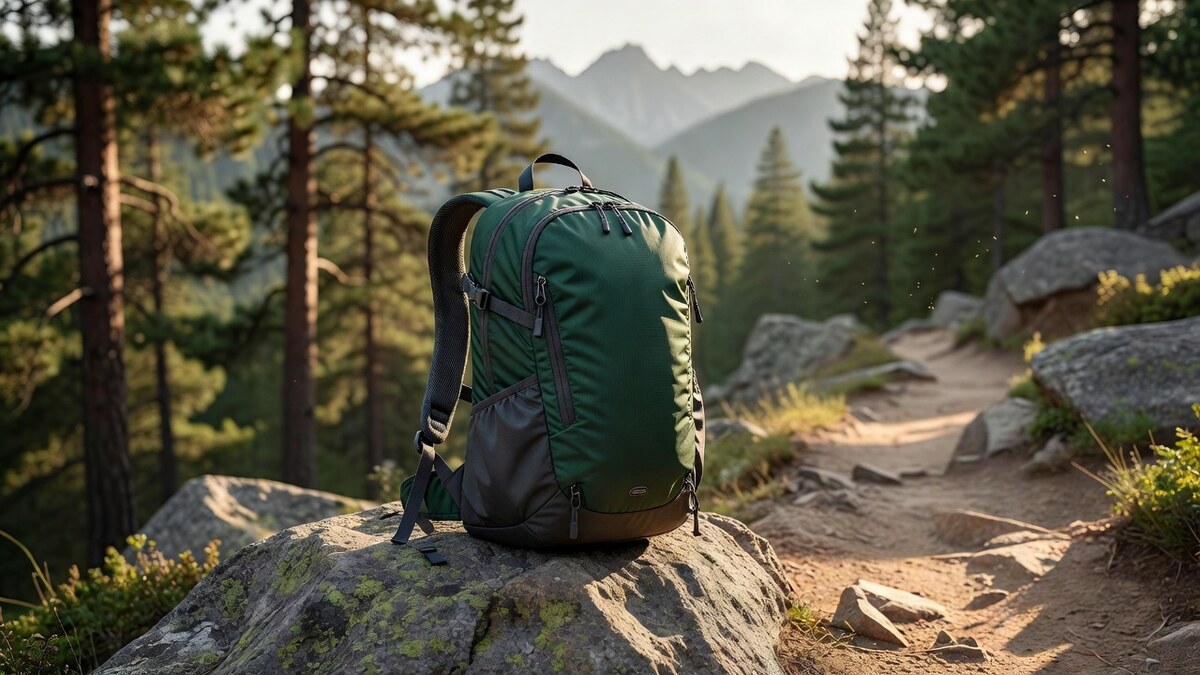
- WATERFLY 20L Packable Hiking Daypack — $25.98, 4.5★ from 3,800+ buyers. The honest budget answer to the same row. It folds into its own pocket and disappears into a suitcase, glovebox, or the bottom of a larger pack, and the shell is water-resistant rather than waterproof — which is the correct spec for a pack that is meant to ride inside something else. That is exactly the "if it doesn't compress small, it stays home" problem the table names.
- BECOJADDE 15L Foldable Packable Daypack — $25.19, 4.4★ from 970+ buyers. Same fold-into-itself idea, five liters smaller, and it packs down to roughly the size of a fist. Keep one in the car as the spare for whoever forgot theirs — the 15L main compartment takes a light layer, lunch, and two bottles.
- Osprey Jet 18L Kid's Hiking Backpack — $80.00, 4.7★ from 100+ buyers. The kids' version, scaled for ages 4-10 with an adjustable torso and a safety whistle in the sternum strap. If you are working through the "rain with kids" question further down, this is the piece that stops a child from carrying everything in a drawstring bag that soaks through in ten minutes.
One thing to be straight about: a pack cover is the outer layer, not the waterproofing. None of these four is sold as a waterproof pack, and that is fine — the dry bag inside is what actually protects the sleeping bag. Buy the pack for the carry, the dry bag for the water, and skip the cover-or-liner argument entirely.
Camping in the Rain: The Planning Phrasings
| What people search | What to do about it |
|---|---|
| camping in the rain tips | Lower your expectations of the plan, not the trip. Have a camp setup that lets you cook and sit under cover, bring twice the lighting you think you need because it gets dark early under storm clouds, and expect everything to take longer. |
| camping in the rain gear | The kit is shell, waterproof footwear, a full-coverage rainfly, a footprint, a tarp, dry bags, and a lighter that works wet. The SUPRUS arc lighter at $9.99 is rechargeable and flameless, so it lights in wind and rain when a disposable will not. |
| camping in the rain essentials | Shelter first, warmth second, food third. A dry place to sit, a dry spare layer per person, and a hot meal solve the three failures that send families home early. |
| camping in the rain must haves | The two items people forget most often are a tarp and a pack cover. Neither is expensive, both are miserable to improvise, and together they decide whether rain is an inconvenience or the end of the trip. |
| camping in the rain packing list | Everything from the checklist above, plus one extra complete change of clothes per person sealed in a dry bag. That change is what you put on at 4 p.m. when everything you were wearing has given up. |
| camping in the rain with kids | Kids get cold faster than adults and complain less clearly, so dress them in layers with a waterproof outer shell and keep a sealed dry set for each child. Then let them get wet — the puddles are the attraction, and the Camping in Florida guide shows how a warm-rain setup differs from a cold-rain one. |
| camping in the rain with dogs | Wet dogs bring mud into the tent, so set a towel and a drying spot inside the vestibule and out of the sleeping area. Paw care matters more on wet ground — our dog camping guide covers the wet-weather version. |
| camping in the rain and cold | Cold rain is the genuinely dangerous combination, because it strips heat rather than just getting you wet. Add a fleece under the shell — the Columbia Benton Springs fleece at $39.99 is built for exactly this — and change wet baselayers before you sit down to eat. |
| tent camping in the rain | Tent camping in rain is a pitching discipline, not a gear problem: high ground, tight fly, cracked vent, nothing touching the walls. Get those right and a tent is a fine place to spend a storm. |
| car camping in the rain tips | Car camping is the easy version of this — you have a dry seat, a real spare set of clothes, and a place to retreat. Use the tarp for a covered cooking and eating area and leave the tent for sleeping only, so the inner floor stays dry. |
| overnight camping in the rain | The overnight is where a cheap setup fails: condensation soaks sleeping bags, groundwater finds the floor, and the fly sags loose by 2 a.m. Stake the fly tight, vent it, and put a waterproof layer under every sleeper. |
| camping in the rain hacks | Hang a line under the tarp for wet jackets, keep a dedicated pair of camp shoes that never leave the dry zone, and pre-light the stove area with a windscreen. Small moves, but they are the ones that keep you out of the tent. |
| rainy camping games | Cards, a board game, a deck of trivia, and a headlamp per person turn a wet afternoon into the part of the trip the kids remember. Bring them in a dry bag — wet cardboard ends the evening early. |
| luxury camping in the rain | The upgrade that actually changes a wet trip is a covered outdoor living space, not a fancier tent. A large tarp or a canopy over the kitchen and table gives you the one thing luxury camping sells: somewhere warm and dry to be that is not your sleeping bag. |
Rainy Weather Camping FAQ
What is the most important piece of rain gear for a hiking trip?
The rain jacket, by a wide margin. A shell is the one purchase that buys you the most trips — get it right and the rest of your system can be imperfect. What matters is whether the fabric still beads water after a season of use (that's the DWR coating doing the work, not the "10,000mm" number on the hangtag) and enough breathability that a climb doesn't turn into a sauna.
Do I need waterproof hiking shoes, or are regular trail runners fine?
Wet feet end a trip faster than a wet jacket, so waterproof footwear earns its keep anywhere you'll cross wet grass, mud, or streams. The Merrell Moab 3 Waterproof ($129.95) and the KEEN Targhee 3 Low Waterproof ($139.95) are the two pairs we keep coming back to. If your trails drain well and you'd rather have maximum breathability, a fast-drying non-waterproof shoe is a defensible call.
How do I keep my tent dry when camping in the rain?
Almost every wet night comes from one of three failures: groundwater soaking up through the floor, the rainfly sagging until it touches the inner wall, and condensation with no ventilation. Pitch on high, well-drained ground, stake the fly out tight so it never contacts the inner tent, and leave a vent cracked open. A full-coverage rainfly design like the CAMPROS CP gives you far more margin than a summer dome.
How do you start a fire or cook when everything is soaked?
Skip the matches and lighters that quit when wet. The SUPRUS electric arc lighter ($9.99) is windproof and flameless, so it lights in the rain. For cooking, a dual-fuel stove such as the Gas One GS-3400P (~$35) runs on propane or butane and fires up when everything else around camp is soaked.
How do I keep my clothes dry inside a wet pack?
Use a dry bag system instead of one big liner: separate bags for sleeping clothes, a spare insulating layer, and anything that must stay bone dry. If your pack has no rain cover, everything goes in dry bags — electronics and spare clothes packed first.
Is camping in the rain actually worth it?
Yes, and most people never find out. The forest is quieter, the campsites are emptier, and the trails are yours. Rain is the default condition from early spring through late fall across the Pacific Northwest, the Southeast, the Appalachians, and anywhere coastal — a gear list built only for sunny 70°F days leaves you hypothermic and wet at 55°F. Once shell, shoes, tent, and stove are sorted, a rainy trip is just a camping trip.
In Florida the afternoon storm is a scheduling problem rather than a trip-ending one, and our Camping in Florida guide covers the tarp-and-shell setup that makes a Gulf evening work.
If rain is in the forecast, the repair order matters more than the products: our how to waterproof a tent guide covers drying, seam sealing and re-proofing in sequence.
Are rain pants worth it for hiking, or can I just wear regular hiking pants?
For most family day hikes, regular fast-drying hiking pants are enough — a shell keeps your torso dry and your legs dry out on the walk back. Rain pants earn their place when you are sitting or standing still in the rain for hours, hiking brushy overgrown trails, or out in cold rain below about 50°F. If you hike through winter or live in the Pacific Northwest, carry them as an extra layer over your hiking pants; if you hike three-season weekends in mild rain, spend the money on a better shell first.
What shoes should I wear hiking in the rain?
Waterproof low boots or trail shoes with a synthetic upper and a real lug pattern, plus wool or synthetic socks — never cotton. Waterproof wins on wet grass, mud, and cold ground; a fast-draining non-waterproof shoe wins if your route crosses streams repeatedly, because no membrane survives water coming in over the cuff. If you own one pair of hiking footwear, make it the waterproof pair: the Merrell Moab 3 Waterproof at $129.95 or the KEEN Targhee 3 Low.
How do I keep hiking boots dry on a wet trip?
Bring two pairs per person when you can, so one dries while the other is worn, and pull the insoles out overnight. Stuff crumpled newspaper inside the boot to pull moisture out and change it once — it works far better than heat. Keep boots away from the fire: direct heat cracks the membrane and glue that make the boot waterproof, and a fire-dried boot never fits the same way again.
Do I need a backpack rain cover, or are dry bags enough?
Dry bags are the ones that actually keep your gear dry, and a pack cover is the layer that keeps the pack itself from gaining water weight. On a short day hike a cover alone is fine. On a wet overnight, use both: a dry bag or liner for everything that must stay bone dry — spare clothes and electronics packed first — and a cover over the pack so it doesn't soak through to your back.
What should I pack for camping in the rain with kids?
One extra complete change of clothes per child, sealed in a dry bag, plus a waterproof shell and waterproof footwear for each of them. Kids lose heat faster than adults and report it less clearly, so layers they can shed matter more than one thick jacket. Then bring the indoor entertainment — cards, a board game, a headlamp each — because a dry place to sit and something to do is what keeps a wet afternoon from ending the trip.
Is camping in the rain with a dog any different?
Mostly in the tent. Wet dogs carry mud straight into the sleeping area, so set a towel and a drying zone in the vestibule and keep them out of the inner tent until they're dry. Paws take more punishment on wet, gritty ground, and a wet dog gets cold the same way a wet person does. Our dog camping guide covers the wet-weather version of the setup in detail.
Three purchases close the loop the answer above leaves open. For the mud a wet dog carries straight into the sleeping area, the Dog Paw Cleaner ($17.99, 4.6★ from 2,400+ buyers) is a rinse-free foam and soft brush you use at the vestibule door — no bucket, no wet dog flopping onto the sleeping pads. For paws on wet, gritty ground, Musher's Secret Paw Wax ($24.99, 4.7★ from 13,500+ buyers) is the balm sled-dog mushers rub into pads to keep them from cracking and drying out, and Ruffwear Grip Trex dog boots ($49.99, 4.1★) add a Vibram sole for trips over wet rock and gravel — a boot is the only one of the three that protects a pad which is already cut. And because a wet dog gets cold the same way a wet person does, the Ruffwear Stumptown insulated dog jacket ($55.99, 4.5★) is the layer that keeps a wet dog warm once it stops moving — at camp, in the vestibule, and on the drive home.
The Verdict
Rainy weather camping rewards preparation and punishes improvisation. The good news: once your shell, your shoes, your tent, and your fire are sorted, the rest of the trip is just camping. The forest is quieter in the rain, the campsites are emptier, and the trails are yours. The people who postpone every trip for a sunny forecast are missing half the outdoors.
Start with the rain jacket — it's the one purchase that buys you the most trips. Get the footwear right for your terrain. Learn to pitch a tent so the fly doesn't touch the inner wall. Carry the $8 lighter that works wet. After that, most rainy trips become the ones you remember for the right reasons.
If you're new to hiking in general, our hiking for beginners guide covers the foundation this article builds on. For day-trip-specific essentials, the day hike essentials checklist is the shorter version. And if you're bringing a dog into wet weather — wet paws on wet trails are their own problem — the dog camping guide has the paw-care details I left out here.
For the Pacific Northwest version of this packing list — rain management first, insulation second — see our Camping in Oregon guide.
<!-- AFFILIATE_DISCLOSURE -->If your fall or winter trip is heading for the Mid-Atlantic coast, the Maryland camping guide covers the cold-water wind, the off-season bathhouse situation, and the gear that actually gets used in a November cypress marsh.