Winter Camping With Kids 2026: How Cold Is Too Cold, What to Pack, and How to Sleep Warm
How cold is too cold for kids, how to layer them, what winter sleep system actually works, and a tested packing list for family winter camping.
Winter camping with kids sounds like a dare until you understand that children don't lose body heat faster because they're small — they lose it faster because they're wet, under-insulated from below, and over-dressed in the wrong layers. Fix those three things and a 25°F night with a five-year-old is genuinely fun. Get them wrong and a 40°F night ends with a crying child in the truck at 2 a.m.
We've camped through snow, sleet, and one memorable 19°F night with a four-year-old who slept nine hours straight. This guide is the system that made that possible: the temperature ladder by age, the sleep setup that does the actual work, the layering rules, the gear we link below, and an honest list of what not to bother with.
Short version: yes, you can take kids winter camping. Most families should start in the 30s, not the teens. The single highest-leverage upgrade is not a heater — it's a genuinely insulated sleeping pad under every kid.
Quick Answer: Can You Camp in the Winter With Kids?
Yes — with one number. A child sleeping on the ground needs an R-value of 4 or higher under them, and a bag rated at least 15°F colder than the actual forecast low. That's it. If the low is 30°F, a 20°F kids bag plus an insulated pad is comfortable. If the low is 12°F, you need a 0°F system and an adult who wakes up once to check on them.
Everything else — the fire, the hot chocolate, the sunset — is comfort. The pad is safety. People argue about "winter camping with kids" as if it's one thing; it's really two different trips: cold-weather camping with kids in the 28–40°F range, which is easy and forgiving, and true snow camping with kids below 20°F, which is a gear problem you solve in advance and a logistics problem you solve with a shorter day.
Now the part nobody writes: kids run hot when they're playing and cold the second they stop. The mistake is dressing them for the hike and putting them to bed in the same clothes. Plan for two completely separate wardrobes — the moving set and the sleeping set — and the trip stops being a negotiation.
How Cold Is Too Cold? The Temperature Ladder for Kids
Rough, tested guidance — not a manufacturer's spec sheet:
- 45–60°F lows — "shoulder season." Kids need a 40°F bag, a fleece, and a hat. This is the range to trial your whole system. If it goes wrong here, it goes wrong cheaply.
- 32–45°F lows — real cold weather camping with kids. 20°F kids bags, R-value 4+ pads, thermal base layers, and a warm bottle of water in the sleeping bag as a heater. This is the sweet spot for a first winter trip.
- 20–32°F lows — proper cold. 15–20°F bags, insulated pads (never air mattresses), a liner to add 20°F, and a hard rule: nothing cotton, anywhere, for anyone.
- 10–20°F lows — advanced. This is where you want a 0°F bag or a bag-plus-liner combination, hand warmers in the foot box, and an adult who sleeps light. Pick a short hike and a long campfire.
- Below 10°F — skip it with kids under 8. Not because it's impossible, but because the failure mode (a child who can't articulate that they're cold) is severe and the margin is thin. There's no award for this.
Factor in wind, not just temperature. A 30°F night with a 20 mph wind behaves like 18°F. Site your tent behind a windbreak — a hedge, a rock, the vehicle, even a tarp strung as a wall — before you consider buying gear to compensate.
Kids Sleep Systems: The Part That Decides Your Night
If you read one section of this guide, read this one. Ground cold is the enemy, not air cold. A sleeping bag insulates by trapping air around you; compress that bag underneath you with body weight and it stops working. That's why a kid in a great bag on a bare tent floor still wakes up cold at 3 a.m.
Order of operations, and it matters:
- Pad first — insulated, and rated in R-value. Closed-cell foam is the indestructible budget answer.
- Then the bag — rated 15°F below the forecast low, sized to the child, not to what they'll grow into.
- Then the clothing they sleep in — dry thermal base layer, hat, socks. Never the clothes they wore all day.
- Then the extras — a fleece liner, a warm water bottle, hand warmers near the feet (never against bare skin).
What we actually use and link:
- TETON Sports Celsius Jr Kids Sleeping Bag, 20°F — $49.99, 4.5★. Our default recommendation for ages 5–11. The 20°F rating gives real margin for a 35°F night and it packs small enough for a kid to carry.
- Kelty Woobie 30°F Kids Sleeping Bag — $39.95, 4.5★. The lighter, cheaper, mild-weather option. Perfect for that first 40°F trial trip; not enough below freezing on its own.
- Morrison Outdoors Little Mo 40° Baby Sleeping Bag (6–18 months) — $69.95, 4.5★. The wearable-bag design is the point: no loose bag a baby can slide into, and it works in a pack-and-play or a co-sleeping setup.
- Morrison Outdoors Big Mo 40° Kids Sleeping Bag (ages 2–4) — $79.95, 4.5★. Same idea, bigger. Great for toddlers who will not stay inside a mummy bag.
- Klymit Insulated Static V Sleeping Pad — $94.99, 4.5★. The pad we put under older kids: genuinely insulated, packs to the size of a water bottle.
- Therm-a-Rest Z Lite Sol Sleeping Pad — $54.95, 4.7★. Closed-cell foam, effectively unbreakable, and the only pad we'd hand a kid to set up alone. Zero puncture risk.
- REDCAMP Fleece Sleeping Bag Liner with Hood — $24.99, 4.6★. The cheapest way to add real warmth: a liner inside an existing bag, hood included.
- Litume Fleece Sleeping Bag Liner (Adds Up to 27°F) — $57.98, 4.6★. When you want one bag to cover both a 40°F and a 20°F trip, this is the add-on that does it.
- TETON Sports Celsius XXL 0°F Sleeping Bag — $89.99, 4.5★. For the adult who's awake at 2 a.m. checking on everyone: get yourself a bag that's warmer than you think you need.
- Coleman Palmetto 40°F Cool-Weather Sleeping Bag — $44.99, 4.4★. The honest budget pick for mild nights. Don't push it below freezing.
One more: if your child is in a pack-and-play or a crib inside the tent, insulate underneath the whole thing — a foam pad or an insulated pad under the base changes everything, and it's the step parents skip.
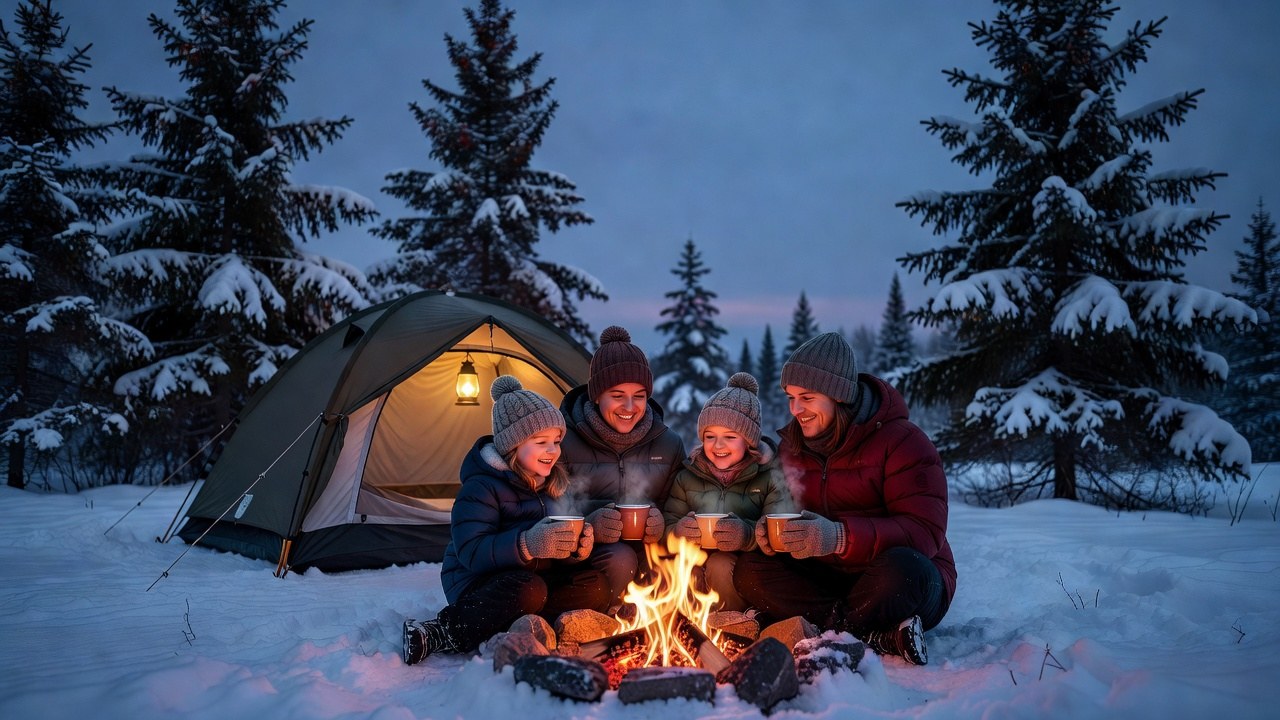
Cold Weather Camping Gear for Kids: The Layering System
Layer count beats layer thickness. Three thin layers beat one puffy layer, because you can remove one without stripping a kid down in the cold.
- Base layer (next to skin): synthetic or merino wool only. Cotton holds water against the skin and is the single most common cause of a cold child. Columbia Men's Midweight Omni-Heat Base Layer Top ($49.99, 4.6★) is the reflective-waffle style we use most; the Smartwool Intraknit Thermal Merino Base Layer Bottom ($139.00, 4.6★) is the premium merino answer for the parent who's cold-weather camping with kids all season.
- Mid layer: fleece, one per person. Columbia Steens Mountain 2.0 Fleece ($34.99, 4.6★) for men and the Columbia Benton Springs Fleece ($39.99, 4.6★) for women. Cheap, packs flat, dries fast.
- Outer layer: a shell and insulated snow pants. Kids' snow pants go over the base + fleece. Skip the insulated bibs and you'll be drying wet pants by the fire at 5 p.m.
- Feet: insulated boots, one size up, with one pair of wool socks. Never two pairs of socks in a tight boot — that's a circulation problem, not warmth. Columbia Youth Bugaboot Celsius Insulated Snow Boots ($64.99, 4.6★) are what we put on our own kids; Darn Tough Merino Hiking Socks ($25.95, 4.7★) are the sock that survives wet snow play.
- Hands: mittens beat gloves for kids. Fingers share heat in a mitten. Trendoux 3M Thinsulate Touchscreen Gloves ($19.99, 4.5★) for older kids who want their own gear, and Carhartt Waterproof Insulated Knit Cuff Gloves ($32.99, 4.6★) for adults.
- Head and neck: non-negotiable, both. Smartwool Merino Reversible Cuffed Beanie ($35.00, 4.7★) and the matching Smartwool Merino Neck Gaiter ($32.00, 4.6★). A gaiter you can pull over a kid's nose is worth ten extra degrees of "comfortable."
- Legs on snow: gaiters. Outdoor Research Crocodile Gaiters ($59.00, 4.6★) keep snow out of boots on the walk in — and dry boots are warm boots.
- Under everything: traction. Yaktrax Pro Traction Cleats ($34.95, 4.5★) for icy campground roads. Kids fall on ice constantly; this turns a trip-ending wrist injury into a laugh.
One rule that prevents half of all cold-kid problems: change their base layer before bed. If they sweated during the day, that layer is damp and it will chill them all night. Fresh thermals at bedtime is the highest-value 30 seconds of the trip.
The Tent, the Heater, and the CO Alarm
A family winter camping tent doesn't have to be a four-season mountaineering tent. For most kids' trips, you want:
- A dark, roomy cabin-style tent if you're driving to the site and the weather is above 25°F. Kids sleep later and you get standing room. We've used the CORE 6-Person Instant Cabin Tent ($169.99, 4.5★) for exactly this: a 60-second setup with cold hands is worth a lot.
- A true 4-season dome if you're expecting wind, snow load, or sub-25°F nights. The UNP 6-Person 4-Season Dome Tent ($39.99, 4.4★) is the budget entry point; four-season tents we've compared in detail is the place to go deep.
- A hot tent only if you want the wood-stove experience with a school-age kid who can follow rules. The Naturehike Massif Hot Tent with Stove Jack ($269.00, 4.3★) is a real 2–4 person hot tent for that trip — and our full hot-tent guide covers the venting and stove rules you must not skip.
Now the safety part, and we're not being dramatic. Any propane or butane heater inside a tent, including "indoor-safe" catalytic units, consumes oxygen and produces carbon monoxide. If you use one:
- Vent the tent — a cracked door or a roof vent, always. Never sealed.
- Put a battery CO alarm in the tent. Kidde Carbon Monoxide Detector, AA Battery ($23.97, 4.7★) is the one we carry; it's cheap, it's travel-sized, and there is no argument against it.
- Bring a portable gas leak detector if you're running any propane appliance. TECHAMOR Y201 Pro Gas Leak Detector ($25.99, 4.4★) sniffs the fitting before you trust it, and it's the same tool we recommend in our propane leak-testing guide.
- Heat the kid, not the tent. A heater running all night is how people get into trouble. Warm the tent for 20 minutes before bed, turn it off, and let the sleep system do the work. Our heater-by-size comparison is in the camping heater safety guide.
- If you do run heat, the Mr. Heater Little Buddy ($69.99, 4.5★) is the small-tent option, the Mr. Heater MH9BX Buddy ($74.00, 4.7★) is the mid-size standard, and the Mr. Heater Big Buddy ($146.48, 4.6★) only belongs in a large, vented cabin tent.
Also pair the heater with the non-negotiable extras: a Rumpl Original Puffy Blanket ($139.00, 4.7★) thrown over a kid's bag adds real warmth without re-buying gear, two pairs of HotHands Hand Warmers ($29.99, 4.6★) dropped in the foot box, and a rechargeable OCOOPA Hand Warmer 2-pack ($39.99, 4.5★) for the kid who wants to hold something warm all evening.
Can You Camp in the Snow? Snow Camping With Kids, Step by Step
Yes — and snow actually makes it easier in two ways: it insulates, and it packs into a flat, clean sleeping surface. What it changes is logistically.
- Arrive by 3 p.m. Winter dark comes early. Setting up in the dark with cold kids is where trips go wrong. If you can't arrive early, book a cabin instead and save the tent night for a shorter drive.
- Level and compact the tent pad. Walk the site in. Snow you've stomped is a stable, insulated floor. Mark the door with a stick so nobody trips in the dark.
- Boots come off at the door, always. One wet boot inside a tent is 10°F of lost warmth. Keep a dry pair of camp booties or thick socks at the vestibule.
- Snow play is an hour, not a day. Build the snowman, have the snowball fight, then get everyone dry. Wet snow gear at 4 p.m. means a cold 8 p.m. Bring a second set of mittens per kid.
- Water: keep it liquid. Bottles freeze overnight. Sleep with tomorrow's water bottle in your bag (it's free heat), or use a wide-mouth insulated bottle — and our snow-boots and traction guide covers the footwear side of this.
- Bathroom logistics change completely. Know where the heated restroom or vault toilet is, and plan the 2 a.m. trip before it happens. A clear, lit path beats a headlamp panic.
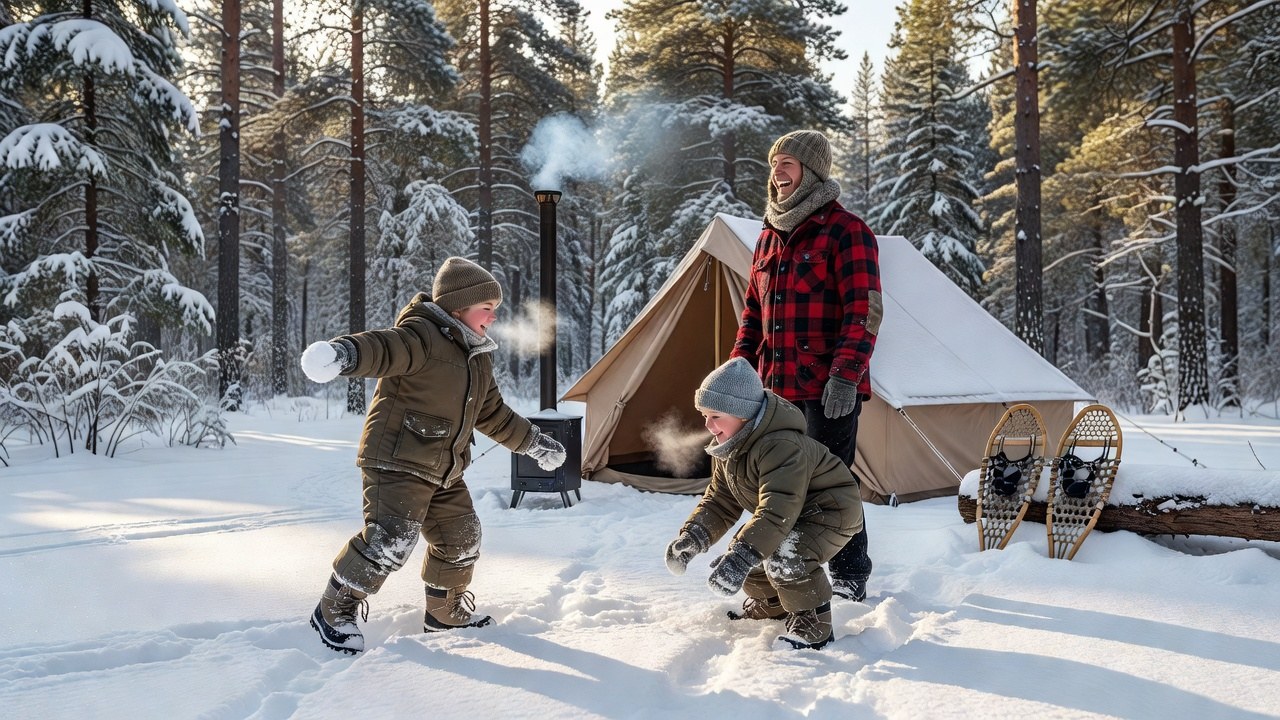
Winter Camping With a Baby and Toddler: The Rules That Matter
This is the section where winter tent camping with kids, "how to tent camp with a toddler," and "winter camping with a baby" get real answers, because the tactics are different from a school-age kid's.
- There is no such thing as a cold baby; there is only a wet or under-padded baby. Babies can't shiver efficiently and can't tell you. Under-6-months in winter is a call most pediatricians will push back on — if you go, go with a heated cabin, not a tent.
- Wearable sleep sacks over loose blankets. The Morrison Outdoors Little Mo (6–18 months) exists for this exact reason. No loose bedding in an infant's sleep space, ever.
- The toddler escape problem is real. A toddler in a mummy bag will be out of it by 1 a.m. The Morrison Big Mo (ages 2–4) is shaped for kids who roll; if your toddler will not stay covered, that's the single fix worth buying.
- Two check-ins. If your child is under 4, one adult should look in at ~1 a.m. Touch the back of the neck, not the hands or feet — cold extremities are normal, a cold neck is not.
- Nap early, sleep early, leave early. The whole trip rhythm shifts. Cold weather camping with toddler-age kids is a 20-hour trip, not a 40-hour one, and shorter is better every time.
- The baby and toddler camping guide has the feeding, diapering, and pack-and-play details; and if your child is between stages, what size tent fits 2 adults, 2 kids and a dog settles the shelter question.
Winter Camping Food: Hot, Fast, and Kid-Approved
Cold kids eat more and complain more. Feed them hot, and feed them early.
- Hot lunch beats a trail lunch. A stove and a pot of soup in the middle of the day resets everyone. The Coleman Triton+ 2-Burner Propane Stove ($149.99, 4.7★) is the car-camping workhorse; the MSR PocketRocket 2 ($49.95, 4.8★) is what you want for melting snow on a hike.
- A vacuum food jar is the highest-ROI winter kitchen item. Fill the Thermos Stainless King Food Jar ($30.50, 4.6★) with hot soup or mac and cheese at breakfast and you have a hot meal at 1 p.m. with zero cooking. That single item has saved more winter trips for us than any piece of clothing.
- Warm drinks are a comfort lever, not a nutrition plan. Hot cocoa, hot cider, broth. Bring twice what you think you need.
- Frozen food is a feature. Winter camp food list: stews, chili, pasta, oatmeal, quesadillas — things that are already cooked and reheat well. Olive oil and butter freeze solid, so cook with the fat you've already included.
- Snacks within reach at all times. Trail mix freezes into a brick; string cheese freezes too. Keep snacks in an inside pocket so they stay soft.
- Themed meals win with kids. Kid-friendly camp meals that travel well in cold weather is our tested list; the fall camping food guide covers the shoulder-season version.
Winter Camping List for Families
Print this. It's the short version of everything above.
Sleep (per kid)
- Kids sleeping bag rated 15°F below the forecast low
- Insulated pad, R-value 4+, or closed-cell foam
- Fleece liner (optional but the cheapest warmth you can buy)
- Fresh, dry thermal base layer to sleep in
- Hat and wool socks for sleeping
- Warm water bottle in the bag
Sleep (adult)
- 0°F–20°F bag (you will be up at 2 a.m.; be warm when you are)
- Insulated pad
- Extra blanket for the kid who kicks theirs off
Wear (per person)
- Synthetic or merino base layer top and bottom
- Fleece mid layer
- Waterproof insulated shell and snow pants
- Insulated boots, one size up
- Two pairs of mittens or gloves per kid
- Wool socks, two pairs per day
- Beanie and neck gaiter
- Gaiters for snow
Camp
- 4-season tent or a dark-room cabin tent
- Ground tarp and a stake set for snow (or snow anchors)
- Lights: a kids' Black Diamond Wiz Kid Headlamp ($24.95, 4.6★) each, plus a Goal Zero Lighthouse Micro Lantern ($29.95, 4.4★) for the tent
- Heater (optional) + CO alarm (not optional)
- Gas leak detector if you run any propane appliance
- 2-burner stove + fuel, plus a food jar for a hot no-cook lunch
- Firewood, fire starter, and a backup lighter
- Traction cleats for the adults on icy paths
- Traction and a snow shovel for the site
Non-gear
- Twice the hot drinks
- A deck of cards, a book, and screen-free activities for the dark hours
- A dry bag for wet snow clothes
- A hard "we leave at noon" rule on the last day
Common Mistakes Parents Make Camping With Kids in Cold Weather
- Buying a heater instead of a pad. Heat rises; cold comes from below. Insulate the bottom first.
- Cotton base layers. Cotton + sweat = a cold child at 11 p.m. This is the most common mistake and the easiest to fix.
- A bag rated for the season instead of the night. A "3-season" bag is a summer bag. Check the actual comfort rating, not the marketing name — our sleeping bag temperature ratings explainer is the 5-minute version.
- Dressing for the hike and sleeping in the same clothes. Change the base layer before bed. Every time.
- Sealing the tent to keep heat in. If you're running any combustion appliance, seal the tent and you've built a CO trap. Vent it.
- Too long a trip. Two nights is the maximum for a first winter trip with kids. One night is often the right call.
- No plan for the 2 a.m. bathroom trip. Sort out the path and light before bed, not during the emergency.
- Forgetting that water freezes. Bottles, hydration bladders, wipes, and anything with a pump. Sleep with your water or keep it in an insulated sleeve.
If you want the broader backcountry version of these rules — including what changes when you're carrying everything — our winter camping guide for beginners and the winter camping gear checklist are the two places to continue. And if this is your first cold trip with kids, the family camping checklist is the non-winter baseline to build from.
For the states where the fall window runs longest, see the camping guide for Arkansas.
Winter Camping With Kids FAQ
Can you camp in the winter with a toddler?
Yes, from roughly age 2, and comfortably from age 3 if you follow the sleep system: an insulated pad under them, a kids' bag rated at least 15°F below the forecast low, a dry base layer at bedtime, and a quick neck-check at 1 a.m. Keep the trip to one night. Toddlers regulate temperature less efficiently than adults, so margin matters more than gear quality at the top end — a Morrison Outdoors Big Mo 40 plus a closed-cell pad will outperform an expensive adult bag on the floor.
How cold is too cold to take a child camping?
Below 10°F, skip it with kids under 8 — the risk isn't the cold itself, it's that a cold child can't always describe what's wrong before it becomes serious. Between 10°F and 20°F, go only with a 0°F-grade system per person and an adult who sleeps light. From 20°F to 40°F, a 20°F kids' bag plus an R-4 pad handles it. Above 40°F is the ideal first-trip range.
Do kids need a different sleeping bag than adults?
Yes. Kids' bags are shorter, narrower, and rated differently, and a child in a too-long adult bag loses heat to the empty space around them. Look for youth sizing, not just a lower temperature rating — the TETON Sports Celsius Jr and the Kelty Woobie are both sized and rated for kids, and our kids sleeping bag buying guide compares the whole field.
Can you use a propane heater in a tent with kids?
Only with the tent vented, an in-tent CO alarm, and the heater off while you sleep. Catalytic "indoor-safe" heaters still consume oxygen and produce carbon monoxide. Use one to take the chill off for 15–20 minutes before bed, then turn it off and let the sleep system hold the warmth. A Kidde Battery CO Detector is $23 and there is no version of this where you don't bring it.
What should kids wear to sleep in a tent in cold weather?
A dry synthetic or merino base layer, a hat, and wool socks — never the clothes they wore during the day and never anything cotton. Add a fleece liner if the forecast is below 30°F. Change their base layer right before bed; if they sweated during the day, that layer is damp and will chill them within an hour.
Is snow camping with kids safe?
It's as safe as your gear and your decisions. Snow insulates and gives you a flat, clean sleeping surface, which is why we usually prefer a snowy site to a wet, muddy shoulder-season one. The real risks are wet clothing, under-insulated sleeping pads, and getting cold before dinner — so arrive early, keep a dry set of everything, and treat 3 p.m. setup as a hard deadline.
<!-- AFFILIATE_DISCLOSURE -->