Camping in January 2027: Where It's Warm Enough, What's Open, and How Cold It Really Gets
Camping in January 2027: which states are warm enough for tent camping, what's actually open, how cold it really gets by region, MLK weekend booking tips, and what to pack for winter nights.
Quick Answer: Is January Worth Camping For?
Yes — if you pick the right half of the country. January is the single most polarized camping month in the US:
- Where it works: Florida, the Gulf Coast, southern Arizona, south Texas, southern New Mexico, and the California/Arizona desert parks. Daytime temperatures there land in the 60s–70s°F most weeks, and campgrounds are open because winter is their season.
- Where it doesn't: most of the northern tier. Many state park campgrounds in the upper Midwest, New England, and mountain West shut off water and close loops from October through April, and national park roads into the high country are snowed in.
- What changes vs. fall: your fuel behaves differently (butane quits, propane doesn't), your water lines freeze, and the sun sets early enough that you'll spend three or four hours of awake time in the dark. Plan for the dark, not just the cold.
If you want the shortest version: camp in January for the desert and the Gulf, not for the mountains. Want to know where to sleep and how warm it needs to be? Sleeping bag temperature ratings explained is the 5-minute version of the number that matters most.
Where It's Actually Warm Enough to Camp in January
Florida and the Gulf Coast
Florida is the default January answer, and for good reason: state parks from the Panhandle to the Keys keep campgrounds open all winter, and the Keys stay warmest of all. The trade-off is demand — this is snowbird season, and it starts ramping in early January and peaks through March. Popular coastal parks fill up as soon as their booking window opens (many Florida state parks open reservations about 11 months ahead, so January of next year is often being booked this winter).
Gulf-side Alabama, Mississippi, and Louisiana are the value play: warm enough for comfortable tent nights most weeks, far less crowded than the Keys, and the same coastal setup. Our Alabama and Louisiana guides cover the Gulf-side campgrounds that stay open.
Arizona and Southern New Mexico
Southern Arizona has the most reliable winter tent-camping weather in the country — dry air, sunny 60s–70s, chilly but manageable nights. This is peak season for the desert parks, and the campsites near Tucson fill on weekends. New Mexico splits in two: the southern desert is comfortable, while the northern mountains are a genuinely winter trip.
State-by-state detail: Arizona and New Mexico.
South Texas and Big Bend
Big Bend National Park's busy season runs roughly November through April, and January is one of its best months — cool days, cold-but-clear nights, and no summer heat to worry about. The Gulf Coast south of Houston (Galveston, Padre Island) stays mild enough for tent camping most of the month.
Full detail on the state's winter windows: Camping in Texas.
The California and Arizona Desert Parks
Death Valley, Anza-Borrego, Joshua Tree, and Organ Pipe Cactus are all at their best in January: 60s°F days, no summer furnace, and night skies worth the trip. Nights still drop hard in the desert — 30s°F is normal, and clear skies mean fast heat loss after sunset. The desert camping gear checklist covers what's different about sleeping out there.
And If You Want Cold: January Is Snow Camping Season
Not everyone is chasing warmth. January is the most reliable month of the year for actual snow camping — stable snowpack, fewer people, and campgrounds that are quiet in a way summer never is. That's a different trip with different gear; start with the winter camping beginners guide.
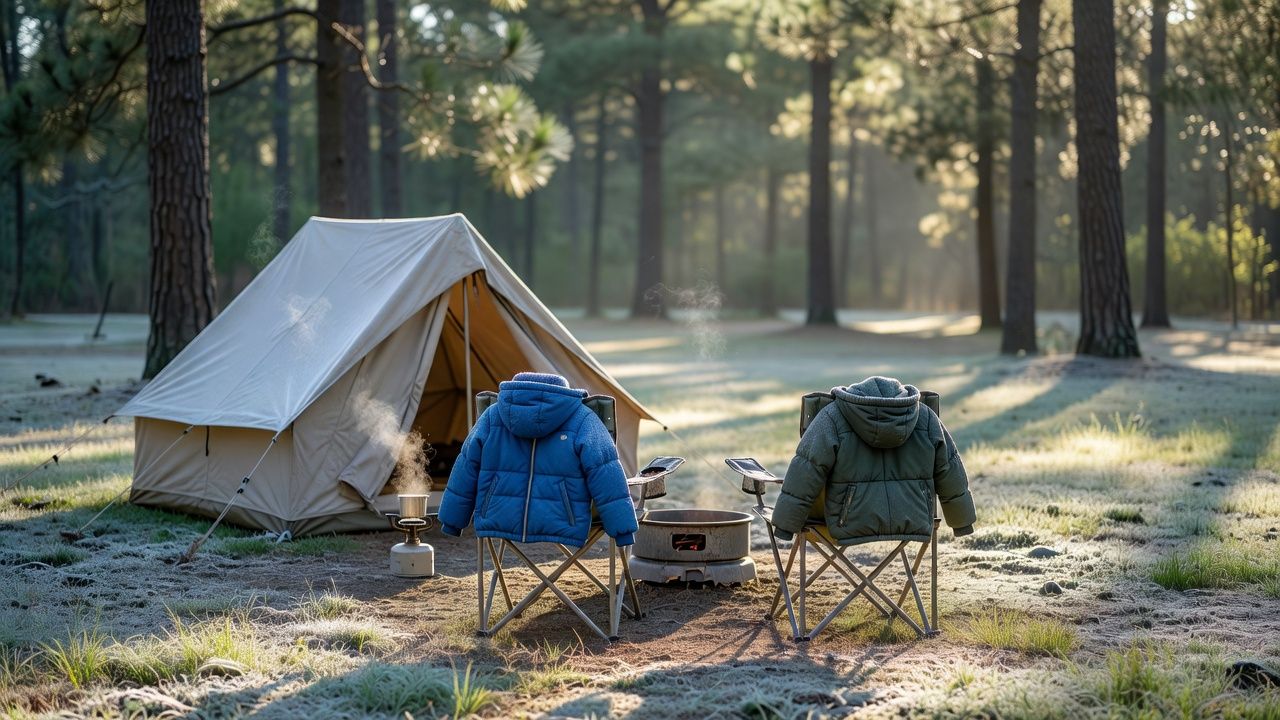
Camping in January by State: How Each Question Resolves
If you already know your state, the answer usually comes down to two things — is the campground open, and is the night survivable with the bag you own.
- Florida — open statewide, book early, expect snowbird competition. Florida guide
- Arizona — the most dependable winter tent weather; desert parks at peak season. Arizona guide
- Texas — Big Bend and the Gulf coast are the January picks; the Panhandle is not. Texas guide
- New Mexico — southern desert yes, northern mountains only with real winter gear. New Mexico guide
- Louisiana — mild, underrated, and open through winter. Louisiana guide
- Alabama — Gulf State Park area weather is comfortable most of the month. Alabama guide
If your state isn't on that list, you're probably looking at a closed-or-snowed-in situation rather than a gear problem. The national picture, including the parks that stay open year-round, is in the national parks camping guide.
What's Actually Open in January (and What Isn't)
Open and at their best: desert parks (Death Valley, Joshua Tree, Anza-Borrego, Organ Pipe), Big Bend, most of Florida and the Gulf Coast, southern Arizona state parks, and any private RV park that runs year-round.
Open but limited: Yosemite Valley stays open and is genuinely beautiful in January, but Tioga Road and the Glacier Point Road are closed to vehicles for the season. Mammoth Hot Springs is effectively the only Yellowstone campground area that stays usable in winter, and most Yellowstone campgrounds are closed. Great Smoky Mountains campgrounds vary — several stay open, but check the specific one before you drive.
Closed: most upper-Midwest, northern New England, and mountain-West state park campgrounds. Water is shut off and loops are gated from roughly October/November until spring. Even where camping is allowed on national forest land, access roads may not be plowed.
Booking windows matter more in January than in July. Snowbird season means the good coastal sites in Florida and Arizona are competing with people staying for weeks, not weekends. If you're planning the Keys, the most in-demand Florida state park campsites are typically booked the day the window opens — set a reminder rather than hoping for a cancellation.
How Cold Does It Really Get? A January Temperature Ladder
These are typical overnight lows, not worst-case cold snaps. Treat them as the number you pack for.
| Region | Typical January overnight low | What that means for your kit |
|---|---|---|
| Florida Keys / south Florida | 55–65°F | Three-season bag, no heater |
| Gulf Coast (AL/MS/LA) | 35–45°F | 20–30°F bag, warm layer |
| Southern Arizona / desert parks | 30–40°F | 20°F bag plus a real insulated pad |
| South Texas / Big Bend | 25–35°F | 0–20°F bag, expect wind |
| Southern California coast | 40–50°F | Three-season bag plus a beanie |
| Northern tier / mountain West | 0–20°F (colder at elevation) | 0°F or lower bag, hot tent or RV, real winter gear |
The gap between "my bag is rated for it" and "I slept cold" is almost always the pad, not the bag. Cold ground pulls heat out from below faster than air takes it from above, which is why the how to stay warm camping breakdown starts with what's under you.
New Year's, MLK Weekend, and the January Camping Calendar
January has two big camping weekends and one quiet stretch:
- New Year's (Dec 30–Jan 2): the busiest few days of the month at southern campgrounds. Many state parks run First Day Hike programs on January 1 — a genuinely good reason to be camped on New Year's Eve.
- The first two weekends: quiet, cheap, easy to book. If you have flexibility, this is the best-value window of the entire month.
- MLK weekend (third Monday): the second surge, since it's a three-day weekend for most families. Book three to four weeks ahead at minimum for the popular desert and coastal parks.
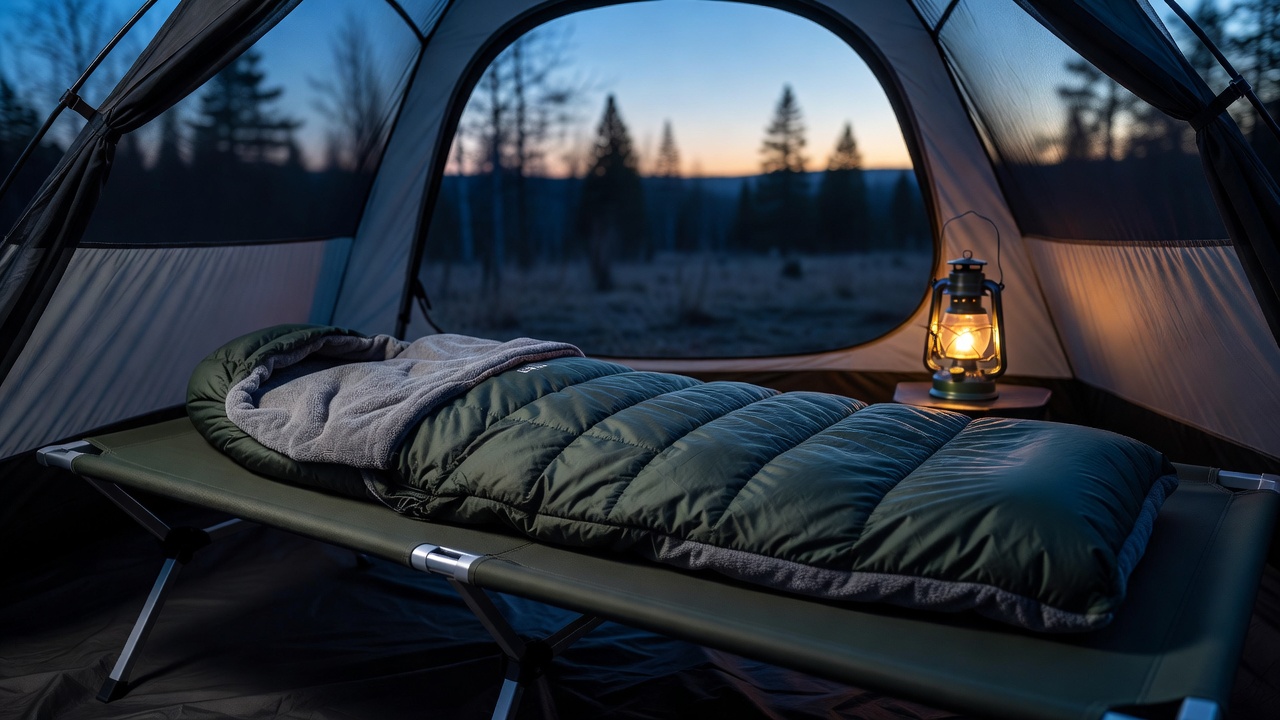
Beyond the holidays, January's real constraint is daylight: in much of the country you're looking at sunset around 5-ish and full dark not long after. That changes the shape of the evening — dinner earlier, more time in the tent, and a much bigger payoff from good lighting and a warm place to sit. Lanterns and a rechargeable power station stop being optional once it's dark for fourteen hours.
What to Pack for January Camping
The principle is layering by function: warmth under you, warmth around you, warmth you can drink.
Sleep system (the part that decides your trip)
- TETON Sports Celsius 0°F sleeping bag ($59.99) — the budget workhorse for genuinely cold nights.
- Kelty Cosmic Down 20°F ($169.00) — the lighter down option for mild-winter trips where bulk matters more than raw warmth.
- Exped MegaMat 10 ($239.95) — if you're car camping in January, this is the pad that makes a 20°F night feel civilized.
- Therm-a-Rest NeoAir XLite NXT ($209.95) — the packable insulated pad for backpacking in the cold.
- Rumpl Original Puffy Blanket ($139.00) — the extra layer over the bag when the temperature bottoms out at 4 a.m.
Heat and fuel (where January trips actually fail)
Fuel is the most common January mistake, and it's chemistry, not gear quality:
- Butane quits first. Plain butane canisters — the cheap four-packs and 12-packs — stop vaporizing near freezing, which is why the Gas One dual-fuel stove ($34.99) can run butane in September and frustrate you in January.
- Isobutane blends go lower, not forever. MSR IsoPro ($8.95) and similar blends keep working into the 20s°F, and further if you keep the canister warm in a pocket or sleep with it.
- Propane wins in the cold. One-pound propane cylinders like the Coleman 16.4 oz 12-pack ($64.99) keep pressure well below freezing — that's why cold-weather car camping defaults to propane.
- If your stove won't light in the cold at all, it's usually the canister and not the burner. The camp stove troubleshooting guide walks through it in order, and the fuel explainer covers which fuel to bring.
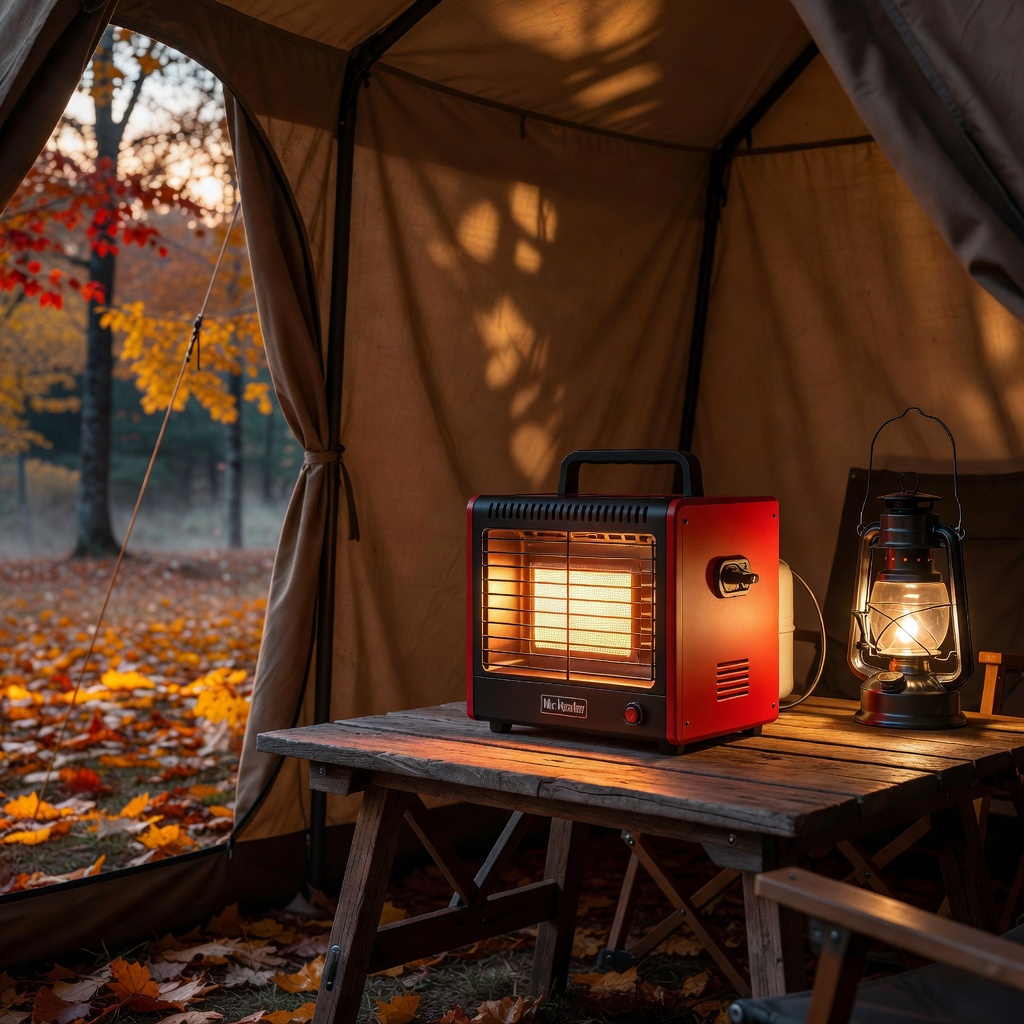
For heat in a tent or an RV awning area, a portable radiant heater plus a hose to run it off a bulk tank is the standard car-camping setup:
- Mr. Heater Buddy MH9BX ($74.00) — the widely used indoor-safe design with a low-oxygen shutoff, for ventilated spaces only.
- Mr. Heater Little Buddy ($69.99) — the smaller version for a tent vestibule or a small RV space.
- 10-foot Buddy hose assembly ($17.99) and propane fuel filter ($15.97) — the two accessories that make running a Buddy heater off a 20 lb tank actually work.
- Kidde portable CO detector ($23.97) — non-negotiable if any fuel-burning heater shares your sleeping space. The full safety rules are in the tent heater guide.
Clothing layers
Think in three layers: a wicking base, an insulating mid, and a shell that blocks wind. Then add extremities, because that's where January cold is felt first.
- Columbia Midweight Omni-Heat base layer ($49.99) — the reflective base layer that does the most work per dollar.
- Columbia Powder Lite II insulated jacket ($94.91) — a mid-layer that doubles as a camp jacket.
- Smartwool merino beanie ($35.00) — worth it for sleeping in alone.
- Gloves: Carhartt insulated knit-cuff gloves ($32.99) for camp chores that involve cold metal, TRENDOUX touchscreen gloves ($19.99) for everything else.
- HotHands hand warmers ($29.99 for 40 pairs) or OCOOPA rechargeable warmers ($39.99) — the cheapest way to keep kids from declaring the trip over.
Water, power, and light
- Water freezes. Fill your tank and disconnect the hose at night, or use a heated hose — the step-by-step version is in the RV winterization guide. For tent camping, keep your drinking water inside the tent, not in a bottle that turns to ice.
- Dark at five means power matters. A Jackery Explorer 300 ($199.00) or EcoFlow River 2 ($169.00) runs lights, phone charging, and a heated blanket through a long January night.
- Lighting: the Goal Zero Lighthouse Micro ($29.95) is a rechargeable, weatherproof lantern that lives in a tent pocket.
January Camping With Kids and Dogs
Kids handle cold well when you keep three things true: they sleep warm, they stay busy, and the trip is short. A single night is a perfectly good January trip with young children. Warm sleep comes first — kids' bags are rated differently from adult bags, and the sizes change fast with age, which is what the kids sleeping bag buying guide sorts out:
- Kelty Woobie 30°F kids bag ($39.95) and TETON Celsius Jr 20°F ($49.99) for school-age kids.
- Morrison Outdoors Big Mo 40° ($79.95) for toddlers who won't stay under a blanket.
- Babies and toddlers have their own rules — the camping with a baby or toddler guide covers sleep temperature and layering.
Dogs mostly need the same thing you do: a warm place off the cold ground. Cold-tolerant breeds are fine into the 30s°F with a bed or a raised cot, short-coated dogs are not — and a January trip is not the time to test a new dog's first camping night. The dog camping guide covers the cold-weather side.
January Camping Safety: Cold, CO, and Water
- Never run a fuel-burning heater in a sealed tent. The Buddy-style heaters have low-oxygen shutoffs, but they still need ventilation, and any heater in a sleeping space belongs next to a CO alarm.
- Watch for hypothermia, not just comfort. Wet clothing and wind matter more than the thermometer. Change out of damp layers before bed, even if it's inconvenient.
- Treat frozen water as the default. RV lines, hydration bladders, and water filters left out overnight all freeze. Filters specifically: a frozen hollow-fiber filter can crack internally and stop working — keep it in your sleeping bag.
- Check the campground's winter status before you drive. "Open year-round" and "water on" are two different claims; many campgrounds stay open with no water and no dump station.
- Have a bail-out plan. A January night that goes wrong is worse than a July night that goes wrong. Know where the nearest motel is and be willing to use it.
Common January Camping Mistakes (Learn From Mine)
- Packing for the daytime temperature. Your trip happens at 6 a.m. and 9 p.m., not at 2 p.m.
- Trusting a butane stove in the cold. Bring propane, or plan to keep the canister warm.
- Forgetting that the ground is the cold side. A great bag on a bare pad is a cold night.
- Underestimating the dark. Fourteen hours of darkness needs light, power, and something to do.
- Booking late for MLK weekend. It's the busiest three-day weekend of the winter in the warm states.
- Trying a first-time winter trip at a remote site. Make the first January trip a familiar campground with a store nearby.
Camping in January FAQ
Is January a good time to go camping?
It's excellent in the warm-winter states — Florida, the Gulf Coast, southern Arizona, south Texas, southern New Mexico, and the desert parks — where January is peak season, not off-season. In the northern tier it's a specialist trip: most state park campgrounds are closed or have water shut off, so you're either prepared for real winter camping or you're heading south.
Where is it warm enough to camp in January in the US?
The most reliable January tent-camping weather is southern Arizona, south Texas (Big Bend and the Gulf Coast), southern New Mexico, Louisiana and coastal Alabama, Florida, and the southern California desert parks. All of those areas offer 60s–70s°F days with cool nights through most of the month.
Can you camp in January in a tent?
Yes, anywhere on the warm-winter list, with a three-season tent and a bag rated for the expected low. The equipment that decides whether it's comfortable is your sleeping pad's insulation and your fuel choice — not the tent.
Do campgrounds stay open in January?
Many do, especially in the South and Southwest. But "open" often means no water and no dump station, so check the specific park before you go. Northern state park campgrounds commonly close from October or November through spring, and even open ones may have unplowed access roads.
What sleeping bag do I need for January camping?
Match the bag to the overnight low, then add a margin. In the deep South a three-season bag works; on the Gulf Coast and in the desert, a 20°F bag is comfortable; in south Texas or any mountain West site, bring a 0°F bag or lower. Pair whatever you bring with an insulated pad — the pad is often what separates warm sleep from a cold night.
Is January camping crowded?
Only on New Year's and MLK weekend. The first two weekends of January are among the quietest camping dates of the year in the South, and the desert parks are busy in a steady, snowbird way rather than a summer-holiday way.
The Bottom Line
January rewards a simple decision: go south, or go prepared. If you camp in Florida, the Gulf Coast, southern Arizona, or the Texas desert, you're camping in the best month of the year there — open campgrounds, mild days, and none of the summer crowds. If you camp in the mountains, treat it as a genuine winter expedition with a stove-jack tent, a 0°F-or-better bag, and a heater you trust. Either way, bring propane instead of butane, put insulation under you, and plan for the dark.
Michigan is a live January option in the upper Midwest: roughly 34 state park campgrounds stay open year-round and the state publishes a winter matrix of state forest campgrounds marked open all year. Our Michigan camping guide covers the winter half of the state's camping calendar alongside the fall one.
<!-- AFFILIATE_DISCLOSURE -->TrailMapz is a participant in the Amazon Services LLC Associates Program. As an Amazon Associate we earn from qualifying purchases — it doesn't change what we recommend.