Camping in Arizona 2026: State Parks, the Desert Season & Where to Camp in Winter
Where to camp in Arizona in 2026 — the 365-day state park reservation window, the $180 BLM winter permit, why the season flips by elevation, which state park campgrounds are worth booking, the Grand Canyon South Rim in winter, free dispersed camping rules, and the gear that survives 30°F desert nights.
Arizona is the state that gets camping backwards, and it works out beautifully. Everywhere else, summer is the season and winter is the off-season. Here it is the reverse — from roughly November through March, the Sonoran Desert sits in the 60s and low 70s all day, the campgrounds fill with snowbirds escaping actual winter, and the mountain parks four hours north are under snow and shut for the year.
That single fact reorganizes everything about planning a trip here. The reservation systems are different, the free-camping rules have a hard limit that catches people out, the gear list looks nothing like a summer camping checklist, and the state's campgrounds run on a booking clock that rewards planners by as much as a year out.
This guide walks through all of it: the four separate systems that run camping in Arizona, the state park campgrounds genuinely worth setting an alarm for, month-by-month timing, the Grand Canyon in winter, the $180 permit that lets you stay seven months, and the gear that decides whether a 35°F desert night is pleasant or miserable.
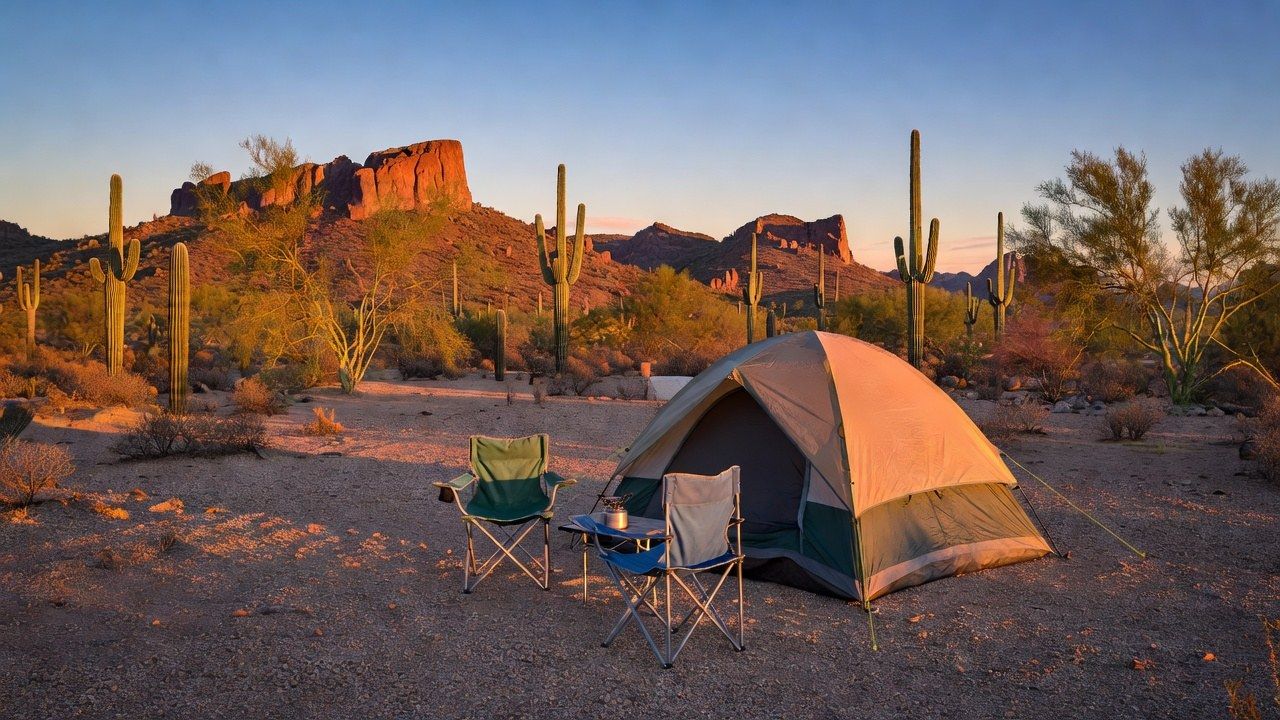
Quick Answer: Where to Camp in Arizona in Winter
- Best overall pick for a first Arizona trip: Lost Dutchman State Park, 40 minutes east of Phoenix at the base of the Superstition Mountains. Desert trails from the tent pad, full hookups available, and it fills up every weekend from November through March.
- Best for a family with kids: Dead Horse Ranch State Park in Cottonwood — over 100 sites, water, shaded cottonwoods, and it sits in the middle of the Verde Valley so both Sedona and Jerome are day trips.
- Best winter weather: the Colorado River parks near Lake Havasu — Cattail Cove and Buckskin Mountain — where January afternoons regularly hit 65°F.
- Best free (or nearly free): BLM Long Term Visitor Areas near Quartzsite and Yuma, where $180 covers a full seven months from September 15 to April 15, or $40 covers up to 14 consecutive days.
- Best national park: the Grand Canyon's South Rim, which stays open all year and is genuinely better in winter — no crowds, no heat, and the canyon's shadows do most of the work.
- What to skip: the White Mountains (Fool Hollow Lake, Lyman Lake) and the North Rim. They are wonderful parks. They are also at 6,000–9,000 feet and closed or snowed in from roughly November to April.
What Changed for the 2025–26 Season
Three things are different this year, and each one changes a trip plan.
The Grand Canyon's North Rim is running a recovery season. After the Dragon Bravo fire, the North Rim reopened on May 15, 2026 with a deliberately reduced operation: no lodging inside the park, no potable water on the North Rim, and the 2026 season focused mainly on day use with limited backcountry access. The campground and lodge previously ran May 15 to October 15; that window is now effectively over for the year. If you were planning a North Rim camping trip, the South Rim is the answer.
BLM's Long Term Visitor Area permits went digital. The 2026–27 LTVA season opened September 15, 2026 and runs to April 15, 2027, and permits are now handled through the online system rather than only at the entrance kiosks. Same $180 price, same seven months, same seven designated areas across Arizona and California — but you can sort it out before you drive.
Water restrictions persist at the Grand Canyon's South Rim. Following the August 2026 flood damage to the transcanyon waterline, expect conservation notices and some fill points to be limited. Carry water in, even at a developed campground. And because the North Rim has no potable water at all this year, do not plan to top up there.
Why Arizona's Camping Season Flips (and Where It Doesn't)
Arizona rises from about 1,000 feet at Yuma to 12,600 feet at Humphreys Peak. That 11,000-foot spread is why "when is camping season in Arizona" has no single answer — the state effectively contains two camping climates stacked on top of each other.
The desert and river parks (roughly 1,000–4,500 feet) — Phoenix, Tucson, Apache Junction, Lake Havasu, Yuma, Ajo — are prime November through March. Expect daytime temperatures in the 60s and low 70s, nights that drop into the 30s and 40s, and essentially zero rain. Summer here is genuinely dangerous: 110°F afternoons and monsoon storms from July into September.
The high-country parks (roughly 6,000–9,000 feet) — Flagstaff, the White Mountains, the Mogollon Rim, the Grand Canyon's rims — flip the calendar completely. Their season is roughly May through September. Winter means snow, closed campgrounds, and forest roads that may not reopen until spring.
So "camping in Arizona in winter" in practice means: the desert, the low river valleys, and the South Rim of the Grand Canyon. Not the mountains. If you book a trip to Fool Hollow Lake in January because the photos looked beautiful, you will arrive at a frozen lake and a locked gate.
There is one more layer people miss: the elevation swing inside a single trip. Camp at Lost Dutchman in November and you will be in a t-shirt at 2 p.m. and reaching for a fleece at 8 p.m. Drive two hours north to Flagstaff and you have moved from the low desert into a 7,000-foot town where that same night is in the teens. A desert camping trip in Arizona is really a packing problem, and the gear section below treats it that way.
How Arizona Camping Actually Works: Four Separate Systems
Nothing wastes more time on an Arizona trip than assuming one reservation site covers the whole state. It does not. Four systems run in parallel, and they have different rules, different windows, and different portals.
1. Arizona State Parks — azstateparks.com/reserve
The Arizona State Parks system is self-supporting: it does not receive General Fund tax money, which explains both the fee structure and the emphasis on reservations. Roughly a dozen parks offer camping, and they are the sweet spot for families — developed sites, water, restrooms, and locations close to real towns.
The rules that matter:
- Reservations open up to 365 days in advance, with a minimum of one day before arrival.
- A $3.60 non-refundable reservation fee applies per site, on top of the nightly rate.
- Two-night minimum on peak-season weekends at many parks — the classic Friday-night-only plan does not always work in winter.
- Camping fees run $25–$50 per night depending on site type (tent vs. RV vs. full hookup) and season. Day-use fees run $5–$30.
- Fees include one vehicle per campsite. Each additional vehicle is $15 per night — worth knowing if two families are sharing a site.
One timing detail that trips up out-of-state planners: Arizona does not observe daylight saving time. The state stays on Mountain Standard Time all year. That means an 8 a.m. Arizona release is 10 a.m. Eastern and 7 a.m. Pacific once California has fallen back — so add an hour of cushion if you are booking from the West Coast, because your clock and their clock drift apart in November.
2. National Forest and BLM dispersed camping — free, with a clock on it
Most BLM land and most national forest land in Arizona allows dispersed camping — camping outside a developed campground with no facilities and no fee. The catch is that the stay limit is not a state-wide rule. Every forest and every BLM field office writes its own order, and the standard federal pattern is 14 days, after which you must move on. Do not assume "14 days anywhere" — check the specific forest's current order before you park.
The forests that matter most for a winter trip: Tonto (closest to Phoenix), Coronado (Tucson), Coconino (Flagstaff), Prescott, and Kaibab (Grand Canyon north and south of the park).
3. BLM Long Term Visitor Areas — the $180 seven-month permit
This is Arizona's most underknown camping product and the single best deal in the state for anyone staying a while. Seven designated Long Term Visitor Areas in Arizona and California are managed under one permit:
- $180 long-term permit — valid continuously from September 15, 2026 through April 15, 2027, seven months.
- $40 short-term permit — up to 14 consecutive days within the same area.
- No hookups. This is dry camping on public land. Some LTVAs provide water, dump stations, and trash service; none provide power.
- La Posa, near Quartzsite, is the largest and most famous — the January RV gathering that turns a dusty stretch of desert into a temporary city.
If you are a snowbird who wants to spend the winter in one warm place, $180 for seven months is roughly the cost of four nights at a commercial RV park.
4. National Park Service — Grand Canyon on Recreation.gov
Camping inside Grand Canyon National Park runs through Recreation.gov, with a six-month reservation window, and it is a separate universe from the state park system. Detailed below.
Arizona State Park Campgrounds Worth Booking
Arizona State Parks has camping at roughly a dozen parks. These are the ones that justify the reservation fee.
Lost Dutchman State Park — Apache Junction. The closest thing Arizona has to a signature desert campground. Sites sit at the base of the Superstition Mountains, with the Treasure Loop and Siphon Draw trailheads essentially inside the campground. Roughly 40 minutes from Phoenix Sky Harbor. This is the park that fills up fastest in winter, and the one where the two-night weekend minimum bites hardest — plan a full weekend, not a Saturday.
Dead Horse Ranch State Park — Cottonwood. Over 100 sites across several loops, both tent and RV, in the Verde River Valley. Shade from real cottonwood trees, water nearby, and a location that puts Sedona and Jerome both inside a short drive. The best "base camp for a week" state park in the state.
Catalina State Park — Tucson. Around 120 tent and RV sites in the heart of the Sonoran Desert at the base of the Santa Catalina range. Hiking straight out of camp, saguaro forest everywhere, and Tucson's food scene 20 minutes away. A solid pick for a mild January trip.
Patagonia Lake State Park — Patagonia. About 105 sites in southeastern Arizona around a small lake, and one of the best birding destinations in the country — the birding here is genuinely exceptional from fall through spring. If your family includes a pair of binoculars, this is the park.
The Colorado River group — Cattail Cove, Buckskin Mountain, Alamo Lake. Four parks line Arizona's western edge along the Colorado River, and they are the warmest winter camping in the state. Cattail Cove (61 sites) is the laid-back alternative to the busier Lake Havasu side. Alamo Lake is the secluded one — five campgrounds, excellent bass fishing, and real distance from everything. Buckskin Mountain sits right on the river.
Picacho Peak State Park — Eloy. Around 85 sites, some with electric, in classic saguaro desert between Phoenix and Tucson. The Hunter Trail to the summit is a short, steep, genuinely memorable hike with cable sections — not a small-kid trail, but a great one for older kids.
Homolovi State Park — Winslow. About 53 sites, most with electric hookups, near the Little Colorado River, with Hopi archaeological sites inside the park boundary. It is one of the less obvious parks and one of the more interesting ones — quiet, dark skies, and history you can walk to.
Roper Lake State Park — Safford. A southeastern Arizona park with a warm spring-fed lake and a mild winter, useful as an alternative when Tucson and Phoenix parks are full.
Skip these in winter: Fool Hollow Lake (Show Low) and Lyman Lake (near Springerville), both excellent White Mountains parks that belong on a summer list, not a winter one.
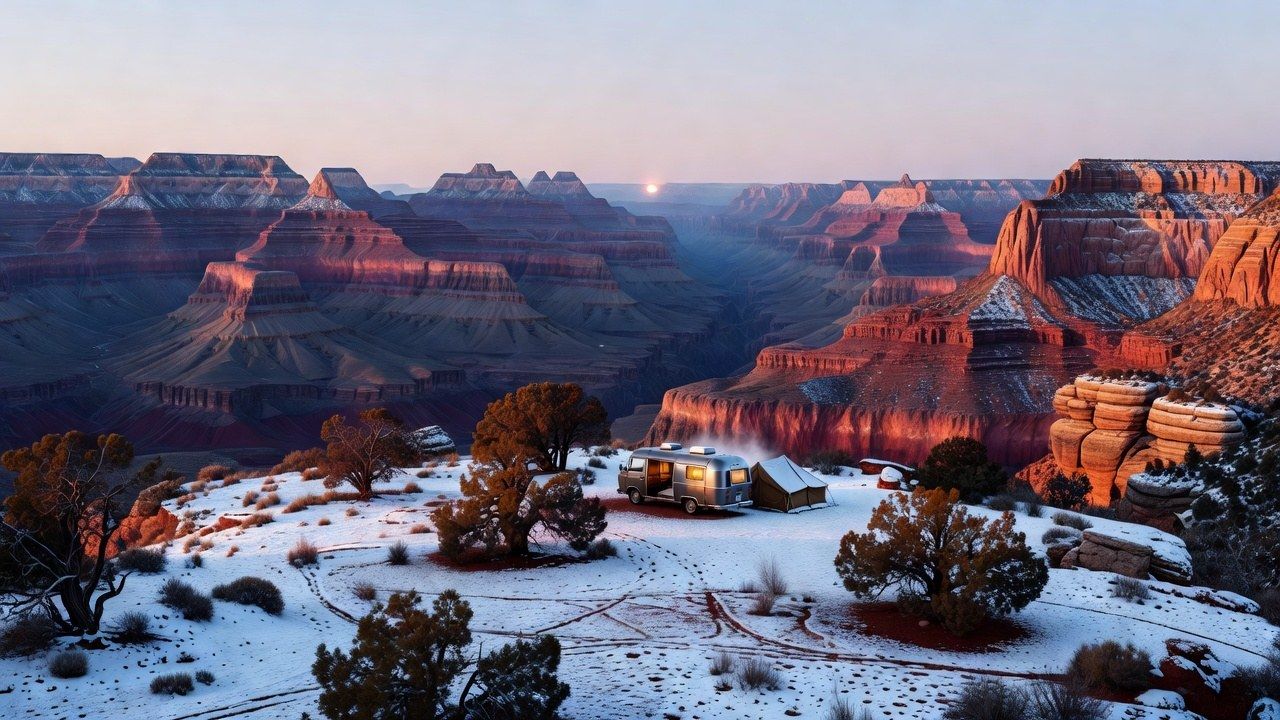
Camping in Arizona in October and November
October is the transition month. The high country is still open and at its absolute best — aspens turning on the Kaibab and Coconino, crisp 60s in Flagstaff — while the low desert is still warm enough that a Phoenix-area campground in the middle of the day is uncomfortable. If you have flexibility in October, spend it at elevation. Add a fall camping gear checklist to the pile, because the temperature swings are the whole story.
November is when the flip completes. Desert parks become genuinely pleasant — 70s by day, 40s at night — the snowbirds begin arriving, and the state park reservation scramble starts in earnest. Thanksgiving week is the single busiest camping weekend of Arizona's entire winter season. Book 365 days out if you want Lost Dutchman or Dead Horse Ranch for that week. If the holiday timing is what matters to you, our Thanksgiving camping guide covers the logistics; for the broader month, see camping in November.
Camping in Arizona in December and January
This is peak season in the desert and peak cold in the mountains, and the gap between the two is enormous.
At 1,000–2,500 feet (Yuma, Quartzsite, Lake Havasu, Organ Pipe Cactus National Monument near Ajo) expect 65–70°F afternoons and 40s at night. This is genuinely t-shirt-and-shorts camping weather in the middle of winter, which is exactly why the Quartzsite LTVA scene exists.
At 2,000–3,000 feet (Phoenix, Apache Junction, Tucson, Patagonia) expect mid-60s days and mid-30s to low 40s nights. Cold enough that a 40°F-rated sleeping bag is not enough — bring a 0°F or 20°F bag and a real sleeping pad, which matters more than the bag.
At 7,000 feet (Flagstaff, Grand Canyon South Rim, Williams) expect 40s by day and teens to low 20s at night, with snow on the ground for much of the winter. Beautiful; a completely different packing list.
Holiday weeks — roughly December 20 through January 3 — are the most competitive reservation window of the year at every desert park. If you are booking for next winter, the 365-day window means those dates open almost exactly a year ahead.
For the cold-night side of the trip — heat sources, condensation, and how to stay warm without a campfire — see how to stay warm camping and the winter camping gear checklist.
Camping in Arizona in February and March
February is the best-kept secret of the Arizona camping year. The weather is as good as January or better, days are getting longer, the wildflowers in the lower desert begin stirring, and the reservation pressure eases slightly once the holiday weeks are past.
March is the wildflower month in the desert parks, and it is spectacular when the winter rains cooperate — brittlebush, poppies, and lupine across the lower slopes. It is also when spring break traffic arrives, especially around Lake Havasu, so book early. And here is the seasonal trap: March at 2,000 feet is 75°F and pleasant; March at 7,000 feet is still snow. The elevation flip does not stop being true just because it is spring.
If you are looking for the single best two-week window for a destination trip to Arizona, most locals would say mid-November and mid-February through mid-March. Both avoid the holiday crush and both sit inside the sweet spot for the desert parks.
The Grand Canyon in Winter: South Rim Only
The Grand Canyon in winter is a better trip than the Grand Canyon in summer, and it is not close. No shuttle crush, no 100°F rim temperatures, no waiting for a photo spot — and the low winter sun puts long shadows across the buttes that summer light never produces.
But the rims are not the same place in winter, and this year the difference is sharp.
South Rim — open all year. About 90% of all Grand Canyon visitors go to the South Rim, and it is the one that stays open through winter. Two campgrounds matter:
- Mather Campground — the big one, in Grand Canyon Village, open all year, no hookups, but with showers and laundry on site. Reservations run through Recreation.gov with a six-month window, and peak-season reservations are strongly recommended. Expect a rate in the neighborhood of $30 per night, a rig-length limit in the 30-foot range, and water-conservation notices following this year's waterline repairs — confirm details on Recreation.gov when you book.
- Trailer Village — the full-hookup option, also open all year, also in the village, and the one to pick if you are in an RV that needs power and water.
Seasonal additions that close in winter: Desert View (open April 11 – October 18, 2026) and the national forest's Tusayan Montane campground (May 15 – September 30, 2026). Neither is available for a winter trip — plan around the two year-round options.
North Rim — effectively closed for the year. The North Rim sits at 8,000 feet, only 10% of visitors go, and it needs a 215-mile, five-hour drive from the South Rim Village to reach. Historically it ran May 15 to October 15. This year it reopened May 15 in recovery mode after the Dragon Bravo fire, with no lodging and no potable water on the rim. If you were counting on it, move the trip to the South Rim.
One more thing that surprises people: NPS campgrounds inside the park have no RV hookups except Trailer Village. And the canyon's rims are 7,000–8,000 feet — a South Rim December night can be 15°F. Bring a bag rated for it. Our national parks camping guide covers the wider system if you are stringing parks together.
Free Camping in Arizona: What's Actually Allowed
Arizona is one of the better states in the country for free camping, but the rule set has two different clocks and people constantly mix them up.
On BLM and national forest land: dispersed camping is generally free, requires no permit, and is subject to a stay limit set by that specific forest or field office. The federal default pattern is 14 days, then move — but the orders genuinely differ, so read the one that applies to where you are parked. You need your own water, your own toilet solution, and you need to know whether fires are currently allowed.
On BLM Long Term Visitor Areas: different product entirely. $40 for up to 14 consecutive days, or $180 for the full seven-month season, in designated areas with some shared services.
In Arizona State Parks: no dispersed camping. Developed sites, reservations, fees.
The two rules people break most often: camping on state trust land (a different thing from state parks, and generally not permitted) and parking overnight on public land that is not designated for it. If you are unsure about a specific spot, the BLM field office or forest ranger district will answer the phone.
If you want the full off-grid playbook — water, power, waste, and picking a spot — our RV boondocking guide for beginners covers it in detail. And for the desert-specific version, there is a whole desert camping gear checklist on the site.
Fire, Water, Cactus, and the Rules Nobody Reads
Campfires. The default in Arizona state park campgrounds is a fire ring, and in winter a campfire is usually fine. Arizona's serious fire season is spring into summer, when forests move to Stage 1 and Stage 2 restrictions that ban open flames outside developed rings. Winter is generally the safe window — but burn bans are seasonal and local, so check the current restriction level for the forest or park you are visiting rather than assuming. If restrictions are on, you can still cook: see the tent heater safety guide for the cold-night alternatives and the safety rules that go with them.
Water. Assume you need more than you packed. Desert campgrounds in the state park system generally have water, but not all sites have hookups, and the Grand Canyon's North Rim has no potable water at all this year. A 5-gallon water carrier at $13.99 solves the campsite problem, and a Sawyer Squeeze filtration system at $45.95 is worth carrying if you plan any canyon or creek hiking.
Cacti are not decorative. Cholla spines detach on contact and are genuinely painful to remove — the jumping cholla is named for a reason. Keep kids and dogs on the trail, not cutting between plants. Pack a tick and splinter removal tool ($14.39) and real tweezers in the first aid kit; our camping first aid checklist covers the desert additions.
Wildlife. Scorpions, snakes, and the occasional javelina. In winter, snakes are largely dormant, but a warm February afternoon can bring rattlesnakes out. Shake out boots and sleeping bags, and keep food sealed — which matters at Grand Canyon and in bear country too, where a BV450 bear canister at $89.99 is the right call if you are backpacking.
Sun. This is the part people underestimate in winter. A February afternoon at 2,000 feet will burn you, and UV at elevation is worse. A UPF 50+ sun hat with a neck cape ($135.01), an SPF 50 sunscreen ($14.99), and a UPF 50 long-sleeve hoodie ($26.99) handle it. More on the general case in our sun protection camping guide.
Camping in Arizona With Kids and Dogs
With kids, Arizona is unusually rewarding. The state park system runs junior ranger programs, saguaro forests and petroglyph sites are genuinely fascinating to a 7-year-old, and the winter weather means you are not fighting heat exhaustion all afternoon. Practical picks: Lost Dutchman for trail access from the tent pad, Dead Horse Ranch for water and shade, Homolovi for the archaeology, and the Grand Canyon South Rim for the obvious reason.
Kids' sleep gear matters more than kids' play gear in the desert, because the nights are the hard part. A Kelty Woobie 30°F kids' bag ($39.95) suits mild desert nights; a TETON Celsius Jr 20°F ($49.99) is the better call at elevation. A kid-sized headlamp ($24.95) is genuinely a safety item in a dark campground, and kids' hiking shoes that handle rock ($74.95) beat sneakers on desert trails.
With dogs, the rules vary more than people expect:
- Arizona State Parks: leashed dogs are allowed in campgrounds and on most trails. Check the individual park page — some trails are closed to pets.
- Grand Canyon: leashed dogs (6-foot max) are allowed on the Rim Trail and in the village, but not below the rim on any trail, and not on the park's shuttle buses.
- Organ Pipe Cactus National Monument and most national park backcountry: generally closed to pets.
The desert-specific dog risks are cactus spines in paws, grass awns and foxtails that work into fur and skin, and hot or cold ground depending on the hour. A paw wax at $24.99 helps with abrasion on rock, a collapsible bowl ($19.95) keeps hydration easy, and a raised dog cot ($49.99) gets your dog off the ground and away from the cold and the spines. For the wider trip-planning version, see camping with dogs.
Arizona Winter Camping Gear: What Actually Belongs in the Car
The Arizona packing problem is not "cold" or "hot" — it is 40 degrees of swing between 2 p.m. and 2 a.m., plus elevation change inside a single weekend. Build the list in layers and you will be fine in every part of the state.
Shelter and Shade
- CORE 6 Person Instant Cabin Tent — $169.99. Fast setup, standing height, works for a family base camp.
- Coleman Skydome 4-Person Tent — $122.99. The reliable small-family option with built-in lighting.
- CAMPROS CP 8-Person Tent — $159.98. Two-room layout for bigger groups.
- UNP 4-Person Cabin Tent — $115.99. Budget cabin with a proper rainfly.
- Crown Shades 10x10 Pop-Up Canopy — $139.99. Essential in the desert. Shade is the difference between a pleasant lunch and a retreat into the tent by 11 a.m.
- Gorich Beach Sun Shelter — $49.99. Light shelter for a day at the lake or river parks.
Sleeping: The Part That Decides Your Trip
Desert nights at 2,000 feet are 30°F colder than the daytime high. This is where a warm-weather camping list fails.
- TETON Sports Celsius Regular 0°F — $59.99. The value pick for cold desert nights.
- TETON Sports Celsius XXL 0°F — $89.99. Same rating, more room.
- Kelty Cosmic Down 20°F — $169.00. Down, packable, the right choice if you are also hiking.
- Coleman Palmetto 40°F — $44.99. Only for the warmest low-desert nights in a tent with good insulation.
- Exped MegaMat 10 — $239.95. The most comfortable pad on the site; pairs with a cold bag.
- Therm-a-Rest NeoAir XLite NXT — $209.95. Ultralight and genuinely warm.
- Klymit Insulated Static V — $94.99. The mid-price insulated pad that most people should buy.
- Therm-a-Rest Z Lite Sol — $54.95. Indestructible closed-cell foam; great as a base layer under another pad in the desert, where a puncture is a real risk.
- Rumpl Original Puffy Blanket — $139.00. The campfire blanket for the 7 p.m. temperature drop.
- Litume Fleece Sleeping Bag Liner — $57.98. Adds meaningful warmth to a bag you already own.
Raising Your Bed Off the Ground
Elevated sleeping changes a desert night more than a better bag does — you get away from cold ground and away from the cactus and insects.
- Coleman Trailhead II Cot — $54.99. The straightforward folding cot.
- MARCHWAY Ultralight Folding Cot — $66.99. Lighter and more packable.
- SoundAsleep Dream Series Queen Air Mattress — $149.95. Car-camping comfort with a built-in pump.
- Intex Comfort Plush Elevated Airbed — $49.99. The budget version.
Layers
- Columbia Omni-Heat Base Layer Top — $49.99. The layer that makes a 35°F night fine.
- Smartwool Intraknit Thermal Base Layer Bottom — $139.00. Merino bottoms for sleeping in.
- Columbia Steens Mountain Fleece — $34.99. The 6 p.m. layer at any elevation.
- Columbia Powder Lite II Insulated Jacket — $94.91. For South Rim or Flagstaff trips.
- Rab Downpour Waterproof Shell — $125.00. Wind is a bigger deal than rain in the desert.
- Carhartt Insulated Gloves — $32.99 and TRENDOUX Thinsulate Touchscreen Gloves — $19.99. Gloves matter more than people plan for on a 7 a.m. desert start.
- Smartwool Merino Beanie — $35.00 and Smartwool Merino Neck Gaiter — $32.00.
- Merrell Moab 3 Hiking Boot — $89.99 and Darn Tough Hiker socks — $27.95. Rock and cactus trails punish thin footwear.
Kitchen and Water
- Coleman Triton+ 2-Burner Stove — $149.99 and Camp Chef Explorer Two-Burner — $127.99. Cook outside; a stove also keeps you cooking when fire restrictions are on.
- Coleman Bottle-Top Propane Stove — $21.99 and Gas One GS-3400P Dual Fuel — $34.99. Compact single-burner options.
- Coleman 16.4 oz Propane 12-Pack — $64.99. Buy fuel once for the season.
- Stanley Wildfare Core 26-Piece Cook Set — $89.99 or Lodge 6-Quart Camp Dutch Oven — $59.95 if you cook over coals.
- Coleman 70-Quart Xtreme 5-Day Cooler — $79.99. Desert heat is hard on ice; a 5-day cooler earns its price.
- Coleman 5-Gallon Water Carrier — $13.99 and Sawyer Squeeze — $45.95.
- AeroPress Original — $39.95 or Snow Peak Titanium French Press — $65.00. Desert mornings are cold; coffee is not optional.
- Coleman Pack-Away 4-in-1 Table — $99.99, KingCamp Adjustable Bamboo Table — $119.99, and Coleman Camp Chair with Cooler — $39.99. Shade plus a table is how you survive a 70°F November afternoon.
Light and Power
- Black Diamond Spot 400 Headlamp — $39.95 or Petzl ACTIK CORE — $79.95.
- Black Diamond Moji Lantern — $24.95 and MalloMe Lantern 4-Pack — $23.99. Long desert nights need real light, not a phone screen.
- Jackery Explorer 300 — $199.00 or EcoFlow RIVER 2 — $169.00. For charging and a small heated blanket at night.
- Jackery SolarSaga 100W Panel — $179.00 or BigBlue 28W Folding Panel — $59.97. Arizona has the solar resource; use it. More in our portable power station guide.
- FRIZCOL 3-in-1 Camping Fan — $29.98. Sounds wrong for winter — it is not wrong for a 75°F November afternoon in a tent.
Cold-Night Extras (High Country and Cold Snaps)
- Mr. Heater Buddy — $74.00 and Mr. Heater Big Buddy — $146.48. Only with ventilation, and never in a sealed tent overnight.
- Kidde Carbon Monoxide Detector — $23.97. Non-negotiable if you run any propane heat or cook inside.
- HotHands Hand Warmers 40-Pair — $29.99 and OCOOPA Rechargeable Hand Warmers — $39.99. A warm pocket pair makes a 6 a.m. desert pack-up civilised.
- Sealy 12-Volt Heated Car Blanket — $31.99. Runs off a power station.
Moving Gear and Extras
- Osprey Daylite Plus — $75.00 and Osprey Talon 22 — $139.95 for day hikes.
- CamelBak Crux 3L Reservoir — $34.95. Desert hiking goes through water fast.
- Cascade Mountain Tech Carbon Trekking Poles — $49.95 or TrailBuddy Aluminum Poles — $44.91. Poles are worth it on loose desert rock.
- Retevis Walkie Talkies 4-Pack — $39.99. Reliable kid supervision in a big state park campground.
- Leatherman Rev Multi-Tool — $39.95, Fiskars X7 Hatchet — $29.99, and UCO Stormproof Match Kit — $12.99.
- Garmin Instinct 2 Solar — $278.99 and Garmin inReach Mini 2 — $349.99. Cell coverage is genuinely absent across large parts of Arizona.
- Celestron Nature DX 8x42 Binoculars — $166.00. For Patagonia Lake birding and canyon overlooks.
- Camco Power Defender 30-Amp Surge Protector — $69.99, Camco RhinoFLEX Sewer Hose Kit — $60.02, Camco Drinking Water Hose — $13.97, and RVMATE Leveling Blocks — $32.87. Arizona state park sites are frequently unlevel — bring blocks.
Arizona in October: Where to Go by Elevation, and What to Pack
October in Arizona is not one month, it is two. The state rises from about 1,000 feet at Yuma to 12,600 feet at Humphreys Peak, and that spread means where to camp in arizona in october is really a question about altitude.
The short version: in October the high country is still open and at its best, while the low desert is still hot enough that a Phoenix-area campground is uncomfortable in the middle of the day. If you have any flexibility this month, spend it at elevation.
The October questions people actually type
| What people are searching | The short answer |
|---|---|
| best camping in arizona in october | The high country — Coconino and Kaibab aspens turning, crisp 60s in Flagstaff, campgrounds still open |
| arizona camping in october | Plan for the flip: desert parks are improving but not yet good, mountain parks are at peak and about to close |
| where to camp in arizona in october | Elevation first: Flagstaff, the Mogollon Rim and the North Kaibab. Desert parks come into their own in November |
| where to camp in az in october | Same answer at lower altitude — anything at 6,000 feet or above, and check closing dates before you book |
| is october a good time to visit arizona | Yes, for the high country and the Grand Canyon's South Rim. For Phoenix and Tucson, November is better |
| what to pack for arizona in october | Layers: t-shirt days and cold nights, plus a real sleeping pad — the elevation swing inside one trip is the trap |
| where to camp in arizona in november | The flip completes — desert and river parks become genuinely pleasant, and the reservation scramble begins |
| where to camp in arizona in december | Desert parks at 1,000–3,000 feet are peak season; the mountain parks are snowed in and closed |
| where to camp in arizona in january | Peak desert season, and the most competitive month of the year at Lost Dutchman and the river parks |
| where to camp in arizona in the summer | High country only — Flagstaff, the White Mountains and the Mogollon Rim. Summer in the low desert is dangerous |
The trap inside an October trip
The elevation swing is not between trips, it is inside one. Camp at Lost Dutchman in October and you will be in a t-shirt at 2 p.m. and reaching for a fleece by 8 p.m. Drive two hours north to Flagstaff and that same night is in the 30s or colder. An Arizona camping trip is really a packing problem, which is why the sleeping system matters more than the tent.
Practically that means three things. Insulation under you is the highest-return purchase for a desert night — see the Klymit Insulated Static V at $94.99, or the Gear Doctors Oxylus self-inflating pad if you want the cheaper version of the same idea. A bag rated for the low, not the average — the TETON Sports Celsius XXL 0°F at $89.99 covers both the mountain nights and a cold desert snap, while the Coleman Palmetto 40°F at $44.99 is honest for a low-desert November trip only. And light, because dark arrives early: the Black Diamond Spot 400 headlamp at $39.95 plus the Goal Zero Lighthouse Micro at $29.95 cover headlamp and ambient light without a lantern's bulk.
Two more that earn their space on an October trip: the Sawyer Squeeze water filter at $45.95, because developed campgrounds and backcountry sites here are dry and you should not plan to rely on fill points, and a pack of HotHands hand warmers at $29.99 for the 40-pair bulk pack, which is the cheapest way to make a cold morning at elevation comfortable.
Before you book: the October closing edge
October is the last comfortable month for the high country, and the mountains close on their own schedule. The White Mountains parks (Fool Hollow Lake, Lyman Lake) sit at 6,000–9,000 feet and shut down for winter. The Grand Canyon's North Rim ran a reduced recovery season this year with no lodging and no potable water, and its historical May 15–October 15 window is effectively over for the year — the South Rim, open all year on Recreation.gov with a six-month window, is the answer instead.
One timing detail that catches out-of-state planners: Arizona does not observe daylight saving time. The 8 a.m. Arizona state-parks release is 10 a.m. Eastern, and once California falls back it is 7 a.m. Pacific — so add cushion if you are booking from the West Coast, because the clocks drift apart in November.
For the month on either side of this one, the October national guide covers the rest of the country and the camping in November guide explains what changes when October ends. Colorado's mountains run a similar elevation calendar a state over — the camping in Colorado guide is the comparison.
Arizona Camping FAQ
What is the best month to camp in Arizona?
For the desert parks, mid-November and mid-February through mid-March are the sweet spots — 60s and 70s by day, no holiday crush, and the best weather-to-crowd ratio of the year. For the high-country parks around Flagstaff and the White Mountains, the best months are June through September.
Do you need reservations for Arizona state park campgrounds?
Yes in practice, especially in winter. Reservations open 365 days in advance on azstateparks.com/reserve, carry a $3.60 non-refundable fee per site, and many parks enforce a two-night minimum on peak-season weekends. Lost Dutchman and Dead Horse Ranch routinely fill for winter weekends, and Thanksgiving through New Year is the hardest window of the year.
Can you camp for free in Arizona?
Yes, on most BLM and national forest land, under dispersed camping rules — free, no permit, but with a stay limit set by that specific forest or field office (the federal default pattern is 14 days). Separately, BLM's Long Term Visitor Areas charge $40 for up to 14 days or $180 for the seven-month season from September 15 to April 15. There is no free dispersed camping inside Arizona State Parks.
Is it warm enough to camp in Arizona in December?
It depends entirely on elevation. At 1,000–2,500 feet (Yuma, Quartzsite, Lake Havasu, Organ Pipe) expect 65–70°F afternoons and 40s at night. At Phoenix and Tucson elevations, expect mid-60s days and nights in the 30s and low 40s. At 7,000 feet (Flagstaff, Grand Canyon South Rim), expect 40s days and teens at night with snow.
Can you camp at the Grand Canyon in winter?
Yes, but only on the South Rim, which stays open all year. Mather Campground (no hookups, showers and laundry on site) and Trailer Village (full hookups) both operate year-round, both book through Recreation.gov with a six-month window. Desert View and the Tusayan Montane campground close for the season, and the North Rim is closed for the year after reopening in post-fire recovery mode in May 2026.
Are dogs allowed at Arizona campgrounds?
Leashed dogs are allowed at Arizona State Park campgrounds and on most state park trails — check the individual park page, because some trails exclude pets. At the Grand Canyon, dogs are allowed on the Rim Trail and in the village, but not below the rim and not on shuttles. Most national park backcountry, including Organ Pipe Cactus National Monument, is closed to pets. The desert-specific risks are cholla spines, grass awns and foxtails in paws, and hot or cold ground.
What should I pack for a winter camping trip in Arizona?
Build it in layers, because a 2,000-foot desert campsite can swing 40 degrees between afternoon and 2 a.m. The non-negotiables: a 0°F or 20°F sleeping bag, a genuinely insulated sleeping pad (or a cot to get off the cold ground), a base layer plus fleece plus beanie and gloves for the evening, a shade canopy for the afternoon, more water than you think you need, and UPF 50 sun protection. If you are heading to the South Rim or Flagstaff, add an insulated jacket and expect snow.
Is dispersed camping allowed everywhere in Arizona?
No. It is generally allowed on BLM land and national forest land under that office's current order, subject to a stay limit and any fire restrictions. It is not allowed in Arizona State Parks, and state trust land — a different category from state parks — generally does not permit camping. Designated Long Term Visitor Areas require a paid permit. When in doubt, call the BLM field office or ranger district; they answer.
Go the other way on the map and the Texas camping guide covers the same winter-season inversion on the Gulf side — including why the state park booking window there is only about five months.
Planning a trip on the other side of a state line? The new Camping in New Mexico 2026 guide covers New Mexico's five separate camping systems, its six-month state park booking window, and the stay limit that doubles on October 1.
The southern winter-camping belt continues east through Alabama, where the coast peaking November through March is documented in Camping in Alabama.
If you are chasing warm-weather winter camping, our Camping in Louisiana guide covers the state parks, canoe-in bayou sites and the 13-month booking window that makes Louisiana different from every other state in the snowbird corridor.
Comparing Arizona against the other warm-winter states? The Camping in January 2027 guide lines up the January temperature ladder and the booking windows state by state.
For the mirror-image version of this trip — red rock parks that peak in October instead of desert parks that peak in winter — our Camping in Utah guide breaks down the state's five separate reservation systems.
For the neighbouring version of the same October opener, camping in California walks through the desert parks, the six-month state reservation window and the fees — camping in California.
Where should I camp in Arizona in October?
At elevation. Flagstaff, the Mogollon Rim and the Kaibab Plateau are at their best in October and still open, with aspens turning and daytime temperatures in the 60s. The low desert parks — Lost Dutchman, the Colorado River parks, the BLM Long Term Visitor Areas — become genuinely pleasant in November rather than October.
What is the difference between camping in Arizona in October and November?
October belongs to the high country and November belongs to the desert. The flip completes in November: desert and river parks settle into 70s by day and 40s at night, the snowbirds begin arriving, and the state park reservation scramble starts in earnest. Thanksgiving week is the single busiest camping weekend of Arizona's winter season.
Do I need winter gear for an Arizona camping trip in October?
You need a real sleeping system, yes — but for the night, not the day. October days at 6,000 feet are comfortable in a t-shirt; the same night can drop into the 30s. Pack a sleeping pad with genuine insulation value and a bag rated well below the daytime temperature you expect, and treat the elevation change between two stops as a change of season.
The Bottom Line
If you are comparing destinations, camping in Wisconsin covers the state park system's booking window, its staggered October closures and the sites that stay open all winter.
If you're comparing states for the same fall window, we keep a full West Virginia camping guide too — the one state in the region where the headliner national park takes no reservations at all.
Next door, camping in Georgia runs on a 41-park state system with its own 13-month booking window and a $10 ParkPass that is not included in the reservation — useful when you are comparing state lines for the same weekend.
Arizona is the best winter camping state in the country, provided you understand the one rule that governs everything else: the season follows elevation, not the calendar. Point your trip at the desert and river parks from November through March and you get 70°F afternoons while the rest of the country is shovelling snow. Aim at the White Mountains in January and you get a locked gate.
The planning that actually matters comes down to three things. Book the state park site early — 365 days out, because the winter window is the only window these parks have. Pick the right system — state park reservation, free dispersed, paid LTVA, or Recreation.gov for the Grand Canyon — because they do not share rules. And pack for the night, not the day, because a desert afternoon and a desert 2 a.m. are two different climates.
Do those three and Arizona in winter is the most comfortable, most scenic, easiest-on-the-family camping trip on the calendar. It is also, for about seven months a year, almost entirely free of the crowds that make the same desert unbearable in July.
<!-- AFFILIATE_DISCLOSURE -->TrailMapz earns a small commission from qualifying purchases made through the links on this page, at no extra cost to you. Prices and campground policies change — always confirm current details with Arizona State Parks, the BLM field office, or Recreation.gov before you travel.
Planning a trip the other direction? Our camping in Washington state guide covers the three separate booking portals, the October closing wave and the coast campgrounds that never shut for the season.