Desert Camping Guide: Gear Checklist & Tips for Camping in the Desert (2026)
Desert camping by state — Joshua Tree, Mojave, Anza-Borrego — plus the October-April season, reservation rules, water, and the full gear checklist.
The first time I camped in the desert, I made every classic mistake: no shade structure, one small water bottle for a 4-mile afternoon hike, and a cotton hat that soaked through in an hour. The trip still turned out incredible — but it taught me that desert camping is a different sport from forest or mountain camping.
Fall is the golden season for desert camping. From September through November, places like Joshua Tree, Death Valley, Big Bend, and Moab trade 110°F summer heat for 75-85°F days and crisp 50°F nights — perfect camping weather with almost zero bugs and unbelievable stargazing. If you're planning a fall desert trip (or even a warm-weather one), this guide covers the gear that actually matters, the mistakes that ruin trips, and a complete desert camping checklist.
Desert sites are almost always dispersed sites, and our dispersed camping guide covers the BLM rules and the waste rules that matter most where digging a cathole is impossible.
<!-- AFFILIATE_DISCLOSURE -->Quick Answer: The Desert Camping Shortlist
Desert camping season runs October through April, and the three trips most families take first are Joshua Tree, Mojave National Preserve, and Anza-Borrego — all covered below by state, with fees, reservation windows, and water rules. Want the short version? Start with the California desert state-park window or the October camping guide for what is still open.
- Water capacity beats water features. The RAYMYLO 64 oz insulated bottle covers a full day for one person and keeps it cold; the HydroJug Sport 32 oz is the easier carry on shorter hikes.
- Bring your own shade: the Gorich sun shelter — a UPF 50+ pop-up that turns an exposed site into a livable one — plus a wide-brim Connectyle UPF 50+ hat.
- Tent for hot afternoons and 50°F dawns: CORE 6 Person Instant Cabin — mesh ventilation for the heat, solid enough for the cold snap.
- Off-grid power: the BigBlue 28W Solar Panel — the desert is the one place solar delivers every single day.
- Taking the dog: the Cibaabo dog water bottle — hot ground and no surface water is the desert dog problem in one object.
Why Desert Camping Needs Different Gear
Camping in the desert inverts most of your usual priorities. In the mountains, you worry about cold, rain, and bears. In the desert, your three enemies are:
- Heat exposure — daytime sun is relentless, and there's no natural shade
- Dehydration — dry air pulls moisture out of you 2-3x faster than humid climates
- Distance — services, water, and help are often an hour+ drive away
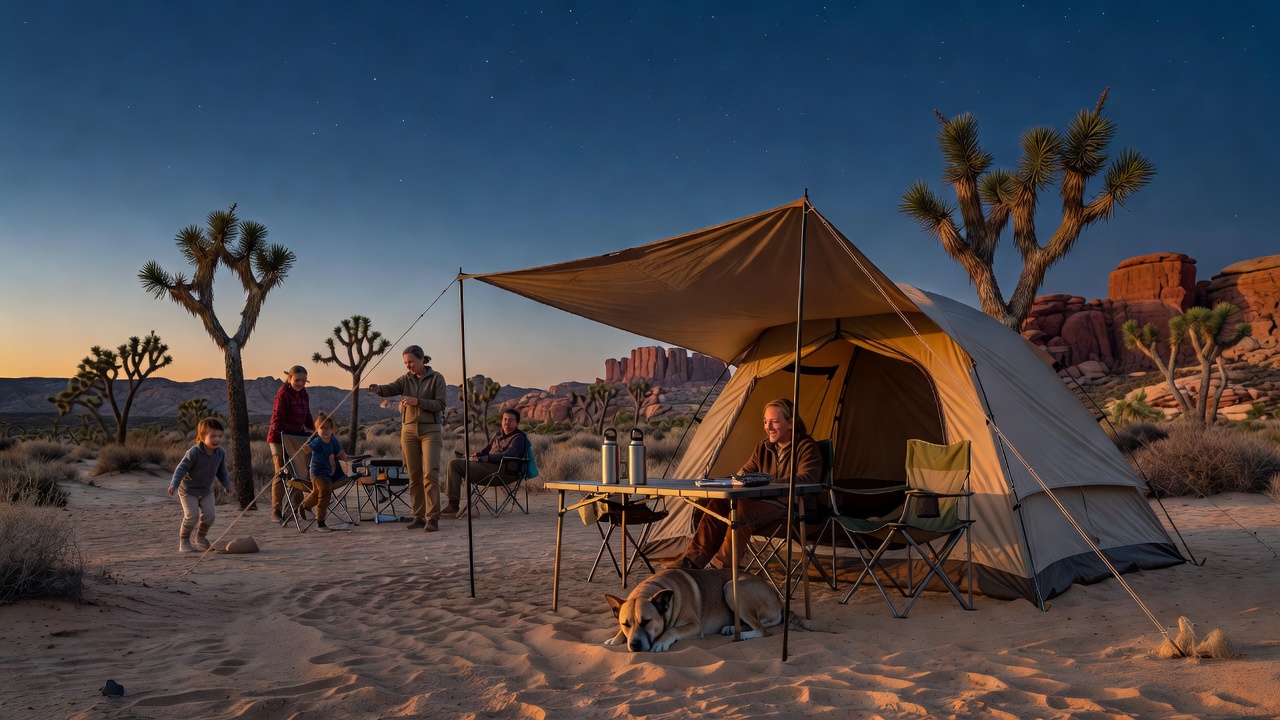
That means shade, water, and sun protection outrank almost everything else on the packing list. A fancy camp kitchen is nice; a UPF 50+ shade shelter is survival gear.
Timing tip: In the desert, the schedule runs on heat, not daylight. Plan activities for sunrise-10am and 4pm-sunset, and use midday for shade, food, and naps. Most heat-related incidents happen between 11am-3pm when people ignore this.
Sun Protection: Hats, Shade, and Coverage
Start with a real sun hat
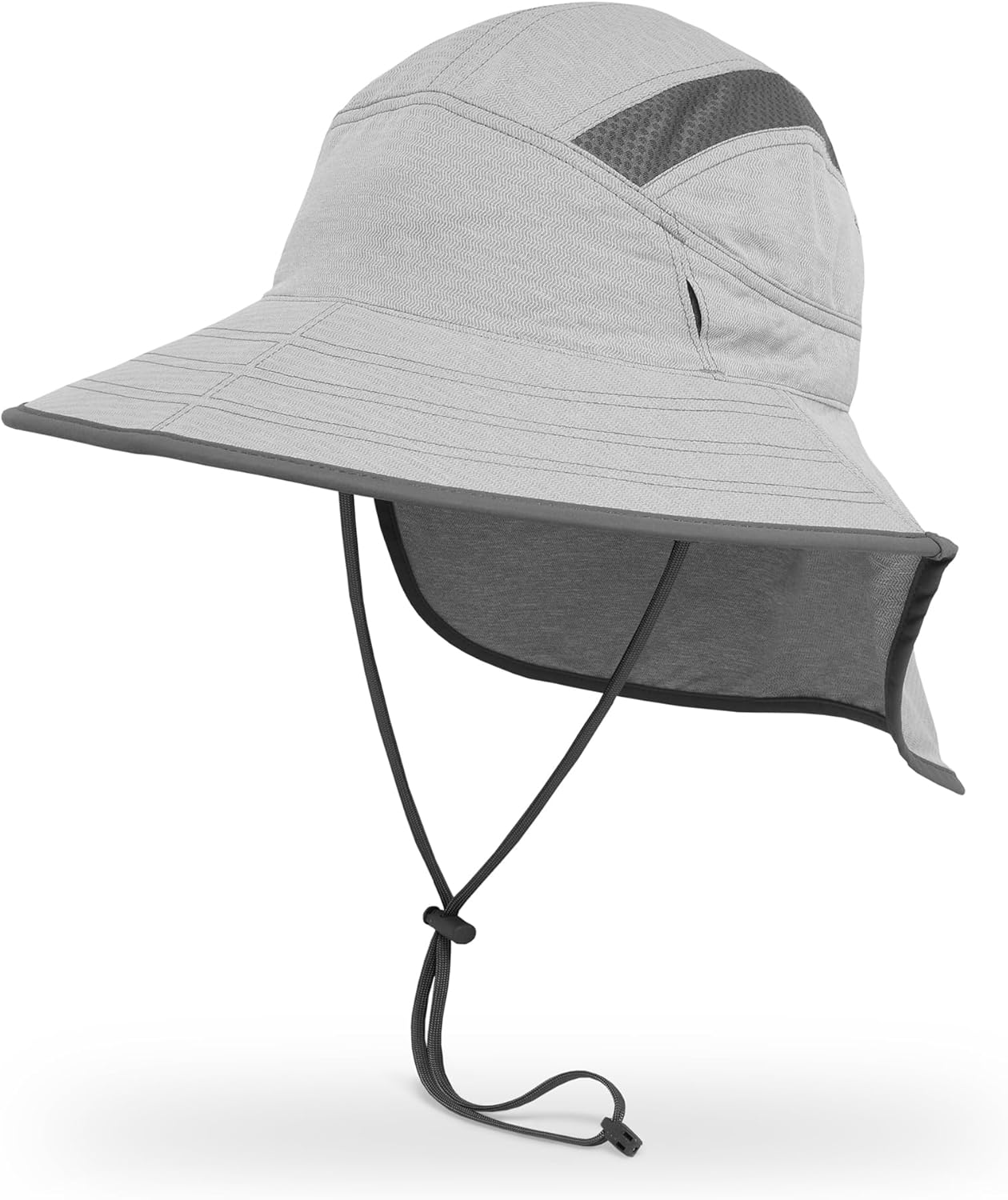
The single most useful piece of desert clothing is a wide-brim hat with neck coverage. My favorite is the Sunday Afternoons Ultra Adventure Hat ($135.01) — it's UPF 50+, has a full neck cape that keeps the sun off your ears and neck, and it's survived years of abuse. The packable brim stays in shape, and the chin cord means it won't fly off in desert wind gusts.
On a budget, the Connectyle UPF 50+ Bucket Hat ($16.99) covers the same critical job — wide brim, UPF 50+ fabric, cheap enough to buy one for every family member and not worry about losing it. For kids, this is the hat to grab: they will lose or destroy hats, so spend $17, not $135.
Pair the hat with long-sleeve UPF shirts, sunglasses, and SPF 50 sunscreen on every exposed patch of skin — including the backs of hands and tops of feet, which people forget constantly.
Coverage only counts if the sunscreen actually goes on, and a desert day is 80-minute reapplication territory: you're sweating constantly, and "water resistant" means 80 minutes, not all afternoon. The Sun Bum Original SPF 50 Lotion ($14.99, 4.7★ from 45,000+ reviews) is the bottle that stays in the day pack — broad-spectrum UVA/UVB, reef-friendly with no oxybenzone or octinoxate, and it rubs in like a lotion instead of a chalky film, so it doesn't sting when sweat runs it into your eyes on a climb. For the shared family bottle in the camp bin, the Banana Boat Sport SPF 50 ($8.95, 4.6★ from 19,000+ reviews) is the 8 fl oz workhorse: same 80-minute sweat and water resistance, big enough for a whole weekend, cheap enough that restocking every season is painless. Whichever you bring, keep it in the door pocket rather than the bottom of the gear bin — dry desert UV does its damage before anyone remembers they packed it.
Long sleeves and sunglasses, not just a hat
A brim handles the top half of you; the rest is fabric and glass. For the shirt, the Baleaf UPF 50 Sun Hoodie with Face Mask ($26.99, 4.5★ from 60,000+ reviews) is the desert hiking layer I reach for: a lightweight long-sleeve hoodie with an integrated face panel that covers ears, neck, and the back of the head — exactly where a hat brim alone leaves a gap — and it packs smaller than a cotton tee. For kids, the Coolibar Kids' Long Sleeve Sun Shirt ($32.00, 4.5★) does the same job in a fabric that survives sunscreen, sand, and a week of camp laundry.
Sunglasses matter more out here than anywhere else: dry air, altitude, and pale ground glare all stack up, and squinting for six hours is its own kind of fatigue. The J+S Ultra Sleek Polarized Aviators ($24.99, 4.6★ from 40,000+ reviews) are polarized, light on the nose, and cheap enough to live in the glovebox as a spare pair. For smaller faces, the Babiators Polarized Kid Sunglasses ($19.99, 4.6★) are built to survive being dropped, sat on, and buried in a sandbox of a campsite.
Bring your own shade
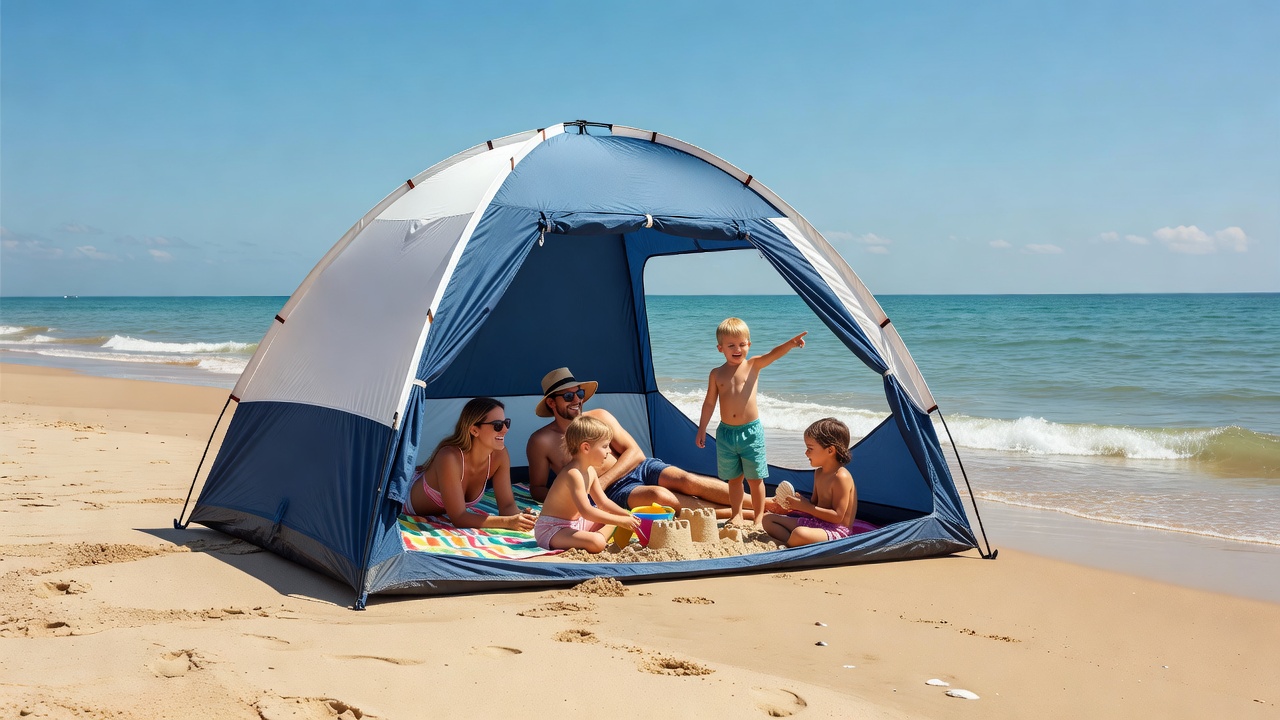
Desert campsites rarely have trees. A dedicated shade structure is not a luxury — it's the difference between a midday camp that's unusable and one that's the most comfortable part of the day. The GORICH Beach Tent Sun Shelter ($49.99) is my budget pick: UPF 50+ fabric, sets up in minutes, and it doubles as a beach shelter and a cooking-away-from-the-sun spot. Set it up over your camp table and you've created a living room in the middle of nowhere.
For full shade coverage over a larger group, orient any tarp or shelter to block the afternoon sun (west side), and leave the east side open for morning light.
Hydration: The #1 Desert Priority
Rule of thumb for desert camping: 1 gallon (4 liters) of water per person per day — and that's before you factor in cooking, washing, or a dog. If you're hiking, add another liter per 2 hours of activity.
Big water bottles that stay cold
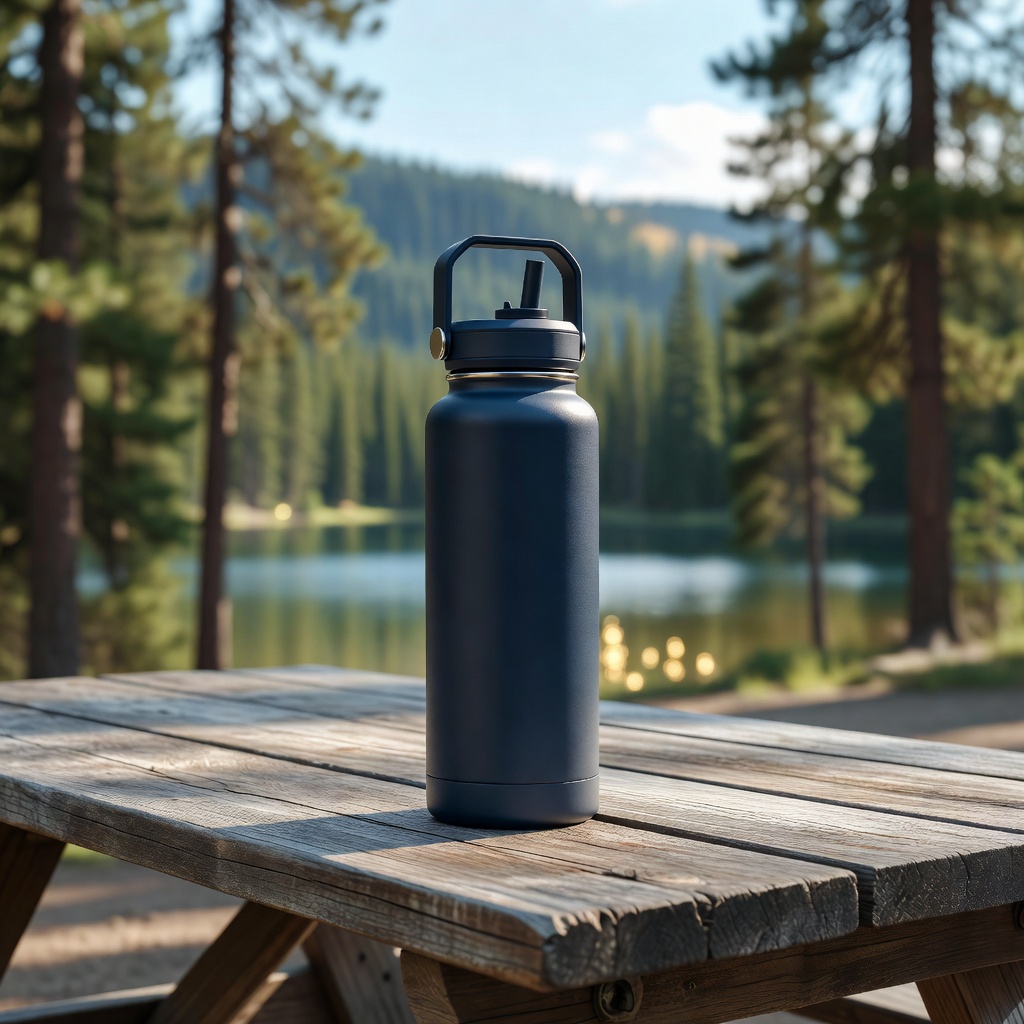
In 95°F dry heat, a bottle that sweats condensation is a bottle losing its cold fast. Insulated stainless steel is the way to go:
- The RAYMYLO 64 oz Insulated Water Bottle ($19.19) is the workhorse — 64 ounces (half a day's water for one person), triple-wall vacuum insulation keeps water cold for up to 48 hours, and the wide mouth takes ice cubes easily. It's the closest thing to a personal water cooler.
- The CIVAGO 32 oz Insulated Water Bottle ($19.99) is the everyday sipper — the straw lid means you can drink one-handed while driving or hiking, and the three-lid system covers straw, chug, and standard mouth openings.
- The HydroJug Sport 32 oz ($34.99) is the insulated sports-bottle option with a comfortable handle for carrying around camp all day.
Desert hydration trick: Freeze two bottles half-full the night before, top them off with cold water in the morning, and you get ice-cold water for the entire afternoon — no cooler required for the day's drinking supply.
Hands-free hydration for the hiking hours
Bottles are right for camp, but on the trail you want both hands free and a sip every few minutes rather than a stop-and-unscrew every mile — which is how the extra liter per 2 hours of hiking actually gets drunk. If you already carry a day pack, the CamelBak Crux 3L Reservoir ($34.95, 4.7★ from 4,600+ reviews) drops into most hydration sleeves and holds roughly a full day of hiking water for one adult, with the bite valve clipped to a shoulder strap so you drink without breaking stride. If you would rather buy one piece instead of two, the INOXTO Hydration Vest ($23.99, 4.4★) arrives as pack plus 1.5L bladder, with an insulated sleeve that keeps the water cooler in 95°F heat and enough pocket space for a phone, keys, and a snack — the all-in-one version for a shorter hike, or for a kid old enough to carry their own.
Electrolytes, not just water
Pure water isn't enough when you're sweating hard. Add electrolyte powder or tablets to at least one bottle a day — salt and potassium loss causes the headaches, cramps, and fatigue people misdiagnose as "just heat." If you're hiking, our hiking hydration guide has the full breakdown of filters and bottles.
Shelter: Tents That Handle Desert Nights
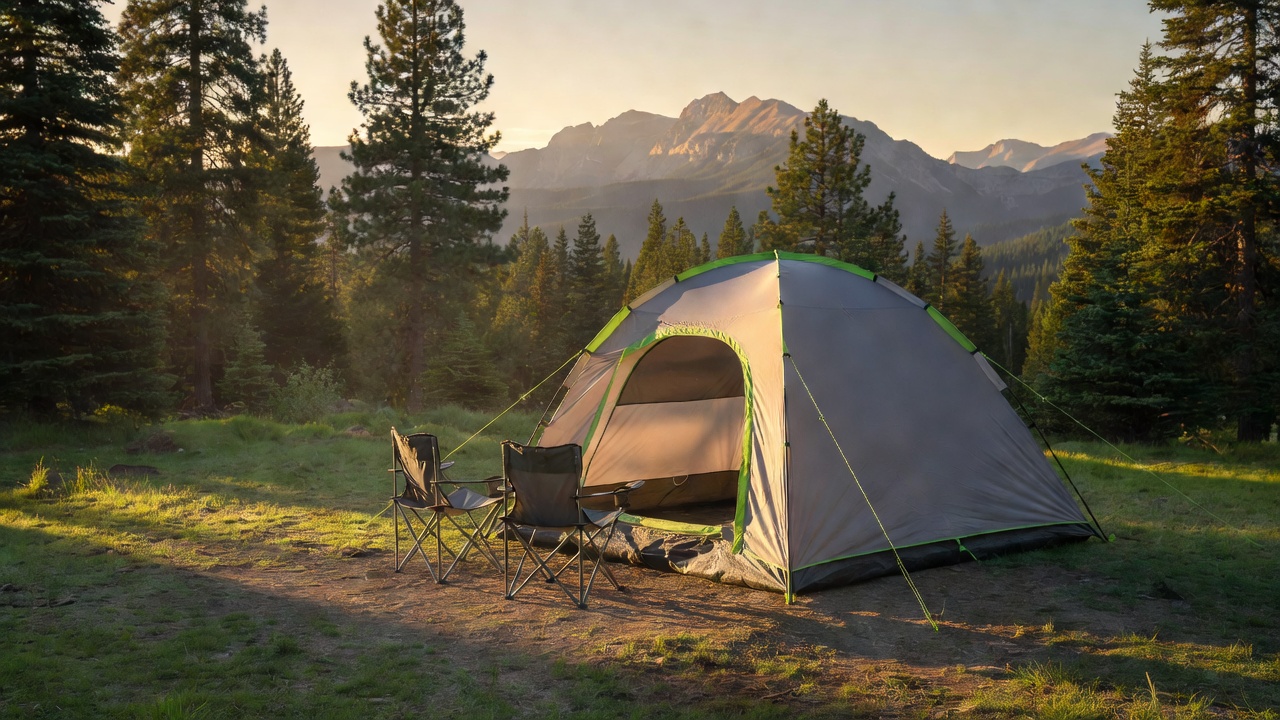
Desert nights are the best part — clear skies, 50-60°F, perfect sleeping temperatures. But the day-to-night swing (often 40-50°F) means your tent needs ventilation and the ability to block early-morning sun.
The CORE 6-Person Instant Cabin Tent ($169.99) is my family pick for desert trips: the instant-cabin frame means setup in under a minute (before the heat builds), and the large mesh panels give serious airflow on warm nights. The room divider splits the space so kids can go to bed while adults stay up stargazing.
Two desert-specific tent notes:
- Pitch in the shade of your shelter or vehicle — the morning sun turns any tent into an oven by 8am. A tent in shade stays 10-15°F cooler.
- Use a footprint or tarp — desert ground is full of sharp rocks, dried vegetation, and the occasional cactus spine. A $10 tarp under your tent floor saves you from waking up with a hole in the floor and sand in your sleeping bag.
- Stake everything properly — desert wind gusts are sudden and strong. Use every stake loop and guy line, and add a rock over each stake if the ground is too hard.
Cooking in the Desert
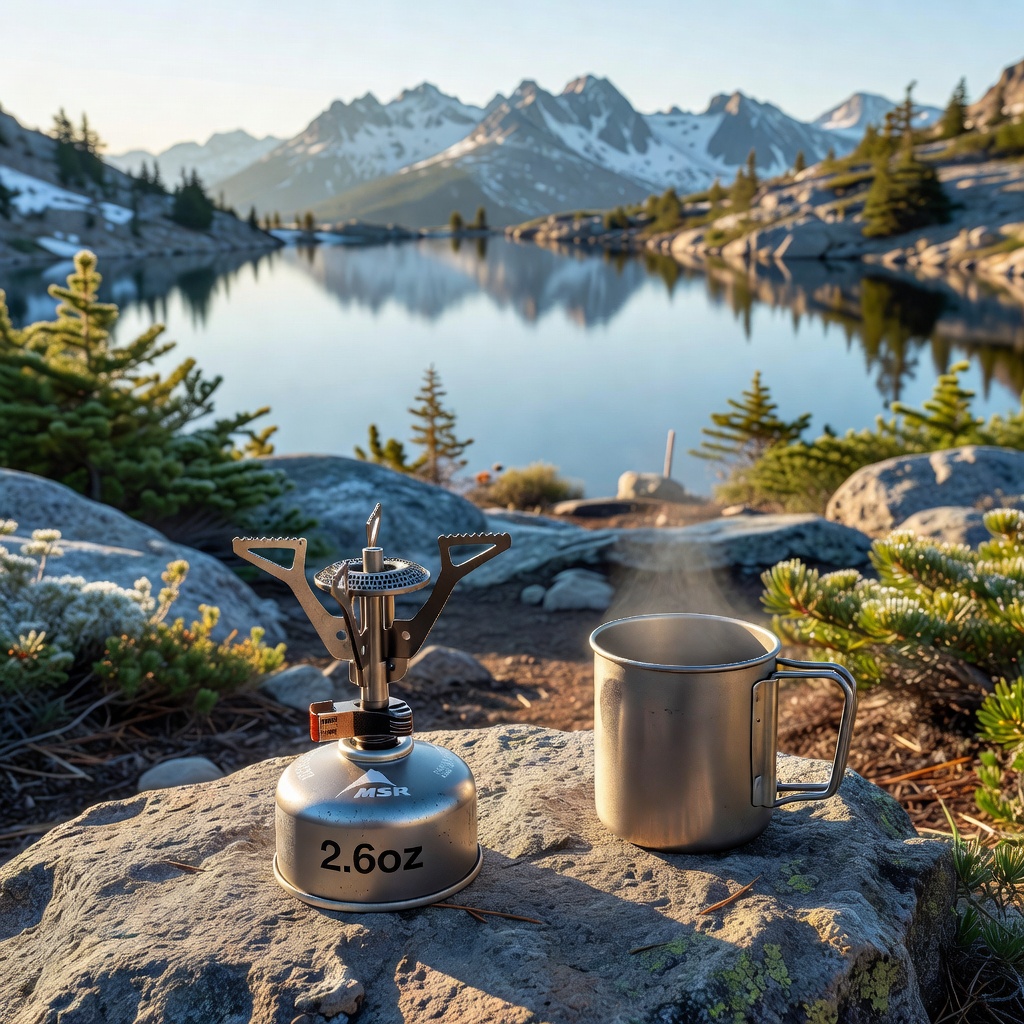
Desert cooking is simple and satisfying: fewer bugs than anywhere, long dry firewood (where fires are allowed), and meals taste better under a sky full of stars.
The MSR PocketRocket 2 Ultralight Stove ($49.95) is the perfect desert stove — it boils a liter of water in about 3.5 minutes, packs to pocket size, and works flawlessly in dry conditions. For breakfast coffee, lunch soups, and dinner freeze-dried meals, it's all you need. (Cold-weather stove performance doesn't matter much in the desert, so a light canister stove wins here.)
Cold drinks and food storage come down to one piece of gear: the Coleman 316 Series Wheeled Cooler 62qt ($84.99). In dry desert air, ice lasts longer than you'd expect (less humidity transfer), and this cooler's wheels are a lifesaver — you don't want to carry a loaded 62-quart cooler across a sandy campsite. The wheels handle gravel and packed sand fine; drag it, don't carry it.
Desert meal tip: Cook big in the morning, eat leftovers cold at midday. Nobody wants to fire up a stove at 2pm in the heat — a pre-made sandwich and cold pasta salad hit harder than hot food ever could.
Lighting: Nights Are the Best Part
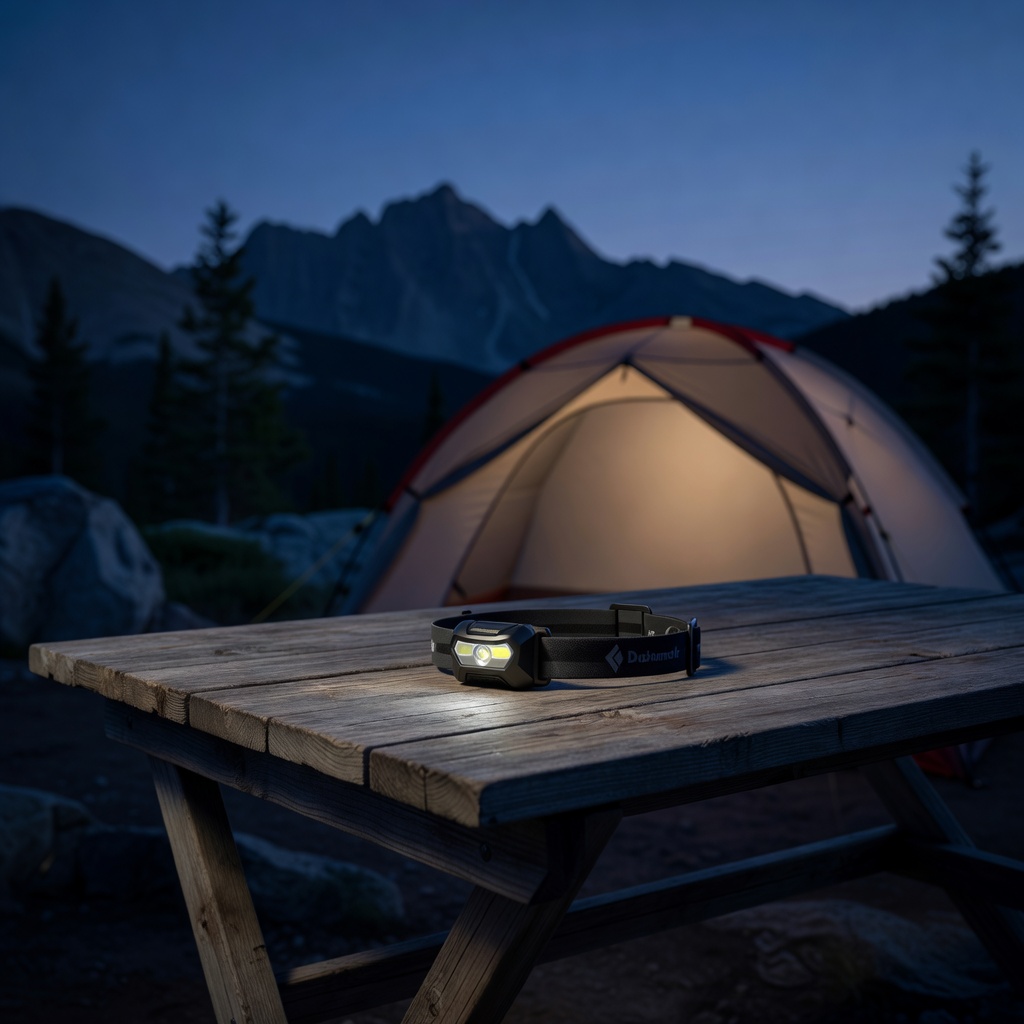
With zero light pollution and no tree canopy, desert nights are made for stargazing. But the darkness is absolute — no moon means you can't see your hand in front of your face. Reliable lighting isn't optional.
The Black Diamond Spot 400 Headlamp ($39.95) is the desert essential: 400 lumens, waterproof, and dual-fuel (rechargeable or AAA) so a spare battery swap keeps you lit for a week. The red-light mode is a stargazer's best friend — red light preserves your night vision, so you can walk to the bathroom and come back able to see the Milky Way again.
Around camp, the Black Diamond Moji Lantern ($24.95) throws soft, dimmable light for the table or tent — 200 lumens is plenty for a 4-person dinner, and the dimmer keeps it from blasting away the night sky. Full desert lighting setup ideas are in our camp lighting guide.
Footwear: Boots for Hot Ground
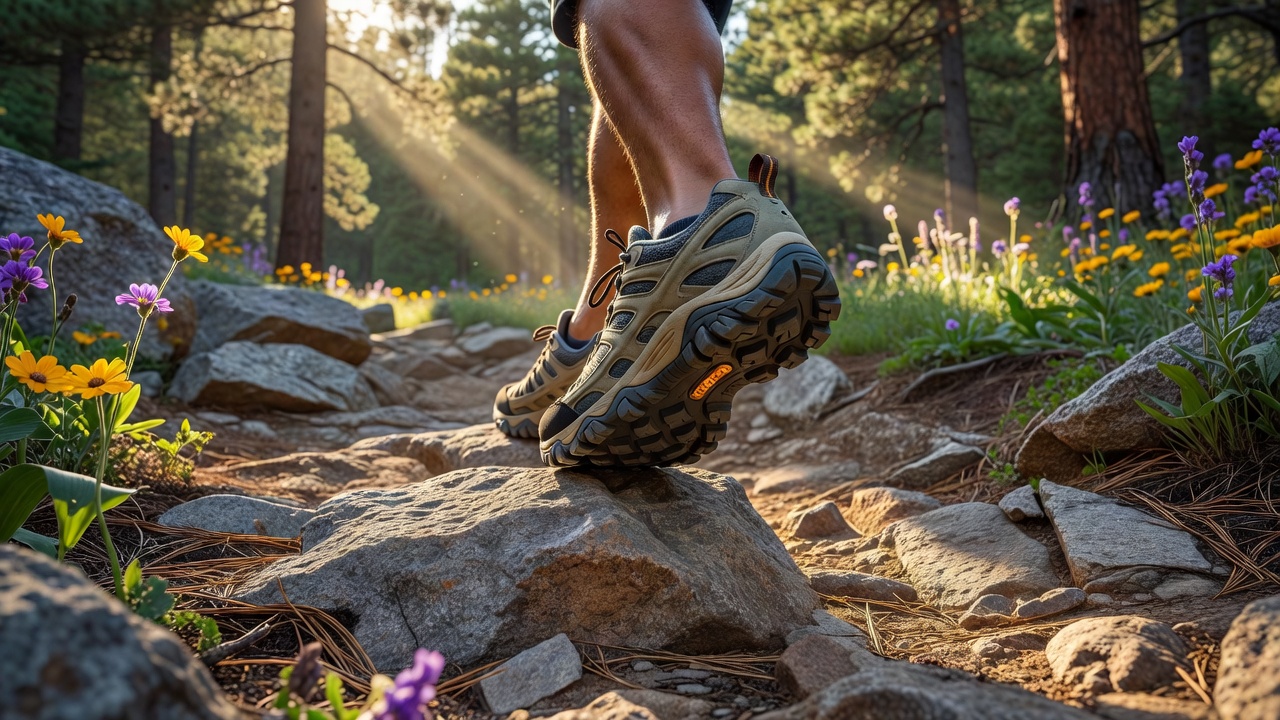
Desert hiking means two things: hot ground and loose rock. Closed-toe shoes with real grip are mandatory — sandals on desert trails are an invitation to blisters, cactus spines, and burned feet.
The Merrell Moab 3 Waterproof Boot ($89.99) is the desert trail all-rounder: grippy Vibram sole for slickrock and scree, cushioned for long approaches, and tough enough for cactus country. If you prefer a lower-profile shoe, the Merrell Moab 3 Waterproof Shoe ($129.95) gives you the same platform in a mid-height cut.
Desert boot tip: Gaiters (or even just high socks pulled over boot tops) keep sand and gravel out of your boots. On a windy day in soft sand, you'll be grateful every single step. And bring a second pair of camp shoes — after a long hike, taking boots off and switching to open sandals is one of camping's greatest pleasures. Our hiking footwear guide has the full comparison.
Camping With Dogs in the Desert
Desert trips are amazing for dogs — endless space, interesting smells, no ticks — but the heat is harder on them than on you. Dogs can't sweat; they cool off by panting, which is brutally inefficient in dry heat.
Three desert dog rules:
- Water at all times — the Cibaabo Dog Water Bottle ($14.98) is the perfect trail companion: one-handed water dispensing, a built-in food container, and a filter. Offer water every 20-30 minutes on hikes, even if the dog doesn't ask.
- Paws burn fast — the 5-second test: if you can't hold the back of your hand on the ground for 5 seconds, it's too hot for bare dog paws. Hike in the morning, and keep midday miles off pavement and dark rock.
- Don't let them roam far in the open desert — a dog that bolts after a jackrabbit in 10,000 acres of identical-looking terrain can be gone for hours. The Oitickly Smart Dog Training Collar ($39.99) with its 4,500-foot range and voice command is the best desert safety tool I've found — you can correct and recall from a distance you'd never reach on foot.
Our camping with dogs guide covers the full dog-camping setup, and the dog summer hiking safety guide goes deep on paw protection.
Power: Solar for Off-Grid Days
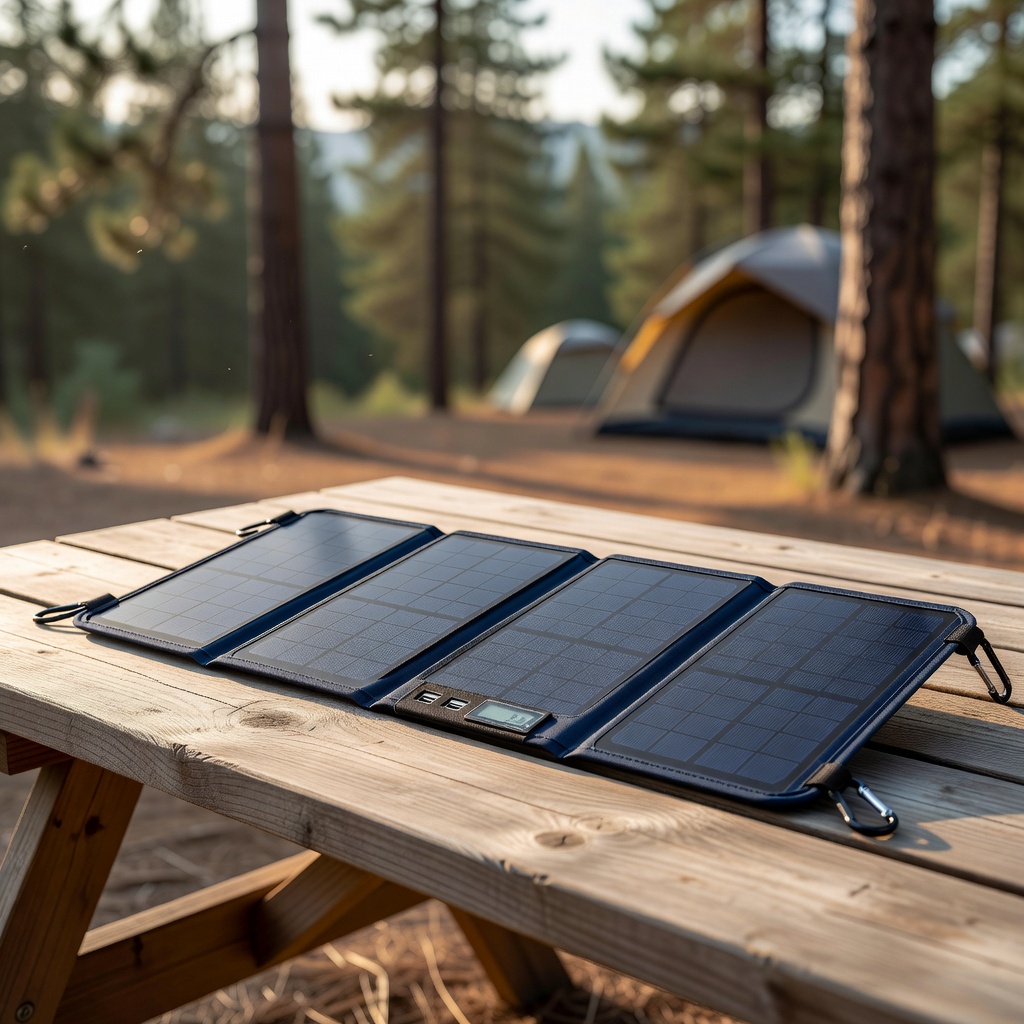
If you're camping for more than a weekend (or the kids are attached to tablets on the drive), the desert is the best solar environment on earth — 300+ days of sun and zero tree cover. The BigBlue 28W Solar Panel Charger ($59.97) folds to paperback size, charges phones and power banks through USB-A/USB-C, and the digital ammeter tells you exactly how much sun you're catching. Set it on the roof or hood of the car in the morning, and by evening your phone, camera, and headlamps are topped up. Our portable power station guide covers the bigger battery-pack setups, and our camping solar guide walks through the real-world wattage math for backpackers, car campers, and RVs.
The Desert Camping Gear Checklist
Here's the complete checklist — print it, pack it, don't skip the "small" items:
- Sun hat (UPF 50+, wide brim) — one per person, Sunday Afternoons or budget bucket hat
- Sunscreen SPF 50 — reapply every 2 hours, more if you're sweating
- Shade shelter — GORICH UPF 50+ shelter, set up first at camp
- Water: 1 gallon/person/day — RAYMYLO 64oz + CIVAGO 32oz
- Electrolytes — powder or tablets, one serving per day minimum
- Insulated cooler — Coleman 316 wheeled 62qt
- Ventilated tent — CORE 6P instant cabin + tarp footprint
- Headlamp with red mode — Black Diamond Spot 400
- Lantern — Black Diamond Moji
- Grippy hiking boots — Merrell Moab 3
- Stove + fuel — MSR PocketRocket 2
- Camp chairs with shade — the Coleman Cooler Quad Chair ($54.99) holds drinks cold while you sit; for kids, the Kelsyus Youth Canopy Chair ($37.99) has a built-in adjustable canopy so they're shaded while they eat
- Dog kit — collapsible water bottle, long-range training collar
- Solar charger — BigBlue 28W
- First aid + extra water in the car — a spare gallon per vehicle, always
On item 2: the two sunscreens that actually earn space in the desert kit are the Sun Bum Original SPF 50 ($14.99) for faces, ears, and the backs of hands, and the Banana Boat Sport SPF 50 ($8.95 for 8 fl oz) as the bottle everyone shares. Both are broad-spectrum SPF 50 with 80-minute water and sweat resistance — which in 100°F dry heat means reapplying closer to every hour, not every two.
Common Desert Camping Mistakes (Learn From Mine)
I've made (or seen) every one of these — learn from the failures:
Underestimating water. People pack for "normal" camping and run out by day 2. In the desert, if you're rationing water by day 2 of a 3-day trip, you've already lost. Pack 1 gallon per person per day, plus a spare gallon in the car that nobody touches.
Skipping the shade structure. "It's only 85°F, we'll be fine" — until 2pm rolls around and the tent is an oven and the table is unbearable. The $50 shade shelter turns midday into the best part of the day. Never skip it.
Hiking at noon. The desert sun at midday is not a training opportunity. Start before sunrise for anything over 2 miles, and be back at camp by 10-11am. Afternoon miles happen after 4pm — and bring that headlamp in case the trail takes longer than planned.
Forgetting the dog's paws. Hot ground burns paw pads faster than you'd believe. Morning walks, midday shade, and the back-of-hand test before every trailhead. A dog with burned pads is a miserable dog (and a miserable trip).
Not staking the tent. Desert gusts arrive with zero warning. A tent that's "fine without stakes" in the forest will become a tumbleweed in the desert. Stake every loop, guy out the rainfly, and put a rock on each stake.
Desert Camping Season: Why October Is the Real Opening Day
Ask anyone who camps the Southwest and they will tell you the same thing: the desert camping season runs October through April, and summer is the off-season nobody wants. That is why desert camping in winter is not a compromise — it is the point. The window from fall camping into November and December brings 70–85°F days, 40–50°F nights, no bugs, and long dark skies that make stargazing the main event.
That flips the normal camping calendar. In the mountains you chase July; in the desert you wait for the heat to break. So when you check desert camping weather before a trip, you are not looking for a warm weekend — you are looking for a cool one. A 95°F forecast in October is a warning, not a bonus.
Joshua Tree campgrounds are busiest from October to May, which surprises people who assume peak season is summer. If you are planning a trip and wondering about joshua tree camping best time, the honest answer is: the shoulder weeks on either end of that window, when the reservation crunch eases and the nights are still comfortable. November and January are the sweet spots for joshua tree camping in november or a joshua tree camping in january trip — the annual campfire ban lifts on October 1, so a November fire ring is legal again.
For anyone weighing camping in arizona in october or looking for the best camping in arizona in october, the desert sections of the state (around Phoenix, Tucson, and the Kofa and Sonoran desert country) are the ones to target, not the high pine country that is already cooling into frost. Our Arizona camping guide and October camping guide both map the elevation-versus-temperature trade-off.
By July, desert camping in summer is a different sport entirely: it is possible at elevation (Big Bend's Chisos Basin, Nevada's high ranges), but low desert in July is a survival question, not a comfort question — 1 gallon of water per person per day, no afternoon hiking, and shade you bring yourself. If summer is your only window, read our hot weather camping guide before you book anything.
Desert Camping by State: Where Families Actually Go
If you want desert camping Arizona (plenty of people type desert camping az instead), you are spoiled for choice: Saguaro and Organ Pipe in the south, the Sonoran desert around Tucson, and the cooler Mogollon Rim country a couple of hours north when you want pines instead of cactus. Our shortlist of best desert camping arizona picks is really an elevation decision — you can camp at 2,000 feet and sweat or at 7,000 feet and need a jacket on the same weekend. For a first desert trip with kids, the southern desert in late fall is the gentle introduction. Full route notes are in our Arizona guide.
If you want best desert camping California, you have three very different deserts: Anza-Borrego near San Diego, the Mojave high desert, and Death Valley. For camping in the desert California style — drive-up sites, shade structures, flush toilets nearby — the state park campgrounds beat the national park ones for family comfort, and they open their reservation season on October 1. As a rule, california desert camping sites inside the state park system are the ones with shade ramadas and real bathrooms.
If your search is desert camping Southern California, that usually means Anza-Borrego, Ocotillo Wells, or the Mojave fringe within a few hours of Los Angeles. The best desert camping Southern California trips in fall are the ones that trade distance for quiet: the closer you stay to the metro edge, the more you will share the site. For desert camping san diego families, Anza-Borrego is the default answer and the drive is the price of admission.
If you want best desert camping Utah, the red-rock country around Moab and the San Rafael Swell is where to start. West desert camping Utah (the Great Basin side) is emptier and more rugged, and desert camping near salt lake city puts you an hour or two from both. Utah's BLM land is the single easiest place on this list to find a free legal campsite.
Desert camping Nevada means Great Basin country, the Nevada Test Site edges, and the desert ranges between Reno and Vegas — wide open, lightly used, and brutally exposed to wind. Desert camping Texas means Big Bend and the Chihuahuan desert, where the park's desert floor and its mountain basin are two different climates. Desert camping New Mexico means White Sands, the Organ Mountains, and the Chihuahuan desert around Las Cruces.
Whichever you pick, check the state guide first: California, Utah, New Mexico, Texas.
Joshua Tree Camping: Sites, Spots, Fees, and the Reservation Gap
Joshua Tree is the desert camping page most people are really looking for, so here is the short version from the park's own campground listings.
There are about 500 campsites. The majority take reservations on recreation.gov, bookable the same day or up to six months ahead. Reservation-only campgrounds include Indian Cove, Black Rock, Jumbo Rocks, Ryan, Cottonwood, and the three group areas. Three campgrounds are first-come, first-served: Hidden Valley, White Tank, and Belle. Those run $25 a night, you must set up to claim the site and then pay at an entrance station within one hour, and "first-come" is doing a lot of work in that sentence — they fill nearly every weekend from September to May.
Fees elsewhere run $30–35 a night depending on the loop. Only Black Rock and Cottonwood have water. Everything else is pit toilets and no water, which is the single most useful thing to know before you load the car. Cell service is very limited. Sleeping in your vehicle outside a campground is illegal, so a late arrival with no reservation is a real problem — plan a backup in the gateway towns.
So joshua tree camping reservations are not optional advice in season; they are the plan. joshua tree camping with dogs is allowed, but pets stay on leash, cannot be left unattended, and cannot go on trails — our dog camping guide covers the workaround routine.
On joshua tree camping sites and joshua tree camping spots: the high-elevation loops (Black Rock at ~4,000 feet, Ryan at ~4,000) are meaningfully cooler than the valley floor, which matters for joshua tree camping weather and for anyone trying to sleep past sunrise. A joshua tree camping map is worth printing before you leave the pavement, because the campground roads are one-way loops and easy to misread at dusk. If you are planning joshua tree camping october or a November weekend, book the moment the six-month window opens. And treat the park's own listing as the joshua tree camping ground record — it carries each loop's site count, elevation, and water status.
For the full reservation-window, closure and fire-ban picture, see our October guide.
Mojave Desert Camping: Three Year-Round Campgrounds and Free Dispersed Sites
Mojave National Preserve is where desert camping gets cheap and quiet. There are three developed campgrounds — Mid Hills, Hole-in-the-Wall, and Black Canyon — and all three are open year-round, which makes this the answer for anyone who wants winter camping without snow. They handle passenger cars and most RVs, and they are the right call for a first trip.
The rest of the preserve is the other half of the story. Treat every mojave desert campsite as borrowed ground: mojave desert camping spots that are not in a developed loop are roadside and undeveloped sites, and camping is allowed only on previously used sites outside posted closure areas. That is the whole rule in one line: no new sites, no undisturbed ground, no firewood collecting, and pack out everything including toilet paper. Campsites must be more than 200 yards from any natural or constructed water source, and groups of eight or more vehicles need a permit.
Two practical warnings: most undeveloped roads need high clearance and often four-wheel drive, and the preserve has essentially no natural water — carry everything you will drink.
So yes, mojave desert blm camping and mojave desert dispersed camping are both real options, and mojave desert free camping is genuinely free because there are no fees or services to speak of. If you would rather not gamble, mojave desert camping reservations are the wrong search — the developed loops at Mojave National Preserve are first-come, and the reservation page you want belongs to the California state parks instead. For budgets and route planning, mojave desert camping reddit threads are unusually useful because people post precise GPS and road-condition notes; treat them as leads and check them against the preserve's own camping page.
One label worth decoding: "mojave desert preserve camping" and "mojave national preserve camping" both point at the same place. Mojave desert rv camping is fine in the three developed loops, but not on the undeveloped routes. And mojave desert lava tube camping refers to the area near the Cima volcanic field — the lava tube itself is a day-use feature, so plan to camp at a designated site nearby rather than beside it.
Anza Borrego Camping: The October 1 Reservation Rule
Anza-Borrego Desert State Park just east of San Diego is the largest state park in California, and it runs on a calendar that tells you everything about desert seasons.
Reservations are available October 1 through April 30 and can be booked six months in advance through ReserveCalifornia. The rest of the year is the summer closure window, when the park's desert campsites and services shut down and the visitor center drops to weekend hours. In other words: if you are searching anza borrego camping reservations in September, the honest answer is to wait a few days or book for October onward the moment the window opens.
Everyday logistics are simple and enforced. Check-in is 2 p.m. Campsites hold up to eight people and two vehicles, extra vehicles pay a fee, quiet hours run 10 p.m. to 6 a.m., and generators are only allowed in daylight hours. Fires must be in a metal container or camp stove — no ground fires. That last rule is the one people break, and it is the one the rangers care about. The full regulation list is on the anza borrego camping map page and the park's own rules page, which is worth reading once as anza borrego camping rules.
On dogs: anza borrego camping dog friendly is a yes for campgrounds, designated park roads, and the visitor center trail, and a no for backcountry trails. For the anza borrego camping guide version of where to actually pitch, the developed campgrounds along Borrego Palm Canyon are the family default, and anza borrego camping sites further out require self-rescue capability — the park says most dirt roads need AWD or 4x4.
Two things people search for by name: anza borrego camping hot springs and the anza borrego camping agua caliente area both refer to the same warm-spring country near the park's south end, and both require a vehicle that can handle rough roads and a tolerance for mud. If you are looking for anza borrego camping cabins, the state park system rents cabins in a handful of parks but Anza-Borrego itself is overwhelmingly a tent-and-RV park — check the ReserveCalifornia listing for what is actually bookable in your dates.
For anza borrego camping spots that come with photographs, the park's own site posts anza borrego campsite photos and an availability view that refreshes every 15 minutes. Treat that listing as the anza borrego camping ground record — availability, fees, and closures all come from it. Check anza borrego camping weather before you go: the park runs to 125°F in summer and to freezing nights in winter, and anza borrego camping dispersed style travel out back means no services of any kind.
Desert Camping Near Me: How to Find a Legal Site
If your search is desert camping near me or camping in the desert near me, the useful skill is not a list of parks — it is knowing which land you are standing on.
Roughly: national park campgrounds are developed, fee-based, and often reservation-only. State park campgrounds are similar but often cheaper, with a seasonal reservation window. BLM land, which covers enormous stretches of the Southwest, is the category where dispersed camping is usually allowed unless an area is posted closed or carries specific restrictions. National forest land is similar. What you will not find is camping on private land, and that includes most of the open desert you can see from a highway.
So can you camp in the desert anywhere? No — you camp on public land that permits it, on ground that has already been used as a site, and away from water sources. That is the short rule. Our October camping guide covers how to check closures state by state.
A few things worth knowing about desert camping rules in general:
- Do not create a fire ring or a new site. Use what exists.
- Bring your own firewood; collecting it is usually prohibited on public land.
- Pack out toilet paper and trash, and bury human waste at least six inches deep where rules allow it.
- Keep at least 200 yards from any water source; they are rare and everything depends on them.
- Groups of eight or more vehicles often need a permit.
As for desert camping reservations, the pattern is: national and state parks in season — book early, often the same day is already too late. BLM and dispersed land — no reservations exist at all, first arrival wins, and the trade-off is no water, no toilets, and no one to call. A paper desert camping map beats a phone, because desert camping dispersed style routes commonly have no signal at all.
The honest version of desert camping safety is mostly preparation: full water supply for every person and pet, a real first aid kit such as our 3-person ultralight kit, a spare headlamp, and a plan you have told someone else. Cell coverage in Anza-Borrego is described by the park as extremely limited or non-existent — assume the same everywhere and carry the gear you would need to self-rescue.
Desert Camping Essentials: Decoding the Packing-List Wordings
Every desert packing list is the same list with different names, so here is the decoder table first. Find the wording you typed on the left; the right column is what to actually buy or pack.
| What you searched | What you actually need |
|---|---|
| desert camping essentials / camping in the desert essentials / desert camping list / desert camping gear list / desert camping packing list | Water (1 gal/person/day plus pet water), shade, sun coverage, insulation for a 40°F night |
| desert camping supplies / desert camping accessories / desert outdoor gear | Stakes that hold in sand, guy lines, a repair kit, a backup light source |
| desert camping clothes | Long sleeves and a wide-brim hat over cotton, a warm layer for the night, closed shoes |
| desert camping tent / best desert camping tent | A tent with real ventilation and a fly that can be left off — heat, not rain, is the enemy |
| desert shade tent / how to make shade in the desert | A pop-up canopy or tarp with poles; shade is a schedule too, not only an object |
| desert camping water bag / desert camping water / desert camping water bag | A large gravity carrier plus individual bottles you actually drink from |
| desert hiking gear / desert hiking gear list / desert hiking gear women | Light layers, gaiters, sun gloves, and shoes with a rock plate |
The shade section is where most first-timers under-buy. A wide-brim hat is sun coverage; it is not shade. Shade is a structure you can sit under for four hours in the middle of the day, because desert afternoons from 1 to 4 p.m. are for sitting. Our pick is a 10x10 pop-up canopy that one person can raise, which also covers the picnic table and the dog.
Water is the other half. Two things matter: total capacity and cold. A 5-gallon water carrier handles camp use, while a 64 oz insulated bottle is the one that gets carried on the hike. If you are filtering from a spring or a rare creek instead of carrying everything in, our water filtration and hydration guide covers the difference between filtering for taste and treating for safety.
Sleeping: a three-season bag rated to about 30°F is the desert standard, because desert nights drop hard after a 70°F day. If you are camping in the Mojave high country in winter, go warmer. For power, a portable power station replaces the campfire light you probably will not be allowed to have — see our solar guide for panel sizing.
One note on desert camping tent choice: ventilation is worth more than waterproofing out here. You want mesh, two doors, and a fly you can leave off on clear nights.
Desert Camping Food: What Works When It Is Hot and Dry
The first thing to know about desert camping meals is one rule: nothing that needs to stay cold for three days unless you brought a serious cooler, and nothing that takes an hour of stove time in the middle of the afternoon.
The practical pattern is a cold breakfast, a no-cook lunch, and a real cooked dinner after the sun drops. If you are hunting for desert camping food ideas, start there and skip the recipes that assume a refrigerator. For desert camping recipes, the ones that survive the drive are one-pot, low-water, and heavy on shelf-stable ingredients — beans, rice, tortillas, canned fish, and dried fruit. Our fall camping meals guide has a full set that works in shoulder-season desert weather.
A hard-sided 70-quart cooler is what makes cold food possible for a long weekend — ice retention, not volume, is the spec that matters. Keep it in the shade and open it as rarely as possible; in a desert, every open lid costs you a day of ice.
Hydration food counts too. Electrolytes are not a gimmick when you are drinking two gallons a day and sweating constantly — salty snacks, sports drink powder, and broth for dinner all replace what plain water does not. Our hydration guide explains the ratio.
Desert Camping Tips, Hacks, and Safety
The desert camping tips that actually change a trip are boring ones, and the same goes for the best camping in the desert tips you will read anywhere: start early, stop early, and treat the afternoon as indoor time.
- Hike at dawn. Be off exposed trails by 11 a.m. in shoulder season and by 9 a.m. in summer.
- Move camp shade, not camp. Chasing shade across a day beats sitting in one spot and cooking.
- Double your water estimate and then add pet water. The park guidance is 1 gallon per person per day for drinking alone.
- Check your shoes before you put them on. Scorpions and other desert residents like warm dark places.
- Know the fire rules before you light anything. Ground fires are broadly prohibited; a camp stove in a metal container is the norm.
- Take the sunset shift seriously. The temperature drops fast, and the second half of the trip is about warmth layers and lights.
- Print the map. Desert camping maps save you when desert camping dispersed routes have no signal.
A few desert camping hacks worth stealing: freeze water bottles to double as cooler ice; use a white tarp rather than a dark one for a shade structure; keep a spare headlamp in the car, not the tent; and put your cooler under the vehicle at night where the ground stays cooler.
For desert camping ideas with kids, the winners are the ones that use the desert's schedule: night hikes with real headlamps, stargazing, rockhounding early, and a solar shower at 4 p.m. instead of a mid-day bath. Our dog camping guide covers the pet side, and if you are bringing one, note that desert camping with dogs is genuinely fine as long as you protect paws from hot ground, carry a portable dog water bottle, cover pet sun exposure, and never leave an animal in a vehicle.
On desert camping dog friendly rules specifically: campgrounds are almost always fine, trails usually are not, and national parks are the strictest. Plan your trip around the campground and the road, not the hike.
The last safety item is the one people skip: an honest bail-out plan. What people call desert camping safety failures are almost never dramatic — they are a wrong turn, a dead phone, and less water than the walk back needed.
When is the best time to camp in the desert?
October through April. In the low desert, summer is the off-season and the park campgrounds often close or hit 110°F-plus. The shoulder weeks at each end of that window are the best value: comfortable nights, fewer people, and no reservation scramble.
Do you need a reservation for desert camping?
In national and state parks during season, usually yes — and often months ahead. On BLM and other public land, there are no reservations at all: dispersed camping is first-arrival-wins with no services. Check the specific park before assuming either.
What does desert camping cost?
Developed national park loops commonly run $25–35 a night, and state park campsites are usually a little less. Dispersed camping on BLM land is free. What you save in fees you pay back in water, fuel, and the fact that nobody is coming to help.
Can you camp in the desert in an RV?
Yes, in developed campgrounds — most truck-campers and trailers fit the loops that were built for them. Dispersed routes are a different story: soft sand and unmaintained roads stop a rig fast, and the national preserves explicitly warn that most undeveloped sites need high clearance.
How do you make shade in the desert when there are no trees?
Bring it. A pop-up canopy, a tarp with poles, or a sun sail staked out with lines and sand stakes. Natural shade is scarce and often off-limits, and the 1–4 p.m. block is exactly when you need four hours of it.
Are desert campgrounds open in winter?
Many are, and some are only worth visiting in winter. Mojave National Preserve's three developed campgrounds are open year-round, while California's Anza-Borrego runs its reservable season from October 1 through April 30. Elsewhere, check closures before you drive.
Is desert camping safe with kids?
Yes, with a schedule change. Hike at dawn, keep afternoons under shade, carry far more water than you think you need, and keep kids within sight of camp. The risks in the desert are exposure and distance, not wildlife.
What water capacity do I actually need for desert camping?
Plan on one gallon per person per day for drinking, plus cooking and cleaning, plus water for dogs. A family of four on a two-night trip is carrying 8–10 gallons before you count anything else — which is why a large carrier plus individual bottles beats a pile of small bottles.
Desert Camping FAQ
How much water do I need for desert camping?
Plan on 1 gallon (4 liters) per person per day before you count cooking, washing, or a dog, and add roughly a liter for every 2 hours of hiking. If you're rationing water by day two of a three-day trip, you packed too little. Keep one spare gallon in the car that nobody touches.
What time of day should I hike in the desert?
Run the day on heat, not daylight. Start before sunrise for anything over 2 miles and be back at camp by 10-11am; do afternoon miles after 4pm and carry a headlamp in case the trail runs long. Most heat-related incidents happen between 11am and 3pm, when people ignore exactly this rule.
Do I really need a shade shelter, or is a wide-brim hat enough?
A hat isn't enough on its own. A wide-brim with neck coverage — like the Sunday Afternoons Ultra Adventure — protects your head and neck, but a UPF 50+ shelter such as the GORICH beach tent (~$50) is what turns midday back into usable time instead of letting the tent become an oven.
How do I keep drinking water cold in desert heat?
Insulated stainless steel, not plastic. The RAYMYLO 64 oz Insulated Water Bottle ($19.19) uses triple-wall vacuum insulation to hold cold for up to 48 hours, and its wide mouth takes ice cubes easily. A bottle that sweats condensation in 95°F dry heat is a bottle losing its cold fast. Freeze two bottles half-full overnight and top them off with cold water in the morning.
How do I know when the ground is too hot for my dog's paws?
Use the back-of-hand test: if you can't hold the back of your hand on the ground for 5 seconds, it's too hot for bare dog paws. Hike in the morning, keep midday miles off pavement and dark rock, and offer water every 20-30 minutes even if the dog doesn't ask — dogs cool by panting, which is brutally inefficient in dry heat.
Do desert nights get cold?
Often, yes. Expect around 50°F nights even after 100°F days, and desert gusts arrive with no warning. Stake every loop, guy out the rainfly, and put a rock on each stake — a tent that's "fine unstaked" in the forest becomes a tumbleweed here.
For the state-level version of these same rules — booking windows, fees, and where dispersed camping is actually restricted — see our Camping in Arizona guide. West Texas has its own version of this, and the Texas camping guide covers Big Bend's fire ban, the Trans-Pecos, and the coastal end of the same state.
New Mexico is a good test case for all of the above — see Camping in New Mexico 2026 for its six-month state park window, the 14-day BLM dispersed limit, the day-of-only backcountry permit at Carlsbad, and the state trust land exception.
For the opposite of a desert trip, Alabama offers a humid coastal season in winter and an Appalachian ridge in autumn — see Camping in Alabama.
For a worked example of how a state system can invert every rule you know, Camping in Louisiana covers the 30-day dispersed limit and the no-campground national parks.
When is the best time to camp in the desert?
October through April. In the low desert, summer is the off-season and the park campgrounds often close or hit 110°F-plus. The shoulder weeks at each end of that window are the best value: comfortable nights, fewer people, and no reservation scramble.
Do you need a reservation for desert camping?
In national and state parks during season, usually yes — and often months ahead. On BLM and other public land, there are no reservations at all: dispersed camping is first-arrival-wins with no services. Check the specific park before assuming either.
What does desert camping cost?
Developed national park loops commonly run $25–35 a night, and state park campsites are usually a little less. Dispersed camping on BLM land is free. What you save in fees you pay back in water, fuel, and the fact that nobody is coming to help.
Can you camp in the desert in an RV?
Yes, in developed campgrounds — most truck-campers and trailers fit the loops that were built for them. Dispersed routes are a different story: soft sand and unmaintained roads stop a rig fast, and the national preserves explicitly warn that most undeveloped sites need high clearance.
How do you make shade in the desert when there are no trees?
Bring it. A pop-up canopy, a tarp with poles, or a sun sail staked out with lines and sand stakes. Natural shade is scarce and often off-limits, and the 1–4 p.m. block is exactly when you need four hours of it.
Are desert campgrounds open in winter?
Many are, and some are only worth visiting in winter. Mojave National Preserve's three developed campgrounds are open year-round, while California's Anza-Borrego runs its reservable season from October 1 through April 30. Elsewhere, check closures before you drive.
Is desert camping safe with kids?
Yes, with a schedule change. Hike at dawn, keep afternoons under shade, carry far more water than you think you need, and keep kids within sight of camp. The risks in the desert are exposure and distance, not wildlife.
What water capacity do I actually need for desert camping?
Plan on one gallon per person per day for drinking, plus cooking and cleaning, plus water for dogs. A family of four on a two-night trip is carrying 8–10 gallons before you count anything else — which is why a large carrier plus individual bottles beats a pile of small bottles.
The Arkansas camping guide walks through four booking systems that share no portal.
Final Thoughts
Desert camping rewards preparation like no other style of camping. Get the shade, water, and sun protection right, and you'll have some of the best nights of your life — warm days, perfect 50°F sleeping, and a sky so full of stars it looks fake. Get those basics wrong, and it's the fastest way to a miserable, dangerous trip.
Start with the essentials: sun hat, shade shelter, big insulated bottle, and a ventilated tent — then build out from there.
New to all this? Our first camping trip starter kit walks through the complete beginner setup, and the hot weather camping guide covers heat management in more depth. If you're heading somewhere sandy with kids, the sun protection guide is required reading. Happy trails — and drink your water. 🏜️
<!-- AFFILIATE_DISCLOSURE -->