Camping in Wisconsin 2026: What's Still Open in October, the $15 Nonresident Rule, and How the State's Booking System Works
Camping in Wisconsin 2026: which campgrounds close in October, the 11-month booking window, the $15 nonresident surcharge, and Devil's Lake's 423 sites.
Wisconsin has a reputation problem that works in your favor: people think of it as a summer lake state, so the moment the water gets cold the campgrounds empty out — exactly while the state is putting on the best show it has. Fall color in Wisconsin runs from late September in the north to the fourth week of October along Lake Michigan, and the state park system keeps roughly 6,000 campsites, most of them inside a two-hour drive of a major metro.
What trips people up is not where to camp. It's that Wisconsin has one booking system with rules most national guides get wrong, a $15-per-night surcharge for out-of-state plates, and a hard October closure wave that takes a chunk of the best loops offline for six months. This guide is the version with the actual numbers, the actual dates, and the actual state sources behind them.
Quick Answer: Can You Still Camp in Wisconsin in October?
Yes — but you have to know which loops stay open, and you should book earlier than you think.
- The single best October answer is Quartzite campground at Devil's Lake State Park. It is open year-round and holds 75 electric sites out of 100. The park's other two campgrounds, Northern Lights and Ice Age, typically close in October and reopen around April — so the park never fully closes, but the wooded electric sites do.
- Reservations open 11 months out at 9 a.m. Central Time, and you can also book the same day you arrive. There is no lottery and no separate portal — everything runs through one system at
wisconsin.goingtocamp.comor 1-888-947-2757. - Out-of-state campers pay $15 per night on top of the posted site fee. That is a flat surcharge, all season, every property in the state system.
- Expect a $9.30 reservation fee and a $10 cancellation fee per site. They are not refundable, and they are not built into the nightly rate.
- Check-in is 3 p.m. with no early check-in; checkout is 1 p.m. You drive straight to your reserved site — the system checks you in automatically after 3 p.m.
- Two of the three October windows are genuinely great: peak color in the north the first week of October, and Baraboo/Door County the third week. Bring a 20°F bag regardless — Wisconsin nights fall into the 30s hard by early October.
If you are only reading one line: book now for the third week of October, pick a year-round loop, and budget $15 a night extra if your plates are not Wisconsin.
What Just Changed for the 2026 Season
Three things are worth knowing before you open the booking site, because they change what a weekend costs and what is even available.
Vehicle admission is now a separate, non-trivial line item. Every motor vehicle entering a state park, forest or recreation area needs an admission pass, and the rates in force since August 19, 2025 are steeper than people remember. A 12-month pass is $28 for Wisconsin plates and $50 for out-of-state plates. A daily pass is $13 in-state and $16 out-of-state. Wisconsin residents 65 and older get a 12-month pass for $13 and a daily pass for $3. A reduced-rate 12-month pass ($15.50 in-state, $32.50 out-of-state) covers an additional vehicle registered to the same household, but it has to be bought at the same time as the full-price pass. The 12-month pass runs 12 months from the date of purchase, not the calendar year — so a pass bought in October is good through next October. Fail to pay before you use the property and there is an extra $5 fee on top.
The nonresident surcharge is the fact nobody publishes. Beyond the higher admission pass, nonresident campers pay $15 per night in addition to the standard campsite fee. On a three-night trip that is $45 on top of the site rate and the admission pass — which is why a "cheap" Wisconsin weekend is rarely as cheap as the site rate suggests when you are coming from Illinois or Minnesota.
Devil's Lake is now effectively a year-round park, but only one loop is. The Quartzite campground (sites 1–100) is open year-round. Northern Lights and Ice Age typically close in October and reopen around April. That single sentence decides most October itineraries, so confirm it against the park's own camping page when you book rather than trusting a June blog post.
How Wisconsin's Booking System Actually Works
Wisconsin runs its own reservation system rather than Recreation.gov, and the mechanics are unusually clean once you know them.
The window. Reservations can be made on the same day as arrival or up to 11 months in advance of your occupancy date. New dates open at 9 a.m. Central Time 11 months out, and that release time applies to both the website and the phone line — the most competitive inventory in the state (Devil's Lake on a fall weekend, Peninsula in summer) is effectively a 9 a.m. event.
Reservations are required. Campers must make a reservation before setting up on any site. There is no walk-up-and-pay-at-the-gate path for campsites in the state system, though some properties have historically handled same-day questions at the property office.
The fees, exactly. A $9.30 reservation fee applies per site, a $10 cancellation fee applies per cancellation, and a $6 change fee applies if you move your dates or site. These are separate from the camping fee and are described by the DNR as funding the reservation system itself. Note the fee is per site, not per call — reserving three sites for an extended family means three reservation fees.
The cancellation ladder. Cancel no later than 3 p.m. Central Time two days before your reservation day and you get a full refund of camping fees — but not the reservation or cancellation fees. Cancel after that and you are refunded the camping fees for all but the first night. And one rule that costs people real money: there are no refunds for any part of a 3-night holiday reservation once the site has been occupied.
Occupancy and party size. A standard campsite is for a parent or parents with dependent children and not more than two guests, or a group of no more than six people regardless of age. Group sites across the system typically hold 20 to 60 people, and youth groups must bring at least one adult per 10 members. An individual can hold only two sites for the same time period.
Days and hours that matter on the ground. Check-in is 3 p.m. and checkout is 1 p.m. No camping party may set up or take down a camping unit between 11 p.m. and 6 a.m. Tents and non-wheeled units must stay within the campsite, on durable surfaces like gravel, dry grass or a mowed area, and you should not move fire rings.
Site types worth knowing exist. Beyond standard sites, the system includes group campsites, backpack sites (several hundred yards to a few miles from the nearest parking, so you carry everything in), water-access sites reachable only by canoe or kayak, equestrian sites at five properties, double sites where two sites share a driveway, and accessible (ADA) campsites and cabins at ten properties. Kettle Moraine's backpack shelters are a nice middle ground — a roof, a fire ring and a vault toilet, without a full car-camping setup.
If all of this sounds like a system designed for people who read the fine print, that is the point: the fine print is where Wisconsin hides the difference between a $60 weekend and a $120 weekend. Our state park camping guide breaks down why state systems almost never share a booking portal, and the trip planning guide covers the rest of the pre-trip checklist.
When Wisconsin Campgrounds Close for the Season
This is the section that decides an October trip, because Wisconsin's closures are staggered rather than uniform — and the published dates are the only reliable source.
| Campground | Property | Season / closure |
|---|---|---|
| Quartzite (sites 1–100) | Devil's Lake State Park | Open year-round |
| Northern Lights, Ice Age | Devil's Lake State Park | Typically close in October, reopen around April |
| Sandstone Ridge | Mirror Lake State Park | Reservations year-round; water and shower/flush buildings unavailable approx. Nov 1 – May 1 |
| Cliffwood | Mirror Lake State Park | Open May 1 – Oct. 31 |
| East Fork | Black River State Forest | Open May 1 through the Monday after the second weekend of October |
| Castle Mound | Black River State Forest | Open year-round; limited sites plowed in winter when conditions and staffing allow |
| Pigeon Creek | Black River State Forest | Open year-round; limited sites plowed in winter |
| Hugh Harper indoor group camp | Wyalusing State Park | Opens early April, closes at the end of October; two-night weekend minimum |
Two patterns fall out of that table. First, the year-round inventory is real — Devil's Lake Quartzite, Black River's Castle Mound and Pigeon Creek, and Mirror Lake's Sandstone Ridge (with water off from about November 1) will all take you deep into fall and winter. Second, the closure wave is not a single date: Devil's Lake's two big loops and Black River's East Fork all go offline within a few weeks of each other, and by early November you are choosing from a much shorter list. When do campgrounds close in 2026 tracks the same pattern across the rest of the country.
If your trip is already planned around a specific loop, book it now rather than in the last week of September. The year-round loops are the ones that fill first once the seasonal loops close, because everyone does this math at the same time.
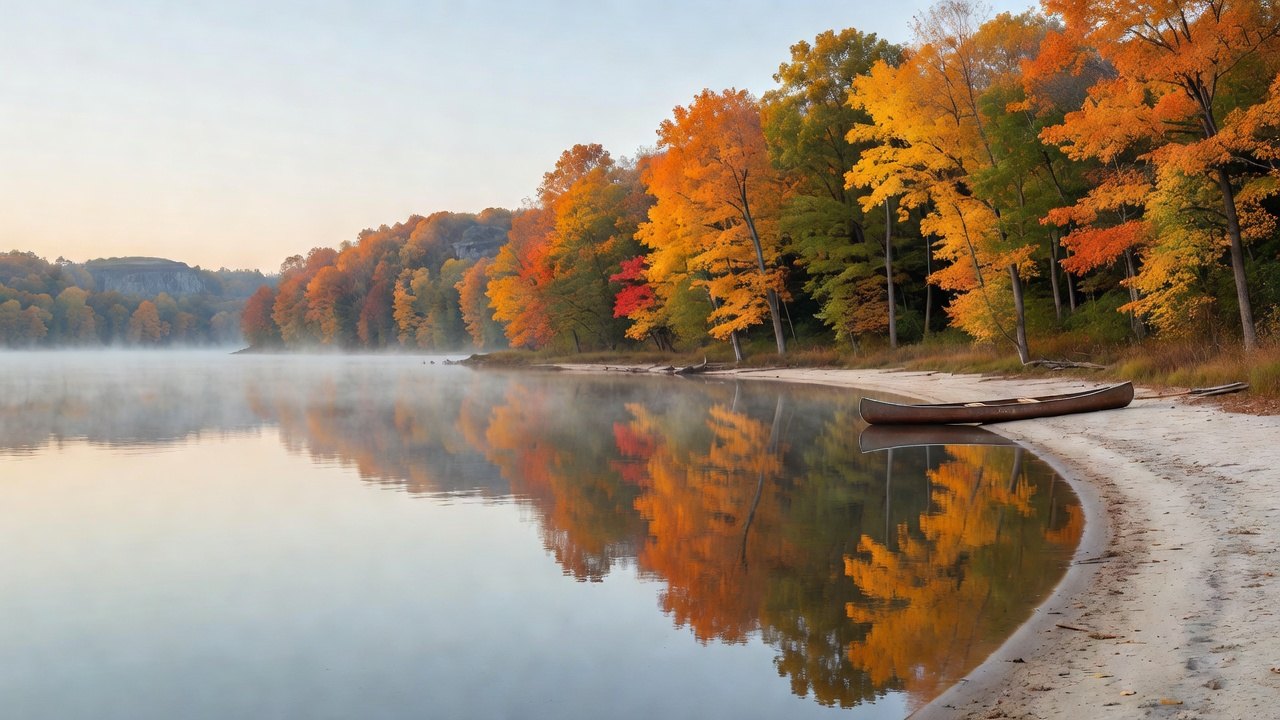
The Named Campgrounds Worth Booking
Wisconsin's inventory is large enough that "the best campground" is really a question about which loop fits your trip. These are the ones with numbers behind them, all pulled from the DNR's own property pages.
Devil's Lake State Park — 423 sites, three loops
Devil's Lake has three regular campgrounds with 423 sites total, each accommodating a family of one to six, plus nine group campsites that can hold a total of 460 campers. Every campsite is reservable. Each site has a picnic table, a gravel or paved parking area, room for at least one family tent, and a metal fire ring.
- Quartzite (sites 1–100) is mostly open and grassy with scattered medium and large trees, has 75 electric sites, one shower building, two pit toilets, a dump/fill station and a playground in the middle of the loop. The largest rigs end up here because the sites are more open. It is the loop that stays open year-round.
- Northern Lights (sites 104–246) is the only campground in the park with wooded electric sites — 71 of them — and it is the oldest, opened in 1939, with three of its four shower and restroom buildings built by the Civilian Conservation Corps in the 1930s.
- Ice Age is non-electric only, split into two sections, with two running-water restroom and shower buildings plus seven pit toilets. This is the tent-and-quiet loop.
One practical note: the campsites are not within sight of the lake, so a "lake view" site is not a thing here. The lake is a five-minute walk from the loops and the bluffs are the reason to come anyway — 500-foot quartzite cliffs, the Tumbled Rocks Trail, and in October, a color palette that runs down the bluff into the water. If you are coming with a family, this is the park to build the weekend around.
Mirror Lake State Park — 151 sites, and Wisconsin Dells next door
Mirror Lake is the practical answer for a Wisconsin Dells weekend. It has 151 family campsites across three campgrounds plus seven group sites, an accessible cabin, and a rental cottage designed by Frank Lloyd Wright.
- Sandstone Ridge has 68 sites, and it is the loop to aim for: sites 58–83 are electric, site 63 is accessible, and sites 201–204 are walk-in sites within 50 yards of the parking area. The Lakeview Trail connects the campground to the beach and boat landing.
- Cliffwood has 35 sites with 29 electric, but it is open May 1 to October 31 only — so on an October trip, confirm Sandstone Ridge specifically.
The water caveat is real and easy to miss: from approximately November 1 to May 1, water and the shower/flush toilet buildings are weather-dependent, and all water facilities are typically unavailable in that window. Drinking water stays available year-round at the park office. If you are camping in late October, plan on a late-season shower situation.
Peninsula State Park — 468 sites, Wisconsin's most-visited
Peninsula is described by the state as Wisconsin's most popular camping destination: five campgrounds, 468 family sites, and three group tent campsites on the Door County peninsula.
- North Nicolet Bay has 44 sites with no electrical hookups.
- South Nicolet Bay has 143 sites, 54 with electricity.
- Tennison Bay is the largest at 188 sites, 97 of them electric.
The campgrounds sit above a sand swimming beach with a camp store, boat and bike rentals, a public boat launch and a fishing pier. For an October trip this is the leaf-peeping pick: Door County's color peaks in the third week of October, and the park is a five-minute drive from Fish Creek and Ephraim.
Wyalusing State Park — 109 sites and a bluff view of two states
Wyalusing's two family campgrounds — Wisconsin Ridge and Homestead — hold 109 regular campsites, with a sanitary dump station near the Homestead entrance. The park adds an outdoor group camp with five sites for 130 people, and the Hugh Harper indoor group camp, a lodge with a commercial kitchen, dining area, recreation room and four dormitories sleeping 108, which opens in early April and closes at the end of October. Pets are not allowed at the indoor group camp, and there is a two-night minimum on weekends. Sitting on the bluff where the Wisconsin and Mississippi rivers meet, this is the quietest of the big-name parks — and the one where a group booking actually makes sense.
Potawatomi State Park — 123 sites on the Door peninsula
Daisy Field campground at Potawatomi has 123 campsites, 40 with electricity, plus four group sites that each hold 30 people. There are two paved accessible campsites in the south loop, and the Cabin by the Bay — an accessible indoor cabin with a wheel-in shower, heating and air conditioning that sleeps up to six. Potawatomi is the smaller, calmer Door County option when Peninsula is full.
Black River State Forest — the year-round answer
Three family campgrounds here, and this is the forest to know if you want to camp in Wisconsin after everything else has closed.
- Castle Mound — 35 sites, 21 non-electric and 14 electric, one electric ADA-designated site, an accessible shower building, an indoor picnic shelter and a sanitary dump station. Open year-round, with some sites available all winter.
- East Fork — 24 sites, all non-electric, with two vault toilet buildings, hand-pump water and canoe access to the East Fork of the Black River. Open May 1 through the Monday after the second weekend of October.
- Pigeon Creek — 38 sites, all non-electric, one ADA-designated site, three vault toilet buildings, hand-pump water, a canoe launch and a swimming beach. Open year-round.
And the detail that makes Black River the winter pick: when conditions and staffing allow, a limited number of sites are plowed during winter at Castle Mound and Pigeon Creek. That is as close to a guaranteed winter car-camping site as Wisconsin gets.
Camping in Wisconsin in October
October is the month where the state splits in half. The northern third is already at or past peak in the first week — Hurley and its surroundings were reading 40% color with a first-week-of-October peak forecast, Ashland 35%, Hayward and the Cable area 30% — while the southern third is still three weeks out. Baraboo, Door County and Green Bay all carry third- and fourth-week-of-October peak forecasts in the state's own live report.
So the plan depends on what you want:
- If you want color and you are booking mid-September, go north and go early. The first week of October in Iron, Bayfield and Sawyer counties is the strongest week of the year up there, and the campgrounds are quieter than summer.
- If you want a family weekend with warm-ish afternoons, go south and go late. Devil's Lake, Mirror Lake, Peninsula and Wyalusing all sit in the third-week band, and daytime highs are still in the 50s and low 60s.
What October takes away is water infrastructure. Mirror Lake's water and shower buildings go down around November 1, Devil's Lake's seasonal loops close during the month, and Black River's East Fork closes right after the second weekend. Assume you are showering less, drinking from the park office spigot, and carrying a warmer bag than the calendar suggests. Our fall camping gear checklist is built around exactly this transition, and where to camp in October covers the same window nationally.
If you are thinking about Columbus Day weekend, that is a different booking problem — the Columbus Day weekend checklist walks through it.
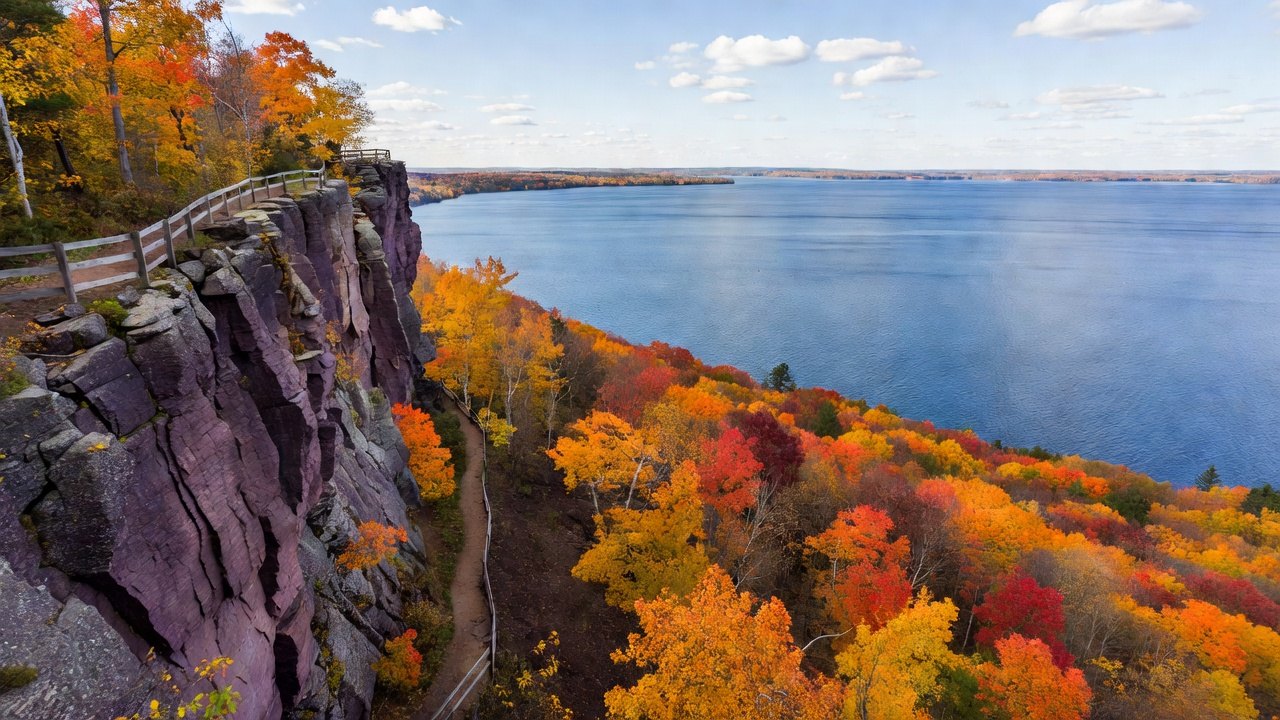
Camping in Wisconsin in November and Winter
November is when Wisconsin camping goes from "crowded fall weekend" to "you and the deer." This is a genuinely good time to go if your gear is up to it, and it is the cheapest month of the year to camp in the state.
What stays open. Devil's Lake's Quartzite loop is year-round. Black River State Forest's Castle Mound and Pigeon Creek are year-round, with plowed sites in winter. Mirror Lake takes reservations year-round on Sandstone Ridge, with water facilities off from about November 1. Everything else in the state system should be treated as closed until roughly April.
What it costs. November and winter rates are lower than summer across the system, and demand collapses — which means you can often book a weekend a week out rather than 11 months out. The $15/night nonresident surcharge still applies year-round, and so does the admission pass.
What you need. November nights in Wisconsin fall into the 20s and 30s, and a 40°F bag will not do it. This is three-season-plus territory: a 0°F or 20°F bag, a properly insulated pad (a closed-cell pad plus an inflatable is the combination that makes winter car camping comfortable), and a real plan for staying warm and dry during 13 hours of darkness. How to stay warm camping and the winter camping gear checklist cover the system; the cold-weather camp stove guide covers the part where your stove stops performing.
One winter rule that matters more than any other: check the daily fire danger and get your burning permit before you go. More on that below.
Fall Colors in Wisconsin: Timing It Right
The state publishes a live fall color report with per-destination percentage and a forecast peak week, updated daily through the season. Here is where the campground-relevant destinations stood in the final week of September 2026:
| Destination | Color now | Forecast peak |
|---|---|---|
| Hurley | 40% | 1st week of October |
| Ashland | 35% | 2nd week of October |
| Hayward | 30% | 1st week of October |
| Cable Area | 30% | 1st week of October |
| Birchwood | 25% | 1st week of October |
| Eagle River | 15% | 2nd week of October |
| Boulder Junction | 15% | 1st week of October |
| Baraboo Area (Devil's Lake) | 10% | 3rd week of October |
| Appleton | 10% | 3rd week of October |
| Green Bay | 10% | 4th week of October |
| Black River Falls | 5% | 3rd week of October |
| Door County (Peninsula) | 0% | 3rd week of October |
| Bayfield | 0% | 3rd week of October |
The pattern to internalize: color moves south and east at roughly two weeks per latitude band, which is why a trip to Hayward and a trip to Devil's Lake should be planned a month apart even though they are four hours from each other. Check the live report the week you leave — the percentages move fast once nights drop below 40°F, and the forecast week is a forecast, not a promise. Our leaf peeping guide covers the national picture and the tracker methodology.
Wisconsin Dells and the Family Weekend
Wisconsin Dells is the state's default family destination, and it happens to sit ten minutes from one of the better state park campgrounds in southern Wisconsin. That combination is the most reliable family-first weekend in the state.
Camp at Mirror Lake, play in the Dells. Mirror Lake State Park's Sandstone Ridge loop is the practical base — electric sites, showers in season, a beach, a boat landing, and a trail connecting the campground to both day-use areas. Its rental cottage was designed by Frank Lloyd Wright, which is a strange and delightful thing to find in a Wisconsin state park. The Cliffwood loop closes October 31, so on a late-fall trip confirm you are on Sandstone Ridge.
Book the campsite before the waterpark. The campground fills before the resorts do on fall weekends, and the state system's 11-month window means October weekends are bookable in November of the prior year. If you are traveling with young kids, camping with a toddler is the version of this trip that actually works, and the tent size guide settles the "do we need a 6-person or an 8-person" argument before you buy.
For the group trip, Wyalusing's Hugh Harper indoor group camp (108 people, commercial kitchen, four dorms) closes at the end of October — that is a bookable, genuinely rare option for a family reunion or a scout group.
State Forests, National Forest, and Free Camping
Wisconsin has a whole second tier of camping outside the state park system, and it is where the free and near-free nights live.
Chequamegon-Nicolet National Forest covers the northern third of the state and offers both developed campgrounds and dispersed camping — camping outside a developed campground, with no latrines, no fire rings and no amenities. Dispersed camping is free, and the rules are the ones people get wrong: the Motor Vehicle Use Map (MVUM) for your ranger district governs which roads you may drive on, and parking is generally allowed up to 30 feet from the edge of the road surface where it is safe and does not damage vegetation or soils. RV and vehicle campers may use shoulder pull-offs or closed roads with a berm. Parking in front of gates is prohibited, and Leave No Trace applies throughout.
Remote and primitive camping on DNR lands is its own category. There are a limited number of very primitive remote sites not associated with a campground, and they do not require a reservation fee. Some are single sites on lakes and rivers reachable only by watercraft. Remote primitive backpack camping also exists on some northern forest properties under the existing permit system — permit holders hike in at least one mile, no vehicles or trailers, and the permit specifies where you may park. Contact the property before planning a trip, because this is the least standardized camping in the state.
The Ice Age Trail crosses Wisconsin for roughly 1,200 miles and is the reason backpackers come here in October. Camping on and around the trail is a patchwork — some of it in state forest backpack sites, some in county and private campgrounds, some via the trail's own dispersed-camping rules — so the trail's own camping map is the thing to consult rather than any single campground page. Kettle Moraine's backpack shelters (a roof, a fire ring and a vault toilet) are the classic overnight on the southern segments.
State forests generally allow camping where you would expect and county parks often allow it where you would not. If you cannot find a state park site, check the county park system where you are heading before assuming you have to drive home. Camping for free and dispersed camping in national forests is a genuinely different discipline from state park camping — no reservation, no fee, no facilities, and stricter leave-no-trace expectations.
Camping on the Water: Apostle Islands and the St. Croix
Two of Wisconsin's best camping experiences are only reachable by boat, and both are worth planning a whole trip around.
Apostle Islands National Lakeshore offers camping on 18 of the Lakeshore's 21 islands plus three mainland areas. Individual campsites are $15 per site per night for parties of one to seven, and primitive camping zones — island-specific backcountry areas rather than a fixed site — are $15 per island location per night for one to five people. Most sites include a picnic table, fire ring, a metal bear-resistant food locker and a nearby privy. Reservations run through Recreation.gov on a 30-day window, or by calling the Bayfield headquarters at 715-779-3398, option 2. Note that you can only book an itinerary within 30 days of your start date — this is not an 11-month booking, and it is the single biggest planning difference between the Apostles and the state parks.
Saint Croix National Scenic Riverway is the other water-based option: primitive shoreline campsites scattered along the St. Croix and Namekagon rivers, designed for multi-day paddle trips. There are no fees and no reservations required — sites are first-come, first-served and easier to secure mid-week and outside holiday weekends. One exception to know before you launch: a camping permit is required on the St. Croix River below Highway 8, and the Riverway is split into three management zones with different rules. If you are paddling, this pairs naturally with a water filtration and hydration plan, because river water is not drinking water.
Fire Rules, Firewood, and Burning Permits
Wisconsin's fire rules work differently from the states that use calendar windows, and getting this wrong is the fastest way to have a ranger visit your site.
Wisconsin regulates burning by ground condition, not by date. In DNR forest fire protection areas, a burning permit is required to burn legal materials whenever the ground is not completely snow-covered. Permits are free and easy to obtain, and the DNR's own safety guidance says the safest time to burn is when the ground is completely snow-covered — so much so that they recommend throwing a tarp over your debris and waiting for persistent snow rather than burning in spring. Debris burning is the number one cause of wildfires in Wisconsin.
Two carve-outs matter for campers. First, DNR burning permits do not apply inside incorporated cities and villages, which set their own requirements and are often stricter. Second, a permit regime for debris does not mean campfires are unregulated — the DNR's guidance is blunt that even a campfire in a fire ring or fire pit can cause a wildfire, and you are expected to check the daily fire danger rating before you light anything. In a dry October, a county-level burn ban can land on your weekend with no notice.
Firewood is the other rule people break. Wisconsin restricts firewood movement, and the rule on the ground is that only certified firewood, or firewood originating from within 10 miles of the park, may be brought into a property. Firewood is sold at or near most state park properties, and certified dealers are listed by the state agriculture department. This is not a technicality — it exists to stop emerald ash borer and other pests, and moving wood from home is exactly the behavior it targets.
For the practical side: a gas or liquid-fuel stove is the safest cooking decision in a dry fall, which is also why our camp stove fuel guide leads with propane and isobutane rather than wood. And if your trip is a shoulder-season one, cold-weather stove performance and fuel canister safety and disposal cover the two failure modes people hit in November.
Camping in Wisconsin With Dogs
The short answer: dogs are allowed in almost all Wisconsin state parks and forest campgrounds, with a specific exclusion list that catches people out.
Where dogs cannot go. Not in buildings, and not in beaches, playgrounds, picnic areas, shelters or amphitheaters. That means the family beach at Mirror Lake and the swimming beach at Pigeon Creek are off-limits to your dog even though the campground next to them is not. Plan on a long lead and a walk rather than a swim.
Where they can go. Campgrounds, trails and most of the property outside those day-use zones. Standard practice applies — leash, clean up, and do not leave a dog unattended at the site. On Wisconsin Ridge at Wyalusing or the Quartzite loop at Devil's Lake, dogs are simply part of the campground.
The October-specific dog problem is the dark. With sunset around 6 p.m. in mid-October, your dog's evening walk happens in the dark, and every raccoon, skunk and deer in the park is on the move. A headlamp you can wear hands-free plus a light or reflective element on the dog's harness solves most of it. If you are paddling — the Apostles or the St. Croix — a dog life jacket is not optional on cold water.
For the full gear list, our dog camping gear checklist is organized by what actually gets used, and the camping with dogs guide covers behavior, heat and trail etiquette. A dog first-aid kit matters more in fall than summer, because the injuries that happen are cut pads and burrs, not heat stroke.
Gear That Actually Matters for a Wisconsin Fall Weekend
Wisconsin in October is a three-season problem in a single weekend: 60s at 3 p.m., 30s at 3 a.m., and a real chance of rain. Build around warmth you can shed and shelter you can trust.
Shelter and sleeping. A 3-season family tent is the right call for state park car camping; a 4-season tent is overkill unless you are going in November. The CAMPROS CP 8-person tent at $159.98 is the family room-divider option, and the CORE 9-person instant cabin at $299.99 is the one you can stand up in. For the sleeping system, the TETON Sports Celsius 0°F bag at $59.99 is the entry point and the Celsius XXL 0°F at $89.99 fits a taller camper. Warm-weather sleepers can drop to the Coleman Palmetto 40°F bag at $44.99 for early September only.
The pad is the part people skip. Ground steals heat faster than air does, so a 0°F bag on a bare pad is a 30°F night. The Therm-a-Rest Z Lite Sol at $54.95 is the indestructible closed-cell base layer, the Klymit Insulated Static V at $94.99 is the mid-range inflatable, and the Exped MegaMat 10 at $239.95 is what you buy when you have decided car camping should feel like a bed. Layer a closed-cell pad under an inflatable for late-October nights — the sleeping pad comparison explains the R-value math.
Heat and light. A Rumpl Original Puffy blanket at $139.00 doubles as a camp blanket and an extra layer in the tent. For light, the Petzl ACTIK CORE headlamp at $79.95 is the rechargeable workhorse, the Black Diamond Spot 400 at $39.95 is the alternate, and the Black Diamond Moji lantern at $24.95 handles the table.
Kitchen. A two-burner propane stove is the family-camping answer — the Coleman Triton+ 2-burner at $149.99 for a group, or the Coleman bottle-top single burner at $21.99 for a couple. Backpackers want the MSR PocketRocket 2 at $49.95 and a spare isobutane canister at $8.95. For coolers, the Coleman 70-quart Xtreme at $79.99 holds a family weekend's food and the RTIC 45 QT at $239.00 is the rotomolded upgrade. Cookware: the Stanley Wildfare Core 26-piece set at $89.99, or a Lodge cast iron Dutch oven at $59.95 if you cook over coals. Coffee matters at 35°F — the AeroPress at $39.95 or the GSI percolator at $34.95 inside; see the camp coffee makers roundup for the rest. Our camp kitchen setup guide covers the packing order.
Fire and tools. The Fiskars X7 hatchet at $29.99 splits the firewood you buy at the park office, and UCO stormproof matches at $12.99 are what actually light a wet October fire. Because Wisconsin firewood rules are strict, plan to buy at the property and carry a collapsible saw or multi-tool at $39.95.
Clothing. Layering is the whole game. The Outdoor Research Helium rain jacket at $159.00 weighs nothing and saves a weekend; the Columbia Omni-Heat base layer at $49.99 is the October foundation; and the Columbia Steens Mountain fleece at $34.99 is the mid-layer you will actually wear all day. Hands and feet: Carhartt insulated gloves at $32.99 and Darn Tough midweight hiker socks at $27.95. For footwear, Merrell Men's Moab 3 Waterproof at $129.95 handles mud, wet leaves and bluff steps without complaint.
Kids. A Kelty Woobie 30°F kids bag at $39.95 for the under-6 set, the TETON Celsius Jr 20°F at $49.99 for older kids, and the Morrison Little Mo 40° baby bag at $69.95 for infants. A one-piece kids rain suit at $32.99 is the difference between a wet kid and a crying wet kid, and a Kelsyus canopy chair at $37.99 gives them their own shade-free spot at the table.
Dogs. A well-fitted harness — the Ruffwear Front Range at $44.95 — plus a travel bowl at $19.95 and a raised cot at $49.99 that keeps them off cold ground and out of the tent.
Power and safety. The EF ECOFLOW RIVER 2 at $169.00 runs a CPAP or charges a family's phones for a weekend, and the LuminAID PackLite Max at $49.99 is the lantern you can leave on the table. The Adventure Medical Kits Ultralight/Watertight kit at $44.95 plus hot hands at $29.99 cover the two things that actually go wrong in a cold-weather camp. If you are hiking in the northern forest in November, a bear canister at $89.99 and bear spray at $39.99 belong in the pack — and the Apostles require a food locker for a reason.
Planning Shortcuts
This section is a router, not a summary — each line points at the part of the page that answers it. If one of these was your actual search, jump straight there.
- The systems, by name. Whether you searched wisconsin state parks camping reservations, wisconsin state park camping reservations online, wisconsin state park camping reservations login, or the wisconsin state park camping reservation system, the answer is the same single system — and the wisconsin state park camping reservation phone number is 1-888-947-2757. If you were chasing the wisconsin state park camping reservation window, it is 11 months with new dates at 9 a.m. Central Time. On money: the wisconsin state parks camping reservation cancellation policy is a two-day cutoff at 3 p.m. Central with no refunds on a 3-night holiday stay once the site has been occupied, the wisconsin state park camping reservation policy adds a $9.30 reservation fee and a $10 cancellation fee per site, and if you were after wisconsin state parks camping reservations free, the free camping in this state is on DNR remote sites and national forest dispersed areas, not in the state park system.
- Finding and choosing a site. For a wisconsin state parks camping map or a wisconsin state parks camping map pdf, the per-park maps on the state site are more accurate than any third-party map, and the individual park map PDFs show site numbers and hookup classes. If your question was about wisconsin state park camping sites or a campsite in wisconsin generally, the inventory section above gives the site counts, electric split and closure dates per property. If you came in broad — camping in wisconsin, camping in wisconsin state parks, or a search for the best camping in wisconsin — the short list is Devil's Lake, Peninsula, Mirror Lake, Wyalusing and Black River State Forest, in that order of what they are best at.
- By region. If you typed camping in wisconsin devils lake or camping in wisconsin dells, the Mirror Lake and Devil's Lake sections above are the answer, and both sit in the same southern cluster. A search for camping in wisconsin on lake michigan or camping in wisconsin with lake points at Peninsula, Potawatomi and Point Beach on the Lake Michigan side. The camping in wisconsin driftless area question is answered by Wyalusing, Blue Mound and the southwestern state parks, which peak later than everything else.
- Cabins and comfort. If you wanted camping in wisconsin with cabins, note that the state system's indoor inventory is accessible cabins at ten properties plus facilities like Wyalusing's Hugh Harper lodge and Potawatomi's Cabin by the Bay. If you were hunting wisconsin dells camping cabins, wisconsin dells camping resort, wi dells camping resort or wisconsin dells camping packages, the state park answer is Mirror Lake's accessible cabin and Wright-designed rental cottage, while everything else in that category is private. A wisconsin dells camping domes search is a private-resort product, not a state one.
- Every version of the Dells question. camp in wisconsin dells and wi dells camping and wisconsin dells campground and wisconsin dells camping areas all resolve to the same answer: camp at Mirror Lake State Park and drive into the Dells. If you were specifically after wisconsin dells camping state park or wisconsin dells camping devils lake, both parks are in the same neighborhood — Mirror Lake is the closer base, Devil's Lake is the bigger park. For an RV, wisconsin dells camping rv and wisconsin dells camping resort routes are private campgrounds with full hookups; the state park loops cap rig size by site. Tent campers searching wisconsin dells camping tent should book Sandstone Ridge at Mirror Lake. And if waterparks are the point, wisconsin dells camping waterpark and wisconsin dells camping reservations are one combined trip — book the campsite first, the waterpark second.
- Free camping, forests and the national forest. Searches for can you camp for free in national forests and can you camp anywhere in a national forest both land on the dispersed-camping rules above: free, but MVUM-governed. If you asked can you camp in wisconsin state forests, the answer is yes and it is often cheaper than the park system. camping in wisconsin state forests, camping in wisconsin national forests, camping in chequamegon nicolet national forest, best camping in chequamegon nicolet national forest, dispersed camping in chequamegon nicolet national forest and dispersed camping wisconsin national forest are all answered by the forest section, while camping in wisconsin county parks is the fallback tier when the state system is full.
- The Ice Age Trail. If you came in on ice age trail camping, ice age trail campsites, ice age trail camping map, ice age trail camping wisconsin, ice age trail camping rules, ice age trail backpacking camping, ice age national scenic trail camping, or ice age trail camping reservations, the trail's own camping map is the authority because the overnight options are a patchwork of state forest backpack sites, county campgrounds and dispersed zones. The other three — ice age trail dispersed camping, ice age trail dispersed camping map, ice age trail primitive camping areas and primitive camping ice age trail — are the same question with different words, and ice age trail alliance camping refers to the volunteer organization that maintains the trail and publishes its own guidance. For camping near ice age trail without hiking it, Kettle Moraine's backpack shelters and the surrounding state forest campgrounds are the practical base.
- Dogs. Two audiences: best camping in wisconsin with dogs, dog friendly campgrounds in wisconsin, and camping with dogs in wisconsin are all the same answer, and are dogs allowed in wisconsin state parks is answered by the exclusion list above — campgrounds yes, beaches and playgrounds no.
- Winter. The winter questions split cleanly. If you searched winter camping in wisconsin state parks, winter campgrounds in wisconsin, winter camping sites in wisconsin or best winter camping in wisconsin, the answer is Devil's Lake's Quartzite loop, Black River's Castle Mound and Pigeon Creek, and Mirror Lake's Sandstone Ridge. A winter camping northern wisconsin or winter camping southern wisconsin search is really a latitude question: the north is a snow-camping trip, the south is a cold-weather car camping trip. winter rv camping in wisconsin means Black River's plowed sites or a private resort with hookups, since the state system's winter water is off. And if the underlying question was can you camp in the winter or winter camping in wi, yes — with a 0°F bag, an insulated pad and a real plan for the dark.
- Fall color. If you typed wisconsin fall colors 2026, wisconsin fall colors report, wisconsin fall colors update or wisconsin fall colors tracker, the state's live report is where those numbers come from. wisconsin fall colors peak is the third week of October for the southern third of the state and the first week for the north. If you wanted wisconsin fall colors map, wisconsin fall colors best places map or wisconsin fall colors best places, the destinations in the table above are the ones near campgrounds. For wisconsin fall colors forecast and wisconsin fall colors chart, read the peak week column as a forecast rather than a schedule. wisconsin fall colors guide is this page, and a wisconsin fall colors train ride is a separate experience booked through the scenic railroads, not a campground.
- The near-miss phrasings, routed anyway. A few of the ways people search this topic do not match the wording anywhere else on the page, so here they are directly. If you searched camping in wisconsin reservations, that is the booking section: one system, 11 months, 9 a.m. Central. If you searched camping in wisconsin dells with cabins, the state park version is Mirror Lake's accessible cabin and its rental cottage, with private resorts covering the rest. If your search was wisconsin dells camping sites, read that as the same Mirror Lake answer as wisconsin dells camping areas and wisconsin dells campground — Sandstone Ridge is the loop to book. For a wisconsin state parks camping reservations map, use the per-park map PDFs linked from each property page, because they carry the site numbers the booking screen only abbreviates. If your question was simply can you camp in october, the answer is yes at the year-round loops, and camping in wisconsin in november still works at Devil's Lake, Black River and Mirror Lake long after the seasonal loops are shut.
Wisconsin Camping FAQ
Can you camp in Wisconsin in October?
Yes, and it is one of the best months to do it. Devil's Lake's Quartzite loop, Black River State Forest's Castle Mound and Pigeon Creek, and Mirror Lake's Sandstone Ridge all operate into or through October, and fall color peaks between the first and fourth week of the month depending on latitude. What closes is significant: Devil's Lake's Northern Lights and Ice Age loops typically close in October, Black River's East Fork closes the Monday after the second weekend of October, Mirror Lake's Cliffwood loop closes October 31, and water and shower buildings at several parks go offline around November 1.
How far ahead can you book a Wisconsin state park campsite?
Up to 11 months before your planned occupancy date, with new dates released at 9 a.m. Central Time. You can also book the same day you arrive — Wisconsin is one of the more flexible large state systems on last-minute bookings. Reservations are required before you set up on any site, and everything runs through one portal at wisconsin.goingtocamp.com or by phone at 1-888-947-2757.
What fees should I expect beyond the campsite rate?
A $9.30 reservation fee per site, a $10 cancellation fee, and a $6 change fee. Nonresident campers pay an additional $15 per night on top of the standard campsite fee. Every motor vehicle also needs a vehicle admission pass: $28 for a 12-month pass with Wisconsin plates, $50 out-of-state, or $13 / $16 for a daily pass. There is an extra $5 fee if you use the property before paying for admission.
Can I have a campfire in Wisconsin in the fall?
Usually yes, but the rule is different from most states: Wisconsin regulates burning by ground condition, not calendar dates. In DNR forest fire protection areas, a free burning permit is required whenever the ground is not completely snow-covered — so a dry, snowless October is exactly when permits matter. DNR permits do not apply inside incorporated cities and villages, which set their own rules, and the DNR warns that even a fire ring campfire can start a wildfire. Check the daily fire danger rating before you light anything. Firewood is separately restricted: only certified firewood or wood from within 10 miles of the property.
Which Wisconsin state park campgrounds are open in winter?
Devil's Lake's Quartzite campground (year-round, 100 sites), Black River State Forest's Castle Mound (35 sites) and Pigeon Creek (38 sites) — both of which plow a limited number of sites in winter when conditions and staffing allow — and Mirror Lake's Sandstone Ridge (reservations year-round, with water facilities off from about November 1 to May 1). Treat everything else as closed until roughly April. Expect the $15 per night nonresident surcharge to still apply.
Are dogs allowed in Wisconsin state parks?
Yes — pets are allowed in almost all Wisconsin state park and forest campgrounds, but they are not allowed in buildings, beaches, playgrounds, picnic areas, shelters or amphitheaters. So the campground is fine and the swimming beach next to it is not. Keep your dog leashed, clean up after it, and plan evening walks around the early October sunset.
Do I need a reservation for the Apostle Islands or the St. Croix?
They work differently from each other and from the state parks. Apostle Islands camping is on 18 of 21 islands plus three mainland areas, costs $15 per site per night for parties of 1–7 (or $15 per island location per night for primitive zones of 1–5), and books through Recreation.gov on a 30-day window. Saint Croix National Scenic Riverway shoreline campsites have no fees and no reservations — first-come, first-served — with one exception: a camping permit is required on the St. Croix River below Highway 8.
What is the best weekend for fall color in Wisconsin in 2026?
It depends on where you go, which is the whole point. In late September 2026 the state's live report showed Hurley at 40% with a first-week-of-October peak, Ashland at 35% peaking the second week, and Hayward and the Cable area at 30% peaking the first week — while Baraboo, Door County and Green Bay were still at 0–10% with third- and fourth-week-of-October peaks. Color moves south and east at roughly two weeks per latitude band, so plan a northern trip and a southern trip a month apart.
The Bottom Line
Wisconsin is the fall camping state that most people plan wrong. The inventory is enormous — more than 6,000 state system campsites, with Devil's Lake alone holding 423 — but the October closure wave takes the best loops offline, and the real cost of a weekend includes a $15-per-night nonresident surcharge, an admission pass, and a $9.30 reservation fee that never appears in the headline rate.
The play, in order: decide your week from the live color report, pick a year-round or late-closing loop, book it early because the window opens 11 months out at 9 a.m. Central, and build the sleep system for 30°F nights rather than 60°F afternoons. If you only have one weekend, take Mirror Lake or Devil's Lake in the third week of October and let the Dells be the backup plan for a rainy afternoon.
<!-- AFFILIATE_DISCLOSURE -->TrailMapz earns a commission from qualifying purchases made through links on this page, at no extra cost to you. Prices and availability are accurate as of publication and subject to change.
Planning a trip the other direction? Our camping in Washington state guide covers the three separate booking portals, the October closing wave and the coast campgrounds that never shut for the season.