Camping in Minnesota 2026: The North Shore in October, the 120-Day Booking Window, and the 26 Parks That Stay Open All Winter
Camping in Minnesota 2026: the 120-day booking window, the real campsite fees, the 26 parks open all winter, and Boundary Waters self-permit season.
Minnesota has the best fall camping in the country and almost nobody plans for it. The state runs one reservation system for roughly 5,000 state-park campsites, the Boundary Waters drops its permit quota on October 1, and the DNR publishes a list of the 26 state parks that keep campsites open all winter — a list most "best fall camping in Minnesota" articles never bother to find.
What trips people up is not where to camp. It's that Minnesota has a 120-day rolling booking window that opens at 8 a.m. Central, a vehicle permit required simply to drive into a state park, a campsite fee table that ranges from $17 to $245 a night, and a hard October closure wave that takes a large share of the best loops offline until spring. This is the version with the actual numbers, the actual windows, and the actual DNR pages behind every one of them.
Quick Answer: Can You Still Camp in Minnesota in October?
Yes — and October is arguably the best month to do it. Minnesota state park campgrounds generally stay open through the fall color season and then close in waves, while a documented set of 26 state parks and recreation areas keep campsites open all winter. Two things change on October 1 that make the whole state easier:
- The Boundary Waters Canoe Area Wilderness stops requiring a quota permit. From October 1 through April 30, entry is a self-issued permit from a kiosk at the entry point — no reservation, no recreation fee, no lottery luck required. During quota season (May 1 – September 30) that same overnight paddle trip needs a reserved entry-point permit through Recreation.gov.
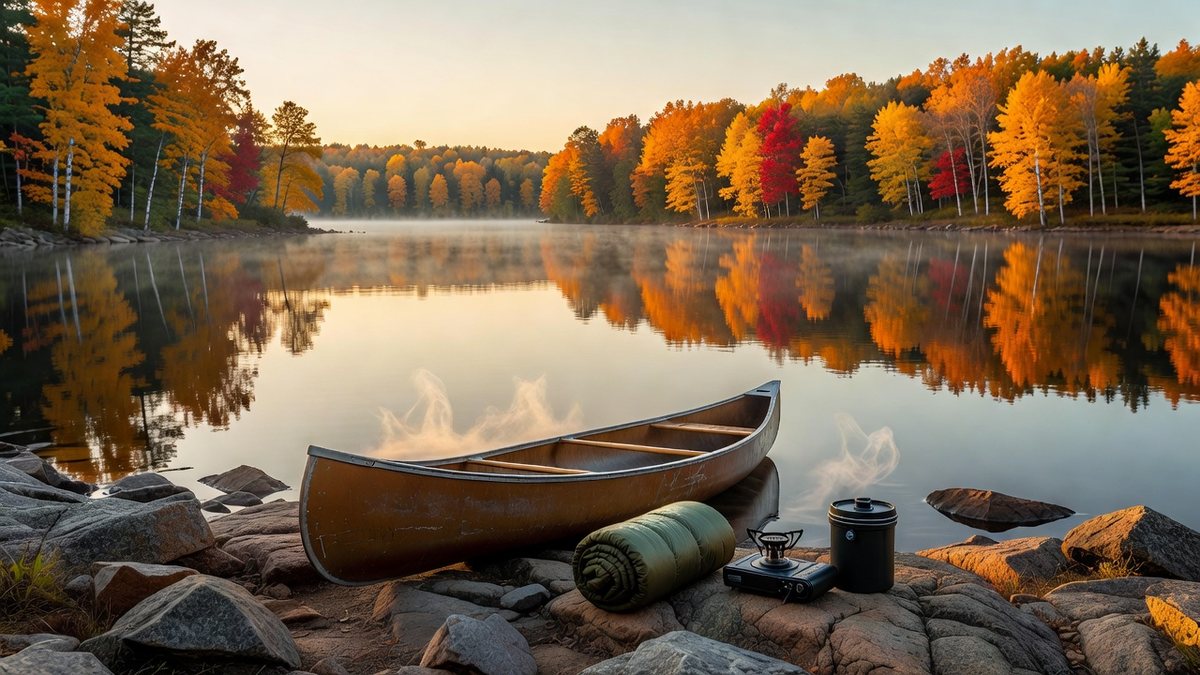
- Fall color arrives where the camping is. The North Shore's maples and birches turn while the state park campgrounds there are still open, and the DNR's Fall Color Finder is updated every Thursday through the end of October with park-by-park reports.
What you cannot do is show up and pay cash into an envelope. The DNR no longer accepts self-payment envelopes at state park campgrounds — you book online, or you pay same-day by card, gift card, or (if staff are available) cash.
What's Actually Open: Minnesota's October Campground Calendar
Minnesota does not have one closing date. State park campgrounds close in a wave that starts in the north and works south, and the reliable way to plan is to separate parks into three categories.
1. Parks with campsites open all winter. The DNR's winter camping page lists these 26 state parks and recreation areas as having winter campsites — which means their campgrounds do not vanish in October:
| Region | Parks |
|---|---|
| North Shore / northeast | Cascade River, Gooseberry Falls, Split Rock Lighthouse, Tettegouche, George H. Crosby Manitou, Jay Cooke |
| North-central / northwest | Bear Head Lake, Itasca, Big Bog State Recreation Area, Lake Bemidji |
| Central | Afton, Flandrau, Frontenac, Glendalough, Lake Carlos, Lake Maria, Maplewood, Mille Lacs Kathio, St. Croix, Wild River, William O'Brien |
| South / southeast | Lake Shetek, Minneopa, Myre-Big Island, Savanna Portage, Whitewater |
Six of those — Cascade River, Gooseberry Falls, Split Rock Lighthouse, Tettegouche, Crosby Manitou, and Jay Cooke — sit on or within minutes of Lake Superior's North Shore, which is where Minnesota's fall color show actually happens.
2. Parks that close in October. Most remaining state park campgrounds run through the fall color weekend nearest their region and then close for the season, with the shower buildings shut first. If a specific park is the reason for your trip, check its own page rather than trusting a statewide date — the DNR advises checking the visitor alert for the park or recreation area before you leave home, because closures, construction, and seasonal shutdowns are posted there first.
3. State forest campgrounds. These are a different system with a different price and a different calendar. Drive-in campsites in Minnesota state forests run $17 a night, taxes included — the cheapest legal campsite in the state — and many of them are open with no services far later than the state park loops.
The practical October play is to book inside category 1. You get the color, the park is guaranteed to be staffed and open, and if the trip slides into November you do not have to move.
How Minnesota's Reservation System Really Works
This is the part that decides whether you get a North Shore site in leaf season. Minnesota uses one reservation system for state park campsites, camper cabins, and lodging, and the rules are precise:
- You can book up to 120 days before your arrival date. Not a year. The DNR changed the window from one year to 120 days on July 1, 2020, and it has stayed there — which is why, in practice, a mid-October North Shore weekend opens for booking in mid-June.
- On the first day a site becomes available, online booking does not open until 8 a.m. Central. Every other day of the year, the system takes online reservations around the clock. That 8 a.m. moment is the entire game for Gooseberry Falls and Tettegouche in October.
- There is a non-refundable reservation fee per site: $8 online, $10 through the call center. Same-day reservations carry no reservation fee.
- Maximum stay: 14 nights on a single camping reservation, 7 nights on a lodging reservation.
- A vehicle permit is required to enter a state park, whether you are camping or just driving through. One-day permit $7; year-round permit $35, valid for a full year from purchase at every state park and recreation area.
- Minnesota residents with a physical disability get half-price campsite fees Sunday through Thursday nights, on drive-in, backpack, walk-in and other rustic sites, with a Federal Access Pass or a Minnesota disability plate or hang tag.
- The DNR call center is 888-646-6367 (MINNDNR) or 651-296-6157, open 8 a.m.–8 p.m. daily April 1 through September 30, closed holidays.
Two habits worth building. First, buy the vehicle permit before you leave home — the DNR explicitly recommends it, and it saves the queue at the park entrance on a fall weekend. Second, if your dates are fixed and the site you want is gone, the reservation system lets you set a notification alert on a specific site, and it emails you if it frees up. Cancellations are common in October as people watch the forecast.
Fall weekends are genuinely busy at Minnesota state parks — that is the DNR's own wording, not a hunch. If your schedule allows it, a Tuesday-to-Thursday trip in early October gets you the same color with a fraction of the site competition.
What a Minnesota Campsite Actually Costs in 2026
Minnesota's fee table is published and specific, which makes it easy to budget — and easy to see where the money goes. Taxes are additional in state parks, and included in state forests.
| What you're booking | Price per night | Notes |
|---|---|---|
| Drive-in campsite | $20–$35 | The standard car-camping loop |
| Cart-in / walk-in (under ½ mile from parking) | $20–$25 | You haul gear by hand or cart |
| Backcountry (backpack or watercraft, over ½ mile) | $20–$23 | Boundary Waters-style sites |
| Equestrian campsite | $22–$25 | Bring the horse |
| Wall tent | $35–$40 | Pre-pitched canvas |
| Yurt | $80 | Heated |
| Group campsite | $50–$300 | Priced by group size |
| Camper cabin | $80–$90 | Heated, no plumbing |
| State forest drive-in campsite | $17 | Taxes included — the budget option |
| Electric hookup, where available | +$10 | |
| Water and sewer hookup, where available | +$8 | |
| Campsite with EV charging, where available | +$7.50 | |
| Reservation fee | $8 online / $10 call center | Non-refundable, per site; free for same-day |
The lodging tier is where Minnesota separates itself, because the state park system runs cabins and lodges it actually rents by the night, not just campsites:
- Tettegouche State Park, on the North Shore: Cabins A–D run $130–$175 a night, and the Illgen Falls cabin is $220.
- Itasca State Park: Bear Paw cabins $110, Douglas Lodge rooms $85, four-season Douglas Lodge suites $150, and Bert's Cabins $140–$245.
- St. Croix State Park: CCC cabins $95; guesthouses $235.
- Wild River State Park: guesthouse $175.
- Scenic State Park: CCC cabin $90.
- Flandrau State Park: stone CCC cabin $85.
Eight state parks also rent group centers that sleep 60 to 215 people, for $180–$600 a night (or $5 per person, whichever is greater) — the cheapest way to put an extended family or a scout troop under one roof in October.
For a family of four doing two nights in a heated camper cabin, that is $160–$180 plus the $35 year-round vehicle permit. Compare that to a hotel room on the North Shore in leaf season and the math stops being close.
The North Shore in October: The State Park Run on Highway 61
If you only do one Minnesota camping trip, do this one, and do it in the first two weeks of October. The North Shore is a single 145-mile corridor on Highway 61 from Duluth northeast to Grand Portage, with the state parks strung along it like beads — which means you can camp in one, drive twenty minutes, and hike another. Every park on this list is in the DNR's winter-campsite table, so none of them disappear on you.
Gooseberry Falls State Park is the busiest park on the shore and the one to book first, because the falls are a two-minute walk from the parking lot — which makes it the right choice with young kids or grandparents in the group. Split Rock Lighthouse State Park puts you under the most photographed structure on Lake Superior; the walk down to the shoreline is the trip, and the lighthouse itself is the reason a lot of families come back every year. Tettegouche State Park is the one for hikers: 300-foot diabase cliffs, the Baptism River, and High Falls — and it is also where the state's rentable North Shore cabins are, including the Illgen Falls cabin.
Then keep going northeast. Temperance River State Park, Cascade River State Park, and Judge C. R. Magney State Park — home of the Devil's Kettle — are progressively quieter, and by the time you reach Grand Portage, you are on the Canadian border with the trailhead for the Mount Josephine overlook, which is a 2.5-mile round trip to a view of the whole shoreline.
Practical North Shore notes that matter more than the scenery:
- Lake Superior makes its own weather. The shore can be 15 degrees colder and socked in with fog when Duluth is sunny, and October wind off the water is the thing that sends families home early. Pack as if for late November on the water and late September 20 miles inland.
- Cell service is patchy north of Silver Bay. Download maps and the DNR reservation confirmation before you leave Duluth.
- The shoreline is rock, not sand. Bring ground pads for kids if they'll be sitting or playing on it.
- Arrive early on Saturdays. Parking at Gooseberry Falls fills before mid-morning in leaf season.
If your trip is a Thursday-to-Sunday, a good structure is Tettegouche as base camp, one day north to Grand Marais and Magney, one day south to Split Rock and Gooseberry on the way home.
Boundary Waters After September 30: The Permit Wall Comes Down
This is the best-kept scheduling secret in Minnesota camping, and the reason October is worth planning around rather than avoiding.
The Boundary Waters Canoe Area Wilderness is roughly 1,098,000 acres, extends nearly 150 miles along the international boundary, and contains over 1,200 miles of canoe routes and more than 2,000 designated campsites. Through the quota season — May 1 to September 30 — every overnight paddle, motor, or hiking trip, and every motorized day trip, needs a quota permit reserved through Recreation.gov, tied to a specific entry point on a specific date, with a limited number of permits per entry point.
From October 1 through April 30, all of that goes away. Entry becomes a self-issued permit you pick up from a kiosk at the entry point or a Forest Service office — no reservation and no recreation fee. Self-issued permits are required for non-motorized day use year-round, for overnight visitors from October 1 to April 30, and for day-use motor visitors in the same window.
The rules that do not change: one permit per group, and a group limit of 9 people and 4 watercraft. Permit holders, alternates, entry dates and entry points cannot be changed once a quota reservation is made, so if you are traveling in the last days of September, the entry date on your permit is final.
One caveat you must check before driving north. The Superior National Forest has been running a phased reopening of the BWCAW through the 2026 fire season. As of the September 8 phase, entry points including Angleworm Lake, Angleworm Lake Trail, Little Indian Sioux North, Moose/Portage River North, Stuart River, Blandin Trail, and Sioux-Hustler Trail were closed through September 30, with the rest of the closure list evolving phase by phase. The Forest Service publishes the phase map and Exhibit A closure list alongside current alerts, and it is updated as conditions change. Check the current alert page and the phase map the day before you leave — the self-issued permit being free does not mean the entry point is open.
Water in northern Minnesota in October is cold enough to be dangerous within minutes. A capsized canoe in a 50-degree lake is a survival situation, not an inconvenience, and the USFS expects life jackets worn, not stowed. If you are paddling with kids, that is the single non-negotiable piece of gear.
Itasca, the Headwaters, and the Lakes Without Crowds
If the North Shore is booked out or your group does not want a five-hour drive, Minnesota has a second, quieter camping geography: the lake country of the north-central and central part of the state, anchored by Itasca State Park.
Itasca is where the Mississippi River starts — you can literally wade across the headwaters on a set of rocks, which is the single best 10-minute stop in Minnesota for kids. It is also the park with the widest range of places to sleep: Bear Paw cabins at $110 a night, Douglas Lodge rooms at $85, four-season suites at $150, plus drive-in campsites in the $20–$35 range. Itasca is in the year-round camping list, so October is not a risk.
The surrounding ring is where Minnesota camping gets cheap and empty after Labor Day:
- Lake Bemidji State Park, Lake Carlos State Park, and Glendalough State Park all keep winter campsites, which means their October loops are open and the summer crowd is gone.
- Mille Lacs Kathio State Park pairs a campground with the kind of archaeology that makes a rainy day interesting — this is where the area's Indigenous history is interpreted on-site.
- Maplewood State Park is a fall color destination in its own right, with the hills and lakes that turn first in the central part of the state.
- St. Croix State Park — a CCC-era park with cabins at $95 and guesthouses at $235 — is the fallback if you want the St. Croix River valley instead of the big lake.
The trade-off is honest: no Lake Superior, no granite cliffs, and the color runs a week or two behind the North Shore. In exchange, you get campsites in the first week of October without the 8 a.m. booking scramble.
Camper Cabins, Yurts, and Lodges: The Fall Shortcut
Minnesota's camper cabins change who can go camping in October. A camper cabin is a heated, hard-walled, bunk-bed structure with electricity and a porch but no plumbing — that last part is what keeps the price at $80–$90 a night instead of hotel rates. Yurts are $80. Both book through the same 120-day window as a campsite.
What that buys you in practice:
- A late-October trip without a four-season tent. The difference between camping in 30°F and camping in 30°F indoors is the difference between a great memory and a miserable one.
- Grandparents, toddlers, and non-campers. Nobody has to sleep on the ground to come along.
- A rain day that does not end the trip. Minnesota in October is a coin flip on weather; a cabin makes the wet half of the trip fine.
The cabins worth knowing about by price: Flandrau's stone CCC cabin ($85), Scenic's CCC cabin ($90), St. Croix's CCC cabins ($95), Itasca's Bear Paw cabins ($110), Savanna Portage and Tettegouche cabin tiers ($130–$175), and the Illgen Falls cabin at Tettegouche ($220) for a group that wants to split one nice place. Twenty-four of the winter-campsite parks have some form of lodging, so the cabin option is not limited to a handful of parks.
If you go the tent route instead, the same gear that handles the Boundary Waters in October handles a state park cabin-adjacent campsite — a cold-rated sleeping bag and a pad with a real R-value, not a summer bag and an air mattress. See our winter camping gear checklist for the version of that kit that does not end in a 3 a.m. shiver.
State Forests and Free Camping: The Cheap October Option
Minnesota's cheapest legal campsite is not in a state park. State forest drive-in campsites run $17 a night with taxes included, versus $20–$35 plus tax in the park system, and the state forest system is enormous — the DNR maps state forests, walk-in access areas, and wildlife management areas alongside the parks.
Three advantages in October:
- Price. A three-night trip for a family is under $60 in site fees plus the $35 year-round permit (the vehicle permit still applies inside state parks; state forest rules differ by unit — check the forest's page).
- Availability. Forest campgrounds are first-come, simple, and far less contested in fall than a North Shore park loop.
- Quiet. By mid-October you may have the loop to yourself.
What you give up is predictability: fewer services, water shut off earlier, and no lodge or cabin attached. For the full picture of how dispersed and primitive camping works in state and federal land, our dispersed camping guide walks through the rules of thumb that keep you legal and leave-no-trace, and the state park camping guide covers the reservation-and-permit layer that applies when you cross back into the park system.
Camping in Minnesota With Kids and Dogs
Minnesota is one of the better states to camp with a family in the fall, for a structural reason: the parks are close together, the drives are short, and the campground loops are built around amenities rather than wilderness.
With kids, October actually helps. No mosquitoes, no heat, and the two things kids remember — a fire and a waterfall — are both better in cold weather. The specific adjustments that matter:
- Assign a warm sleeping bag, not a summer one. A 40°F bag in a 34°F Minnesota night is a bad first camping memory. Kid-sized 20°F and 30°F bags rated for real cold make the difference — our kids' sleeping bag buying guide compares the ones that actually hold their rating.
- Insulate from the ground, not just from the air. Kid cots and insulated pads beat an air mattress that drains heat all night.
- Headlamps for everyone. October means sunset near 6:30 p.m. — two hours of camp in the dark before bed. A kid-safe rechargeable headlamp at $24.95 solves the "I can't see" meltdown permanently.
- Layers as a system, not as backup. The cheapest fix for a cold-weather family trip is a base layer under a fleece — a midweight thermal crew under a zip fleece is a 45-degree-and-windy outfit that costs less than one restaurant dinner.
With dogs, the North Shore and the state forest units are both friendly, with leash rules on trails and in campgrounds. Two October-specific notes: hunting season overlaps fall camping, which matters on state forest land in particular — the DNR's guidance is blaze orange for people and dogs where hunting is legal, and our dog hunting-season hiking guide covers what that means for trail choice. And lake water in October is a real hazard for dogs as much as for kids. For a tent-to-dog setup that fits a fall trip, see the best tents for camping with dogs.
On food and the camp kitchen: Minnesota state parks require food stored in a vehicle or a bear-resistant container in problem areas, and the North Shore has black bears. A bear canister at $89.99 is the honest answer if you're in the Boundary Waters or a remote forest site; in a state park loop, the locked vehicle is usually enough, but check the park's Be BearWise notice.
Fall Colors: How to Time a Minnesota Trip
Minnesota publishes the best fall color tooling of any state, and it is free:
- The DNR Fall Color Finder is updated every Thursday through the end of October, with color-coded maps and leaf reports from individual state parks and recreation areas.
- It includes a date slider that shows what typical color looks like statewide on a given date in past years — which is exactly the tool you need in June, when you are booking a mid-October campsite 120 days out and cannot know the season.
- There is a weekly fall color email newsletter you can subscribe to before you go.
- The DNR's own tips: check the visitor alert for your park before leaving, consider a weekday trip because fall weekends are busy, and buy the vehicle permit before you leave home.
The sequencing is consistent enough to plan around: color arrives in far northern Minnesota first, works down through the North Shore and the north-central forests, moves into the central lakes region, and finishes in the southwest prairie and river valleys — where the DNR points to bronze prairie grasses and the bluffs above the Mississippi at Winona and Red Wing. That means a late-September trip and a mid-October trip are two different Minnesota trips, and the state is wide enough that the season lasts the better part of six weeks end to end.
If your dates are locked, work backwards: pick the region by date rather than picking the region and hoping the date cooperates. Second week of October is the safest all-around bet because it covers the North Shore's tail and the central lakes region's peak at the same time.
October Nights: Frost, Heat, and What Actually Keeps You Warm
Here is the number that decides your gear list: Minnesota October nights routinely drop to or below freezing, especially inland and in the north, and the North Shore adds wind off a lake that does not warm up all year. Frost on the tent in the morning is normal, not a sign you camped wrong.
The gear logic that works, in order of importance:
- A sleeping bag rated for the temperature you'll actually get. Most "3-season" bags sold for car camping are 30–40°F comfort at best. For October in Minnesota, a 0°F or 20°F bag is not overkill — see the sleeping bag comparison for what the ratings actually mean. A $59.99 0°F rectangular bag handles most Minnesota October nights; a $169 down 20°F bag gets you there in a third of the packed volume.
- Ground insulation with a real R-value. This is where most cold campers fail. An air mattress at R-value 1 will freeze you no matter what bag you're in. A closed-cell pad at $54.95 or an insulated inflatable at $94.99 is the single highest-return upgrade for shoulder-season camping.
- A way to make heat, safely. A portable indoor-safe propane heater is the standard solution for a cold tent or a camper cabin porch, and a propane fire pit sidesteps fire bans entirely when the woods are dry. Never run a stove or a heater for heat inside a closed tent without understanding the ventilation and carbon-monoxide rules — the Buddy heater is designed for it, your camp stove is not.
- A blanket that isn't a bedsheet. A packable puffy blanket at $139 is the piece people use most on a 35°F evening by the fire, and the one they keep in the car afterwards.
- Layers you can adjust. A fleece, a thermal base layer, and a waterproof rain shell cover everything from 55°F and drizzling to 35°F and windy. A $34.99 zip fleece under a shell is the whole upper-body system.
- Feet and hands. Waterproof boots — Merrell Moab 3 at $129.95 or Keen Targhee III at $187 — plus wool socks. Cotton socks in a wet 40°F boot is how a hike ends early.
- Light, because dark comes at 6:30. A 400-lumen dual-fuel headlamp at $39.95 and a rechargeable lantern at $29.95 cover camp chores and card games. A 4-pack of lanterns at $23.99 is the cheap way to light a whole loop.
For the full shoulder-season version of this list, including a packing checklist organized by temperature band, see the fall camping gear checklist. If your trip is heading for genuine cold — a November trip, a hot tent, or a late-season Boundary Waters run — our hot tent guide covers the wood-stove route, and the camp stove fuel guide explains why canister stoves get unreliable right around the temperatures you're planning for.
Firewood, Fire Bans, and Campfires in October
Two rules govern October campfires in Minnesota, and both exist for good reasons.
Firewood doesn't travel. Moving firewood is the main way invasive insects and diseases spread, and Minnesota restricts where firewood can be brought in — the practical rule is buy it where you burn it, from a local vendor near the park, not from home and not from a pile 200 miles south. The DNR publishes firewood guidance per park.
Burn bans are real in dry autumns. October is the driest month in many parts of Minnesota, and the DNR can restrict or ban open burning, including campfires, when the fire danger index climbs — the same conditions that drove the 2026 Superior National Forest closures. When a campfire ban is on, a propane fire pit is the difference between a trip with a fire and one without, because it is a controlled appliance rather than open burning — but always confirm with the park first, because a total burn ban can cover propane too.
A $12.99 stormproof match kit is not a gimmick in a Minnesota October: wind, damp wood, and a 35°F evening are exactly the conditions a standard lighter fails in.
Three Minnesota Trips You Can Book This Week
1. The North Shore leaf-peeping weekend (2–3 nights). Book Tettegouche or Gooseberry Falls as base camp. Day one: drive to Grand Marais, hike the Mount Josephine overlook at Grand Portage, back through Judge C. R. Magney. Day two: Split Rock Lighthouse shoreline walk, then Gooseberry Falls and the Fifth Falls loop. Book the camper cabin instead of a site if anyone in the group is cold-sensitive. Remember the $35 year-round vehicle permit.
2. The Boundary Waters self-permit paddle (2–3 nights, starting October 1). Choose an entry point from the Forest Service's current open list, pick up a self-issued permit at the kiosk — no reservation, no fee — and base out of a single lake rather than a long route, because October wind is a real constraint on open water. Bring the bear canister, treat the water, and treat the lake as cold water. The payoff is campsites you could not reserve in July.
3. The Itasca and central lakes cabin trip (2 nights). Fly or drive to Bemidji, book a Bear Paw cabin at $110 for two nights, wade the Mississippi headwaters, and use the second day for Lake Bemidji or Lake Itasca paddling. This is the version of Minnesota camping that works with a toddler or a grandparent, and it is bookable inside the 120-day window well into October.
Minnesota Camping FAQ
Do Minnesota state parks stay open for camping in October?
Many do, but not all, and the closings come in waves starting in the north. The reliable list is the DNR's winter camping page, which names the 26 state parks and recreation areas with winter campsites — that group's campgrounds do not shutter in October. For any park outside that list, check the park's own page and visitor alert before you drive.
How far in advance can you book a Minnesota state park campsite?
120 days before your arrival date. The DNR shortened the window from one year to 120 days on July 1, 2020. Online booking for a site opens at 8 a.m. Central on the first day it becomes available, and around the clock on all other days. There is a $8 online or $10 call-center non-refundable reservation fee per site, waived for same-day bookings.
Do you need a permit to camp in the Boundary Waters in October?
No reservation and no recreation fee — but you still need a permit. From October 1 through April 30 it is a self-issued permit picked up from a kiosk at the entry point or a Forest Service office, with no reservation required. From May 1 through September 30 the same trip requires a quota permit reserved through Recreation.gov for a specific entry point and date. One permit per group, maximum 9 people and 4 watercraft.
How much does it cost to camp in a Minnesota state park?
$20–$35 a night for a drive-in campsite (tax additional), plus a $7 one-day or $35 year-round vehicle permit, plus an $8 online reservation fee. Cart-in and walk-in sites run $20–$25, backcountry sites $20–$23, camper cabins $80–$90, and yurts $80. Electric hookups add $10 a night. State forest drive-in campsites are $17 a night with taxes included.
Are Minnesota state park campgrounds crowded in the fall?
The DNR says it plainly: fall weekends are busy at Minnesota state parks, and they recommend a weekday trip. The pressure concentrates on the North Shore parks with waterfalls within a short walk of the parking lot — Gooseberry Falls above all. A Tuesday-to-Thursday trip in early October is dramatically easier to book and quieter to camp.
What temperature should a sleeping bag be rated for October camping in Minnesota?
Treat October nights as freezing or below, especially inland and north, and add wind if you are on Lake Superior. A 0°F to 20°F bag is the honest range for comfort, paired with a pad at R-value 4 or higher — the pad matters as much as the bag. A 40°F summer bag will not do it, no matter how many blankets you layer on top.
Can you camp in Minnesota in winter?
Yes, and the state makes it easy to find where. The DNR maintains a winter camping map and page showing the 26 parks with winter campsites and which have electric sites, showers, drinking water, firewood, lodging, and rental equipment. Voyageurs National Park plus Frontenac, Itasca, and Tettegouche state parks are the ones offering winter tent camping in designated campgrounds, and Tettegouche's visitor center shares a building with a highway rest stop, so its bathrooms stay open around the clock.
Do you need a vehicle permit just to visit a Minnesota state park?
Yes. A vehicle permit is required to enter a Minnesota state park or recreation area, and it does not come with the campsite. It is $7 for one day or $35 for a year-round permit valid at every state park and recreation area for a full year. The DNR recommends buying it before you leave home to skip the entrance queue on a fall weekend.
The Bottom Line
Minnesota is the best-value fall camping state in the country if you plan around two dates instead of one. The North Shore's color peaks while its state parks are still open — and all six of the North Shore parks are in the DNR's 26-park winter-campsite list, so they are not a gamble. On October 1 the Boundary Waters drops its quota permit and becomes a free self-issued entry, which turns the state's signature wilderness trip into something you can decide to do on a Thursday.
Book 120 days out at 8 a.m. Central, buy the $35 year-round vehicle permit before you leave, and if anyone in the group hates the cold, put them in an $80–$90 camper cabin and camp anyway. That is the whole strategy — and it costs less than a single North Shore hotel night in leaf season.
You Might Also Like
- Where to Camp in October: The Fall Camping Guide — the national version of this page, with by-region picks and the window-by-window October calendar.
- Camping in Wisconsin 2026 and Camping in Michigan 2026 — the rest of the upper Midwest, with the nonresident fees and booking quirks.
- When Do Campgrounds Close? — the statewide closure-wave pattern that Minnesota follows, and how to check your specific park.
- Columbus Day Weekend Camping Checklist — the long weekend that sits in the middle of Minnesota's best camping month.
- Thanksgiving Camping Guide and Camping in November — for the trip after the leaves are down.
- Cabin Camping With Kids — how to run the cabin version of a Minnesota trip with young kids.
- How to Stay Warm Camping — the systems approach to cold nights, from ground insulation to heat sources.
TrailMapz is reader-supported. When you buy through links on this page, we may earn an affiliate commission at no extra cost to you. Prices and DNR fee schedules reflect published 2026 rates and can change — always confirm current fees, closures, and fire restrictions with the Minnesota DNR and the Superior National Forest before you travel.