Best 4-Season Tents for Winter Camping (2026): Snow-Tested Picks for Every Budget
Real 4-season tents for winter camping: MSR Access 2, NEMO Kunai, Naturehike Massif hot tent. What makes a tent winter-worthy, plus the 0°F sleep system that keeps you warm.
The first winter night I spent in a tent labeled "4-season" taught me that the label means almost nothing. It was 14°F on a ridge above treeline, wind pushing snow through the door zipper like fine sand. By 2am there was a thin drift on my sleeping bag, and the fly was frozen to the pole clips. The tent was warm enough — because the tent was never the problem. It was the design.
That's the honest truth about winter camping shelter: a real 4-season tent is a specific tool for a specific job, and most "4-season" tents on Amazon are actually 3-season tents with extra guy-out points and a marketing team. This guide covers what actually makes a tent winter-worthy, three snow-tested tents I'd trust at three price points, and the sleep system that matters more than any tent.
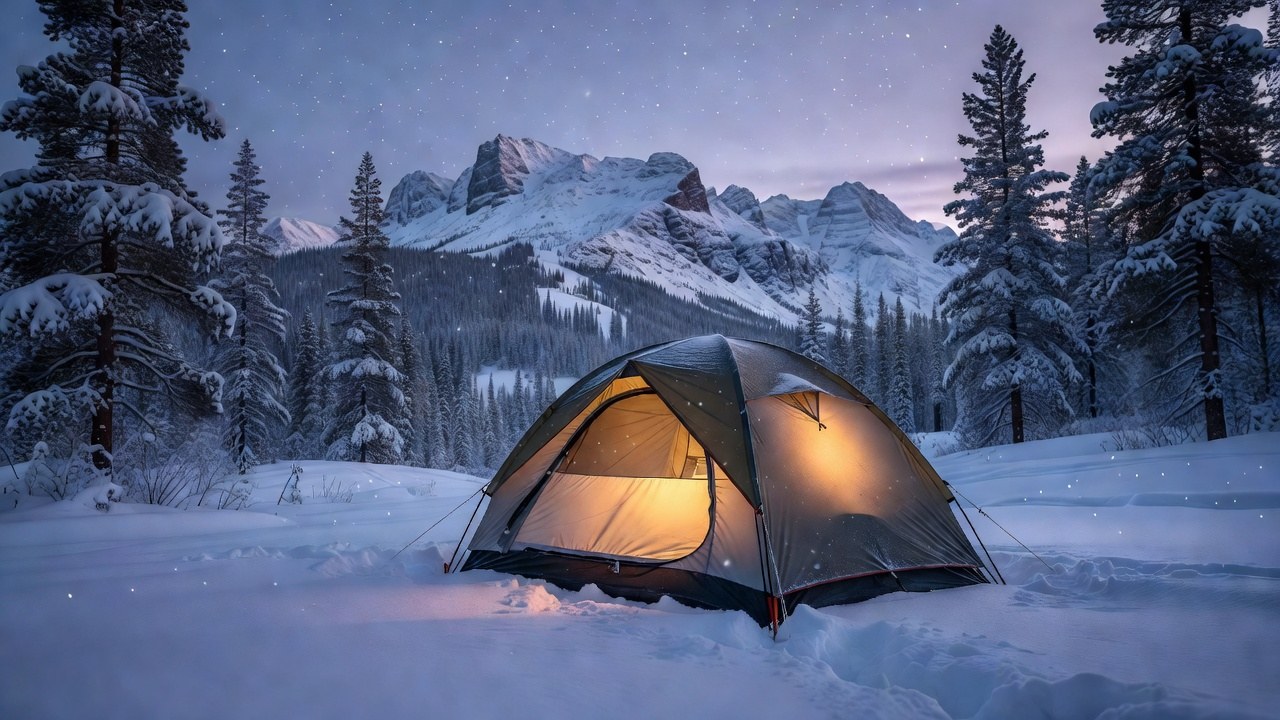
If you are deciding whether the cold-weather tent earns its keep this year, Veterans Day, November 11, 2026 is a free-entry national park day that makes a good first cold-weather test trip.
Quick Answer: Which 4-Season Tent to Buy
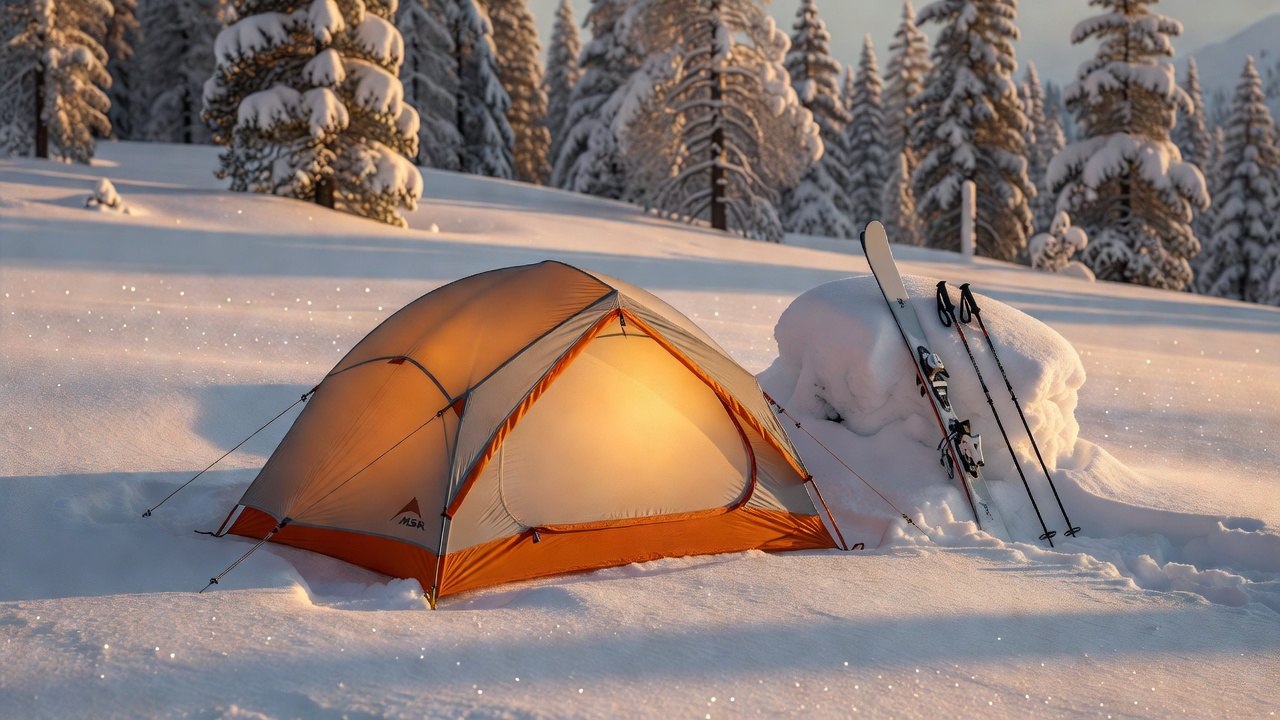
- Best for ski touring and deep backcountry: MSR Access 2 — the lightest genuinely storm-worthy option here.
- Best versatile 3—4 season: NEMO Kunai 3 — handles snow load without turning into a sauna in shoulder season.
- Best budget and family pick: Naturehike Massif Hot Tent — a stove jack at a fraction of the price, and the one most families should buy.
- But the tent is not the warmth. The Therm-a-Rest NeoAir XLite NXT does more for your night than any fly fabric, with the Klymit Insulated Static V as the budget pad and a Kelty Cosmic Down 20 as the bag. Pair those before you spend more on the tent.
Do You Actually Need a 4-Season Tent?
Most winter camping does not require a 4-season tent. If you're camping below treeline in calm conditions, or you're snowshoeing into a sheltered valley, a solid 3-season tent with a full-coverage fly handles it fine — our winter camping for beginners guide lays out exactly how to set up a 3-season tent for cold nights (face the door away from wind, dig a snow wall, use deadman anchors).
You genuinely need a 4-season tent when:
- You're above treeline or on exposed ridges where wind gusts regularly exceed 40 mph
- Snow load is a real risk — a heavy storm can dump enough snow to collapse a 3-season dome's thin poles
- You're winter backpacking or ski touring and weight per warmth matters
- You'll spend multiple nights in deep snow and need a shelter that sheds accumulation instead of collecting it
If you're car camping with the family in a state park in January, a 4-season tent is overkill — buy a better sleeping bag instead. Our winter camping gear checklist walks through the full cold-weather kit — bags rated below freezing, insulated pads, stove fuel, and layering — so you can build the right system around whatever shelter you pick. If you're sleeping on a frozen lake or a wind-scoured plateau, a 3-season tent is a liability. The tent size guide has more on matching shelter to trip type; this guide is about the winter end of that spectrum.
What Makes a Tent Actually "4-Season"?
Manufacturers throw the term around loosely, so learn the four things that separate a real winter tent from a rebadged summer tent:
Pole structure and strength. Real 4-season tents use more poles (or heavier-gauge poles) in geometries that resist snow loading — geodesic or modified-hub designs, not simple crossed domes. Snow collapses tents through pole failure, not fabric failure. Check the pole count and material: aluminum DAC or Easton poles beat fiberglass at any price.
Fabric and fly coverage. Winter tents have higher-denier fabrics (typically 30D-40D ripstop) and a fly that reaches all the way to the ground, with a protected door. A 3-season fly that stops a foot above the snowline turns into a snow scooper in a windstorm.
Vestibule and protected entry. You need a place to take off boots and park a pack outside the inner tent. A covered vestibule doubles as a windbreak for the door zipper — the weakest point on any tent in winter.
Condensation management. Your breath produces a shocking amount of moisture. A winter tent needs vents you can crack from inside without letting snow in. Some condensation is unavoidable below freezing; a good design keeps it off your sleeping bag.
If condensation rather than cold is what's soaking your bag, the fix order matters: vent first, then pitch, then gear. Our tent condensation guide walks through the venting order that works in a sealed tent and the absorbers that keep the water out of your insulation.
Three Winter Tents I'd Actually Trust (2026)
Best for Ski Touring & Deep Backcountry: MSR Access 2
MSR Access 2 — 2-Person 4-Season Tent
If your winter trips involve skis, a splitboard, or a snowshoe approach, the MSR Access 2 is the tent I keep coming back to. It's a true 4-season design that weighs about 5 lbs 6 oz — light enough to split between two packs, with a floor plan that fits two sleepers plus gear. MSR built it around skiers: the fly vents reduce condensation, the limited-mesh inner body traps body heat better than the mesh-heavy backpacking tents, and the poles are rated for real snow load.
At roughly $600-700 it's an investment, but it replaces two tents (a summer backpacking tent and a winter shelter) for people who tour in shoulder seasons. The tradeoff: it's a two-person tent, period. No family version, and the interior is snug — which is exactly what you want for warmth.
Best Versatile 3-4 Season: NEMO Kunai
NEMO Kunai 3–4 Season Backpacking Tent
The Kunai is the tent for people who winter camp a few weekends a year and refuse to own a shelf full of shelters. It's a 3-4 season hybrid: convertible mesh panels on the inner tent give it summer ventilation, while the wind-blocking inner body and burly pole structure handle real winter conditions. At around 4 lbs, it's lighter than the MSR Access 2 and packs smaller — a genuine advantage if your winter trips start with a hike.
NEMO redesigned the current generation with a reshaped entry, a higher-volume vestibule, and larger convertible mesh panels. Set up as a 4-season tent, it shrugs off 20°F nights with wind. Set up with the mesh open, it's a fine 3-season backpacking tent. That versatility is the whole pitch: one tent, every season. It's less bombproof than the Access in a true blizzard, so know its limits — but for most winter campers it's the smartest buy on this list.
Best Budget & Family Option: Naturehike Massif Hot Tent
Naturehike Massif Hot Tent with Stove Jack — 2/4 Person
Here's the budget twist: the cheapest way to be warm in winter is to bring a heat source inside. The Naturehike Massif is a 4-season hot tent with a stove jack — a reinforced opening in the fly that lets you run a small wood stove's chimney through the roof. A wood stove turns a 20°F night into a t-shirt night, and it doubles as a cooking surface and snow-melter (snowmelt water is the only reliable winter water source).
The Massif comes in 2 and 4-person versions, with a double-layer 4-season design, waterproof/windproof fly, and the stove jack built in. For family winter car camping it's the clear value pick — you're not carrying it, so weight is irrelevant, and the stove does the work the tent would otherwise have to do. The tradeoffs: hot tents need ventilation discipline (carbon monoxide is real — keep that vent cracked), the stove adds ~$100-150 on top of the tent, and you're committed to sourcing firewood. If you want a simpler no-stove budget option, a well-pitched 3-season tent from our budget camping gear guide plus the right sleep system beats a cheap "4-season" tent every time.
The Sleep System Matters More Than the Tent
Here's the winter camping secret nobody puts on the tent box: your sleeping bag and pad keep you alive; the tent just keeps them dry. On a 14°F night you can be perfectly comfortable in a mediocre shelter with a dialed sleep system — and miserable in a $700 tent with a summer bag. Spend your money in this order: pad, bag, tent.
The pad is non-negotiable. In winter, the ground conducts heat out of your body like a heat sink. The Klymit Insulated Static V ($94.99, 4.5★ from 7,200+ reviews) is the workhorse: an R-value around 4.4 with V-shaped chambers that keep you off the cold floor without the weight of a foam monster. For ultralight winter trips, the Therm-a-Rest NeoAir XLite NXT ($209.95, 4.7★) packs to the size of a water bottle with serious warmth — or layer the cheap-and-cheerful Therm-a-Rest Z Lite Sol ($54.95, 4.7★ from 11,500+ reviews) foam pad on top of an inflatable for a bombproof double stack.
The bag: match it to the coldest night you'll face. The TETON Sports Celsius XXL 0° Sleeping Bag ($89.99, 4.5★ from 3,200+ reviews) is the value king — a 0°F rating, XXL cut for side sleepers, and a removable liner, all for under a hundred bucks. It's bulky and heavy, which is fine for car camping but brutal for backpacking. For weight-conscious winter trips, the Kelty Cosmic Down 20° ($169, 4.5★) uses 550-fill down to save two pounds — but a 20° bag is a 20° bag; pair it with a liner or wear your puffy inside on genuinely cold nights.
One cheap hack that saves winter trips: boil water before bed, pour it into a CIVAGO 32 oz insulated bottle ($19.99, 4.6★ from 11,700+ reviews), seal it, and drop it in the foot of your bag. You get a hot-water bottle that's still warm at 5am — and drinkable water in the morning.
One sizing consequence of that bulk: winter sleep systems eat far more floor area than summer ones, so the 4P that felt roomy in July can turn into a wrestling match in January once the XXL bags and a doubled-up pad stack are inside. If you're choosing between a 4P and a 6P for cold-weather trips, put cots or thick pads into our tent size calculator — it shows the larger capacity class that setup actually needs rather than the one the box advertises.
One mistake that is not about the tent at all: arriving at a cold camp in wet boots. The sock-and-drying system, and the winter footwear that supports it, is in our snow boots and winter traction guide.
Best Winter Camping Gear: The Kit Beyond the Tent (2026)
Search for the best winter camping tent and you get forty shelter reviews and almost nothing about the gear that decides whether you actually sleep. That order is backwards. The best cold weather camping tent is only the outer shell of a system — a $700 shelter with a summer pad, numb fingers, and boots frozen solid is still a miserable night. If you are building the best winter camping gear list from scratch, pick the shelter first, then close the gaps below before you spend another dollar on poles and fabric.
None of this is ultralight backcountry kit. It is the car-camping and family-winter-trip layer: the pieces that turn a state-park January weekend into a genuinely comfortable trip instead of a survivable one. For the shelter half, the three tents above cover most budgets — but a best snow camping tent for deep snow and a best winter camping tent with stove are different tools again, which is why the stove route gets its own subsection below.
1. A tent heater that is actually rated for indoor use
The single biggest comfort upgrade in winter car camping is a heat source you can run inside the tent. The Mr. Heater MH9BX Buddy ($74, 4.7★) is the one I trust: 4,000 or 9,000 BTU of radiant heat across up to 225 square feet, enough for a six-person tent, with a piezo push-button ignition so there are no matches to fumble at 2am. What makes it the safe choice is the pair of sensors — an oxygen-depletion sensor that shuts the unit down when oxygen drops, and a tip-over switch that kills the flame if it gets knocked — plus the fact that it runs on cheap 1-lb propane cylinders instead of a built-in fuel tank.
Treat any heater in a tent as real equipment with real rules, not a campfire indoors. Keep a vent cracked for cross-ventilation, never sleep with the unit pressed against fabric, and follow the manual's clearance instructions exactly. If you would rather run it from a 20-lb tank than buy disposables, the 10-foot Buddy series hose ($17.99) lets the tank sit outside the sleeping area instead of next to your head, and Mr. Heater specifies its inline fuel filter for any hose-and-bulk-tank setup. In a 1-2 person tent the smaller 3,800 BTU Little Buddy does the same job for $69.99 without blasting through a cylinder.
2. Warm hands, dry hands
Numb fingers make every camp task miserable, and two products fix it two different ways. The rechargeable OCOOPA UT2s hand warmers ($39.99, 4.5★) are two 5,000 mAh units that snap together for 360° heat or split so each person gets one — four heat levels from 104°F to 145°F, up to 16 hours across the pair, and each half doubles as a USB-C power bank. For zero preparation at all, the HotHands bulk pack ($29.99, 4.6★) is 40 pairs (80 warmers) that hit about 135°F for up to 10 hours each, odorless and safe in pockets, gloves, and boots. Rechargeable for the trips you plan, disposable for the ones you don't.
3. A real base layer, and merino on your feet
The checklist above says to change into dry base layers before sleeping — this is that layer. The Columbia Omni-Heat Midweight Base Layer Top ($49.99, 4.6★) lines the fabric with reflective silver dots that bounce your own body heat back at you while Omni-Wick moves sweat off your skin, and the midweight stretch knit layers under fleece and a shell without bulk. Then put merino on your feet: the Darn Tough Hiker Micro Crew ($27.95, 4.7★) is a midweight wool sock that still insulates when it is damp, and it carries an unconditional lifetime guarantee — one pair, every winter, replaced if it ever wears through.
4. Traction and light for the 2am walk
Frozen ground changes the rules for the walk to the bathroom or the woodpile. Yaktrax Pro traction cleats ($34.95, 4.5★) stretch over hiking boots or snow boots with 1.4mm steel coils wrapping the entire outsole for 360-degree grip on packed snow and sheet ice, field-tested to -41°F, and they roll down to pocket size. Light matters as much when the sun sets at 5pm, which is why the Black Diamond Spot 400 ($39.95, 4.5★) is the winter pick — the dual-fuel design runs on AAA batteries, so a dead rechargeable in the cold is never the end of the night.
5. A stove that still lights below freezing
Canister stoves lose pressure as the mercury drops, which is a real problem when you are melting snow for water. The MSR WhisperLite Universal ($149.95, 4.7★) solves it by burning ordinary isobutane canisters on easy trips and switching to white gas, kerosene, or unleaded gasoline when it turns brutal — and its Shaker Jet self-cleaning system clears a clogged jet in the field with a shake. That fuel logic is the whole point of our camp stove fuel guide, which covers which fuel still works at 15°F and why isobutane quits before propane does.
6. The blanket that lives in the tent
Winter camping is not only sleeping. The Rumpl Original Puffy blanket ($139, 4.7★) is a 52-by-75-inch puffy that stays comfortable down to about 45°F, shrugs off damp campfire air, and clips to a camp chair with its corner loops. It is not a sleeping bag: it is the layer for sitting up after dinner, for warming up before you climb in, and for the kid who insists on another twenty minutes by the fire.
If you are still choosing between shelters, the best winter camping tents for most families are the ones above — a hot tent if you will feed a stove, the NEMO Kunai if you want one tent for three seasons and four. And before you book anything, check which parks are even open: our Camping in December guide lists the winter-rated campgrounds, the ones that close, and how far south you have to drive to stay above freezing.
Common Winter Tent Mistakes (Learn From Mine)
- Trusting the "4-season" label. Read the pole specs, the fly coverage, and the denier. If a tent lists a mesh-heavy body and a fly that doesn't reach the ground, it's a 3-season tent with a winter price tag.
- Skipping deadman anchors. Regular stakes pull straight out of frozen ground. Use snow stakes, or fill stuff sacks with snow and bury them as anchors — then guy out every point, especially the windward side.
- Sealing the tent tight against the cold. The condensation from your breath freezes on the inner walls and drips on your bag as the tent warms. Crack a vent. A slight draft beats being slowly soaked.
- Forgetting the ground cloth does nothing for warmth. A footprint protects the floor; it does not insulate. Your pad does that job.
- Sleeping in your day clothes. Damp sweat freezes. Change into dry base layers inside the tent — this one habit is worth more than any tent upgrade.
Quick Winter Shelter Checklist
- 4-season tent with full-coverage fly and snow-rated poles
- Snow stakes or stuff-sack deadman anchors + extra guy line
- Insulated sleeping pad (R-value 4+), or double-stacked pads
- Sleeping bag rated for the coldest expected night
- Dry base layers to change into at night
- Insulated water bottle as a hot-water bottle (and for morning water)
- Small stove for cooking and melting snow (see our cold-weather & high-altitude stove guide for fuel that works below freezing)
- Headlamp with cold-weather batteries (they die fast in the cold)
Winter Tent FAQ
Do you need a 4-season tent for winter camping?
Usually not. If you are camping below treeline in calm conditions, or snowshoeing into a sheltered valley, a solid 3-season tent with a full-coverage fly handles winter fine. You genuinely need a 4-season tent when you are above treeline on exposed ridges, when snow load could collapse thin poles, when you are winter backpacking or ski touring, or when you will spend multiple nights in deep snow.
Can you use a 3-season tent in winter?
Yes, with technique. Set the door away from the prevailing wind, build a snow wall on the windward side as a windbreak, and use deadman anchors — regular stakes pull straight out of frozen ground. Car camping in a state park in January is the case where a 4-season tent is overkill and a better sleeping bag is the smarter purchase.
Why does my tent get wet inside in winter?
Condensation, and it is mostly your breath. Each person exhales a surprising amount of moisture, and below freezing that vapor condenses and then freezes on the inner walls, dripping onto your bag as the tent warms up. The fix is not sealing the tent tighter against the cold; it is cracking a vent. A slight draft beats being slowly soaked.
What is the difference between a 3-season and a 4-season tent?
Four things separate a real winter shelter from a rebadged summer tent: stronger pole structures in geometries that resist snow load, higher-denier fabric with a fly that reaches all the way to the ground, a protected vestibule for boots and packs, and vents you can open from inside. Snow collapses tents through pole failure, so pole specs matter far more than the "4-season" label.
Is a hot tent safe to use in winter?
A hot tent is built around a stove jack — the heat-resistant port that lets a wood stove's chimney exit through the tent wall — so the stove is not simply sitting loose inside a sealed nylon shelter. Safety still depends on following the manufacturer's clearance, venting, and burn instructions exactly, and on never sleeping with a fire you cannot monitor. Treat it as real equipment with real rules, not a campfire indoors.
How do you stay warm in a winter tent?
The sleep system does the work, not the tent. Use an insulated pad with an R-value of 4 or higher (or stack two pads), a bag rated for the coldest night you expect, and change into dry base layers before sleeping, since damp day clothes freeze. A tent keeps snow off you; your pad and bag are what keep you warm.
If you're weighing a desert winter, our Camping in New Mexico guide lays out which half of the state is actually in season from November through March, plus the park elevations and free BLM dispersed rules that decide it.
Alabama's winter camping needs a three-season tent on the coast and a real four-season shelter only at elevation — see Camping in Alabama for the split.
Planning the shoulder season? Camping in Louisiana explains why October through April is the only camping season that makes sense on the Gulf Coast, and what hurricane season does to the calendar.
A four-season tent is only half of a warm night. Our cot vs air mattress vs sleeping pad breakdown covers the sleeping-surface half, including the R-values that matter on below-freezing trips.
If you would rather heat with wood than with propane, the hot tent camping guide covers stove jacks, stove sizing and the ventilation rules that come with a fire inside a tent.
What is the best winter camping tent for a family?
It depends on how you plan to heat it. For car camping and family trips, a hot tent like the Naturehike Massif above is the best winter camping hot tent value going — the stove does the work the tent would otherwise have to do, and you are not carrying the weight anywhere. If you will not deal with firewood, the NEMO Kunai is the most versatile shelter on the list, and below treeline in a mild winter a solid 3-season tent with a real sleep system still beats a cheap tent wearing a "4-season" label.
What gear do you need for winter camping?
The short class list: an insulated pad rated R-4 or higher, a bag rated for the coldest night you expect, a dry base layer to sleep in, merino socks, an insulated bottle for hot water, a stove that still lights below freezing, a headlamp that runs on disposable batteries, traction cleats for icy ground, and — for car camping — an indoor-rated tent heater plus hand warmers. That is the complete best winter camping gear list for a family weekend. Upgrade the sleep system first and the tent last.
If your fall or winter trip points at the Mojave, the Nevada camping guide maps what stays open in November, which parks close on a fixed date, and the free dispersed options in between.
The Bottom Line
Buy the shelter your trip actually demands: the MSR Access 2 for serious backcountry and ski touring, the NEMO Kunai for a do-everything 3-4 season tent, and the Naturehike Massif hot tent for budget or family winter camping where a wood stove does the heavy lifting. Then spend the rest of your budget on the sleep system — the TETON 0° bag and Klymit Insulated pad combination keeps you warm at a fraction of the cost of a top-tier tent. Shelter keeps the snow off; the sleep system keeps you alive.
Winter camping is one of the most rewarding ways to escape the crowds. Get the gear right, and a 14°F night stops being a survival exercise and starts being a great story.
<!-- AFFILIATE_DISCLOSURE -->Tent sorted? The next decision is what goes inside it — the kid-sized pad-and-bag system, plus the layering rules, are in our winter camping with kids guide.
If your fall or winter trip is heading for the Mid-Atlantic coast, the Maryland camping guide covers the cold-water wind, the off-season bathhouse situation, and the gear that actually gets used in a November cypress marsh.