Snow Camping for Beginners: How to Camp in the Snow (2026 Family Guide)
How to camp in the snow without freezing: site selection, snow anchors, sleep systems, fuel, and the gear that matters on a first snow camping trip.
Quick Answer: Can You Camp in the Snow?
Yes — people camp in the snow every winter, and you do not need an expedition budget to do it. What you need is a dry sleep system, a pad combination with real R-value, a stove that still works when it is 15°F, and a site that is not under a dead tree or on an avalanche slope. Snow camping in a developed or car-adjacent spot is a beginner-friendly weekend trip. Snow camping miles from the road, in a storm, is a different sport.
The rest of this guide is the trip-level stuff — where to put the tent, how to anchor it in snow, why you wake up cold even when your bag rating is fine, and what to bring so the first night does not end at 2 a.m. in the car. If you already know the gear list, jump to Snow Camping Essentials. If you are starting from zero on winter gear generally, read our winter camping gear checklist first and come back.
What Snow Camping Actually Is (and What It Isn't)
Snow camping means camping on snow — a base that is frozen, insulative, and slippery all at once. It is not automatically backpacking, and it is not automatically "extreme." Three versions exist, and they are wildly different nights:
- Car-adjacent snow camping (start here). You park in a plowed lot, walk 50 to 200 yards, and pitch. You can retreat to a warm car. This is where every family snow camping trip should begin.
- Snow camping with a basecamp tent. A four-season or hot tent, a stove, chairs, a real kitchen. Heavy, comfortable, and the version most families actually love. See the 4-season tent guide for what makes a shelter snow-worthy, and the hot tent guide if you want heat inside the shelter.
- Snow camping as a backcountry objective. Navigation, avalanche terrain, self-rescue, often snowshoes or skis. Do not make this your first trip, and do not take kids into it without training.
The trap is assuming trip #3 is the same sport as trip #1. It isn't. Snow camping at a trailhead with the car nearby is genuinely fun in your first season.
Can You Camp in the Snow? The Honest Answer for Families
The short answer: yes, and kids usually handle it better than the adults do — if you keep them dry and busy.
What actually decides whether your family night works:
- A dry layer against the skin. Wet cotton is the whole ballgame. Merino or synthetic only.
- A pad stack that blocks the cold coming up from below. Snow pulls heat out of a sleeping bag faster than air does.
- A bag you trust 15°F below the forecast low. Ratings are survival numbers, not comfort numbers.
- Food and water you can reach without leaving the bag. Nobody sleeps well hungry or dehydrated.
- An exit plan. If the trip goes sideways at 11 p.m., you should be able to be in the car in 10 minutes.
The families who hate snow camping are almost always the ones who planned it as "summer camping, but colder." The ones who love it plan around moisture, not temperature. That is why kids-specific cold limits deserve their own read before you take a toddler out — the temperature ladder is different for a 4-year-old than for you.
Snow Camping Sites: How to Pick One That Won't Flood, Sink, or Freeze
Site selection on snow is a different checklist than summer. In summer you hunt for shade and flat ground. On snow you hunt for drainage, wind shelter, and the absence of hazards overhead.
- Never camp under a snow-loaded dead tree. Snow-loaded branches and beetle-killed trees drop. This is the most common serious winter camping injury and it is entirely avoidable.
- Avoid the bottom of a hollow or drainage. Cold air sinks and pools. Ten feet of elevation can be 8°F warmer.
- Avoid avalanche runout zones and slopes above you. If the site is under a 30-45° slope, pick a different site. A trip that requires avalanche judgment is a trip that requires avalanche training.
- Look for natural windbreaks. Trees, rock outcrops, a snow berm you build yourself. Wind is what makes 20°F feel like 0°F, and it is what collapses tent poles.
- Frozen lakes only with local knowledge. Ice thickness varies by body of water, snow cover, and current. Unless you have spoken to a local ranger or bait shop that day, stay off the ice.
- A plowed or packed lot beats deep powder for a first trip. Firm ground means your stakes hold and your car is right there.
If you are camping inside a park or forest, the legal picture is worth ten minutes of research. Many national forests allow dispersed winter camping; many parks close roads and campgrounds and shift to primitive winter rules. Our campground closing-date guide explains how to check your specific site, and the national park camping guide covers the reservation mechanics.
Pitching a Tent in Snow: Anchors, Platforms, and Wind
Standard tent stakes do nothing in powder. Snow has almost no holding power until you work it, so first-timers need one of three anchoring systems:
- Deadman anchors. Fill a stuff sack with snow, tie your guy line to it, bury it 6-12 inches, and stomp the snow down. Weigh it down for 20-30 minutes so it sets. This is the cheapest and most reliable method.
- Snow-specific stakes. Wider, longer, and often aluminum or plastic with a hole. They work in packed or wind-slabbed snow.
- Ski or trekking pole anchors. Bury the pole horizontally in a T-slot in the snow. Good for light shelters.
Two things make anchors fail: not burying them deep enough, and not giving the snow time to sinter (harden). If it is snowing sideways, build the anchors first, then raise the tent.
The platform matters more than the anchor. Options, worst to best for a family trip:
- Pitch straight on powder → you will sink, and the bag contact point gets wet.
- Sleep on a closed-cell foam pad over powder → workable, still lumpy.
- Stomp or shovel a flat platform, then let it set for 30+ minutes → the standard move. Compact the area where you will sleep, plus a small entry trench.
- Dig a shallow pit or snow wall → the upgrade. A 1-2 foot wall on the windward side is the single biggest comfort change you can make in 15 minutes with a shovel.
For the shelter itself, a four-season tent is the honest answer for snow above about 6 inches and any real wind — the poles, guy points, and venting are designed for it. If you want to go deeper on shelter choice, read the 4-season tent comparison; the Naturehike Massif holds up as a budget hot-tent entry point, and the MSR Access 2 remains the benchmark for a lightweight four-season shelter you can also carry.
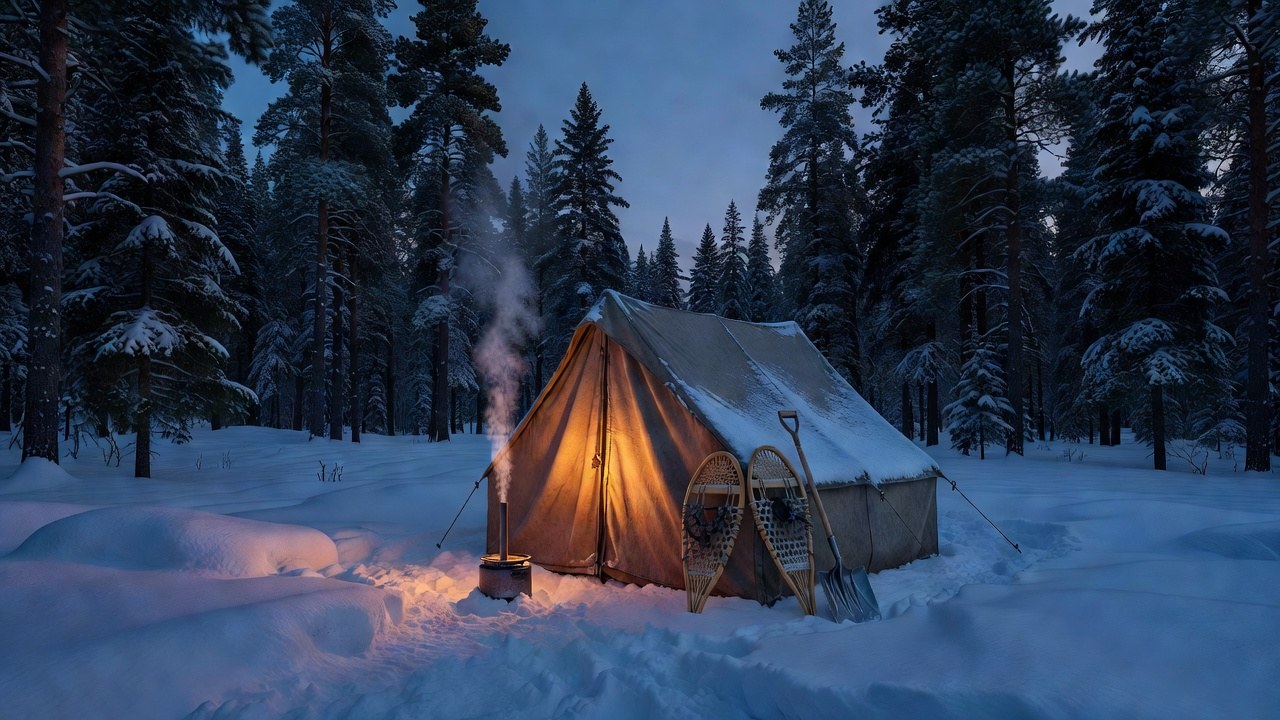
Winter storm camping note: if the forecast says "snow, 6-12 inches," a first trip is the wrong day. Snow camping is fun in a light dusting; a storm is an advanced-conditions trip.
Staying Dry Is Harder Than Staying Warm
Here is the inversion nobody warns you about: in snow, moisture, not temperature, is what makes you cold. Your body produces roughly a liter of water vapor overnight through breathing and sweating. In a sealed tent at 15°F, that vapor has nowhere to go but into your bag, your pad, and your base layer.
The fixes are boring and they work:
- Vent the tent even though it feels wrong. Leave a vent cracked and a door flap partly unzipped under a fly. You will trade a few degrees for a dry bag.
- Do not breathe inside your bag. Breathe into the air, or wear a balaclava that lets you exhale forward.
- Change socks before sleep, every night. Damp socks you wore all day guarantee cold feet at 3 a.m. This is where merino socks like Darn Tough Hiker Midweight earn their price — they stay warm when damp, dry fast, and you can swap to a dry pair without a laundry day.
- Dry layers on your body, not in a bag. Putting damp cloth in a sleeping bag just moves the moisture to your insulation. Sleep warm with them or dry them next to the stove before bed.
- Keep the snow off the entry. A small mat or a scrap of closed-cell foam at the door stops snow tracking into your sleep area.
- Use a liner or a liner-bag system. A fleece liner adds a few degrees and absorbs some of the vapor so your bag's insulation stays dry.
- Melt-water discipline. Water in a bottle you can keep in the bag is water you will actually drink. A frozen bottle at 7 a.m. is a morale event.
If condensation is your recurring enemy, the same fixes appear in the tent condensation guide — snow just makes them non-negotiable.
The Snow Camping Sleep System That Actually Works
This is the section that decides your trip. Two rules:
Rule 1: Two pads, one bag. Snow conducts heat out of you. A single inflatable pad is not enough. The standard is a closed-cell foam pad (indestructible, cheap, R-value ~2) under or over an insulated inflatable (R-value 4-6). Stacked, you are looking at R-6 to R-8 and you will feel it.
Rule 2: Buy temperature headroom. Take the forecast low, subtract 10-15°F, and buy for that. A 20°F bag in a 20°F night is a cold night. A 0°F bag in a 20°F night is a good night.
Working combinations from our own catalog:
- Closed-cell base: Therm-a-Rest Z Lite Sol — the foam pad that cannot fail, cannot puncture, and doubles as a sit pad. Pair it under anything.
- Insulated inflatable: NEMO Tensor All-Season (the wide, quiet option), Sea to Summit Ether Light XT Insulated (thickest for side sleepers), or the budget route, Gear Doctors Oxylus.
- Pure comfort / car camping: Exped MegaMat 10 — heavy, absurdly warm, and the pad people buy after one cold night in a thinner pad.
- Bags: Kelty Cosmic Down 20 for a real down bag at a fair price; TETON Sports Celsius XXL 0° for the budget 0°F route; Coleman Oak Point Big & Tall 30°F if you sleep on your side and want shoulder room; Coleman Palmetto 40°F for mild-snow trips only.
- Liners: Redcamp fleece liner with hood (cheap insurance), Litume fleece mummy liner (a claimed +27°F boost, which is optimistic but real in effect), or a silk liner for warmer, drier nights.
- Kid sleepers: the kids cold-weather guide covers this properly — smaller bags, warmer feet, and why kids should be in a bag rated well below the forecast.
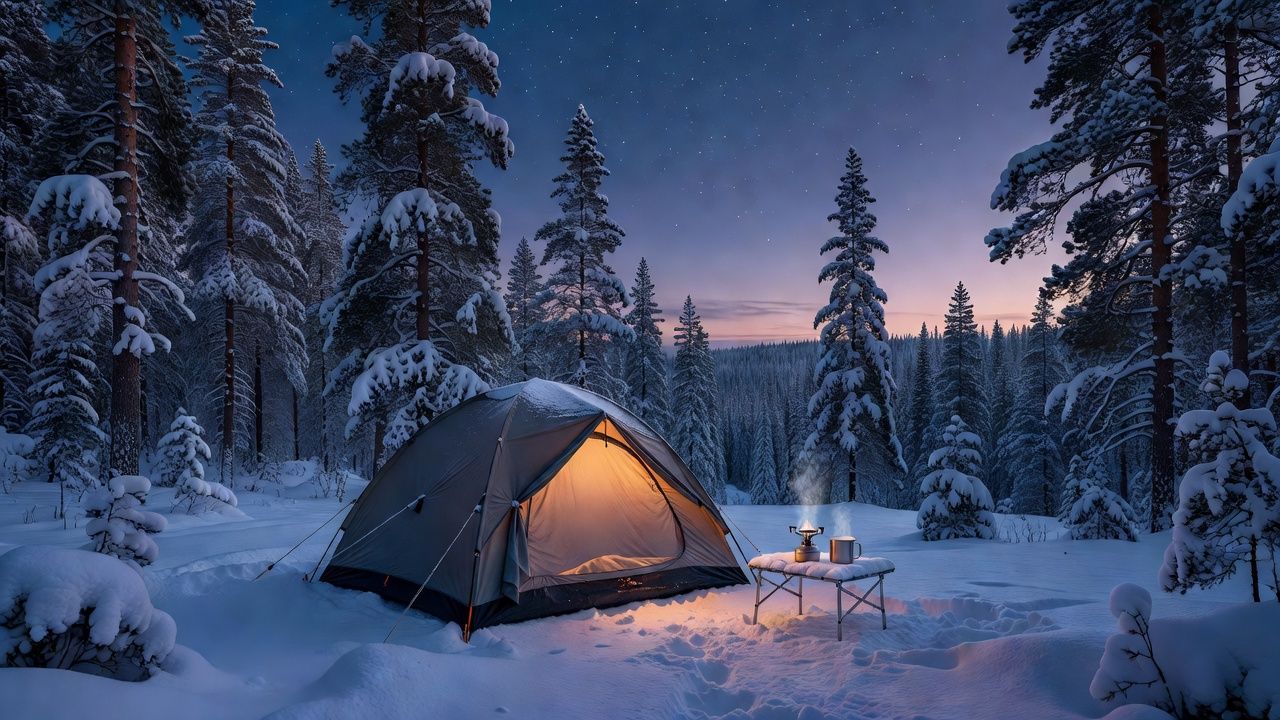
Layers inside the bag follow the same logic as the pad: merino base layer top and bottom, dry socks, a beanie, and gloves within reach. A neck gaiter is the most underrated piece of snow camping gear because it seals the gap between beanie and jacket collar.
Snow Camping Kitchen: Melting Snow, Fuel, and Hot Food
Snow camping cooking has one hard constraint: melting snow costs fuel. If you are used to a weekend on one isobutane canister, plan for two, and expect performance to drop as the canister cools.
- Isobutane canisters get sluggish below about 20°F. Keep the canister in your jacket before use, or switch to a stove that runs on white gas or a hybrid.
- **MSR WhisperLite Universal is the classic answer for cold and altitude — it runs on multiple fuels and does not care about canister temperature.
- The MSR PocketRocket 2 is the light, cheap, three-season workhorse for snow camping that stays mild; bring a windscreen.
- The MSR heat reflector and windscreen is a small purchase that measurably shortens your boil times in cold, breezy conditions.
- Start every melt with a little liquid water in the pot. Heating snow in a dry pot scorches and wastes fuel. Never eat snow for hydration — it lowers your core temperature.
- Arc lighters beat flint in wind and cold. The SUPRUS electric lighter fires in conditions where a disposable lighter's piezo gives up.
Food-wise, snow camping rewards hot, high-fat, low-fuss meals in a Thermos food jar or a Stanley camp mug you can hold with gloves on. Our winter camping food guide has the full menu plan, and if your stove is misbehaving in the cold, the cold-weather stove guide and the stove troubleshooting guide are the two pages to open before you blame the fuel.
Heat in the tent — the safety line. A propane heater like the Mr. Heater Buddy is what turns a cold night into a comfortable one for many families. If you use one:
- Ventilation is non-negotiable. Crack a vent. Carbon monoxide does not care that it is 12°F.
- Bring a CO alarm. Cheap, small, and the only reason to trust the arrangement.
- Run it to warm the tent before bed and in the morning, not sealed and running all night in a closed tent with a sleeping kid pressed against it.
- Keep combustibles away — bags, foam pads, and tent walls all melt or burn.
Our tent heater safety guide and how to stay warm camping both go deeper on this, and it is worth twenty minutes before your first heater night.
How to Get There: Snow Driving, Trailheads, and Parking
Most snow camping trips are decided before you leave the house.
- Check road and gate status the morning of. Winter gates close entire forest road systems. A "closed" gate is a two-hour detour.
- Carry traction. Chains or snow socks for the driven wheels, a shovel you can actually dig with, and an ice scraper that is not the plastic card from your wallet.
- Park where plows can work. Do not block a plow turnaround or a one-lane road. If a plow buries your car overnight, that is your morning.
- Tell someone your plan. Route, site, expected return, and a check-in time. Cell service in winter mountains is unreliable, so treat it as unavailable.
- Pack a cold-weather car kit. Blanket or sleeping bag, extra gloves, water, snacks, headlamp, jumper pack, and a way to make heat if you have to wait.
Snow Camping With Kids and Dogs
Both are doable and both need their own read, because the failure modes are specific.
- Kids: they lose heat fast, they will not tell you they are cold, and their sleep systems need more headroom than yours. Read the winter camping with kids guide before you plan the trip, and keep the day short and the nap warm.
- Dogs: booties for icy crusts and refrozen snow, a raised bed instead of the ground, and a plan for paw ice balls. The cold-weather camping with dogs guide covers the details, and the general dog camping guide is the summer baseline.
If you are deciding where to go at all, the December camping guide, the January guide, and the Christmas and New Year camping guide all cover snow-capable destinations by region, and the November guide is where most families should actually start.
Snow Camping Essentials: What Actually Changes on Snow
Not a full packing list — the winter camping gear checklist is that list. This is what changes when the ground is snow:
- Two pads, not one. Closed-cell foam plus an insulated inflatable. Non-negotiable. Therm-a-Rest Z Lite Sol under a NEMO Tensor All-Season is the combination people keep coming back to.
- Wide-mouth water bottle you can fill with snow and keep in your bag. A 40 oz Thermos Stainless King still has liquid water in the morning if it slept with you.
- Socks you can rotate. Two or three pairs. Darn Tough Hiker Midweight for the day, dry merino for sleeping, and no cotton anywhere.
- Gloves plus liners. TRENDOUX Thinsulate touchscreen gloves for camp chores, Carhartt waterproof insulated knit-cuff gloves for the cold jobs. Liners mean you can work without bare hands.
- A beanie and a neck gaiter. Smartwool's merino beanie and reversible neck gaiter are the two items that most change how cold a night feels.
- Insulated boots with a waterproof membrane and real tread. Salomon X Ultra 4 Mid GTX for adults, KEEN Targhee Mid WP for kids and teens. Add traction if you are walking on refrozen snow.
- A dry bag for the wet stuff. A waterproof roll-top dry bag keeps damp gloves, socks, and the morning's wet layers away from your sleep kit.
- Footprint and a canopy re-waterproofing pass. Packed snow and abrasion chew through tent floors and DWR. Nikwax SolarProof on the fly, and a footprint under the tent.
- Snow shovel. Not optional if there is a foot of snow on the ground. It is how you build the platform, the wall, and the path.
- A headlamp and a lantern that work in the cold. Cold kills alkaline batteries; rechargeable lanterns like the LuminAID PackLite Max (with solar top-up) handle it better.
- Sunscreen and sunglasses. Snow reflects UV. A bluebird day on snow will burn you worse than a summer beach day.
- A tarp or ground cloth for the vestibule so you have a dry place to sit down and take boots off.
- Hand warmers. HotHands disposables for gloves and pockets, OCOOPA rechargeable if you want a reusable pair. The single cheapest way to buy warmth for a kid.
- A battery bank and solar panel. Cold drains phone batteries; power is a safety item when the phone is your only camera, map, and emergency contact. See the solar and off-grid charging guide.
Snow Camping Tips From Cold Nights
- Trip #1 should be 15 minutes from the car. Full stop. Earn the backcountry version later.
- Eat fat before bed. Your body is a furnace and it needs fuel. A late snack is not a treat, it is heat.
- Empty your bladder before sleep and keep a bottle for the middle of the night. Getting up in the cold is what ruins most first nights.
- Set your alarm once to check the kids. They do not regulate temperature like adults.
- Put tomorrow's clothes in the bag with you. Waking to warm layers changes the morning.
- Pack out everything, including food scraps. Winter camping concentrates animals around the only warm-ish places around — camp.
- Have a bail-out decision point. If the forecast shifts to a storm, or a kid is wet and shivering and cannot be warmed, you go home. That is not failure; it is the skill.
Common First-Trip Mistakes
- A single three-season pad in single-digit temperatures. The floor, not the air, is what makes you cold.
- Sleeping in the clothes you hiked in. Damp layers in a bag are a slow, guaranteed chill.
- Sealing the tent "to keep the heat in." You keep the moisture in instead. Vent.
- Melting snow in a dry pot. Fuel disappears and the pot scorches.
- Stomping out a site in the dark. Arrive with 2-3 hours of daylight.
- Trusting a bag rating at its number. Ratings are survival, not comfort.
- Forgetting the sun. Sunscreen and sunglasses genuinely matter on snow.
- Ignoring wind. A windbreak or a wall is worth more than an extra layer of clothing.
Snow Camping FAQ
Can you camp in the snow?
Yes. Snow camping is a normal winter activity for thousands of families every year, especially in the 1-2 feet of snow that accumulates in national forests, state parks, and mountain campgrounds between November and March. You need a dry sleep system, a pad stack with real R-value, a cold-capable stove, and a site that avoids hazards overhead and avalanche terrain. Start car-adjacent and short.
How do you stay warm snow camping?
Stay dry, insulate from below, and eat. Use two pads (closed-cell foam plus an insulated inflatable), sleep in dry merino layers, change socks before bed, vent the tent so your breath and sweat do not soak your insulation, and eat a fat-heavy snack before sleep. In snow, moisture management beats adding layers.
What tent do you need for snow camping?
Any waterproof tent works for a mild, car-adjacent night. For deeper snow and real wind, a four-season tent is the right tool — heavier poles, more guy points, and venting designed for a sealed winter environment. If you want heat inside the shelter, a hot tent with a stove jack is the next step. See our 4-season tent guide and hot tent guide.
What are snow camping essentials?
Two sleeping pads, a bag rated 10-15°F below the forecast, dry merino base layers and socks, a beanie and neck gaiter, insulated gloves, insulated boots with traction, a cold-capable stove plus extra fuel, a shovel, a headlamp, a hard-sided warm drink, hand warmers, and a battery bank. The full list is in our winter camping gear checklist.
Is snow camping safe with kids?
It can be, with rules: keep the trip short and near the car, use a kid bag rated well below the forecast, check on them once overnight, keep them dry and fed, and set a bail-out threshold. Do not take a child into avalanche terrain or into a storm. The temperature ladder for kids is in our winter camping with kids guide.
Where can you snow camp?
National forests usually allow dispersed winter camping on open roads, many state parks keep a winter loop or walk-in sites open, and some national parks keep one or two campgrounds running year-round. Always check the land manager's winter rules and gate status the day you go — our guides to where to camp in December and camping in January cover the regional map.
The Bottom Line
Snow camping is winter camping with the ground working against you. Fix the ground (two pads, a compacted platform, a wind wall), fix the moisture (vent, dry layers, dry socks), fix the fuel (a stove that runs cold, extra canisters), and keep the first trip close to the car. Do that and a 15°F night with snow falling is genuinely one of the best camping experiences of the year — the kind your kids ask for again.
If you want the gear list rather than the trip plan, start with the winter camping gear checklist. If you want the destination, start with the December and January guides.
<!-- AFFILIATE_DISCLOSURE -->TrailMapz earns a small commission from qualifying purchases made through links on this page, at no extra cost to you.