Multigenerational Camping (2026)
Camping with grandparents, parents and kids is a different sport. Here's the 3-generation tent, sleep, chair and activity plan that keeps peace.
In this article · 20 sections
- Quick Answer: Multigenerational Camping at a Glance
- One Tent That Fits Everyone (Pitched in Minutes)
- Sleep Setups: Grandparents Don't Sleep on the Ground
- Chairs You Can Actually Get Out Of
- Light the Path for Late-Night Trips
- Meals Three Generations Can Agree On
- The Wagon Rule: Nobody Carries Anything
- Activities That Bridge the Ages
- Camping Games for Seniors and Grandkids (Both Generations Win)
- Camping With Elderly Parents: What Actually Changes
- Camping With Seniors: Comfort, Pace, and the Bathroom Question
- Where to Go With Grandparents (and Family Vacation Ideas That Work)
- A Sample 3-Generation Weekend Schedule
- Common Mistakes (Learn From Mine)
- Camping With Grandchildren: The Handoff That Actually Makes It Work
- Getting There: Campers and Road Trips With Grandparents
- Camp Grandma: Running a Week of Camp for Your Grandkids
- A Quick Decoder: What People Actually Mean
- Multigenerational Camping FAQ
- The Bottom Line
The first time I took my parents camping with my kids, I planned it exactly like a normal family trip. That was the mistake. By Saturday noon, Dad was napping in the car, my daughter was bored, and Mom was quietly reorganizing the food bin because the table was "too low to cook on." Three generations at one campsite isn't a family camping trip with extras — it's a different sport, with its own gear, pace, and schedule.
Here's the good news: once you set it up right, it's the best kind of trip there is. Grandparents get unhurried time with grandkids, parents get a second pair of watchful eyes, and the kids get the full "camping with grandma and grandpa" memory that lasts decades. National Grandparents Day is September 13 — and the long holiday weekends of fall are the perfect window to make it happen.
This guide covers the six things that actually make or break a three-generation weekend: the tent, the sleep setups, the chairs, the lighting, the meals, and the activities. For a single-generation comfort-focused setup, our camping for seniors guide is the deeper dive — this one is about everyone together.
Quick Answer: Multigenerational Camping at a Glance
The core rule: comfort goes to the oldest generation first, always. If your budget is tight, upgrade Grandpa's sleep before you upgrade anything else — one bad night and the trip gets shortened by a day.
The six things that make or break it: a tent that pitches in under 5 minutes, a real sleep setup for older backs (a cot or a 4-inch pad — never a backpacking pad), chairs with armrests that reach forward at a 17-19 inch seat height, lights that live inside the tent, one hot familiar meal everyone eats at a real table, and a wagon so nobody carries anything.
Tent sizing: 5-8 people fits a 9-person instant cabin tent with a room divider. Splitting into two tents — grandparents in one, parents + kids in the other — is the polite way to solve snoring.
When to go: long fall holiday weekends. Nights are cool but not freezing, and campgrounds have thinned out after summer.
The schedule truth: three generations means a slower day, not a fuller one. Build in about two hours of unplanned time per day or the trip falls apart by Saturday afternoon.
One Tent That Fits Everyone (Pitched in Minutes)
The fastest way to ruin a multigenerational trip is a tent that takes 45 minutes of wrestling poles while Grandpa supervises and the kids run off. Instant cabin tents exist precisely for this moment.
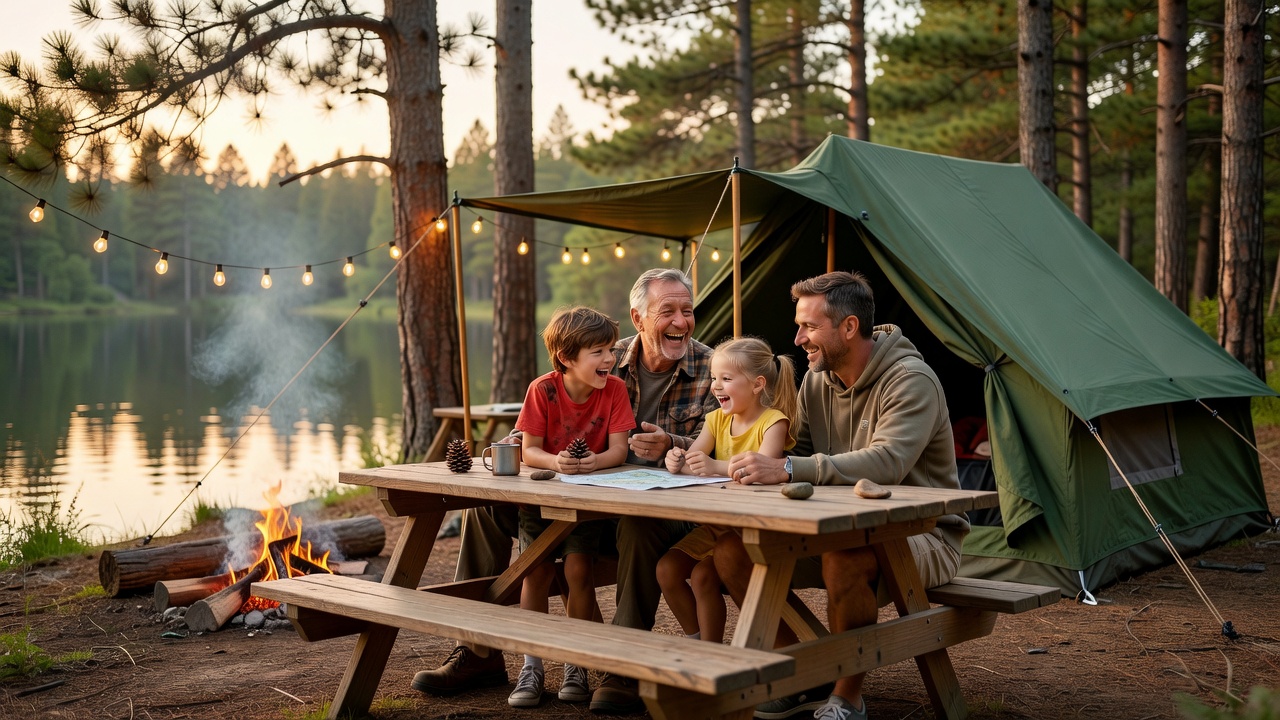
For a three-generation group of 5-8 people, the CORE 9 Person Instant Cabin Tent is our default pick. It's a true one-pole-push setup — pre-attached poles mean it's standing in about two minutes with two people — and at $299.99 it's the rare 9-person tent that doesn't cost as much as a plane ticket. The 14' x 9' floor gives you room for a cot and an air mattress without everyone tripping over everyone else at 2 a.m. The separate room divider matters more than you'd think when three generations share one space: kids go down at 8, adults stay up talking, nobody wakes anybody.

If your group splits into two tents — grandparents in one, parents + kids in another — the CORE 6 Person Instant Cabin Tent at $169.99 is the same instant-pitch logic at half the price. Two smaller tents actually solve the snoring problem more politely than one big one.
Not sure what size you need? Work through the numbers in our camping tent size guide before you buy — the "add one person" rule is especially true when one of those people is a 6-year-old starfishing in a sleeping bag.
Sleep Setups: Grandparents Don't Sleep on the Ground
Here's the uncomfortable truth of three-generation camping: the ground that a 9-year-old bounces off happily will wreck your dad's back for a week. Sleep comfort is not a luxury item on this trip — it's the whole trip. A cranky, sleep-deprived grandparent is a one-way ticket to "let's just go home early."
Two sleep setups cover 90% of grandparents:
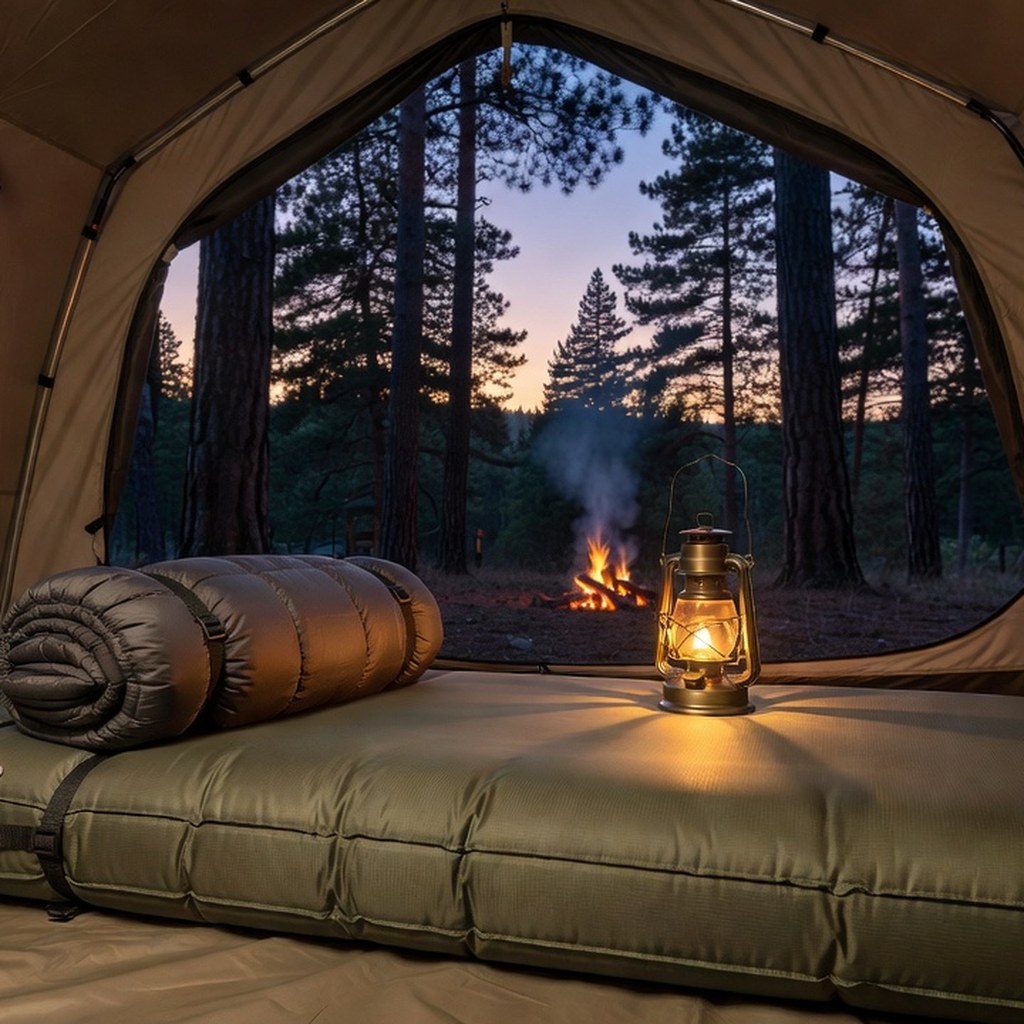
The cot. Getting up off the ground entirely is the single biggest comfort win for older backs and hips. The Coleman Trailhead II Large Folding Cot ($54.99) sets up in seconds, holds up to 300 lbs, and packs down to a carry bag you can strap to the roof rack. Pair it with a foam pad on top and most grandparents sleep better than they do in their own guest room.
The big pad. If your parents prefer a tent-floor setup, skip the backpacking pads entirely. The Exped MegaMat 10 is 4 inches of closed-cell foam and air that genuinely feels like a mattress — it's the pad I've watched multiple grandparents reluctantly try and then immediately ask where to buy one. At $239.95 it's an investment, but it doubles as the guest bed at home and lasts a decade.
Kids, meanwhile, are fine on whatever they already use. The gear hierarchy on a three-generation trip is simple: comfort goes to the oldest generation first, always. If budget is tight, upgrade Grandpa's sleep before you upgrade anything else.
Chairs You Can Actually Get Out Of
Watch a 70-year-old try to stand up from a low-slung beach chair and you'll understand why chair choice is a hill worth dying on. The rule: armrests that reach forward, a seat height near chair height (17-19 inches), and a frame that doesn't flex when someone pushes off it.
The KingCamp Quad Arm Chair with Cooler Bag ($115.39) is the easy standout for older campers — the padded armrests run the full length of the seat so standing up has something solid to push against, and it's rated to 440 lbs with a side cooler pocket for water and meds. For bigger or taller grandparents, the SunnyFeel XXL Oversized Camping Chair ($99.98) handles up to 500 lbs with a wider, higher seat.
And the kids aren't an afterthought — a full-size chair swallows a 5-year-old. The Kelsyus Youth Outdoor Canopy Chair ($37.99) is sized for kids 3-8, and the adjustable canopy shade means the youngest generation stops asking to go inside the tent every 20 minutes.
One more chair rule: bring one more chair than you have people. Three generations means someone is always moving — cooking, chasing a toddler, fetching water — and the empty-chair shuffle is how grandparents end up standing.
Light the Path for Late-Night Trips
The bathroom run at 2 a.m. is where three-generation trips quietly fall apart. Grandpa can't see the tent guylines, the kid is scared of the dark, and nobody packed a light that lives inside the tent. Fix lighting before you need it.
Our campsite lighting stack for mixed ages:
- Table light: the Black Diamond Moji Lantern ($24.95) — 200 lumens, dimmable, hangs from the tent ceiling or sits on the table. The dim mode is the unsung hero: bright enough to find the water bottle, dim enough not to wake anyone.
- Ambient + charging: the Goal Zero Lighthouse Micro Flash Lantern ($29.95) doubles as a phone charger, which quietly resolves the "my phone is at 10%" panic that grandparents and teenagers share equally.
- Wearable lights: this is the one trip where everyone wears a headlamp at night, and the kids get a kick out of it. The Black Diamond Wiz Kid Headlamp ($24.95) is child-safe (no loose batteries, low-brightness lockout mode) — give one to each grandkid and suddenly "I need to go to the bathroom" stops being a group expedition.
The golden rule we learned the hard way: a light that's in the car is a light that doesn't exist. Do the 2 a.m. test — walk the campsite path in the dark and check that every adult knows where their light lives.
Meals Three Generations Can Agree On
Forget the gourmet camp kitchen on this trip. The multigenerational meal formula is: one hot, simple, familiar meal everyone eats, cooked fast, at a table that doesn't wreck anyone's back.
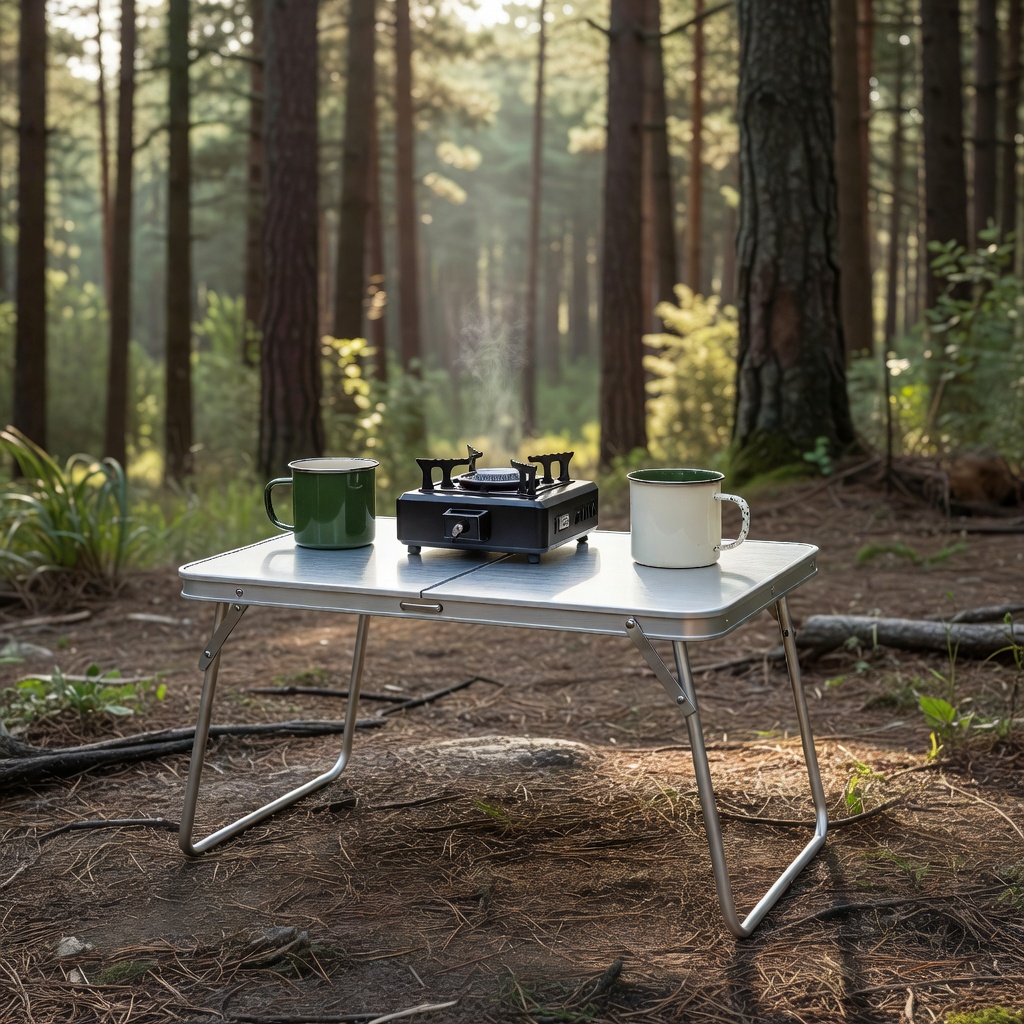
That means a real table — the GCI Outdoor Compact Camp Table ($45.00) sets up at 20 inches with no assembly and is the difference between Grandpa cooking bent over a cooler and cooking standing up like a human. And keep the cooking simple with a dependable single-burner: the Coleman Classic 1-Burner Butane Camp Stove ($29.99) boils water for everyone's coffee/tea in the morning and handles a one-pot dinner at night.
Menu strategy for three generations:
- Breakfast: pre-cooked breakfast burritos wrapped in foil — reheat in 5 minutes, zero dishes, kids can assemble their own.
- Lunch: cold cuts, cheese, and fruit on the table. No cooking, no cleanup, no argument.
- Dinner: one pot of chili or pasta that everyone eats at the same time. The 8-year-old gets a tiny portion, the teenager gets seconds, Grandpa gets the leftovers for tomorrow's lunch.
If you want the full campfire-cooking upgrade path, our campfire cooking gear and recipes guide has the deeper menu ideas — but save the 12-ingredient Dutch oven project for a trip without grandparents.
The Wagon Rule: Nobody Carries Anything
Three generations means three different carrying capacities, and the smallest one (literally) sets the pace. The single best equipment upgrade for multigenerational camping is a wagon. The Radio Flyer 3-in-1 EZ Fold Wagon with Canopy ($109.99) hauls the water cooler, the chairs, and a tired 4-year-old — and the canopy turns it into a mobile nap station on the walk back from the lake. The canopy also means the youngest generation gets shade without anyone having to hold an umbrella over them.
Speaking of shade: if your campsite doesn't have trees, the Crown Shades 10x10 Pop-Up Canopy ($139.99) is the difference between a 3 p.m. mass exodus indoors and everyone lingering at the table for another hour. One-push setup means even the person who "doesn't do tent poles" can help.
Activities That Bridge the Ages
The activity graveyard of three-generation trips is the plan that assumes everyone does everything together, all day. The winning pattern is one shared anchor activity per day, with free time on both sides.
Shared anchors that actually work across 5 to 75:
- The short morning walk — 20 minutes, flat, before it gets hot. Everyone goes, everyone comes back to breakfast together.
- One meal cooked as a team — Grandma supervises, kids chop (with supervision), Dad runs the stove. The cooking is the activity.
- Campfire hour after dark — stories, not screens. The kids interview Grandpa about "the old days"; it's never not hilarious.
- A lazy game at the table — cards or a travel board game. The screen-free camping activities guide has a full list that scales to mixed ages.
- The teen job list — teenagers disengage when they're decorative, so hand them something the trip depends on: the fire, the stove, the navigation. Our camping with teens guide has 15 activities that land with teenagers plus the gear they'll actually keep.
If you're the parent in the middle, resist the urge to schedule all three generations into nonstop activity. The magic of these trips is the unplanned half-hour when Grandma and the 6-year-old are both quietly drawing at the table while everyone else naps. That's the memory. For the full day-by-day rhythm, the labor day weekend camping checklist and our backyard camping setup guide are great dry runs — a backyard overnight with grandparents is the perfect zero-risk rehearsal before a real trip.
Camping Games for Seniors and Grandkids (Both Generations Win)
Most camping games for seniors fail for one reason: they need you on the ground. Anything that involves kneeling, getting up from a cross-legged seat, or holding a squat for more than a few seconds is out — not because anyone can't do it once, but because doing it six times in an afternoon is what ends the trip early.
The games that actually work have three properties: you can play them standing or seated, they're forgiving of a slow first throw, and they don't produce a winner who has to be congratulated while someone else sulks. In our family that last rule matters more than the other two.
- Bocce on flat ground. Two sets, played from a folding chair if you want. The soft-toss motion is gentle, the scoring is legible, and the ball rolls slowly enough that a nine-year-old and an eighty-year-old have a genuinely fair game. It only fails on sloped or rocky ground, so scope out your pitch in daylight.
- Ladder toss (the bolas-on-a-ladder game). Played with an underhand toss from a fixed spot, so nobody walks anywhere. Set the throw line closer for the grandparents, further back for the kids, and score it as a team game.
- Seated cards — cribbage, rummy, or a plain deck. The most reliably happy hour of a three-generation trip. Bring a second deck, a cribbage board, and a small table, because trying to play cards on a cooler lid is its own argument.
- Campfire trivia, spoken not scored. Read a question, let everyone guess, don't keep points. Kids learn things; grandparents get to be the ones who know.
- A short, slow walk plus a list. "Find five different leaves" or "spot three animal tracks" gives the kids a job and gives the grandparents a legitimate reason to walk 400 yards and then sit back down.
Build a two-tier schedule
The trick that has worked for us is splitting the day by energy type rather than by age. Mornings are movement — a short walk, a throw-and-catch game, a paddle if the water is flat. Afternoons are seated — cards, fishing from a chair, a book under the canopy. Evenings are shared — the fire, the meal, the trivia. Nobody has to be told to rest; the schedule does it for them.
Camping With Elderly Parents: What Actually Changes
The first thing worth saying is that camping with elderly family members is a comfort-engineering problem before it's a fun problem — and the engineering is mostly about four things: the drive, the bathroom, the temperature, and the ground you ask them to walk on.
If camping with elderly parents is on your calendar, work through these before you pick a campground:
1. The drive sets the whole trip's ceiling. Plan a stop every 90 to 120 minutes. Not because anyone is fragile, but because sitting still in one position for three hours is what makes hips and knees stiffen up, and a stiff arrival turns into a short morning. A rule of thumb we've adopted: nobody's first walk of the trip should be longer than the drive legs were short. Pack water, and treat the rest stop as part of the itinerary rather than an interruption to it.
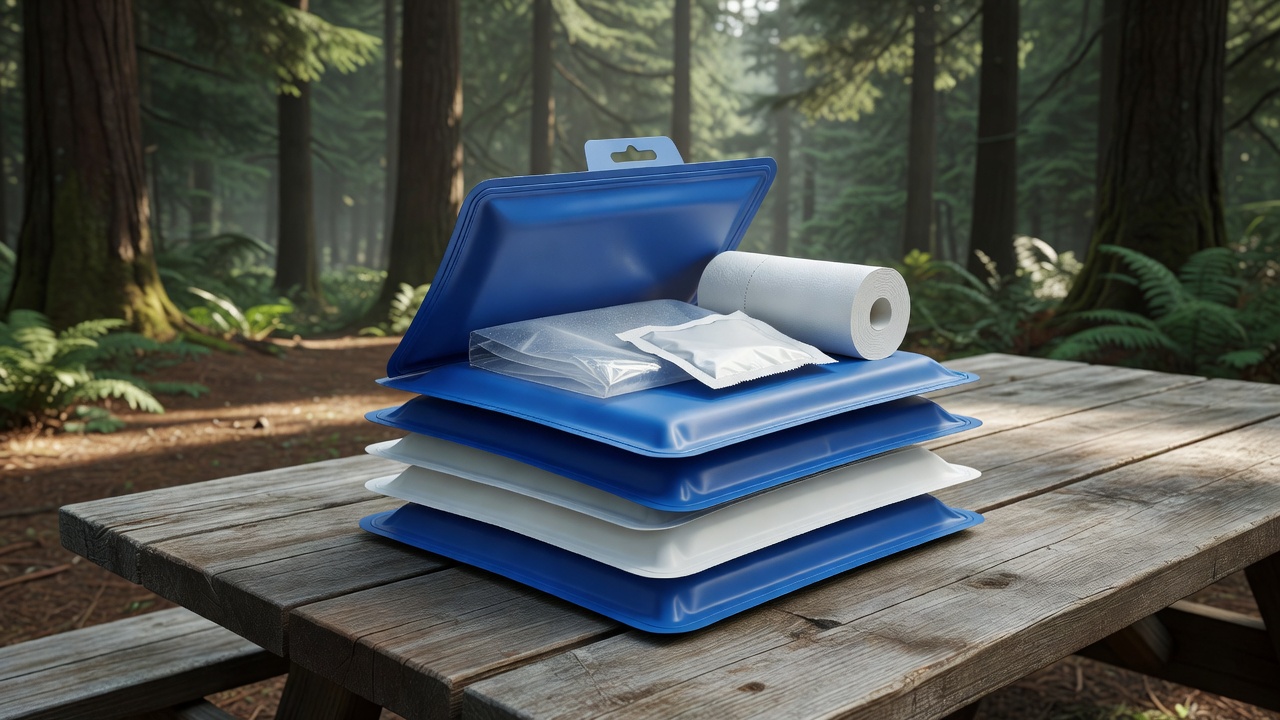
2. The bathroom is the decision, not an amenity. This is the single most common reason a trip gets cut short. Choose a site within an easy, paved, lit walk of flush toilets, and if that isn't available, bring your own answer. A portable toilet kit turns a site with nothing into a site that works — a WAG bag kit is the version that packs flat, meets most land-manager requirements for pack-out human waste, and means nobody is doing a midnight hike. If the campground has a vault toilet, check whether it's a step-up design; a raised concrete floor with no handrail is harder than it looks.
3. Temperature is less forgiving than it used to be. Older bodies regulate heat and cold differently, and the effect is mostly invisible until someone is shivering under a blanket they didn't ask for. Two cheap fixes carry most of the weight: rechargeable hand warmers in a jacket pocket, and a real lap blanket at the fire instead of a beach towel. The puffy camp blanket we keep in the wagon is the one that gets used every single trip. Set your "we go inside" trigger at a temperature, not at a feeling — pick a number before the trip and honour it.
4. Altitude deserves an actual conversation. Above roughly 8,000 feet, thinner air is a real physiological change and not a stamina question. If your parents have any cardiac, respiratory, or blood-pressure history, that is a doctor conversation before it's a camping plan. Keep the first day at the lowest elevation you'll be at, keep it short, and don't schedule the big viewpoint on arrival day.
5. Medications and the campfire schedule don't naturally agree. If something needs to stay cool, an insulated pouch inside the food cooler works better than a bag resting on ice, and a meds list with doses and phone numbers should live in the glovebox and on a phone. Cold-weather camping can also make people drink less water, which is exactly backwards — dehydration in cool weather hides well because you don't feel thirsty.
6. Ask, specifically, and don't be polite about it. The short version on how to travel with elderly parent comfort in mind is to plan around their clock rather than yours, and that starts with four direct questions: how long can you comfortably sit in a car, do you need a bathroom within walking distance at night, how cold is too cold for you, and how far do you actually want to walk. Families that ask those four questions on the phone, a week ahead, have a very different trip than families that find out at the campsite.
And the practical upside nobody mentions: if your parents are 62 or older, the Senior Pass is $20 for a year or $80 for life, covers the pass holder's whole vehicle at per-vehicle parks, and at many federal campgrounds it also takes 50% off the overnight fee. Worth checking against the specific campground before you book, because concession-run sites don't always honour it.
If you're the one in the middle, camping with older parents usually means you're also the trip's logistics department. Budget for that. The parents who plan one big thing per day and then stop are the parents whose trips everyone wants to repeat.
Camping With Seniors: Comfort, Pace, and the Bathroom Question
Search camping for senior citizens and you'll mostly get RV-resort content, which is a shame, because the actual question is narrower than that: how do you pick a site where someone in their seventies sleeps well, moves easily, and isn't bored?
The honest answer to where to go with grandparents is: somewhere with a real toilet, level ground, and a town within twenty minutes. That's not a compromise — it's the filter that removes every site that would have gone badly.
A campsite screening checklist. Score each candidate on these. Anything you can't answer, assume it's a no:
- Drive-up access with a short, level path to the tent pad. No stairs, no root-choked slope, no "it's only fifty yards" through sand.
- Flush toilets or a clean vault toilet within a lit walk. Not a hike.
- Afternoon shade or a canopy. Four o'clock sun in an exposed site is what sends people to the car.
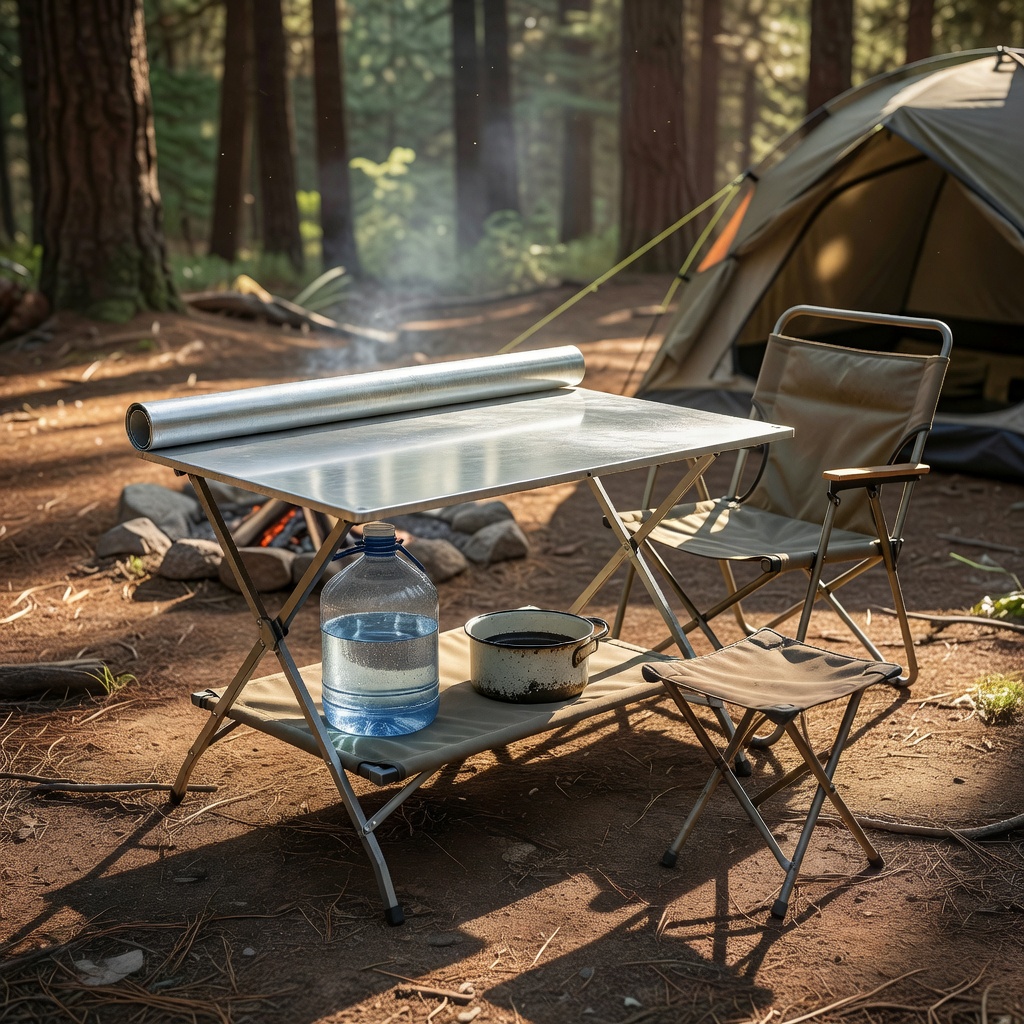
- A picnic table at waist height. This is the one piece of campground "furniture" that is genuinely hostile to older backs — low, sloped, and usually bolt-anchored. A proper folding dining table that you bring yourself fixes the cooking and eating problem in one move.
- A level, firm sleeping surface. Inflatable pads that take three minutes of huffing are a poor fit; a cot or a thick self-inflating pad is the answer, and the page's own sleep setup section above covers the specifics.
- Cell signal and a hospital under an hour away. Not because you expect to need it, but because knowing the answer changes how relaxed everyone is.
- A wagon for the gear. Nobody carries anything, including the person who insists they can. The heavy-duty folding wagon earns its space on a multigenerational trip more than on any other kind.
Concrete camping ideas for seniors, ranked by how little can go wrong. One planned activity per day, and treat the rest of the day as the point:
- A drive-up site with electricity and water. Keeps a CPAP running, keeps a kettle going, and lets someone plug in a phone.
- A state park cabin or yurt. Same campsite, same fire ring, a real bed. This is the highest-success-rate introduction there is.
- An RV site with full hookups, used by tent campers. You get power, water, and a real bathroom block for the price of a site fee, and nobody has to tow anything.
- A fishing-first trip. Sitting in a chair with a rod is the most legible "we're doing something" activity there is, and it works at every age.
- A day-use picnic that never becomes an overnight. Twenty years of camping history doesn't require sleeping outside to be sustained.
- A glamping tent or a campground with a lodge. Real beds, a restaurant within walking distance, and a fire pit for the part everyone actually wanted.
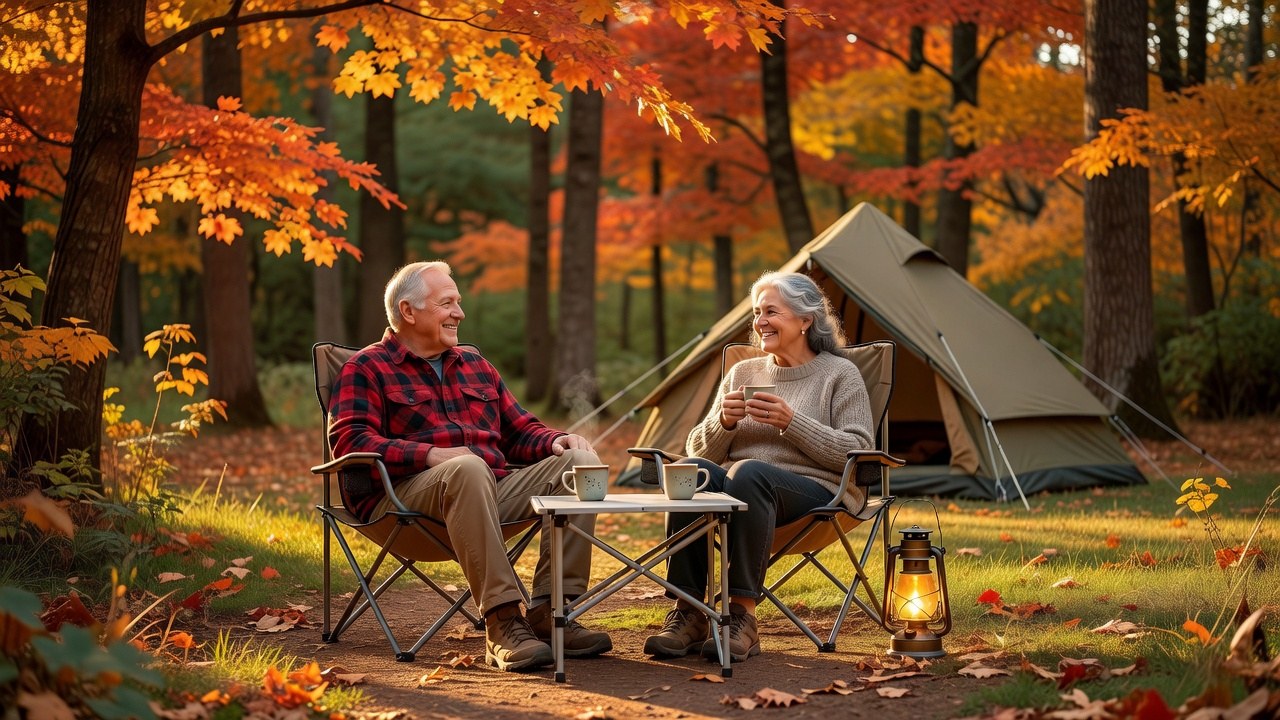
What makes this work is pace, and pace is a planning decision rather than a personality trait — camping with seniors goes best when the itinerary has one entry per day and everyone agrees in advance that empty hours are the product, not a gap to be filled.
Where to Go With Grandparents (and Family Vacation Ideas That Work)
The best family vacation ideas with grandparents tend to be the least ambitious ones. Three generations have three different definitions of a good afternoon, and the venue that satisfies all three is almost never the most spectacular one.
Four trip shapes that have worked for us, in ascending order of effort:
- The lake-and-lawn state park. Drive-up sites, a swimming area, flush toilets, paved loops for walking, a playground for the kids. Grandparents sit where they can see the water; kids burn off everything they ate.
- A national park with a campground and a lodge. Days are shared; nights can be split. If the weather turns, the lodge absorbs the grandparents without anyone having to abandon the trip.
- A cabin plus day-camping hybrid. Rent the cabin, drive to the trailhead or the lake for the middle of the day, come back to a shower and a bed. This is the version that most often converts a reluctant grandparent into a repeat camper.
- An RV park near a small town. Walk into town for coffee or a museum, come back and sit outside. Unfashionable, extremely effective.
And the ones to avoid: anything that requires a shuttle, a timed entry you can't move, a long exposed hike, or a campsite you can't drive to. If the trip depends on everyone being able to do the same physical thing at the same pace, it isn't a multigenerational trip — it's a hiking trip with reluctant guests.
A Sample 3-Generation Weekend Schedule
Friday evening: Arrive before dark. Tent up first (two people, 10 minutes with an instant cabin). Grandparents claim their sleep spot, kids burn energy exploring with headlamps. Simple dinner, early lights-out.
Saturday: Slow morning — coffee, breakfast burritos, no plan until 10. Short walk. Lunch at the table. Afternoon free: fishing, hammock, nap, or lake time in small groups. One team-cooked dinner. Campfire stories.
Sunday: Another slow morning. Pack up before lunch so nobody gets hangry mid-takedown. One last group photo at the campsite sign. Everyone goes home tired in the good way.
Common Mistakes (Learn From Mine)
- Planning every hour. Three generations have three different energy curves. Over-scheduling is the #1 trip killer — build in two hours of unplanned time per day.
- Skimping on grandparent sleep. The cot/pad upgrade is not optional. One bad night and the whole trip gets shortened by a day.
- One big group tent with zero privacy zones. Use the room divider or split into two tents. Everyone needs a corner that's theirs.
- Letting the youngest set the food agenda. The 4-year-old will happily eat only goldfish crackers; Grandma will not. Cook one real meal everyone eats.
- Forgetting the "everyone carries something" rule. Even a 3-year-old can carry the marshmallows. It's how kids feel like campers instead of cargo.
Camping With Grandchildren: The Handoff That Actually Makes It Work
For a grandparent, camping with grandchildren is a different relationship than parenting, and the difference shows up in the logistics. When grandparents and parents are both present, the failure mode isn't too little supervision — it's unclear supervision. Everyone assumes someone else is watching the fire ring.
Fix it out loud, before the trip, with a simple handoff rule: a named adult is on kid duty, and the role rotates. Write it on the schedule. It sounds bureaucratic; in practice it's what lets a grandparent actually sit down with a book while a parent takes a walk, because both know who's responsible for the next ninety minutes.
A few more things that make camping with grandkids run smoothly:
- Pair one adult with one kid on tasks. Setting up a tent, fetching water, gathering kindling. Kids get undivided attention, adults get a job that isn't "supervise", and nobody is managing a crowd.
- Decide the tent question honestly. What grandparents camping with grandkids most often want is their own second tent — a door they can close at 8:30pm is not a snub, it's how they're still cheerful at breakfast. Plan for a second tent rather than a bigger one.
- Give grandparents the gear that doesn't move. Their chair, their mug, their lantern, in the same spot all weekend. Kids can relocate; a preferred chair being borrowed is a genuine morale event.
- Staff bedtime, don't just announce it. The hardest hour on a multigenerational trip is 7:30-9:00pm. Assign it in advance and rotate it.
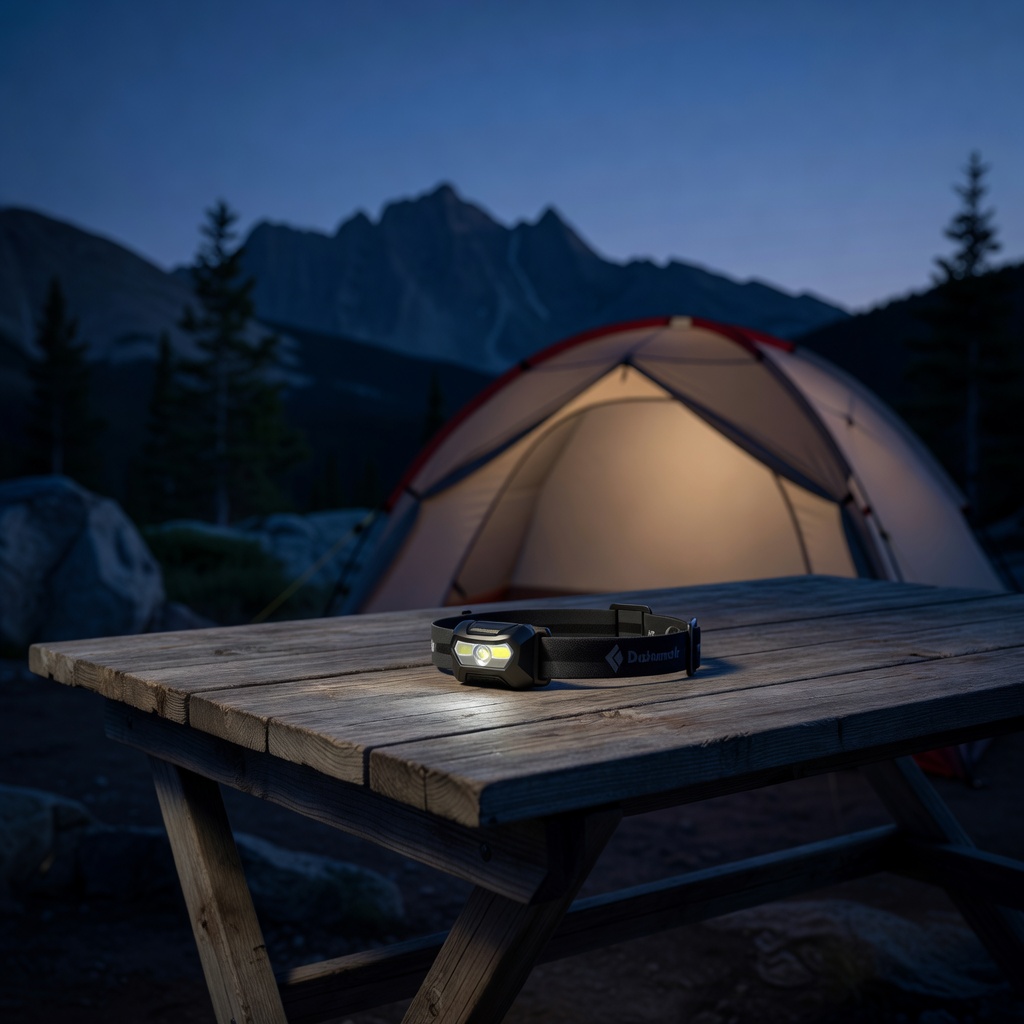
- Keep a headlamp on every adult and a kid-safe headlamp on every kid. Night walks to the bathroom are where trips go wrong, and a 400-lumen waterproof headlamp on the adults means the walk back is a non-event.
For what it's worth, camping with granny, in our family, turned out to mean exactly one thing: she wants to be the one who makes breakfast. Give people a job they actually want and the trip organizes itself.
Getting There: Campers and Road Trips With Grandparents
For a lot of families, grandparents camping means one word: camper. And that's a legitimate, well-tested answer — a camper solves the bathroom, the bed, the temperature, and the electricity problem in a single purchase decision.
A grandparents camper doesn't have to be a motorhome. The three shapes that show up most:
- The tow-behind trailer as the grandparents' room. Park it on the site, the rest of the family tents next to it. Grandparents get a real bed and a bathroom; everyone still eats at one fire.
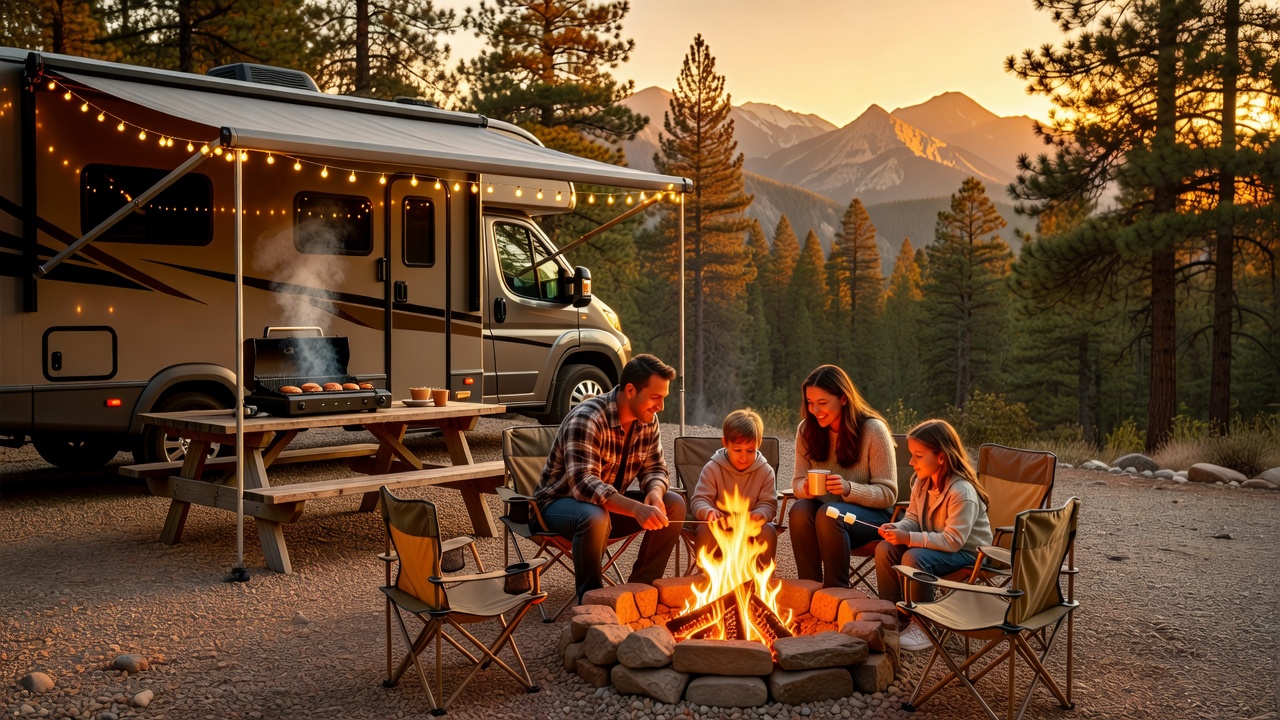
- A small motorhome as the trip's base. Nobody tows anything, the drive is the accommodation, and the campground becomes a place you park rather than a place you set up.
- Renting one for a single trip. The right answer if you're not sure the pattern will stick. One rental weekend tells you more than a year of reading about it.
Two things to plan for specifically: hookups, because a powered site is what keeps a CPAP, a phone, and a kettle working, and driving pace. If the CPAP is the reason someone in the family stopped camping, our CPAP camping power guide works out the battery size per machine and per pressure — it is a smaller problem than most people assume. A grandparents road trip works best as a short-leg trip — two to three hours between stops, an overnight, repeat. If you're building the trip around a camper, our RV camping for beginners setup guide covers the hookup and levelling side, and the RV versus tent comparison is the honest version of the trade-off if you're still deciding.
Camp Grandma: Running a Week of Camp for Your Grandkids
"Camp Grandma" is one of those ideas that sounds twee and turns out to be the best-attended event of the year. The premise is simple: a grandparent runs a multi-day camp — at home, in the backyard, or at a campground — with a theme a day, a fixed start time, and a schedule the kids can see.
The grandparent camp ideas borrowed from actual summer camp all share one feature: the same shape every day, different content. Kids relax when they know the rhythm. A skeleton that works:
- Day 1 — Water. Sprinkler, creek, lake, or a bucket-and-sponge car wash. Anything wet.
- Day 2 — Nature detective. A field guide, a magnifier, a list of things to find, and a walk nobody plans to finish.
- Day 3 — Cooking. One thing they make themselves, start to finish, that gets served to the whole camp. Campfire dessert counts.
- Day 4 — Make something. Whittle-adjacent crafts, friendship bracelets, painted rocks, a birdhouse. Keep the tools blunt.
- Day 5 — Field trip. A state park, a creek, a farm stand, a museum. The one day that involves driving.
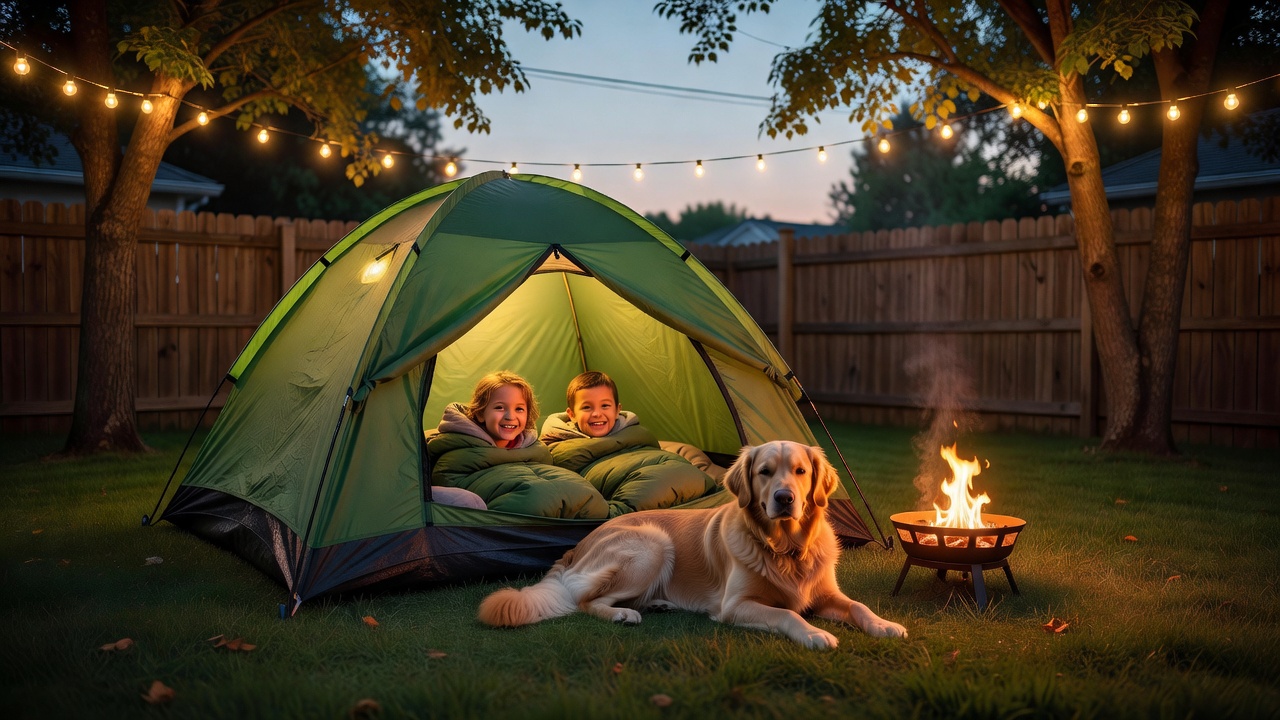
The grandma camp activities that survive a whole week are cheap and repeatable — a rope, a ball, chalk, a deck of cards, a bucket. You don't need to buy activities for grandma camp; you need a supply bin and a start time. Budget about $40, spend $15 of it on snacks, and put the rest into one big-ticket item the kids will remember.
If you're collecting camp grandma ideas, a three-day version is genuinely easier to sustain than a full week: run it as a single Saturday at a campground with two of the five themes, and a photo a day as the only ritual you insist on.
The one non-negotiable: a headcount at every transition. Same rule as any camp, same reason. Count kids before you move, count them when you arrive, count them before the fire gets lit.
A Quick Decoder: What People Actually Mean
Searches around this trip are inconsistent, and the phrasing rarely matches the need. A short translation table:
- "camping with elderly parents" — almost always a bathroom-and-drive question, not a gear question.
- "camping with seniors" or "camping for senior citizens" — usually asking whether a non-camper can be brought along at all. The answer is a cabin or an RV site, and then yes.
- "where to go with grandparents" — the real question is proximity: a toilet, a town, and a hospital.
- "how to travel with elderly parent" — pacing and medication timing, plus one honest conversation.
- "grandparents camper" — a trailer on the family site, not a lifestyle purchase.
- "camping with grandkids" vs "camping with grandchildren" — same trip, but the first usually means the parents aren't coming, which changes the adult-to-kid ratio completely.
- "grandma camp ideas" — a themed multi-day camp with a fixed start time, at home or at a campground.
Multigenerational Camping FAQ
What's the biggest mistake on a 3-generation camping trip?
Over-scheduling. Three generations have three different energy curves, and planning every hour is the number one trip killer — build in about two hours of unplanned time per day. The second biggest mistake is skimping on grandparent sleep: one bad night on the ground and the trip gets shortened by a day. Comfort goes to the oldest generation first, always.
What size tent do you need for three generations?
For 5-8 people, a 9-person instant cabin tent is the sweet spot — pre-attached poles get it standing in about two minutes with two people, and a 14' x 9' floor fits a cot plus an air mattress without everyone tripping over each other at 2 a.m. The room divider matters more than you'd expect: kids go down at 8, adults stay up talking, nobody wakes anybody. If your group naturally splits, two 6-person instant tents — grandparents in one, parents and kids in the other — cost less than one big tent and solve snoring far more politely.
How do you keep grandparents comfortable camping?
Two sleep setups cover about 90% of grandparents. A folding cot gets them off the ground entirely, which is the single biggest comfort win for older backs and hips — it sets up in seconds, holds up to 300 lbs, and a foam pad on top makes it better than most guest beds. If they prefer a tent-floor setup, skip backpacking pads completely and use a 4-inch self-inflating pad that genuinely feels like a mattress. Pair either one with a chair that has armrests reaching forward and a seat height of 17-19 inches, because a low-slung camp chair is where older campers get stuck.
What meals work when you're feeding three generations?
One hot, simple, familiar meal everyone eats — cooked fast, at a table that doesn't wreck anyone's back. Breakfast is pre-cooked burritos wrapped in foil, reheated in five minutes with zero dishes. Lunch is cold cuts, cheese, and fruit on the table. Dinner is one pot of chili or pasta served to everyone at the same time, with the 8-year-old getting a small portion and Grandpa taking the leftovers for tomorrow's lunch. Save the 12-ingredient Dutch oven project for a trip without grandparents, and use a real 20-inch camp table so nobody cooks bent over a cooler.
Do kids and grandparents both need headlamps?
This is the one trip where everyone wears a headlamp at night. The 2 a.m. bathroom run is where three-generation trips quietly fall apart — Grandpa can't see the tent guylines and the kid is scared of the dark. Give each grandkid a child-safe rechargeable headlamp (no loose batteries, with a low-brightness lockout mode) and late-night bathroom trips stop being a group expedition. The golden rule: a light that's in the car is a light that doesn't exist. Do a 2 a.m. test walk in the dark before bed and confirm every adult knows where their light lives.
How many camp chairs should you bring?
One more chair than you have people. With three generations someone is always moving — cooking, chasing a toddler, fetching water — and the empty-chair shuffle is exactly how grandparents end up standing while a teenager sits. Bring one per person plus a spare, and give the kids their own kid-sized chair with a canopy so shade and seating stop being a negotiation.
Wide and high-volume feet are the norm rather than the exception as we get older, and they're one of the most common reasons a family hike ends early. Our wide-feet hiking shoe guide explains how to fit a wide foot without simply sizing up.
Can camping with elderly parents work without a bathroom nearby?
Yes, but only if you bring the bathroom. A portable toilet kit plus a privacy shelter solves the night-time problem that most often ends a trip early. What you can't fix is a site with a steep, unlit walk to a vault toilet — so if the only option is a night hike, pick a different site.
How do you plan camping with grandchildren when the parents stay home?
That's a different trip, with a different ratio. Two grandparents and three kids works if you never need both adults doing the same thing at once: one adult on the fire and the meal, one on the kids. Drop the itinerary to one planned activity per day, keep the drive under two hours, and pick a site with a bathroom you can see from the tent.
Is camping with seniors different from camping for senior citizens?
No — it's the same audience with two phrasings. What changes is the framing: comfort first, one activity a day, and a site that a non-camper can be genuinely happy at. If someone is searching camping for senior citizens, they're usually asking whether a first-timer in their sixties or seventies can enjoy it. A cabin or a powered site is the honest answer.
What are the best camping ideas for seniors who don't want to sleep on the ground?
A state park cabin or yurt, an RV site with hookups, or a campsite paired with a cot and a thick pad. Any of the three works; the cabin is the one with the highest success rate for a true non-camper. If you want to stay under canvas, the cot is what makes it viable.
Where to go with grandparents if nobody wants to hike?
Paved loops, lakeshores, and campgrounds with developed paths. A drive-up site at a lake with a swimming area beats a spectacular alpine site with a 200-yard walk from the parking lot every single time. The trip is about the hours at the site, not the destination.
What makes a good grandparents road trip?
Short legs, a real bed, and an overnight that isn't an all-day drive away. Two to three hours between stops, one activity at each stop, and nothing that requires arriving somewhere by a specific time. Campgrounds with hookups extend the range considerably.
Do grandparents camping with grandkids need their own tent?
Most of them will want one, and it's worth planning for rather than improvising. A separate small tent gives them an early night, a space that stays tidy, and a door they can close. Put it close enough that a voice carries but far enough that a kid crying at 2am doesn't wake them.
How do you plan activities for grandma camp?
Fix the start time, pick one theme per day, and keep every activity at a table or on flat ground. The supplies are a bin, not a shopping list. Most of the planning effort should go into the daily rhythm — kids work off a visible schedule far better than off instructions.
The Bottom Line
Multigenerational camping works when you design for the oldest generation's comfort and the youngest generation's attention span — and let everyone in between just enjoy not being in charge of everything. One instant tent, one real sleep setup for the grandparents, chairs with armrests, lights that live in the tent, simple meals at a real table, and one shared activity a day. That's the whole formula.
Grandparents Day is September 13. The long weekends are coming. If you've been meaning to get three generations to a campsite, this fall is your window — and if the grandparents bring the dog along, our camping with dogs guide covers that generation too.
Gear fit changes across generations, and the women's hiking gear guide covers the women's-specific footwear, layers, and sun protection side of that.
<!-- AFFILIATE_DISCLOSURE -->