RV Camping vs Tent Camping: Which is Right for Your First Trip? (2026)
RV camping vs tent camping for beginners in 2026: compare first-trip cost, campsite reservations, setup, weather comfort and the right choice for your group.
The first big decision every new camper faces isn't which tent to buy. It's whether to buy a tent at all. RV camping and tent camping are two different relationships with the outdoors, and the wrong choice for your personality can turn a weekend getaway into a $200 regret.
I've done both. I've woken up to condensation dripping on my face in a 2P tent and I've cranked the AC in an RV at 2 AM because it got too warm. Both are camping. Neither is "better." But one is better for you.
This guide compares RV camping and tent camping across the dimensions that matter: cost, setup, comfort, campsite availability, and the intangible stuff no spec sheet captures.
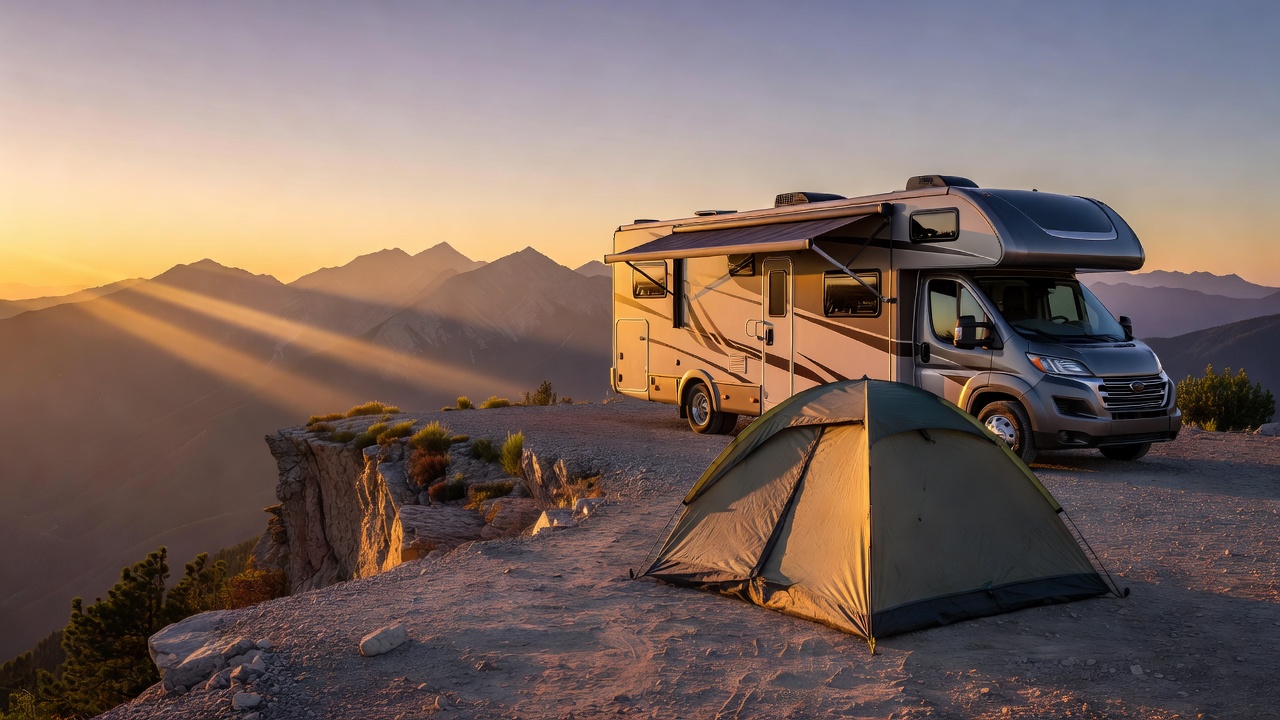
The TL;DR: RV vs Tent at a Glance
Before we dive deep, here is the 30-second version:
- Tent camping wins on: Cost (10 to 20× cheaper entry), campsite availability (any flat ground works), authentic outdoor connection, and learning curve
- RV camping wins on: Comfort (bed, bathroom, climate control), weather independence (rain doesn't ruin your trip), storage capacity (bring everything), and multi-season usability
First-Trip Decision Snapshot
- Total cost: A two-person tent setup usually lands around $300–$600 plus $15–$35/night. A three-night RV rental can cost $450–$900 before fuel and a hookup site.
- Arrival-to-relax time: A practiced tent setup is typically 20–30 minutes. An RV first-timer should reserve 30–45 minutes for parking, leveling, and utilities.
- Best family fit: A tent works well for adventurous families in fair weather; an RV earns its premium when small kids, grandparents, or a reliable bathroom are non-negotiable.
- Rain-day comfort: A well-pitched tent stays viable, but wet gear still needs managing. An RV gives you a dry indoor reset when a storm takes over the afternoon.
If you camp 2 weekends a year and can handle a rainy Saturday, buy a tent. If you're planning 10+ trips annually or have family members who'll mutiny without a real bathroom, an RV pays for itself fast.
Cost Comparison: The Real Numbers
Tent Camping Startup Costs
A complete tent camping setup for two people runs about $300 to $600:
- Tent: EVER ADVANCED 6P Blackout Cabin Tent ($169.99), or go ultralight with a Kelty Late Start 2P ($159.95) if you're backpacking
- Sleeping pads: $40 to $100 per person
- Camp stove + cookware: $50 to $100
- Cooler: $30 to $80
- Camp chairs, lantern, misc: $50 to $100
Total: $300 to $600 one-time. After that, campsites run $15 to $35/night at state parks, $0 on dispersed public land.
RV Camping Startup Costs
The math changes based on whether you rent or own:
- RV rental: $150 to $300/night for a Class C, $100 to $200/night for a travel trailer. A 3-night weekend = $450 to $900 for the vehicle.
- RV purchase: $10,000 to $80,000 for a used or new travel trailer, plus $20,000 to $100,000+ for a tow vehicle if you don't already have one. Class A motorhomes start at $50,000 and go past $500,000.
- Campsite fees: $30 to $80/night for full hookups, $15 to $40 for electric-only. National park RV spots book 6 to 12 months in advance.
But RV ownership also carries ongoing costs tent campers never think about:
- RV-specific gear you need even after buying the vehicle: a 30-amp surge protector, sewer hose kit ($60.02, 4.7★), leveling blocks, and a black-tank treatment starter pack. The exact kit changes by rig, but we break down what actually matters in our essential RV accessories setup checklist.
- Water system maintenance: A good inline RV water filter and a pressure regulator are non-negotiable unless you enjoy replacing burst plumbing — and if you're connecting to campground water at all, a Camco TastePURE 25-ft RV Drinking Water Hose ($13.97, 4.5★) keeps the drinking line tasting like water instead of garden hose. Our essential RV accessories setup checklist covers which ones to buy first and why — and when you're ready to go deeper, the RV water system setup guide walks through sanitizing, flushing, and winterizing the whole fresh-water system.
- Black tank treatment: A drop-in treatment pack keeps your black tank from becoming the campsite's least popular neighbor. If you're new to RV sanitation gear, start with the essential RV accessories setup checklist before you buy anything.
- Annual maintenance: $500 to $2,000 for winterization, roof seals, bearing repacks, tire replacement. The winterization line item is the one you can erase: draining the tanks, bypassing the water heater, and pumping antifreeze through the lines takes about 20 minutes and $40 in gear — our RV winterization step-by-step checklist covers the exact routine before the first freeze hits.
Break-even point: If you camp 20+ nights a year, owning a modest travel trailer beats renting by year 3 to 4. If you camp 5 nights a year, rent or stick with a tent.
Comfort: Where the Gap is Massive
Sleeping
- Tent: A good sleeping pad on flat ground. You hear every owl, every raindrop, every raccoon investigating your cooler at 3 AM. There's a meditative quality to it, or an infuriating one, depending on your relationship with sleep.
- RV: A real mattress. Climate control. No condensation. No rocks under your hip. For light sleepers, this is the difference between a camping trip and three days of sleep deprivation.
Bathroom Situation
- Tent: The campground bathhouse is a 3-minute walk. At 2 AM in 40°F weather, that walk feels like the Bataan Death March. Bring a headlamp and shoes you can slip on fast — or skip the walk entirely. A Camco Portable 5-Gallon Toilet Bucket ($34.99, 4.5★) with its seat, lid, and carry handle is the budget tent-camper's version of a private bathroom: keep it in the vestibule and the 2 AM trip becomes a 30-second one.
- RV: Your own bathroom. Your own toilet paper. No shoes required. For families with young kids or anyone who gets up twice a night, this alone justifies the RV premium.
Weather Resilience
This is where RVs earn their reputation. A tent in sustained rain is an exercise in moisture management. Everything gets damp eventually, no matter how good your rainfly is. An RV in sustained rain is a rainy day indoors. You play cards, you cook, you stay dry.
Here's the difference: In a tent, bad weather changes your trip. In an RV, bad weather is a minor inconvenience.
Setup Time: The Hidden Cost
Tent Setup
An experienced solo camper can pitch a modern tent in 5 to 10 minutes. A true instant-cabin model still goes up in about a minute with pre-attached poles, and most beginner-friendly 4P family tents are campfire-ready well before your RV neighbors finish leveling. Add 10 to 15 minutes for sleeping pads, bags, and organizing gear inside.
Total setup from arrival to campfire: 20 to 30 minutes.
RV Setup
Parking, leveling, unhitching, connecting power/water/sewer, extending slide-outs, stabilizing jacks. A practiced RV owner does this in 15 to 20 minutes. A first-timer needs 30 to 45 minutes and may still get the leveling wrong — RVmate 12-Pack RV Leveling Blocks ($32.87, 4.6★) shrink that learning curve: stack them under the low side instead of hunting for a perfectly flat pad, and the fridge keeps working.
Total setup from arrival to campfire: 25 to 45 minutes, plus the stress of backing a 25-foot trailer into a tight campsite while your spouse waves their arms in increasingly ambiguous gestures.
First Camping Trip: Pick the Lowest-Risk Version
For your very first camping trip, do not let the RV-versus-tent choice become an all-or-nothing identity test. Pick a one- or two-night campground close to home, arrive well before dark, and leave yourself a simple exit plan if weather turns ugly.
- Choose a tent first when you want the lowest-cost learning weekend. A quick-pitch Coleman Skydome 4P makes the arrival routine less intimidating, while the Coleman 316 62QT Wheeled Cooler keeps a family’s first-night food organized without expensive specialty gear.
- Choose an RV rental first when sleep, bathroom access, or a rainy-day refuge will determine whether your group enjoys the trip. Inspect the electrical pedestal before plugging in; a Camco Power Defender 30-Amp RV Surge Protector helps protect a compatible 30-amp rig from unsafe campground voltage, and Camco TST MAX Drop-INs solve one unglamorous but important first-trip problem.
- Either way: Pack one separate light for the bathroom walk and one for camp. The Petzl ACTIK CORE Rechargeable Headlamp leaves both hands free for unloading, late-night bathroom walks, and tent setup, even if your vehicle or shelter setup changes later. If you want to run more than lights and phones off-grid — a cooler, a CPAP, a fan — a portable power station beats a gas generator for both tent and RV base camps; our portable power station guide covers watt-hours, outputs, and solar charging.
For a complete arrival-to-bedtime packing sequence, use our first camping trip starter kit for beginners. It is designed to help you test the camping habit before spending RV-owner money.
Winner for setup speed: Tent (for car camping). RVs catch up with practice but never beat a pop-up tent at speed. For multi-day trips where you set up once, the difference is negligible. If you're leaning toward tent camping, our tent size guide will help you pick the right capacity (2P, 4P, or 6P) before you buy.
Campsite Availability: Where You Can Go
Where Tents Win
- Dispersed camping on BLM and National Forest land: No fees, no reservations, no neighbors. Tent campers can set up almost anywhere flat and 200 feet from water. RVers need road access and a level-enough pad.
- Backcountry sites: Hike-in only. No RV can reach them. If your ideal campsite requires a 4-mile hike, you're in tent territory by default.
- Small state park campgrounds: Many older campgrounds have sites built for 1960s station wagons. A modern 30-foot RV won't fit.
Where RVs Win
- Full-hookup RV resorts: Pool, laundry, wifi, paved pads. These places exist for RVs and tent sites are an afterthought.
- National park campgrounds with RV loops: The best spots with views are often RV-only because they're designed for pull-through access.
- Winter camping: Tents in snow are an advanced skill. RVs with furnaces are cozy at 15°F.
Here's the constraint: An RV limits WHERE you can camp. A tent limits WHEN you can camp comfortably. Pick your tradeoff.
The Intangible Stuff Nobody Talks About
Connection to the Outdoors
In a tent, you're in the environment. You hear every sound, feel the temperature shift at 4 AM, see the stars through the mesh ceiling. It's immersive in a way that's hard to describe to someone who hasn't done it.
In an RV, you're observing the outdoors through windows. The AC hum masks the crickets. The furnace masks the morning chill. You can step outside anytime, but the default state is separation, not immersion.
Some people find tent camping meditative. Others find it nerve-wracking. Neither response is wrong.
The Social Factor
Tent camping tends to be more social. You're all in the same boat, borrowing each other's stove fuel, complaining about the same raccoon. RV camping can be isolating if you retreat inside with the door shut. But it also makes multi-generational trips possible: grandparents who'd never sleep on the ground can join the trip in an RV.
Storage and Organization
RVs have cabinets, closets, and drawers. Everything has a place. Tent camping means duffel bags and plastic totes. Stuff everywhere, nothing organized, and the thing you need is always at the bottom of the bag you didn't mean to open.
For trips longer than 3 days, the organizational advantage of an RV becomes hard to ignore.
Decision Guide: Which One Should You Pick?
Follow the path that matches your situation:
-
First time camping, solo or couple?
- Start with a tent. The financial commitment is tiny, you learn outdoor fundamentals that RVers skip, and you'll appreciate an RV more later if you upgrade.
-
Family with kids under 8?
- Tent if the kids are adventurous and you camp in good weather windows. Kids under 8 in a tent during a thunderstorm is a core memory. Either the best kind or the kind they bring up in therapy.
- RV if anyone in the family will be miserable on the ground. A miserable family member can tank an entire trip.
-
Camping 15+ nights a year?
- RV ownership starts making financial sense. The comfort-per-night cost drops below a hotel and the gear is always packed and ready.
-
Want to camp in winter or shoulder season?
- RV. Cold-weather tent camping requires specialized gear, experience, and a tolerance for suffering that most beginners don't have.
-
On a tight budget?
- Tent, no question. A full tent setup costs less than one weekend RV rental. For budget-specific picks, see our camping gear under $50 guide.
-
Want to visit national parks with limited reservations?
- Tent. Tent-only sites are more available and many parks (Yosemite, Yellowstone) have first-come-first-served tent loops that RVers can't use. For trip-planning basics and the gear you need before your first reservation, read our RV camping for beginners setup guide and our essential RV accessories setup checklist.
First-Trip FAQ: Cost, Reservations, and the Right Call
Is RV camping or tent camping cheaper for a first trip?
For one weekend, tent camping is almost always cheaper. A tent, pads, basic stove, cooler, and light can be reused for years; renting an RV adds nightly rental, mileage or fuel, insurance, and a hookup-site premium before you have unpacked a bag. The exception is a group that would otherwise need multiple hotel rooms—or a family that knows a failed night of sleep will end the trip early. In that case, an RV rental can be the more useful experiment, even if it is not the lowest-dollar option.
Which campsites should beginners reserve?
Start with a developed state-park or county campground within two hours of home. Tent campers should filter for a level tent pad, potable water, bathrooms, and a site that is not directly on a busy road. RV renters need to check three details before clicking reserve: the maximum rig length, whether the site has the electrical service their rental requires, and whether water/sewer hookups are actually at the site. Reserve a Friday or Saturday arrival well ahead in popular parks; for a first trip, the boring, available campground beats the bucket-list park that forces you to arrive after dark.
Should a first-time family choose an RV or a tent?
Choose the tent when the goal is a low-stakes, fair-weather introduction and everyone can sleep comfortably on a pad. Choose the RV when a toddler's bedtime, a grandparent's mobility, frequent bathroom trips, or a rain forecast would decide whether the group enjoys the outdoors at all. A practical middle route is a one-night tent trip close to home first, then an RV rental once you know your family likes campground routines. Our family camping gear checklist and first camping trip starter kit make either test run easier to plan.
Can You Do Both?
Yes. Many campers own a tent AND an RV and choose based on the trip. Weekend quick getaway? Grab the tent. Week-long family vacation? Take the RV. The skills transfer. Understanding campsite setup, weather patterns, and Leave No Trace principles applies regardless of shelter type.
If you're tent-curious but own an RV: pitch a tent in your backyard or at a local campground. Try it for one night before committing to a full trip. The worst case is you walk back inside at midnight and try again another time.
For a deeper dive into RV-specific gear and setup, check out our RV camping for beginners setup guide and our essential RV accessories setup checklist.
<!-- AFFILIATE_DISCLOSURE -->The Bottom Line
Tent camping and RV camping aren't competing lifestyles. They're different tools for different versions of the same goal: spending more time outside.
Pick tent camping if you want the rawest connection to the outdoors, the lowest cost of entry, and the freedom to camp anywhere flat. Pick RV camping if comfort, weather independence, and multi-generational trip capability matter more than the price tag.
Neither choice is permanent. Start with what fits your current situation, try the other when you can, and let the outdoors do the rest. Happy camping from the TrailMapz team.
TrailMapz is reader-supported. When you buy through links on our site, we may earn an affiliate commission at no additional cost to you. All prices and ratings are accurate as of June 2026.