Best Firewood for Camping: How to Build a Campfire That Actually Burns (2026)
Which firewood actually burns at a fall campsite — hardwood vs softwood, kiln-dried bundles, the don't-move-firewood rule, and a step-by-step fire build. Firewood and fire-starting picks from Fiskars, UCO, and BioLite.
The campfire is the part everyone pictures and the part that most often falls flat. You get to the site at 4:30, the light is already going, the air has that October bite to it, and the wood you bought at the gas station two hours ago is in a plastic-wrapped bundle that hisses and smolders instead of burning.
I have done this badly more times than I want to admit. I have fed a wet fire an entire Sunday newspaper. I have tried to light a fire on top of a propane grate and watched the flame show up for ninety seconds and leave. The fix was never more matches — it was understanding what I was actually burning.
This guide covers the wood itself: which species burn well, what "seasoned" and "kiln-dried" actually mean, the one rule about moving firewood you should not break, and how to build a fire that holds up when the air is damp and the sun is already down. If you want the cooking side of the fire, the campfire cooking gear and recipes guide covers that separately — this one is about the fire.
Why Your Campfire Keeps Dying (It's Almost Never the Lighter)
When a fire fails, the instinct is to blame ignition. Buy a better lighter, more matches, lighter fluid. But ignition is the easy part. A fire dies because of one of three things:
- The wood is wet or green. Unseasoned wood is mostly water. You are spending your fire's heat boiling that water off instead of burning wood. This is the number one cause of a smoldering, smoky, won't-catch fire.
- There is no heat ladder. A campfire works because small things light medium things, which light big things. If you go from a match straight to a wrist-thick log, you skip two rungs of the ladder. The log will char and quit.
- There is no air. Fire needs oxygen. A pile of wood laid flat and tight will smother itself. You need gaps, and you need the fire raised off bare ground.
Fix those three and a fire is genuinely easy. Everything below is about making those three conditions true.
Hardwood vs Softwood: What Actually Burns Well at a Campsite
Firewood splits into two useful categories, and both have a place — they just do different jobs.
Hardwoods (oak, maple, ash, hickory, birch) are dense. They take longer to catch but burn longer, hotter, and produce better coals. Those coals are what you cook over and what keeps radiating heat after the flames die. For an evening fire you plan to sit around for three hours, hardwood is the answer.
Softwoods (pine, fir, spruce, cedar) are lighter and resinous. They catch fast and burn hot and bright — then they're gone. Softwood is excellent tinder and kindling, and terrible as your main fuel. A fire built entirely from pine is a fireworks display, not a heat source.
| Firewood | Density | Catches | Burn time | Best role |
|---|---|---|---|---|
| Oak | Very high | Slow | Very long | Main fuel, coals for cooking |
| Maple | High | Medium | Long | Main fuel, all-purpose |
| Ash | High | Medium | Long | Main fuel, splits easily |
| Birch | Medium-high | Medium | Medium | Main fuel, easy to identify |
| Hickory | Very high | Slow | Very long | Longest-burning coals |
| Pine / fir / spruce | Low | Fast | Short | Kindling and tinder only |
| Cedar | Low | Very fast | Very short | Fire starting, natural tinder |
If you can only buy one bundle at a campsite, buy hardwood for the body of the fire and pick up a small handful of softwood kindling separately. That combination works in almost every condition.
A note on "seasoned" vs "green": seasoned wood has been dried for six months to a year, ideally split and stacked with air moving through it. Green wood was recently cut. You cannot tell the difference by looking at a bundled log — but you can tell by weight and by sound. Seasoned wood is noticeably lighter and the logs clack against each other rather than thudding. At a campsite, buying kiln-dried bundles removes the guesswork entirely, because kiln-dried wood has been heated to drive moisture down to roughly 15-20%.
The One Firewood Rule You Should Not Break
Do not move firewood more than about 10 miles from where it was cut.
This sounds fussy. It is not. Invasive insects and diseases — emerald ash borer, Asian longhorned beetle, gypsy moth — travel inside firewood, and a single bundle carried from one state to another has started infestations that killed millions of trees. That is why so many state and national parks now prohibit bringing outside firewood, and why the ranger at the entrance station asks where your wood came from.
Practically, this means: buy local, buy at or near the campground, and burn what you brought before you leave. Many campgrounds sell certified heat-treated firewood on site, which is the safest option and also the most convenient. It usually costs a few dollars more than the gas station bundle and it is worth it — you are buying wood that will actually burn, plus you are not the person who gets a citation.
If you are travelling a long distance and want to skip the wood question entirely, a propane fire pit is the workaround. The Outland Living portable propane fire pit brings a 19-inch, 58,000 BTU flame with no wood, no smoke, and no sparks, and it is legal in a lot of places where a wood fire is banned during dry spells. We keep one in the truck for exactly that reason.
How to Buy Firewood for a Camping Trip
Three tiers, and I have used all of them:
- Certified heat-treated bundles at the campground — safest, driest, most convenient. Usually $8-$15. My default for a weekend.
- Local firewood from a roadside stand or hardware store near the site — cheaper in volume, quality varies. Look for bark that is loose and splitting, and lift a piece: if it feels heavy for its size, it is still wet.
- Kiln-dried hardwood bundles from a home center before you leave — good if you are camping somewhere that sells nothing. Buy it a week ahead and store it somewhere dry, not in a damp garage.
What to avoid: the shrink-wrapped bundle sitting outside a gas station in the rain for a month. It will be wet, and wet wood is the whole problem. If that is your only option, split the pieces smaller when you get to camp — smaller pieces dry and catch faster — and use more kindling than you think you need.
How to Build a Campfire: The Heat Ladder
Ignore the Instagram teepee. Here is the build that works in real conditions.
1. Clear and prepare. Scrape the fire ring down to bare mineral soil. Keep a two-foot cleared radius, and check for overhanging branches. Build on bare ground, not on grass or roots — buried roots can smolder underground and start a fire days later.
2. Tinder. This is your smallest, driest material: birch bark, cedar shavings, dry grass, a crumpled paper bag. You want a loose handful the size of a softball, not a compressed ball.
3. Kindling. Pencil-to-thumb thickness softwood, laid in a loose criss-cross so air gets through. This is where most fires fail — people jump from tinder to logs. Give the kindling its own stage.
4. Light from the bottom. Fire burns upward. Put your flame under the tinder, not on top of it.
5. Feed up the ladder. As the kindling catches, add slightly bigger pieces. Then wrist-thick. Then your hardwood splits. Patient, one rung at a time, and the fire builds itself.
6. Bank and enjoy. Once you have coals, push them together in the center. Coals, not flames, are what cook your food and heat your feet.
For ignition, matches and disposable lighters fail in wind and after they get wet. Two things that do not: the UCO Stormproof Match Kit packs 25 windproof matches in a waterproof floating case with three strikers — the case floats, which matters if you are lighting a fire near a lake or river. And the SUPRUS electric arc lighter is a flameless USB-rechargeable arc lighter with a safety lock — no fuel, no flint, nothing to get wet, and it works in wind that would blow out a flame. One of each covers you in almost any condition.
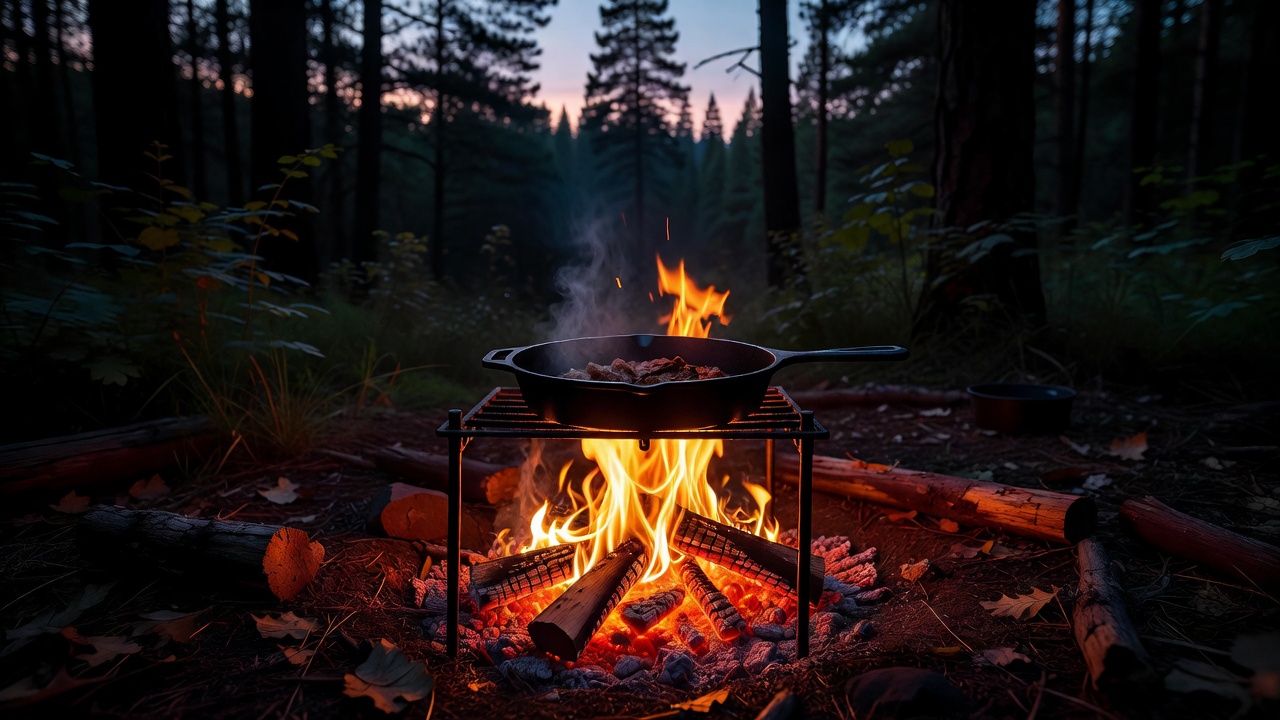
Splitting and Processing Wood at Camp
Bundled wood arrives in whatever sizes the seller cut. You will want splits smaller than that for kindling, and a hatchet is the cheapest way to get them.
The Fiskars X7 hatchet is a 14-inch forged-steel hatchet with a shock-absorbing handle and a sheath, which is the right size for splitting wrist-thick wood into kindling without hauling a full axe. It costs about thirty dollars and lives in our camp box permanently.
Two technique notes: split on a solid surface or a stump, never on rock or bare ground where the blade can chip. And never split wood by holding it with one hand and swinging with the other — hold the piece with a short stick, or better, set the hatchet blade into the wood and tap both against the block. Hatchet injuries are almost always a two-handed mistake.
Wind, Rain, and Burn Bans: The Real Fall Conditions
Fall camping is exactly when fire gets complicated. The air is damp at night, the wind picks up, and half the state may be under a burn restriction.
Damp air: Build bigger than you would in summer. A fire that would be perfect in July needs roughly twice the kindling in October, because the moisture in the air and in the wood is fighting you. Preheat your wood — lay the next few pieces near the fire ring so they dry out before they go in.
Wind: A fire in wind is a fire that throws sparks. Keep your cleared radius wider, and consider a fire that burns downward rather than upward — the upside-down fire (logs on the bottom, kindling on top) burns longer and throws fewer embers.
Burn bans: When open wood fires are banned, you have three legal options. A propane fire pit (above). A wood-burning camp stove, which is a contained combustion chamber rather than an open fire — the BioLite CampStove 2+ burns twigs and small sticks in an enclosed unit and also converts the heat into USB power, which is a genuinely useful trick on a cold weekend. And a gas camp stove, which is what most no-cook and fire-ban alternatives end up being.
Always check the current restriction before you pack — bans change weekly in a dry autumn, and they are enforced.
Cooking on the Fire: Cast Iron Is the Whole Answer
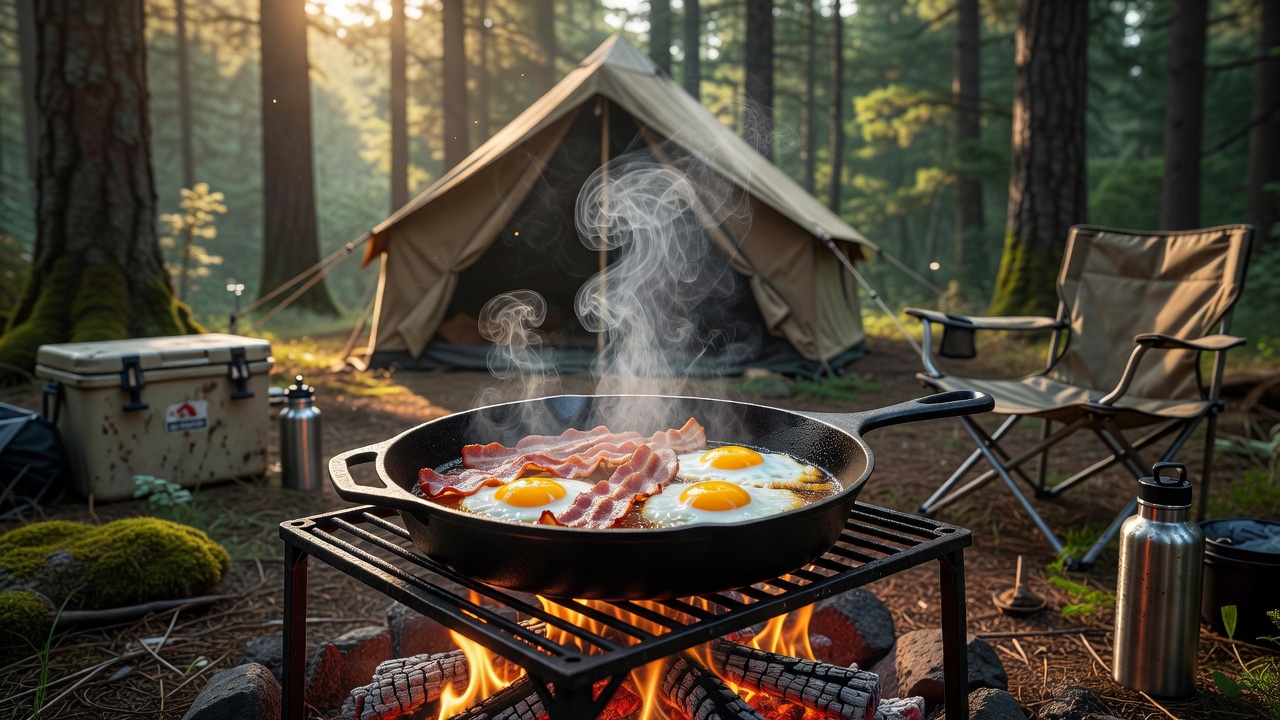
If the fire is going to earn its keep, it should be cooking something. Cast iron is the classic answer because it takes direct flame, holds heat, and does not care about a little ash.
The Lodge 10.25-inch cast iron skillet is the workhorse — one pan for eggs, bacon, sausage, and anything you want to sear over coals. The Lodge 6-quart deep camp Dutch oven is the one for stews, chili, and baking bread over coals with the lid loaded on top. And the Lodge cast iron combo cooker does double duty as both a deep pot and a skillet, which is what I would take if I only had room for one piece.
For a small grill-surface option, the Lodge round cast iron griddle sits over coals nicely and gives you a flat top for pancakes or quesadillas.
Staying Warm and Lit Once the Sun Drops
A fall campfire is half heat and half atmosphere, and you need both to work as the temperature drops.
Warmth on you, not just in front of you: a Rumpl puffy camp blanket is the piece people underestimate — warm, water-resistant, and it packs small enough to leave in the car all season. For hands, HotHands air-activated warmers give ten hours of heat per pair and cost almost nothing per use, while OCOOPA rechargeable hand warmers are the refillable version at 16 hours and four heat levels. And when you are handling wood and shifting logs, Carhartt's insulated knit-cuff gloves are waterproof with a knit cuff that keeps the cold from running up your wrist.
Light, so you can see what you are doing: the MalloMe 4-pack of multicolor camp lanterns is a cheap way to light a whole site at once, and the Black Diamond Moji lantern is the dimmable single-lantern option that does not blind everyone at the table.
If the fire is your only heat source, that is a signal to look at your sleep system too — a clear night in late October pulls heat out of the ground fast, and our fall camping gear checklist covers the layering side. For genuinely cold trips, the 4-season tent guide is the next step up.
Common Campfire Mistakes (Learn From Mine)
Lighting a fire with the biggest log you have. I have done this. You get a black log and no fire. Start small, always.
Using fire starter fluid on a campfire. It flashes, it smells, and it teaches you nothing about building a fire. Use it at home in a grill if you must. At a campsite, build the ladder.
Building on the fire ring's built-up ash. Old ash blocks airflow and hides wet ground. Scrape to bare soil, every time.
Leaving before the fire is dead. Drown it with water, stir the ash, drown it again, then touch the ashes with the back of your hand. Warm means not out. Cold means out. Fires that look dead start forest fires the next afternoon.
Forgotten food in the fire ring. Foil packets left in coals are fine. Anything plastic, or a can, is trash you now have to dig out of the ash.
Skipping the burn-ban check. Every year people get cited for a wood fire during a restriction. A two-minute check on the park's site prevents the whole trip going sideways.
A Fall Campfire Packing Checklist
- Firewood — certified, local, kiln-dried or seasoned (do not haul it across state lines)
- Kindling — softwood sticks, plus a hatchet to split down bigger pieces
- Tinder — birch bark, cedar shavings, or a paper bag
- Ignition — windproof matches and a flameless arc lighter, so you have two independent ways in
- A metal fire poker or stick for shifting logs
- Cast iron — skillet, Dutch oven, or combo cooker for cooking over coals
- Water or a bucket for extinguishing, plus a shovel if fires are allowed outside rings
- Warm layer and gloves for sitting out after sunset
Campfire Firewood FAQ
Should I buy hardwood or softwood firewood for camping?
Buy hardwood (oak, maple, ash, hickory) for the body of your fire and softwood (pine, fir, cedar) for kindling. Hardwood is denser, burns longer, and produces the lasting coals you cook over. Softwood catches easily but burns out quickly, so it is best used only to get the fire started.
How do I know if firewood is dry enough to burn?
Dry, seasoned wood is noticeably lighter than green wood of the same size, and the logs clack when knocked together instead of thudding. Kiln-dried bundles are the reliable option because moisture has already been driven down to roughly 15-20%. If a piece feels heavy for its size or the bark is still tight and damp, it is not ready.
Can I bring firewood from home to a campground?
Generally no — most state and national parks restrict firewood to within about 10 miles of where it was cut, because invasive pests travel inside the wood. Buy certified heat-treated firewood at or near the campground instead. If you cannot buy local, a propane fire pit avoids the issue entirely.
What is the best way to start a campfire without lighter fluid?
Build a heat ladder: tinder at the bottom, pencil-thick kindling in a loose criss-cross above it, and hardwood splits only once the kindling is burning well. Light the tinder from underneath so the fire burns upward. Windproof matches or a flameless arc lighter make ignition reliable in wind and wet conditions.
Can I have a campfire during a burn ban?
Not a wood fire, in most cases — burn bans prohibit open flames and open wood fires specifically. Contained options like a propane fire pit or an enclosed wood-burning camp stove are often still permitted, but restrictions vary by jurisdiction and change week to week. Check the specific park's current restriction before your trip.
The Bottom Line
A campfire is not a mystery — it is a moisture problem, an air problem, and a patience problem, in that order. Buy wood that is actually dry and actually local. Build in small steps instead of one big leap. Give it air. Do those three things and you will have coals to cook on and a fire that is still going when everyone else is giving up.
If you are planning the rest of the trip, start with where to camp in October for site selection, then move to the campfire cooking guide when it is time to actually feed people. And if your season runs into November, the camping in November guide covers the colder version of everything here.
<!-- AFFILIATE_DISCLOSURE -->