Camping Toilet & Sanitation Guide: How to Poop in the Woods Without Ruining the Trip (2026)
A no-nonsense 2026 guide to portable camp toilets, wag bags, bucket setups, RV toilet treatment and Leave No Trace, with picks from $15 to $45.
Let's just say it out loud: the number one thing that stresses out first-time campers (and a lot of experienced ones) is the bathroom situation. Where do you go? What do you do with it? How do you keep things clean, private, and odor-free when you're miles from plumbing?
It's not glamorous, but getting sanitation right is the difference between a trip that feels civilized and one that feels like a survival ordeal. The good news: a complete, sanitary camp toilet setup costs less than a single night at a motel, and the gear lasts for years. This guide walks through the three main approaches — bucket toilets, wag-bag systems, and RV/camper toilet treatment — so you can pick the one that matches your trip, your group size, and your comfort level.
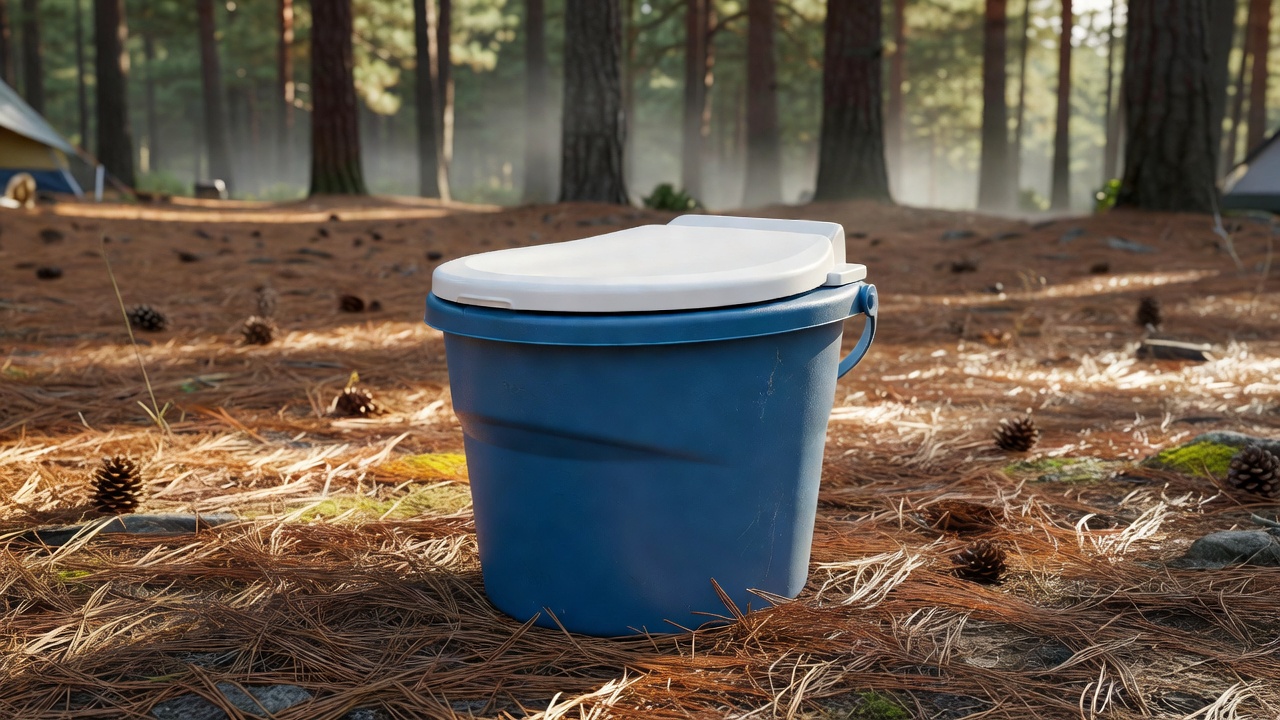
In a hurry? Here's the short answer. For most family car-camping trips, get a bucket toilet (about $25) — or the Camco version with a latching lid and carry handle (about $35) — line it with a 3-mil contractor bag, add a scoop of kitty litter after each use, tie the bag off, and pack it out when you leave. Backpacking or camping somewhere with pack-out rules? Carry wag bags instead — each one seals waste with gelling powder and packs out with you. Road-tripping or glamping? A portable flush toilet is the no-bags upgrade. And the rule that applies to every setup: everything you bring in packs out — burying waste is only acceptable for backcountry catholes, and many campgrounds now require pack-out even for car campers.
Quick Answer: Pick Your Camp Toilet Setup
Three approaches cover 95% of campers, and the whole thing costs less than one motel night:
- Cheapest complete setup (under $60 total): the Reliance Luggable Loo ($24.99), plus a pack of Camco TST MAX Drop-Ins ($14.67) to control odor for a full season.
- Comfort upgrade for car camping: the Camco 5-Gallon Toilet Bucket ($34.99) has a proper seat and a latching lid.
- Backpacking and pack-out zones (zero cleanup): a 12-pack of Cleanwaste WAG Bag 12-Pack ($44.99) is the leave-no-trace answer.
- A flushing toilet without plumbing: the Camco 41541 Portable Toilet ($54.99) for pop-ups, tents, and road trips.
Whichever you choose, add hand sanitizer and a privacy plan — that's the part first-timers forget.
Why a Dedicated Camping Toilet Setup Matters
You can, technically, just dig a cathole and move on. For low-impact backpacking on remote trails, that's still the right answer (more on Leave No Trace rules below). But for car camping, family trips, base camps, and RV setups, a real portable toilet changes the experience entirely:
- Privacy and dignity — nobody on a family trip wants to squat behind a bush while the kids "definitely aren't looking"
- Sanitation and health — a contained, sealable system keeps waste away from food, water, and sleeping areas, which is how you avoid the GI bugs that wreck multi-day trips
- Weather and darkness — middle-of-the-night bathroom runs in the rain, cold, or dark are genuinely miserable without a setup near your tent
- Group logistics — one well-managed toilet system serves a family of four or five for a full weekend without issues
- Campsite rules — many developed and dispersed campsites now require pack-out of all human waste, meaning "dig a hole" isn't even an option there
The upfront cost is small. The payoff in comfort and peace of mind is enormous — and it's one of the items most often missing from a standard family camping gear checklist.
The Three Main Camping Toilet Approaches
There's no single "best" camping toilet — the right choice depends on where you're going, how many people, and how long you're staying. Here's how the four main setups compare.
1. The Bucket Toilet: Best for Car Camping and Family Base Camps
A bucket toilet is exactly what it sounds like: a 5-gallon bucket with a snap-on toilet seat lid. You line it with a trash bag, add a handful of absorbent material (kitty litter, sawdust, or specialized treatment), and use it. When it's full or the trip's over, you tie off the bag and pack it out.
This is the workhorse of car camping. It's cheap, sturdy, holds a surprising amount, and the bucket doubles as a carry container for the rest of your gear in transit. For families with kids, a bucket toilet set up inside a privacy tent or the back of an SUV turns "the bathroom problem" into a non-issue for the whole weekend.
The Reliance Luggable Loo Portable 5-Gallon Bucket Toilet ($24.99) is the budget benchmark — a simple, rugged 5-gallon bucket with a snap-on seat lid that's been the standard for decades. If you want something a bit more refined with a proper hinged seat, latching lid, and carry handle, the Camco Portable 5-Gallon Toilet Bucket with Seat, Lid and Carry Handle ($34.99) is the step-up pick. Both use standard trash-bag liners and the same absorbent treatment.
Best for: car campers, families, base camps, group sites, anyone who wants the simplest reliable solution
Budget tip: a $1 box of unscented kitty litter from the grocery store works just as well as branded "toilet treatment" for absorbing liquid and tamping down odor. Bring a scoop and add a layer after each use.
Why a 5 Gallon Bucket Camping Toilet Is Still the Standard
Almost every DIY bucket camping toilet comes back to the same three parts, and the sizing is the reason it works:
- The bucket — a standard 5 gallon bucket camping toilet uses the same bucket your hardware store sells. That shared rim size is exactly why snap-on seat lids, latching lids, and liners all fit without adapters.
- The seat — a proper camping toilet seat is the single biggest comfort upgrade. A 5 gallon bucket camping toilet seat with a hinge beats a plain snap-on lid, and the bucket lands close to dining-chair height, so most adults actually sit down instead of perching.
- The liner and the lid — 3-mil contractor bags inside, a latching lid outside. The lid is your odor control; the bag is your pack-out.
Building a DIY bucket camping toilet from parts is legitimate — bucket plus seat lid plus absorbent is the same setup as a branded kit, usually for less. Two things worth doing differently: buy a dedicated bucket rather than reusing one that held paint, oil, or garden chemicals, and keep the seat lid and scoop stored with your camp gear so the kit never gets borrowed for something else.
There is also a middle step that isn't obvious for families: a small bucket camping potty sized for toddlers. A 2-gallon bucket with a training seat is a bathroom bucket camping kids can actually sit on safely, instead of balancing on a full-size opening.
What the branded versions buy you is the details — a hinged seat, a lid that seals tighter, a carry handle so the unit moves in one trip, and a shape that stacks with the rest of your gear. That's why the two picks above stay the recommendation over a bare hardware-store bucket.
2. The Wag Bag System: Best for Backpacking, Boating, and Sensitive Areas
A wag bag (short for "waste bag") is a single-use, sealable bag with a built-in absorbent gel powder and a tough outer layer that won't puncture. You use it directly, seal it, and pack it out — no bucket, no chemicals, no mess.
This is the go-to for backpacking, river trips, rock climbing, and any area where you're required to pack out all human waste (which is increasingly common on popular trails, alpine zones, and river corridors). It's also the most sanitary option because each bag is fully sealed and disposable — there's nothing to clean afterwards.
The Cleanwaste Original WAG Bag Portable Toilet Kit (Pack of 12) ($44.99 for a 12-pack, about $3.75 per use) is the standard. Each bag has a puncture-resistant outer shell, an inner bag with gel powder that solidifies waste and neutralizes odor, and a ziplock-style seal. The 12-pack covers a weekend for a family of four, or a full week of solo use with spares for emergencies.
Best for: backpackers, paddlers, climbers, Leave No Trace-required zones, anyone who needs a fully self-contained pack-out system
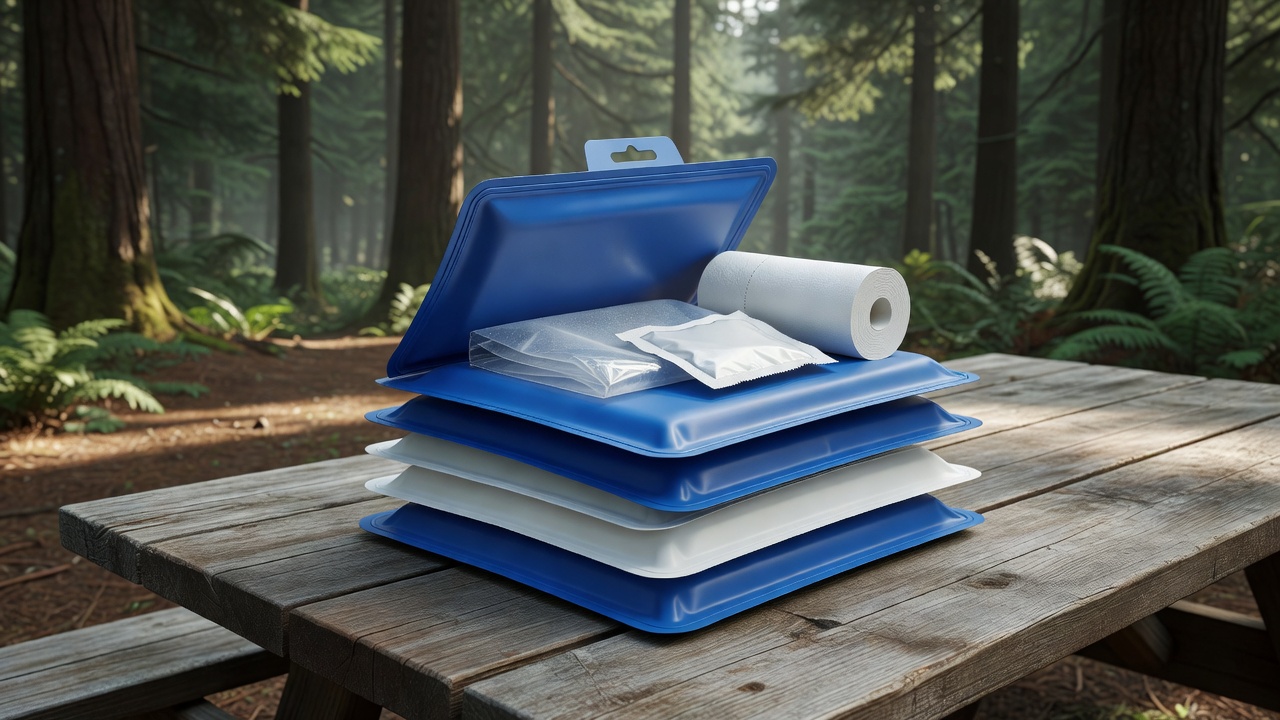
Pro tip: even if you're car camping with a bucket toilet, throw two wag bags in your kit as backup. If your bucket liner leaks or breaks, a wag bag is a clean emergency fallback.
3. The Portable Flush Toilet: Best for Road Trips, Pop-Ups, and Tent Glamping
A portable flush toilet is the middle ground between a bucket and a plumbed RV: a compact unit with a fresh-water flush tank on top and a detachable waste-holding tank below. You flush after use (most run on a battery-operated pump), and waste collects in the bottom tank behind a sealing slide valve that locks in odors until you empty it. No bags, no liners, no digging.
The Camco 41541 Portable Travel Toilet ($54.99) is the classic pick — a 5.3-gallon holding tank with an odor-locking slide valve, a battery-operated flush, and a carry handle that makes it easy to move from tent to trailer. It's the setup most families upgrade to when they outgrow a bucket: the flush feels like a real toilet, emptying takes under a minute, and a capful of tank treatment keeps smells from ever starting.
Best for: pop-up and tent campers, road-trippers, van campers, and RV owners who want a portable unit at the campsite
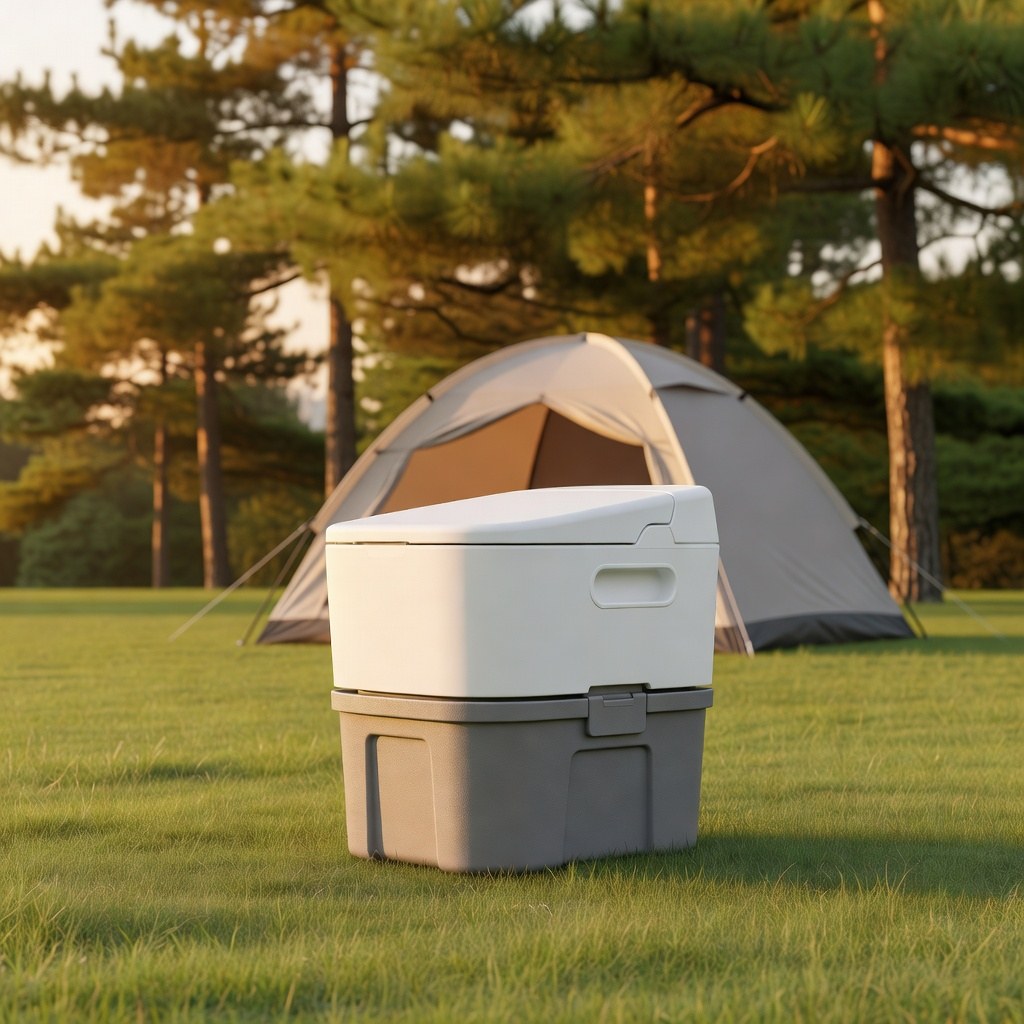
Pro tip: pair it with a drop-in tank treatment like the Camco TST MAX RV Toilet Treatment Drop-Ins — a single tablet in the holding tank breaks down waste and controls odor between empties.
4. RV and Camper Toilet Treatment: Best for Trailer and Motorhome Trips
If you're camping with a travel trailer, motorhome, or camper with a plumbed toilet and holding tank, your toilet is built in — but the treatment you use in that tank makes or breaks the experience. Bad treatment means odors that fill the rig the moment you flush. Good treatment means you barely think about it.
The Camco TST MAX RV Toilet Treatment Drop-Ins, Citrus Scent, 30-Pack ($14.67 for 30 treatments, about $0.49 per dose) is the reliable choice — a drop-in tablet that breaks down waste, controls odor with a citrus scent, and works in both black and gray water tanks. One drop per tank flush is the standard dose. The 30-pack covers a full season of weekend trips.
Best for: RV owners, travel trailer campers, anyone with a plumbed toilet and holding tank
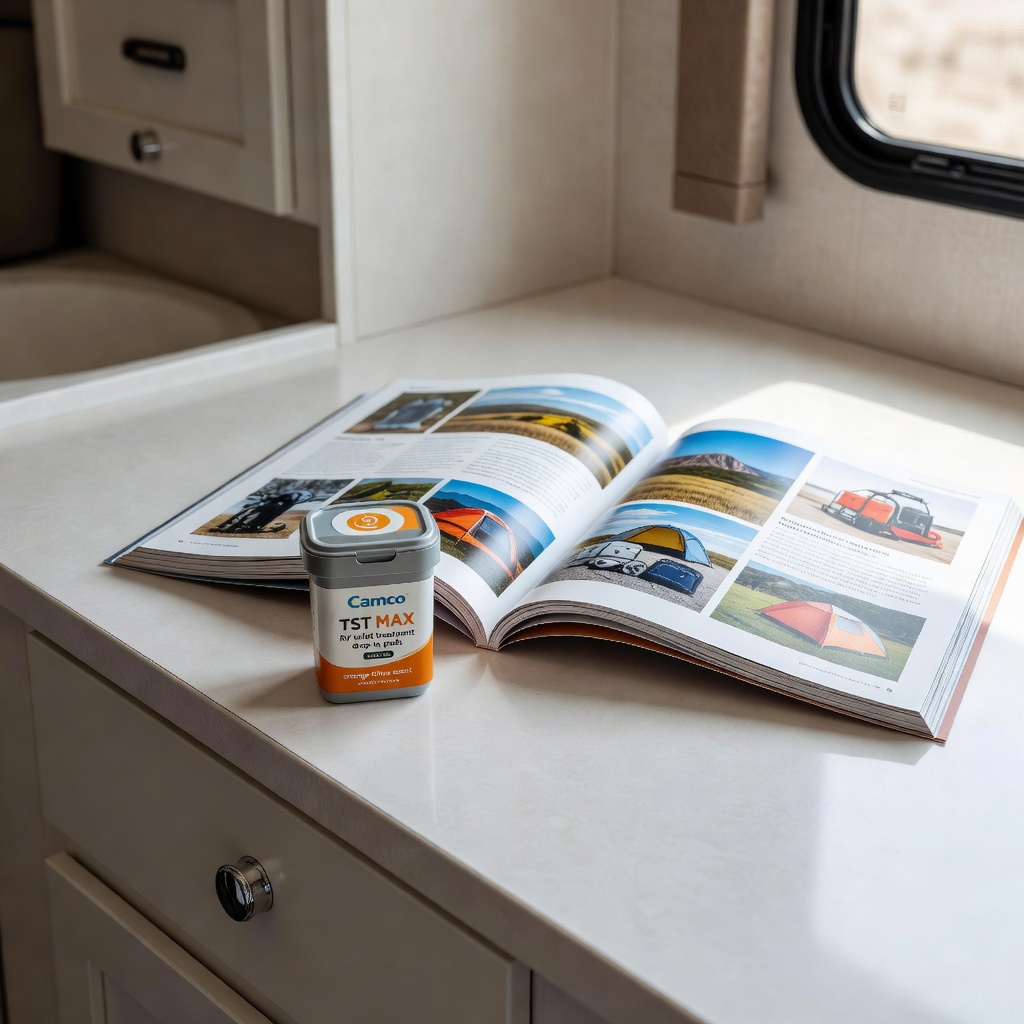
Why it matters: holding-tank odor is the number one complaint from new RV owners, and the fix is almost always "use a better treatment at the right dose." The cheap stuff lets waste sit and ferment; a proper enzymatic treatment like TST MAX breaks it down before odor starts.
How to Choose: A Quick Decision Guide
Not sure which setup fits your trip? Here's the shorthand:
- Solo or duo backpacking, 1-3 nights → wag bag system (lightweight, pack-out, nothing to clean)
- Car camping, family of 3-5, weekend trip → bucket toilet + trash bag liners + kitty litter
- Pop-up camper, tent glamping, or road trip → portable flush toilet (a real flushing toilet without the plumbing — detachable tank, no bags or liners)
- RV, trailer, or camper with plumbed toilet → RV toilet treatment drop-ins (the toilet's already there; just maintain the tank)
- Group base camp, 4+ people, 3+ days → bucket toilet as primary, wag bags as backup, plus a dedicated privacy tent
- Sensitive area with mandatory pack-out → wag bags only (catholes prohibited by land manager rules)
Most families end up with a hybrid: a bucket toilet for the campsite and a couple wag bags in the daypack for hikes away from camp. That combo covers nearly every scenario for under $80 total.
Setting Up a Camp Toilet That Doesn't Smell (or Gross Anyone Out)
The gear is half the battle. The setup is the other half. Here's how to run a camp toilet so it stays clean, odor-free, and unembarrassing for the whole trip.
Picking the Right Spot
- Distance rules: at least 200 feet (about 70 adult steps) from any water source, trail, or campsite — this isn't just courtesy, it's a hard Leave No Trace rule that protects water quality
- Downwind from camp and the cooking area: even with good treatment, a breeze in the wrong direction is a mood-killer at dinner
- Private but accessible: behind a tree or rock outcrop is fine for a cathole; for a bucket or toilet tent, pick a flat spot you can reach in the dark without tripping
- Level ground: a bucket toilet on a slope tips. Find flat ground or level with a rock or pad.
The Bucket Toilet Routine (Step by Step)
- Line the bucket with a heavy-duty trash bag (13-gallon kitchen bags work; contractor bags are tougher)
- Add a 2-inch layer of absorbent (kitty litter, sawdust, or a capful of RV treatment) in the bottom
- After each use, add another scoop of absorbent on top and close the lid
- Keep a dedicated bag of absorbent next to the toilet with a scoop or cup
- Keep hand sanitizer and a small trash bag for used toilet paper within arm's reach
- When the bag is half to two-thirds full, or at the end of each day, tie it off and store it in a sealed container away from camp and food
- Pack out the sealed bag with the rest of your trash — never bury or burn a plastic bag
A family of four can run a single bucket toilet for a full weekend with one bag change mid-trip if you follow this routine. The lid seals the odor; the absorbent handles the liquid.
Keeping It Sanitary
- Dedicated hand sanitizer next to every camp toilet, every time — GI illness is the number one trip-ruiner, and it almost always traces back to poor hand hygiene after bathroom use
- Separate the toilet supplies from kitchen gear — keep the toilet bag, hand sanitizer, and absorbent in a different bin or compartment from food and cooking equipment
- Seal everything — open bags and unsealed buckets attract insects and animals; a latching lid is non-negotiable in bear country
- Never put toilet paper in a cathole — it decomposes slowly, animals dig it up, and it's the most visible sign of a careless camper. Pack it out in a sealed bag or use a wag bag for paper too.
Camping Toilet Paper: The Small Detail That Causes Most Camp Toilet Problems
Toilet paper is where camp sanitation quietly goes wrong. Two rules cover almost all of it: what paper you buy depends on whether anything is flushing, and where the paper goes depends on whether anything is being packed out.
If you're using a portable flush toilet or an RV holding tank, use quick-dissolve RV and marine toilet paper. It's thin, single-ply paper made to break apart in a tank. Regular household paper — especially plush multi-ply — is the most common cause of holding-tank clogs, and "flushable" wipes are worse: they don't break down fast enough for a 5-gallon tank, so they join the sludge layer you eventually have to empty. If you want wipes on a road trip, pack them out.
If you're using a bucket toilet or camping anywhere in the backcountry, household paper is fine — but it goes into a separate sealed bag, not into the bucket liner and not into a cathole. That's the same rule the Leave No Trace section below lays out: paper breaks down far more slowly than people assume, animals dig it up, and a zip bag weighs nothing.
Camping toilet paper storage matters more than people expect, because paper that's soaked, muddy, or half-eaten by a squirrel is a genuine problem at 11pm. Three things fix it:
- A rigid container — a dedicated camping toilet paper container keeps the roll dry through rain and dew. A coffee can with a lid, a small plastic storage box, or a purpose-made camping toilet paper holder all do the same job.
- A holder you can hang — a tube-style camping toilet paper holder clips to the frame of a privacy shelter or to the bucket handle so the roll never sits on the ground. This is the one camping toilet paper dispenser upgrade that actually changes your trip.
- A separate used-paper bag — a roll-top or zip bag kept with the toilet, never with the food.
If you'd rather not carry paper at all, camping toilet paper tablets (compressed tissue coins that expand with a splash of water) take up a fraction of the room and are a backpacking favorite. A backcountry bidet squeeze bottle is the other paper-free route.
For a weekend for four, two rolls plus one spare is plenty. Between trips, keep the roll in its container with a couple of silica packets if you live somewhere humid — the paper you packed in June should still be dry in October.
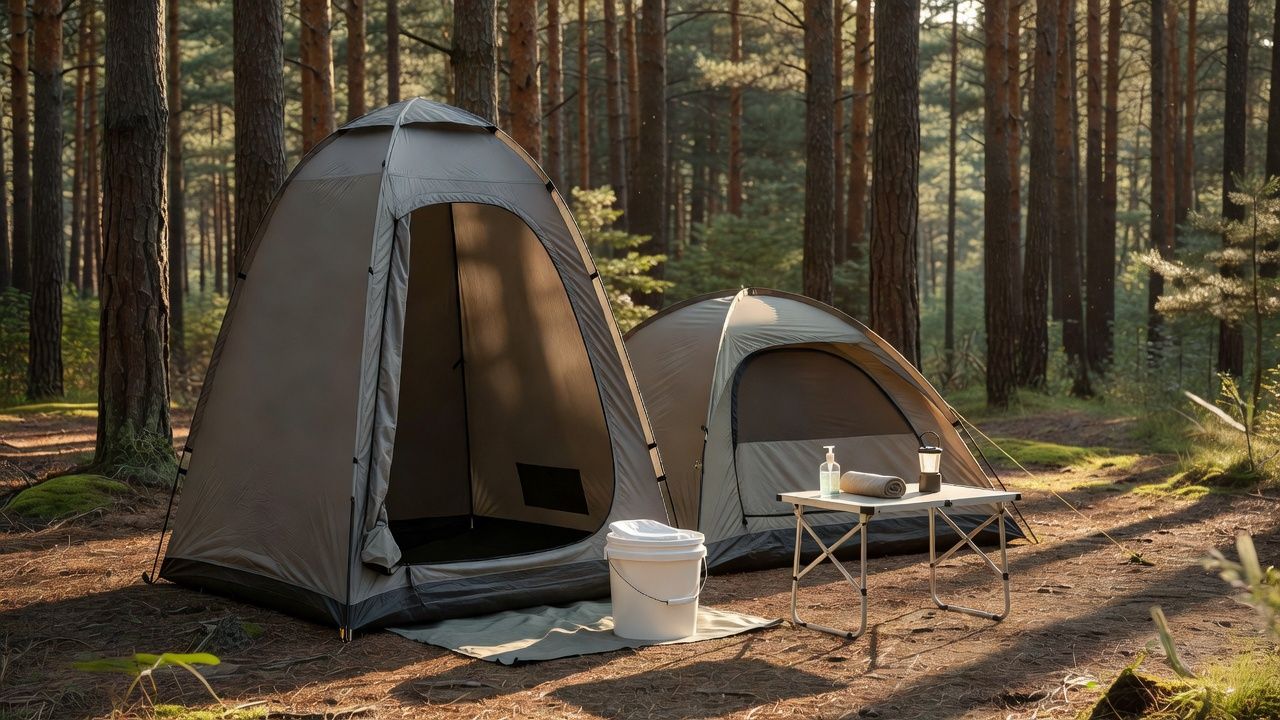
Camp Bathroom Setup: Privacy Tent, Caddy, and the Rest of the Kit
A camp bathroom isn't one purchase — it's four pieces that only work together. A complete camping bathroom setup is those four pieces in one place; a camping bathroom kit is the same list bought together, and you can put one together for less than the kit costs. The toilet is the part everyone researches; the other three are the parts people forget and then fix on the way home.
1. A camping bathroom tent (privacy shelter). A camping toilet tent pop up design is a lightweight shelter with a floor, a zippered door, and a hanging hook. Look for standing height, a hook for a light, and a vent panel so it doesn't become a sauna. Put it on flat ground within easy reach of the tent — the entire reason it exists is the 2am trip — but still downwind of camp and 200 feet from water, exactly like any other toilet placement. Stake it and add the guy lines; a pop-up shelter in wind folds over on itself if it's just standing free.
Two variants are worth knowing. A camping toilet tent for car camping can be as simple as a tarp rigged off an open SUV hatch, but that's a fair-weather solution with no privacy from the next site over — a pop-up packs to roughly the size of a folding chair and sets up in about 30 seconds, which is why most families just bring it. And a foldable portable toilet for camping (a commode frame that takes a bag) solves the storage problem on road trips where a 5-gallon bucket is awkward to pack.
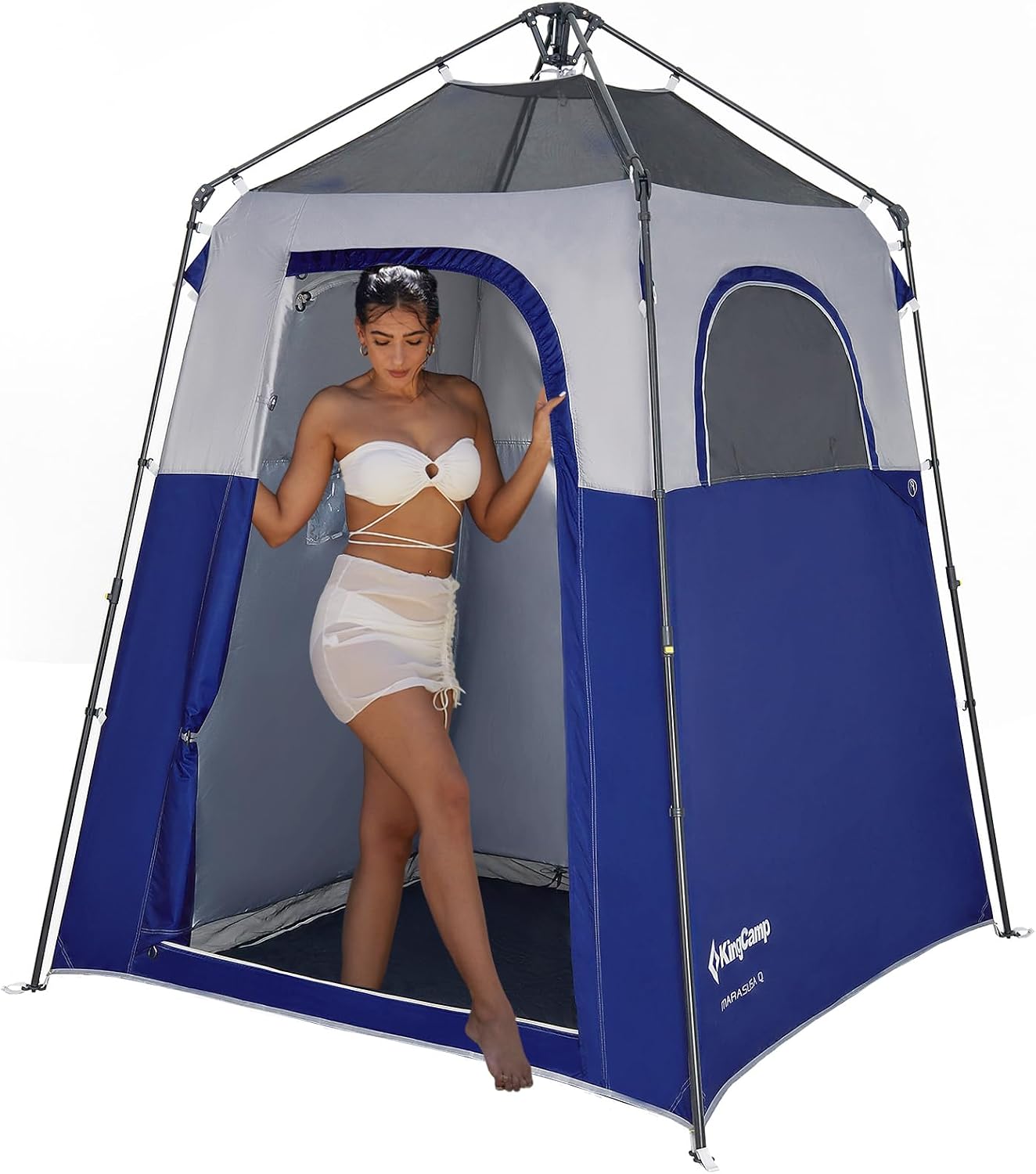
If the $30 pop-up is the shelter you end up replacing every season, the KingCamp Instant Shower Tent ($129.99, 4.5★, 1,791 ratings) is the buy-once version of the same object: rust-resistant iron poles and included stakes instead of thin fiberglass legs, a zippered PE floor with drainage zips so a 2 AM trip in the rain is not a 2 AM trip into mud, a detachable rain canopy, and a top hook rated for a full 5-gallon shower bag. It sets up the same way — unfold, extend the poles, click — in under a minute with no tools, and it stands up in wind without folding over on itself. Buy it once and it outlives three of the cheap ones.
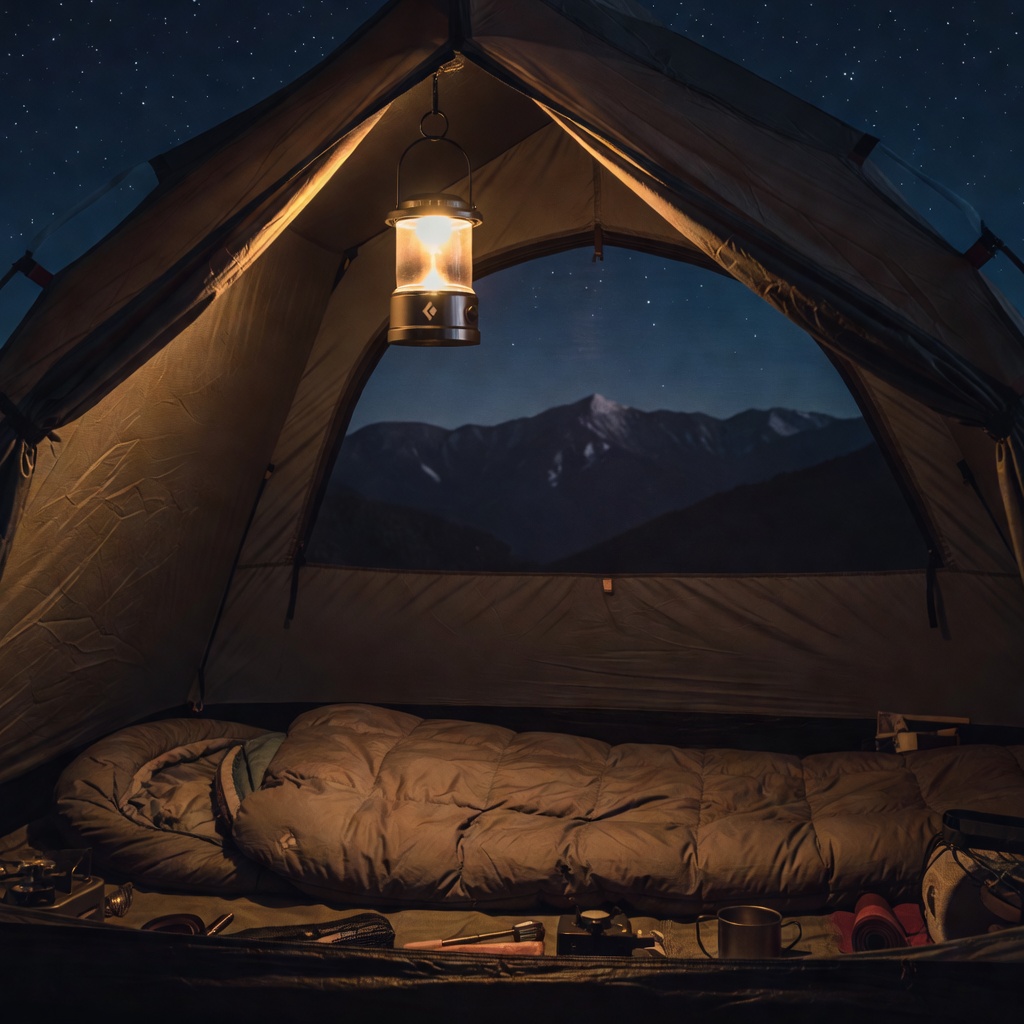
2. A camping bathroom shelter needs a floor and a light. The floor keeps feet out of the mud; the light is what makes a night visit survivable. A dimmable lantern hung from the top hook is ideal — bright enough to see, dim enough not to wake the campground. We use the Black Diamond Moji ($24.95) for exactly this: it hangs from the shelter hook and has a soft low setting.
3. A bathroom caddy. One bin that holds everything and travels to the toilet as a unit: paper in its container, the used-paper bag, hand sanitizer, a small light, spare liners, and the absorbent scoop. A camping bathroom caddy (a shower tote or a lidded bin) is also how you enforce the rule that matters most — the camping bathroom essentials never share a bin with kitchen gear.
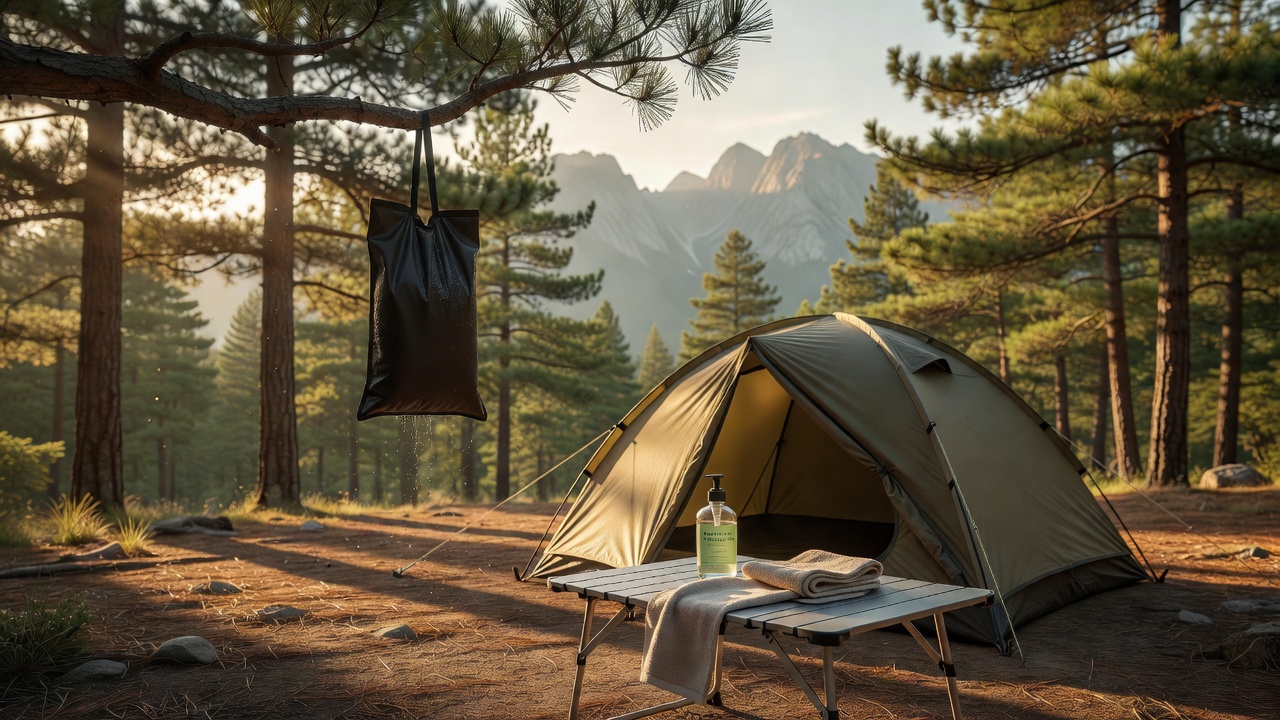
4. The bathing half. A camp bathroom is usually also where people wash up; "camping bathroom and shower" is one setup, not two. A solar shower bag ($35.99) hangs from the same shelter hook in the afternoon sun, and a quick-dry microfiber towel ($24.95) is dry before breakfast — both cut the amount of wet gear you fold back into the car. Keeping soap and shampoo in a hanging camping toiletry bag, rather than a dopp kit that sits on the ground, keeps camping toiletries out of the dirt and out of the dog's reach.
Can a camping toilet for inside tent sleeping work? Almost never inside the sleeping area itself. A chemical toilet or bucket inside a closed tent traps odor and moisture in the one place you can't escape. If your tent has a floorless vestibule or an attached awning, a lined bucket in that space — emptied immediately, liner sealed — is the common family compromise. A privacy shelter is the better answer, which is why a $30 pop-up shows up on so many family packing lists. If you're weighing setups, the best camping toilet for tent camping is almost always the bucket (cheap, no tank, nothing to flush) or a portable toilet for tent trailer and pop-up trips, where a small flush unit earns its keep — and if you specifically want a portable toilet for camping tent setups with no bag changes, that flush unit is the one.
Leave No Trace: The Rules Most People Get Wrong
The official Leave No Trace guidelines for human waste are specific, and a surprising number of experienced campers get them wrong. Here's the current standard:
- Cathole depth: 6-8 inches deep and 4-6 inches wide, in organic soil (not sand, not rock) at least 200 feet from water, camp, and trails
- Cover and disguise: fill the hole with the original soil, then scatter leaves, duff, or rocks over the spot so it's not visible
- Toilet paper: pack it out — don't bury it (animals dig it up) and never burn it (fire risk in dry conditions). A sealed ziplock bag works and is the official recommendation
- Urinate on durable surfaces: rocks, gravel, or bare dirt — not live plants (animals are attracted to the salt and will damage the vegetation digging for it)
- Group size matters: for groups of 6+, a single communal cathole area is better than scattered individual holes — it concentrates impact instead of spreading it across the whole site
- Pack-out is increasingly mandatory: popular trails (many in National Parks, alpine zones, river corridors, and high-use backcountry) now require all waste to be packed out. Check the land manager's website before your trip — assuming a cathole is allowed can earn you a fine
If you're unsure whether a cathole is allowed, default to a wag bag. Pack-out is always compliant; a cathole is only compliant where it's explicitly permitted.
Where Do You Go to the Bathroom When Camping? The Plain Answer
The honest answer depends entirely on where you are, and hardly anyone explains it in plain language. Whether you phrase it as where do you go to the bathroom when camping or where do you go to the toilet when camping, there are only four real scenarios:
- Developed campground with restrooms → use them. This is not the trip to be a hero.
- Campsite without facilities → your own toilet at your own site: a bucket toilet for car camping, or a portable flush toilet if you want the upgrade. Many of these sites now require pack-out of all human waste, so check the land manager's page.
- Backcountry, low use → a cathole, done properly: 6-8 inches deep, 200 feet from water, camp, and trails, paper packed out.
- Backcountry, high use or a pack-out zone → a wag bag, carried out. Always compliant.
How to poop in the woods, without the euphemisms. Walk well off the trail and away from water, dig the hole, go, cover it, disguise the surface. That's the whole technique. The part people actually struggle with is everything around it, so build a small kit and keep it in your pack: a trowel, your paper in a container, a zip bag for used paper, hand sanitizer. On multi-day river trips, where pack-out is mandatory, the standard solution is a sealable reusable container — often a DIY poop tube (a length of wide PVC with a screw cap) or a commercial version of the same idea. It sounds absurd until day three, when it's the most appreciated item in the raft.
How to poop in the woods without toilet paper. A backcountry bidet (a squeeze bottle) plus air drying works and leaves nothing behind. Smooth rocks and snow work in a pinch. Broad soft leaves are the last resort and some cause skin irritation, so know what you're touching. If you use a bandana, it is now used paper: it gets packed out, not hung on a bush.
How to poop in the woods for women. A stand-to-pee funnel makes the entire process dramatically easier and lets you avoid squatting in poison ivy. Pair it with a dedicated bandana for drip-drying rather than more paper, keep the funnel in its own bag, and keep a spare in the car for rest stops.
How to poop in the woods with bad knees (or any mobility limit). Don't squat. Use a tree for balance with a leaning technique, or — better — carry a sit-down option: a folding commode frame, a bucket toilet at a comfortable height, or a wag bag used on a camp stool. There is no virtue in making this harder than it needs to be.
How to poop in the woods without leaving a trace. Bury human waste only where it's allowed, pack out the paper and every wipe, and never leave a cathole uncovered or partially covered. If the land manager requires pack-out, a cathole is not a lesser-impact option — it's the non-compliant one.
Going with a buddy is about safety, not company: at night in bear country, make noise and don't wander off alone, and keep your own sanitizer rather than passing one bottle around. And the universal rule for every scenario above: wash your hands like it matters, because it does.
The Short Answer for Every Way People Ask This
| How people phrase it | The short answer |
|---|---|
| camping toilet options / camping toilet portable | The four setups above: bucket, wag bag, portable flush, RV tank. Most families land on a bucket for the site plus a couple of wag bags for hikes. |
| camping toilet bucket / camping toilet bags / portable toilet camping bags | A 5-gallon bucket with a snap-on or hinged seat lid, lined with a 3-mil contractor bag. "Camping toilet bags" almost always means those liners — not a bag you buy pre-filled. |
| camping bucket toilet lid / camping bucket toilet liners | The latching lid is the odor-control part; the liner is the pack-out part. Buy both, and buy the thick liner. |
| camping toilet chemicals / portable toilet camping chemicals | Tank treatment for a portable flush toilet or RV tank: a drop-in tablet per flush that breaks down waste and controls odor. For a bucket toilet, plain unscented kitty litter does the same absorbing job for less. |
| portable toilet camping tent / portable toilet camping foldable | The shelter is what makes any of it usable in a campground. A foldable commode frame is the storage-friendly alternative when a bucket won't pack. |
| camping bathroom ideas / camping bathroom solutions / camping bathroom hacks | Four pieces: toilet, privacy shelter, caddy, light. The hacks that matter are a hanging light, a hanging paper holder, and a caddy that never touches kitchen gear. |
| camping bathroom bucket / camping bathroom bags | The bucket is the toilet; the bags are the liners. Keep both in the caddy so a night trip doesn't need a search. |
| camping toilet paper holder / container / box | Anything that keeps the roll dry and off the ground. A tube holder that clips to the shelter frame is the upgrade; a lidded can is the free version. |
| how to poop in the woods backpacking / while camping / without a toilet | Cathole where allowed (6-8 inches, 200 feet from water), wag bag where pack-out is required. Kit: trowel, paper in a container, zip bag for the paper, sanitizer. |
| how to poop in the woods without leaving a trace / leave no trace poop rules / leave no trace poop kit / leave no trace poop bags / leave no trace poop tube / leave no trace poop / leave no trace pooping in the woods / leave no trace feces / leave no trace poo | Bury waste only where allowed, pack out all paper and wipes, use a sealable container (a "poop tube") where pack-out is mandatory, and check the land manager's rules before you go. |
| how to poop in the woods without toilet paper / without a toilet | A squeeze-bottle bidet plus air drying, or smooth rocks and snow in a pinch. Anything fabric becomes used paper and gets packed out. |
| best camping toilet for kids / best portable toilet for kids / portable toilet for kids / portable toilet for kids camping / foldable portable toilet for kids / portable toilet cover for kids / how to poop in the woods for women / how to poop in the woods with bad knees / how to poop in the woods while camping with kids | Kids need a smaller opening (travel potty or training seat on a bucket) and a setup near the tent; women benefit from a stand-to-pee funnel; bad knees or limited mobility mean a sit-down option, never a squat. |
| 5 gallon bucket camping toilet seat / bucket style camping toilet / bucket camping potty / bathroom bucket camping / camping toilet for inside tent / camping toilet for toddlers / camping toilet for kids | A standard 5-gallon bucket is the base of all of them. Kids get a 2-gallon bucket or a training seat; "inside the tent" really means the vestibule, emptied immediately. |
| bucket camping toilet portable / bucket toilet seat camping | Same bucket, same lid. "Portable" in these searches just means it isn't plumbed in — and any snap-on or hinged camping toilet seat fits a standard 5-gallon bucket. |
| camping bucket toilet bags | Contractor-grade 3-mil liners. A "camping toilet bag" is a liner, not something you buy pre-treated; kitty litter does the treating. |
| camping toilet paper bag / camping toilet paper case / camping toilet paper cover | Storage again: a zip bag for the used paper, and a small case or cover to keep the clean roll dry, clean, and squirrel-proof. |
| how to poop in the woods with a buddy / how to poop in the woods without a toilet | Go with someone at night in bear country, carry your own sanitizer, and treat every "no toilet anywhere" situation as the four scenarios above. |
| how to poop in the woods leave no trace / where to go to the bathroom when camping / where do people go to the bathroom when camping | Cathole where it's allowed, pack out every wipe and sheet of paper, and when in doubt use the restroom or a wag bag. If there is a bathroom, that is the answer. |
Leave No Trace Poop Rules, Including for Your Dog
The human rules are covered above, but there's a second set most campers ignore. Although Leave No Trace poop rules are written for people, they apply to dogs too: dog waste carries bacteria and parasites that affect water quality, it is not "natural" in the concentrations a campground produces, and bagging it and then leaving the bag on the trail is the most common piece of litter found on popular trails. That is the whole of the Leave No Trace dog poop rule in one line: bag it, carry it, and don't leave it for someone else to deal with. Bag it and carry it — a small sealable container or an odor-proof pouch in your pack makes that tolerable on a long hike. A dedicated poop kit (bags, a sealable container, sanitizer) living in your pack means you never improvise. Our camping with dogs checklist covers the rest of the dog-specific gear.
Camping Toilet for Kids and Toddlers (and the 2am Problem)
A kid-focused setup is a different design problem than an adult one, and it's the setup families get wrong most often.
- The hole is too big. A full-size bucket seat is genuinely unsafe for a toddler to balance on. A camping toilet for kids should be a small travel potty, or a full-size bucket with a training seat on top — a portable toilet seat for kids that reduces the opening to kid size. A camping toilet for toddlers is the same idea in a smaller package. A portable toilet seat cover for kids is a different product entirely: a disposable paper cover for vault toilets and rest-stop bathrooms on the drive out. Families also keep a folding portable toilet for kids travel days and to serve as a portable toilet for kids in car rides — a toddler's bladder does not respect a 90-minute leg, and a travel potty in the trunk turns a roadside emergency into a two-minute stop.
- Familiarity beats novelty. Bring the potty or seat they already use at home, and — the tip nobody gives you — do a practice run in the backyard before the trip. Potty training and a new environment at the same time is a recipe for accidents.
- The 2am problem. Overnight trips are what push families toward a camping potty for kids inside the sleeping space. If you do that, line it, seal it, keep it in the vestibule rather than the sleeping area, and empty it first thing in the morning — never leave a sealed liner inside a warm tent all day.
- Make it theirs. A basket with the potty, wipes, a change of clothes, and a small light means a kid can handle a night trip with one parent instead of waking the whole tent. Our camping with a baby or toddler guide goes deeper on age-by-age sleep and feeding setups.
Common Camping Toilet Mistakes (Learn From Mine)
I've made most of these so you don't have to:
- Skimping on the lid — an open bucket, even with treatment, fills a tent vestibule with smell in an hour. A latching lid is the single biggest odor-control upgrade you can make.
- Using thin trash bags — a kitchen bag that splits at 2am is a catastrophe you don't forget. Spend the extra $2 on contractor bags (3-mil thickness) and sleep easy.
- Forgetting the hand sanitizer — I once ran a group trip where four people got a stomach bug, and the shared cause was a camp toilet with no dedicated sanitizer. Now there's a bottle clipped to every toilet, no exceptions.
- Burying toilet paper "because it's biodegradable" — it is, eventually, but in dry climates it can sit for years, and animals expose it long before then. Pack it out, always.
- Putting the toilet too close to camp for "convenience" — 200 feet exists for a reason. Closer means odors drift in, and in bear country, closer means you've put a food-adjacent attractant next to your tent.
- Not packing out the sealed bag — yes, I've seen people tie off a bag and leave it at the campsite "because it's sealed." That's littering, it's illegal, and it's exactly what gives campers a bad name. The sealed bag goes in your trash and to a dumpster.
What to Pack: A Camping Toilet Checklist
Here's the complete kit, sized for a family of four on a weekend car-camping trip:
- 1 bucket toilet (Reliance Luggable Loo or Camco Portable Toilet Bucket) — the toilet itself
- Optional upgrade: 1 portable flush toilet (Camco 41541, $54.99) — swap the bucket for a flushing toilet with a detachable tank and zero bag changes
- 5-10 heavy-duty trash bag liners (contractor bags, 3-mil) — one active, rest as spares
- 1 bag of absorbent (kitty litter, sawdust, or RV treatment) with a scoop or cup
- 2-3 wag bags as backup and for day hikes away from camp
- 1 bottle of hand sanitizer (clip to the bucket or hang nearby)
- 1 sealed ziplock bag for used toilet paper (pack-out)
- 1 small shovel or trowel (for catholes where permitted, or burying food waste)
- 1 privacy tent or tarp (optional but worth it for groups) — a $30 pop-up privacy tent turns an open campsite into a private bathroom
For RV and trailer trips, swap the bucket and bags for a box of Camco TST MAX RV Toilet Treatment Drop-Ins and a bottle of holding-tank cleaner. The toilet is already built in; maintenance is the whole job. For the full list of must-have RV add-ons, see our essential RV accessories setup checklist.
FAQ: Camping Toilet Questions, Answered Fast
Is it OK to bury camping toilet waste?
Only in the backcountry, and only the right way: a cathole 6–8 inches deep and 4–6 inches wide in organic soil, at least 200 feet from water, camp, and trails — filled in and disguised when you're done. On developed and dispersed campsites and many popular trails, pack-out is now mandatory, so check the land manager's rules before you go. When in doubt, default to a wag bag: pack-out is always compliant, while a cathole is only compliant where it's explicitly permitted.
How does a wag bag work?
A wag bag is a single-use, sealable bag with a built-in absorbent gel powder and a tough outer layer that resists punctures. Use it directly, zip it shut, and pack it out — the gel solidifies waste and neutralizes odor, so there's nothing to clean afterward. It's the go-to for backpacking, river trips, climbing, and any area with mandatory pack-out rules, and it's the most sanitary option because each bag is fully sealed and disposable.
What do you put in a bucket toilet to control the smell?
Add a layer of absorbent after every use — a dollar box of unscented kitty litter from the grocery store works as well as branded toilet treatment. The bigger odor-control upgrade is the lid: a latching lid keeps smells in the bucket better than any chemical, which is why step-up bucket toilets with hinged, latching lids are worth the few extra dollars.
Can you use regular trash bags with a bucket toilet?
Yes — but use contractor-grade bags, not thin kitchen bags. A 3-mil contractor bag that splits at 2 a.m. is a disaster nobody forgets, so spend the extra couple of dollars, double-bag if you want extra security, and always tie the bag off before packing it out. Never leave a sealed bag at the campsite: the sealed bag goes in your trash and out to a dumpster.
How often do you need to empty a camping toilet?
For a family of four on a weekend trip, one 5-gallon bucket toilet with a litter layer after each use typically lasts the whole trip — you tie off the final bag when you pack up. A portable flush toilet's removable holding tank (like the 5.3-gallon tank on the Camco 41541) should be emptied before it fills — the slide valve locks in odor, and emptying takes under a minute at a dump station or vault toilet.
Do you need a privacy tent for a camping toilet?
No, but it's the difference between a toilet your family actually uses and one everybody avoids. A pop-up privacy shelter gives you standing height, a door that closes, a hook for a light, and a floor, for about $30. Stake it, place it downwind of camp and 200 feet from water, and keep it within easy reach of the tent for night trips. If you're camped somewhere genuinely private and far from other sites, a bucket behind a rock is fine.
Can you put regular toilet paper in a portable camping toilet?
Only if you want to empty a clogged tank. Portable flush toilets and RV holding tanks need quick-dissolve RV and marine paper, which is made to break apart in the tank. Household multi-ply paper — and especially "flushable" wipes, which aren't — is the most common cause of holding-tank problems. With a bucket toilet or a backcountry cathole, household paper is fine, but it goes into a separate bag and gets packed out.
How do you handle a camping toilet at night with kids?
Give them their own setup near the tent: a small travel potty or a lined bucket with a training seat, in a privacy shelter or vestibule, with a dim light hung inside and wipes and a change of clothes in one basket. Line it, seal it, and empty it first thing in the morning. A dimmable lantern on its lowest setting is enough light to see by without waking the whole campground.
The clearest example of a county-by-county fire rule is in our Arkansas camping guide.
The Bottom Line
A camping toilet setup is the most overlooked piece of trip gear and the one with the highest comfort return per dollar. A bucket toilet, a box of treatment, and a bottle of hand sanitizer — under $40 total — turns a potentially miserable part of camping into something you never think about. For backpackers and pack-out zones, a handful of wag bags at $3.75 each solve the same problem with zero cleanup. And for RV owners, the right tank treatment is a $15 fix for the single most common complaint in the hobby. For pop-up, tent, and road-trip campers who want a flushing toilet without a plumbed rig, the Camco 41541 portable flush toilet splits the difference — real flushing feel, a detachable tank that empties in minutes, and no bags or liners to buy.
The gear is cheap. The rules are simple. The payoff is a trip where nobody's stressed about the one thing everyone needs to do. Pack a toilet, follow Leave No Trace, and the bathroom question stops being a question. Showering is the other half of camp hygiene — our how to shower while camping guide covers solar showers, quick-dry towels, and keeping a whole family clean off-grid. For the full pre-trip planning workflow — campsite selection, meal prep, packing lists — see our camping trip planning guide.
<!-- AFFILIATE_DISCLOSURE -->