RV Winter Camping: Stay Warm Without Frozen Pipes (2026)
RV winter camping without drama: heat the rig safely, keep water flowing, protect the batteries and stop condensation. Gear picks and a cold-night plan.
A travel trailer in the snow looks like the easiest possible upgrade over a tent: hard walls, a furnace, a real bed. Then the first 22°F night happens, the water line to the city spigot turns into a solid stick, the furnace blower drains the batteries by 2 a.m., and every window is running with water from last night's cooking and breathing.
Winter RV camping is not tent camping in a bigger box. It is four systems — heat, water, power, moisture — and each one fails in a different way, at a different temperature, with a different bill attached. The good news is that all four are solvable with a small, specific set of gear, and most of the decisions get made before you leave the driveway.
This guide is the version I use for ski weekends and late-season campgrounds: what to buy, what to leave at home, and the honest limits of a three-season rig. If you are still deciding whether an RV is the right winter vehicle at all, start with the RV vs tent camping comparison, and if this is your first season owning a rig, the RV camping for beginners setup guide covers the basics this page assumes.
Quick Answer: What Winter RV Camping Actually Requires
- Heat: the trailer furnace if you have hookups or a healthy battery bank; a catalytic propane heater as a supplement, never sealed in with you. A CO alarm is not optional.
- Water: below 32°F, either a thermostatically heated hose on a full-hookup site, or disconnect entirely and run off the fresh tank with jugs for drinking.
- Freeze protection: an overnight low of 28°F is enough to crack a water pump housing or a pex line inside a wall. Water expands about 9% when it freezes, and none of that damage is visible until spring.
- Power: the furnace blower is a 12-volt load running all night. Plan on a 30-amp pedestal, a surge protector and a circuit analyzer — or a power station, and lithium batteries that are not being charged below freezing.
- Moisture: burning propane puts water vapor into the air — roughly 1.6 lb of water per pound of propane. Without venting, that water ends up in your sleeping bag and behind the mattress.
| System | What fails first | Temperature it bites | The fix |
|---|---|---|---|
| Heat | Furnace blower kills the battery overnight | Any night below 40°F | Hookup power, or a Buddy heater as a supplement plus a CO alarm |
| Water | Hose and city-water inlet freeze solid | Below 32°F | Heated hose, or disconnect and use the fresh tank |
| Power | Lead-acid batteries sag under a cold, constant load | Below 25°F | Pedestal power, or lithium kept above freezing before charging |
| Moisture | Condensation soaks bedding and grows mold | Any closed-up night | Cracked roof vent, fan, drying gear, wipe-downs |
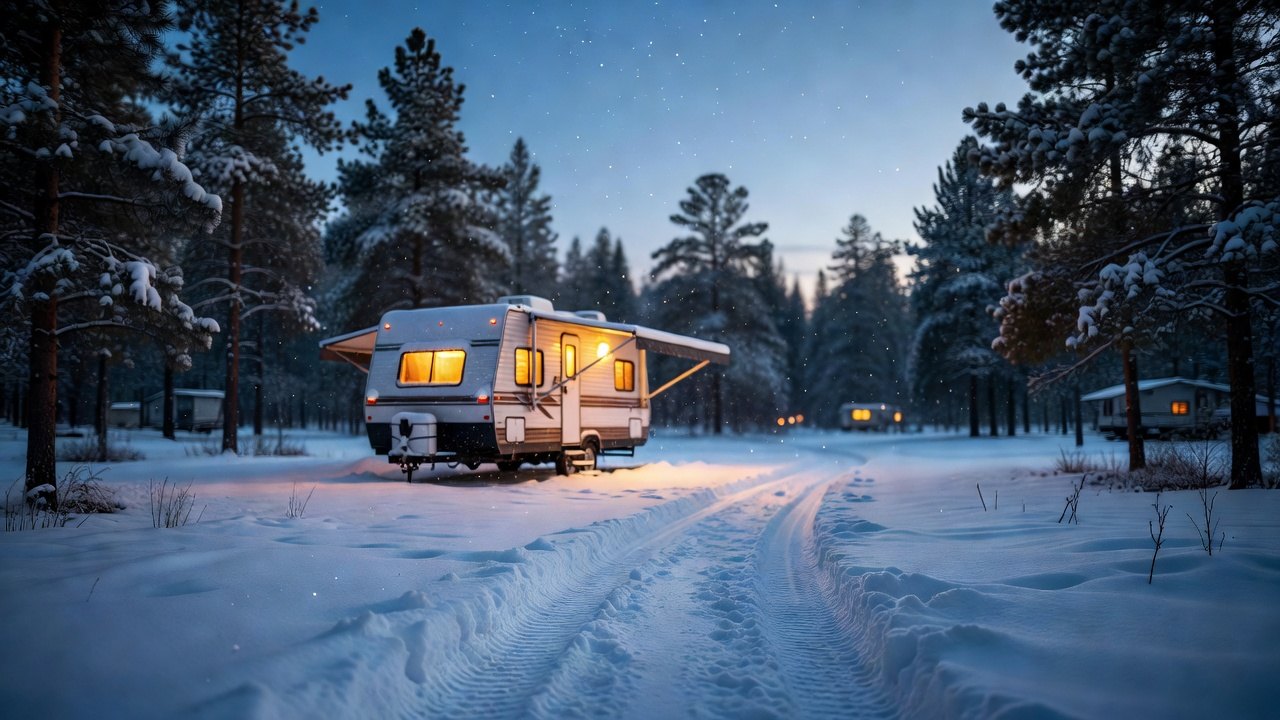
Heat: Furnace, Catalytic Heater, or Both
An RV furnace is ducted, thermostat-controlled, and it burns propane from your onboard tank while a 12-volt blower pushes the heat through the rig. It is the best heat source in a trailer, and it is also the reason people wake up to a dead battery: the blower runs continuously while the burner cycles, so a night of furnace on battery alone is a hard test for a pair of lead-acid batteries.
If you are on a 30-amp pedestal, run the furnace and stop thinking about it. If you are dry camping, treat the furnace as a short-burst tool — bring the rig up to temperature before bed, then shut it off and rely on bedding — and add a radiant propane heater for the cold hours.
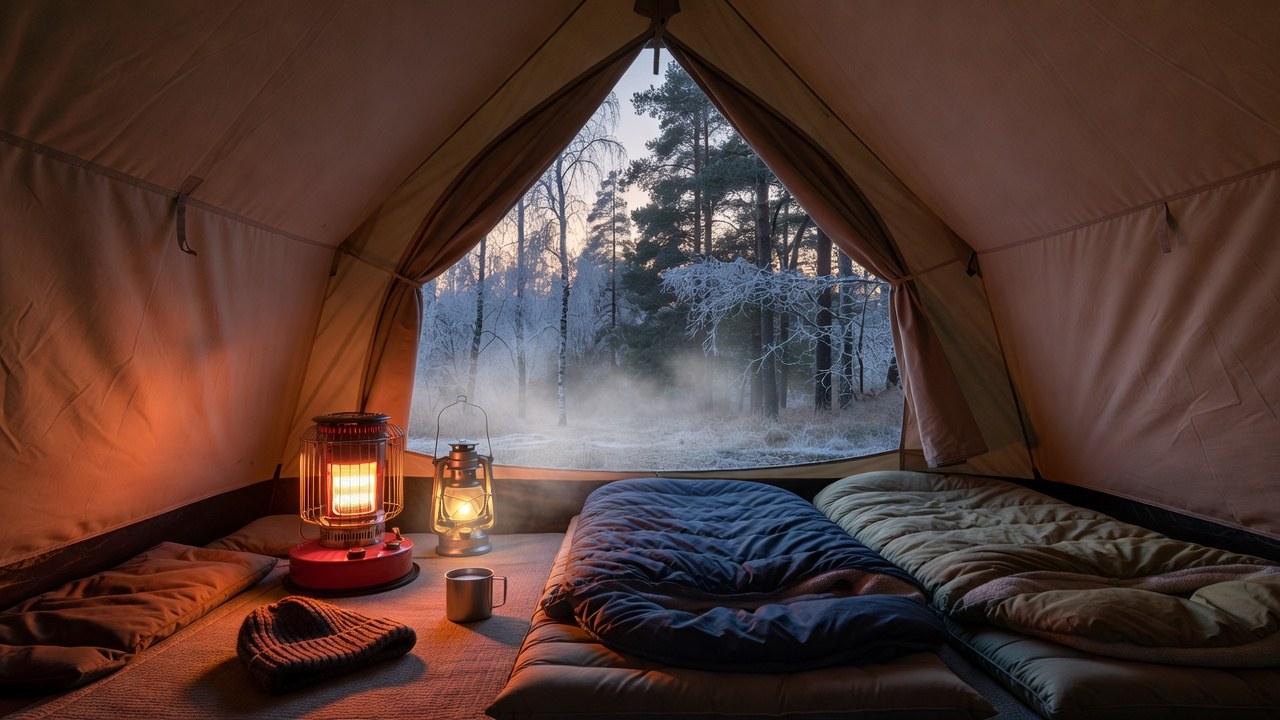
Which propane heater for which rig. The Mr. Heater Buddy MH9BX ($74.00) covers 4,000 and 9,000 BTU and is the default for a small trailer or a truck camper. The Big Buddy ($146.48) adds a third setting at 18,000 BTU and a battery-powered fan, which is what a 24-foot trailer or a cabin-style rig actually needs on a single-digit night. The Little Buddy ($69.99) at 3,800 BTU is sized for a teardrop, a popup, or a van — not for a slide-out trailer.
Two rules that come straight from how these heaters work:
- Ventilate. A catalytic heater consumes oxygen and produces water vapor. A cracked roof vent and one window cracked an inch is the difference between a dry rig and a wet one.
- Use the hose and the filter if you feed it from a 20 lb tank. The 10-foot Buddy hose assembly ($17.99) gets the tank outside the living space, and Mr. Heater specifies the F273699 fuel filter ($15.97) in-line with any bulk tank because tank oils can clog the orifice and turn a working heater into one that lights and quits.
Put a battery-powered CO detector ($23.97) in the sleeping area before the first cold night. A propane heater that lights and then shuts off 40 seconds later is usually a safety sensor doing its job, not a broken heater — the eight causes are walked one by one in Mr. Heater won't stay lit, and the ventilation and clearance rules for any heater inside a tent or trailer are in the tent heater safety guide.
Water: The System That Costs Real Money
Everything else on this page is comfort. This section is the one that produces four-figure repair bills.
An RV water system is a set of plastic and rubber parts holding water under pressure, inside walls you cannot see. Freeze that water and it expands about 9%. The pump housing cracks, pex lines split, the water heater tank can be ruined, and toilet seals fail. The site's RV winterization checklist puts the fix at about 20 minutes and roughly $40 in gear — but that is the process for storing a rig, not for camping in it.
If you have full hookups and want to keep using city water: a heated hose is the whole answer. The Camco 25-foot heated drinking water hose ($134.53) has a built-in thermostat that switches the heat on as the temperature approaches freezing, and it is the version that survives a ski-town January. The Wufoty 25-foot heated hose ($78.99) is the budget route to the same idea, and it is the one to buy if you camp a handful of cold weekends rather than living in the rig.
Two cheap parts protect the hose and the plumbing behind it: a brass water pressure regulator ($16.99), because campground pressure spikes are what actually burst fittings, and an inline water filter ($17.99) so you are not tasting the campground's plumbing.
If you are dry camping or the site has no water: disconnect the city-water hose completely, drain it, and stow it. Fill the fresh tank at home, use the onboard pump, and carry drinking water in jugs — the tank is inside the heated envelope on most rigs, the hose is not. Keep the grey and black tank valves closed and dump when full: a nearly empty tank freezes faster than a full one, and a full black tank is a block of ice you cannot dump.
If the rig is not four-season rated, the tanks and dump valves hang below the floor and are the first thing to freeze. Tank heaters, skirting, or a strict "no water in the tanks after dark" policy with jugs and a basin are the honest options. Adding antifreeze to the P-traps before a hard freeze is cheap insurance, and a hand pump winterizing kit ($26.99) or a permanent pump converter ($17.99) is what you use on the last morning before the rig sits for weeks. The three water circuits this touches are explained in the RV water system setup guide, and the jug-and-bottle tactics for tent camping transfer directly if you are camping beside the trailer rather than in it — see how to keep water from freezing camping.
Power: What Actually Runs Overnight
A winter night in an RV is a power problem disguised as a temperature problem.
- Hookup sites: 30-amp pedestal, and check it before you plug in. A 30-amp surge protector ($69.99) takes the hit from a bad pedestal, and a circuit analyzer ($54.99) tells you whether the outlet is wired correctly — reverse polarity and open grounds are common at older winter campgrounds, and they are the failure a surge protector alone will not catch.
- Propane: cold propane delivers less vapor pressure. The tank does not run dry; it just stops keeping up. That is why a 20 lb tank feeding a Buddy heater through a hose performs differently at 10°F than at 40°F, and why the 20 lb tank run-time math is worth reading before you plan a four-night trip.
- Batteries: lead-acid capacity drops in the cold, so a bank that runs the furnace in October may not make it to dawn in January. Lithium (LiFePO4) holds up better in the cold but must not be charged below freezing — that is a damage mechanism, not a preference. If the battery lives in an unheated compartment, either keep it above freezing before charging or move the load to a power station you carry inside.
- A power station is the flexible answer for lights, phones, a fan and a heated blanket when you do not want to touch the house battery. The Jackery Explorer 300 ($199.00) is 292Wh, which is a night of small loads — not a furnace. Treat solar as a summer tool: short days and a low sun angle cut winter panel output hard.
Moisture: Why the Inside of the Windows Is Wet
Every pound of propane burned releases roughly 1.6 lb of water vapor, and every person in the rig adds more by breathing. Seal the trailer up to stay warm and that water has nowhere to go: it condenses on the coldest surfaces — windows, the wall behind the mattress, the ceiling above the bed — and by morning your bedding is damp.
The fixes are boring and they work:
- Crack the roof vent an inch and run the fan on low while you cook or heat. You are trading a little propane for a dry rig.
- Wipe the windows and walls down before bed. A dry microfiber takes a surprising amount of water out of the air's reach.
- Dry boots and gloves outside the sleeping area — the DryGuy travel dryer ($39.80) is a small luxury that stops wet gear from becoming a moisture source overnight. Mistake I have made: leaving wet boots by the furnace, which just moves the water into the air.
- Keep gear off the exterior walls. A thermal blanket ($24.99) hung as a curtain between the sleeping area and the rest of the rig keeps warm air where you are and gives the moisture somewhere to condense that is not your mattress.
- Add a 12-volt heated blanket ($31.99) so the sleeping area is warm without running the furnace all night.
The full physics — and the difference between condensation and an actual leak — is in the tent condensation guide, which applies to a trailer as directly as it does to a tent.
Insulation and Skirting on a Budget
The floor is the coldest surface in a winter trailer, and the wind under the rig is what makes it cold. Skirting — foam board, vinyl skirting panels, or even a heavy tarp weighted at the ground — is the single biggest comfort upgrade per dollar, and it also protects the tanks and dump valves from wind.
Inside, the cheap wins are a rug over the cold floor, reflective bubble insulation cut to fit the windows at night, and leveling blocks ($32.87) plus wheel chocks ($12.99) so the rig stays put on a sloped, icy pad. Chocking matters more in winter, not less: ice under the tires is exactly when a trailer decides to roll an inch.
If you are outfitting the rig from scratch, the essential RV accessories setup checklist covers the year-round kit this page assumes you already own.
Where to Camp in an RV in Winter
Three patterns cover most winter RV trips:
- Ski-resort and mountain-town lots. Many allow overnight parking with restrictions; some have power pedestals. Check the resort's own rules, not a forum post.
- Year-round public campgrounds with hookups. State park systems in the Southeast, the desert Southwest and the Pacific Northwest keep a subset open all winter; the ones with 30-amp power are the ones that make a three-season trailer comfortable.
- Snowbird routes. Southern Arizona, southern New Mexico, the Texas Hill Country and the Gulf Coast are the classic winter boondocking band.
Booking matters more in winter than summer, because the open inventory is a fraction of the summer set: the booking-window guide explains how far ahead each system opens. For destination-level cold-weather planning, the December camping guide and the snow camping guide cover the tent-side version of the same decisions, and the winter camping gear checklist is the packing list that overlaps almost completely with a trailer trip.
The Mistakes That Ruin Winter RV Trips
- Leaving the water hose connected overnight. The most common and most expensive mistake on this page. If the forecast is below freezing, disconnect, drain and stow it, and switch to the fresh tank.
- Running a propane heater with everything sealed. Oxygen depletion, water vapor, and in a small rig a real CO risk. Vent, and keep a CO alarm in the sleeping area.
- Charging lithium batteries below freezing. Damage that shows up months later as reduced capacity, not as an error message.
- Letting the grey tank fill. A full grey tank in freezing weather is a block of ice with a valve you cannot open. Dump early.
- Skipping the chocks on a snowy pad. Ice, a slight slope and an unattended trailer is a bad combination.
- Expecting a three-season rig to behave like a four-season one. The difference is heated and enclosed tanks, dual-pane windows and real insulation. You can close much of that gap with skirting and discipline — but not all of it.
RV Winter Camping FAQ
How cold is too cold to camp in an RV?
There is no single number, because it depends on the rig. A three-season trailer with skirting, a heated hose and hookup power is comfortable into the teens. Without skirting and without hookups, the practical floor is around 25-30°F — below that, the water system and the batteries become the limiting factors long before the people do. A true four-season rig with heated tanks handles single digits.
Do I need a heated hose for winter RV camping?
Only if you want to stay connected to campground water below freezing. A heated hose with a thermostat is the difference between running city water all winter and carrying jugs. If you dry camp or the campground shuts its water off for the season, skip the hose and use the fresh tank.
How do I keep my RV water from freezing while camping?
Three options, in order of cost: disconnect and use the fresh tank (free), add a heated hose for hookup water (about $80-$135), or heat and enclose the underbelly with skirting and tank heaters. Whichever you choose, drain and stow any hose that is not heated before the overnight low drops below freezing.
Can I run a propane heater in an RV overnight?
A catalytic Buddy-style heater is designed for indoor-safe use with ventilation, and it is what most people run overnight in a trailer. Keep a roof vent cracked, keep a CO alarm in the sleeping area, keep the heater clear of bedding, and do not run it in a rig that is sealed tight. If the heater keeps shutting off, work through the causes in the won't-stay-lit guide rather than overriding the sensor.
Will my RV furnace keep the tanks from freezing?
Usually not. On most three-season trailers the furnace heats the living space only; the tanks and dump valves sit below the floor in the wind. Ducted heat into the underbelly is a four-season feature. That is why skirting, tank heaters or a strict dry-tank policy matter as soon as the overnight lows go below the mid-20s.
How do I stop condensation in an RV in winter?
Vent while you cook and heat, wipe the windows before bed, dry wet gear outside the sleeping area, and keep bedding off the exterior walls. Propane heat is the biggest single source of indoor moisture in a winter trailer, so the vent is not wasting heat — it is removing the water that would otherwise soak your bedding.
<!-- AFFILIATE_DISCLOSURE -->