RV Furnace Won't Ignite: 7 Causes and Fixes (2026)
RV furnace won't ignite? Work the ignition sequence in order: battery voltage, propane flow, sail switch, igniter, high-limit. Fixes for Suburban, Atwood, Dometic.
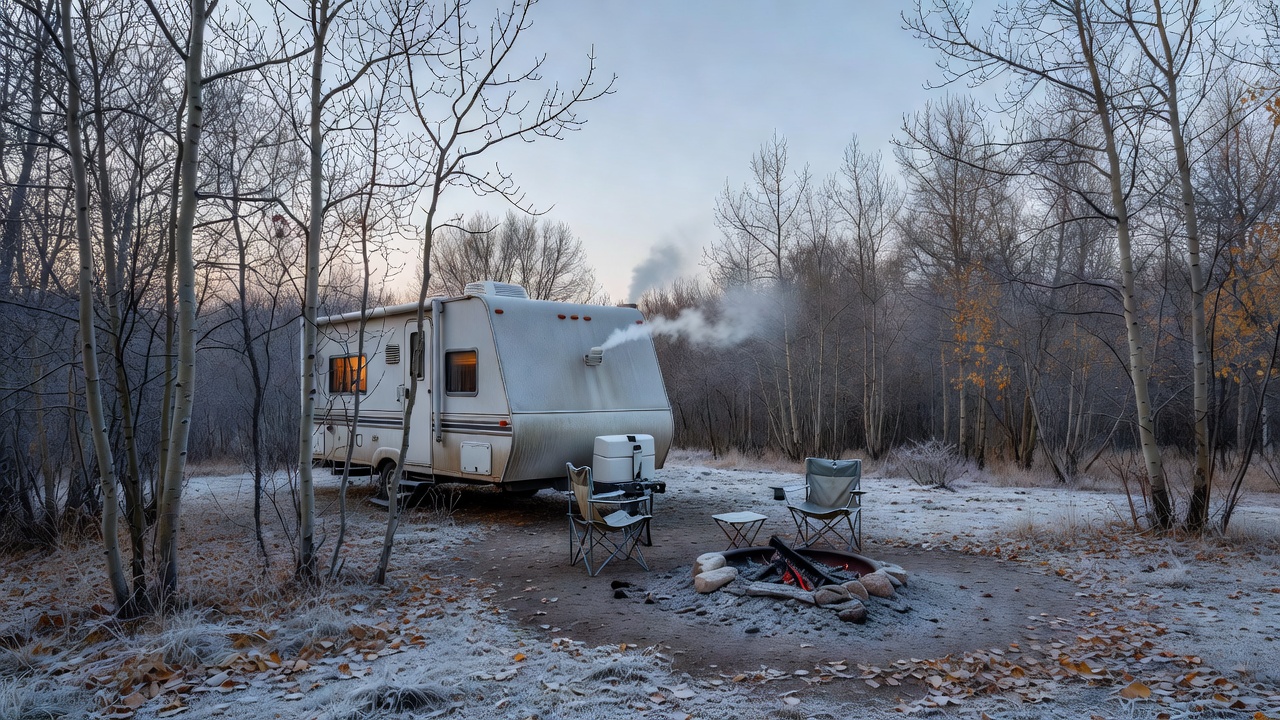
There is a specific kind of cold that only exists in an RV at 6 a.m. when the thermostat clicks, the blower spins up, and nothing else happens. No whoosh. No heat. Just the sound of a fan moving 34-degree air around your living room.
If your RV furnace won't ignite this fall, the good news is that the failure is almost always in one of seven places — and you can test them in about twenty minutes with a multimeter, a wrench, and a screwdriver. The order matters, because a furnace refuses to fire for reasons that look identical from the thermostat.
Quick Answer: Why Your RV Furnace Won't Ignite
Ranked by how often they actually cause a no-heat call in cold weather. Whether you got here searching "RV furnace won't ignite," "camper furnace won't ignite," "RV propane furnace won't ignite," or "RV furnace won't turn on," the answer is the same seven checks — and the tests below apply to all of them:
- Low DC voltage. A tired battery or a sagging converter slows the blower, the sail switch never closes, and the furnace never even tries to light. This is the single most common cause.
- Propane that isn't reaching the burner. Empty tank, valve barely open, air in the lines after a refill, a tripped excess-flow device, or a regulator that has failed or frozen.
- A dirty or stuck sail switch. It closes on airflow, and dust, dog hair, and insect debris keep it from making contact.
- A fouled igniter or a mud dauber nest in the burner tube after a summer in storage.
- A tripped high-limit switch from blocked return air, closed registers, or a snow-packed exterior vent.
- A failed control board — usually water intrusion or corrosion, and usually the last thing to suspect, not the first.
- Thermostat or fuse problems — dead AA batteries, the mode set to FAN, or the small blade fuse on the furnace board.
The diagnostic split that saves the most time: does the blower run? If the blower never starts, you have an electrical supply or thermostat problem. If the blower runs for 15–20 seconds and then quits without a whoosh, you have an airflow (sail switch) or gas problem. If it clicks repeatedly and never lights, you have an ignition or gas-delivery problem. If it lights, runs a minute, and shuts off, you have a flame-sensing, high-limit, or venting problem.
How an RV Furnace Decides to Fire
Every modern forced-air RV furnace — Suburban, Atwood, Dometic — runs the same safety sequence, and each step blocks the next one:
- The thermostat calls for heat and sends 12V to the furnace.
- The control board starts the blower.
- Once airflow is strong enough, the sail switch in the blower housing closes. No airflow, no sail switch, no gas. This is a deliberate safety interlock so unburned propane can't pool in the chamber.
- The board opens the gas valve and the igniter sparks, typically after a short purge.
- The flame sensor (often the same electrode that sparked) proves there's a flame. If it doesn't prove within a few seconds, the board closes the gas valve and locks out.
- When the thermostat is satisfied, the gas valve closes and the blower runs a cool-down cycle of roughly 90 seconds to clear heat from the exchanger.
Because each step gates the next, the symptom tells you where you are in the chain. A blower that runs and stops is a different failure than a blower that never starts, and treating them the same is why people replace control boards that were never broken.
Symptom → Likely Cause → First Fix
| What you see and hear | Most likely cause | First thing to check |
|---|---|---|
| Nothing happens at all, not even the blower | No 12V to furnace: thermostat, board fuse, wire | Thermostat batteries and mode; the blade fuse on the furnace board |
| Blower runs ~15–20 s, stops, no click | Sail switch never closed (low voltage, obstruction) | Battery voltage under load, then clean the sail switch |
| Blower runs, igniter clicks, no flame | No gas: air in line, closed valve, tripped excess flow, bad regulator | Light a stove burner; if it's weak too, it's supply-side |
| Igniter clicks and the flame lights, then dies in seconds | Flame sensor not proving, or gas pressure dropping | Clean the electrode, check for a partially closed valve |
| Runs one minute, shuts off, repeats | High-limit switch tripping: restricted airflow or blocked vent | Return-air path, registers, exterior vent for snow or nests |
| Heat works but smells odd or the CO alarm chirps | Incomplete combustion, blocked vent, CO | Stop using it; ventilate; check the vent and a CO alarm |
| Furnace works at sea level, fails at altitude | Orifice/derate limits above roughly 4,500–5,000 ft | Model-specific high-altitude kit or a different heat source |
Fix 1 — Dead or Lazy Blower: Test DC Voltage Before Anything Else
A furnace pulls serious current — often 7–10 amps at startup. A battery at 12.6V resting can sag well below 12V under that load, and a slow blower moves too little air to close the sail switch. The furnace then behaves exactly like it has a gas problem, which is why so many people end up at the propane tank first.
Measure at the battery (or at the furnace's 12V feed if you can reach it) while the thermostat is calling for heat. Below about 12V under load, charge or replace before you touch anything else. If you're boondocking on a single group-24 battery in 25°F weather, a furnace cycling all night will pull it down fast — that's a power budget question as much as a repair question, and our RV boondocking guide walks through the math.
If you're on shore power and the blower still sounds tired, check the pedestal itself before chasing the furnace. A 30-amp circuit analyzer confirms voltage, polarity, and open grounds at the post in seconds — a bad neutral at a state-park pedestal has masqueraded as a furnace failure more than once.
Fix 2 — Propane That Isn't There
If the blower runs and you never get a flame, prove the supply before opening the furnace cabinet. Light a stove burner. A strong blue flame means gas is reaching the appliances and the problem is local to the furnace. A weak, orange, or sputtering flame means the problem is upstream.
Upstream causes, in order of frequency:
- Air in the line. After a tank swap or a refill, the hose and regulator are full of air. Run the stove for 30–60 seconds until the flame stabilizes before blaming the furnace.
- A valve that isn't really open. Open the tank valve slowly. Cracking it wide can trip the excess-flow device inside the OPD valve, and you'll get a trickle instead of a supply. Close it, wait, open it a quarter turn at a time.
- A failed two-stage regulator. If the stove, water heater, and furnace are all weak, the regulator is the common denominator. These fail more often than people expect and are inexpensive to replace.
- Regulator freeze-up. Propane absorbs heat as it vaporizes, so a small tank in cold weather can chill, frost over, and lose pressure. A 20 lb tank struggles to feed a 30,000 BTU furnace continuously below about 20°F; a 30 lb tank, dual tanks, or a tank blanket solves the supply side, not the furnace.
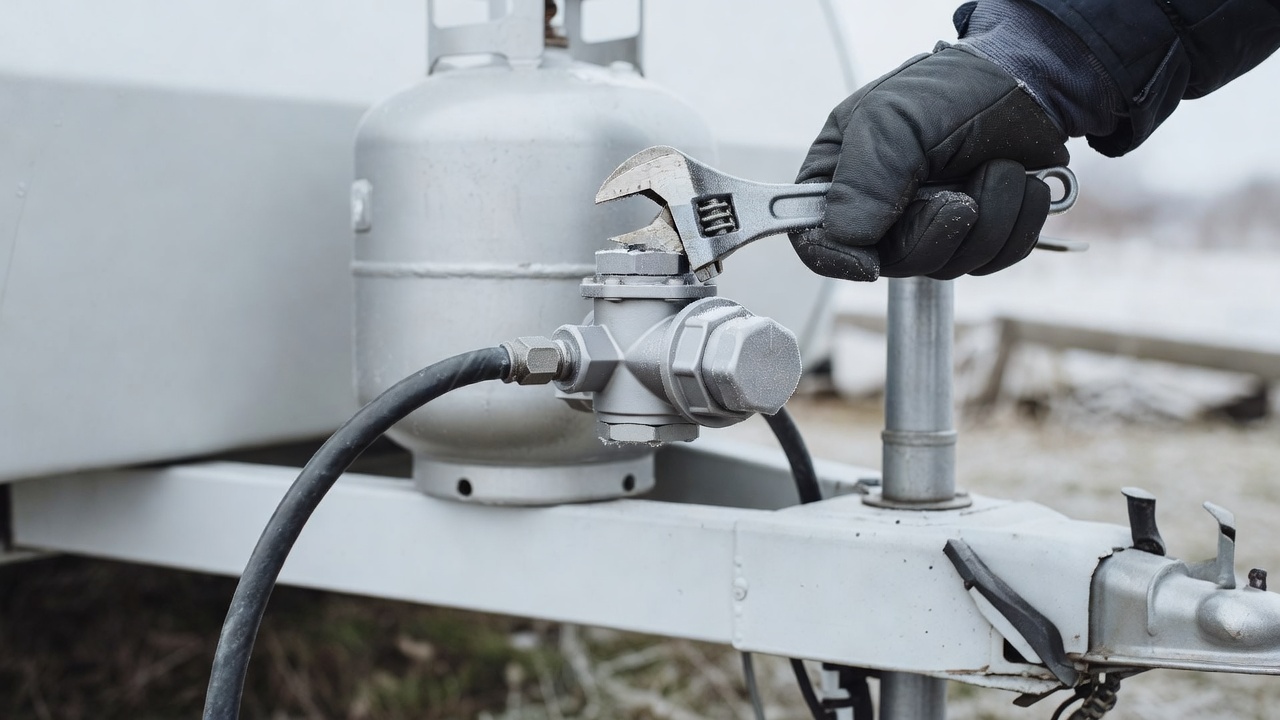
Sizing the tank to the furnace matters more in winter than in summer — our propane guide for camping and the 20 lb tank run-time math both apply directly to a furnace that runs all night.
Before you crawl under the rig with a wrench, do a soap-bubble test on every joint you touched and keep a combustible gas sniffer in the toolbox. An adjustable wrench and a multi-tool like the Leatherman Rev cover most furnace fasteners, but leaks are a separate test from pressure.
Fix 3 — The Sail Switch
The sail switch is a small paddle on a microswitch inside the blower housing. Airflow pushes the paddle; the switch closes and tells the board it's safe to open the gas valve. Dust, pet hair, and insect debris make it stick — and a slightly bent paddle never closes at all.
Test: with the thermostat calling for heat and the blower running, the switch should read closed. If it doesn't, kill power, pull the switch, clean it, and check that the paddle moves freely through its full travel. Reinstall and retest. Do not bend the paddle "to make it work" — a sail switch that's been bent to close is a switch that will fail again in a month, in the dark, at 20°F.
If the switch is mechanically fine but the blower is weak, go back to Fix 1. The sail switch is reporting the truth.
Fix 4 — Igniter, Orifice, and the Summer Nest
A furnace that sat from April to October is a housing project for mud daubers and spiders. Nests in the burner tube, the combustion air intake, or the exhaust restrict airflow and can block the flame path entirely; a web across the orifice changes the gas pattern enough that ignition fails.
With power off and gas off:
- Pull the burner and inspect the tube, intake, and exhaust for nests, webs, and rust flakes. Compressed air and a bottle brush clear most of it.
- Clean the igniter electrode with emery cloth and check the gap — typically about 1/8 inch, and confirm the spec for your model. A cracked ceramic insulator is a replacement, not a cleaning.
- Never enlarge or drill an orifice. If it's clogged, clear it with air or replace it.
This single step fixes a large share of "worked fine last winter, won't light now" cases, and it costs nothing but an afternoon.
Fix 5 — High-Limit Switch and Blocked Airflow
If the furnace lights, runs for a minute, and shuts down — then repeats — the high-limit switch is doing its job. It opens when the heat exchanger gets hotter than it should, which happens when:
- return air is blocked (a mattress against the grille, gear piled in front of the intake),
- supply registers are closed or blocked by furniture,
- ductwork is crushed, disconnected, or full of debris,
- the exterior vent is packed with snow, ice, or a nest, so combustion gases can't leave.
That last one is both a no-heat problem and a carbon monoxide problem. Clear the vent every time you clear snow off the roof, and never run the furnace with the vent blocked "just for a few minutes."
Fix 6 — Thermostat, Fuse, and Control Board
Work down this list before buying a board:
- Thermostat batteries. Most RV thermostats run on AA cells. Dead batteries look exactly like a dead furnace.
- Mode. Confirm it's set to HEAT/AUTO, not FAN. A thermostat left in FAN runs the blower forever and never calls for gas.
- The blade fuse on the furnace board. Many boards carry a small automotive-style fuse that blows from a voltage spike. A five-dollar fuse is worth checking before a two-hundred-dollar board.
- Board corrosion. Water intrusion at the connector or a corroded edge connector causes erratic behavior — blower runs, no gas valve signal, or random lockouts. Pull the connector, look for green, dry it, and reseat.
Many boards also flash a fault code on an LED. Count the flashes and match them to your model's chart in the owner's manual — that code is the fastest path from symptom to part, and it's usually printed on a label inside the access panel.
Suburban, Atwood, and Dometic: Where to Look on Your Model
The sequence is the same across brands; the part locations and fault codes are not.
Suburban RV Furnace Won't Ignite. Suburban's SF and NT series put the sail switch in the blower housing on the return-air side and the igniter/flame sensor assembly on the burner. The common failures are the sail switch, the electrode, and the board's fuse. Look for the sequence chart on the access panel door.
Atwood RV Furnace Won't Ignite (Hydro Flame). Atwood units — now serviced under the Dometic umbrella — are notorious for the sail switch and for spider webs in the burner. On older Hydro Flame models, check the thermal cutout and the wiring at the thermostat before condemning the board.
Dometic RV Furnace Won't Ignite. Same architecture, newer control boards with more diagnostic behavior and more sensitivity to voltage. If a Dometic unit locks out repeatedly after a battery upgrade or a solar install, recheck the 12V feed and grounds first.
Whatever the badge on the cover, the order of diagnosis doesn't change: airflow, then gas, then ignition, then limits.
It Runs but Blows Cold, or Short Cycles
- Blower runs, no heat, no click: gas valve isn't being commanded. Suspect the board, the sail switch circuit, or a gas valve that isn't getting 12V.
- Lights, then dies in 5–10 seconds: flame isn't proving. Clean the electrode, check the ground, confirm gas pressure isn't dropping as other appliances cycle.
- Short cycles on a cold night: high-limit again, or a thermostat mounted in a spot that heats up faster than the cabin. Move the thermostat away from a register or a sun-facing wall before replacing parts.
- Works below 4,500 ft, fails higher: propane appliances are altitude-sensitive. A high-altitude orifice kit or a non-propane backup heat plan is the answer.
When the Furnace Loses: A Backup Heat Plan
If you're already mid-trip and the furnace needs a part you can't buy until Monday, keep the trip and stay safe:
- A 12V heated blanket runs off the house battery and keeps a bunk warm without combustion.
- A portable propane heater is a reasonable short-term substitute only with a CO alarm, a cracked vent, and the manufacturer's clearance rules followed. Our tent heater safety guide covers the limits, and the Mr. Heater won't-stay-lit troubleshooting guide covers the portable side of the same fuel problems.
- Hand warmers are the cheapest way to make a cold sleeping bag survivable.
- If temperatures are going below freezing and the furnace is out, protect the water system next — a heated drinking water hose and a winterizing pump kit cost far less than a split tank or a cracked line. Our RV winter camping guide and the step-by-step winterization checklist are the two pages to read before the first hard freeze.
Safety: Carbon Monoxide Is the Real Failure Mode
Every no-heat problem is annoying. A cracked heat exchanger, a blocked vent, or a burner burning with a lazy yellow flame is dangerous. Carbon monoxide is colorless and odorless, and RV furnaces are combustion appliances inside a small, sealed box.
- Keep a working CO alarm in the living space, and test it before every cold-weather trip.
- Never sleep with a combustion appliance running if the vent is blocked, the flame is yellow, or the CO alarm has ever chirped.
- If you smell gas, shut the tank valve, ventilate, and don't operate switches. Test joints with soapy water; confirm with a gas sniffer.
- Don't tape over, screen, or "insulate" the furnace vent. It needs both intake and exhaust.
When to Stop and Call a Tech
Stop diagnosing and get a certified RV technician when: you smell gas and can't find the source, the heat exchanger is cracked or rusted through, the CO alarm has activated, the burner flame is yellow and sooty after cleaning, or you've replaced the sail switch and electrode and still have a lockout. Those are the cases where the next step isn't a part — it's a combustion analysis.
For everything else, the twenty-minute version usually wins: check voltage under load, prove the gas at the stove, clean the sail switch, clean the igniter and the burner tube, and clear the vent.
RV Furnace Not Igniting FAQ
Why does my RV furnace click but not ignite?
Clicking is the igniter sparking without a flame to light. Either gas isn't reaching the burner (air in the line, a closed or partially tripped valve, a failing regulator, or a blocked orifice) or the spark is jumping somewhere other than the burner because the electrode is fouled, mis-gapped, or cracked. Prove gas at the stove first — it's a thirty-second test that eliminates half the possibilities.
My camper furnace won't turn on at all — not even the blower. Why?
The furnace isn't getting 12V, or it isn't being asked to run. Check thermostat batteries and mode first, then the blade fuse on the furnace control board, then the wire run and ground. A furnace with no blower is almost never a gas problem.
My RV furnace won't start after sitting all summer. What's the most likely cause?
Insects. Mud daubers and spiders build in burner tubes, vent tubes, and around the orifice during the off-season, and webs across the burner change the flame pattern enough to prevent ignition. Pull the burner, clear the tube and orifices with air, clean the electrode, and try again before buying any parts.
Can low battery voltage really stop a furnace from igniting?
Yes, and it's the most common cause of a furnace that runs its blower and then gives up. The blower has to move enough air to close the sail switch. A battery that sags below roughly 12V under a 7–10 amp load slows the blower just enough that the switch never closes, so the board never opens the gas valve.
Should I keep running the furnace if it short cycles?
No. Short cycling usually means the high-limit switch is opening because of restricted airflow or a blocked exterior vent — and a blocked vent is a carbon monoxide risk, not just a comfort problem. Clear the return air, open the registers, check the vent for snow and nests, and only then retest.
How cold is too cold for an RV furnace to keep up?
The furnace itself doesn't stop working at a specific temperature, but the propane supply does. As tanks cool, vaporization slows, and a single 20 lb tank can struggle to feed a 30,000 BTU furnace continuously near 20°F. Insulating or heating the tank, or switching to a larger or dual-tank setup, fixes the supply side.
Is it cheaper to fix the furnace or winterize and skip it?
If the furnace needs a control board or a heat exchanger, winterizing is the sane short-term move — a winterization kit costs a fraction of the repair and protects the plumbing while you wait for parts. If it's a sail switch, an electrode, or a fuse, fix it and keep camping; late fall is the best quiet season on the calendar, as our November camping guide argues.
<!-- AFFILIATE_DISCLOSURE -->