How to Keep Mice Out of a Camper: Winter Storage
Mice squeeze through gaps the width of a pencil. Here is the entry-point audit, the remedies that actually work, and a winter storage routine that holds.
In this article · 13 sections
- Quick Answer: Exclusion First, Traps Second, Repellents Last
- When Mice Actually Move In (And Why Fall Is the Window)
- The 12-Point Entry-Point Audit
- Keeping Them Out: The Questions People Actually Type
- Getting Rid of Them, by Where You Found Them
- Remedies Ranked: What Works, What's Folklore
- The Winter Storage Sequence (Step by Step)
- If They Got In Anyway: Safe Cleanup
- Spring: The De-Winterizing Check
- Gear That Makes This Easier
- What Owners on Forums Actually Report
- More Guides for Off-Season Camper Owners
- Mice in a Camper FAQ
The first hard freeze is when it happens. You winterize the water system, pull the battery, zip the cover on, and drive away feeling responsible. Then in April you open the door to a smell that has no good explanation, and a nest made out of the insulation you paid for.
Mice don't care that the camper is closed. To them a stored trailer is the best structure on the property: dry, insulated, wind-proof, and completely unoccupied for five months. The mistake most of us make is treating the problem as a smell problem — buying dryer sheets and peppermint oil — when it is a hole problem. A mouse only needs a gap about the width of a pencil, roughly a quarter inch, and it will find the one you never looked at.
This guide is the audit I run on my own camper every October: where they get in, what actually seals a gap, which remedies are folklore, and what to do if you open the door in spring and find evidence.
Quick Answer: Exclusion First, Traps Second, Repellents Last
If you only do three things before storage:
- Walk the shell and seal every gap you can fit a pencil into. Copper mesh packed tight, then expanding foam over it. Foam alone gets chewed; mesh alone pulls out.
- Remove every food and scent source — crumbs in the galley, pet food, birdseed, soap, candles, spices, even the grease film on the stove.
- Set snap traps inside and check them monthly. A stored camper with traps tells you the moment something gets in, instead of in April.
Everything else — peppermint oil, dryer sheets, ultrasonic plugs, mothballs — is either temporary, unproven, or unsafe in a space people sleep in. The sections below break down why, with the entry-point audit first because that is where the problem is actually solved.
When Mice Actually Move In (And Why Fall Is the Window)
Field mice and deer mice don't "invade" in January. They move in September through November, when overnight temperatures start dropping and the local population is looking for insulated shelter near a food source. Your camper is that shelter — and it sits still, which is exactly what a mouse wants.
Three behaviors explain almost everything about camper infestations:
- They travel along edges, not across open floors. That's why traps belong against walls and in corners, not in the middle of the room.
- They need very little water. They get moisture from food and condensation, so "there's nothing to drink in there" is not protection.
- They explore a fixed route. Once a mouse has a path in, it reuses it. That's why sealing one obvious hole often ends the problem, and why leaving one small gap open undoes a whole afternoon of work.
A camper that sits in a field, next to brush, or on the tree line is the highest risk. Gravel or pavement under the tires, mowed grass around the rig, and no stored firewood leaning against the frame all reduce the odds before you seal anything.
The 12-Point Entry-Point Audit
Work the shell in this order, from the ground up. Bring a headlamp — most of these are in shadow and you will not see them with a phone light at arm's length.
| # | Where to look | Why it leaks |
|---|---|---|
| 1 | Shore power cord hatch / cable pass-through | The cord hatch is the single most common highway. The cord holds the flap open, and the foam gasket behind it is often gone. |
| 2 | Water and sewer bay doors | Hoses hold the door ajar, seals flatten, and the wet bay is warm from the water heater. |
| 3 | Slide-out seals and the floor-line gap | Seals compress over seasons. The corner where the slide meets the wall is the classic entry. |
| 4 | Exterior compartment doors | Any hatch with a foam gasket more than a few years old is a candidate. |
| 5 | Furnace and water heater vent grilles | Large openings, warm air, and often no screen at all. |
| 6 | Refrigerator vent panel (side or roof) | Big louvered opening; the fridge compartment is warm year-round. |
| 7 | Roof AC gasket and roof seams | A shrunk gasket lets water in and mice in through the same gap. |
| 8 | Wheel wells, around the axle, and spring hangers | Road spray opens seams; this is the shortest path to the insulated underbelly. |
| 9 | Frame penetrations for propane, water, and wiring | Factory cutouts with a rubber grommet are not sealed, just covered. |
| 10 | Bumper storage and tongue jack area | Open frame ends are hollow tubes running the length of the rig. |
| 11 | Awning rail screws and trim fasteners | Every screw hole is a 1/8-inch hole once the sealant dries out. |
| 12 | Door seals, screen door, and underbelly coroplast seams | The coroplast edge that hangs loose at the front or rear is an open door. |
Two entry points deserve their own note. The shore power hatch and the furnace vent are the two I find open most often on used campers, and both are cheap to fix: replace the hatch gasket and add a stainless or copper mesh screen behind the vent grille. Never block a furnace or water heater vent with mesh fine enough to restrict airflow — use a coarse mesh rated for the purpose, or a manufactured vent screen.
Keeping Them Out: The Questions People Actually Type
Camper owners ask this in a lot of different word orders, and the answer is the same audit in a different starting place. Here is the short version for each, so you can go straight to the fix.
| Question, as people type it | The short answer |
|---|---|
| how to keep mice out of camper | Seal every pencil-width gap at the 12 points above, then trap inside. Order matters more than products. |
| how to keep mice out of camper for winter | Do it in September, before the first cold snap. Mice pick their winter shelter during the fall move, not in January. |
| how to keep mice out of camper home remedies | Copper mesh plus expanding foam beats every home remedy. Peppermint oil and dryer sheets do not seal anything. |
| how to keep mice out of camper during storage | Empty every food and scent source, leave cabinet doors open, set traps inside, and check them once a month. |
| how to keep mice out of camper during winter storage | Same routine, plus a walk-around after the first hard freeze — new gaps show up when seals shrink. |
| how to keep mice out of camper during winter | Keep traps live all season and check them monthly. A closed camper you don't visit is a camper you find out about in April. |
| how to keep mice out of camper trailer | Start at the shore power hatch and the water bay, then the slide seals. Those three cover most travel trailer entries. |
| how to keep mice out of camper van | Vans leak differently: check wheel arches, firewall grommets, the rear door seal, and any added wiring pass-throughs. |
| what is the best way to keep mice out of campers | Mechanical exclusion first, traps second, repellents a distant third. Nothing scented substitutes for sealing a gap. |
| what will keep mice out of a camper | Copper mesh packed into gaps, foam over the mesh, sealed bay doors, vent screens, and live traps inside. |
| how to keep mice out of rv | The 12-point audit, done from the ground up. Class A and C rigs add the engine bay and the firewall pass-throughs. |
| how to keep mice out of rv trailer | Same as a travel trailer: cord hatch, wet bay, slide corners, then the underbelly coroplast edge. |
| how to keep mice out of rv during storage | Remove food, seal the shell, set traps, check monthly. Do not store firewood against the frame. |
| how to keep mice out of rv during winter storage | Add vent screens and re-check the seals after the first freeze; cold makes old gaskets pull away. |
| how to keep mice out of rv in winter | Traps plus monthly visits. Winter is when a missed gap turns into a nest in the ductwork. |
| best way to keep mice out of rv | Exclusion plus monitoring. The traps are not there to solve an infestation — they are your early warning. |
| how to keep rodents out of rv | Rodents is the wider class: seal for mice at a quarter inch, but also close the larger gaps rats and squirrels use. |
| how to keep rats out of rv | Rats need a bigger opening and will burrow under skirting. Seal to a half inch, clear brush, and check the underbelly. |
| how to keep rats out of travel trailer | Same, plus block the frame tube ends and anything within a foot of the ground. |
| keep mice out of travel trailer | Start with the cord hatch gasket, the wet bay, and the slide floor line. Then trap inside. |
| keeping rodents out of travel trailer | Seal, then remove attractants: food, pet food, birdseed, and standing water in the bay. |
| how to keep mice out of travel trailer during winter storage | Seal in fall, trap through winter, and check after each cold snap when seals shrink. |
| how to keep mice out of travel trailer in winter | Monthly trap checks. A winter check takes ten minutes and tells you whether your sealing worked. |
| best way to keep mice out of travel trailer | Copper mesh and foam at the shell, traps along the interior walls, and no stored food. |
| how to keep mice out of camping trailer | The same three fixes for any trailer: cord hatch, wet bay, slide corners. |
| keeping mice out of rv trailer | Seal the shell first, then remove food, then monitor with traps. Skip the scented remedies. |
| how to prevent mice in rv over winter | Prevention is the fall audit plus an empty galley. If you only do one, empty the galley. |
Getting Rid of Them, by Where You Found Them
If they are already in, the location tells you what to do next. Droppings in a kitchen drawer is a different problem from scratching in the ceiling.
| Situation | What to do |
|---|---|
| mice in camper what to do | Find the entry first. Trap inside, then seal the gap — otherwise you are emptying a bucket with the tap running. |
| mouse in camper | One mouse is a route, not a one-off. Trap it, then walk the shell the same week — a single visitor usually means an open lane from outside. |
| mouse in camper ceiling | Trap access through a light fixture or vent trim; the ceiling void is warm and usually where a single mouse is heard first. |
| mouse in camper wall | Listen rather than look. Set traps at the interior wall base and seal the exterior penetration feeding that void. |
| mouse in campervan | Check behind the seats and under the bed platform; a van's voids are shallow, so one mouse is usually visible fast. |
| how to get mice out of travel trailer | Trap along the interior walls and seal the cord hatch, wet bay, and slide corners. Empty the under-bed storage of fabric first. |
| how to get rid of mice in camper | Snap traps along every interior wall, checked daily. Bait with peanut butter, set perpendicular to the wall. |
| how to get rid of mice in a camper fast | Traps plus a flashlight search of the galley, bedding, and any box you stored soft goods in. Speed comes from finding the nest, not from stronger poison. |
| how to get mice out of rv | Same trap line, plus a check of the water bay and the furnace compartment, where nests are common. |
| how to get rid of mice in rv | Trap the interior, seal the shell, and remove the nesting material you find. Gloves on, and read the cleanup section below first. |
| how to get rid of mice in camper trailer | Check the storage compartments under the beds and dinette first — that is where the insulation is. |
| how to get rid of mice in camper van | Look in the cab, behind the seats, and in the rear quarter panels; vans nest near the wheel arches. |
| how to get rid of field mice in camper | Field mice behave like house mice inside a camper: edges, corners, and stored fabric. Same trap placement works. |
| how to get rid of mice in camper ceiling | Cut the access you have — usually a light fixture or a vent trim — and set traps in the space. Do not spray anything into a duct. |
| how to get rid of mice in rv ceiling | Same approach. If the ceiling is insulated with fiberglass batts, expect the nest to be in the batt, near the warmest point. |
| how to get rid of mice in camper walls | Traps at the wall base inside, plus seal the exterior gap that let them in. Wall voids are a highway, not a home. |
| mice in camper ceiling | Scratching at night above the bed is the usual report. Trap access through a vent or fixture, then seal the roof-side entry. |
| mice in camper walls | Often heard rather than seen. Seal exterior penetrations; interior traps will catch the ones using the void. |
| mice in camper roof | Roof entry usually means the AC gasket, a roof vent screen, or a seam. Reseal before you trap, or they come back. |
| mice in camper vents | Pull the vent trim, remove nesting material, and add a screen. Vents are warm in sun and easy to enter. |
| mice in camper trailer | Check under-bed storage, the dinette bench, and the wardrobe — soft goods and insulation. |
| mice in campervan | Check behind the rear panels and under the bed platform; vans have more voids than trailers. |
| mice in camper over winter | Trap through the season and check monthly. A winter infestation found in April has usually been there since October. |
| how to get rid of mice smell in camper | Remove the source — nest, droppings, soaked insulation — then ventilate, clean hard surfaces, and treat soft goods. An ozone run helps after cleaning, never instead of it. |
Remedies Ranked: What Works, What's Folklore
This is where most people lose a season. Scented remedies feel like they should work, and the internet repeats them confidently. Here is the honest ranking.
| Remedy | Verdict |
|---|---|
| Copper mesh + expanding foam | The one that works. Pack the mesh tight, foam over it. Copper does not rust the way steel wool does. |
| Steel wool | Works as a barrier, but rusts and stains; use copper or stainless mesh where moisture is present. |
| Silicone sealant for hairline gaps | Fine for screw holes and trim seams. Not a barrier for a gap you can see daylight through. |
| Snap traps | The workhorse. Cheap, humane when placed correctly, and the best early-warning device you can buy. |
| Bucket trap | Effective in mild weather for a shed or garage; in a freezing camper the water freezes, so run it in fall, not midwinter. |
| Glue boards | Catch non-target animals and require daily checks. Skip them if pets or birds are around. |
| Peppermint oil | Smells strong for a few days, then evaporates. No lasting barrier, and it does not stop a determined mouse. |
| Dryer sheets | Folklore. No mechanism, no evidence, and it stops nothing once the scent fades. |
| Ultrasonic repellers | No consistent evidence, and rodents habituate. Not a substitute for sealing a hole. |
| Mothballs | Do not. They are a registered pesticide not labeled for repelling animals, the vapor is absorbed by cushions and bedding, and they are a hazard to kids and pets. |
| Poison bait blocks | Not inside a camper. Mice die in walls and ducts, and the carcass smell lasts longer than the problem. Secondary poisoning also threatens pets and raptors. |
If you want the shortest defensible answer: seal with mesh and foam, monitor with snap traps, and spend nothing on scent.
The Winter Storage Sequence (Step by Step)
Do this in one afternoon, in this order.
- Empty the galley completely. Crumbs, spices, coffee, oil, pet food, birdseed, soap, candles. Wipe the counters and the stove, including the grease film.
- Strip the soft goods. Bedding, towels, jackets, anything a mouse would shred for a nest. Store them in the house in sealed bins.
- Clean, then dry. Vacuum thoroughly, wipe surfaces, and leave the rig open to dry. Moisture plus nesting material is the combination you are trying to avoid.
- Run the 12-point audit with a headlamp, and seal everything you can fit a pencil into.
- Screen the vents. Coarse screen behind the furnace and water heater grilles, and screens on the roof vents you leave cracked for airflow.
- Leave cabinet doors and drawers open so air moves and so nothing feels like a cave.
- Set traps in the galley corners, the water bay, the under-bed storage, and along the wall nearest the cord hatch.
- Pull the battery and store it in the garage, per your winterization routine.
- Close up, and resist the cover flap. A cover is fine; a cover with a loose skirt touching the ground is a ladder.
- Clear the perimeter: no firewood stacked against the frame, mow the grass, and keep brush off the tires.
- Write a check date on the calendar — monthly through winter, plus one after the first hard freeze.
- Re-check in spring before you power anything up.
If the water system is still on your list, the full procedure is in our RV winterization checklist — do the rodent sealing first, because a chewed water line undoes the winterizing anyway.
If They Got In Anyway: Safe Cleanup
This part is not optional, and it is the step people skip. Deer mouse droppings can carry hantavirus, and the way you clean determines whether you breathe it.
- Ventilate first. Open the door and windows and leave the rig for at least half an hour before you start.
- Do not dry-sweep or vacuum droppings. That aerosolizes dust. Wet the area down with a disinfectant or a 1:10 bleach solution and wipe, never sweep.
- Gloves and a mask. Disposable gloves, and a respirator if the contamination is heavy or in a confined space.
- Double-bag everything. Nest material, gloves, and cleanup rags go straight into sealed bags and out of the camper.
- Then clean hard surfaces with disinfectant, and treat soft goods as contaminated until washed hot or discarded.
- Wash hands when you're done, and change clothes before you eat.
Also assume wiring damage until you have looked. Chewed insulation on the 12-volt side can leave you with dead lights, a furnace that won't fire, or a converter that trips — and on the 120-volt side it is a genuine fire risk. Trace the visible runs, check behind the converter and the furnace, and if you find chew marks on multiple circuits, get it inspected rather than taped up.
Spring: The De-Winterizing Check
When you open up in spring, do this before the first trip:
- Look for evidence in the same four places you set traps: galley corners, water bay, under-bed storage, wall along the cord hatch.
- Inspect wiring behind the converter, at the furnace, and along the frame where the harness runs.
- Replace cabin and furnace filters if there is any sign of nesting.
- Smell-test the soft surfaces. Urine odor lives in foam and carpet padding; an enzyme cleaner is the only thing that actually breaks it down. Baking soda and vinegar mask it for a week.
- Flush the water system as part of de-winterizing, and sanitize the fresh tank before the first trip.
- Reset the traps for a couple of weeks. If they stay empty, your sealing worked.

Gear That Makes This Easier
You do not need much, and none of it is scented. A headlamp is the real tool here — most entry points are in shadow and you will be working in a bay with no light.
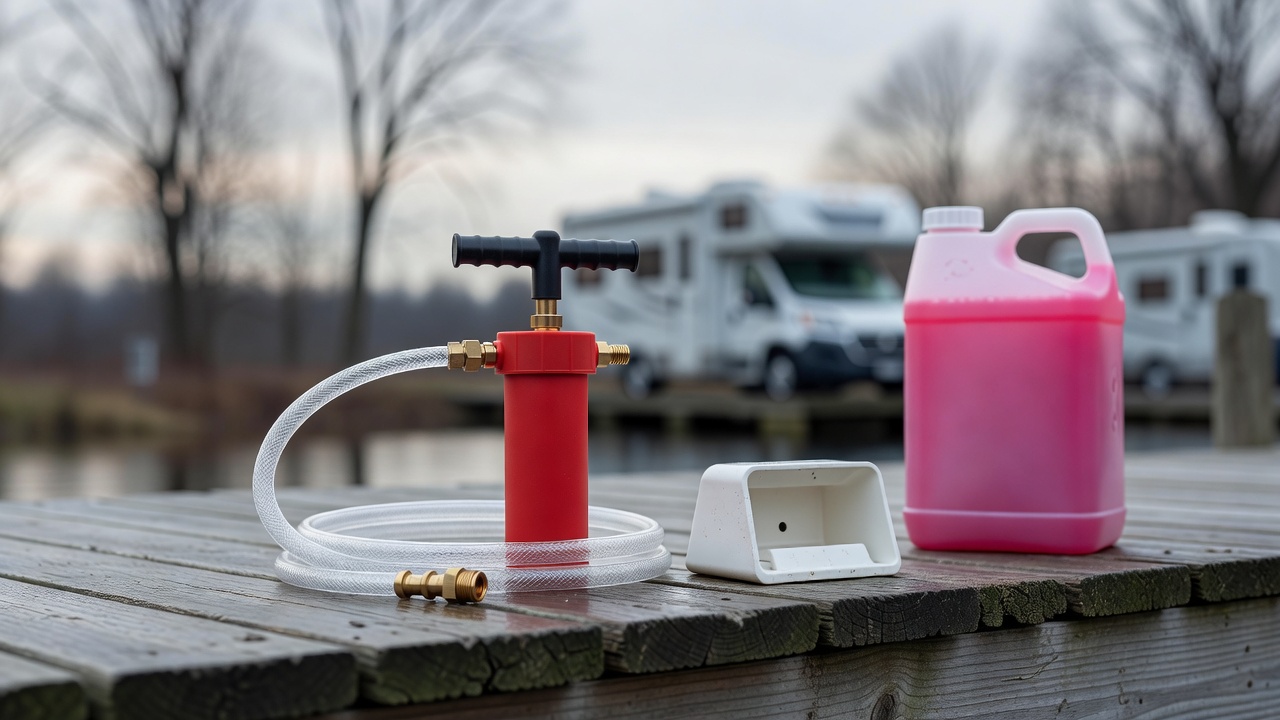
Camco RV Antifreeze Hand Pump Kit ($26.99) — pumps antifreeze through the lines without a compressor. Do the rodent sealing first, then winterize, so you aren't pumping antifreeze into a system a mouse has already opened.
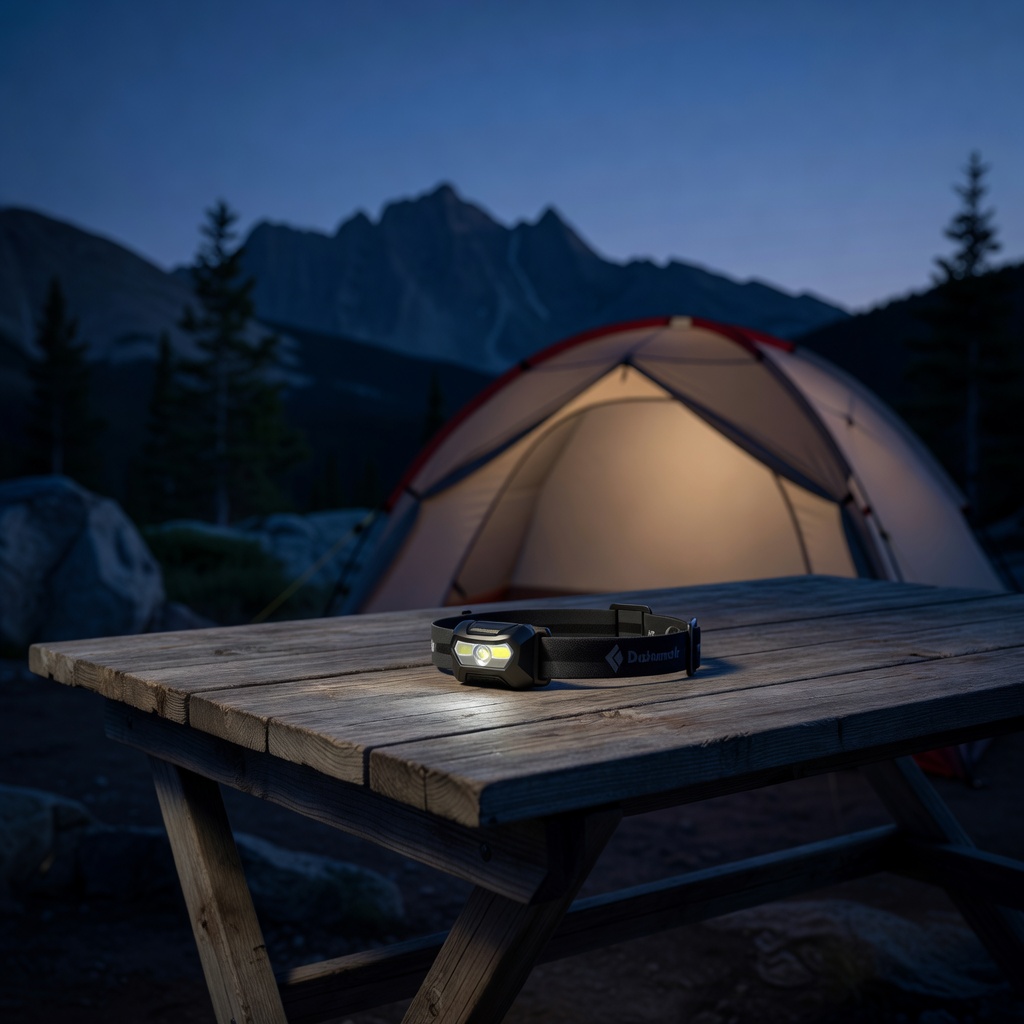
Black Diamond Spot 400 Headlamp ($39.95) — 400 lumens and a red mode for working inside a dark bay without blinding yourself. This is the one tool I use at every step of the audit.
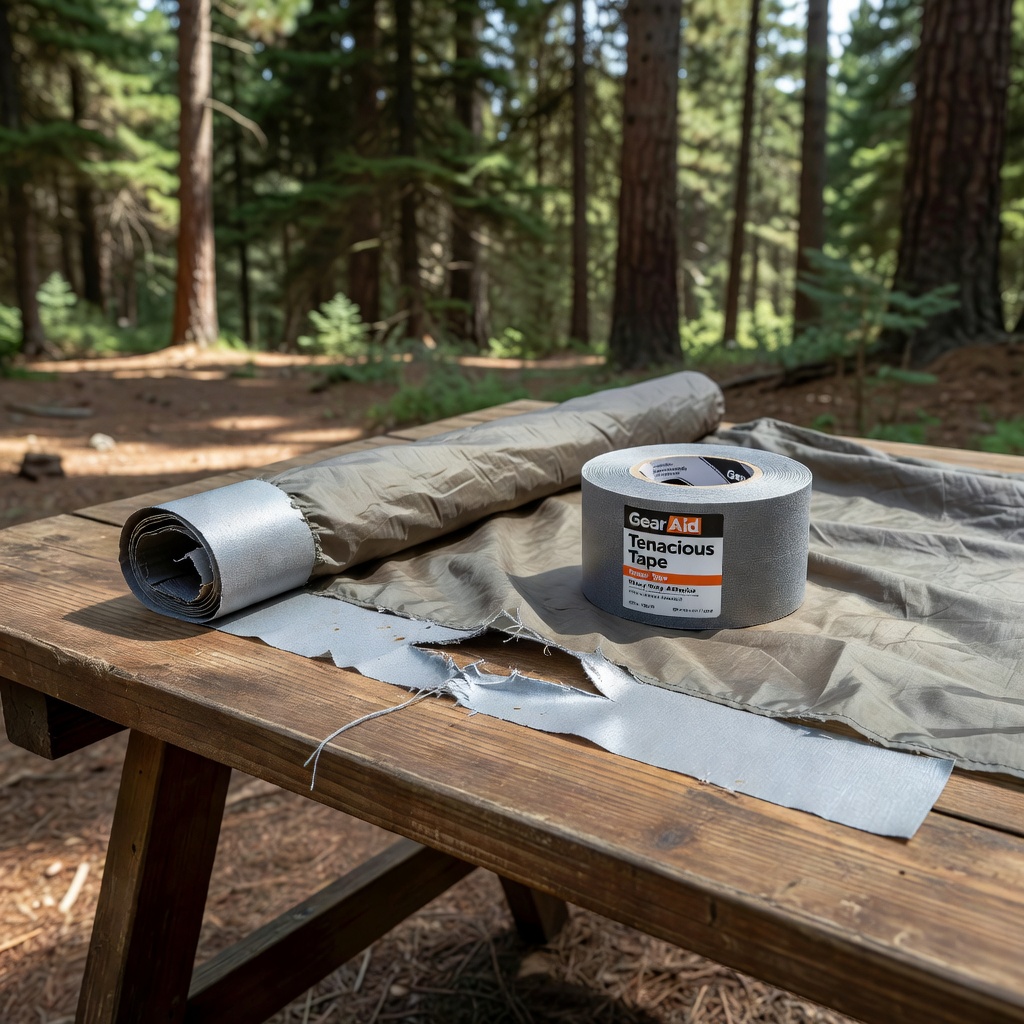
Gear Aid Tenacious Tape ($14.39) — patches a torn vent screen or a split canvas seam well enough to get you through the season. Not a substitute for mesh and foam at a real gap.
If your rig is stored somewhere you can't visit monthly, the cheap insurance is a couple of extra snap traps and a note in your phone. Monitoring is the whole game.
What Owners on Forums Actually Report
Search mice in camper reddit or how to keep mice out of rv reddit and you get the same three findings repeated across brands, trailer types, and years:
- The cord hatch wins. It is the most-cited entry point by a wide margin — the cord props the flap open and the gasket behind it is usually shot.
- Sealing one obvious hole often ends the problem. Because mice reuse a route, closing the actual entry beats trapping inside forever.
- The scented remedies are the most-regretted purchases. Dryer sheets and ultrasonic plugs show up again and again in "didn't work" threads, while copper mesh and foam show up in the ones that did.
One more pattern worth stealing: owners who set traps and check them monthly report finding problems in weeks instead of seasons. Owners who rely on a cover and hope report the April surprise.
More Guides for Off-Season Camper Owners
- RV Winterization Checklist: Step by Step — the water system, in the right order.
- RV Winter Camping Guide — if you'd rather keep using the rig than store it.
- Pop-Up Camper Guide — canvas care, storage, and where a pop-up leaks differently.
- Camping Gear Maintenance & Care — the same inspection habit applied to tents and sleeping systems.
- How to Store a Sleeping Bag — the soft goods that end up as nesting material if you leave them in the camper.
- Essential RV Accessories Setup Checklist — the bay-side gear worth owning.
Mice in a Camper FAQ
Can mice get into a completely closed camper?
Yes. A closed camper is easier for them, not harder — it is dry, warm, and has no occupant. They enter through gaps around the shore power cord hatch, bay doors, slide seals, vent grilles, and frame penetrations. A quarter-inch gap is enough.
Does peppermint oil or a dryer sheet keep mice out of a camper?
No, not as a barrier. Peppermint oil smells strong for a few days and then evaporates, and there is no evidence dryer sheets repel rodents. Both are commonly reported as ineffective; copper mesh packed into the gap is what actually stops entry.
How do I know if mice are in the camper if I don't see them?
Look for droppings in drawer corners and along walls, shredded insulation or fabric, gnaw marks on wiring, and grease smudges along a wall edge where they travel. Scratching above the bed at night, or a furnace that suddenly won't fire, are the other two common tells.
Are mothballs safe to use in a stored camper?
No. Mothballs are a registered pesticide not labeled for repelling animals, the vapor is absorbed by cushions and bedding, and they are hazardous to children and pets. Sealing the shell is the safe equivalent.
Should I use poison bait instead of traps?
Not inside a camper. Mice die in wall voids and ducts, and the odor and carcass removal problem outlasts the infestation. Poison also creates secondary poisoning risk for pets and wildlife. Snap traps along the walls are the better tool in a space people sleep in.
<!-- AFFILIATE_DISCLOSURE -->