2-Day Camping Trip Packing List: What to Bring for One Night (2026)
A 2-day camping trip packing list for one night out, not a week: what to bring, what to leave home, the four-meal plan, and a weekend itinerary.
Short version: for a 2-day camping trip you need shelter, one sleep system per person, one small stove, one cooler, light, and a first-aid kit — and you should leave home roughly half of what a week-long list tells you to bring. A single overnight is a space problem, not a supply problem. If you kit for one night the way you'd kit for five, you spend your whole weekend loading and unloading the car instead of sitting by the fire.
I've packed for both. A one-nighter with two kids and a dog takes about 40 minutes to load if the list is right, and about two hours if it isn't. This is the list that gets it to 40.
This is the trip-length companion to our first camping trip starter kit — that guide is about what to buy first, and this one is about what to put in the car for one night. If your trip is longer or the forecast is cold, you want the fall camping gear checklist instead.
Quick Answer: What to Bring on a 2-Day Camping Trip
For one night out, bring: a tent you can pitch in under 10 minutes, one sleeping bag and one pad per person, a compact cooler if the trip is under 3 days, a single-burner stove and one pot, two light sources (a headlamp plus a lantern), a first-aid kit, water (bottles plus a filter if the tap isn't available), and one change of clothes — not three.
The two things people forget: a layering layer for the evening (it drops 15-20°F after sunset even in September) and a way to keep food off the ground if you're anywhere with wildlife.
The two things people over-pack: firewood (buy it local — most campgrounds ban moving it) and cooking gear (one pot and one pan feed four people for a single dinner).
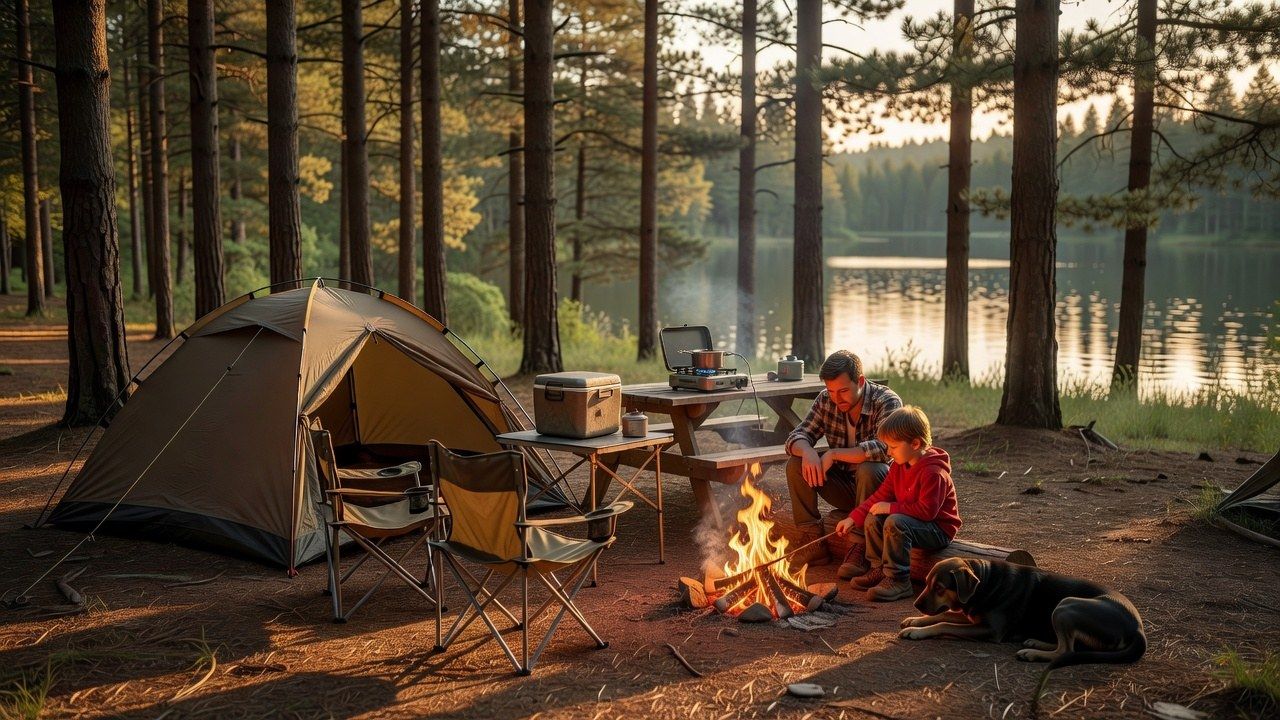
What Counts as a "2-Day Camping Trip" — and Why It Changes the List
Industry packing lists are written for the 5-day car camper, and they quietly assume you'll want a Dutch oven, a shower setup, a second cooler for drinks, and four changes of clothes. A 2-day trip — which in practice means arrive Saturday afternoon, leave Sunday before lunch, around 24 to 36 hours on site — breaks almost every one of those assumptions.
Here's the math that matters. A single overnight gives you four meals: dinner, breakfast, lunch, and snacks. That's not four days of cooking, it's four cooking events. It also gives you one night of sleep, which means you don't need a sleep system that's comfortable across a range of temperatures — you need one that's comfortable for one forecast.
That's the whole trick. A 2-day trip is a specific trip, and a specific trip can be packed specifically. Once you stop bringing "in case" gear, a family of four fits in a sedan trunk plus a back seat.
The 2-Day Camping Trip Packing List
Shelter and Sleep
Tent. For a family of four on one night, a 4-person dome is the honest answer — it goes up fast and comes down faster in the morning. The Coleman Skydome 4-Person Tent with LED Lighting ($122.99, 4.5★) has pre-attached poles and an integrated light, which matters more on a one-night trip than you'd think — you set up in dim light on Saturday and pack down in dim light on Sunday. If you have three kids or two adults who want standing room, step up to the EVER ADVANCED 6-Person Blackout Tent ($169.99, 4.4★) — the blackout fabric buys you a Sunday morning where the kids sleep past 6 a.m. Our family tent comparison covers that trade-off in detail.
Sleeping bags. One per person, rated for the actual forecast low, not the season. A 40°F bag like the Coleman Palmetto ($44.99, 4.4★) is right for a mild September night; the TETON Sports Celsius 0° ($59.99, 4.5★) is the safer call if you're camping above 5,000 feet, where the September low is a different animal.
Sleeping pads. This is the piece most first-timers skip, and it's the piece that decides whether the trip is fun. Ground pulls heat out of a sleeping bag all night. A closed-cell foam pad like the Therm-a-Rest Z Lite Sol ($54.95, 4.7★) is cheap and indestructible for one night. If you want to actually sleep well, the Klymit Insulated Static V ($94.99, 4.5★) packs to the size of a water bottle — which, on a one-night trip, is the whole point.
Kitchen and Food
Cooler. For a 24-hour trip, a small hard cooler is right — you're chilling four meals, not a week of them. The YETI Roadie 24 ($250.00, 4.8★) is the buy-once option and holds ice for a weekend without a top-up. The Coleman 70-Quart Xtreme 5-Day ($79.99, 4.6★) is the value pick and has enough room for food plus drinks for four. Our guide to packing a cooler for a weekend trip covers the ice-ratio math.
Stove. One burner is enough for four meals if you plan simple food. The Coleman Classic 1-Burner Butane Stove ($29.99, 4.5★) lights instantly, packs into its own case, and boils water while you're still looking for the matches. Fuel choice matters more than the burner for shoulder-season trips — our camp stove fuel guide explains which canister still works below 40°F.
Pot and pan. One 2-quart pot and one small skillet. That's it. If you're bringing a full cook set for one night, you're carrying weight you'll never use.
Coffee. A press or a pour-over cone, because "camp coffee" is 80% of why most people go. Our camp coffee makers guide covers the options that survive a car trunk.
Lighting, Power and Comfort
Headlamp plus lantern. Two light sources, different jobs. The Black Diamond Spot 400 ($39.95, 4.5★) is the hands-free one for setting up tents and finding the bathroom at 2 a.m. The Goal Zero Lighthouse Micro Flash ($29.95, 4.4★) hangs in the tent and doubles as a phone charger in a pinch. The MalloMe 4-Pack Lanterns ($23.99, 4.7★) is the cheapest way to give every kid their own light and end the "it's my turn" argument.
Chairs and a table. A 2-day trip is mostly sitting, so this is where comfort money actually pays off. The Coleman Portable Chair with 4-Can Cooler ($39.99, 4.6★) is the sensible family pick. For a bigger adult, the SUNNYFEEL XXL Oversized Chair ($99.98, 4.2★) is built for 500 lbs and doesn't wobble. A folding table like the Coleman Pack-Away 4-in-1 ($99.99, 4.6★) replaces the picnic table you may not get on a busy weekend.
Power (optional). If you're bringing phones, a camera and a CPAP, the Jackery Explorer 300 ($199.00, 4.7★) is overkill for one night but is the difference between "camping" and "camping with a medical device". Most people don't need it for 24 hours. Our portable power station guide covers when you do.
Safety, Water and the Dog
Water. Fill bottles at home and bring 1 gallon per person per day. If the campground tap is off-season or the site is a walk-in, add the Sawyer Squeeze filter ($45.95, 4.7★) — it weighs 3 oz and turns a stream into drinking water.
First aid. A small kit, plus knowledge of what's in it. Our camping first aid checklist is the reference to read before you go, not after.
Food storage. Even a one-nighter needs a plan. In bear country that means a canister — the BearVault BV450 ($89.99, 4.7★) is the one that fits a weekend of food for two. Everywhere else, a hanging line or a locked car trunk.
Dog gear. Water, bowl, leash, and a way to carry it. The Cibaabo dog water bottle with food container ($14.98, 4.8★) handles water and kibble in one bottle. Our dog camping checklist covers the rest — including the leash rules that catch people out at state parks.
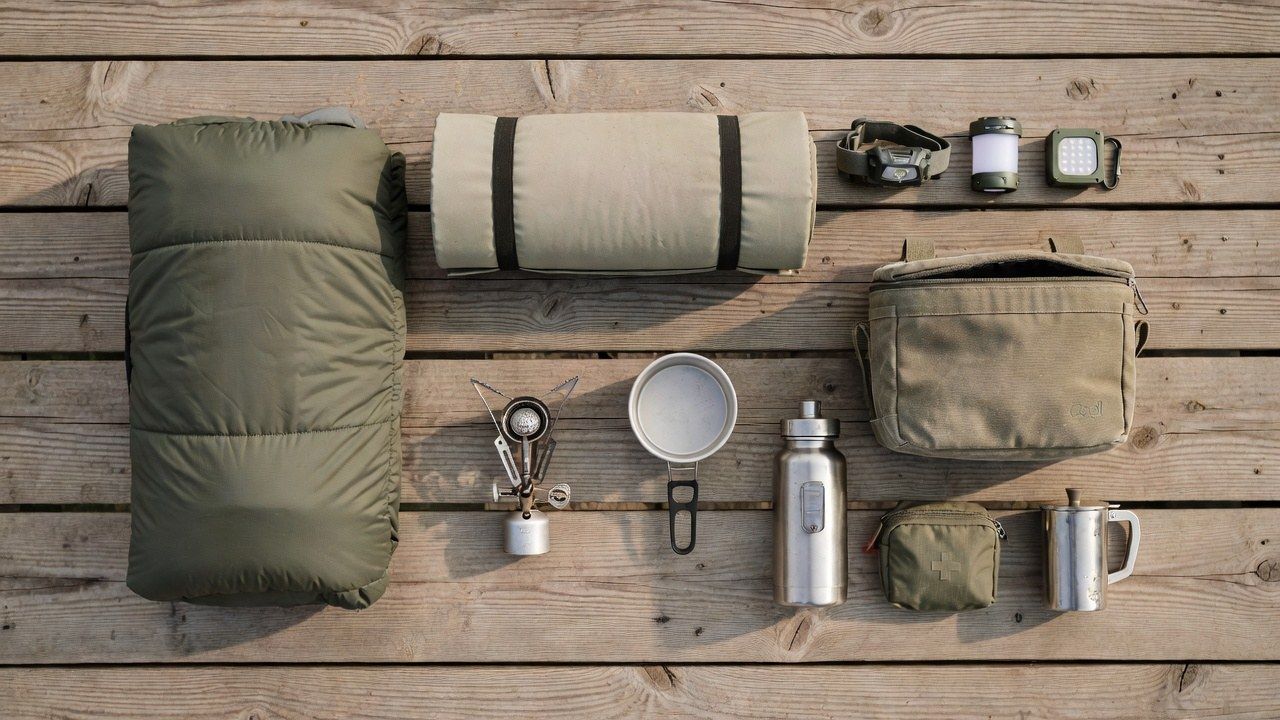
How the List Changes From One Night to Three Days
The mistake with short-trip lists is treating them as a smaller version of a week-long list. They aren't smaller — they have fewer categories. One night needs shelter, sleep, kitchen, light, water, first aid and one change of clothes; everything you add for a longer trip is a consumable (food, water, fuel), not a piece of gear.
| How people phrase it | What actually changes |
|---|---|
| 2 day camping trip checklist | Nothing. The list above is the two-day version — tent, sleep system, one stove, one cooler, light, water, first aid, one change of clothes. |
| camping list for 2 days · camping packing list 2 days | Same eight categories, multiplied by the number of people in the car. |
| camping packing list one night · camping packing list 1 night · one night camping packing list | The numeral and the word order change; the list does not. |
| camping packing list for 2 nights · 2 night camping trip packing list · camping checklist 2 nights | Add one breakfast, one dinner and one pair of socks per person. That is the entire difference. |
| packing list for 2 day camping trip · what to pack for 1 night camping trip · what to pack for one night camping trip · what to pack for 2 night camping trip | The question form of the same list — start at the Quick Answer above. |
| what to bring for camping one night · what to bring for 2 day camping trip · what to bring camping for 2 nights | "Bring" and "pack" describe the same car load. Nobody has ever needed a different tent because of a verb. |
| what to pack for camping one night · what to pack for a night camping · what to pack for camping for 2 days | One overnight, so: no shower kit, no second cooler, no firewood from home. |
| camping checklist for 2 · one day camping checklist | If you're counting the days your list should cover, you're overthinking it — the day count is not the driver, the nights are. |
| 3 day camping checklist · 3 day camping list · camping packing list for 3 days · what to pack for 3 day camping trip · what to take camping for 3 days | Three days is the first length where you carry a second fuel canister and a full second dinner. The gear list is identical to a one-nighter. |
| 4 day camping trip packing list · 5 day camping trip packing list | Past three days you are multiplying food and laundry, not gear. If your car is full at day two, it's full at day five — which is the argument for the short trip. |
| how to pack food for 3 day camping trip | Cooler math, below: one frozen dinner block per night plus one dry bin. |
The one-line rule. Nights change the quantities; they almost never change the items. The exceptions are fuel, food and socks — and batteries, if you're running a lantern every evening. Everything else on this page stays in the car whether you sleep out once or three times. That is why a 2-day trip is the cheapest way to find out whether your sleep system works before you commit a week to it.
What to Leave at Home on a One-Night Trip
This section saves more time than the packing list itself.
- The second change of clothes. One set for evening, one for the morning, and the clothes you're wearing. That's it.
- Firewood. Buy it where you're camping. Moving firewood is banned in most state and national park systems because it spreads invasive pests, and a bundle at the campground gate costs less than the fine.
- The full cook set. One pot, one pan, one spatula.
- Shower and grooming gear. You're out for 24 hours. Bring a toothbrush.
- The giant cooler. If you already have a 70-quart, fine — but don't buy one for a one-nighter.
- Airtight "just in case" duplicate of anything. The one-night failure mode is a car so full that getting to the sleeping bags requires unpacking the stove.
One-Night Meal Plan: Four Meals, One Small Stove
Simple is the point here. Everything below cooks on one burner.
Saturday dinner — one-pot chili or pasta. Brown the meat at home, freeze it, and it doubles as an ice block in the cooler. One pot, 15 minutes.
Saturday campfire — marshmallows or a one-pan dessert. Our campfire dessert recipes have several that need nothing but foil.
Sunday breakfast — eggs, tortillas, coffee. A skillet and a pot. Tortillas beat bread because they don't crush in the car.
Sunday lunch — sandwiches from the cooler. This is the meal that justifies the cooler. Eat it while packing up, then you're driving by 1 p.m.
Food for four for four meals fits in a 24-quart cooler plus one dry bin. That's the entire kitchen.
Tent Camping, Car Camping and Weekend Lists: Pick the Right Column
Most of the different search phrases for this trip describe the same list seen from a different angle — where you sleep, how long you're out, or what you call the piece of paper. Here is the honest mapping, so you don't read four lists and pack for all of them.
| How people phrase it | Which list you actually need |
|---|---|
| overnight car camping checklist · overnight car camping list · overnight car camping packing list · weekend car camping packing list | Car camping means the car is your storage unit. Swap the backpack for one plastic bin plus one cooler and nothing else changes; you can also pack heavier, which is the whole advantage. |
| tent camping gear list · overnight camping gear list · weekend camping gear list | "Gear list" is this list with a different noun. Gear implies durable items only — add food, water and clothes back on top of it. |
| weekend camping kit list | "Kit list" is the phrasing used in the UK; it generally covers personal kit, not the shared camp kitchen or the cooler. |
| weekend camping packing checklist · weekend camping trip packing list · weekend trip packing list | A weekend is one night or two. Count your nights, then read the rows above. |
| packing list for a weekend camping trip · pack for weekend camping trip · packing for a weekend camping trip | The verb form ("pack for…") and the noun form ("packing list for…") are the same document. |
| weekend tent camping packing list · tent camping packing list with kids | Tent camping with kids adds exactly three things: a second set of dry clothes per child, a headlamp each, and one comfort item you refuse to leave home. |
| basic weekend packing list · overnight packing list · overnight stay packing list · overnight camping packing list | "Basic" and "overnight" are the useful filters here — if a list runs past about 25 lines for one night, it was written for a longer trip. |
| week camping trip packing list | A week is a different problem: laundry, a bigger cooler and a second fuel canister. Use this list as the base and multiply the consumables by seven. |
| free camping packing list · free camping gear list | "Free" normally means free campgrounds (dispersed, BLM, national forest), which adds one item to this list: a way to carry your own water and a plan for human waste. |
| packing for a camping trip | The generic version of everything on this page — the one-night trip is the smallest honest version of it. |
| what to pack for overnight camp | Read "camp" as camping and this is the list above. If you mean a kids' overnight summer-camp session, you want a different list entirely: labels, laundry, no stove and no cooler — none of this page applies. |
Why the phrase sprawl exists. Packing content gets written for the longest trip a keyword tool can find, then trimmed by readers. This page goes the other way: it is built for one night, and every row above tells you what to add when your trip stops being one night.
The Weekend Itinerary, Hour by Hour
This is the part most packing lists skip, and it's the part that makes a 2-day trip feel like a real trip rather than a gear-hauling exercise.
Saturday
- 11:00 a.m. — Drive out. Leave before lunch so you're not setting up hungry. Packing list: see above, loaded in the order in the next section.
- 1:30 p.m. — Arrive, check in, pick the site. If you have a choice, take shade over a view for a September trip — the tent gets hot at 3 p.m. either way.
- 2:00 p.m. — Tent up, sleep systems in, then stop setting up. The temptation is to finish every task before relaxing. Don't.
- 3:00 p.m. — Short hike, swim, or bikes. One activity, not three. Our screen-free camping activities guide has a list that needs almost no gear.
- 5:30 p.m. — Fire started, dinner on the stove.
- 7:30 p.m. — Sunset. This is the actual reason you came.
- 9:00 p.m. — Kids to the tent. Lantern on, lights out by 10.
Sunday
- 7:00 a.m. — Coffee first, breakfast second. Let the sun do the work of waking everyone.
- 9:00 a.m. — One more short walk, or a second round of the fire.
- 10:30 a.m. — Start packing. Tent down first, sleeps systems aired out and rolled, then kitchen.
- 12:00 p.m. — Sandwiches, then out.
- 1:00 p.m. — Driving home. You're back before dinner, which is the entire appeal of the format.
Packing the Car: The Load Order That Saves 20 Minutes
Load in reverse order of use, and keep the sleeping gear where you can reach it without unpacking anything else.
- Deepest layer: chairs, table, cooler, dry food bin, firewood if you brought it.
- Middle: duffels of clothes, dog gear, lighting bin.
- Top layer, nearest the tailgate: tent, sleeping bags, pads, first-aid kit.
- Inside the cabin: water bottles, snacks, the daypack with the hike map.
The rule that matters: nothing you need before dinner should be underneath something you don't need until Sunday morning. If you have to unload the cooler to get to the tent, the list is wrong.
Setting Up Camp in Under 30 Minutes
For a family of four, it goes fast if the gear is grouped by task rather than by category.
- Minutes 0-3: park, decide the tent pad, check for widow-makers overhead and slope underfoot.
- Minutes 3-12: tent up. Poles first, fly second, stakes only at the two windward corners for a calm night.
- Minutes 12-18: pads and bags in. This task gets skipped and then becomes the 9 p.m. problem.
- Minutes 18-24: kitchen zone — table, stove, cooler, water. Set it ten feet from the tent so cooking smells stay out of your sleeping space.
- Minutes 24-30: lights up, chairs out, fire laid but not lit.
That's the whole setup. Everything else is optional and can happen whenever.
What Food and Clothes Actually Go in the Car
Food and clothing are the two categories where a one-night trip punishes overpacking hardest, because both get multiplied by people.
| How people phrase it | The short answer |
|---|---|
| camping food list for 2 days · food to take camping for 2 days · what food to bring camping for 2 days | Four meals: dinner, breakfast, lunch and snacks. For four people that fits in a 20-24 quart cooler plus one dry bin — no second cooler, no pantry box. Pack it in this weekend cooler order and the ice survives the whole trip. |
| what food to bring for overnight camping | Freeze Saturday's dinner at home; it doubles as the cooler's ice block and is ready to reheat on one burner. |
| what to wear overnight camping | One set for the evening, one for the morning, and the clothes you drive home in. Add a fleece and a beanie even in September — the 3 a.m. temperature is the one that catches people out. |
| what to bring for camping overnight · what to bring for overnight camping trip | Shelter, sleep, one stove, one cooler, two light sources, water, first aid, and the clothes on your back. Everything else on a week-long list stays home. |
If you want the same list as a single line to copy into your phone: tent, bag, pad, pillow, one pot, one pan, one spatula, cooler with frozen dinner, breakfast, sandwich supplies, coffee, headlamp, lantern, water, filter, first-aid kit, one change of clothes, one fleece, toothbrush, dog bowl.
Kids, Dogs and Grandparents on a Short Trip
A one-nighter is genuinely the best trip format for anyone who isn't sure about camping yet — there's no day three to survive, and the exit is always 12 hours away.
With kids, the win is arrival timing: get there early enough to do one fun thing before dark. Our family camping checklist and family-of-five packing list cover the extra layers and the "each kid carries their own bag" trick.
With dogs, one night is ideal — you find out whether your dog actually sleeps in a tent while the stakes are still low. Check leash and generator rules before you book; they vary wildly by park system.
With older parents or grandparents, the constraints flip: it's about the sleeping surface and the bathroom walk, not the hike. Our camping for seniors guide and the multigenerational camping guide cover those specifics.
Common 2-Day Trip Mistakes (I've Made All of Them)
Packing for the trip I wanted instead of the trip I booked. I once brought a full Dutch oven setup to a campsite I was leaving in 14 hours. It rode in the trunk, unused, both ways.
Skipping the sleeping pad. Did this on my first overnight in years. Sleeping bag directly on the ground, 45°F night, up at 5 a.m. A $55 foam pad would have fixed it. The sleeping pad vs air mattress comparison is worth ten minutes before you buy.
Underestimating the evening temperature drop. September days are warm; September nights at 4,000 feet are not. Bring the fleece. Bring the beanie. It weighs nothing and it saves the trip.
Setting up the whole campsite before resting. If the tent is up and the sleeping bags are in, you're done. Everything after that is optional. The people who hate camping are the ones who spend three hours being efficient and then have no evening left.
Packing snacks that require preparation. Hungry kids don't wait for a stove. Trail mix, fruit, and something salty in the front seat.
2-Day Camping Trip FAQ
What should I bring on a 2-day camping trip?
Shelter (tent), one sleeping bag and pad per person, a compact cooler, a single-burner stove with one pot, two light sources, a first-aid kit, water, one change of clothes, and an evening layer. For one night you do not need a full cook set, a shower setup, a second cooler, or more than one outfit change.
What is the difference between a 2-day camping trip and an overnight trip?
Practically, nothing — both mean one night on site, roughly 24 to 36 hours. "2-day" counts the calendar days; "overnight" counts the sleep. Plan for four meals (dinner, breakfast, lunch, snacks) and one night of sleep regardless of which label you use.
How much food do I need for a 2-day camping trip?
Four meals for the group, plus snacks. For four people that fits in a 24-quart cooler and one dry bin: pre-cooked or frozen dinner, breakfast items that cook in one pan, sandwich supplies for the last lunch, and coffee. Frozen pre-cooked meat doubles as an ice block.
Do I need a cooler for just one night?
Only if you're bringing perishables. A small 20-24 quart cooler is enough for four people for four meals, and you can skip ice entirely if you freeze your dinner the night before and eat it Saturday evening. A large 5-day cooler is overkill for a single overnight.
What do I leave at home for a one-night camping trip?
Firewood (buy it locally — moving it is banned in most park systems), the full cook set, extra clothing changes, shower and grooming gear, and any duplicate of an item you already packed. A 2-day trip is a space problem, so every duplicate costs you car room.
Can I do a 2-day camping trip with no experience?
Yes — it's the best format to try first. You're on site for roughly 24 hours, so if anything goes wrong the car is twelve hours away at most. Bring the starter kit, pick a campground with flush toilets, and check the trip planning guide for the booking side.
One pack-list item worth upgrading for a two-day trip: supportive footwear plus a second pair for camp. Our plantar fasciitis hiking shoe guide explains why that combination matters.
What to bring for camping overnight in cold weather?
Cold changes exactly three items: your sleeping pad (a foam or insulated pad matters more than the bag — our sleeping pad comparison covers the R-value question), your evening layer, and your fuel. Propane and isobutane canisters lose pressure near freezing, so a canister stove that roared at 75°F can simmer weakly at 35°F — keep the canister in your sleeping bag overnight, or cook on the fire. Everything else on the list is unchanged. If you're weighing a canister against a 1 lb cylinder, how long a propane canister actually lasts is the number to check before you shop.
How many nights does a 2-day camping trip cover?
One. "2-day" counts calendar days — you leave Saturday morning and drive home Sunday afternoon — while "overnight" counts the sleep. That is roughly 24 to 36 hours on site, one dinner, one breakfast, and a lunch eaten while you pack up. Anyone selling you a week-long packing list for this trip is selling you car space you don't have.
How much water do I need for one night?
One gallon per person per day is the working number for drinking, cooking and dishes — so for one night, about a gallon and a half per person. Fill bottles at home rather than at the campground, because off-season taps are often shut off. If the site is a walk-in or the tap is dry, bring a filter: three ounces turns any stream into drinking water and removes the need to haul the extra jugs.
Do I need a camp stove for a one-night trip?
Only if your dinner needs heat. A one-burner stove, one pot and one pan cover all four meals on this plan — the second pot is the item people most often carry and never use. If you're cooking over a fire ring instead, check the fire restrictions before you leave: several western states ban open fires in September even when the campground is open.
Can I camp for one night without a reservation?
Sometimes, and it depends entirely on the land manager. State parks in the busy autumn foliage weeks often sell out on weekends, while national forest and BLM dispersed sites are usually first-come. The safe one-night play is a Sunday-to-Monday trip, or a walk-in site that is too small for an RV — both have far better same-day availability.
What changes if I'm car camping instead of backpacking?
You stop counting ounces and start counting space. The car can carry a bigger cooler, a real pillow and a camp chair; what it cannot carry is anything that blocks access to the sleeping bags. Pack in reverse order of use — sleeping gear closest to the tailgate — so you are not unloading the kitchen to go to bed.
Is a weekend camping trip packing list different from a one-night list?
Only if your weekend is two nights, in which case you add one breakfast, one dinner and one pair of socks per person. Two-night weekends are also where people first bring a second cooler or a full cook set, and that is the moment the packing stops being a twenty-minute job.
How do I pack food for a 3-day trip instead of 2 days?
Add one frozen dinner and one breakfast per person, and a second fuel canister. Keep the frozen meals at the bottom of the cooler — they are the ice. Nothing about the kitchen equipment changes: the same one pot, one pan and one spatula that cooked four meals will cook eight.
The Bottom Line
A 2-day camping trip is the highest-return version of camping there is: one night out, four meals, and a Sunday afternoon at home. The list is short on purpose — tent, sleep systems, one stove, one cooler, light, water, first aid, and one change of clothes.
Pack it in reverse order of use, keep the sleeping gear at the tailgate, and stop setting up when the tent is up. That's the whole system. Our first camping trip starter kit covers the buying decisions; our camping trip planning guide covers the booking ones. Everything else is just a Saturday.
<!-- AFFILIATE_DISCLOSURE -->As an Amazon Associate, TrailMapz earns from qualifying purchases. Prices and ratings shown are approximate and change often — always confirm on the product page before buying.