1 lb Propane Tank & Camp Stove Buyer's Guide (2026)
1 lb propane tank guide: stove picks, real burn rates, refill routes, and what a weekend of fuel actually costs against a 20 lb tank.
You're in the camping aisle holding a green 16.4 oz cylinder, trying to work out whether the stove you're about to buy will even screw onto it. Or maybe you already own the stove and you're just tired of paying $7 a bottle at the ranger station while a three-quarters-full 20-lb tank sits in your garage.
Both problems have the same fix, and it isn't complicated: the 1 lb propane system is the cheapest, most universally compatible camp kitchen you can build. The catch is that almost everyone buys the three parts in the wrong order — the stove first, then panic about fuel, then discover the refill situation after they've already thrown out a dozen bottles.
This guide is the order that actually works: stove, then fuel, then refill route.
Quick Answer: What You Actually Need for a 1 lb Propane Setup
Three decisions, in this order:
1. Pick the stove by how many people you feed. Cooking for one or two with zero setup? The Coleman Bottle Top Propane Stove ($21.99) screws directly onto the cylinder — no hose, no regulator. Feeding a family and wanting breakfast to happen in one round? The Coleman Triton+ 2-Burner ($149.99) puts 22,000 BTUs across two burners with push-button ignition.
2. Buy fuel in a 12-pack, not singles. The Coleman 16.4 oz Propane Cylinder 12-Pack ($64.99) roughly halves the per-canister cost, and propane keeps producing pressure below freezing — which butane does not.
3. Decide your refill route before you generate a bin full of empties. Either a DOT-stamped Flame King refillable cylinder ($59.99), or a Gas One refill adapter ($14.99) that fills disposables from your 20-lb BBQ tank, or a GASPRO 20 lb-to-1 lb converter ($9.98) that removes canisters from your setup entirely.
And the fuel math, before you commit to a format: a family weekend burns two to four pounds of propane — about $21 in disposable 1 lb canisters, or $3-4 drawn off a refilled 20 lb tank. The refill hardware that closes that gap starts at $9.98, and the full comparison, including refill vs exchange pricing, sits in the cost section below.
That's the whole decision. If you want the run-time math, the cold-weather fuel rules, and the eight products worth considering, keep reading.
How the 1 lb Propane System Actually Fits Together
The reason this system is so universal is one standardized fitting: the CGA 600 valve on the top of every 1 lb cylinder. Every bottle-top stove, propane lantern, and tabletop grill in North America is built to thread onto that same valve, which is why a $22 stove from one brand works on a $5 cylinder from another.
So the parts are simpler than they look:
- The cylinder is just a 16.4 oz (1 lb) steel tank with a universal valve. Roughly two hours of full-blast cooking per cylinder — I broke down the exact run-time math and meals per canister if you want the numbers.
- The appliance is anything with a CGA 600 connection: bottle-top stoves, two-burner tabletop stoves, lanterns, small grills, and the Mr. Heater Buddy line of radiant heaters.
- The adapters are what let you escape the disposable cycle. They convert either the big tank down to a 1 lb appliance, or the big tank into a refill station for your small cylinders.
What people get wrong is treating the cylinder as the fixed part. It isn't — the cylinder is the part you optimize. The full propane vs butane vs isobutane comparison covers the chemistry; below is what to actually buy.
So what is a 1 lb propane tank, exactly? A disposable 16.4 oz steel pressure vessel with one standard CGA 600 valve on top, and nothing more. That standardization is why camp stove propane size is never really a guessing game: if the fitting threads on, the appliance was designed around a 1 lb propane stove cylinder, and anything bigger is a tank question rather than a stove question.
It's also where the pressure myth deserves to die. A 1 lb vs 20 lb propane tank pressure reading is identical, because vapor pressure depends on temperature, not tank volume: both sit near 110 PSI at 70°F. That's true of a 1 lb vs 5lb propane tank working pressure too — capacity scales with size, pressure does not. Buy the bigger tank when you want more burn-hours, never because you want "more pressure."
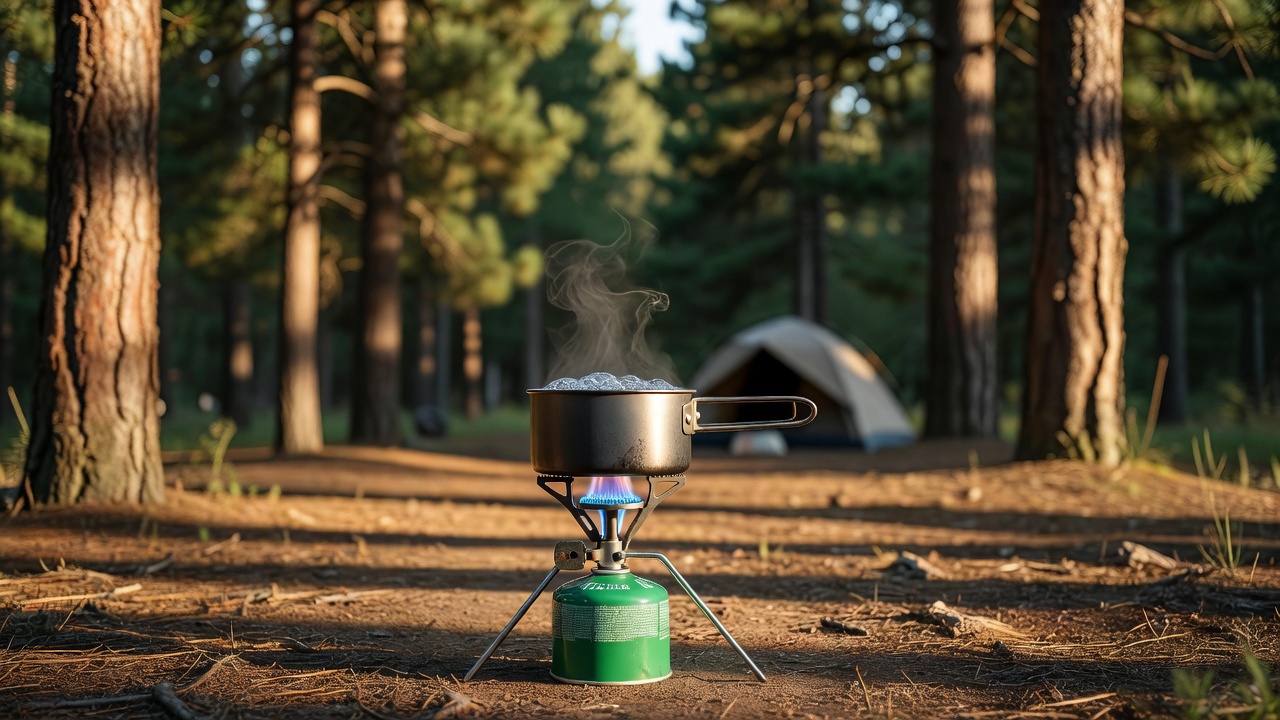
The Best Stoves That Run on 1 lb Propane
1. Gas One GS-3400P Dual Fuel — the value pick ($34.99)
This is the most flexible stove under $50, because it runs on both fuels: a 1 lb propane cylinder via the included hose and POL fitting, or a cheap butane cartridge straight into the body slot. That matters more than it sounds — plain butane stops vaporizing around 40°F, so a butane-only stove that was fine in June sputters and dies on a 38°F October morning. The GS-3400P just switches to propane.
8,000 BTUs, auto-ignition, three-sided wind guards, carrying case. At 14,200 ratings and 4.5 stars it's the safest first stove in this list. The trade-offs are honest ones: it's heavier than a butane-only unit because of the dual-fuel hardware, and the plastic case is functional rather than tough.
Gas One GS-3400P Dual Fuel Camp Stove →
2. Coleman Bottle Top — the $22 zero-setup backup ($21.99)
Screws onto the top of a 1 lb cylinder in about five seconds. No hose, no regulator, no assembly. 10,000 BTUs through a single adjustable burner, with a wind-baffle that holds the flame in light gusts and a wide base that doesn't tip with a full stockpot.
Where this earns its place isn't as a primary stove — it's as the second burner. Every family that owns a two-burner has hit the same wall: the big stove is covered in dinner prep and the coffee pot has nowhere to go. This is the burner that's live 30 seconds after you open the trunk. Two honest caveats: no built-in ignition (bring a lighter), and it sits high on the canister so it's less stable than a tabletop design.
Coleman Bottle Top Propane Stove →
3. Coleman Triton+ 2-Burner — the family kitchen ($149.99)
If you're cooking real meals for four or more, this is the stove the rest of the list is measured against. 22,000 total BTUs (11,000 per burner) means coffee and breakfast happen simultaneously instead of in sequence. InstaStart push-button ignition lights without matches — which sounds like a gimmick until you've tried to light a stove in heavy morning dew. Integrated wind guards keep the flame steady on breezy lakeside sites.
It's about 13 lb and folds into a carry case, so it's car-camping gear, not backpacking gear. It also has no built-in griddle surface, so if pancakes are on the plan you'll want a griddle plate. 21,000 ratings at 4.7 stars makes it the most proven 2-burner here.
Coleman Triton+ 2-Burner Propane Stove →
4. Camp Chef Explorer Two-Burner — the base-camp workhorse ($127.99)
A step up in output for groups: two 30,000-BTU cast-aluminum burners, 60,000 BTUs combined, across a 14 x 32-inch cooking surface that fits a 12-inch skillet and a 5-quart pot side by side. Standard 2-burner stoves top out around 20,000 BTUs, which is why cooking for five takes three rounds. This is roughly triple the output.
The catch: it's built around a bulk propane tank, not 1 lb cylinders. So it belongs in this guide with a footnote — if your family's version of "1 lb propane setup" is really a backyard-tank setup with a hose run, this is the cooktop to buy. It's heavy, it wants a table or camp stand, and it's overkill for a couple's weekend.
Camp Chef Explorer Two-Burner Stove →
5. MSR PocketRocket 2 — the backpacking answer, with one caveat ($49.95)
2.6 ounces, boils a liter in about 3.5 minutes, folds small enough to live inside a pot. For solo and duo backpackers it's the obvious choice — 3,800 ratings at 4.8 stars.
The caveat is the fuel, and it's the single most common mistake in this whole category: the PocketRocket 2 screws onto threaded isobutane canisters, not 1 lb propane cylinders. You cannot thread a green Coleman bottle onto it. If you want the flame control of this stove and the cheapness of 1 lb propane, look at the isobutane vs propane trade-offs first — the short version is that propane wins on cost and cold, isobutane wins on pack weight.
The Fuel: What to Buy and How Much
Propane: the 12-pack is the whole trick
A Coleman 16.4 oz Propane Cylinder 12-Pack ($64.99) brings the per-canister cost down to roughly half of single-bottle pricing — and it removes the failure mode where you run out at 6 PM with dinner half-cooked and pay convenience-store prices at the ranger station. Each cylinder covers a meal or two on a typical two-burner. Twelve of them is roughly a season of weekend trips for a family.
Propane also boils at -44°F, which is the reason it's the default cold-weather fuel. 10,500 ratings at 4.8 stars. The drawbacks are physical: twelve steel cylinders take up real trunk space, and they're disposable, so they need to go to a proper propane take-back point.
Where to actually buy them. Online, 1 lb propane tanks for sale almost always means a 1 lb propane tank 4 pack or a six-pack rather than singles, because the shipping weight only makes sense in bulk. In town it's the opposite problem: a 1 lb propane tank walmart, a 1 lb propane tank home depot, and a 1 lb propane tank ace hardware run are the same $5–7 cylinder in three different aisles, and a 1 lb propane tank near me search returns three stores within ten minutes of most trailheads. The shelves are what empty before a holiday weekend — buy the season's supply early instead of the night before.
Butane: right fuel, wrong season
If you run a Coleman Classic butane stove, the GasOne 12-Pack of 8.8 oz butane canisters ($29.99) drops the cost to about $2.50 a canister, roughly two hours of high-heat cooking each. Great for beach days, tailgates, and warm-weather car camping.
But be honest about the limit: butane stops vaporizing below about 40°F. These are the right canisters for summer and the wrong ones for a freezing morning. That's the whole reason dual-fuel stoves like the GS-3400P exist.
Isobutane: backpacking fuel, better in the cold
For threaded backpacking stoves, MSR IsoPro ($8.95 for 110g) uses an 80/20 isobutane-propane blend with 5% or less n-butane, which holds pressure down to roughly 11°F versus butane's 31°F. The self-sealing Lindal valve works with the PocketRocket and most threaded stoves, and there's a printed float gauge to see what's left. It's the priciest fuel per gram here — that's the price of pack weight and cold reliability.
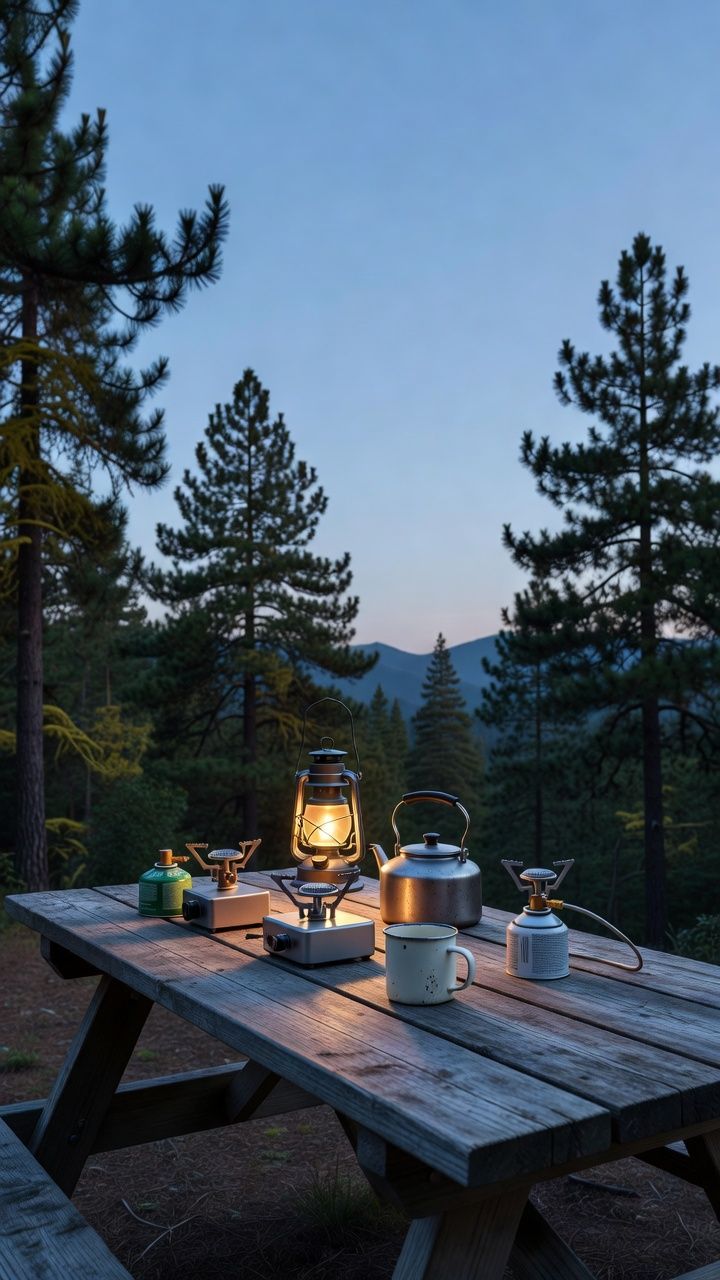
Before you decide how many cylinders to buy, it helps to know what a trip actually burns. The working rule of thumb is one pound of propane per burner per three days of two-meal cooking, plus a spare — our how much propane you need for a camping trip guide breaks that into per-day burner-hours and compares 1 lb, 5 lb, and 20 lb tanks side by side. If you are choosing between the green bottles and a bulk tank, the 1 lb vs 20 lb propane cost-per-trip breakdown does the cost and burn-time math for both.
The raw numbers, if you want them. The question everyone eventually asks is how much propane does a camp stove use, and the answer is arithmetic: a 10,000 BTU burner at full blast burns roughly 0.45 lb per hour, so 1 lb propane tank cooking time works out to about two hours of maximum flame — or closer to four hours if you're simmering stews and boiling coffee rather than searing. Run a 22,000 BTU two-burner with both burners wide open and you're into a fresh cylinder in about an hour. That single conversion is why buying the 12-pack matters more than any stove upgrade.
Refilling Your 1 lb Tanks: Three Legitimate Routes
This is where the internet gives genuinely dangerous advice, so here's the honest version. I wrote a full breakdown of the safe refilling process — including the three routes, the fill-limit rule, and the mistakes that get people hurt. The short version:
Route 1 — A DOT-stamped refillable cylinder (the legal answer)
The Flame King Refillable 1 lb Cylinder with Refill Kit ($59.99) is rated and stamped for repeated fills, so there's no grey area. Same CGA 600 connection, so every appliance in this guide treats it like any other cylinder. 4.6 stars across nearly 3,000 ratings. You still need a 20-lb donor tank, and you must weigh it to respect the 80% fill limit.
Route 2 — Refill your own disposables (cheap, but know the rules)
The Gas One Refill Adapter with 4-foot hose ($14.99) threads onto a standard 20-lb BBQ tank by hand and mates with the small cylinder valve. On a warm afternoon a 1 lb bottle fills in under two minutes. Solid brass body with properly cut QCC1 threads — the part cheap adapters get wrong, and a sloppy thread here means a leaking seal at 100+ PSI. It pays for itself in roughly two seasons.
Two real constraints: the donor tank must be warmer than the small cylinder (cold tanks need a warm day or a water bath), and you have to weigh the bottle or watch the vent closely, because overfilling is easy when you rush.
One item you'll see listed next to refill kits is a 1 lb propane tank valve removal tool. That's the line where refilling stops being a household chore: a cylinder with the valve unscrewed is an open pressure vessel you cannot legally transport, fill, or trust. If a process only works after the valve comes out, skip it and buy a DOT-stamped refillable instead.
Route 3 — Skip canisters entirely
The cleanest option if you're based in one spot: the GASPRO 20 lb-to-1 lb Adapter ($9.98) mounts a bottle-top stove directly on a full-size tank. No refilling, no disposables, no chore. Under $10 with 3,400+ ratings makes it the cheapest way to stop buying green bottles — not by filling them, but by removing them from the setup. The trade-off is that the appliance sits directly on the tank and feels top-heavy with a big pot, so keep the flame clear of the brass.
If your appliance is a 1 lb propane tank grill rather than a stove, the plumbing is the same idea with a different ending: a 1 lb propane tank regulator for tabletop grills takes the bulk tank down to the grill's own inlet, so the big tank stays on the ground and the cooking surface stays up on the table where it belongs. Tabletop propane camping stove with grill combos use the exact same CGA 600 threads, which is why one hose kit usually covers both.
Whichever route you pick, the empties you do generate have a right way to leave your possession — the canister safety and disposal guide covers where they can and can't go.
On 1 lb propane tank disposal specifically: an "empty" cylinder still holds residual vapor, so it can't go in curbside recycling or a standard trash compactor, and it must never go in a fire. A fully vented cylinder goes to a household hazardous waste site or a propane retailer that takes green bottles back.
Wind, Leaks, and Storage: The Two Things People Skip
Wind is the number one reason a camp stove underperforms. A flame that's being pushed sideways boils water far slower than the same flame in still air, which is why every stove in this list has some wind-guard design. If you're on a liquid-fuel stove like an MSR WhisperLite or Dragonfly, the MSR Heat Reflector and Windscreen ($16.97) wraps the burner in folding aluminum and reflects radiant heat back up at the pot — faster boils, less fuel per meal, and it rolls into a tube that takes almost no pack space.
One hard rule: that screen is for liquid-fuel stoves only. Never wrap a windscreen around a canister stove's fuel can, because trapping heat around the canister is a safety problem, not an efficiency trick.
Storage is the other one. Keep cylinders upright, out of the sun, and away from the vehicle cabin on hot days. A 1 lb cylinder is a pressure vessel; treat it like one. The stove side of the same routine — burner ports, the jet, and the air tube — is in our camp stove cleaning guide.
Indoors is a hard no. Here's the one people get wrong: can you use a propane camp stove indoors? No — and not because of the flame. A propane burner produces carbon monoxide, and a tent, garage, or camper interior traps it with nowhere for it to go. The Mr. Heater Buddy line is what people confuse with stoves here: it's certified for indoor use with a low-oxygen shut-off, while no cooking stove carries that rating. Cook outside, or under a fully vented screen shelter.
Which Setup Fits Your Trip?
| Trip | Stove | Fuel | Refill route |
|---|---|---|---|
| Solo weekend, car | Coleman Bottle Top ($21.99) | 1–2 propane cylinders | SKIP — buy the 12-pack |
| Couple, frequent trips | Gas One GS-3400P ($34.99) | Propane + butane backup | Gas One adapter ($14.99) |
| Family of 4+, real meals | Coleman Triton+ 2-Burner ($149.99) | Propane 12-pack ($64.99) | Flame King refillable ($59.99) |
| Base camp / group of 6+ | Camp Chef Explorer ($127.99) | Bulk 20-lb tank | n/a — runs on bulk |
| Backpacking | MSR PocketRocket 2 ($49.95) | MSR IsoPro 110g ($8.95) | n/a — recycle canisters |
If you're still deciding how many burners you need, the single-burner vs 2-burner comparison walks through the real-world setups for each.
By Configuration: Griddle, Legs, Quick Connect, and RV Setups
Once the burner count is settled, the next round of questions is about configuration — and each answer changes which stove you should buy.
- Griddle. A propane camp stove with griddle surface is the family-breakfast upgrade: pancakes, bacon, and eggs at once instead of in relays. The Triton+ has no built-in griddle, so you add a cast-iron plate over one burner; the Camp Chef's 14 x 32-inch surface takes two plates side by side.
- Legs and stands. A propane camp stove with legs stands at counter height with no picnic table involved — the Camp Chef Explorer ships with detachable legs — and a propane camping stove with stand does the same job for a tabletop model on a folding base.
- Quick connect. A propane camp stove with quick connect is the RV and travel-trailer variant: a hose that clicks into the trailer's regulated low-pressure port instead of threading onto a cylinder. Fast and tidy, but it only fits appliances rated for a regulated supply — never run a high-pressure bottle-top burner off one.
- RV kits. For a propane camp stove for travel trailer trips, the kit is a low-pressure hose plus a stove rated for it, and the best propane camp stove for rv use is usually a two-burner that lives with the rig rather than a bottle-top you carry to the picnic table.
- Canning and big pots. A propane camp stove for canning needs sustained high output, which is exactly what the 60,000-BTU Camp Chef is for. Water-bath canning on a $22 bottle-top works, but it takes long enough that the fuel savings disappear.
- Ovens. A propane camp stove with oven is really a different appliance class — a Dutch oven over the burner, or a dedicated camp oven — because no 1 lb cylinder stove in this guide has a built-in oven.
What a Weekend of Fuel Actually Costs: 1 lb Canisters vs a 20 lb Tank
Here is the number that decides the whole format: a family camping weekend on disposable 1 lb canisters costs roughly $21 in fuel, and the same weekend off a refilled 20 lb tank costs about $3. Identical burners, identical meals. The gap is entirely in how you buy the propane, not in how much you burn.
The reference prices for 2026. The plain answer to how much does propane cost per gallon at a refill counter is $3.00-4.00, and how much does propane cost to refill a 20 lb BBQ tank lands at $12-20 for a full cylinder at a dealer, hardware store, or U-Haul counter. Bulk benchmarks sit lower — the EIA's weekly U.S. residential propane price held at $2.67-2.68/gal through spring 2026 — but propane cost per gallon for a 20 lb cylinder always prices above the bulk number, because you are paying for a small fill rather than a delivery truck. Regional spread dominates: how much does propane cost per gallon near me is a genuinely different answer in New England than in Texas, and propane cost per gal also swings with the heating season.
In per-pound terms, which is what makes camping arithmetic work: propane cost per pound of $0.60-1.00 refilled, against $1.47-2.00 at an exchange rack — because exchange programs put back 15 lb, not 20, a documented industry practice rather than a rumor. Expressed per unit of heat, propane cost per btu works out to about $2.80-4.60 per 100,000 BTU on refills, $6.80-9.30 at exchange prices, and roughly $25 per 100,000 BTU on single disposable canisters.
The two numbers that make the math work
A 20 lb propane tank gallons figure of 4.7 gal is what a full fill actually puts in, and a 20 lb propane tank full weighs about 37 lb on the scale — 17 lb of steel tare plus 20 lb of fuel, which is why 20 lb propane tank weight full catches people out at the fill station. Those 20 lb of fuel are roughly 432,000 BTU. A 1 lb cylinder holds about 21,600 BTU.
Everything below is that single ratio. The 20 lb propane tank cost question then splits in two: $45-60 to buy a tank outright, or $22-30 for an exchange swap at the 20 lb propane tank exchange near me cage outside most groceries and hardware stores — fuel included, 15 lb of it. A first-time setup, tank plus fill, is a propane tank and fill cost of roughly $55-80.
Burn hours by output, side by side
| Burner output | Hours on a 20 lb tank | Same output on 1 lb canisters |
|---|---|---|
| 9,000 BTU | 48 | 2.4 |
| 10,000 BTU (Coleman Bottle Top) | 43 | 2.2 |
| 15,000 BTU | 29 | 1.4 |
| 18,000 BTU | 24 | 1.2 |
| 22,000 BTU (Triton+ with both burners open) | 20 | 1.0 |
| 30,000 BTU | 14 | 0.7 |
| 50,000 BTU | 9 | 0.4 |
| 60,000 BTU (Camp Chef Explorer, both burners) | 7 | 0.4 |
Read that table as answers to the questions people actually search. Ask how long will a 20 lb propane tank last at 15000 btu and the answer is about 29 hours, and how long will a 20 lb propane tank last at 18000 btu is 24. Take it down to how long will a 20 lb propane tank last at 30000 btu and you get 14, while how long will a 20 lb propane tank last at 50000 btu is under 9 — which is exactly why how long does a 20 lb propane tank last on a grill with two wide burners falls so fast. The one-line version of how many hours does a 20 lb propane tank last is 43 on a 10,000 BTU bottle-top, and how long should a 20 lb propane tank last for a family weekend is a small fraction of that, because nothing about camp cooking is fuel-hungry next to a furnace: how long does a 20 lb propane tank last in an rv is a heater question, not a stove question.
How much fuel a weekend actually burns
The honest answer to how much propane does a weekend camping trip use is two to four pounds. A 22,000 BTU two-burner burns about 1 lb an hour wide open, and a family weekend spread across coffee, breakfast, and dinner is roughly four hours of mixed-open flame. Four pounds is four disposable canisters ($21.68 at $5.42 each) or one fifth of a refilled tank ($3.00-4.00). That single comparison is the entire cost per camping trip argument, and it repeats every trip you take.
Refill vs exchange: the 73% gap
Once you own a tank, propane refill vs exchange is not close. The 20 lb propane tank refill cost settles it — $12-20 for a full 20 lb fill against $22-30 for a 15 lb exchange — so propane tank refill vs exchange is a 73% per-pound gap, and the propane tank refill vs exchange cost figures above are the whole argument: is it cheaper to refill or exchange propane tank has a one-word answer, refill, for any cylinder that passes its date stamp. Whether is it cheaper to refill propane or exchange changes only if you are filling a large tank by delivery for a house or RV. For a propane tank refill or exchange decision on a camping tank, the exchange rack makes sense in exactly two situations: the tank is damaged, or it is out of date.
That date stamp is the one compliance detail that trips people up, so check it before planning a trip. Search results phrased as propane tank refill requirements really come down to a legible requalification date on the collar: DOT cylinders must be requalified 12 years after manufacture, then every 5 years (49 CFR 180.205), and a refill station legally cannot fill a cylinder past its date. When that happens, searching 20 lb propane tank recertification near me or swapping at an exchange counter is the fix, and propane tank refill vs new follows from the same rule — a requalified tank keeps working, so replace only a damaged one.
Which route to buy
Three ways to close the gap, all of them in the catalog:
- Gas One propane refill adapter and 4 ft hose ($14.99) — refill your own empties from a 20 lb donor tank. At ~$18 per weekend saved against disposable pricing, it pays for itself on the first trip.
- GASPRO 20 lb-to-1 lb converter ($9.98) — stop generating empties at all and run the stove off the big tank, which is also the cheapest per-BTU option in this guide.
- Flame King refillable 1 lb cylinder with refill kit ($59.99) — the DOT-stamped, legal-canister version of the same math, worth it if you want small cylinders without buying disposables.
Staying on disposables is still the right call for a trip or two a year: the Coleman 16.4 oz 12-pack at $64.99 works out to $5.42 a canister and needs no planning at all. Where the trade flips is frequency — past four or five weekends a season, the refill hardware is the cheaper setup for good.
1 lb Propane FAQ
How long does a 1 lb propane tank last?
A standard 16.4 oz (1 lb) cylinder gives you roughly 2 hours of full-blast cooking, 15–20 pots of boiled water, or 6–8 real camp meals on a typical single-burner stove. On a 10,000 BTU burner that's about 1.5 hours at maximum output; dial the flame down for simmering and it stretches considerably. For the full per-burner run-time math, see the dedicated run-time breakdown.
Can you refill 1 lb propane bottles?
Yes — but choosing how is the part that matters. There are three legitimate routes: buy a DOT-stamped refillable cylinder, use a refill adapter with your own 20-lb donor tank, or skip canisters entirely with a 20 lb-to-1 lb converter. What you should not do is overfill a cylinder or ignore the 80% fill limit, which is where refilling turns dangerous.
Is propane or isobutane better for a camp stove?
It depends on how you're carrying the stove. Propane wins for car camping and groups: it flows down to -44°F, costs less per meal, and the same cylinder can power a lantern or heater. Isobutane wins for backpacking: a 4 oz canister plus a 2.6 oz stove is about 7 oz total, and nothing else comes close on pack weight. The full comparison is in the isobutane vs propane guide.
Can I use a 1 lb propane tank with a backpacking stove?
Not directly. Backpacking stoves like the MSR PocketRocket 2 use threaded Lindal-valve isobutane canisters, which are a different connection from the CGA 600 valve on a 1 lb propane cylinder. If you want propane economics with a backpacking-style burner, your options are a dual-fuel stove or an adapter setup — not a green bottle threaded onto an ultralight burner.
How many 1 lb tanks should I bring?
Budget one cylinder per 2 hours of cooking, then add a spare. Practically: 2 cylinders for a weekend of coffee and simple meals for two, 4–6 for a family cooking three meals a day across a long weekend on a two-burner. Running out at dinner is the single most common camp-kitchen failure, and a spare cylinder costs less than the meal it saves.
Can you use a propane camp stove indoors?
No. A propane burner produces carbon monoxide, and a tent, garage, or camper interior traps it. Camp stoves carry no indoor rating — the Mr. Heater Buddy heaters do, which is why the two get confused. Cook outside or under a fully vented screen shelter.
How much propane does a camp stove use per hour?
Roughly 0.45 lb per hour for a 10,000 BTU burner at full flame, scaling with output: a 22,000 BTU two-burner wide open burns about 1 lb an hour. Simmering normally halves that, so 1 lb propane tank cooking time runs from about two hours flat-out to four hours at low heat.
Is 1 lb vs 20 lb propane tank pressure different?
No. Both hold propane at the same vapor pressure for a given temperature — around 110 PSI at 70°F — so the 1 lb vs 20 lb propane tank pressure question is a misunderstanding. The bigger tank buys burn-hours, not pressure. A 1 lb vs 5lb propane tank comparison works the same way.
How much does camping fuel cost for a weekend?
About $21 on disposable 1 lb canisters at $5.42 each — four canisters covers a family weekend — against $3.00-4.00 for the same four pounds of propane drawn from a refilled 20 lb tank. The hardware that makes that switch, a refill adapter or a 20 lb-to-1 lb converter, costs less than two weekends of disposables.
Is 1 lb propane vs 20 lb tank cheaper for a two-night trip?
The 20 lb tank wins on cost every time, by roughly $18 per weekend, and it wins by more once you stop paying exchange prices and refill the tank at a dealer instead. A 1 lb setup only wins on pack size and zero planning, which is why bottle-top stoves still make sense for solo trips and overnighters.
How long does a 20 lb propane tank last while camping?
About 43 hours on a 10,000 BTU single burner at full flame, 29 hours at 15,000 BTU, and 20 hours on a 22,000 BTU two-burner with both burners wide open. Simmering roughly doubles those figures, so a weekend of real cooking uses two to four pounds — a fifth of the tank or less.
The Bottom Line
The 1 lb propane system is the best value in camp cooking — one universal valve, cheap fuel sold everywhere, and stoves from $22 to $150 that all thread onto the same cylinder. Build it in order: pick the stove by how many people you feed, buy fuel in a 12-pack instead of singles, and pick your refill route before the empties pile up.
Start with the Coleman 16.4 oz 12-pack if you already own a stove and just need fuel, or the Gas One GS-3400P if you're buying both at once and want the flexibility to run whichever fuel is cheaper.
Related: Camp Stove Propane Hose, Regulator & Tank Adapter Guide — which hose, adapter, and regulator you actually need to run a stove off a 20 lb bulk tank, what each fitting costs, and the 60-second leak test.
The one thing to test before you commit to a 1 lb setup: the cylinder-to-stove joint. Our propane leak guide shows the 30-second soapy-water check.
<!-- AFFILIATE_DISCLOSURE -->