Camping in Virginia 2026: State Parks, Shenandoah & Where to Camp in the Blue Ridge
Camping in Virginia 2026: state park fees from $16 a night, Shenandoah campgrounds and backcountry permits, free national forest sites, and the coast.
Virginia is the state where the mountains are close enough to be a habit. From Washington you can be on Skyline Drive in ninety minutes. From Richmond, the Blue Ridge is an hour west. From Virginia Beach, you can camp on the edge of the Atlantic at First Landing and be home for lunch. That proximity is why Virginia gets camped harder than its trail mileage suggests — and why the booking windows here behave like a big-city market rather than a rural one.
The version of a Virginia camping trip that goes wrong is almost never a gear problem. It is a systems problem. Virginia runs at least four separate camping systems — state parks on their own reservation portal, Shenandoah National Park on Recreation.gov, the Blue Ridge Parkway and national forest on a different set of rules again, and free dispersed camping that needs no reservation at all — and each one opens its calendar on a different schedule. Book inside the wrong system, or at the wrong moment in that system's window, and you will not get the site you wanted in Virginia's single best month.
This guide covers all four systems, the state park campgrounds genuinely worth planning around, what changed at Shenandoah this season, the ticket most first-time visitors miss, fall color timing by region, why the fire rule everyone quotes does not apply in October, and the gear that makes a 30°F Blue Ridge night comfortable instead of the reason you leave a day early.
Quick Answer: Where to Camp in Virginia
- Virginia State Parks are the reliable family default. 38 state parks and historic sites with more than 3,500 campsites, booked on reservevaparks.com, with a rolling 11-month reservation window. That is nearly double Shenandoah's lead time, and it is why the good sites disappear first.
- Shenandoah National Park is the icon, and it books 6 months out on Recreation.gov. Big Meadows is now reservation-only; Mathews Arm and Loft Mountain are a mix of reservable and first-come, first-served; Lewis Mountain stays first-come only.
- You need an entrance pass either way. Shenandoah charges $30 per private vehicle for 7 days ($25 motorcycle, $15 per person on foot or bike). It is a separate cost from the campsite.
- Hiking Old Rag requires a $2 day-use ticket from March 1 through November 30 — in addition to the entrance pass. That covers all of October.
- Free camping exists here. Dispersed camping on George Washington and Jefferson National Forest land costs nothing, needs no reservation, and is subject to a 14-day stay limit.
- October is the month. Shenandoah's color peaks mid-to-late October, nights run 30–40°F, and the 4 PM burning law everyone worries about only applies February 15 through April 30.
- Virginia is unusually dog-friendly for a national park state. Leashed dogs are allowed in Shenandoah's campgrounds and on the large majority of its trails, which is not true at most national parks in the East.
What Just Changed for Fall 2026
Three things are worth knowing before you pick a campground this season.
Big Meadows is now reservation-only. Shenandoah has tightened how its largest campground fills: every site at Big Meadows (milepost 51.2) is by reservation through Recreation.gov, with no first-come, first-served walk-in inventory. For a family that used to drive in on a Thursday and hope, that route is gone — especially in October, when Big Meadows is the campground everyone wants because it sits five minutes from Byrd Visitor Center, the camp store, and the best meadow in the park.
Mathews Arm and Loft Mountain are now a mixture. Both campgrounds hold back a portion of sites for first-come, first-served arrivals while the rest book ahead — which means showing up without a reservation is still viable at the north and south ends of the park, just not something you should plan a three-hour drive around. Lewis Mountain remains first-come, first-served only. To reduce the gamble, the park runs a weekend availability alert: text SHENCAMP to 888777 and you get twice-daily updates on campsite availability on weekends. That is the single most useful free thing a fall camper can do in Virginia, and almost nobody does it.
Old Rag still requires a day-use ticket through November 30. Since the ticket system began, hiking the Saddle, Ridge, and Ridge Access trails — essentially the classic Old Rag loop — requires a $2 per-person day-use ticket on top of your park entrance pass. It is not a lottery and it is not expensive, but it does sell out: about 800 tickets per day, released in two waves. 400 become available 30 days ahead at 10 a.m. Eastern, and the remaining 400 open on a shorter rolling window. If Old Rag is the reason for your trip, set a calendar reminder for 10 a.m. exactly 30 days out. Tickets for the year become available starting the first week of February, and none are required in December, January, or February.
One timing note for the color itself: after a dry late summer, Shenandoah's color tends to run a little ahead of the historical average at the highest elevations, with the strongest showing in the upper Blue Ridge before the valley bottoms turn. If your trip is at the very start of October, aim high on the Drive. If it is late October, aim low.
How Virginia Camping Actually Works: Four Systems in One State
Decide which system you are booking inside before you pick a place. They do not share a portal, a window, or a rulebook.
1. Virginia State Parks (DCR). This is the largest bookable system in the state: 38 state parks and historic sites with more than 3,500 campsites between them, from barrier-island beach camping at First Landing to high-elevation sites in the southwest mountains. Everything runs through reservevaparks.com or the Customer Service Center at 800-933-PARK (7275), with a rolling 11-month reservation window for most facilities. The 11-month lead is the key detail: for a park like First Landing or Grayson Highlands on a fall weekend, the sites you want are taken eleven months before you thought about it, and what is left by August is what is left. Transfers and changes are typically allowed up until a few days before arrival, which is worth knowing if your plans shift.
2. Shenandoah National Park (NPS). Five campgrounds along Skyline Drive, all owned by the same park, all governed by the same entrance fee, but with different reservation rules (see the next section). Reservations go through Recreation.gov, with many sites opening 6 months ahead. Skyline Drive is 105 miles with 75 overlooks, and the park holds roughly 500 miles of trails including 101 miles of the Appalachian Trail. The entrance pass is separate from your campsite fee: $30 per private vehicle for 7 consecutive days, $25 per motorcycle, or $15 per person if you walk or bike in. Annual passes and the America the Beautiful pass cover it instead.
3. The Blue Ridge Parkway and national forest. The Parkway is a separate NPS unit from Shenandoah — same ridge, different administration — and its campgrounds sit along the spine of the state from the Peaks of Otter south toward North Carolina. George Washington and Jefferson National Forest manages most of the actual mountain land in western Virginia, with developed campgrounds plus a great deal of legal dispersed camping.
4. Free dispersed camping. No reservation, no fee, no facilities. You drive a forest road, find a legal pull-off, camp, and leave no trace. The limit on national forest land is 14 days at one location. This is the system that makes a last-minute fall trip possible in Virginia when every reservable site is gone — and it is also the one with the fewest guardrails.
One practical note that catches out-of-state visitors: Virginia state park campsites are inexpensive by East Coast standards, but the entry fee structure is different from the national park model. You pay for the campsite reservation, not a separate daily park pass, at most Virginia State Parks — so the cost of a state park night is closer to $40–60 than the $30-plus-site-fee stack at Shenandoah.
Virginia State Park Campgrounds Worth Booking
Not every Virginia state park is worth a trip on its own. These are the ones people come back to, and the ones whose reservations you should treat as competitive:
- First Landing State Park (Virginia Beach) — the most-visited park in the system, and the one that surprises people: campsites in maritime forest with a boardwalk out to the Chesapeake Bay, twenty minutes from the Virginia Beach oceanfront. It is the only place in Virginia where a beach trip and a real camping trip are the same trip, and the fall weekends are the best of the year because the crowds thin out and the water is still swimmable in early October.
- False Cape State Park (Virginia Beach) — the one with no road access. You hike, bike, or boat in from Back Bay or Sandbridge, which means primitive camping on the last undeveloped stretch of Atlantic coast in Virginia. It is not a first-timer's park, but it is the most genuinely wild camping available on the East Coast between Assateague and the Outer Banks.
- Grayson Highlands State Park (Mouth of Wilson) — the southwest high country, at the base of Mount Rogers, with wild ponies grazing along Wilburn Ridge and the highest-elevation camping in the state. October here is a week or two ahead of the rest of Virginia. It also gets genuinely cold, which is the point.
- Douthat State Park (Millboro) — one of the oldest parks in the system and among the largest single blocks of state park land in Virginia, with a lake, 40+ miles of trails, and a campground that fills for fall weekends months out. This is the park Virginians book for a serious hiking weekend.
- Hungry Mother State Park (Marion) — a wooded lake park in the far southwest with a beach, cabins, and a campground that stays open late into the season. Good pairing with Grayson Highlands if you are making the drive west anyway.
- Shenandoah River State Park (Bentonville) — canoe access on the Shenandoah River plus ridge views from the campground, about 90 minutes from Washington. This is the best answer when Shenandoah National Park itself is full.
- Sky Meadows State Park (Delaplane) — a small park on the eastern slope with walk-in and primitive sites, close to the Appalachian Trail. Small campground, so "small" also means "gone early."
- Pocahontas State Park (Chesterfield) — 7,900 acres of forest twenty minutes from Richmond, with a big campground and a lake. The best option for central Virginia families who do not want a long drive.
- Kiptopeke State Park (Cape Charles) — Eastern Shore, on the Chesapeake, with the famous concrete ships offshore and some of the best fall birding on the Atlantic flyway. Camping here in late October is a different trip from mountain camping, in a good way.
- Chippokes State Park (Surry) — on the James River with a working plantation history, quiet campgrounds, and fossil hunting on the beach. A good shoulder-season park when the mountains are already too cold.
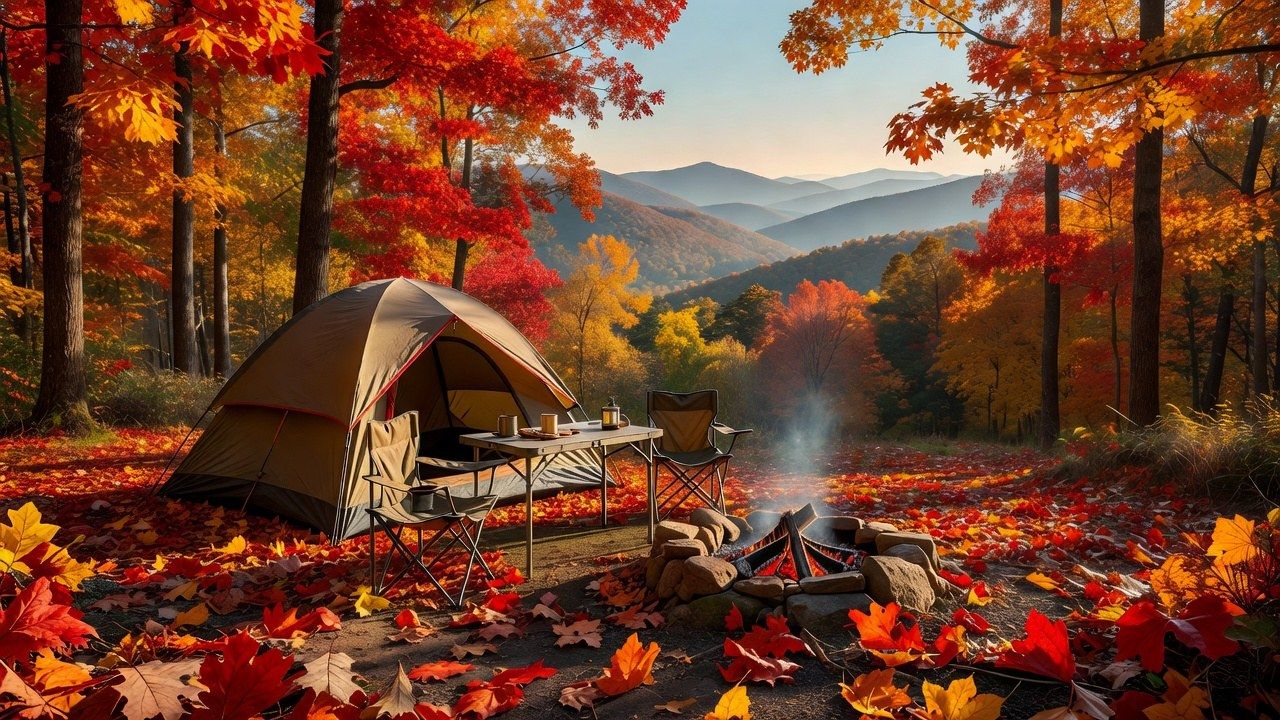
If you are camping in a cabin rather than a tent, note that state park cabins book on the same 11-month clock and go faster than campsites at the popular parks — and that a handful of state park campgrounds close loops or water systems as the first freeze arrives, so confirm the specific loop before you drive.
Camping in Virginia in September
September in Virginia is still summer at the beginning and turns real fall by the end. It is also the month when the state's best camping conditions quietly arrive.
- Temperature: 70s°F in the mountains by day early in the month, dropping into the 50s and then the 40s at night as it goes on. By late September, a campsite at 3,000 feet can hit the upper 30s after a clear night.
- Crowds: this is the month Virginia's campgrounds finally open up. Summer is the peak here, not fall — the reverse of what most out-of-state visitors expect — so a September weekend at a state park is often the easiest good weekend of the year to book.
- Bugs: still a factor. Mosquitoes and, more importantly, ticks, are active in the early fall. Virginia is heavy tick country, and the adult black-legged ticks that matter most become active again in the fall. Repellent and a nightly tick check are not optional in September.
- Color: the southwest high country starts first. Grayson Highlands and the Mount Rogers area typically show early color in the last week of September, while the Blue Ridge proper is still mostly green.
The one September risk is a tropical system. Late September is still inside the Atlantic hurricane season, and the difference between a beautiful Shenandoah weekend and a washout can be a storm making landfall 300 miles south. Build in a flex day if you are driving from far away.
Camping in Virginia in October
October is why people plan Virginia camping trips a year out, and the month behaves very differently depending on where in the state you are.
- Early October (1–12): the best combination of conditions at elevation — color starting in the high Blue Ridge, mild days, cold-but-manageable nights. Shenandoah's Skyline Drive is busy but not yet at peak.
- Mid October (13–25): peak color across the Blue Ridge and the Shenandoah Valley. This is the single most competitive stretch of the year for Shenandoah campgrounds and Skyline Drive pullouts. Expect slow traffic on the Drive on weekends, and book early-morning hikes instead.
- Late October (26–31): color moves downslope into the valleys and Piedmont; the mountains are past peak but the oak and hickory hold on. This is when the state parks at lower elevation — Pocahontas, Chippokes, Shenandoah River — hit their best week.
- Tidewater and the coast: October through mid-November at First Landing, False Cape, and Kiptopeke. The ocean is warm enough to swim into early October, the greenhead season is over, and the campgrounds are quiet.
Nights in the mountains in late October routinely drop into the 30s, and it is not unusual to see the first light frost at elevation by the third week. If you are camping above 3,000 feet, plan for a hard freeze and pack accordingly — our where to camp in October guide walks through the cold-night decision in detail, and the Columbus Day weekend camping checklist covers the long-weekend logistics.
Virginia fall color by region and elevation
| Region | Typical peak | Why it matters |
|---|---|---|
| Southwest highlands (Grayson Highlands, Mount Rogers) | Late September – mid October | Highest elevations in the state turn first |
| Central Blue Ridge / Shenandoah (Skyline Drive) | Mid-to-late October | The peak everyone plans around |
| Shenandoah Valley and Piedmont | Late October – early November | A week or two behind the ridge |
| Northern Virginia / DC piedmont | Late October – early November | Closest option for a day trip |
| Tidewater and the Eastern Shore | Late October – mid November | The longest fall window in the state |
Shenandoah National Park: The One Everyone Books First
Shenandoah is the campground market that behaves like a city, and it is worth understanding before you try to book it.
The four family campgrounds, north to south:
| Campground | Milepost | Reservation rule | Notes |
|---|---|---|---|
| Mathews Arm | 22.1 | Mix of reservable and first-come | Closest to Front Royal; the northern entry point |
| Big Meadows | 51.2 | Reservation only | The big one; near Byrd Visitor Center and the camp store |
| Lewis Mountain | 57.5 | First-come, first-served only | Smallest of the four; tents and small RVs |
| Loft Mountain | 79.5 | Mix of reservable and first-come | Southern section; closest to Rockfish Gap and Charlottesville |
Big Meadows and Loft Mountain also offer group camping; the other two do not have group loops. Many sites across the park can be reserved 6 months ahead on Recreation.gov, and fall foliage weekends are the most competitive dates of the year after Memorial Day and Labor Day.
The tickets and passes you need. Your campsite reservation does not include park entry. A private vehicle pass runs $30 for 7 consecutive days, motorcycles are $25, and walk-in or bicycle entry is $15 per person (children under 16 are free). Buy it in person at an entrance station or the Old Rag and Whiteoak Canyon trailhead kiosks, or use an annual or America the Beautiful pass. Then, separately, if your plan includes Old Rag, you need the $2 per-person day-use ticket for March 1 through November 30.
Backcountry camping. Shenandoah's backcountry is a real option — 500 miles of trail, 101 of them the Appalachian Trail — and it requires a free backcountry permit, self-registered before you start. The park's rules on where you can camp, food storage, and fires are stricter than national forest land, and they exist for a reason: this is black bear country, and a properly stored food bag or a bear canister is the difference between a story and an incident.
Two park-specific cautions. First, Skyline Drive has a 35 mph speed limit for good reason: deer move constantly at dawn and dusk in October, and the drive takes longer than the mileage suggests — budget two and a half to three hours end to end, more on a peak weekend. Second, the park's campgrounds close progressively through late October and early November as the freeze arrives, with Big Meadows typically the last of the four to shut down. Confirm closing dates for your specific campground rather than assuming the park is open because the Drive is.
The Blue Ridge Parkway and National Forest: The Free Options
If Shenandoah is full — and in mid-to-late October it will be — Virginia still has options, and two of them are free.
The Blue Ridge Parkway. A separate National Park Service unit that runs 469 miles from Shenandoah's southern end toward Great Smoky Mountains, with campgrounds at intervals including the Peaks of Otter area in Virginia. It is the same ridge, the same color, and a fraction of the reservation pressure. If you want the Shenandoah fall experience without the Shenandoah booking process, this is the honest workaround.
George Washington and Jefferson National Forest. This is the free option, and it covers an enormous amount of western Virginia. Dispersed camping outside developed campgrounds is allowed in most of the forest: no fee, no reservation, no water, no toilet, no fire ring, and a 14-day stay limit. Developed forest campgrounds are cheap and reservable through the usual federal channels, and they rarely run full even at foliage peak.
What dispersed camping in Virginia actually requires. A road-legal vehicle that can handle gravel, water for everyone including the dog, a way to pack out everything, and a food storage plan that assumes a bear will find a poorly hung bag. In the national forest you are on your own, and cell coverage in the Virginia mountains is patchy to nonexistent — a satellite messenger is not paranoia here, it is a reasonable purchase. The national parks camping guide covers the same tradeoffs from the other direction, and the state park camping guide covers how state systems differ from federal ones.
Fire Rules: Why the 4 PM Burning Law Does Not Apply in October
Virginia's statewide open-burning restriction — the 4 PM Burning Law — runs February 15 through April 30, and it prohibits open-air burning before 4 p.m. within 300 feet of woodland, brush, or dry fields. It is a spring rule, and it exists because of Virginia's spring fire season.
That means the rule most people quote at a Virginia campground in October does not actually apply in October. What applies instead is whatever the current local situation dictates:
- Local burn bans. Counties and localities can and do impose their own restrictions during dry spells, and the Virginia Department of Forestry posts them as they happen. A dry October can trigger one in a matter of days.
- Park and forest rules. Shenandoah restricts fires to designated fire rings in campgrounds and has its own rules in the backcountry. National forest land generally allows campfires outside of restrictions, but always check the current forest order.
- Red flag conditions. High wind plus dry fuel means no fire, regardless of any calendar. If a gusty front is coming through, skipping the campfire is the correct call.
The one fire rule that is always in force: do not move firewood. Virginia has been fighting the emerald ash borer and other invasive pests for years, and transporting firewood from home is the primary way they spread. Buy certified heat-treated firewood locally or at the campground — the $8 bundle at the entrance is cheap insurance for the forest you came to see.
If you want a guaranteed fire in a dry October, book a developed campground with a fire ring, and carry a propane or liquid-fuel stove so a mid-trip restriction change does not end your hot meals. Our camp stove fuel guide covers which stoves survive every restriction level.
Camping in Virginia With Dogs
Virginia does something that most of the East Coast's national parks do not: it lets you bring the dog on the trails.
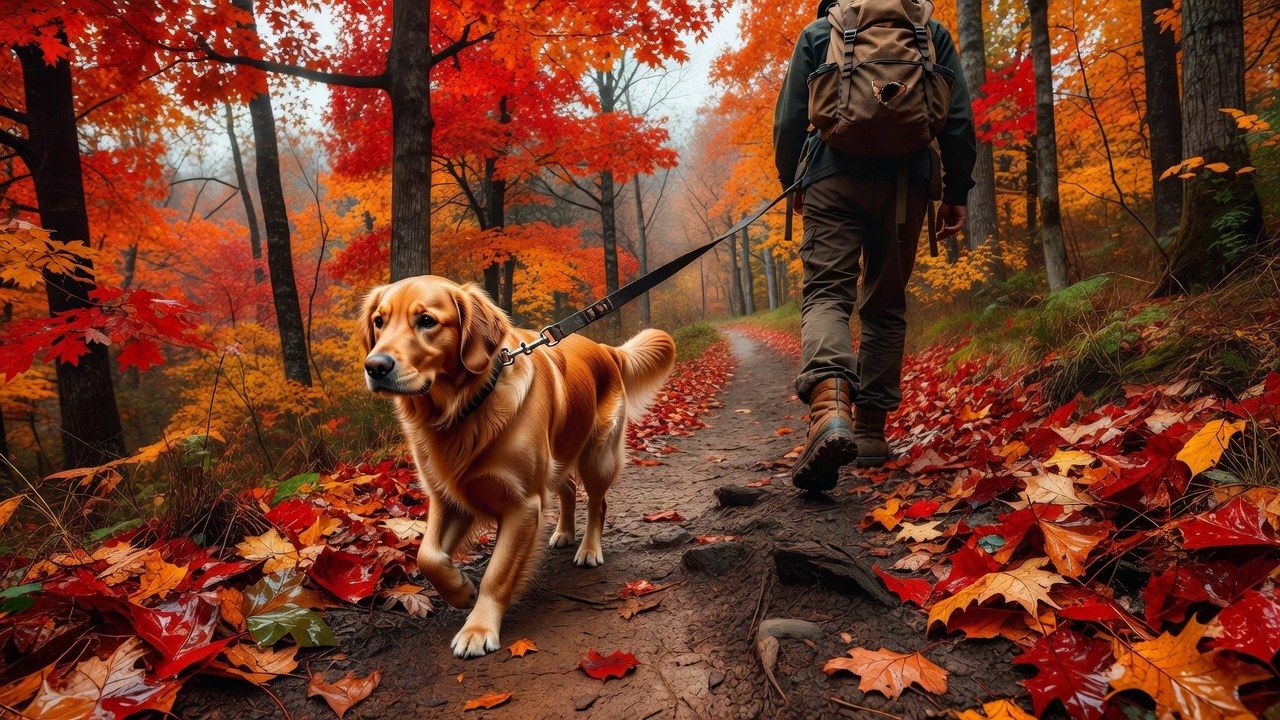
- Shenandoah National Park allows leashed dogs in its campgrounds and on the large majority of its trails, including the stretch of the Appalachian Trail that runs through the park — a genuine outlier among national parks, where pets are usually confined to roads and campgrounds. The leash rule is strict and physical: no longer than 6 feet, at all times. Pets are not allowed on ranger-led programs.
- Virginia State Parks welcome leashed pets in most campgrounds and on most trails, with the usual exceptions: swim beaches, some developed areas, and a few cabins are off-limits. Check the individual park's page, because the exceptions differ park to park and matter most at the beach parks.
- National forest land is the most permissive. Dispersed camping generally has no leash requirement, though keeping the dog close near other campers, roads, and wildlife is both polite and safer.
- Ticks are the real Virginia dog problem. Fall is when adult black-legged ticks are active again, and they are the vector for Lyme disease. Talk to your vet about prevention, and do a hands-on tick check every night — ears, armpits, between the toes. A tick remover tool ($14.39) lives in our camp kit permanently for exactly this reason; a reflective collar ($18.99) matters more than usual in October, when daylight is short and hunters are active in the national forest.
- Bear awareness applies to dogs too. A dog that chases a bear is a dog that brings the bear back to you. In Shenandoah and the national forest, keep the dog leashed and skip the off-trail exploring.
If the dog is coming, the camping with dogs checklist and the dog camping hub go deeper on trail-specific gear and cold-weather handling.
Cold Nights in the Blue Ridge: The Gear Setup That Works
Virginia fall camping looks mild on paper and is not at elevation. A 3,000-foot ridge in late October will hit the low 30s, and the damp cold in the Appalachians feels colder than the same temperature in Colorado. This is the kit that handles it.
Shelter. A three-season family tent is right for the whole fall window. For a family of four or five the CORE 6 Person Instant Cabin Tent ($169.99) sets up in about a minute and leaves room to stand, and the CAMPROS CP 8 Person Tent ($159.98) adds a room divider when the kids want separate space. The EVER ADVANCED 6 Person Blackout Tent ($169.99) blocks early light — useful in a park where the sun comes up over the ridge before you want it to. For a smaller group, the Coleman Skydome 4-Person Tent ($122.99) is the dependable budget pick, and if you are hiking in rather than car camping, the Night Cat 2-Person Backpacking Tent ($53.99) is light, cheap, and genuinely waterproof. Virginia rain is not a rumor — bring the Nikwax SolarProof treatment ($19.95) if your tent has a season or two on it, and Gear Aid Tenacious Tape ($14.39) for the hole you will find.
Sleeping. Buy a bag rated at least 15°F colder than the night you expect. The TETON Sports Celsius 0° bag ($59.99) is the value answer, the XXL version ($89.99) fits taller campers, and the Coleman Oak Point Big & Tall 30° bag ($74.99) is the roomy option for adults who sleep hot. The Kelty Cosmic Down 20 ($169.00) is the down bag worth owning if you want it to pack small. Kids get cold faster than adults, which makes the TETON Sports Celsius Jr ($49.99) or the Kelty Woobie ($39.95) the most common family upgrade heading into October. A fleece liner ($24.99) adds real warmth to any bag for almost nothing.
Under you. Appalachian cold comes up through the ground, so the pad matters as much as the bag. The Klymit Insulated Static V ($94.99) is the value insulated air pad, the Exped MegaMat 10 ($239.95) is the most comfortable car-camping pad made, and the closed-cell Therm-a-Rest Z Lite Sol ($54.95) is the unkillable backup that doubles as a sit pad by the fire. On a cot you still need insulation underneath — the Coleman Trailhead II cot ($54.99) or the lighter MARCHWAY folding cot ($66.99) both work with a pad on top, and a Trekology pillow ($16.99) is the cheap comfort upgrade everyone forgets.
Layers. Virginia fall is a layering problem, because a 65°F afternoon and a 33°F night happen in the same 24 hours. Start with a Columbia Omni-Heat base layer top ($49.99), add a Columbia Steens Mountain fleece ($34.99) or the women's Benton Springs fleece ($39.99), and put a real rain shell on top — Virginia's fall rain is the wet, sideways kind, which is why the Rab Downpour jacket ($125) and the Outdoor Research Helium ($159) earn their place. Small items do disproportionate work: a merino beanie ($35) and a neck gaiter ($19.99) are worth more than an extra jacket at 6 a.m., gloves ($32.99) matter if you are the one making coffee, and hand warmers ($39.99) keep kids in the game past dark.
For footwear, Virginia trails in October mean wet leaves on rock and lots of mud. The Merrell Moab 3 ($89.99) is the all-rounder, the KEEN Targhee 3 Low ($187) is the wider, more cushioned alternative, the Merrell Women's Moab 3 ($144.95) is the women's version, and merino hiking socks ($27.95) are the cheapest way to fix cold feet. Kids get the KEEN Hightrail waterproof shoe ($74.95) and the Osprey Jet 18L kid's pack ($80) so they carry their own layers.
Kitchen. One stove that works in any fire restriction and one good cooler. The Coleman Classic 1-Burner Butane Stove ($29.99) is small and unstoppable, the Gas One GS-3400P dual-fuel stove ($34.99) runs on either canister type, and the Coleman Triton+ 2-burner ($149.99) is what a family that cooks real meals wants. The Stanley Wildfare 26-piece cook set ($89.99) nests an entire kitchen into one bag, and a Lodge 10.25-inch cast iron skillet ($19.99) over a fire ring is still the best dinner at any Virginia campground. Keep food in a hard cooler — the Coleman 70-Quart Xtreme ($79.99) is the value pick and bear-aware enough for front-country sites. For mornings, the AeroPress ($39.95) weighs nothing, and the Thermos Stainless King 40 oz ($39.99) keeps coffee hot for a sunrise overlook on Skyline Drive — the single best $40 in a fall camp kit.
Light and power. Fall nights start at 6 p.m., so lighting gets used twice as much as in summer. The Petzl Actik Core ($79.95) is the rechargeable standard and the Black Diamond Spot 400 ($39.95) is the value alternative; kids get the Black Diamond Wiz Kid ($24.95) because it actually stays on a seven-year-old's head. For camp, the MalloMe lantern 4-pack ($23.99) covers a whole site, the LuminAID PackLite Max ($49.99) is solar and inflates, and a Jackery Explorer 300 ($199) or EcoFlow River 2 ($169) keeps phones, camera batteries, and a heated blanket alive through a cold weekend. String lights are the cheapest way to make a wet-weather camp feel good — the Twinkle Star set ($19.99) runs off a power station.
Base camp and moving gear. Virginia campsites are often a short walk from the car, which is where the Mac Sports wagon ($100.56) earns its reputation — firewood, water, and the cooler in one trip. With kids, the Radio Flyer EZ Fold wagon with canopy ($109.99) doubles as a shaded seat. For chairs, the Coleman portable chair with cooler ($39.99) is the budget standard and the NEMO Moonlite recliner ($169.95) is the one you actually want after a 9-mile day. A real table changes a wet morning more than any other purchase: the ALPS Mountaineering dining table ($159.99) is the serious version and the KingCamp roll-up table ($109.99) is the packable one. For day hikes off the campsite, the Osprey Daylite Plus ($75) is the right family daypack and trekking poles ($49.95) make Virginia's wet-leaf descents much safer.
Safety and the small stuff. Two items belong in every Virginia fall kit: a first-aid kit ($44.95) with tick tweezers, and bear spray ($39.99) for the national forest and backcountry, where bear spray makes more sense than a firearm and works on the dogs that get too interested. Add a bear canister ($89.99) if you are camping where food storage rules apply, and pack insect repellent ($28.49) even in October.
One state south, the picture changes in a useful way: North Carolina splits its fall season between the mountains and the coast, and the North Carolina camping guide lays out the 2026 closing dates for both halves, including the Kerr Lake and Jordan Lake schedules that decide a late-October weekend.
Where to Camp in Virginia: Every Answer in One Table
Virginia is not one camping destination — it is four systems that barely talk to each other. State parks book on reservevaparks.com, Shenandoah books on Recreation.gov, the national forests are free and first-come, and the coast runs on phone reservations and tides. Pick the system first, then the site.
If you are comparing the state next door, our Camping in West Virginia guide covers a system built on a much smaller booking window, and the North Carolina camping guide covers the mountains south of the border.
| What people type | The short answer |
|---|---|
| where to camp in virginia | Pick a system: Virginia State Parks (11-month booking window), Shenandoah (five campgrounds, Recreation.gov), George Washington & Jefferson National Forest (free, 14 days), or the coast (First Landing, False Cape). |
| where to go camping in virginia | If you have never camped here: a Virginia State Park campground with a bathhouse, booked a few months out. The 1,800-plus sites across the system absorb first-timer mistakes better than the backcountry does. |
| best camping locations in virginia | Shenandoah National Park, the Blue Ridge Parkway corridor, Grayson Highlands and Mount Rogers, Virginia Beach (First Landing, False Cape), and the free dispersed sites in the George Washington & Jefferson National Forest. |
| camping sites in virginia | Two pools: the 1,800-plus developed state park sites, and primitive sites such as Caledon and Chippokes where the fee table starts at $16 a night for residents. |
| camping in virginia mountains | The mountains are Shenandoah National Park on Skyline Drive, the George Washington & Jefferson National Forest west of the valley, and the Blue Ridge Parkway corridor from Rockfish Gap to the North Carolina line. |
| best camping in virginia mountains | Shenandoah's Big Meadows for elevation and evenings, the national forest for space and free sites, and Grayson Highlands for the highest ground in the state. |
| camping in va mountains | Same mountains, shorter spelling — from I-81 the closest mountain camping is the national forest outside Harrisonburg and Staunton. |
| tent camping in virginia mountains | Tents go almost everywhere: state park standard sites, all of Shenandoah's campgrounds, and any national forest dispersed site. What tents do not get is Shenandoah's vehicles-only campground rules dodged — cars stay in the lot. |
| rv camping in virginia mountains | In the mountains, RVs need a developed site: state parks with electric and water hookups, the private parks around Luray, and the national forest campgrounds built for rigs. |
| campgrounds in virginia mountains | The national forest alone lists more than 40 developed campgrounds. Add the state parks along the Blue Ridge and Skyline Drive's five, and the mountains are the densest camping region in Virginia. |
| places to camp in virginia mountains | Big Meadows, Mathews Arm, Lewis Mountain and Loft Mountain in Shenandoah; Beartree and the Mount Rogers National Recreation Area sites in the national forest; Douthat and Hungry Mother in the state system. |
| best campgrounds in virginia mountains | Big Meadows (Shenandoah), Douthat (state park, full-service, year-round) and Beartree (national forest, lakeside) are the three most-booked answers. |
| campsites in virginia mountains | Campground sites are reservation-first; dispersed sites in the national forest are free and need no reservation at all. |
| camping in blue ridge mountains virginia | Douthat, Sherando and the Parkway's own campgrounds sit within an hour of the ridge. |
Virginia State Parks Camping: Fees, Rules and the 2026 Rate Card
One system, 1,800-plus campsites, one booking window. Virginia State Parks charge residents less than non-residents, and the gap is not small — a plain standard site is $27 for a Virginia resident and $32 for everyone else, before the $5 non-refundable transaction fee and sales tax.
| What people type | The short answer |
|---|---|
| virginia state parks camping fees | Primitive $16 / $19, standard $27 / $32, electric and water $37 / $43, electric, water and sewer $43 / $50 (resident / non-resident). Add a $5 non-refundable transaction fee and Virginia sales tax. |
| virginia state parks camping prices | The same numbers, tax aside: a standard site is the cheapest way in; group campgrounds run $75 to $134 for residents. |
| virginia state parks camping rules | Quiet hours 10 p.m. to 6 a.m., no generators in campgrounds, 14 nights maximum in any 30-day period, check-in 4 p.m. and check-out 1 p.m. |
| virginia state parks camping season | Full-service campgrounds with bathhouses run from the first Friday in March to the first Monday in December. Douthat, Hungry Mother, Pocahontas and Shenandoah River stay open year-round. |
| virginia state parks camping cancellation policy | Cancel early enough and you get the unused portion back less one night. For stays of two nights or fewer, nothing is refunded after the 4 p.m. check-in time passes. |
| virginia state parks camping discounts | Weekly and senior discounts exist at the system level, and the reservation system applies them at checkout — ask when you book by phone rather than assuming. |
| virginia state park camping discounts for seniors | The senior discount is applied through the reservation system; confirm the current rate for your park at booking because seasons and dwellings change the base price first. |
| virginia state parks camping pass | A park pass does not prepay a campsite — it covers day-use entrance. Overnight fees are separate and are charged per night. |
| virginia state parks camping login | Reservations run through the state's online system or by phone at 1-800-933-PARK. The confirmation letter, not the login page, is what staff ask for at check-in. |
| virginia state parks camping reservations online | Online and phone bookings open 11 months ahead and stay open until 2 p.m. on the day of arrival. |
| virginia state parks reservations for camping | Same 11-month window for campsites, cabins, yurts and picnic shelters. |
| when do virginia state parks open for camping | The full-service season opens the first Friday in March. The four year-round parks never close their campgrounds. |
| which virginia state park campgrounds are open year round | Douthat, Hungry Mother, Pocahontas and Shenandoah River are the four with year-round full-service campgrounds. |
| virginia campgrounds open all year | Year-round state park camping means those four; everything else reopens in March. |
| virginia state parks camp host | Camp hosts get a site in exchange for a season of light duties; applications open through the park system, not through the campsite booking page. |
| virginia state parks camping map pdf | The downloadable park map and the fee PDF are the two documents worth printing — one shows where the sites are, the other what they cost. |
| state park camping in virginia | State park camping in Virginia means bathhouses, grills, picnic tables, and hookups at many sites — the middle ground between a hotel and the backcountry. |
| camping at virginia state parks | Book the site, arrive after 4 p.m., light the grill, and be quiet from 10 p.m. That is the whole system in one sentence. |
| tent camping in virginia state parks | Tent campers do best on standard sites — they are cheaper, shadier, and do not pay for hookups they will never use. |
| virginia campgrounds state parks | The state park campgrounds are separate from the private RV resorts; only the state system uses the 11-month public booking window. |
| virginia state parks horse camping | Equestrian camping exists at parks with bridle trails and horse stalls; the stall fee is charged on top of the campsite. |
| virginia state park group camping | Group campgrounds start at a three-site minimum and run $75 to $134 for residents, $88 to $158 for non-residents. |
Which Virginia State Park to Book: Sorted by What You Want
The park you want depends on one decision: mountains, coast, or water. Everything else — hookups, cabins, horse stalls — is a filter you apply afterwards.
| What people type | The short answer |
|---|---|
| state parks in virginia with camping | Most of the system camps. The ones with the deepest inventory are Douthat, Hungry Mother, Claytor Lake, Fairy Stone and First Landing. |
| list of virginia state parks with camping | The official camping fees PDF lists every park's campgrounds, site classes and rates in one table — start there rather than with a blog list. |
| best virginia state parks for camping | Douthat for mountains and a full-service year-round campground, First Landing for the coast, Claytor Lake for water access. |
| best state parks for camping in virginia | Same three, ranked by what you actually do: hike, swim, or paddle. |
| best virginia state parks for tent camping | Fairy Stone and Douthat for tent sites under trees; False Cape if you want dunes and are willing to carry everything in. |
| best virginia state parks for rv camping | Claytor Lake and Bear Creek Lake have electric, water and sewer sites — the deepest hookups in the system. |
| state parks in virginia with rv camping | Every full-service campground except the primitive ones at Caledon and Chippokes, which are walk-in style sites. |
| rv camping in virginia state parks | Book 11 months out for a sewer site; those are the first to go in foliage season. |
| camping in virginia state parks | 1,800-plus sites, four year-round parks, and bathhouses from March to December. |
| virginia state park camping near me | Search by drive time, not by park name: the Blue Ridge is about two hours from Richmond and ninety minutes from Washington. |
| virginia state park campground host | Hosts stay in exchange for duties; the application is separate from the campsite reservation system. |
| virginia state park camping discount code | Discounts are applied in the reservation system, not by coupon code — the rate you see at checkout is the rate. |
| virginia state park pass camping discount | The annual pass covers day-use entrance, not the campsite fee. |
| virginia state parks camping senior discount | Senior rates exist in the rate card; confirm the season first because the base rate changes with it. |
Free Camping in Virginia: Dispersed Sites and the 14-Day Rule
The free option in Virginia is national forest land, not state land. George Washington & Jefferson National Forest covers more than a million acres of the western part of the state, and dispersed camping there is free — but it comes with the same one-stopwatch rule everywhere: 14 days in one location in any 30-day period. At least one person has to occupy the site the first night after the gear is set up, and groups over 75 people need a special-use permit.
No spigot, no problem: the Coleman 5-Gallon Water Carrier at $13.99 holds enough for a family weekend, and the Coleman 70-Quart Xtreme cooler at $79.99 holds ice for five days when there is no power to plug into. The state park camping guide explains how the paid systems differ from this one.
| What people type | The short answer |
|---|---|
| free camping in virginia | Dispersed camping in George Washington & Jefferson National Forest. No fee, no reservation, 14 days in one spot within a 30-day window. |
| free camping in virginia map | Dispersed sites are not reservation pins. Use the forest's motor vehicle use map to see which roads allow camping and where pull-offs are legal. |
| free camping in va | Same forest, same rules — plus dozens of developed forest campgrounds that are cheap rather than free. |
| free dispersed camping in virginia | Pick a clearing already used by someone else, keep it level, and do not dig trenches for drainage. |
| best dispersed camping in virginia | The Mount Rogers National Recreation Area and the long forest roads off I-81 near Harrisonburg and Staunton. |
| dispersed camping virginia lakes | Lakeside forest sites exist, but stay out of runoff paths that drain into the water and never camp within the water's edge buffer. |
| where to camp for free in virginia | National forest dispersed sites. Nothing in the state park system is free — primitive state park sites still start at $16 a night for residents. |
| is there free camping in virginia | Yes, on national forest land. There is none inside Shenandoah National Park: backcountry permits cost $9 per person plus a $6 reservation fee. |
| free tent camping in virginia | Tents fit the free option best, because dispersed sites have no hookups and vehicles must stay on designated roads. |
| shenandoah camping free | Not possible in the park itself — the fee is $9 per person plus a $6 reservation fee for a backcountry permit, and every campground charges. |
| free camping harrisonburg va | The forest west of town is the nearest free ground; dispersed sites start on the forest roads off US-33. |
| free camping abingdon va | The Mount Rogers National Recreation Area south of Abingdon carries both developed forest campgrounds and dispersed sites. |
| free camping near fredericksburg va | There is no national forest this far east. The closest free ground is the GWNF west of the Blue Ridge, roughly two hours out. |
| camping in virginia wildlife management areas | Read the rules before you plan a night: most wildlife management areas prohibit overnight camping, and the ones that allow it need an access permit and a designated site. |
Shenandoah National Park Camping: Fees, Five Campgrounds and the Backcountry
Shenandoah is the one everybody books first, and it has changed more than any other system in the state. All Big Meadows sites are reservation-only now, paper backcountry permits no longer exist, and a backcountry permit is bought on Recreation.gov like a campsite. Entrance itself is $30 for a private vehicle, good for seven consecutive days. Our national parks camping guide covers how that reservation model compares with the rest of the park system.
Two pieces of gear earn their place on a Shenandoah weekend: the Black Diamond Spot 400 headlamp at $39.95, because you will be walking back from the overlook after dark, and the TETON Sports Celsius 0°F sleeping bag at $59.99 for nights that drop below freezing at Big Meadows' elevation.
| What people type | The short answer |
|---|---|
| shenandoah camping | Five campgrounds on Recreation.gov plus a paid backcountry permit system. No free camping anywhere in the park. |
| shenandoah camping sites | Big Meadows, Mathews Arm, Lewis Mountain, Loft Mountain and Dundo — that is all five, and each has its own season. |
| shenandoah camping ground | The campgrounds sit along Skyline Drive; Big Meadows is the biggest and the most central. |
| shenandoah camping area | Two kinds of camping: in a campground, or dispersed in the backcountry with a permit. RV boondocking is prohibited anywhere in the park. |
| shenandoah camping spot | Campground spots are reservable on Recreation.gov. Backcountry spots are dispersed — a permit does not guarantee a specific location. |
| shenandoah camping spots | Same answer as above, and note that A.T. shelters are first-come, first-served even with a permit. |
| shenandoah camping map | Each campground page on Recreation.gov has the site map you need; the backcountry map shows zones rather than sites. |
| shenandoah campsite map | Use the campground's own Recreation.gov map — some sites are tent-only and some accommodate larger vehicles. |
| shenandoah camping big meadows | All sites here are reservation-only. Rangers can make limited reservations on site by card, but availability is not guaranteed. |
| shenandoah camping loft mountain | Reservation-only, at the southern end of the park, and one of only two campgrounds with group camping. |
| shenandoah camping luray | Luray is the town at the Thornton Gap entrance; from there it is a Skyline Drive climb to the campgrounds. |
| shenandoah camping fee | $30 per private vehicle for seven days, $25 for a motorcycle, $15 per person on foot or bike. Campground nights are charged separately. |
| shenandoah camping cost | Add the campground night to the entrance fee, plus $9 per person and a $6 fee if you camp in the backcountry. |
| shenandoah camping reservations | Recreation.gov for both campgrounds and backcountry permits. Campground reservations open months ahead; permits open 90 days out. |
| shenandoah camping booking | Lewis Mountain is the exception — it still runs on self-registration, and first-come sites also appear at Mathews Arm and Loft Mountain. |
| shenandoah camping cancellation policy | Backcountry: the $6 reservation fee is non-refundable and the $9 recreation fee refunds if you cancel more than three days before the start date. |
| shenandoah camping dogs | Leashed pets are allowed in the campgrounds and on most trails. The exceptions are posted at the trailhead, so read the sign before you commit. |
| shenandoah camping dog friendly | Campgrounds are the pet-friendly way to stay — the backcountry adds food-storage and wildlife rules on top. |
| shenandoah group camping | Group camping exists at Loft Mountain and Big Meadows only. There is none at Dundo. |
| shenandoah hammock camping | Two trees and a permit is enough in the backcountry, but the same limits apply: two nights maximum per site, no campfires. |
| shenandoah camping cabin | There are no camping cabins. For a roof in the park you are looking at the lodges, not a cabin loop. |
| shenandoah camping april | Early-season dates vary by campground — check each one's own season on Recreation.gov before you plan an April weekend. |
| shenandoah camping and tubing | Tubing happens on the Shenandoah River down in the valley, so base in Luray or Front Royal and drive up to camp. |
| shenandoah camping and fishing | Bring a Virginia fishing license and read the park's fishing rules first — park waters are regulated separately from the state's. |
Camping in Virginia Beach: First Landing, False Cape and the Tide Rule
Virginia Beach has two state parks and no free camping. First Landing is the comfortable one — 2,888 acres on the Chesapeake Bay with cabins, yurts, water and electric hookups and a camp store. False Cape is the adventure: 4,321 acres and 5.9 miles of beachfront running to the North Carolina line, tents-only, no same-day reservations, and access only on foot, by bike or by paddle craft. Both parks allow leashed dogs, and our camping with dogs guide covers the leash and rabies-paperwork rules that Virginia Beach enforces on its beaches.
| What people type | The short answer |
|---|---|
| where to camp in virginia beach | First Landing State Park for hookups, yurts and cabins; False Cape State Park for primitive dunes camping with no vehicles. |
| camping in virginia beach | Two state parks plus private RV resorts along Shore Drive. The oceanfront itself has no campground. |
| best camping in virginia beach | First Landing if you want a bathhouse and a camp store; False Cape if you want to carry everything in and hear nothing. |
| best camping in va beach | First Landing, on 2,888 acres with 1.5 miles of Chesapeake Bay beach, cabins, yurts and hookup sites. |
| tent camping in virginia beach | First Landing has tent sites; False Cape is tents-only, primitive, with a maximum of two tents per site. |
| tent camping at virginia beach | At False Cape the tent is the only option and the walk in runs five to nine miles through Back Bay National Wildlife Refuge. |
| tent camping in va beach | Book early for weekends — fall weekends fill on Thursday or early Friday. |
| rv camping in virginia beach | First Landing has water and electric hookup sites. False Cape is closed to vehicles entirely. |
| rv camping at virginia beach | RVs belong at First Landing or the private resorts on Shore Drive; overnight parking is never available at Back Bay refuge. |
| free camping in virginia beach | There is no free public camping in the city. Both state parks charge, and refuge parking is off limits to overnight guests. |
| free camping in va beach | Overnight parking for False Cape campers goes to Little Island City Park and is paid through the Honk app. |
| free campsites in virginia beach | None. The nearest free option is dispersed camping in the national forest, hours west. |
| free tent camping virginia beach | Not in the city — a primitive False Cape site still carries a state park fee and a phone reservation. |
| primitive camping virginia beach | False Cape has four primitive campgrounds, drinking water at three points in the Barbour Hill area, and a two-tent limit. |
| dispersed camping virginia beach | Dispersed camping needs public forest land. Virginia Beach's camping is a two-park state system with phone reservations. |
| camping in virginia beach state park | First Landing and False Cape are the two state parks inside the city limits, and they could not be more different. |
| virginia beach state park camping reservations | False Cape's primitive sites must be reserved by phone at 1-800-933-PARK and same-day reservations are not offered. |
| virginia beach campgrounds | First Landing and False Cape are the public ones; the rest are private resorts along Shore Drive. |
| campgrounds in virginia beach | Two state parks, plus private parks. First Landing takes RVs; False Cape takes only what you can carry. |
| campsite in virginia beach | A First Landing site is a full campground experience; a False Cape site is a dune with tides to consider. |
| campgrounds around virginia beach | Add the parks an hour out — Chippokes Plantation and the coastal plain parks — if the city is full. |
| camping in virginia beach area | Fall is the best window: beaches are quieter and the campgrounds drain after Labor Day. |
| best campgrounds in virginia beach | First Landing for facilities, False Cape for solitude. Those are the two real answers. |
| virginia beach campgrounds oceanfront | The oceanfront is hotels. The campground beach is on the Chesapeake Bay side at First Landing. |
| camping in virginia beach with cabins | First Landing rents cabins and yurts. False Cape has no cabins at all. |
| virginia beach campgrounds with cabins | Cabins at First Landing are climate-controlled, sleep four to six, and are charged a per-pet fee per night. |
| virginia state park beach camping | First Landing (yurts, hookups, camp store) and False Cape (tents only, tide-dependent, primitive) are the whole list. |
Coastal RV Sites and the Eastern Shore
Virginia's coastline camping splits again: the resort strip, the barrier islands, and the Eastern Shore across the bay.
| What people type | The short answer |
|---|---|
| rv park in virginia beach | The public hookup option is First Landing State Park; the rest of the corridor is private resorts. |
| best rv park in virginia beach | For a state park, First Landing. For full-hookup resort camping, the private parks on Shore Drive are the choice. |
| rv campgrounds in virginia beach | First Landing's water and electric sites are the public ones, and they book out first in fall. |
| best rv campgrounds in virginia beach | Same answer — public hookups at First Landing, private resorts for longer stays. |
| rv sites in virginia beach | Sites with water and electric exist at First Landing; anything with full sewers is private. |
| campgrounds virginia eastern shore | The Eastern Shore has fewer public campgrounds than the western side of the bay — plan on Chincoteague or a private park. |
| camping virginia eastern shore | Chincoteague and the barrier islands are the draw, and the National Wildlife Refuge side is day-use. |
| best campgrounds in chincoteague virginia | Base on Chincoteague itself, then day-trip the refuge — overnight camping is not allowed on the refuge. |
| tent camping in chincoteague va | Tent sites on the island are private or municipal; the refuge across the channel is day-use only. |
| virginia campgrounds on the beach | First Landing is the one with a real beach at the campground, and False Cape is the one where the campsite is behind the dunes. |
Cabins, Yurts and Group Sites: When a Tent Will Not Do
Not everyone wants to sleep on the ground, and Virginia is unusually good at the alternatives. The state park system rents cabins, yurts and camping cabins; Shenandoah has none of those inside the park; and group sites at Shenandoah exist at exactly two campgrounds.
| What people type | The short answer |
|---|---|
| camping in virginia with cabins | The state park system rents cabins at many parks, and First Landing adds yurts. Shenandoah National Park has no cabins. |
| virginia campgrounds with cabins | State parks are the reliable answer — cabin inventory is booked through the same reservation system as campsites. |
| camping in virginia cabins | Cabin stays carry the same 11-month booking window as campsites, and pets are charged per night where allowed. |
| camping cabins in virginia mountains | Douthat and Hungry Mother are the mountain parks with cabin inventory, and both keep their campgrounds open year-round. |
| virginia camping cabins | Cabins are climate-controlled with kitchens or kitchenettes, which is why they book out before the campsites do. |
| best cabin camping in virginia | Douthat for a mountain lake, First Landing for the beach, Claytor Lake for water access. |
| campgrounds in virginia with cabins | Expect a two-night minimum in season and a firewood bundle included with many cabin rentals. |
| virginia campgrounds with cabin rentals | Bring your own towels, food and coffee — most state park cabins supply furniture and not much else. |
| shenandoah camping cabins | The park has none. Skyland and Big Meadows operate as lodges, which is a different product at a different price. |
| shenandoah campground cabins | Not available — the five campgrounds are tent and RV sites only. |
| shenandoah valley camping cabins | Look at the state parks along the valley instead: Douthat, Shenandoah River and Natural Bridge-area parks. |
| best campgrounds in virginia for families with cabins | Douthat and Claytor Lake, because the cabin, the beach and the campground sit in the same park. |
| campgrounds in virginia beach with cabins | First Landing is the one — cabins and yurts on the bay side of the city. |
| virginia beach campgrounds oceanfront with cabins | The cabins are on the Chesapeake Bay at First Landing, not on the oceanfront strip. |
Camping in Virginia in October, November and December
Fall is the season Virginia camps best, and the state's own forestry department gives you the timing: colors generally peak between October 10 and October 31, starting earliest at the highest elevations and moving east. The week of September 24, 2026 the official report described summer green as fading noticeably — the run-up to peak.
For the color side of the trip, the leaf peeping guide carries the week-by-week timing by state, and the where to camp in October guide covers the October booking window. The fall camping gear checklist is the packing list for a 30°F night, and the cheap fix for that is the Coleman Palmetto 40°F sleeping bag at $44.99 — add the TETON Celsius 0°F at $59.99 if you are camping above 3,000 feet.
| What people type | The short answer |
|---|---|
| camping in october virginia | Peak color generally lands between October 10 and October 31, the state park full-service season runs into early December, and Shenandoah's campgrounds fill on Thursday or early Friday for the weekend. |
| camping in virginia in december | Four state parks keep full-service campgrounds open year-round — Douthat, Hungry Mother, Pocahontas and Shenandoah River. Other campgrounds close on the first Monday in December, and some year-round ones run without a bathhouse. |
| best fall camping in virginia | The Blue Ridge and Shenandoah in the second half of October, then the coastal plain into November as the color moves east. |
| best winter camping in virginia | The year-round state park campgrounds, with electric hookups and a plan for the cold — Shenandoah's campgrounds close for the season and car campers must move outside the park. |
| camping in virginia with swimming | Book a park with a lake or a beach: Claytor Lake, Fairy Stone, Douthat, Hungry Mother and First Landing all pair a campsite with water you can swim in. |
Camping in Virginia With Kids: The Sites That Work
A family trip here is a facilities question more than a scenery question: bathhouses, short walks to the water, and a site you can reach with a loaded car. That points at the state park system, not the backcountry. The family camping packing list covers what to load for five, and the tent size guide settles the 4-person-versus-6-person argument before you buy — the Coleman Skydome 4-Person with LED lighting at $122.99 is the five-minute setup most families start with.
| What people type | The short answer |
|---|---|
| best camping with kids in virginia | A state park campground with a bathhouse and a swimming area — Claytor Lake, Fairy Stone, Douthat and First Landing are the four that do both. |
| campgrounds in virginia for kids | Look for a camp store, a beach or a lake, and hookups so you are not rationing power on a cool night. |
| best camping in virginia for families | The state park system: picnic tables, grills, bathhouses from March to December, and an 11-month booking window that fits school calendars. |
| virginia campgrounds for kids | Group campgrounds start at a three-site minimum, which is how two or three families book a loop together. |
| best campgrounds in virginia for kids | Claytor Lake and First Landing, because the water is a two-minute walk from the tent. |
| best campgrounds in virginia for families | Same two, plus Douthat for a mountain lake with a year-round campground. |
| best virginia campgrounds for kids | Anything with a camp store and a beach beats a prettier site with neither. |
| virginia family campgrounds | Family camping in Virginia usually means a state park rather than a private resort — cheaper, shadier, and closer to trails. |
| kid friendly camping in virginia | Book a site near the bathhouse, bring bikes for the campground loops, and pick a park with a swimming beach. |
| best camping for kids in virginia | A first trip belongs at a state park with a bathhouse, not in Shenandoah's backcountry and not at a dune-in primitive site. |
RV Camping in Virginia: Hookups, Long Stays and the City Question
Virginia's RV camping is a split market: the state park system sells the cheapest hookups in the state, private parks sell full hookups and long stays, and the national forest sells space and no amenities at all. Inside the park system the deepest hookups — electric, water and sewer — are the sites that disappear first.
| What people type | The short answer |
|---|---|
| rv camping in virginia | State parks for cheap hookups, private parks for full hookups and long stays, and the national forest for boondocking on the cheap. |
| rv camping in va | Book 11 months out in the state system if you want a sewer site; those are the first to go in fall. |
| virginia campgrounds rv | The state park rate card separates standard, electric and water, and electric-water-sewer sites — $27, $37 and $43 per night for residents. |
| best rv camping in virginia | Claytor Lake and Bear Creek Lake for the deepest hookups, Douthat and Hungry Mother for a year-round campground. |
| rv campgrounds in virginia mountains | The developed campgrounds in George Washington & Jefferson National Forest, plus the state parks along the Blue Ridge. |
| best rv campgrounds in virginia mountains | A state park with electric and water, or a forest campground built for rigs — the forest's own sites are the cheaper half. |
| free rv camping in virginia | Dispersed camping on national forest land is free, but only for self-contained rigs, and one location is limited to 14 days in any 30-day period. |
| virginia rv parks long term | Long stays are a private-park product; the state system's 14-night limit in any 30-day period is enforced system-wide. |
| rv camping hampton va | The Tidewater corridor is private resorts; the public hookup option is a coastal state park within an hour. |
| rv camping in fredericksburg va | Base along the I-95 corridor and use the state parks to the south for a cheaper hookup night. |
| rv camping in luray va | Luray is RV country — private parks line US-211 at the Thornton Gap entrance to Shenandoah. |
| rv camping in damascus va | Damascus sits on the Appalachian Trail and the Virginia Creeper Trail; rigs fit the national forest campgrounds around Mount Rogers. |
| rv campgrounds in lynchburg va | There is no public RV campground in the city — the public option is a state park within an hour's drive. |
| rv camping danville va | The southside answer is private parks and the lake country; no state park campground sits inside the city. |
| rv camping floyd va | Floyd is a small-town base — the nearest public hookups are at the state parks and forest campgrounds around the Blue Ridge. |
| rv camping farmville va | Farmville is a private-park and highway-corridor stop rather than a public campground town. |
| rv camping abingdon va | The Mount Rogers National Recreation Area campgrounds are the forest option, with private parks in town. |
| rv camping harrisonburg va | The national forest west of town takes rigs at its developed campgrounds; dispersed sites are self-contained only. |
| rv camping in lexington va | Lexington sits between two public options — the forest to the west and the state parks along the Blue Ridge. |
| rv park in ashland va | Ashland is an I-95 stop; the public campgrounds start further out, so plan on a private park for one night. |
| rv park in madison va | Madison is Shenandoah gateway country — private parks serve the corridor and the national park has no hookups. |
| rv park in arlington va | No public RV park operates inside Arlington. Base along I-66 or I-81 and drive in, or use the state parks west of the Blue Ridge. |
| rv park in fairfax va | Fairfax County has no public RV campground — the closest public hookups are the state parks outside the Beltway. |
| rv park in alexandria va | Like the rest of Northern Virginia, Alexandria has no public RV park; plan on an outer-corridor base. |
| rv parks in emporia virginia | Emporia is an I-95 overnight town, and that is exactly what the parks there sell: a full-hookup night in transit. |
| rv park in lexington va | The Blue Ridge Parkway and the forest are the reason to stop here; hookups come from private parks in the area. |
| rv park in lynchburg va | An hour from the Blue Ridge, Lynchburg is a private-park base for a mountain weekend. |
| rv park danville virginia | Southside Virginia RV camping means private parks and lake access rather than a state campground. |
Virginia Camping FAQ
When is the best time to camp in Virginia?
Mid-to-late October for the mountains, and late September for the easiest booking. Shenandoah and the central Blue Ridge peak in the October 15–25 window, with mild days and cold nights. If you want the fall feeling without competing for peak-date campgrounds, the first week of October in the high country and the last week of October in the valleys are both excellent.
Do you need a reservation to camp in Virginia?
For developed campgrounds, yes in practice — Virginia State Parks take reservations through reservevaparks.com with an 11-month window, and Shenandoah campgrounds largely book on Recreation.gov 6 months out. Some Shenandoah sites at Mathews Arm, Loft Mountain and Lewis Mountain are held for first-come, first-served arrivals. Dispersed camping on national forest land requires no reservation and costs nothing.
How far in advance can you book Virginia State Parks campsites?
Eleven months for most facilities, on a rolling basis. That is nearly double Shenandoah's 6-month window, which is why the popular parks — First Landing, Grayson Highlands, Douthat — are effectively booked a year ahead for fall weekends and holiday weekends.
Is Virginia weather in October too cold for camping?
No, but the mountains are colder than people expect. Shenandoah and Blue Ridge nights in late October are commonly 30–40°F, with the first frost at elevation by the third week. A sleeping bag rated to 0–20°F, a real insulated pad, and a mid-layer will keep a family comfortable. Campsites in the Piedmont and Tidewater stay much milder.
What do you need to hike Old Rag?
A $2 per-person day-use ticket in addition to your Shenandoah entrance pass, required from March 1 through November 30 for the Saddle, Ridge, and Ridge Access trails. Roughly 800 tickets are released per day: 400 about 30 days in advance at 10 a.m. Eastern, and the rest on a shorter window. No ticket is needed in December, January, or February.
Do you need a permit to camp in Shenandoah National Park?
Yes for backcountry camping — a free permit, self-registered before you start — plus your entrance pass. Developed campgrounds need a reservation instead of a permit, and your campsite fee does not cover the $30 vehicle entrance pass.
Can you camp for free in Virginia?
Yes, on George Washington and Jefferson National Forest land, outside developed campgrounds. It is free, first-come, and primitive: no water, no toilets, no fire rings, no trash service, and a 14-day stay limit. Some popular areas near the Blue Ridge have restricted or closed dispersed camping, so check the current forest order.
Are campfires allowed when camping in Virginia in the fall?
Usually, yes — the statewide 4 PM Burning Law only applies February 15 through April 30, so it does not restrict October campfires. What does apply are local burn bans during dry spells, park and forest fire rules, and red-flag wind conditions. Always buy certified firewood locally rather than bringing it from home.
Directly south of Virginia and running on a later color schedule, the Tennessee camping guide covers the Smokies frontcountry window, the state park portal, and the free dispersed option in Cherokee National Forest.
If you want to keep camping straight through the cold months, our Camping in Florida guide covers the state whose season runs the opposite way, with its own resident-first reservation window.
When Virginia's season winds down in late fall, Arizona's is just beginning — our Arizona camping guide covers the winter half of the map. For comparison, the Texas camping guide covers a state park system with a roughly five-month booking window — among the shortest in the country.
Planning a trip on the other side of a state line? The new Camping in New Mexico 2026 guide covers New Mexico's five separate camping systems, its six-month state park booking window, and the stay limit that doubles on October 1.
Alabama is the mirror image of Virginia's fire law: no seasonal date window at all. Camping in Alabama explains what applies instead.
If you are chasing warm-weather winter camping, our Camping in Louisiana guide covers the state parks, canoe-in bayou sites and the 13-month booking window that makes Louisiana different from every other state in the snowbird corridor.
Where the foliage window closes earlier, Utah's red rock country is just hitting its stride in October; the Camping in Utah guide covers the booking windows, the in-park campgrounds, and the 30°F nights.
Heading north instead of south for foliage? camping in Pennsylvania covers Pennsylvania's parallel system — a no-fee state park tier plus state forest camping that runs on permits rather than nightly rates.
Can you camp on the beach in Virginia?
Yes, but only in two places. First Landing State Park camps behind 1.5 miles of Chesapeake Bay beach, and False Cape State Park has primitive sites behind the dunes on 5.9 miles of beachfront running to the North Carolina line — and False Cape warns that beach camping is subject to tides and may close during significant high-tide events. Oceanfront camping on the Virginia Beach strip itself does not exist; the water at both parks is on the bay and ocean side of a barrier peninsula, not a boardwalk.
How much does it cost to camp in a Virginia state park?
For 2026 the rate card runs $16 a night for a primitive site and $27 for a standard site for Virginia residents, rising to $19 and $32 for non-residents. Sites with electric and water are $37 / $43, and the few with electric, water and sewer are $43 / $50. Add a $5 non-refundable transaction fee and Virginia sales tax to every reservation, and remember that a dump station costs $10 for anyone who is not staying in the park.
Can you camp anywhere in Virginia?
No — almost all of Virginia is private land, and legal camping is concentrated in four systems: the state parks, Shenandoah National Park, the George Washington & Jefferson National Forest, and private campgrounds. The one broad permission is dispersed camping on national forest land, where you can camp anywhere that is not posted otherwise, up to 14 days in one location within a 30-day period. Wildlife management areas are the opposite: most prohibit overnight camping.
Do you need a permit to camp in Virginia?
It depends which system. Virginia State Parks need a reservation but no permit, and Shenandoah's five campgrounds work the same way on Recreation.gov. Shenandoah's backcountry does need a permit — $9 per person plus a $6 reservation fee, bought in advance on Recreation.gov. Dispersed camping in the national forest needs no permit at all unless your group is over 75 people, which triggers a special-use permit.
Is wild camping legal in Virginia?
Wild camping in the European sense does not exist here, but its closest American equivalent does: dispersed camping on national forest land, which is free, needs no reservation and allows up to 14 days in one spot within any 30-day period. Everything else is a paid, reserved site. Sleeping in a vehicle overnight inside Shenandoah National Park is specifically prohibited — RV and car campers must use one of the five campgrounds, and when those close for the season, camp outside the park.
When is peak fall foliage in Virginia?
Virginia's Department of Forestry puts the peak somewhere between October 10 and October 31, and the dates move with temperature and rainfall. Elevation drives the order: the highest ground turns first and the color rolls east and downhill from there, which is why the same weekend can be past peak at Grayson Highlands and barely started near Richmond. The department publishes a weekly report from late September onward, and the September 24, 2026 edition described summer green fading noticeably — the start of the run-up.
Where can you camp in Virginia for free?
The free option is dispersed camping in George Washington & Jefferson National Forest: no fee, no reservation, 14 days maximum in one location in any 30-day period, and at least one person must occupy the site the first night after the gear is set up. There is no free camping in Shenandoah National Park, and nothing in the state park system is free — even a primitive site costs $16 a night for residents.
Where to camp in northern Virginia?
Northern Virginia has no national forest, so the closest public camping is Prince William Forest Park, a National Park Service unit with a campground and rustic cabins about 35 miles south of Washington. Beyond that you are driving to the Shenandoah Valley — Shenandoah River State Park and the Shenandoah National Park campgrounds are roughly 90 minutes to two hours out, which is why most Northern Virginia campers treat the Blue Ridge as a weekend rather than a night out.
How to get a Virginia state park pass?
The pass covers day-use entrance, not overnight camping, and it is bought through the state park system rather than the campsite reservation page. If your trips are mostly camping, the pass saves less than you would expect — the campsite fee has to be paid on top of it every night. Ask at the park office or check the park system's pass page before you buy, because the annual pass is priced against day-use entrance fees, not lodging.
Does Virginia have cabins?
Yes — the state park system rents cabins, yurts and camping cabins across many parks, booked through the same 11-month reservation window as campsites, with a per-night pet fee where pets are allowed. Shenandoah National Park has none: its five campgrounds are tent and RV sites, and the park's roofed lodging is the lodges at Skyland and Big Meadows. First Landing is the state park that adds yurts to the mix on the coast.
The Bottom Line
If you are comparing destinations, camping in Wisconsin covers the state park system's booking window, its staggered October closures and the sites that stay open all winter.
The state next door has its own full West Virginia camping guide — and it's the one place nearby where the biggest park campground is free, first-come and unreservable.
Next door, camping in Georgia runs on a 41-park state system with its own 13-month booking window and a $10 ParkPass that is not included in the reservation — useful when you are comparing state lines for the same weekend.
Virginia camping in the fall is a booking problem more than a gear problem. Decide which of the four systems you are using — state park, Shenandoah, Parkway and national forest, or free dispersed — then respect that system's clock: eleven months for state parks, six for Shenandoah, no clock at all for the national forest. Book the campground first and the itinerary second, because in mid-October the campground is the scarce resource.
Do that and Virginia delivers the best-value fall camping on the East Coast: hardwood color over layered ridges, dogs allowed on the trail, an ocean beach two hours from a mountain overlook, and a 30°F night that a good bag turns into the best sleep of your month.
<!-- AFFILIATE_DISCLOSURE -->TrailMapz earns a small commission from qualifying purchases made through links on this page, at no extra cost to you. Prices and availability change — always confirm the current details on the retailer's page.
If your plans land on the very last weekend of September, National Public Lands Day 2026 explains which federal lands are genuinely free that Saturday — and which ones quietly stopped waiving entrance fees this year.
Planning a trip the other direction? Our camping in Washington state guide covers the three separate booking portals, the October closing wave and the coast campgrounds that never shut for the season.