Camping in Missouri 2026: the Ozarks, the 12-Month Booking Window and the Trout Parks
How camping in Missouri really works: the 12-month booking window, the $6.50 web fee, the Ozarks float-camp season, and a drought year's fall color.
Missouri is the state that quietly runs one of the largest campground systems in the country and then makes you phone a single number to figure it out. Forty-one state parks and historic sites hold more than 3,500 campsites, from walk-in tent pads a hundred feet off your car to full sewer hookups for an 80-foot trailer. One reservation system books all of it, twelve months ahead, and the same system also covers the trout parks that open in late February while most of the country is still frozen.
It is also the state where the rules catch outsiders off guard in ways that actually matter. You cannot gather or cut firewood anywhere in a Missouri state park. Camping is capped at 15 days within any 30-day window. You must physically arrive within the first 24 hours of your booking or the site goes straight back on the market. And hammocks — which are the whole point of an Ozarks float trip — are legal only if you hang them from a one-inch nylon strap.
This guide is the version I wish someone had handed me before I drove down I-44 with a tent and a bad assumption about how early "early" is. It covers the four camping regions that behave completely differently, how the booking math works including every fee, where the float-camping season lands in October, what the drought has done to this year's color, and the rules that reliably trip up first-timers every fall.
Driving west instead? Our camping in Oklahoma guide works the same ground against a different set of rules — 33 state parks on a rolling 11-month booking window, plus a federal wildlife refuge and a national recreation area that each keep their own calendar.
Quick Answer: Where to Camp in Missouri (and When)
- The Ozarks (south-central and southeast) — the Current River, the Eleven Point, Johnson's Shut-Ins, Hawn, Taum Sauk Mountain, Sam A. Baker, Echo Bluff, Onondaga Cave and Meramec. This is the float-and-swim zone, the best fall-color zone, and the one to book in mid-to-late October. Rocky ground, spring-fed rivers, and the state's most beautiful campgrounds.
- The lakes (central) — Lake of the Ozarks, Pomme de Terre, Stockton, Harry S Truman, Table Rock and Mark Twain. Big-water camping with marinas, 50-amp hookups, and the value-camping parks that cost noticeably less per night.
- The trout parks (south-central) — Bennett Spring, Montauk and Roaring River. Unique in the country: camping attached to a hatchery-fed trout stream where the season opens February 25 and March 1 is a genuine event.
- Near St. Louis and Kansas City (north and east) — Cuivre River, Washington, Babler, Robertsville, St. Francois, St. Joe, Weston Bend and Wallace. The weekend-distance parks for the two big metros, and the ones that fill first on Friday afternoons.
- Dispersed and national forest — Mark Twain National Forest for free, no-reservation, no-amenity camping when the state parks are full.
For a first trip, camping in Missouri state parks is the easiest possible on-ramp: hot showers, laundry at the bigger campgrounds, dump stations, and some campgrounds with free Wi-Fi. For a fall trip, go south and go mid-October — that is when the Ozarks hit their color and when the float season is still open.
What Changed for the 2026 Season
Two operational changes are worth knowing before you book, because both affect what you do when you arrive.
The first is contactless self-check-in. Before your arrival date, campers receive an email with instructions for accessing the reservation online and checking in. The alternative is to open your phone's camera on arrival, hover it over the QR code posted at the campsite, and follow the prompt. Staff are still on site to answer questions, but the days of walking a paper slip to a gatehouse are over at most parks. In practice this means the campsite post itself is your check-in desk — which is a good reason to photograph the post when you arrive rather than assume the email will load on a ridge road.
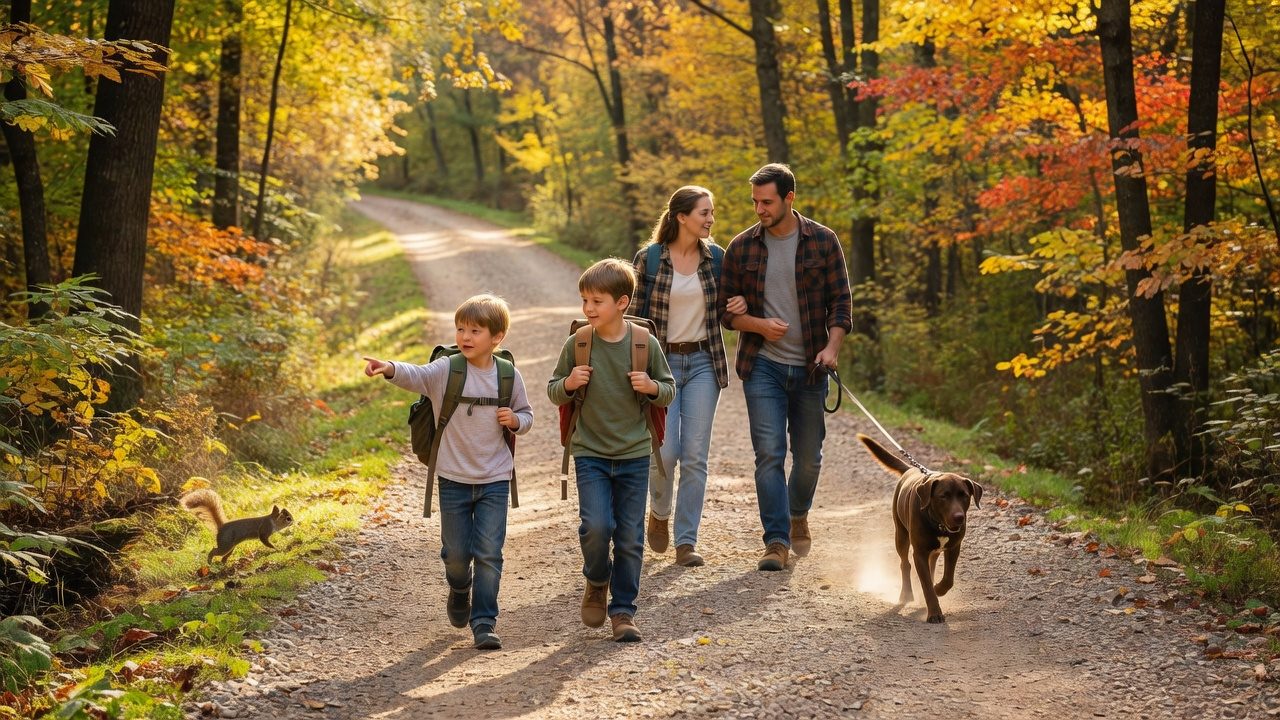
The second is the season boundary, which has always mattered but catches people in October specifically. On-season rates run April 1 through October 31, off-season November 1 through March 31. At Roaring River, Bennett Spring and Montauk the on-season begins February 25. Some northern parks do not open on-season operations until April 15. And Table Rock State Park runs an on-season from March through November, which is why it is the one lake park that behaves like a year-round facility.
Missouri Is Four Camping Regions, Not One
Most camping advice for Missouri treats it as a single blob, and that is why so many people end up at the wrong campground. The state is really four distinct camping geographies, and the one you pick determines everything about your trip — the drive, the water, the crowds, and whether you need a boat.
The Ozarks dominate the southern third of the state. This is spring-fed river country: the Current, the Jacks Fork, the Eleven Point, the Meramec and the Big Piney. The terrain is rocky and steep-sided, the water stays cold into summer, and the fall color is the best in the state. Johnson's Shut-Ins, Hawn State Park, Sam A. Baker, Echo Bluff, Taum Sauk Mountain and Onondaga Cave are the anchors. This is where camping in Missouri ozarks means something specific: gravel bars, swimming holes, and tents on rock.
The lakes run through the center. Lake of the Ozarks is the biggest, Table Rock and Stockton are the clearest, and Pomme de Terre, Mark Twain, Harry S Truman and Wappapello are the quieter ones. Lake camping here means marinas, big water, boat ramps and the state's best power hookups. More than 1,200 Missouri campsites offer 50-amp service, and most of them are at these parks.
The trout parks are their own thing. Bennett Spring, Montauk and Roaring River are state parks built around hatchery-fed trout streams, and the camping attached to them has its own season, its own culture and its own opening-day crowds. If you have ever wanted to camp somewhere the fishing is the entire point, this is it.
The metros' weekend ring is the fourth region, and it is the one most people actually use. If you are planning a trip that crosses state lines, the same park systems are covered in our Tennessee, Kentucky and Georgia camping guides. Cuivre River and Washington serve St. Louis; Weston Bend and Wallace serve Kansas City; Babler, Robertsville, St. Francois and St. Joe fill in the rest. These parks book out first on Friday afternoons and are the best option for a one-night shakedown trip before a bigger one.
How the Missouri State Park Reservation System Actually Works
Missouri State Parks does not run a patchwork of local booking pages. It runs one system, and understanding its rules saves you both money and a wasted drive.
The window is 12 months. You can make your reservation starting at 7 a.m. CT twelve months prior to the first day of your trip. That is not a soft guideline — for the popular parks on a fall weekend, the good sites are gone within the hour the window opens. If you want a specific site number at Johnson's Shut-Ins on a mid-October Saturday, you are booking it twelve months out, at 7 a.m., on a weekday.
Two ways in. Online, reservations run from twelve months out through 7 p.m. the day of arrival. By phone, call 877-422-6766 (877-ICampMo), available 7 a.m. to 7 p.m. CT, seven days a week, and note that phone reservations paid by camping coupon are cut off 21 days before arrival. Paying by card by phone stays open to 7 p.m. day-of.
You can book at most five campsites per phone call or web session. This matters for group trips: a party needing six sites has to split across two sessions, and there is no way around it. Group tent areas — the one at Meramec State Park is the notable one — are booked by phone.
Arrival is enforced. Campers must arrive within the first 24 hours of their stay — the clock runs from 3 p.m. the day of arrival to 3 p.m. the next day — or the site is released for resale. If you are going to be late, call the park. Late arrival with no call is the single most common way people lose a reservation they paid for.
The clock on the site itself. Camping is limited to 15 days within any 30-consecutive-day period across the system. For weekend campers this is invisible; for anyone planning a long snowbird-style stay, it is the binding constraint.
Walk-up sites exist. Campsites that are not reserved remain available for walk-up registration day by day. If the entire campground shows reserved, it is still worth calling, because cancellations and no-shows open up every single day.
The Rate Math: Fees, Seasons and the $2 Discount
Missouri does not publish one flat nightly rate, and pretending otherwise is where budget plans go wrong. Rates vary by campground, by campsite type, and — for anything with electric — by amperage. Electric, electric/water and sewer/electric/water sites are all priced differently, and rates are charged on the basis of available utilities whether you use them or not. A sewer site costs the sewer rate even if you never hook up.
What is fixed and knowable is the fee structure around the reservation, and it is where the small money adds up:
- Booking online: $6.50 per site. Booking by phone at the call center: $8 per site.
- Changing a reservation: $5.25 ($10 for a group tent area), and changes are only allowed up to 7 p.m. the day before arrival.
- Cancelling: $10 flat. Cancel 31 or more days before arrival and you avoid the cancellation fee entirely — the reservation fee is still forfeited, but the $10 goes away. Cancel inside 30 days and you pay it.
- The per-night discount: $2 off per night for seniors 65 and older, people with disabilities, current and former military personnel, and family members of active-duty military. You must ask for it at the time of payment.
There is also a genuinely useful second tier: value camping. Nine state park campgrounds — Graham Cave, Lake Wappapello, Pomme de Terre, Robertsville, Stockton, Harry S Truman, Mark Twain, Annie and Abel Van Meter and Washington — offer lower nightly rates that vary by day and season. If your trip does not depend on a specific park, checking the value-camping list first is the cheapest upgrade available to you.
One more money rule that is easy to miss: a two-night minimum applies on weekend reservations at Big Lake, Lake of the Ozarks, St. Joe, Mark Twain, Wakonda, Wallace and Watkins Mill state parks, and the two nights must be Friday/Saturday or Saturday/Sunday. You cannot book a single Saturday night at Lake of the Ozarks in season and expect the system to accept it.
The Ozarks: Current River, the Float-Camp Season and Why October Is the Peak
If camping in Missouri has a signature trip, it is the Ozarks float weekend — and the season for it is running right now.
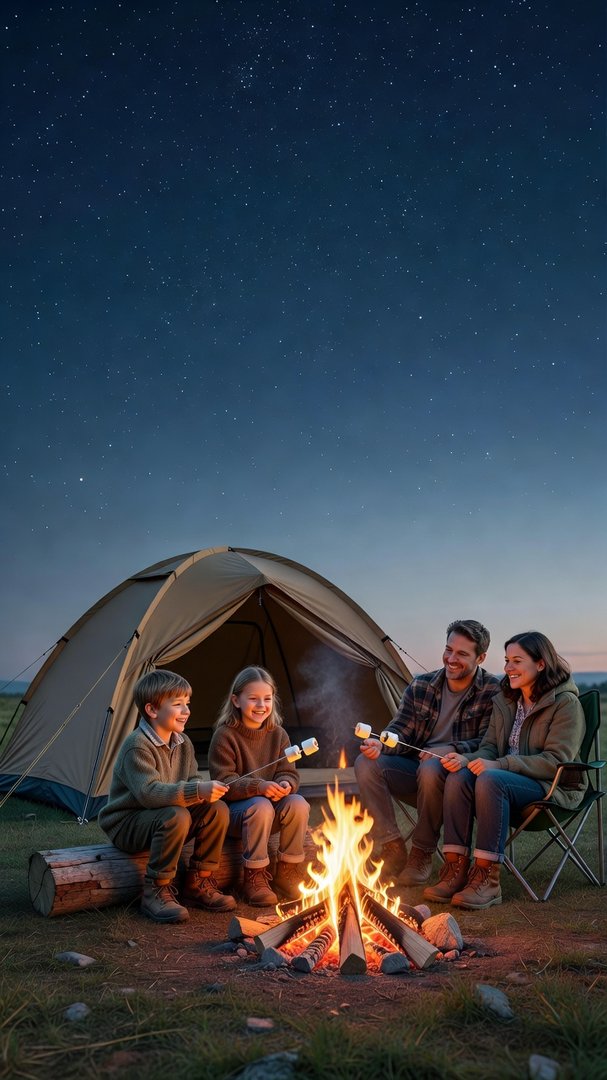
The Current River and its tributary the Jacks Fork are the classic float-camp rivers, with Akers Ferry and Pulltite on the upper Current being the two names that come up most in trip planning. The Eleven Point is the quieter, more rugged alternative. The pattern is the same everywhere: put in upstream in the morning, float a few miles, camp on a gravel bar or a riverside campground, and finish the next day. Spring-fed water keeps these rivers floatable and cold when everything else in the state is low and warm, which is exactly why the Missouri float-camping season stretches from spring into October rather than peaking in July.
For a camping in missouri near water trip with less logistics, the state parks along the same country do the job without a shuttle. Johnson's Shut-Ins State Park is the one everybody photographs — a gorge where the East Fork of the Black River has carved a chute of smooth rock pools. Hawn State Park nearby has some of the best hiking in the state and quieter campsites. Sam A. Baker State Park sits on the St. Francis River with both a float and a hiking scene. Echo Bluff is the newer, more polished park on the Current, with some of the best walk-in campsites in the system.
Missouri State Parks campsite types, for the Ozarks specifically, are worth memorizing because the site post tells you everything before you ever reserve. The color bar on the post means: green = basic, yellow = electric, blue = electric/water, red = sewer/electric/water. A symbol on the post means the site is reservable; no symbol means first-come, first-served only. A vacant card in the slot means it is reservable but open for walk-up registration.
Walk-in campsites — basic sites located 50 to 500 feet from the parking area, with a fire ring, table and lantern post — are available at Cuivre River, Echo Bluff, Hawn, Johnson's Shut-Ins, Long Branch, Stockton, Taum Sauk Mountain, Wakonda and Wallace. For an Ozarks trip where you want quiet without a backpack, these are the sweet spot.
Mark Twain National Forest and Dispersed Camping
When every state park is booked — which on an October weekend in the Ozarks is a real possibility — Mark Twain National Forest is the answer, and most people forget it exists.
Dispersed camping in the national forest means no reservation, no fee, no amenities and no designated pad. You find a legal spot on national forest land, usually off a forest road, and you camp. The trade-offs are real: no showers, no dump station, no guaranteed level ground, and you carry out everything you carry in. Our dispersed camping guide covers the legal side and the etiquette in detail. The upside is that it is free, it is available on a Friday night in October when the state parks are full, and it puts you next to the same rivers and bluffs the state parks are famous for.
The rules that matter: camp away from water sources and trails, avoid anything posted as closed, and check the forest's own current restrictions before you go — fire restrictions are common in dry autumns, and this is a dry autumn. Plan your water and your toilet situation in advance, because the nearest option may be a long drive.
If you want an official campground rather than dispersed camping, the forest also runs developed campgrounds on the same land, and they are reservable separately from the state park system — do not assume one booking covers the other.
Johnson's Shut-Ins, Taum Sauk and the High Country
The St. Francois Mountains — Missouri's ancient volcanic high country — hold the state's most distinctive camping. Taum Sauk Mountain State Park contains the state's highest point, and its camping is walk-in and primitive by design. Johnson's Shut-Ins is the swimming destination, rebuilt after the 2005 Taum Sauk reservoir failure and now one of the most popular parks in the system, which is exactly why its sites go in October.
Elephant Rocks and Grand Gulf are day-use companions to a Johnson's Shut-Ins camping weekend: pink granite boulders the size of houses, and one of the deepest, narrowest gorges in the Midwest. Neither has camping, so they are day trips out of a base at Johnson's Shut-Ins, Hawn or Taum Sauk.
Onondaga Cave State Park is the other oddity worth planning around. It is a cave park with camping attached, on the Meramec, and it is the rare campground where the main activity in bad weather is underground. For an October trip where rain is a real risk, having a cave as your rain plan is a genuine advantage.
Lake of the Ozarks, Table Rock and the Lake Window
Lake camping is the other pole of Missouri camping, and it behaves nothing like the Ozarks rivers.
Lake of the Ozarks State Park is the big one — 17,000-plus acres of land around one of the largest man-made lakes in the country, with two campgrounds and easy boat access. Table Rock State Park near Branson runs an on-season from March through November, which makes it the one lake campground that is still fully operational deep into fall. Stockton, Pomme de Terre, Harry S Truman and Mark Twain are the quieter lakes, and all four are on the value-camping list, which means lower nightly rates than the marquee parks.
The lake parks are where Missouri's electrical hookups pay off. More than 1,200 campsites system-wide offer 50-amp electrical service, and it shows up at electric, electric/water and sewer/electric/water sites — enough to run a modern RV's air conditioning, which on a Missouri lake in September is the difference between a good trip and a miserable one.
Campsite capacity, if you are bringing the whole family: a typical campsite holds two sleeping units (only one of which can be wheeled), two additional non-sleeping vehicles, and six people. A family campsite has two pads, two tables, two grills and two lantern posts, and doubles that capacity to twelve. Family campsites are available at many campgrounds but not all, so this is a booking-time question, not an arrival-time one. If you are choosing a tent for a group that size, our 6-person blackout tent guide compares the blackout cabins head to head. Exceeding the physical design of a site can trigger additional fees.
Bennett Spring, Montauk and Roaring River: the Trout Parks
Missouri has something almost no other state has: four trout parks built around hatchery-fed spring branches, three of which are state parks with camping attached. Bennett Spring, Montauk and Roaring River are the camping trio.
Their seasons are the point. On-season operations at all three begin February 25, and the annual trout-season opener is March 1 — a date that functions in Missouri like a holiday. Camping reservations for opening weekend are among the hardest in the entire system to get, and the rule that catches people is that altering your arrival date for a reservation originally made on the first day of the 12-month window forfeits two camping nights for opening weekend, Memorial Day weekend, the Fourth of July and Labor Day weekend.
Outside the opener, the trout parks are a genuinely underrated fall camping choice: the crowds thin, the water stays cold, and the campgrounds sit right on the spring branch. Roaring River is the one with the most complete campground, Montauk the most relaxed, and Bennett Spring the largest.
Camping in Missouri in October and November
This is the window you are in, and it is the best one.
October is the month Missouri camping hits its peak, for two reasons that reinforce each other. The first is fall color. According to the Missouri Department of Conservation's fall color reports — which run weekly, posted by Thursday evenings, from the second half of September until about mid-November — peak fall color in Missouri is usually around mid-October, when maples, ashes, hickories and oaks are at the height of their display. Color moves from northern and western Missouri southward and eastward, so the northwest peaks first and the Ozarks peak last. That same north-to-south crawl is what drives where to camp in October everywhere else, and by the time the Ozarks finish, camping in November becomes the next open window. As of the October 8 report, both the Northwest region (St. Joseph, Chillicothe) and the Ozark region (Rolla, West Plains, Eminence) were listed as "Beginning to turn" after a warm first week of October — black walnut, hackberry, sycamore and cottonwood were the most colored, most of them bright yellow or golden brown, while most everything else was still green.
The second reason is water. October is the tail of the float season, which means the rivers are still running, the swimming holes are still usable on a warm afternoon, and the campgrounds have thinned out from their summer peak. Johnson's Shut-Ins, Echo Bluff and Hawn in mid-to-late October are about as good as Missouri camping gets.
One caveat specific to 2026: this has been a dry year, and the reports note that oaks across central and southern Missouri are shutting down early from drought stress, producing patches of brown on south- and west-facing slopes. That does not ruin the season — the early-turning species are actually ahead of schedule — but it does mean the color is patchier than a wet year, and the best strategy is to follow the weekly reports rather than commit to a single weekend months out. For the broader version of that playbook, our leaf peeping guide tracks how the color front moves across the rest of the country. The Department of Conservation's suggested hot spots for the northwest include Poosey Conservation Area and the Loess Hills, where the woodland canopy reads as a mosaic through the month.
November flips the math. On-season rates end October 31 (which is why a Thanksgiving camping trip lands in the off-season rate band), campfires start to matter in earnest, and the parks get genuinely quiet — which for some people is the entire appeal. Color is finished by mid-November. The trade is that some facilities wind down, water at electric/water sites is available only during the park's on-season, and you need a real three-season sleep system rather than a summer bag. For a cold-weather family trip with fewer people around, November is underrated; for a first camping trip, October is the safer bet.
Fire, Firewood, Alcohol and the Rules That Actually Apply
Missouri state parks have a set of rules that are enforced, and the ones about fire and wood are the ones visitors break most often.
Campfires are the camper's responsibility and are restricted to the fire ring or grill provided at your site. Large fires and burning trash are strictly prohibited, and you must completely extinguish every fire before leaving. Portable fire pits are allowed on concrete only — not on grass, not on the pad, not on the gravel. If you bring a propane fire pit, that is the one rule you need to know.
You cannot gather or cut firewood in a Missouri state park. All plants and animals are protected, and that includes downed timber. So your firewood has to come in with you — and this is where the state's firewood advisory matters, because Missouri is infested with emerald ash borer, and the spread of EAB and other forest pests has been directly attributed to moving wood products, especially firewood. Oak wilt travels the same way. The practical rule: buy firewood locally or buy certified heat-treated wood, do not haul firewood in from out of state, and do not carry Missouri firewood out — many neighboring states prohibit entry of uncertified firewood from Missouri. Most campgrounds sell firewood on site, and buying it there is both the easiest and the correct answer.
Alcohol is prohibited on beaches, in parking areas and in off-road-vehicle areas in all state parks and historic sites. It is not banned at your campsite, but the display rule on beaches and lots is absolute.
Quiet hours are 10 p.m. to 6 a.m., and all noise-generating devices must be powered off during them. Generators are generally not allowed during quiet hours and are not allowed at all at some facilities — check the specific park if you rely on one. Non-camping visitors must leave the campground by 10 p.m.
Hammocks are allowed to be attached to trees only with a one-inch nylon strap and at an appropriate height, per the code of state regulations. You may not attach lanterns, ropes, leashes, clotheslines or bungee cords to trees. If you are bringing an ENO or a camping hammock to the Ozarks, bring the tree straps with it — bare rope or a thin cord is a violation.
Other rules that matter: check-in begins at 3 p.m. and checkout is at 2 p.m.; general camping is restricted to designated sites, and you must get staff confirmation before setting up at an apparently empty one; accessible campsites can be reserved by parties without a disabled member only when all non-accessible sites of that type are full, and only up to seven days in advance; motorized vehicles such as ATVs, UTVs, golf carts and go-karts are generally not allowed in campgrounds; and personal property cannot be left unattended for more than 24 hours.
Camping in Missouri With Kids and Dogs
Missouri is a genuinely good family camping state, and the rules mostly help.
Kids: the capacity rules do you a favor. A standard site holds six people, and a family campsite holds twelve across two pads with two tables and two grills — so a multi-family trip can share sites rather than booking four separate ones. Trout parks and the Ozark river parks are the winners for kids: shallow spring-fed water, short walks to swimming, and ranger programs at the bigger parks. The Explorer Program and Camper Award Program are worth asking about at check-in; both are designed for repeat family visits.
Dogs: dogs are welcome, on leashes no longer than 10 feet, at all times. Two dogs per campsite is the recommendation. The restrictions that catch people are that pets are not allowed in state park buildings, public swimming areas and beaches, or in waters reserved for fishing — service animals excepted. So no dog on the swimming beach at Johnson's Shut-Ins, and no dog wading into the trout stream at Bennett Spring. Where dogs can stay is worth knowing: Missouri's Cabins for Canines program opens select lodging units to dogs, which matters if you want a roof in November. For the full trip-planning version, see our camping with dogs guide and the dog-friendly national parks guide. And because ticks are real in the Ozarks, bring a tick remover and check everyone — dogs included — after every hike; the camping first aid checklist covers the rest of the kit.
The gear list below covers both scenarios, and everything on it is in the TrailMapz catalog.
Missouri Camping Gear List
Missouri in October asks for two gear kits depending on where you go. The river parks and the national forest need a real three-season sleep system, rain layers and a way to filter river water. The lake parks need power, shade and a cooler that survives a warm afternoon. Everything below is in the TrailMapz catalog, and the fall camping gear checklist covers the pieces that matter before the temperature drops.
Shelter and sleep
- Coleman 4/6/8/10 Person Instant Camping Tent with 1-Minute Setup ($180.00) — the one-minute-setup tent that made instant cabins the default for families; the 6-person version is the sweet spot for a family of four with gear.
- Coleman Sundome Camping Tent with Rainfly ($153.49) — the classic dome, and the right call for a first trip where setup frustration is the biggest risk.
- Coleman Skydome 4-Person Camping Tent with LED Lighting ($122.99) — a four-person dome with built-in LED lighting, genuinely useful when you roll in after dark and the QR check-in does not want to load.
- CORE 6 Person Instant Cabin Tent ($169.99) — a blackout-lined instant cabin, which is what you want if you are camping near St. Louis and the 7 a.m. sunrise is your alarm clock.
- CAMPROS CP 8 Person Camping Tent with Room Divider and Rainfly ($159.98) — an eight-person, two-room tent; two parents and four kids fit with a wall in between.
- EVER ADVANCED 6-Person Blackout Instant Cabin Tent ($169.99) — the blackout instant cabin for a family that wants late mornings.
- Kelty Late Start 2P Backpacking Tent ($159.95) — the two-person tent for a Taum Sauk walk-in site or a Mark Twain National Forest dispersed trip.
- Night Cat 2-Person Backpacking Tent ($53.99) — a budget lightweight two-person tent for a float-trip gravel bar.
- Forceatt 2-Person Camping Tent ($57.18) — the cheap two-person option if you are flying in and buying gear on arrival.
- Therm-a-Rest Z Lite Sol Sleeping Pad ($54.95) — a closed-cell pad that cannot puncture, which matters on Ozarks rock and gravel bars.
- Therm-a-Rest NeoAir XLite NXT Sleeping Pad ($209.95) — the ultralight insulated pad for shoulder-season Ozarks nights.
- Klymit Static V Sleeping Pad ($64.95) — a good-value inflatable pad for three-season state park camping.
- Sea to Summit Ether Light XT Insulated Sleeping Pad ($219.95) — high-loft and genuinely warm, the pick for a November trip.
- Coleman Oak Point Big & Tall 30°F Sleeping Bag ($74.99) — a 30°F big-and-tall rectangular bag, about right for an Ozarks October.
- TETON Sports Celsius XXL 0 Degree Sleeping Bag ($89.99) — the wider 0°F version for a November trip or a cold river valley.
- Kelty Cosmic Down 20 Degree Sleeping Bag ($169.00) — a 550-fill down bag that packs small for the national forest trips.
- Coleman Trailhead II Folding Cot ($54.99) — the cot for anyone who has given up on ground sleeping.
- Coleman Pack-Away Big-N-Tall Camping Cot with Side Table ($110.99) — a big-and-tall cot with a built-in side table.
Hammocks and hammock camping
Remember the one-inch nylon strap rule — bring the straps, not just the hammock.
- ENO DoubleNest Lightweight Camping Hammock (1-2 Person) ($75.00) — the two-person hammock most people start with.
- ENO SingleNest Lightweight Camping Hammock ($54.95) — the single, and the right size for a solo float trip.
- Wise Owl Outfitters Camping Hammock with Tree Straps ($43.91) — a budget hammock that comes with the tree straps, which is the whole compliance question solved.
- ENO Atlas Suspension System ($29.95) — the tree straps that protect the bark, which is exactly what the rule is protecting.
- ENO Guardian Bug Net ($39.95) — a bug net; the Ozarks bottomland still has mosquitoes in October.
- Wise Owl Outfitters Hammock Bug Net ($27.99) — the budget version of the same idea.
- OneTigris Hideout Hammock Underquilt ($39.98) — an underquilt for the cold river valley nights that arrive in late October.
Kitchen
If you are still deciding between propane, butane and isobutane for any of the stoves below, the camp stove fuel guide settles it first.
- Coleman Triton+ 2-Burner Propane Camping Stove ($149.99) — the standard two-burner propane stove for a state park family breakfast.
- Camp Chef Explorer Two-Burner Stove ($127.99) — the bigger, higher-output two-burner for a multi-family trip.
- Coleman Bottle Top Propane Camp Stove ($21.99) — the single-burner bottle-top stove for coffee before a trailhead.
- Coleman Classic 1-Burner Butane Camp Stove ($29.99) — a compact butane single-burner, the simplest way to cook for two.
- MSR PocketRocket 2 Ultralight Backpacking Stove ($49.95) — the lightweight canister stove for the national forest and walk-in sites.
- Jetboil Flash Personal Cooking System ($119.95) — the fastest way to hot water on a cold morning.
- Gas One GS-3400P Dual Fuel Camp Stove ($34.99) — a dual-fuel propane/butane single burner, useful when canisters are hard to find.
- Lodge Pre-Seasoned Cast Iron Deep Camp Dutch Oven, 6 Quart ($59.95) — a six-quart cast-iron Dutch oven, at its best over a fire ring in 50-degree weather.
- Lodge Pre-Seasoned Cast Iron Skillet, 10.25 Inches ($19.99) — the everyday 10.25-inch skillet.
- Stanley Wildfare Core 26-Piece Camp Kitchen Cook Set ($179.99) — a 26-piece nesting camp kitchen if you want one box for everything.
- AeroPress Original Coffee Press ($39.95) — the manual press for people who refuse camp coffee.
- GSI Outdoors 8-Cup Enamelware Percolator ($34.95) — the fire-friendly percolator for a crowd.
- Coleman 70-Quart Xtreme 5-Day Cooler ($79.99) — a 70-quart five-day cooler, which is what a long weekend needs.
- RTIC 45 Qt Ultra-Tough Hard Cooler ($239.00) — the rotomolded upgrade if you are keeping ice for four days at a lake park.
- Stanley All Day Julienne Soft Cooler Bag ($100.00) — a soft cooler for river lunches.
Water
- Sawyer Squeeze Water Filtration System ($45.95) — a 0.1-micron filter that makes Current River water drinkable, which matters on a float or a dispersed trip.
- Coleman 5-Gallon Water Carrier ($13.99) — a five-gallon carrier for a basic site with no water at all.
- Nalgene BPA-Free Tritan Wide Mouth Water Bottle, 32 oz ($16.99) — the reliable 32-ounce bottle.
- Hydro Flask 32 oz Wide Mouth Insulated Water Bottle ($44.95) — an insulated 32-ounce bottle, the one that still helps on a warm October afternoon.
- CamelBak Eddy Kids Insulated Water Bottle, 12 oz ($19.99) — the spill-proof kids' bottle for the back seat.
Light and power
Light is one of the two things people under-pack for a fall trip — the camp lighting guide breaks down lanterns versus headlamps.
-
Black Diamond Spot 400 Headlamp ($39.95) — the 400-lumen headlamp that becomes your hands at a dark campsite.
-
Petzl Actik Core Headlamp ($79.95) — the rechargeable 625-lumen headlamp for anyone who camps often.
-
Black Diamond Moji Lantern ($24.95) — a compact dimmable lantern for the picnic table.
-
Mallome Camping Lantern, 4-Pack ($23.99) — four collapsible lanterns, one per kid, which is the actual solution to tent arguments.
-
Goal Zero Lighthouse Micro Flash Lantern ($29.95) — a USB-rechargeable lantern and flashlight in one.
-
LuminAID PackLite Max 2-in-1 Lantern and Phone Charger ($49.99) — a solar lantern that also charges a phone, for a lake site with no power.
-
Jackery Explorer 300 Portable Power Station ($199.00) — a 292Wh power station for a basic site, enough for lights, phones and a small appliance.
-
EF EcoFlow River 2 Portable Power Station ($169.00) — the compact LiFePO4 alternative for a tent-camping weekend.
-
Anker SOLIX C300 Portable Power Station ($329.99) — the higher-output option for a family basecamp.
-
BigBlue 28W Solar Panel Charger ($59.97) — a folding solar panel for a multi-day dispersed camp.
-
Mr. Heater Little Buddy Propane Heater ($69.99) — a small radiant heater for a November tent trip. For the safe-use rules on any of these heaters, see the camping heater guide before you run one overnight.
-
Mr. Heater Portable Buddy Heater ($74.00) — the 4,000–9,000 BTU version for a larger tent.
-
Mr. Heater Big Buddy Heater ($146.48) — the 18,000 BTU version for a cold-weather basecamp or an RV.
-
Mr. Heater 10-Foot Propane Hose Assembly ($17.99) — the hose that lets you run a Buddy heater from a 20-pound tank instead of one-pound cylinders.
-
Mr. Heater Universal Propane Fuel Filter ($15.97) — the filter that keeps tank gunk out of the heater.
Camp comfort
- Coleman Portable Camping Chair with 4-Can Cooler ($39.99) — the basic chair with a cooler in the armrest.
- KingCamp Oversized Padded Quad-Arm Chair ($115.39) — the oversized chair with a cooler bag and cup holder for long evenings.
- Sunnyfeel XXL Oversized Camping Chair ($99.98) — a 500-pound-rated oversized chair for big-and-tall campers.
- ALPS Mountaineering Dining Table ($159.99) — a real dining table for a family basecamp.
- KingCamp Adjustable Height 4-Fold Bamboo Camping Table ($119.99) — the adjustable-height bamboo table that doubles as a kitchen counter.
- Coleman Pack-Away 4-in-1 Adjustable Height Folding Camping Table ($99.99) — the folding table that packs into its own case.
- Advanced Elements 5-Gallon Solar Shower ($35.99) — a solar shower, which is the difference between a swim and a wash at a basic site.
- Cleanwaste Original WAG Bag Portable Toilet Kit ($44.99) — pack-out waste bags for dispersed camping in Mark Twain National Forest.
- Reliance Luggable Loo Portable Toilet ($24.99) — the bucket toilet for a site with no facilities.
- Adventure Medical Kits Ultralight/Watertight .7 Medical Kit ($44.95) — the compact 3-person kit for a hiking-and-camping weekend.
- Homesake Tick Remover Tool ($14.39) — a tick remover, non-negotiable in the Ozarks for people and dogs.
- Fiskars X7 Hatchet ($29.99) — a small hatchet for splitting the firewood you bought at the campground.
- Celestron Nature DX ED 8x42 Binoculars ($166.00) — waterproof binoculars for watching the color move across a ridge.
- Occer 12x25 Compact Binoculars ($35.99) — a cheap pair the kids can carry.
- Twinkle Star 100 LED Warm White String Lights ($19.99) — string lights for the campsite, with the caveat that they go on the tent, never on a tree.
Fire and fuel
- Outland Living Portable Propane Fire Pit ($142.64) — the answer when a burn ban is in force, and the one fire source you can legally use on concrete.
- UCO Stormproof Match Kit ($12.99) — windproof matches in a floating case.
- SUPRUS Electric Arc Lighter ($9.99) — a windproof USB lighter that works when a flame will not.
- Coleman 164 oz Propane Cylinder, 12-Pack ($64.99) — the bulk one-pound cylinder pack.
- GASPRO 1lb Propane Tank Adapter ($9.98) — the brass adapter that lets a one-pound appliance run off a 20-pound tank.
- Gas One Propane Refill Adapter with 4-Ft Hose ($14.99) — the refill adapter for topping one-pound cylinders off a bulk tank.
- Flame King Refillable 1lb Propane Cylinder with Refill Kit ($59.99) — the refillable one-pound cylinder that ends disposable buying.
- Dozyant Propane Tank Gauge ($15.99) — the gauge that stops you discovering an empty tank at dinner.
- Techamor Y201 Pro Gas Leak Detector ($25.99) — a combustible gas sniffer for checking every new hose connection before you light it.
- MSR Heat Reflector Windscreen ($16.97) — the windscreen that makes a canister stove work in an Ozarks river wind.
- MSR IsoPro Fuel Canister, 110g ($8.95) — the backpacking canister for a walk-in site.
- Jetboil CrunchIt Fuel Canister Recycling Tool ($12.95) — the tool that punctures and readies a spent canister for recycling instead of the trash.
Kids and dogs
- Kelty Woobie 30 Degree Kids Sleeping Bag ($39.95) — the kids' bag that actually fits a small person.
- TETON Sports Celsius Jr Kids Sleeping Bag ($49.99) — a 20°F kids' bag for a late-October Ozarks night.
- Morrison Outdoors Big Mo 40 Kids Sleeping Bag (Ages 2-4) ($79.95) — the toddler bags that solved the problem of kids rolling out of adult bags.
- Kelsyus Youth Outdoor Canopy Chair ($37.99) — the kids' chair with its own shade canopy.
- Ruffwear Front Range Dog Harness ($44.95) — the all-day dog harness for a river-park hike.
- Ruffwear Grip Trex Dog Boots ($49.99) — boots for hot rock and rough Ozarks trails.
- Ruffwear Quencher Collapsible Dog Bowl ($19.95) — the collapsible bowl for a float-trip lunch stop.
- Kurgo Zippy Bowl Travel Dog Bowl ($15.99) — a 48-ounce travel bowl for a bigger dog.
- CIBAABO Dog Water Bottle with Food Container ($14.98) — the bottle-and-bowl combo for day hikes.
- Ruffwear Stumptown Insulated Dog Jacket ($55.99) — the insulated dog jacket for a November trip.
- Canine Canyon Folding Raised Dog Cot ($49.99) — an elevated bed that keeps a dog off cold, damp ground.
- Cheerhunting Waterproof Outdoor Dog Bed ($29.99) — the cheap waterproof bed for a car-camping dog.
- Plusvivo Pop-Up Dog Tent ($69.99) — a mesh dog tent for a campsite where the dog needs its own shaded space.
- Spot the Dog Reflective Collar ($18.99) — reflective, which matters at a dark campground with a 10-foot leash rule.
- Oitickly Smart Dog Training Collar with Remote ($39.99) — the long-range training collar for off-leash trail segments, subject to the leash rule at the campground itself.
Clothing
- Merrell Men's Moab 3 Waterproof Hiking Shoe ($129.95) — the default trail shoe, and waterproof matters on Ozarks creek crossings.
- Merrell Men's Moab 3 Hiking Boot ($89.99) — the mid-boot for a rockier Taum Sauk hike.
- KEEN Men's Targhee 3 Low Waterproof Hiking Shoes ($187.00) — the wider fit for anyone who finds Merrells narrow.
- Salomon Men's X Ultra 4 Mid GTX Hiking Boots ($231.81) — the premium mid-boot for real elevation.
- Merrell Women's Moab 3 Waterproof Hiking Shoe ($144.95) — the women's version of the same shoe.
- KEEN Kids' Targhee Mid Waterproof Hiking Boot ($74.95) — the kids' boot for a real hike.
- Columbia Men's Watertight II Rain Jacket ($60.00) — the packable rain jacket for October showers.
- Outdoor Research Men's Helium Rain Jacket ($159.00) — the ultralight shell for a backpacking trip.
- Frogg Toggs Men's Ultra-Lite2 Rain Suit ($22.74) — the cheapest way to stay dry, pants included.
- Columbia Men's Steens Mountain Fleece Jacket ($34.99) — the mid-layer for a cold morning.
- Columbia Men's Powder Lite II Insulated Jacket ($94.91) — the insulated layer for a November trip.
- Columbia Men's Silver Ridge Convertible Pants ($69.99) — zip-off pants for a warm afternoon.
- Darn Tough Vermont Men's Light Hiker Micro Crew Socks ($24.95) — merino socks with a lifetime guarantee, and the single best value on this list.
- Danish Endurance Merino Wool Hiking Socks ($39.95) — thermal merino for a cold-weather trip.
- Sunday Afternoons Ultra Adventure Hat ($135.01) — the UPF-50 wide-brim with a neck cape.
- Carhartt Men's Waterproof Insulated Knit Cuff Glove ($32.99) — insulated waterproof gloves for a boat or a cold morning paddle.
Packs and mobility
- Waterfly 20L Packable Hiking Daypack ($25.98) — the packable daypack that lives in the car.
- INOXTO Running Hydration Vest with 1.5L Bladder ($23.99) — a small hydration vest for a fast hike.
- Earth Pak Waterproof Roll-Top Dry Bag ($34.31) — the dry bag for a float trip; everything you cannot lose goes in here.
- Scuddles Extra Large Picnic Blanket ($24.99) — a waterproof 60x80 mat for a river lunch stop.
- Camco TastePURE RV Inline Water Filter ($17.99) — the inline filter for a campground water hookup.
- Camco TastePURE 25-Ft RV Drinking Water Hose ($13.97) — the lead-free drinking-water hose for a water hookup site.
Planning Shortcuts: The Questions People Actually Type
A few things that come up over and over when people plan camping in Missouri state parks, answered plainly.
Do I need a reservation? At the popular parks on a fall or summer weekend, yes, and you need it early. At quieter parks and off-season, walk-up registration works, and unreserved sites are released day by day.
What is the cancellation policy? Cancel 31 or more days before arrival and you pay no cancellation fee — you still forfeit the reservation fee. Cancel inside 30 days and you pay the $10 cancellation fee on top.
Can I split a stay across two sites? Yes, if a single site is not open for your whole trip, the reservation center can split it and you are charged only one reservation fee — but it must be done by phone.
Are there cabins? Yes. Several state parks offer cabins and lodging units, booked through the same system, and some participate in the Cabins for Canines program for dogs. The camping reservation system and the lodging reservation system share a portal but a lodge booking is a separate reservation action.
What about campsite in missouri near st louis? The closest options are Cuivre River, Washington, Babler and Robertsville, all roughly an hour to ninety minutes out. They also fill first, so this is a book-ahead category.
Is there free camping? Not in state parks. Free camping means Mark Twain National Forest dispersed camping or a conservation-area site — note that camping in missouri conservation areas follows MDC rules, not state park rules, and many conservation areas do not allow camping at all. Check before you drive.
Is camping in missouri with fishing allowed? Yes, and it is one of the best reasons to go. Trout fishing has its own season at Bennett Spring, Montauk and Roaring River; everything else follows state fishing regulations. Just remember the rule about pets in waters reserved for fishing.
Are there state parks with swimming? Yes — Johnson's Shut-Ins, Sam A. Baker, Lake of the Ozarks, Table Rock and the swimming beaches at several lake parks. Just note the beach alcohol ban and the no-pets-on-the-beach rule.
Missouri Camping FAQ
Do I need a reservation to camp in a Missouri state park?
At the popular parks on a fall or summer weekend, yes — and you should book as close to the 12-month window as possible. Unreserved campsites remain available for walk-up registration day by day, and you can reserve online up to 7 p.m. the day of arrival.
How far in advance do Missouri state park campsites open?
Reservations open at 7 a.m. CT twelve months before the first day of your trip, online or by phone at 877-422-6766. You can reserve a maximum of five campsites per phone call or web session.
What time is check-in and check-out at Missouri state parks?
Check-in begins at 3 p.m. and checkout is at 2 p.m. Campers must arrive within the first 24 hours of their stay — 3 p.m. the day of arrival to 3 p.m. the next day — or the site is released for resale.
How much does it cost to camp in a Missouri state park?
Nightly rates vary by campground and campsite type, and rates are charged on the utilities available whether you use them or not. There is a $6.50 reservation fee for booking online and $8 by phone, a $5.25 change fee, and a $10 cancellation fee. Seniors 65+, people with disabilities and military get $2 off per night.
Can I bring alcohol to a Missouri state park campground?
You cannot consume or display alcohol on beaches, in parking areas or in off-road-vehicle areas in any Missouri state park. It is not banned at your campsite, but the beach and parking-lot prohibitions apply statewide.
Can I bring firewood into a Missouri state park?
Buy it locally or buy certified heat-treated wood. Missouri is infested with emerald ash borer, and moving firewood is the primary way the pest and oak wilt spread. You cannot gather or cut firewood in a state park, and many neighboring states prohibit uncertified firewood from Missouri. Most campgrounds sell firewood on site.
Are hammocks allowed in Missouri state parks?
Yes, but only when attached to trees with a one-inch nylon strap at an appropriate height, per the state code of regulations. Hanging lanterns, ropes, leashes or clotheslines from trees is prohibited.
Can I camp in Mark Twain National Forest without a reservation?
Yes. Dispersed camping on national forest land requires no reservation and no fee — you camp at a legal spot off a forest road, with no amenities, and carry everything in and out. Check current fire restrictions before you go, especially in a dry autumn.
Is Missouri good for camping in November?
Yes, and it is quieter and cheaper — off-season rates begin November 1. The trade-offs are that fall color is done by mid-November, water at electric/water sites is only available during the on-season, and you need a genuine three-season sleep system.
If your route runs through the middle of the country, the Arkansas camping pages explain the twelve-month window and the free winter window on the Buffalo.
The Bottom Line
Missouri is the best-value camping state most people have never properly planned for. Three and a half thousand state park campsites, one booking number, a $6.50 online fee, and a $2 nightly discount that most people never claim. Add the Ozarks on the south end with spring-fed rivers and the state's best fall color, the lakes through the middle with 50-amp hookups, and three trout parks that open in February.
Missouri also sits in the middle of a state family we have written up one by one — Tennessee and Kentucky to the south and east, Virginia beyond that.
The play for right now, in October, is straightforward: pick an Ozarks park — Johnson's Shut-Ins, Echo Bluff, Hawn or Sam A. Baker — book it twelve months out for next year and check the cancellation pool for this one, bring your own firewood or buy it at the campground, pack a hammock with proper tree straps, and follow the Department of Conservation's weekly fall-color report rather than committing to a single weekend. Mid-October is the peak. The rivers are still running. And the sites that are left are the ones nobody else booked yet.
<!-- AFFILIATE_DISCLOSURE -->