Camping in Tennessee 2026: State Parks, the Smokies & Where to Camp in Each Region
Where to camp in Tennessee in 2026 — the four separate camping systems (56 Tennessee State Parks on reserve.tnstateparks.com with a rolling year-ahead window, Great Smoky Mountains National Park's 10 frontcountry campgrounds on Recreation.gov, backcountry permits that moved to Recreation.gov this year with a new $6 permit fee, and free dispersed camping in Cherokee National Forest), which Smokies campgrounds stay open year-round, the new $5 parking tag you can't skip, fall color timing by elevation (peak runs October 20 to November 5 in the Smokies), the certified-firewood rule, dog rules that differ inside and outside the park, and the gear that handles a damp 35°F Tennessee night.
Tennessee is the state that quietly has everything. You can camp on a ridge in the Smokies at 5,000 feet, on a lake two hours from Nashville, or on a river flat in the middle of the state where the only sound at night is water. The Great Smoky Mountains are the most-visited national park in the country, and yet an hour west of the crowds there are Cherokee National Forest campgrounds that stay half empty in October.
That range is also the trap. Tennessee is not one camping system with one set of rules — it is at least four, each with its own booking portal, its own opening window, and its own definition of what you are allowed to do when you get there. The Smokies are on Recreation.gov. Tennessee's 56 state parks are on their own portal. The national forest is on a third set of rules and mostly takes no reservation at all. Add in the parking tag the Smokies now requires, the certified-firewood rule that applies inside the park boundary but not outside it, and a dog policy that flips the moment you cross into the national park, and you have the makings of a trip that goes wrong for reasons that have nothing to do with gear.
This guide covers the systems, the specific campgrounds worth booking, the fall window by elevation, and the kit that handles a Tennessee night in the high country.
Quick Answer: Where to Camp in Tennessee
- Best all-around fall trip: a Smokies frontcountry campground in the third or fourth week of October. Elkmont for creekside sites, Cades Cove for the loop road, Smokemont for the year-round option on the North Carolina side.
- Best state park: Fall Creek Falls State Park, for the 256-foot waterfall and the largest campground network in the system. Reserve it as early as the window allows — this is the park everyone in the state books.
- Best free option: dispersed camping in Cherokee National Forest along Forest Service roads. No fee, no reservation, no facilities. Typically a 14-day stay limit.
- Smokies foliage peak: October 20 – November 5, which is the longest usable fall window in the East because the color moves down from the high ridges to the valleys week by week.
- The one thing people miss: the Smokies now require a $5 daily / $15 weekly / $40 annual parking tag — and an America the Beautiful pass does not substitute for it.
- September vs October: September is warm days and cool nights with the crowds thinning out; October is color plus genuinely cold nights at elevation. Plan for a 30°F night in late October and you will be comfortable.
What Just Changed for Fall 2026
Three changes matter this season, and two of them are new enough that older guides still have them wrong.
Smokies backcountry permits moved to Recreation.gov. As of April 30, 2026, all new backcountry permits are issued through Recreation.gov instead of the park's own backcountry office system. Reservations already issued under the old system are still honored — but if you are booking a backcountry site or shelter now, you book it on Recreation.gov. The per-person, per-night fee is still $8, and a new $6 non-refundable permit fee was added on top. The Appalachian Trail thru-hiker pass went to $44.50 (up from $40), and the old $40 cap on total permit cost was removed — on a long itinerary, that last change is the one that moves your budget.
Parking tags apply inside the park, and frontcountry campers get a narrow exemption. If you are parked at your designated campsite, you do not need a tag. The moment you park anywhere else in the park — a trailhead, a visitor center, an overlook — you do. Tags are not location-specific but they are vehicle-specific, they must be physical (digital copies are not accepted), and they are required for any stop longer than 15 minutes.
The window you book in has not changed, and that is the real constraint. Smokies frontcountry sites open on Recreation.gov on a rolling six-month calendar. Tennessee state parks run their own portal at reserve.tnstateparks.com with a much longer runway — generally about a year ahead on a rolling basis, with shorter windows at smaller parks. If you want a specific October weekend at a specific campground, you are not fighting other campers in September. You were already late in March.
How Tennessee Camping Actually Works: Four Systems in One State
System 1 — Great Smoky Mountains National Park (Recreation.gov). 10 developed frontcountry campgrounds. Cades Cove and Smokemont are open year-round; every other campground in the park is seasonal. Each site has a fire grate and picnic table, and every campground has restrooms with flush toilets and cold running water. There are no showers anywhere in the park — you use the private facilities in Gatlinburg, Townsend, or Cherokee. Only some sites at Look Rock have electric and water hookups. Cades Cove, Elkmont, and Smokemont have 5-amp outlets reserved for medical equipment. Two vehicles per site, six people per site, check-in at 1 p.m., checkout at noon.
System 2 — Tennessee State Parks (reserve.tnstateparks.com). 56 parks, its own reservation portal, its own cancellation rules, and no Recreation.gov involvement. Sites generally run in the $15–$50 a night band depending on whether you are on a tent pad or a full-hookup RV site, with seasonal variation and some parks charging less for walk-in tent sites. Because the window is so long, state park sites are where you have the best shot at a real October weekend if you are booking now.
System 3 — Cherokee National Forest and Big South Fork (mixed). The national forest covers the eastern third of the state and runs on Forest Service rules: developed campgrounds that are partly reservable on Recreation.gov and partly first-come, plus dispersed camping along Forest Service roads that requires no reservation and no fee. Big South Fork National River & Recreation Area sits on the Tennessee–Kentucky line and runs its own mix of reservable and first-come campgrounds. This is where you go when everything else is full.
System 4 — the lakes and the private parks. Tennessee Valley Authority reservoirs, state-run lake campgrounds, and a large network of private RV parks around Nashville, Pigeon Forge, and Chattanooga. There is no statewide rule here; every operator sets its own policy.
The practical upshot: decide which system you are booking in before you decide which campground. The error people make is finding the perfect site, then discovering it opens on a calendar they never checked.
Tennessee State Park Campgrounds Worth Booking
Fall Creek Falls State Park is the flagship and deserves the reputation. It is built around a 256-foot waterfall — the tallest free-falling waterfall east of the Rocky Mountains — inside roughly 26,000 acres of gorge, and the campground network here is the biggest in the system. Book as early as the portal allows for an October weekend; this is the one park in Tennessee where the booking pressure resembles the Smokies.
Standing Stone State Park sits on the Cumberland Plateau and is the quiet alternative — a small lake, a small campground, and a fraction of the traffic of Fall Creek Falls, which makes it the better answer for a first family trip where you want space around the tent. The CORE 6 Person Instant Cabin Tent ($169.99) or the Coleman Skydome 4-Person ($122.99) is the right size for a plateau site.
Rock Island State Park on the Caney Fork is the one to book if your kids are old enough to be impressed by water moving fast. The gorge and the blue holes are a short walk from the campground, and the fall color on the river is as good as anything in the park system.
Natchez Trace State Park in West Tennessee is the answer for anyone driving the I-40 corridor between Nashville and Memphis. It is a forest-and-lake park with a large campground, and it breaks a long drive in a way a hotel does not.
Henry Horton, Montgomery Bell, and Paris Landing are the Middle Tennessee workhorses — close to Nashville, reliably available, and ideal for a two-night weekend rather than a week. Montgomery Bell in particular has the trail mileage to keep kids busy without a drive.
On the lakes, Pickwick Landing, Paris Landing, and Chickasaw are the state park campgrounds where a boat changes the trip. If you are bringing one, pack the Mac Sports heavy-duty wagon ($100.56) — moving a cooler and a boat bag from a parking pad in one trip is the difference between a good arrival and a bad one.
Camping in Tennessee in September
September is the underrated month here and the one most families get right by accident. Days run warm enough that kids swim in the lake at the state parks, nights drop into the 50s on the plateau and the 40s at Smokies elevation, and the summer crowds are gone after Labor Day. If you are booking late and want a site, September is where the availability is.
The catch is that September in the Smokies is still a 3,000-foot climate. A 78°F afternoon in Gatlinburg turns into a 45°F night at Elkmont ten miles up the road. That gap is what the Columbia Men's Midweight Omni-Heat base layer ($49.99) and the women's Benton Springs fleece ($39.99) exist for. Add the Smartwool merino beanie ($35.00) and you have handled the whole month in three items.
September is also the last month before the Smokies' seasonal campgrounds start closing, so if you want Elkmont or Cosby or Deep Creek rather than Cades Cove or Smokemont, this is your window.
Camping in Tennessee in October
October is why people come. The Smokies color runs October 20 to November 5, and unlike New England — where the whole state turns in about ten days — Tennessee's color moves down the mountainside in waves. Sourwood and birch turn on the high ridges first, then the sugar maples at mid-elevation, then the oaks and hickories in the valleys. That gives you almost three usable weeks and a real chance at color even if you booked late.
The trade is cold. A mid-October night at 3,000 feet in the Smokies lands in the high 30s, and it is a wet cold — the Appalachians hold humidity in a way the Rockies do not, so 38°F here feels like 30°F in Colorado. Plan for a 0°F-rated bag in late October at elevation, not a 30°F bag. The TETON Sports Celsius 0° ($59.99) is the value answer and the XXL version ($89.99) fits taller campers. If you want down, the Kelty Cosmic Down 20 ($169.00) packs to a third of the size. Kids get cold faster than adults, which makes the TETON Celsius Jr ($49.99) or the Kelty Woobie ($39.95) the most common family upgrade in October.
Two October logistics that decide the trip: book the 20th to the 5th, not Columbus Day weekend, because Columbus Day is a three-day crush and the color is only just starting at elevation; and check the campground's closing date before you fall in love with it, since several Smokies campgrounds shut in late October or early November.
Great Smoky Mountains National Park: The One Everyone Books First
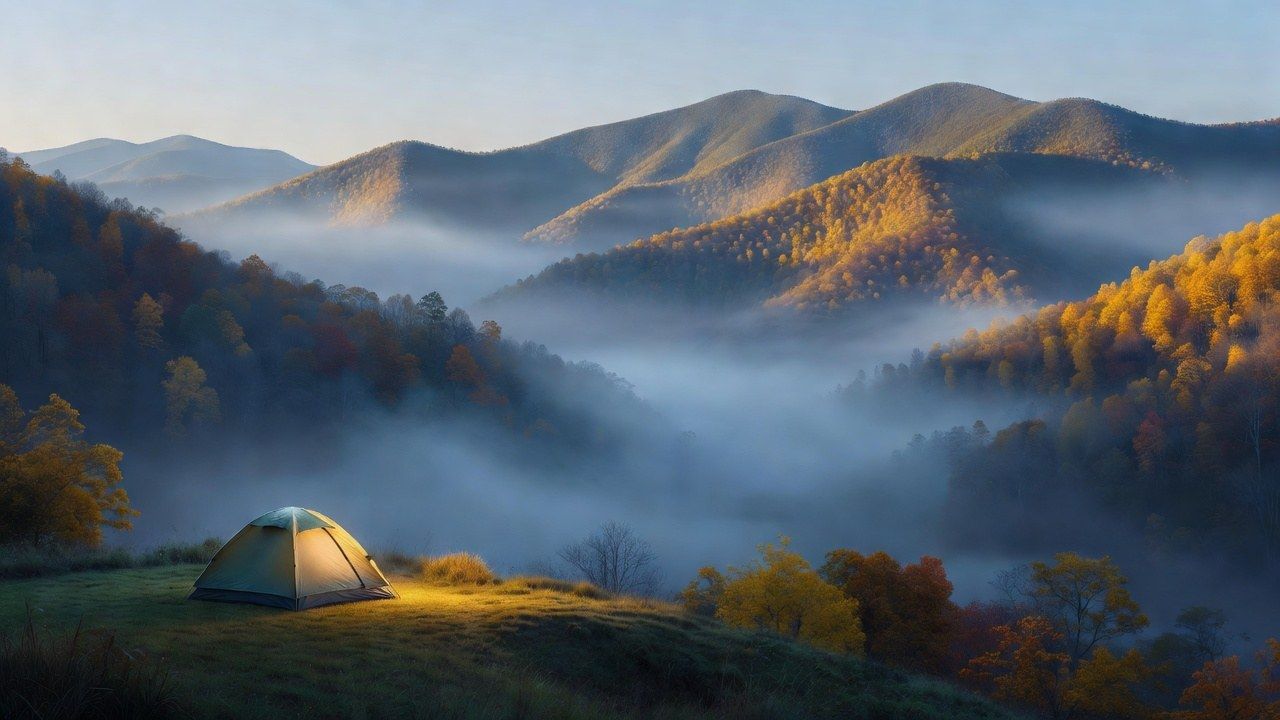
The Smokies are the most-visited national park in the country, and the reason is structural: there is no entrance fee, the park is within a day's drive of half the East Coast, and 800-plus miles of trail start from roads anyone can reach. The camping side splits cleanly in two.
Frontcountry — the 10 developed campgrounds. Cades Cove and Smokemont are the year-round pair. Elkmont is the one most experienced campers ask for, because it sits on the Little River and the sound of water covers everything else. Cosby is the quiet eastern alternative, Deep Creek is the one that ends at a waterfall, and Look Rock is the only campground with any hookups at all. Expect paved pads, flush toilets, cold water, no showers, and a 1 p.m. check-in. Every one of them requires an advance reservation.
Backcountry — permits only, and now on Recreation.gov. You cannot camp anywhere in the Smokies backcountry without a permit and an advance reservation. Party size caps at 8, you cannot stay more than 3 consecutive nights at one backcountry site, and you cannot spend consecutive nights at campsite 113 or at any shelter. The park installs food-storage cables at backcountry sites, which is why a bear canister is optional here rather than required — unlike the Sierra. Fires are permitted only in the existing fire rings at designated sites and only with dead-and-down wood; building a new ring is prohibited, and cutting standing wood is illegal.
The parking tag is not optional. Daily $5, weekly $15, annual $40. It applies to every vehicle parked in the park for more than 15 minutes, it is not location-specific, and America the Beautiful passes do not cover it. Frontcountry campers parked at their own site are the one exception. Buy it in advance — most trailheads have no machine, and the ones that do are not where you want to be standing at 7 a.m.
A note on the Cades Cove loop. The 11-mile one-way loop runs vehicle-free mornings on select days, but that program is seasonal and typically winds down before the October peak. Check the park's current schedule before you plan a bike ride around it — the loop is slow by design either way, and treating it as a half-day rather than a stop is the right call.
Free Camping: Cherokee National Forest and the Dispersed Option
Outside the park boundary, the rules loosen immediately — and this is the single most under-used lever in Tennessee.
Cherokee National Forest covers the eastern third of the state in a patchwork around the Smokies: the Unaka and Watauga districts to the north, the Nolichucky, French Broad, and Ocoee districts to the south. Developed campgrounds run in the $10–$25 range and are partly reservable on Recreation.gov, partly first-come. Between them are Forest Service roads with pull-off sites where dispersed camping is free — no reservation, no fee, no facilities, and typically a 14-day stay limit. You need to arrive self-contained: water, a toilet solution, and a plan for trash.
Two things change the calculus. First, bear country rules do not stop at the park boundary — Cherokee is black bear habitat, so food gets hung or stored properly. A bear canister ($89.99) is the simple answer where you are not camping at a site with a cable. Second, dispersed camping in October means no fire ring and, more often than you would like, a burn ban. An Outland portable propane fire pit ($142.64) is legal during most county burn bans and is the reason a lot of Tennessee campers own one.
Big South Fork National River & Recreation Area on the northern border is the other free-and-cheap option, with backcountry sites and a campground network that sees a fraction of the Smokies traffic.
Timing the Foliage in the Smokies by Elevation
The Smokies are the best foliage trip in the Southeast for one reason: elevation gives you a second chance. Instead of one peak week, you get a moving band that travels downhill at roughly 100 feet per day through late October.
- Above 5,000 feet (Clingmans Dome Road, Newfound Gap, the AT ridgeline) — color arrives first, generally in the first two weeks of October. This is also where the road closures and the wind live, so check the park's road status before you drive up.
- 3,000–5,000 feet (Elkmont, Cosby, Deep Creek, most of the mid-elevation trails) — the sweet spot, running roughly October 10 to October 25. If you are camping in the park and want the classic trip, this is where and when.
- Below 3,000 feet (Cades Cove, Townsend, the Foothills Parkway, the valleys) — peak lands October 20 to November 5, and it holds into the first week of November in a warm year. Cades Cove at peak is the photograph everyone is trying to take; go on a weekday morning.
Newfound Gap Road between Gatlinburg and Cherokee is the drive to build a day around, because it crosses every elevation band in about 30 miles. Bring real binoculars if you have kids — the Occer 12x25 compact pair ($35.99) is the kid-proof option and the Celestron Nature DX ED 8x42 ($166.00) is the adult one that actually resolves detail in low light. Fall is also the elk rut in Cataloochee and the Oconaluftee fields — the biggest wild elk herd east of the Mississippi, and the reason to plan an evening drive.
Fire Rules, Firewood, and the Rule That Surprises People
Inside Great Smoky Mountains National Park, only heat-treated firewood that is bundled and certified by the USDA or a state department of agriculture may be brought in. This is not a suggestion; it is the regulation that keeps the emerald ash borer and the Asian longhorned beetle out of the park. Certified wood is sold by concessioners at Cades Cove, Smokemont, and Elkmont through roughly November, and by private sellers in every gateway town. You may also collect dead and down wood inside the park — you just may not cut standing wood or build new fire rings.
Outside the park, ordinary firewood rules apply, with the usual guidance not to move wood more than about 10 miles. Cherokee National Forest recommends local or certified wood for the same reason the park requires it.
Burn bans are the October wildcard. East Tennessee counties issue burn bans during dry falls, and they apply to dispersed camping and national forest land far more often than to developed campgrounds with established rings. The practical kit for a burn-ban trip: a propane fire pit ($142.64) is the usual answer, and on a cold, fireless night a Little Buddy radiant heater takes the edge off — plus a stormproof match kit ($12.99) that works in the wet.
On cold nights specifically: a Little Buddy radiant heater ($69.99) is rated for indoor use and takes the edge off a tent before bed — but it goes off before you go to sleep, it never goes under a sleeping bag, and a carbon monoxide detector ($23.97) belongs in the tent with it. Every heater mistake in camping is a ventilation mistake.
Camping in Tennessee With Dogs
This is where Tennessee differs from its northern neighbors, and it is a difference that catches people at the trailhead.
Inside the national park, pets are allowed only where a leash no longer than six feet is practical: on roads, in campgrounds, on the Oconaluftee River Trail, and on the Gatlinburg Trail. Those two trails are it. Your dog may not go on the vast majority of Smokies trails — not because of any single incident policy, but because it is a long-standing park rule across the whole backcountry. If your trip is built around hiking with a dog, plan the Smokies as a campground-and-drive trip and do your trail miles outside the boundary.
Outside the park, Tennessee is far more welcoming. Cherokee National Forest, Big South Fork, and Tennessee's 56 state parks allow leashed dogs on the large majority of trails. That single fact is why a dog family is often better served base-camping in the national forest and driving into the park for a day than camping inside it.
Kit that matters on a Tennessee October trip with a dog: a front-range harness ($44.95) rather than a collar for steep, wet-leaf descents; a collapsible bowl ($15.99) and a dog water bottle with a food container ($14.98) for dry ridge hikes; paw wax ($24.99) for the granite on the Cumberland Plateau; and a tick remover ($14.39), because Tennessee's fall tick season runs later than most people expect. A raised cot ($49.99) keeps a dog off cold, damp ground and out of the mud that October guarantees.
On bears: black bears are present across the Smokies and Cherokee National Forest, and fall is when they are feeding hardest before denning. Food never stays in the tent. Bear spray is legal to carry in the park and the national forest, and the SABRE Frontiersman ($39.99) is the standard size. In a frontcountry campground, a hard-sided cooler like the Coleman 70-Quart Xtreme ($79.99) closed and locked in the vehicle is the routine.
Damp Cold at 3,000 Feet: The Gear Setup That Works
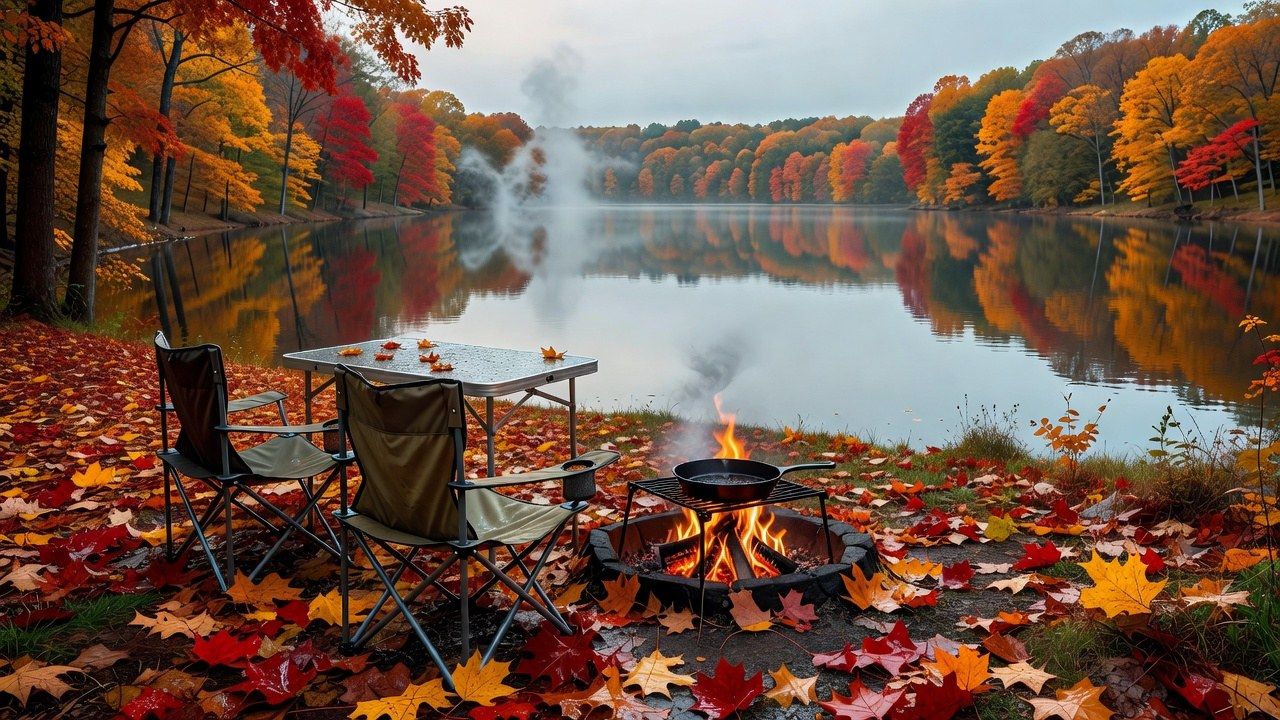
Tennessee fall camping is a humidity problem more than a temperature problem. A 35°F night in the Smokies does more to your sleep than a 25°F night in Utah, because everything you own is slightly wet. That is the whole design brief for this kit.
Shelter. A three-season family tent handles the entire fall window here. The CORE 6 Person Instant Cabin ($169.99) sets up in about a minute and lets you stand up, the CAMPROS CP 8 Person ($159.98) adds a room divider for kids who want separate space, and the EVER ADVANCED 6 Person Blackout ($169.99) blocks early light. For a smaller group the Coleman Skydome 4-Person ($122.99) is the dependable budget pick, and if you are hiking in rather than car camping, the Night Cat 2-Person ($53.99) is light, cheap, and genuinely waterproof. Tennessee rain is not a rumor — treat an older tent with Nikwax SolarProof ($19.95) before you go, and bring Tenacious Tape ($14.39) for the hole you will find.
Sleeping. Buy a bag rated at least 15°F colder than the night you expect — which for a late-October Smokies trip means a 0°F bag. The TETON Sports Celsius 0° ($59.99) is the value answer, the XXL ($89.99) fits taller campers, and the Coleman Oak Point Big & Tall 30° ($74.99) is the roomy option for adults who sleep warm. The Kelty Cosmic Down 20 ($169.00) is the down bag worth owning if you want it to pack small, and a fleece liner ($24.99) adds real warmth to any bag for almost nothing. For a car-camping weekend where you want to be genuinely warm, the Rumpl Original Puffy ($139.00) is the blanket you will use at home too.
Under you. Appalachian cold comes up from the ground and it is wet cold. The Klymit Insulated Static V ($94.99) is the value insulated air pad, the Exped MegaMat 10 ($239.95) is the most comfortable car-camping pad made, and the closed-cell Therm-a-Rest Z Lite Sol ($54.95) is the unkillable backup that doubles as a sit pad by the fire. On a cot you still need insulation underneath — the Coleman Trailhead II ($54.99) or the lighter MARCHWAY folding cot ($66.99) both work with a pad on top, and a Trekology pillow ($16.99) is the cheap comfort upgrade everyone forgets.
Layers. Tennessee fall is a layering problem: a 70°F afternoon and a 35°F night happen in the same 24 hours. Start with a Columbia Omni-Heat base layer ($49.99), add a Columbia Steens Mountain fleece ($34.99) or the women's Benton Springs fleece ($39.99), then a real shell — Tennessee rain is the sideways kind, which is why the Rab Downpour ($125.00) and the Outdoor Research Helium ($159.00) earn their place. The small items do disproportionate work: a merino beanie ($35.00) and a neck gaiter ($19.99) are worth more than an extra jacket at 6 a.m., gloves ($32.99) matter if you are the one making coffee, and rechargeable hand warmers ($39.99) keep kids in the game after dark.
Footwear. Wet leaves on rock is the defining Tennessee fall condition. The Merrell Moab 3 ($89.99) is the all-rounder, the KEEN Targhee 3 Low ($187.00) is the wider, more cushioned alternative, and the Merrell Women's Moab 3 ($144.95) is the women's version. Merino hiking socks ($27.95) are the cheapest way to fix cold feet. Kids get the KEEN Hightrail ($74.95) and the Osprey Jet 18L ($80.00) so they carry their own layers.
Kitchen. One stove that works under any burn ban, one cooler that works on a bear-aware site. The Coleman Classic 1-Burner Butane ($29.99) is small and unstoppable, the Gas One GS-3400P dual-fuel ($34.99) runs on either canister type, and the Coleman Triton+ 2-burner ($149.99) is what a family cooking real meals wants. The Stanley Wildfare 26-piece set ($89.99) nests a whole kitchen into one bag, and a Lodge 10.25-inch cast iron skillet ($19.99) over a fire ring is still the best dinner at any Tennessee campground. A Lodge 6-quart Dutch oven ($59.95) is the upgrade if you camp in October more than once. For coffee, the AeroPress ($39.95) weighs nothing and the Thermos Stainless King 40 oz ($39.99) keeps a sunrise drink hot through a cold morning at the overlook.
Light and power. Fall dark starts at 6 p.m., so lighting gets used twice as much as in summer. The Petzl Actik Core ($79.95) is the rechargeable standard and the Black Diamond Spot 400 ($39.95) is the value pick; kids get the Black Diamond Wiz Kid ($24.95) because it stays on a seven-year-old's head. For camp, the MalloMe lantern 4-pack ($23.99) covers a whole site and the LuminAID PackLite Max ($49.99) is solar and inflates. A Jackery Explorer 300 ($199.00) or EcoFlow River 2 ($169.00) keeps phones, camera batteries, and a heated blanket alive through a cold weekend, and a string light set ($19.99) is the cheapest way to make a wet-weather camp feel good.
Base camp and moving gear. Smokies sites are often a short walk from the car, which is where the Mac Sports wagon ($100.56) earns its reputation, and with kids the Radio Flyer EZ Fold wagon with canopy ($109.99) doubles as a shaded seat. For chairs, the Coleman chair with a 4-can cooler ($39.99) is the budget standard and the NEMO Moonlite recliner ($169.95) is the one you want after a nine-mile day. A real table changes a wet morning more than any other purchase — the ALPS Mountaineering dining table ($159.99) is the serious version and the KingCamp roll-up table ($109.99) is the packable one. For day hikes off the campsite, the Osprey Daylite Plus ($75.00) is the right family daypack and trekking poles ($49.95) make Tennessee's wet-leaf descents much safer.
Water and safety. Smokies and Cherokee backcountry water needs treatment — the Sawyer Squeeze ($45.95) is the standard for a reason. At a state park with a spigot, a 5-gallon carrier ($13.99) saves a dozen trips. Pack a first-aid kit ($44.95) with a tick tool, insect repellent ($28.49) even in October, and the SABRE bear spray ($39.99) for national forest and backcountry trips. A Fiskars X7 hatchet ($29.99) handles the firewood you bought legally.
The Smokies straddle a state line, and the North Carolina side runs its own campground calendar — the North Carolina camping guide covers which of the ten frontcountry campgrounds stay open year-round and which shut in October.
Tennessee Camping FAQ
When is the best time to camp in Tennessee?
Late September through the first week of November. September gives you warm days, cool nights, and the best site availability; the Smokies color peaks October 20 to November 5. Avoid Columbus Day weekend unless you booked months ahead — it is the single busiest camping weekend of the Tennessee fall.
Do you need a reservation to camp in Tennessee?
In Great Smoky Mountains National Park, yes — every frontcountry campsite and every backcountry site requires advance reservation, now booked on Recreation.gov. In Tennessee state parks, yes for anything on a weekend in season. In Cherokee National Forest, some developed campgrounds are reservable and the rest are first-come, and dispersed camping along Forest Service roads needs no reservation at all.
How far in advance can you book?
Smokies frontcountry sites open on Recreation.gov on a rolling six-month calendar. Tennessee state parks run their own portal at reserve.tnstateparks.com with roughly a year-ahead rolling window, though smaller parks open shorter. Smokies backcountry permits are booked on Recreation.gov and can be reserved well ahead of your trip — with a new $6 non-refundable permit fee on top of the $8 per person, per night backcountry fee.
Do I need a parking tag in the Smokies?
Yes, if you park anywhere in the park other than your own campsite for more than 15 minutes. $5 daily, $15 weekly, $40 annual. Tags are vehicle-specific, must be physical, and an America the Beautiful pass does not count as one. Frontcountry campers parked at their designated site are exempt.
Can I bring my own firewood into the Smokies?
Only heat-treated firewood that is bundled and certified by the USDA or a state department of agriculture. You may also collect dead and down wood inside the park. Cutting standing wood and building new fire rings are both prohibited. Outside the park, use local or certified wood within about 10 miles of where you will burn it.
Can you camp for free in Tennessee?
Yes — dispersed camping in Cherokee National Forest along Forest Service roads is free, needs no reservation, and typically allows a 14-day stay. There are no facilities, so you need to arrive self-contained with water and a toilet plan. Big South Fork also has low-cost backcountry options.
Are dogs allowed on Smokies trails?
No. Inside Great Smoky Mountains National Park, pets must be leashed (six feet or shorter) and are only allowed on roads, in campgrounds, and on two trails — the Gatlinburg Trail and the Oconaluftee River Trail. Outside the park, Tennessee state parks, Cherokee National Forest, and Big South Fork allow leashed dogs on the large majority of trails.
Is it too cold to camp in Tennessee in October?
Not if you pack for elevation. Valleys and Middle Tennessee sit in the 40s at night, while a Smokies campsite at 3,000 feet can drop into the low 30s with damp air that feels colder than the number. A 0°F-rated bag, an insulated pad, and a real base layer make an October trip comfortable rather than a story you tell later.
When the season turns cold up here, Florida's is just starting — see our Camping in Florida guide for the state where November through March is the good window.
If you are chasing a milder trip once the Smokies cool off, our Arizona camping guide covers the state whose camping season runs November through March. Texas runs its own version of the autumn window and then a second winter season after it; the Texas camping guide covers both.
Planning a trip on the other side of a state line? The new Camping in New Mexico 2026 guide covers New Mexico's five separate camping systems, its six-month state park booking window, and the stay limit that doubles on October 1.
South of the Smokies the camping rules change again — Camping in Alabama covers the state park window and the national forest stay limits.
If you are chasing warm-weather winter camping, our Camping in Louisiana guide covers the state parks, canoe-in bayou sites and the 13-month booking window that makes Louisiana different from every other state in the snowbird corridor.
Where the foliage window closes earlier, Utah's red rock country is just hitting its stride in October; the Camping in Utah guide covers the booking windows, the in-park campgrounds, and the 30°F nights.
If your fall road trip runs north instead of south, camping in Pennsylvania is the Pennsylvania counterpart — same hardwood color, very different booking and permit rules.
The Bottom Line
If you are comparing destinations, camping in Wisconsin covers the state park system's booking window, its staggered October closures and the sites that stay open all winter.
If you're comparing states for the same fall window, we keep a full West Virginia camping guide too — the one state in the region where the headliner national park takes no reservations at all.
Next door, camping in Georgia runs on a 41-park state system with its own 13-month booking window and a $10 ParkPass that is not included in the reservation — useful when you are comparing state lines for the same weekend.
Tennessee is the best-value fall camping state in the East, and the only reason people miss it is the booking complexity — four systems, four calendars, four sets of rules. Fix that first. Decide whether you are camping in the Smokies, in a state park, on national forest land, or at a private lake campground, then check that system's window before you fall in love with a specific site.
Then aim at October 20 to November 5 in the Smokies, with a second option at lower elevation as a fallback, because elevation is what gives Tennessee a three-week foliage window instead of a ten-day one. Buy the parking tag in advance. Buy certified firewood at the gate. Bring a 0°F bag and an insulated pad even though the forecast says 45°F. And if you are bringing a dog, base camp outside the park boundary — Tennessee rewards that decision more than almost any other state in the region.
If you want the seasonal gear list that pairs with this trip, our fall camping gear checklist covers the full kit, the state park camping guide covers how state park systems differ across the country, and the leaf peeping guide has peak weeks for every state in the East.
If you are timing that foliage window across state lines, our guide to camping in October maps which regions are still open, how the desert and coastal parks flip into season, and how cold the nights run by elevation.
If your fall trip is heading one state over, our Camping in Oregon guide covers the coast, the Cascades and the high desert with the same booking mechanics — including why Oregon's window is only six months.
<!-- AFFILIATE_DISCLOSURE -->Some links on this page are Amazon affiliate links. If you buy through them, TrailMapz earns a small commission at no extra cost to you.
If your plans land on the very last weekend of September, National Public Lands Day 2026 explains which federal lands are genuinely free that Saturday — and which ones quietly stopped waiving entrance fees this year.
Planning a trip the other direction? Our camping in Washington state guide covers the three separate booking portals, the October closing wave and the coast campgrounds that never shut for the season.