Lakeside Camping Checklist 2026: 17 Essentials for Sand, Sun & Water
Lakeside camping checklist for 2026: 17 essentials for sand, sun and water, from beach shelters and hammocks to coolers, dog gear and kids' gear.
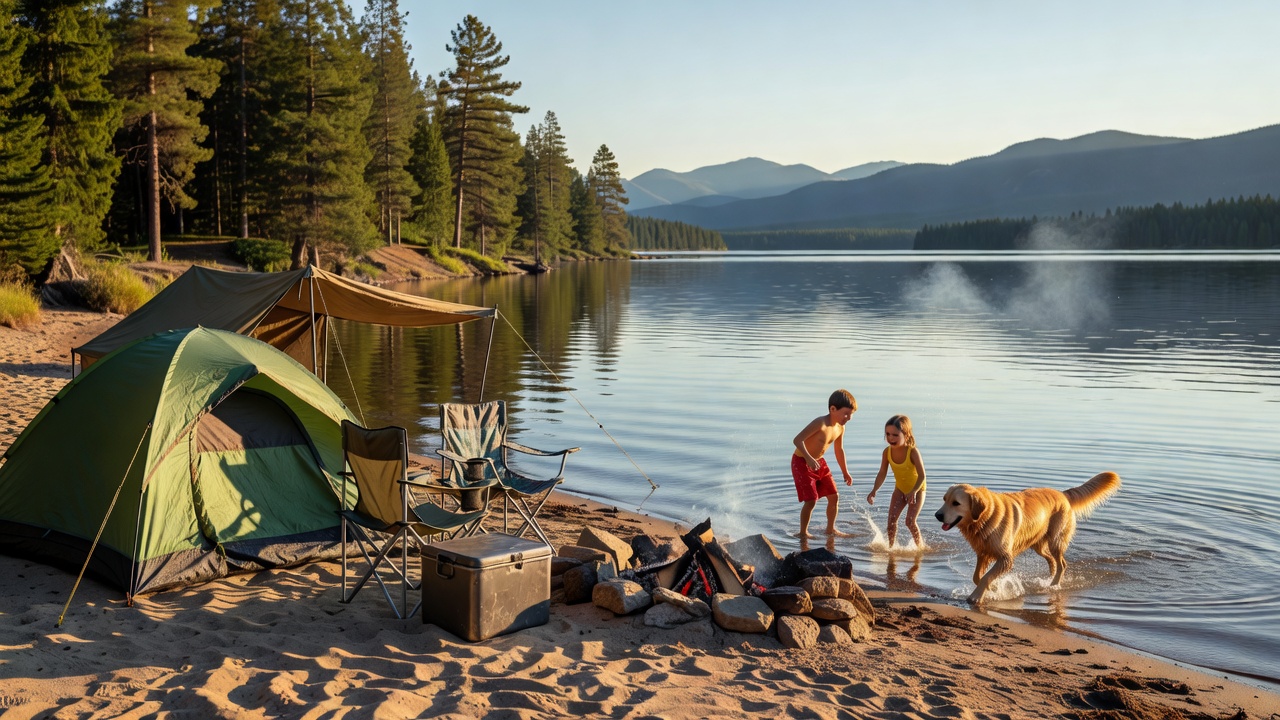
There's something about camping by a lake that a mountain site just can't match. You wake up, unzip the tent, and there's the water — glassy at dawn, sparkling by noon, loud with loons by dusk. The kids are in the shallows before breakfast is on. The dog is chasing waves. The cooler does double duty as a seat and the hammock strings between two pines at the water's edge.
But lake camping has its own failure modes. Sand gets everywhere. The sun off the water burns faster than you think. Drinks go warm by 2 PM unless you planned for it. And the dog will be filthy, wet, and thrilled — which means you'd better have a cleanup plan.
We've done enough lake weekends (and enough sand-in-the-sleeping-bag nights) to know exactly what earns its space in the car. Here's our lakeside camping checklist for 2026, organized by what actually matters on the shore.
Prefer to paddle out to your campsite instead of driving to one? Our kayak camping gear checklist covers the boat-based version of the same trip — dry bags, water filters, and compact stoves for island campsites.
Lakeside camping works differently in a state with four owners — the Oklahoma camping guide sorts out which Oklahoma shorelines take reservations and which still sell sites at the gate.
Quick Answer: The Lakeside Core Setup
- Shade for the day, on the water's edge: Gorich beach tent at $49.99.
- A real tent for the night: CORE 6-Person Instant Cabin at $169.99.
- A cooler built for a hot day: Coleman 316 Series wheeled 62QT at $84.99.
- Lounge mode: ENO DoubleNest hammock at $75.00.
- More water than you think: RAYMYLO 64 oz bottle at $19.19.
- Phones alive for the drive home: Jackery Explorer 300 at $199.00.
- Bathroom logistics: Cleanwaste WAG Bag kit at $44.99.
1. Shelter: A Beach Tent for the Day, a Real Tent for the Night
The biggest upgrade you can make for lake camping is separating "day camp" from "night camp." On the beach, you need shade — the sun reflecting off sand and water turns a lakeside afternoon into an oven. That's where a beach shelter earns its keep.
The Gorich Beach Tent Sun Shelter ($49.99) is our pick for the day zone. It's UPF 50+, sets up in about a minute with no poles to thread, and packs down small enough to toss in the car trunk. It's big enough for 3-4 people to sit under with a cooler and a beach bag, and the sand pockets keep it planted even when the afternoon breeze picks up. Kids get a shaded base camp for building sandcastles; adults get somewhere to escape the glare.
For the night, you still want a proper tent — lake nights get cooler and damper than you expect, and condensation is real when you're parked 50 feet from open water. If you're a small family, the Coleman Skydome 4-Person Tent ($164.99) pops up in about a minute, and its built-in LED lighting means no fumbling for a headlamp when the kids need a midnight bathroom run. For a bigger crew, the CORE 6-Person Instant Cabin Tent ($169.99) gives you the same 60-second setup with room for cots and gear. Pick your tent size with our tent size guide if you're between capacities.
One pro tip: pitch the sleeping tent on the grass or pine needle area behind the beach, not on the sand. Sand in the tent is a one-way ticket to gritty sleeping bags, and it never fully comes out.
2. Lounge Zone: Hammocks and Shade Chairs
The hammock is the single most-lakeside piece of gear we own. Nothing beats stringing one between two pines at the water's edge, with a book in one hand and a cold drink in the other. The ENO DoubleNest Hammock ($75.00) fits two people (or one adult and one very happy dog), and the ENO SingleNest ($54.95) is the lighter solo option. Both pack to about the size of a grapefruit and set up in 60 seconds — check our hammock camping guide for tree-strap tips and hang angles.
For chairs, think shade first. The Kelsyus Youth Canopy Chair ($37.99) is our favorite seat for kids at the lake — it has an adjustable canopy so the little ones can stay in the shade without being dragged back to the shelter every twenty minutes. For the grown-ups, the Coleman Cooler Quad Chair ($54.99) has a built-in four-can cooler in the armrest, which means nobody has to leave the shoreline conversation for a refill.
3. Keeping Things Cold: Coolers Built for a Hot Day on the Water
Here's the thing about lake camping: you're not hiking your cooler in. You can bring the good one. And on a 90-degree August afternoon with the sun hammering off the water, cooler quality is the difference between crisp drinks and sad, warm soda.
The Coleman 316 Series Wheeled Cooler 62QT ($84.99) is our workhorse. The wheels matter more than you think — rolling a loaded 62-quart cooler across a sandy parking lot beats carrying it every time. It holds up to six days of ice in real-world conditions, and the rugged lid doubles as a prep surface for the camp kitchen. For shorter trips or day excursions, the Stanley All Day Soft Cooler ($100.00) is leakproof, packable, and fits neatly between the seats on the drive home.
Cold logistics: freeze water bottles the night before and use them as ice packs. As they melt, you get cold drinking water instead of a cooler full of slush. Double-bag ice in a dry bag or trash bag to keep the meltwater from swimming your lunch. And keep the cooler in the shade — even under a beach shelter, it buys you hours.
4. Hydration: More Water Than You Think
Between the sun, the swimming, and the dry lake breeze, everyone drinks about twice as much as they do at a mountain camp. The RAYMYLO 64 oz Insulated Bottle ($19.19) is our family jug — one fill covers two adults for a long afternoon, and the triple-wall insulation keeps it actually cold in direct sun. For kids, the CIVAGO 32 oz Bottle ($19.99) with the straw lid is the one that actually gets drunk instead of abandoned in the sand. The HydroJug Sport 32 oz ($34.99) with its big handle is great for carrying from the campsite down to the beach.
If you're camping at a lake that isn't a developed campground — think dispersed sites on national forest lakes — you'll need to treat your water. Our camping water filtration and hydration guide breaks down filters, purifiers, and when boiling is the safest call.
5. The Lake Kitchen: Stoves and Skillets That Handle Wind
Cooking by the lake means cooking with a breeze off the water, and a breezy site will eat a bare flame alive. A windscreen or a stove with a wind-resistant design fixes it in one move — see our camp stove windscreen guide for the cheap, effective fix.
For fuel, the Gas One GS-3400P Dual Fuel Stove ($34.99) runs on either propane or butane, which is handy when the camp store only has one. The Coleman Classic 1-Burner Butane Stove ($29.99) is a budget favorite that stows in its own case. Want to cook over the fire instead? The BioLite CampStove 2+ ($199.95) burns twigs and charges your phone while you boil water — a fun one for kids to feed, and it doubles as a backup power source. Pair any of these with the Lodge 10.5-Inch Cast Iron Griddle ($24.90) for lakeside fish, pancakes, and everything in between. If you're new to camp cooking, our camp cooking for beginners guide covers the full meal plan.
6. Light: Lanterns for Camp, Headlamps for the Night Bathroom Run
Lake campgrounds get dark fast — no canyon walls to bounce light around, just open water and a black treeline. You want a lantern that fills the campsite and headlamps for hands-free trips to the bathhouse.
The Black Diamond Moji Lantern ($24.95) is our go-to: 200 lumens, dimmable, and small enough to hang from the tent's center loop or a branch over the picnic table. The Goal Zero Lighthouse Micro Flash ($29.95) doubles as a USB power bank — handy for topping off phones after a day of photos. For headlamps, the Black Diamond Spot 400 ($39.95) is waterproof and bright enough to light the path to the outhouse and back. Full lantern-vs-headlamp breakdown in our camp lighting guide.
7. Power: Keep Phones Alive for the Drive Home
A weekend at the lake is a lot of photos, a lot of "what time is sunset?" checks, and a long drive home that needs a charged phone for maps. A small power station ends the anxiety. The Jackery Explorer 300 ($199.00) will charge phones and tablets all weekend and still run a CPAP or a small fan at night. The EF ECOFLOW RIVER 2 ($169.00) is the lighter, faster-charging alternative — it refills from a wall outlet in about an hour, which is perfect if you're only camping one night. Both are covered in our portable power station guide.
8. Kids: Their Own Gear, Their Own Excitement
Lake camping is peak kids' camping — there's no "hike first, then fun." The fun is right there in the water. But kids need gear sized for them, or they'll borrow yours and lose it in the sand.
The Morrison Outdoors Big Mo 40 Kids Sleeping Bag ($79.95) fits toddlers 2-4, and the Little Mo ($69.95) handles babies 6-18 months — both rated to 40°F, which is plenty for a summer lake night, and both machine-washable, which they will need. The Osprey Jet 18L Kid's Backpack ($80.00) gives a 5-8 year old their own pack for the short walk from the car to the site — give them the job of carrying the marshmallows and you've solved the "I'm bored" problem for at least ten minutes. And the Kelsyus Youth Canopy Chair we mentioned earlier is the thing that keeps a 4-year-old in the shade without a fight.
9. Dogs at the Lake: Cleanup Is the Whole Game
A lake is a dog's paradise — until the dog is wet, sandy, and standing in the middle of your tent. The dog gear that matters at the lake is the cleanup gear.
The Dandylion Dog Paw Cleaner ($17.99) is a no-rinse foam with a brush — two squirts and a quick scrub, and sandy paws are clean enough to enter the tent. The Wahl Waterless No-Rinse Dog Shampoo ($6.97) handles the full-body "lake dog" smell without a hose. If your dog is an off-leash explorer, the oitickly Smart Dog Training Collar ($39.99) with its 4,500-foot range and voice command is the difference between "stay on our beach" and "there goes the dog, bye." Our camping with dogs guide has the full lakeside dog routine, including how to rinse lake water off a dog before it turns into a sand sculpture.
Lake safety for dogs: not every dog is a swimmer. If your dog is new to water, keep them leashed near the shore, watch for signs of fatigue (dogs will swim until they can't), and rinse them after swimming — lake water can irritate ears and skin. See our dog summer hiking safety guide for heat and paw tips that apply on the beach too.
10. Sun Protection: The Water Doubles the Burn
The sun off a lake is a two-way burn — direct from above, reflected from the water. You'll get fried in places you didn't know you had. Hats are non-negotiable. The Sunday Afternoons Ultra Adventure Hat ($135.01) is the gold standard — UPF 50+, a neck cape that covers the ears and the back of the neck, and a brim that actually stays put in wind. The Connectyle UPF 50+ Bucket Hat ($16.99) is the budget pick that covers the same critical zones. Reapply sunscreen every two hours and after every swim — set a phone alarm, because the water will make you forget. Our sun protection guide has the full routine.
11. Bathroom Logistics: Better Than a Shovel
Developed lake campgrounds usually have vault toilets, but the walk is often longer than you want at 2 AM, and dispersed lakeside sites have nothing at all. The Cleanwaste WAG Bag Kit ($44.99 for 12) is the leave-no-trace answer — each bag has gelling powder and a sealed outer bag, and they pack flat. For a base-camp setup, the Reliance Luggable Loo ($24.99) turns a 5-gallon bucket into a proper seat. Our camping toilet and sanitation guide covers the whole range from WAG bags to full cassette toilets.
12. Sleeping: Lake Nights Are Cooler Than You Think
That lake breeze that feels great at noon turns into a cold draft at 3 AM. Even in August, a lake site can drop into the 50s. The TETON Sports Celsius XXL ($89.99) is a 0°F bag that's almost comically warm for summer — but for kids who kick off covers, "too warm" beats "freezing at dawn" every time. The Kelty Cosmic Down 20 ($169.00) is the premium pick: 550-fill down, packs small, and handles the damp lake air without the weight. And a pillow actually matters at the lake — the Trekology ALUFT 2.0 ($16.99) inflates in three breaths and packs to nothing. More in our best camping sleeping bags guide and sleeping pad vs air mattress comparison.
Common Lakeside Mistakes (Learn From Mine)
1. Pitching the tent on sand. It's the most common mistake and the most annoying. Sand works its way into zippers, sleeping bags, and every single sock. Pitch on grass or pine needles, even if it's 100 feet from the water.
2. Forgetting that sun reflects. SPF 30 on the beach feels like SPF 15. Double the reapplication frequency and cover the back of your neck — the classic reflected-burn zone.
3. Bringing a cooler that can't handle the heat. A soft cooler on a 90°F beach for six hours is a warm-sandwich machine. If you're not carrying it far, bring the big insulated one and keep it shaded.
4. Letting the dog dry before rinsing. Wet sand on a dog dries into cement. Rinse the dog before they dry off, or you'll be brushing sand out of their coat for a week.
5. No plan for condensation. Camping near water means damp mornings — everything in the tent gets a light mist. Air the tent out by 9 AM and dry sleeping bags over the chairs for an hour before packing up.
6. Skipping the shade for kids. Kids on a beach will stay in the sun until they're cooked. A canopy chair or beach shelter with a "shade rule" (everyone takes a 20-minute shade break) prevents the meltdown-and-sunburn combo.
The One-Minute Lakeside Packing List
- Shelter: Beach sun shelter + real tent (pitch off the sand)
- Lounge: Hammock, canopy chairs, shade umbrella
- Cold: Big wheeled cooler + soft cooler for the beach, frozen water bottles as ice packs
- Hydration: 64 oz jug for camp, 32 oz bottles for kids, filter if dispersed
- Kitchen: Wind-resistant stove, cast iron griddle, fuel, windscreen
- Light: Lantern for camp, headlamps for night walks
- Power: Small power station for phones and cameras
- Kids: Their own sleeping bag, chair with shade, small pack with a job
- Dog: Paw cleaner, no-rinse shampoo, leash/collar, rinse plan
- Sun: Wide-brim UPF hat for everyone, sunscreen, lip balm
- Sanitation: WAG bags or bucket toilet for dispersed sites
- Sleep: Warmer bag than you think, pillow, tent ventilation plan
Lakeside camping is the easiest trip to love and the easiest to get subtly wrong. Get the shade, the cold drinks, and the dog cleanup right, and everything else sorts itself out. For more seasonal packing lists, see our summer camping checklist, the beach camping gear checklist, and the national parks camping guide for planning your next shoreline destination.
Arizona's lake parks are winter destinations rather than summer ones — our Camping in Arizona guide covers Alamo Lake, Cattail Cove, and the Colorado River parks. Texas has its own lake-and-river camping layer in the Hill Country, and the Texas guide covers the parks worth booking there.
New Mexico is a good test case for all of the above — see Camping in New Mexico 2026 for its six-month state park window, the 14-day BLM dispersed limit, the day-of-only backcountry permit at Carlsbad, and the state trust land exception.
Alabama's Tennessee Valley reservoirs are built for boat-and-camp weekends — Camping in Alabama covers Joe Wheeler, Guntersville and the rest.
For a worked example of how a state system can invert every rule you know, Camping in Louisiana covers the 30-day dispersed limit and the no-campground national parks.
For a lakeside trip that runs into November, our North Carolina camping guide covers the reservoir campgrounds that stay open, including the ones with 24-hour gate access year-round.
The clearest example of a county-by-county fire rule is in our Arkansas camping guide.
Lakeside Camping FAQ
For the system-vs-system version of this question in the Southeast, camping in Georgia walks through five separate booking systems in one state — state parks, Cumberland Island, Corps lakes, the national forest, and the WMAs that are not a camping system at all.
Do I need separate shelter for the beach and for sleeping?
Yes — splitting "day camp" from "night camp" is the biggest single upgrade you can make at a lake. The sun reflecting off sand and water turns a lakeside afternoon into an oven, so you want a dedicated day shelter like the Gorich beach tent sun shelter (UPF 50). Then pitch your real tent off the sand for the night — and never pitch the tent directly on sand.
How do I keep food and drinks cold lakeside?
You're not hiking your cooler in, so bring the good one. The Coleman 316 Series 62-Quart Wheeled Cooler holds ice for days in heat, and frozen water bottles double as block ice you can drink later. A soft cooler like the Stanley All Day Julienne handles the walk down to the water.
Why is cooking by the lake so annoying?
Because of the breeze off the water — a breezy site eats a bare flame alive. A wind-resistant stove or a simple windscreen fixes it in one move: the Coleman Classic 1-Burner is the compact answer, and the Gas One GS-3400P gives you two burners when you're feeding a family. A Lodge cast iron griddle holds heat through gusts far better than thin pans.
Do lake campsites really get cold at night?
Yes, and it surprises people every time. That breeze that feels perfect at noon becomes a cold draft at 3 AM, and even in August a lake site can drop into the 50s. Bring a warmer bag than the daytime temperature suggests — the Kelty Cosmic Down 20 or the oversized Teton Sports Celsius XXL — plus a pillow and a real ventilation plan for the tent.
How much water do we actually need?
About twice what you'd bring to a mountain camp. Between the sun, the swimming, and the dry breeze, everyone drinks more than they expect. The RAYMYLO 64 oz jug at $19.19 covers two adults for a long afternoon and keeps it genuinely cold; kids do better with their own 32 oz bottle they can't lose track of.
What are the bathroom logistics at a lake?
Developed lake campgrounds usually have vault toilets, but the walk is longer than you want at 2 AM, and dispersed lakeside sites have nothing at all. The Cleanwaste WAG Bag Kit ($44.99 for 12) is the leave-no-trace answer — each bag has gelling powder and a sealed outer bag, and they pack flat. For a basecamp setup, the Reliance Luggable Loo gives you a seat for the same bags.
What's the biggest lakeside mistake?
Pitching the tent on sand. It's the most common mistake and the most annoying — sand gets into everything, stakes don't hold, and a wind gust can move the whole shelter. Stake out on dirt or packed gravel, use the beach shelter only for daytime, and sweep feet before anyone goes inside.
One state where all four public-land camping systems behave completely differently is Oregon; the Camping in Oregon guide walks the state park portal, the state forests, the national forests and BLM separately.
<!-- AFFILIATE_DISCLOSURE -->TrailMapz is reader-supported. When you buy through links on our site, we may earn an affiliate commission at no extra cost to you. As an Amazon Associate, we earn from qualifying purchases.
Our camping in Washington state guide documents the three booking systems, the state's own winter-schedule table of per-park closing dates, and the burn-ban levels that decide whether you can have a fire.
For a worked example of how state and federal campground systems differ on the very same piece of land, see the Maryland camping guide — two parks, one barrier island, two booking portals, two season-end dates.