Kayak Camping Gear Checklist: What to Pack for Canoe & Kayak Trips (2026)
Paddle-in camping gear checklist: dry bags, water filter, compact stove, sleep system and sun protection — the complete 2026 kit for kayak and canoe trips.
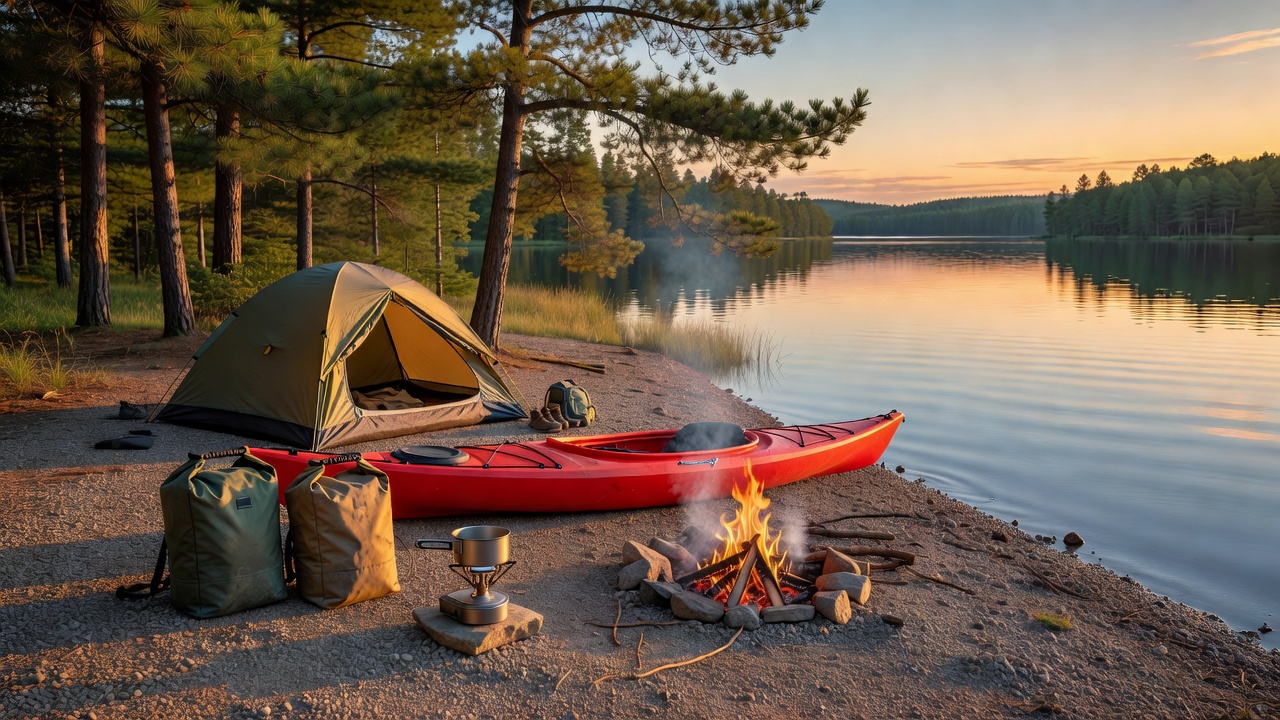
There's a campsite on the far side of the lake that almost nobody reaches. No road, no parking lot, no fire ring full of someone else's bottle caps — just a gravel beach, a ring of pines, and the sound of loons. You get there the same way campers did a hundred years ago: you paddle.
Kayak and canoe camping is the closest thing outdoor weekends have to a cheat code. The gear floats behind you in dry bags instead of riding on your back, so you can bring real food, a real stove, and a real sleeping pad. The payoff is island campsites, quiet coves, and evenings on the water when everyone else is fighting for a picnic table. For families, it's the rare trip where the journey is as fun for the kids as the destination — and our lakeside camping gear checklist covers the shore-bound version of the same trip.
This guide is the packing list I wish someone had handed me before my first paddle-in overnight. It's built around one rule: everything you bring must be dry, compact, and earn its space in the boat.
Lakeside camping works differently in a state with four owners — the Oklahoma camping guide sorts out which Oklahoma shorelines take reservations and which still sell sites at the gate.
Quick Answer: The Ten Things That Actually Go in the Kayak
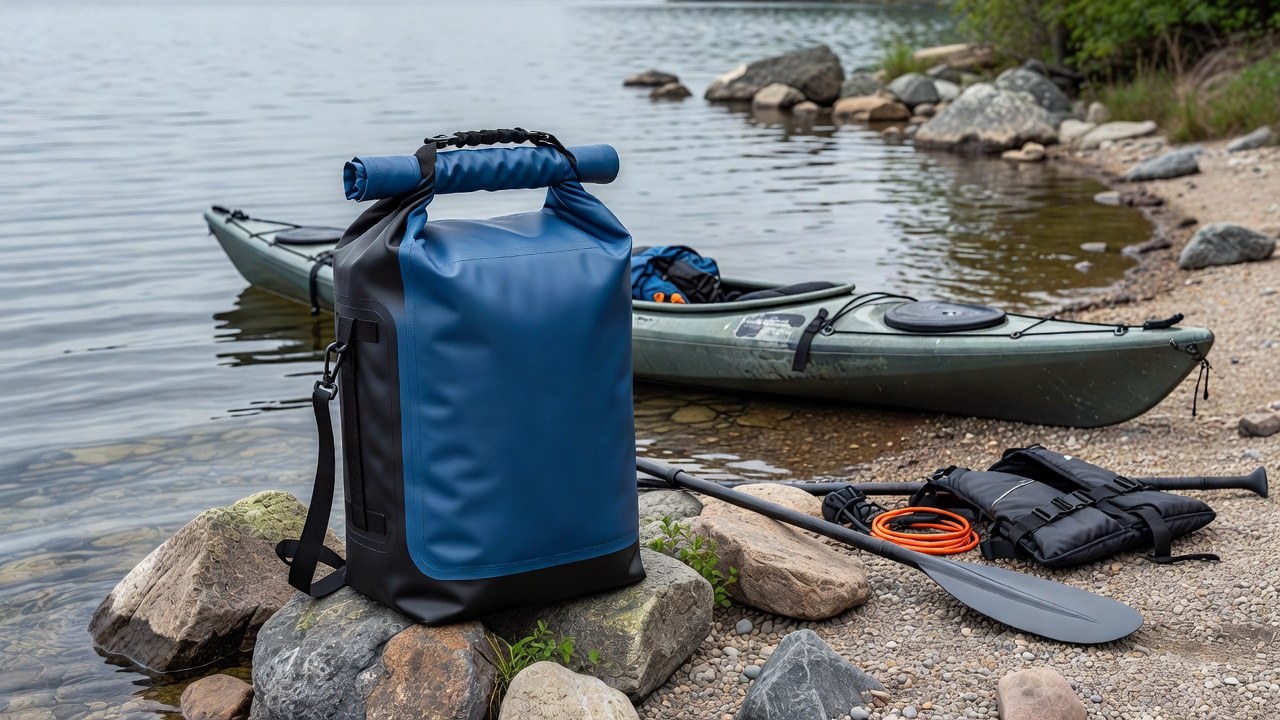
- Keep everything dry: Earth Pak Roll-Top Dry Bag — $34.31. Nothing ends a paddle-camping trip faster than soaked sleeping gear.
- Safe drinking water: Sawyer Squeeze — $45.95. Filter on shore instead of paddling the weight of your water.
- Best stove for a kayak: MSR PocketRocket 2 — $49.95. Small and light enough that it disappears into a hatch.
- Dual-fuel backup: Gas One GS-3400P — $34.99. Runs on butane or propane, so a cold morning does not strand your breakfast.
- One kit, whole kitchen: Stanley Wildfare Core 26-Piece — $179.99. Pots, plates, and utensils nest into one bundle that fits a hatch.
- Best bag for wet nights: Kelty Cosmic Down 20 — $169.00. Down that recovers well, paired with a dry bag to keep it that way.
- Light after dark: Black Diamond Spot 400 — $39.95. Waterproof, and it runs on either batteries or the rechargeable cell.
- Sun on open water: Sunday Afternoons Ultra Adventure Hat — $135.01. Reflected glare off the water is what burns you, and the neck cape covers it.
The Kayak Camping Rule: Weight, Dryness, and the Three-Bag System
Car camping lets you throw gear in the trunk. Kayak camping forces a decision about every single item — if it doesn't fit in a dry bag, it doesn't come. The whole system runs on three dry bags:
- Sleep bag — tent, sleeping bags, pads, pajamas
- Kitchen bag — stove, fuel, cookware, food
- Dry-clothes bag — a change of layers, towel, electronics
The Earth Pak roll-top dry bag is the one the Wirecutter testers keep coming back to: tough PVC, a proper roll-top seal, and it comes in sizes from 5L (electronics) to 55L (the whole kitchen). Grab one in 10L and one in 20L and you're covered for a weekend. Buy them in bright colors — a neon dry bag is a lot easier to spot floating away than a green one.
The 10-pound rule: lift each bag before it goes in the boat. If you can't heft it into the kayak without straining, split it. A loaded boat that's hard to paddle is a miserable boat. This is where the compact versions of everything below earn their keep.
Water & Hydration: Filter, Don't Haul
Water weighs 8.3 pounds per gallon. Hauling a week's worth of drinking water in the boat is the beginner mistake that sinks trips (sometimes literally — it shifts and destabilizes the kayak). The smarter system: carry a liter or two per person and filter from the lake.
The Sawyer Squeeze water filtration system ($45.95, 4.7★ with 40,000+ reviews) is the paddler's standard for a reason: it filters 100,000 gallons, weighs barely 3 ounces, and screws onto standard water bottles. Fill from the lake, squeeze into your bottle, drink. No pump, no batteries, no waiting. Our camping water filtration and hydration guide walks through the full filter-vs-purifier decision if you're heading somewhere with livestock or agricultural runoff.
For the bottle itself, an insulated one is worth it on the water — sun-heated plastic tastes like a kayak seat. The CIVAGO 32 oz insulated stainless steel bottle ($19.99, 4.6★) has three interchangeable lids (straw, chug, coffee), which means one bottle does double duty as your morning coffee vessel.
Paddling with a dog? The Cibaabo dog water bottle ($14.98, 4.8★) is a squeeze bottle with a built-in drinking bowl and food container — one hand operates it, which matters when the other hand is holding a paddle. See our dog water safety guide before bringing a pup on open water.
On open water a dog needs its own flotation rather than a spot on your lap. The Ruffwear Float Coat dog life jacket ($99.99, 4.6★) has a reinforced top handle for hauling a wet dog back aboard a kayak, and the Outward Hound Granby Splash ($24.99, 4.5★ from 14,000+ buyers) is the budget pick for calm lakes and slow rivers.
Cooking on the Water: Compact Is King
On a paddle-in trip, your stove is your best friend and your worst enemy — best friend because hot food makes the whole trip, worst enemy because a bulky stove eats dry-bag space. The fix is to think ultralight, even if you'd never call yourself a backpacker.
The MSR PocketRocket 2 ($49.95, 4.8★) is the gold standard: it folds to the size of a matchbox, boils a liter in 3.5 minutes, and has won over essentially every gear review site since it launched. Screw it onto a small isobutane canister and the whole cooking system fits in your kitchen bag's side pocket. If you want a dual-fuel backup that also runs on cheap propane bottles, the Gas One GS-3400P ($34.99, 4.5★) is the budget pick — slightly bigger, still boat-friendly.
For cookware, skip the clattering pile of pots. The Stanley Wildfare Core 26-piece cook set ($179.99, 4.7★) nests everything — two pots, a pan, plates, bowls, utensils, cutting board — into one tidy bundle that fits a dry bag like it was designed for one. Add the Lodge 6.5-inch cast iron skillet ($9.38) if you plan campfire fish — cast iron is heavy, but lakeside fillets are worth the extra pound. And if you're a coffee person, the Snow Peak titanium French press ($65) makes the paddle-out morning ritual actually civil. Recipe ideas for the fire ring: our campfire cooking gear and recipes guide.
The Sleep System: Compressible, and Off the Ground
Paddle-in campsites tend to be gravel beaches, packed sand, and the occasional tree root — which means ground insulation isn't optional. Two pieces of gear decide whether you sleep or shiver.
Sleeping bag: compressibility is the whole game, because it has to fit in the sleep bag. The Kelty Cosmic Down 20 ($169, 4.5★) packs dramatically smaller than any synthetic bag at the same warmth, and 550-fill down at this price is a legit bargain. Budget alternative: the Teton Sports Celsius XXL ($89.99, 4.5★) if you run cold or want room to sprawl — just accept the extra bulk.
Sleeping pad: this is where kayakers should steal the backpackers' playbook. The Klymit Static V ($64.95, 4.6★) packs to the size of a water bottle and its V-chambers are genuinely comfy side-sleeping. For gravel bars and rocky islands, the Therm-a-Rest Z Lite Sol ($54.95, 4.7★) is the bombproof choice — closed-cell foam can't puncture, doubles as a sit pad, and lashes to the outside of your kayak deck. We break down pad vs. air mattress in our sleeping pad comparison guide.
Tent: for a family paddle-in base camp (paddle the gear to one island, then day-trip around the lake), the EVER ADVANCED 6-person instant cabin tent ($169.99, 4.4★) sets up in about a minute — no wrestling poles on a windy beach with kids waiting. Solo or pair? Keep the weight down and check the best ultralight backpacking tents roundup instead.
Lighting & Power
Lake nights arrive fast and without streetlights. You need one hands-free light for camp chores and one tent light for the family.
The Black Diamond Spot 400 headlamp ($39.95, 4.5★) is IPX8 waterproof — it can survive an unplanned swim — and runs on either AAA or a rechargeable BD 1500 battery, which is exactly the flexibility a paddler wants. For the tent, the Goal Zero Lighthouse Micro flash lantern ($29.95, 4.4★) doubles as a power bank: it'll top off your phone while hanging from the tent loop. On multi-day trips with phones and headlamps to keep alive, the BigBlue 28W folding solar panel ($59.97, 4.4★) charges two devices at once and stows flat against the deck bag.
Sun, Wind & Water Protection
Open water is a sun amplifier — you're getting hit from above and from the reflection off the lake. Sunscreen alone isn't enough on a full paddle day.
The Sunday Afternoons Ultra Adventure hat ($135.01, 4.7★) is the paddling world's favorite: UPF 50+, a neck cape for the sun angle you can't escape, and it floats if it goes overboard. The kids' version ($34, 4.8★) fits the small crew. For kids who won't sit still for sunscreen reapplication, a Coolibar UPF 50+ long-sleeve sun shirt ($32) does the work for you. Full UV strategy on shore and on the water: sun protection for camping and hiking.
Footwear matters more than any other clothing item. You'll be stepping out of the boat onto slimy rocks, shell beaches, and boat ramps. The KEEN Newport H2 sandals ($55, 4.7★) are the classic paddling shoe: closed toe (protects against rocks), quick-dry webbing, and a grippy sole that works wet. They're also the rare water shoe that's fine to wear on a mile-long portage trail.
Towels, Coolers & Comfort
Two "luxury" items that earn their space:
- A quick-dry towel. The PackTowl Personal microfiber towel ($24.95, 4.7★) packs to the size of a burrito, dries overnight, and beats a soggy bath towel on every metric that matters in a boat.
- A proper cooler — for the launch, not the boat. A hard cooler full of ice is too heavy for a kayak. Stash the RTIC 45 QT hard cooler ($239, 4.7★) or the budget-friendly Coleman 316 Series wheeled 62QT ($84.99) at the put-in with the car, and use a soft-sided cooler or the lake itself for day one. Fish you catch goes straight in the lake-water "fridge" until dinner.
The Paddling-Specific Safety Kit
This section is non-negotiable, and most of it is gear you can't buy links for — buy it anyway:
- PFD (life jacket) on everyone, always. Kids wear them even in shallow water — a tipped boat happens in two seconds. Coast Guard-approved, snug fit, whistle attached.
- Spare paddle lashed to the deck. A broken blade on a windy crossing is a real emergency.
- Throw rope or tow line — 50 feet, floating line, stored where you can grab it one-handed.
- Dry-bagged first aid kit — our camping first aid checklist is the full list, but add waterproof bandages and antiseptic wipes.
- A whistle and a headlamp in your PFD pocket, not in the dry bag. If you're separated from the boat, those two items are your rescue kit.
- File a float plan. Tell someone where you're launching, where you're camping, and when you'll be back. Text them when you arrive.
Quick Packing Checklist by Trip Length
Overnight (1-2 nights):
- 10L + 20L dry bags, PFD + whistle, paddle + spare
- Sawyer Squeeze filter + 1L bottle per person
- MSR PocketRocket 2 + fuel + Stanley cook set
- Kelty Cosmic or Teton sleeping bag + Klymit pad
- Black Diamond Spot 400 + Goal Zero lantern
- KEEN sandals + sun hat + sun shirt
- PackTowl + one change of clothes
- First aid kit + headlamp in PFD
Multi-day (3+ nights):
- Everything above, plus a 30-40L dry bag for extra food
- BigBlue solar panel (or a second power bank)
- Water shoes and a dry pair of camp shoes
- Extra fuel canister and a second water bottle
- Z Lite foam pad lashed to the deck as backup seating
Common Kayak Camping Mistakes (Learn From Mine)
- Overloading the boat. I've paddled a wallowing kayak across an open lake because I packed like I was car camping. If you're fighting the boat, you're doing it wrong — split the load, keep the center of gravity low, and test-lift every bag.
- Trusting the weather report at launch. Afternoon thunderstorms on lakes come fast. If you hear thunder, get off the water and wait it out on shore — don't try to "make it across."
- No dry run for the dry bags. A roll-top bag only works if you roll it properly. Practice at home; a leaking sleep bag on night one ruins a trip.
- Skipping the sunscreen reapplication. Reflection off water doubles your exposure. Every two hours, on the water and at camp.
- Forgetting that the lake is the fridge. For the first day, fresh food and drinks can ride in a mesh bag trailed behind the boat — cold water, zero weight. Just don't try it with anything that can't get wet.
The Bottom Line
Kayak camping isn't a gear-heavy sport — it's the opposite. The whole trip runs on three dry bags, a filter, a stove, and a good sleep system. Pack light, pack dry, and the lake does the rest.
Kayak Camping FAQ
How much gear can a kayak actually carry?
Less than you think, and the rule that keeps trips working is simple: if it doesn't fit in a dry bag, it doesn't come. The three-bag system (10L, 20L, and a 30–40L for multi-day trips) forces a decision about every item before you're on the water. Keep weight low and centered so the kayak doesn't wallow, and test-lift every bag before you launch.
Do I need a hard cooler on a kayak trip?
No — and bringing one is a classic beginner mistake. Water weighs 8.3 pounds per gallon, and a hard cooler full of ice is far too heavy to paddle with. Use the hard cooler at the launch site for the drive in, then move drinks and food into a soft cooler like the Stanley All Day Julienne for the boat.
What stove works best for paddle-in camping?
Compact is king, because a bulky stove eats dry-bag space. The MSR PocketRocket 2 is the ultralight default, and the dual-fuel Gas One GS-3400P gives you more burner for group cooking. Pair either with a nesting kit like the Stanley Wildfare Core 26-Piece Cook Set.
Do I really need a sleeping pad?
Yes. Paddle-in campsites are usually gravel beaches, packed sand, and tree roots — ground insulation is not optional. Foam is indestructible and cheap (Therm-a-Rest Z Lite Sol); inflatable packs smaller and sleeps better (Klymit Static V). Pair either with a compressible bag like the Kelty Cosmic Down 20.
How do I keep my gear dry if the boat tips?
Roll-top dry bags, every time — clip-on zipper bags fail exactly when you need them. The Earth Pak roll-top dry bag is the workhorse; make sure you roll it three times and clip before it goes in the hull. Put anything you cannot lose in the smallest bag and keep it tethered to the boat.
What's the one safety item people forget?
A PFD worn by everyone, always — kids included, even in shallow water. A tipped boat happens in two seconds. Beyond that, carry a spare paddle, a whistle on every PFD, and a way to filter water so a delayed return doesn't become an emergency.
<!-- AFFILIATE_DISCLOSURE -->