1 lb Propane Refill vs Exchange: Real Cost Math (2026)
Refill or exchange? Per-pound math on 1 lb bottles and 20 lb tanks: refill costs, exchange pricing, and break-even points.
Refilling wins on cost almost every time — about $1-1.50 per pound versus $1.70-2.30 per pound for a tank exchange, a 30-50% gap. But an exchange still makes sense when you fly to camp, have no scale, or need a certified-inspection cylinder today. For a family camping a few weekends a season, refilling from a 20 lb tank saves roughly $40-70 a year.

In this article · 10 sections
- The Short Answer
- Per-Pound Cost: Every Option Compared
- The Refill Math, Step by Step
- The Exchange Math, Step by Step
- When the Exchange Kiosk Actually Wins
- Refillable 1 lb Cylinders: The Middle Path
- What a Weekend of Fuel Actually Costs
- The Decision Framework
- Refill vs Exchange: The Cost Questions People Ask
- Refill vs Exchange FAQ: The Cost Questions People Ask
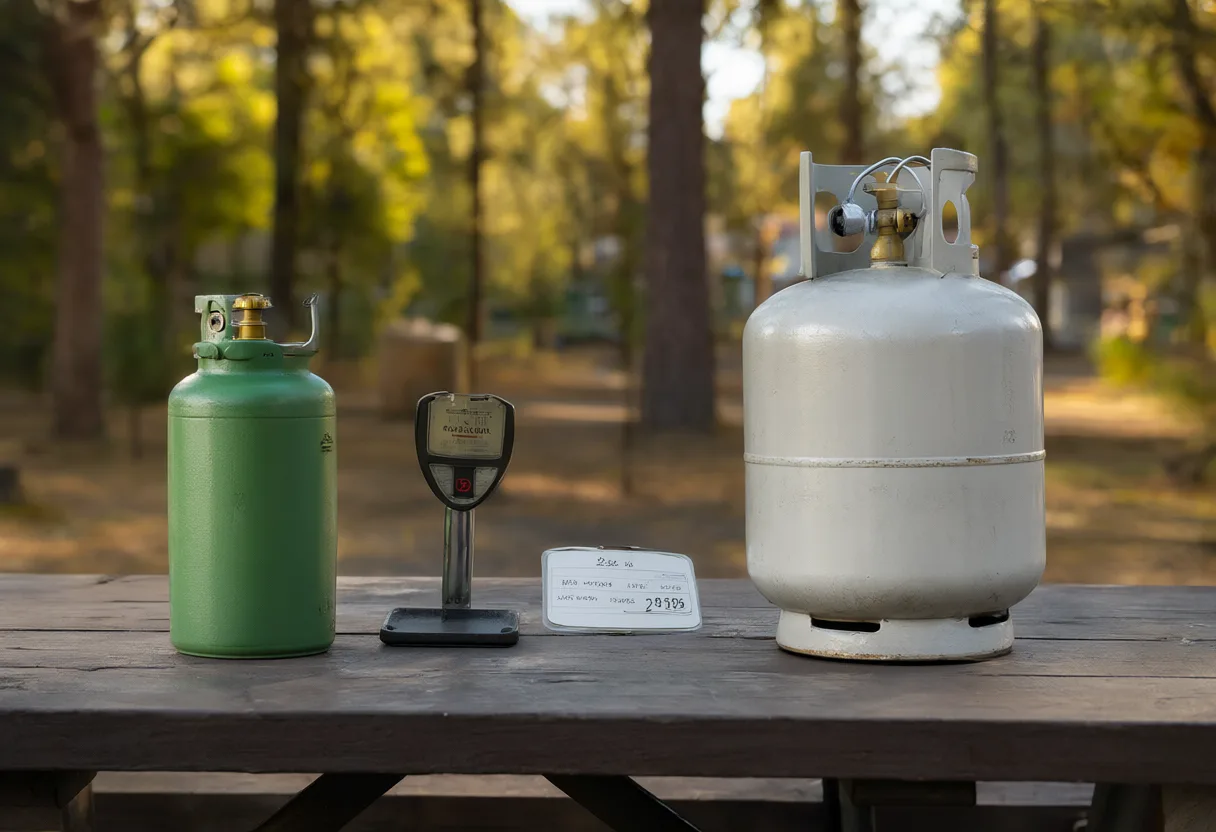
Every family camper hits the same decision at the fuel aisle: grab another disposable 1 lb bottle, swap an empty at the exchange cage, or refill something you already own. The price tags are all in the same $6-30 range, which makes them feel interchangeable. They are not. Priced per pound of actual propane, the gap between the cheapest and most expensive option on that aisle is more than double — and it compounds every single trip.
This page is the cost-only breakdown. For the hands-on procedure, weights, and legality, read the safe way to refill 1 lb propane bottles. For bottle-versus-big-tank sizing across a whole season, see 1 lb bottles vs a 20 lb tank on cost per trip. Here we answer one question: at current prices, is it cheaper to refill or exchange?
The Short Answer
Refill — by 30-50% per pound. A 20 lb tank refilled by weight costs roughly $1.00-1.50 per pound of propane. A tank exchange costs $25-35 for a cylinder that is only filled to 15-17 lb, which works out to $1.70-2.30 per pound. Disposable 1 lb green bottles at $6-8 each are the worst deal on the shelf: $6-8 per pound of fuel in a can you throw away.
The exchange kiosk earns its keep in exactly three situations, covered below. If none of them apply to you, every dollar spent at the cage is a dollar the refill station would have charged you half of.
Per-Pound Cost: Every Option Compared
The trap in comparing fuel prices is that the sticker never tells you how much propane you actually get. Exchange cylinders are deliberately filled to 15-17 lb, not their 20 lb water-capacity rating, and disposable 1 lb bottles hold closer to 0.9 lb of usable fuel. So we normalize everything to cost per pound of propane:
- Bulk refill of your own 20 lb tank (~$20-30 by weight): $1.00-1.50/lb
- Refillable 1 lb cylinders topped up from your tank (bulk propane at ~$1.20-1.60/lb): $1.20-1.60/lb plus the one-time kit cost
- New disposable 1 lb bottles ($6-8 each, ~0.9 lb usable): $6.50-8.90/lb
- Tank exchange swap ($25-35, filled to 15-17 lb): $1.70-2.30/lb
- Hardware-store refill station for small cylinders (where available, ~$2-3 per fill): $2.20-3.30/lb equivalent
Read that list again and the aisle reorders itself: refilling your own tank is roughly half the per-pound cost of the exchange cage, and disposable bottles — the default purchase for most campers — cost four to six times more per pound than bulk propane. The convenience premium is real; the point is to know you are paying it.
The Refill Math, Step by Step
Refill pricing works one way: by weight, at a bulk propane dealer. Most stations charge $3-5 per gallon of propane; a gallon weighs about 4.2 lb, which lands you at roughly $0.90-1.30 per pound, plus a dollar or two for the fill labor at some dealers.
A worked example for a season of family weekends:
- Six weekend trips, one 1 lb bottle equivalent of stove fuel each: 6 lb of propane
- Refilled from your own 20 lb tank with an adapter hose: about $8-10 total
- The same fuel as disposable bottles at $7 each: about $42
- The same fuel as exchange swaps: not even practical — nobody swaps a 20 lb tank for 6 lb of use, but if you did, two swaps would run $50-70
The refill route saves $30-60 per season for a typical family camping pattern, before you count the heater fuel that winter trips add. That is the whole argument, and it is why the Flame King refillable 1 lb cylinder with refill kit exists: it keeps the small-bottle form factor your stove expects while drawing fuel at bulk prices.
The Exchange Math, Step by Step
An exchange swap trades your empty cylinder for a filled one at $25-35. The cylinder you receive is filled to 15-17 lb, not 20 — that is the OPD valve's safe-fill design for the popular branded cages — so the effective per-pound price is 20-35% higher than the sticker suggests.
- $28 swap ÷ 16 lb average fill = $1.75/lb
- The same 16 lb from a bulk refill station: $18-24
- Gap per swap: $4-10, every time
There is one more cost hiding in the exchange habit: you never own the tank. Cylinders in the exchange pool are branded and stay with the cage; your requalification clock, your tank's condition, and your ability to refill it cheaply all get traded away. Over five years, the exchange-only camper has paid the cage $125-175 and still owns nothing to refill.
When the Exchange Kiosk Actually Wins
Three situations, and only three, where we send people to the cage:
-
You're flying to your destination. You cannot transport a filled propane cylinder on a plane, full stop. Landing in Denver or Salt Lake for a national park trip, the exchange cage at the first big-box store is the fastest legal way to get cooking. Buy the cheapest cylinder they stock and plan to refill it locally if the trip is long.
-
You have no scale and no time to verify a fill. Refilling safely means weighing the cylinder before and after. If you do not own a luggage scale and are not going to, the exchange swap is at least a certified, inspected cylinder filled by someone whose job it is.
-
Your own tank is out of date or failed inspection. A cylinder past its twelve-year requalification date cannot legally be refilled anywhere. The exchange cage is the one place that will take it off your hands and hand you a legal, current-inspection replacement — and the swap price is usually within a few dollars of a requalification test, with zero waiting.
Notice what is not on the list: "it's more convenient." Convenience is what the 30-50% per-pound premium buys, and for a family camping on weekends from a car, refilling from a tank you already own is barely less convenient.
Refillable 1 lb Cylinders: The Middle Path
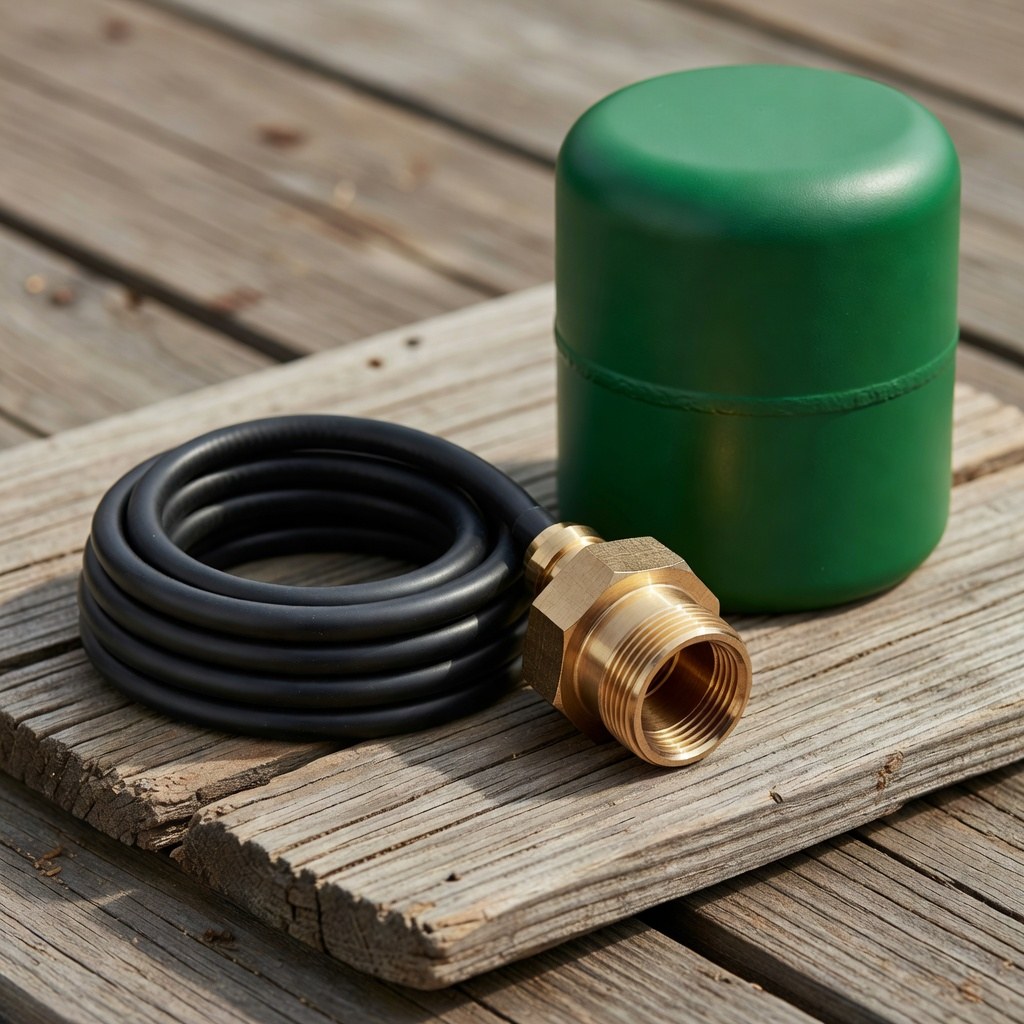
The reason many families neither refill disposables nor haul a 20 lb tank everywhere is the third option: DOT-compliant refillable 1 lb cylinders. They look like the green disposables, screw into the same stove threads, but have a refill valve and are legally designed to be topped up from your big tank.
The economics:
- A Flame King refillable 1 lb cylinder with refill kit runs about $60 for the cylinder and filling kit
- Refilling it from your own 20 lb tank costs $1.20-1.60 per fill in bulk propane
- Versus $7 per disposable bottle, it breaks even at roughly 10-12 refills — one to two seasons for most families
- After break-even, every fill saves about $5.50-6.50 against a new disposable
The honest limits: refilling requires the big tank, a scale, and five careful minutes (the step-by-step refill procedure covers the 80% fill limit and the chill-the-tank trick). And a refillable cylinder is a pressure vessel you now own — it carries its own requalification date and storage rules, covered in how to store propane tanks.
Choosing between the two most common refill rigs? We put the Gas One 4-ft hose adapter vs the Flame King refill kit head-to-head — hardware-only vs kit-with-compliant-cylinder, and which one matches where you are starting from.
What a Weekend of Fuel Actually Costs
Pulling it together for the two-burner stove pattern most family trips follow (the camp stove BTU guide explains why a 10,000 BTU burner draws roughly a pound of propane in 2-3 hours of real cooking):
- Refill route (20 lb tank + adapter or refillable 1 lb): $1.50-2.50 of propane per weekend
- Exchange route (amortized over several weekends per swap): $5-7 per weekend
- Disposable bottle route: $7-14 per weekend
A family doing twelve weekend trips a year is looking at roughly $25 of fuel on the refill path versus $85-170 buying fuel at the cage or the bottle rack. That difference is a new camp chair, or a night at a nicer campground.
The Decision Framework
- Own a 20 lb tank and camp 3+ weekends a year? Refill. Get an adapter hose or a refillable cylinder kit and buy propane by weight. Highest savings, one-time setup.
- Fly to camp, or camp once or twice a year? Exchange cage or disposables. The break-even on refill gear takes multiple seasons you may not use, and the swap is certified and instant.
- Want bottle convenience without the bottle price? Refillable 1 lb cylinders — the middle path above. Same form factor, bulk fuel pricing after a one-season break-even.
- Tank out of date? Exchange or requalify. An expired cylinder is not a refill candidate, and the cage swap doubles as disposal.
Refill vs Exchange: The Cost Questions People Ask
The same question gets typed a dozen different ways. Quick answers, as people actually search them:
| Question, as people type it | The answer |
|---|---|
| propane tank exchange vs refill | Refill wins on cost: bulk refill is ~$1.00-1.50/lb vs $1.70-2.30/lb for a cage swap. Exchange wins on speed and zero ownership. |
| how much does a propane refill cost | A 20 lb tank refill by weight runs ~$20-30 ($3-5/gallon; a gallon weighs ~4.2 lb). |
| how much does a propane exchange cost | $25-35 per swap, and the cylinder is only filled to 15-17 lb — the effective price is $1.70-2.30/lb. |
| cost of 20 lb propane refill | $20-30 by weight at a bulk dealer. The same 16 lb a cage swap delivers refills for $18-24. |
| refill 1lb propane from 20lb | Legal and cheap with a DOT-compliant refillable 1 lb cylinder and an adapter hose — bulk fuel at ~$1.20-1.60/lb. Never refill disposable DOT-39 bottles. |
| propane refill prices near me comparison | Bulk dealers and U-Haul centers refill by weight ($1.00-1.50/lb); hardware-store small-cylinder refills where offered run ~$2-3 per fill; cages are swap-only. |
| cost of propane exchange | Same as the swap price: $25-35, filled to 15-17 lb, so 20-35% more per pound than the sticker implies. |
| how much is a propane refill | For a typical family season (6 weekends, ~6 lb of stove fuel): $8-10 refilling from your own tank vs ~$42 in disposables. |
Refill vs Exchange FAQ: The Cost Questions People Ask
Is it cheaper to refill or exchange a propane tank
Refill, in every scenario where you own a tank worth refilling. Bulk refill runs $1.00-1.50 per pound against $1.70-2.30 per pound at the exchange cage — the 30-50% gap is structural, because exchange cylinders ship at a partial 15-17 lb fill and the cage carries the cost of inspecting, branding, and cycling every tank in the pool. Exchange wins only when you cannot transport or legally refill your own cylinder.
How much does it cost to refill a 20 lb propane tank
Typically $20-30 by weight at a bulk propane dealer, or $3-5 per gallon with a gallon weighing about 4.2 lb. Some dealers add a $1-2 fill fee. Per pound that is $1.00-1.50 — roughly half the per-pound cost of an exchange swap.
Why is a tank exchange only filled to 15 pounds
The OPD (overfill prevention device) valve on modern 20 lb cylinders stops the fill at a safe margin below capacity — 15-17 lb is the standard float shutoff point. It is a safety design, not a shortage, but it means the per-pound math on every swap is worse than the sticker implies. Always divide the swap price by 15-17 lb, never by 20.
How much does a 1 lb propane bottle cost
$6-8 at most big-box and hardware stores for a disposable DOT-39 green bottle, which holds about 0.9 lb of usable fuel — $6.50-8.90 per pound of propane. That makes disposables the most expensive propane on the shelf by a factor of four to six over bulk refill, which is exactly the gap refillable cylinders and adapter hoses exist to close.
Can you exchange a refillable 1 lb propane cylinder
Generally no. Exchange cages trade the standard 20 lb branded cylinders they stock, not 1 lb bottles of any kind. A refillable 1 lb cylinder's value is the refill loop from your own tank — its exchange value at a cage is zero, so plan trips around refilling it, not swapping it.
Does Walmart refill propane tanks
Most Walmart stores with a garden or sporting counter host a propane exchange cage, but refills by weight are typically handled by the third-party kiosk operator, and availability varies by location — some sites offer refill service, others swap-only. Call your local store. Independent propane dealers and U-Haul centers are the more consistent refill-by-weight option, usually at a lower per-pound price than the cage.
How long does a 20 lb tank last on a camp stove
A 20 lb tank holds about 40 hours of full-flame two-burner cooking, which for a family weekend pattern means many trips per fill — the 20 lb tank duration guide has the per-appliance math. That long service life per fill is precisely why refilling beats swapping: you pay the bulk rate once and cook on it for weeks.
Is refilling 1 lb propane bottles legal
Refilling DOT-39 disposable bottles is not legal or safe — they are single-trip vessels with no refill valve. What is legal is refilling a DOT-compliant refillable 1 lb cylinder, which is a different, purpose-built bottle with a refill valve and its own certification. The full refill procedure and legality breakdown walks through the difference.
How does cold weather change the refill vs exchange math
Cold doesn't change the per-pound price, but it changes how much fuel a winter trip burns and how much of the bottle you can actually use. Propane pressure drops as temperatures fall, so a stove that pulled a bottle a weekend in October can burn through nearly double in January — the BTU guide has the cold-weather draw numbers, and a heater night on top of cooking roughly doubles it again. At that burn rate the refill route's savings compound faster, which is exactly when the winter camping gear checklist matters: it pairs the fuel system with the sleep system so a cold snap doesn't turn into an emergency stove marathon. If the trip runs through a vehicle cabin instead of a tent, the winter car camping guide covers the heater and ventilation rules that come with it.
<!-- AFFILIATE_DISCLOSURE -->Everything on this page sits inside our propane and fuel cluster — start from the camp stoves and propane hub for the full set, or the camp kitchen hub for the cookware-and-cooler half of the setup.