Propane Tank Sizes for Camping: Which Size Do You Actually Need?
Camping propane tank sizes explained: 1 lb vs 5 lb vs 20 lb vs 30 lb, real BTU capacity math, which tank fits which stove or heater, and the size a family weekend actually needs.
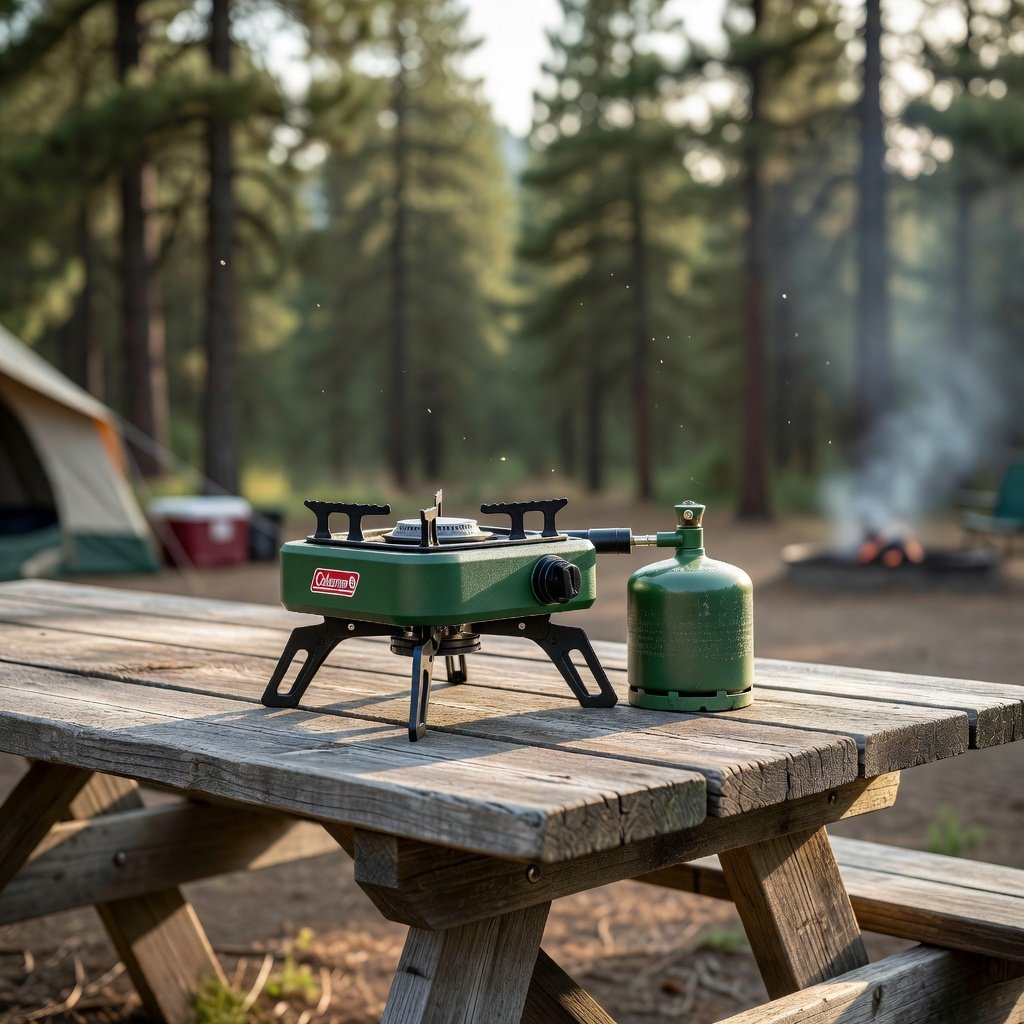 Coleman Bottletop Propane Camp Stove — Single Burner, 7,650 BTU$51.99
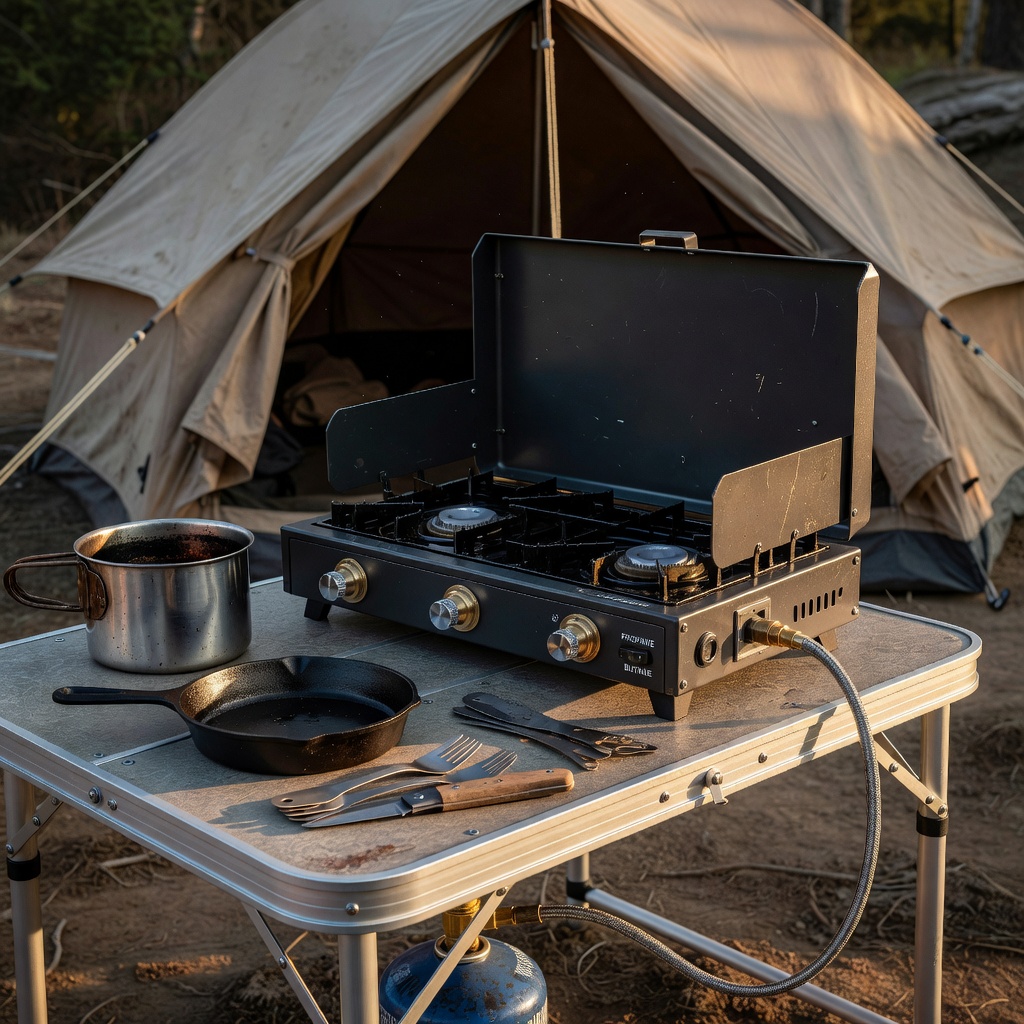 Gas One GS-3400P Dual Fuel Propane & Butane Camp Stove$34.99
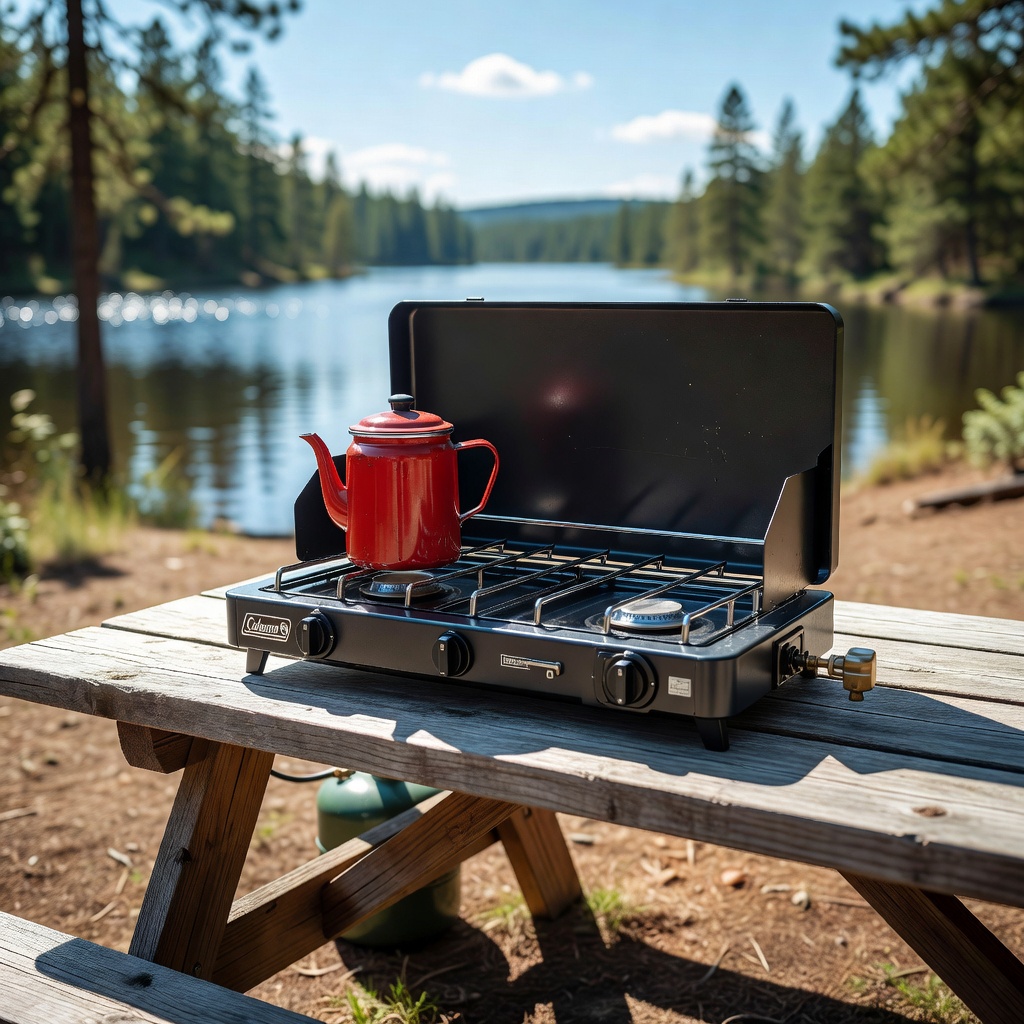 Coleman Triton+ 2-Burner Propane Camping Stove$149.99
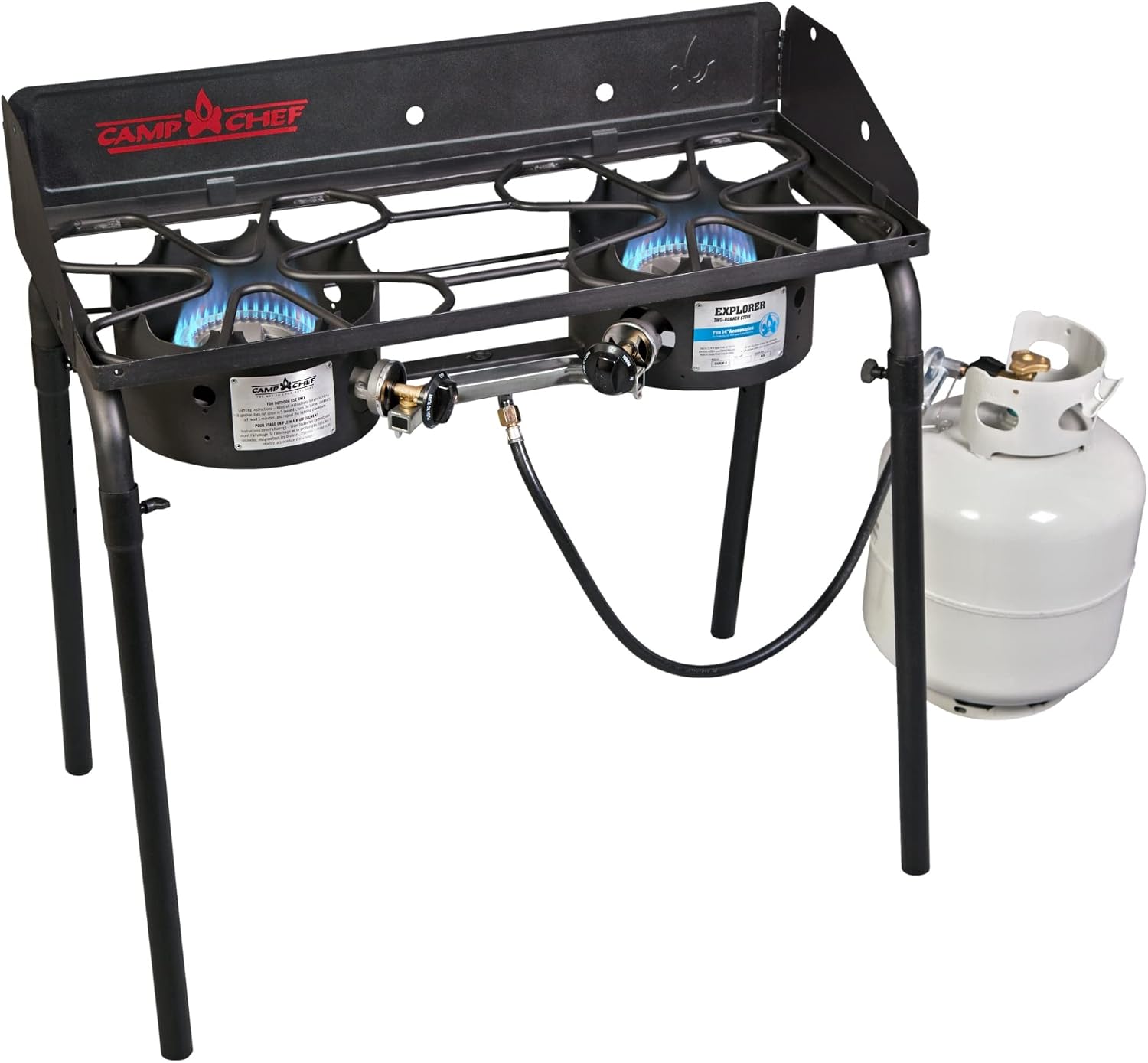 Camp Chef Explorer Two-Burner Camping Stove$127.99
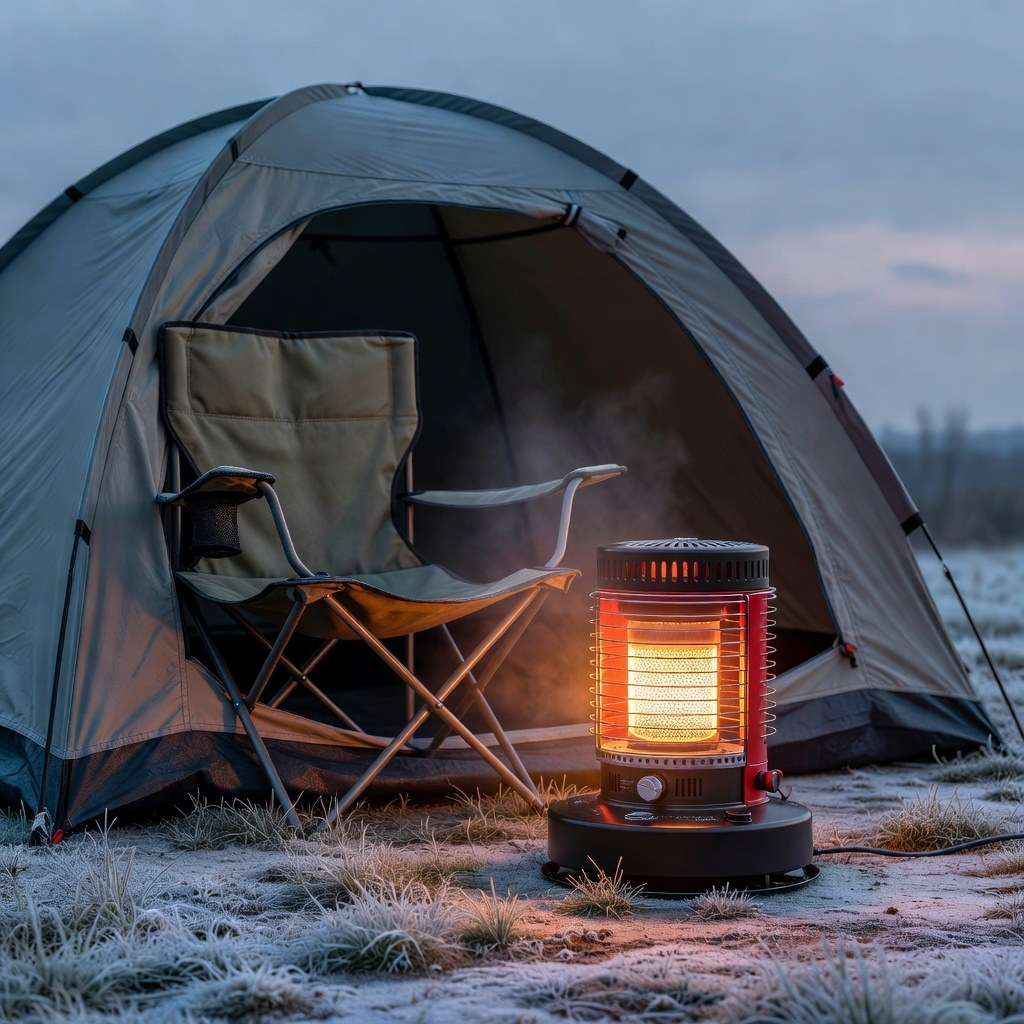 Mr. Heater F274830 MH18B Big Buddy 4,000/9,000/18,000 BTU Indoor-Safe Portable Propane Heater$146.48
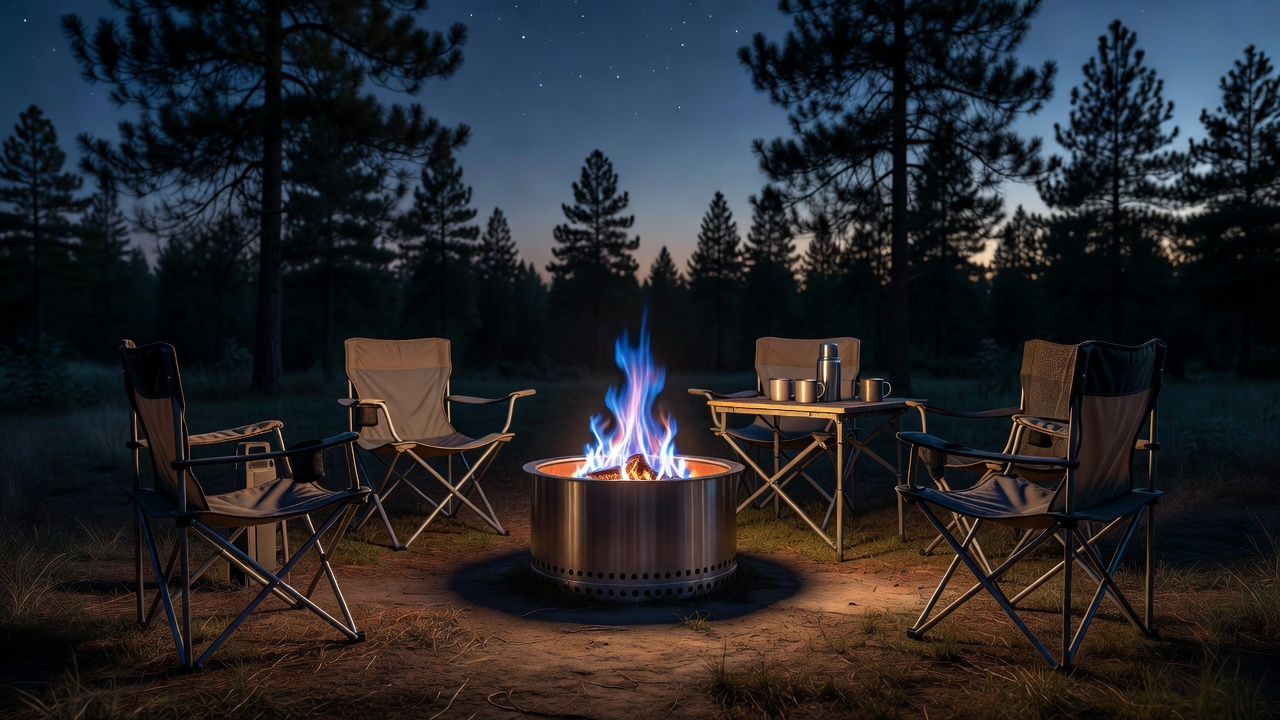 Outland Living Portable Propane Fire Pit, 19-inch, 58,000 BTU$142.64
In this article · 11 sections
- Quick Answer: Which Propane Tank Size for Camping
- Camping Propane Tank Sizes Chart
- Which Tank Fits Which Camping Appliance
- How Long Each Tank Size Actually Lasts
- 1 lb vs 20 lb: The Cost Per Trip Nobody Runs Until It's Too Late
- The Sizes In Between: 5 lb and 11 lb Refillables
- Cold Weather Changes the Math
- Transport and Safety Rules by Tank Size
- Every Way People Ask This: Propane Tank Size Questions
- Propane Tank Sizes FAQ
- Plan the Tank Before You Pack the Stove
Standing in front of the propane shelf at the hardware store, the choice looks simpler than it is: a little green cylinder, a squat steel tank, a big white tank. Pick wrong and you either carry home three times more fuel than your weekend needs, or you run the heater dry at 9 p.m. on the coldest night of the trip. This guide is the missing owner's manual — every propane tank size you can actually buy for camping, what each one runs and for how long, and a plain decision rule for which size your trip needs.
Quick Answer: Which Propane Tank Size for Camping
For a family car-camping weekend with a two-burner stove: one 20 lb tank (or two 1 lb cylinders if you already own the small ones). The 20 lb tank is the standard for a reason — it runs a typical two-burner stove hard for several days, it refills for a few dollars, and it is the same tank your grill uses, so spares are everywhere.
The short version of the whole guide:
- 1 lb disposable cylinders (16.4 oz) — the camp-stove default. Best for backpacking-adjacent trips, single-burner stoves, and as backups. Convenient, but the most expensive propane per pound you will ever buy.
- 5 lb refillable tank — the "I camp monthly and hate waste" size. Same 1 lb-compatible fittings through an adapter, a fraction of the per-fill cost of disposables.
- 20 lb tank — the standard. Two-burner stoves, Buddy heaters, propane fire pits, long weekends. If you buy only one tank, buy this one.
- 30 lb and 100 lb — RV and trailer territory, or basecamps running a fridge and furnace. Overkill for a trunk-camping family.
Camping Propane Tank Sizes Chart
Every size below is a real product you can walk into a store and buy. The BTU column is total fuel energy — how much raw heat the tank contains — which is the number all the run-time math in this guide builds on.
| Tank size | Propane inside | Total energy | What it actually runs |
|---|---|---|---|
| 1 lb disposable (16.4 oz) | ~0.4 gal | ~21,600 BTU | Single-burner stove for a weekend; Buddy heater ~2.4 hrs on high |
| 5 lb refillable | ~1.1 gal | ~108,000 BTU | A single-burner stove for weeks, or a weekend two-burner trip |
| 11 lb refillable | ~2.6 gal | ~238,000 BTU | A long weekend with stove + lantern; uncommon but real |
| 20 lb (standard BBQ tank) | ~4.7 gal | ~432,000 BTU | Two-burner stove for days, heater evenings, a fire pit weekend |
| 30 lb | ~7 gal | ~640,000 BTU | Trailer rigs, long basecamps, dual-tank RV setups |
| 100 lb | ~23.5 gal | ~2,160,000 BTU | Semi-permanent installs; not a trunk-camping tank |
Two things the chart should make obvious. First, pounds of propane — not the physical size of the tank — is what matters; a "small" looking 11 lb steel tank holds five times the fuel of the little green cylinder. Second, the jump from 1 lb to 20 lb is not "twenty times the tank" — it is twenty times the fuel in a tank that is barely more awkward to carry.
Which Tank Fits Which Camping Appliance
This is where most of the confusion actually lives: not "how big is the tank" but "does this tank even connect to my stove."
1 lb cylinders: stoves, small heaters, and everything with a threaded collar
The 16.4 oz green cylinder screws directly into anything built for it: backpacking and table-top stoves, the Coleman Bottle Top single burner, the Little Buddy and Buddy heaters, and most propane lanterns. No adapter, no hose — it is the simplest fuel connection in camping. The Coleman Bottle Top Propane Camp Stove ($51.99) is the classic example: cylinder on the bottom, burner on top, coffee in three minutes.
If your stove takes both fuel types, the Gas One GS-3400P dual fuel stove ($34.99) accepts either a 1 lb propane cylinder or butane cartridges — a sensible hedge if you camp in mixed weather, though for genuinely cold trips propane is the safer of the two fuels.
20 lb tanks: two-burner stoves, Buddy heaters on hoses, fire pits
Anything with a low-pressure regulator and a hose wants a 20 lb tank: full-size two-burner stoves like the Coleman Triton+ ($149.99) and the Camp Chef Explorer ($127.99), the Big Buddy heater fed through a hose, and every propane fire pit worth owning — the Outland Living 19-inch and the Flame King 24-inch firebowl both bolt to a 20 lb tank and burn 58,000 BTU, which a 1 lb cylinder cannot sustain for an evening.
The bridge between the two worlds is the adapter-and-hose category: a 5 ft or 10 ft hose with a 1 lb-disposable-side fitting lets a "small tank" appliance run off the 20 lb tank. The Mr. Heater Buddy series hose ($17.99) is the one most Buddy owners eventually buy — it converts the heater from drinking $3 disposable cylinders to sipping from a tank you refill for pocket change. Our camp stove propane hose and adapter guide covers the whole fitting family.
30 lb and 100 lb: trailers, not trunks
Travel trailers typically ride on twin 20 lb or 30 lb cylinders; motorhomes carry a fixed ASME tank. If you are trunk-camping, none of this is your problem — but if you are renting an RV for a family trip, knowing the rig runs 20-30 lb equivalents tells you the stove and furnace will not be your limiting factor. The RV-specific sizing details live in our how much propane for camping guide.
How Long Each Tank Size Actually Lasts
Capacity only matters relative to what you run. The math is one division: total BTU in the tank ÷ appliance BTU per hour = hours of full burn.
| Appliance (full burn) | 1 lb cylinder | 20 lb tank |
|---|---|---|
| Single-burner stove (~7,650 BTU) | ~2.8 hours | ~56 hours |
| Two-burner stove, both high (~22,000 BTU) | ~1 hour | ~19.5 hours |
| Buddy heater on high (~9,000 BTU) | ~2.4 hours | ~48 hours |
| Buddy heater on low (~4,000 BTU) | ~5.4 hours | ~108 hours |
| Propane fire pit (~58,000 BTU) | ~22 minutes | ~7.4 hours |
Real trips burn less than the table implies, because nobody runs burners flat-out the whole meal. In practice:
- A two-night family weekend with a two-burner stove uses roughly 2-4 hours of actual burner time per day — call it 60,000-90,000 BTU total. One 20 lb tank covers it four times over; four 1 lb cylinders cover it once.
- A Buddy heater used for pre-sleep and morning warm-ups (an hour on low, morning and night) burns about 8,000 BTU/day — a 1 lb cylinder lasts a cold weekend, a 20 lb tank lasts weeks of evenings.
- The crossover rule: if your trip plan includes a heater and a stove and anything else, one 20 lb tank beats a pile of 1 lb cylinders on both weight and cost. If the plan is a single-burner stove and nothing else, 1 lb cylinders are lighter to pack and simpler to manage.
The full per-day fuel budget, including the fridge-and-furnace RV math, is in how much propane a camping trip really uses — and the heater-specific run times are broken down further in how long a Buddy heater runs on each tank size.
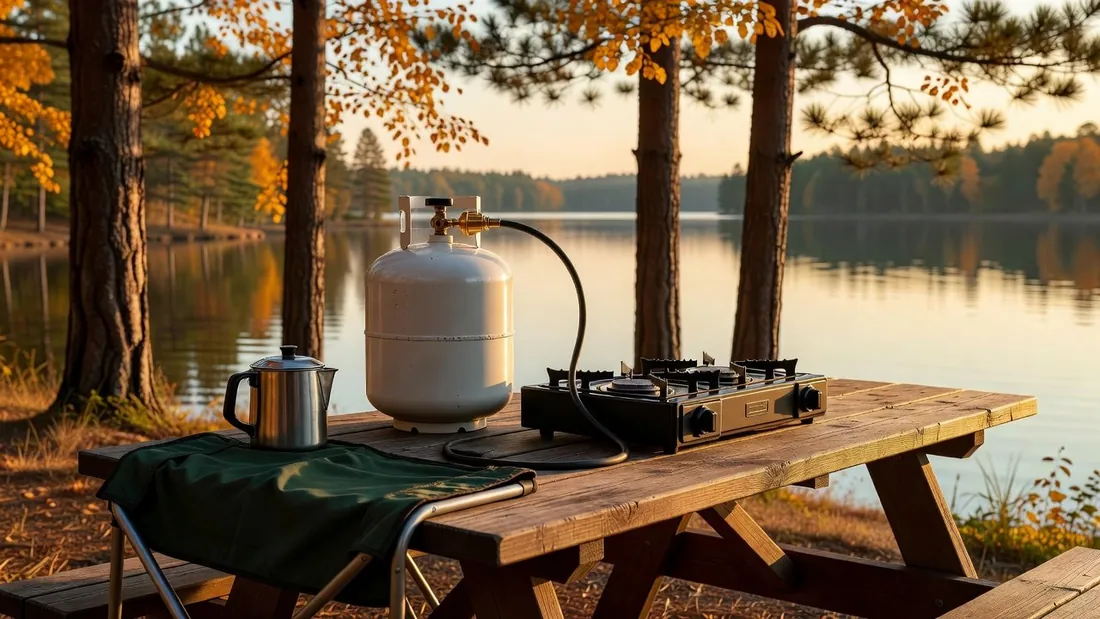
1 lb vs 20 lb: The Cost Per Trip Nobody Runs Until It's Too Late
The disposable cylinder is a convenience tax. A 1 lb cylinder costs roughly $3-5 at a campground store (less at a big-box) and holds about a fifth of the fuel of a 20 lb refill that costs $15-25 at an exchange or a few dollars at a refill station. Per pound of propane, disposables run 3-5× the price of refilling a 20 lb tank.
We ran the full trip-by-trip cost comparison in 1 lb vs 20 lb tank cost per trip — the honest summary: if you camp three or more weekends a year with anything bigger than a single burner, a 20 lb tank pays for its own bulk within a season.
There is a middle path worth knowing about: refilling 1 lb cylinders yourself. With a refill adapter and a scale, a standard 20 lb tank becomes the source and your green cylinders become cheap, reusable vessels — legally a gray-then-green area that is fully settled if you follow the weight-and-date rules. The safety procedure is in how to refill 1 lb propane bottles safely, and the store-exchange-vs-refill economics are in 1 lb refill vs exchange cost.
The Sizes In Between: 5 lb and 11 lb Refillables
The 5 lb ("little buddy" of tanks, about the size of a fire extinguisher on a stand) is the sleeper pick for van campers and frequent weekenders. It holds ~108,000 BTU — five 1 lb cylinders — refills anywhere 20 lb tanks do, and its small footprint fits a trunk bin. The catch is fittings: you will need the same hose-adapter category as the 20 lb tank, so it only makes sense once you have committed to hose-fed appliances.
The 11 lb steel tank is rarer and mostly a marine/overlanding item; if you see one secondhand, treat it as a 5 lb with more capacity, not a small 20 lb — same adapter requirements apply.
Cold Weather Changes the Math
Two cold-weather facts that size decisions hinge on:
- Propane itself does not freeze (it stays liquid until -44°F), but the tank's pressure drops with temperature, and pressure is what feeds the appliance. A cold-soaked 1 lb cylinder feeding a hungry heater will visibly underperform — frosting on the tank exterior is the classic symptom. The full physics and the fixes are in why propane tanks frost up.
- Bigger tanks hold pressure better in cold. A 20 lb tank's larger liquid surface area vaporizes more reliably at 20-30°F than a small cylinder running the same appliance. This is the quiet argument for the 20 lb tank on any late-fall or winter family trip — and it is why our winter guides default to it.
If the trip is genuinely cold, also read how long unused propane lasts in storage before you trust the half-full tank that has been in the shed since spring, and how to store propane tanks between trips for the off-season rules.
Transport and Safety Rules by Tank Size
The rules that actually get enforced or cause accidents, by size:
- Every size: tanks ride upright, secured so they cannot tip, out of a sealed hot trunk when possible, and never inside the passenger cabin of a closed vehicle overnight. Disconnect the appliance before driving.
- 1 lb cylinders: the most commonly mishandled only because people forget they are pressure vessels. No spares loose in a hot car; a plastic crate in the shade is the fix.
- 20 lb tanks: many campgrounds and ferries have specific rules for tanks over a size threshold — call ahead if you are crossing on a ferry or staying somewhere with tank-age limits. Check the valve and collar for damage before every trip.
- Leak checking is a two-minute job with soapy water on every new connection. If you want an instrument instead of bubbles, the Techamor Y201 gas leak detector ($25.99) is the cheap peace-of-mind pick for a family rig.
- Multi-appliance camps: if you run stove and heater and lantern off one big tank, a three-outlet distribution post ($56.99) splits it cleanly instead of swapping hoses at every meal.
The complete storage, indoor-use, and flying-with-propane rules are in the propane storage guide.
Every Way People Ask This: Propane Tank Size Questions
| As people type it | The answer |
|---|---|
| camping propane tank sizes | 1 lb disposable, 5 lb, 11 lb, 20 lb, 30 lb, 100 lb — for family camping, the decision is really 1 lb vs 20 lb. |
| what size propane tank do i need | A two-burner-stove weekend needs one 20 lb tank (or 2-4 one-pounders). Add a heater or fire pit and the 20 lb tank is the only sensible answer. |
| small propane tank for camping | The 1 lb (16.4 oz) cylinder is the small standard; the 5 lb refillable is the small serious option. |
| smallest propane tank for camping | 1 lb disposable (16.4 oz) — it is also the cheapest entry point and fits every small-thread appliance. |
| propane tank sizes chart | See the chart above: 1 lb ≈ 21,600 BTU, 5 lb ≈ 108,000, 11 lb ≈ 238,000, 20 lb ≈ 432,000, 30 lb ≈ 640,000. |
| propane tank for camp stove | Table-top and single-burner stoves take 1 lb cylinders directly; full-size two-burners take a 20 lb tank via regulator hose. |
| propane tank for camping stove how long does it last | A 1 lb cylinder runs a single burner ~2.8 hours flat-out; a 20 lb tank runs it ~56 hours. |
| mini propane tank for camping | "Mini" usually means the 1 lb cylinder. There is nothing smaller with the standard CGA-600 threaded fitting. |
| rv propane tank sizes | Trailers run twin 20-30 lb cylinders; motorhomes carry a fixed ASME tank from 20 to 100 lb. |
| how much propane in a 30lb tank | About 7 gallons of propane (~640,000 BTU) at the 80% OPD fill — roughly 1.5× the fuel of a 20 lb tank, in a cylinder most family cars would rather not lift. |
| propane tanks smaller than 20 lb | The 5 lb (~1.1 gal) and 11 lb (~2.6 gal) refillable steel tanks — same fitting as a 20 lb, less bulk to lift, refillable at any propane dealer. |
| camper propane tank size | Travel trailers and truck campers typically run twin 20 lb or 30 lb cylinders on an auto-changeover regulator; a motorhome carries one fixed ASME tank instead. |
Propane Tank Sizes FAQ
Is a 20 lb propane tank too big for camping?
For backpacking, yes. For family car camping, no — it is the correct default. A full 20 lb tank weighs about 37 lbs, which is trunk-and-wagon weight, not carry-to-campsite weight. The real question is whether your appliances connect to it, and a $15-20 adapter hose solves that for most Buddy heaters and small stoves.
Can I connect a 1 lb propane appliance to a 20 lb tank?
Yes, with a hose adapter — that is exactly what the Buddy heater hose and the camp-stove adapter hoses do. Two things must be true: the appliance is rated for low-pressure bulk supply (Buddy heaters with the official hose are; check your stove's manual), and you do the leak check on every new connection. Never rig an adapter that bypasses the appliance's regulator.
How much propane is left in my tank?
For a 1 lb cylinder, the hot-water method works: pour warm water down the side and feel for the cool line — the level where the liquid propane chills the steel. For a 20 lb tank, the same trick works on the bare steel, or use the tare weight stamped on the collar (TW number) on a scale. The full walkthrough with photos is in how to tell how much propane is left in a 1 lb tank.
Do propane tanks expire?
The tank's certification date does — stamped on the collar as a month/year. Requalification (or exchange) is due 12 years after manufacture, then every 5 years after that, though an exchange swap sidesteps the whole question. The fuel itself does not spoil. Details in the propane shelf-life guide.
What size propane tank for a two-burner camp stove?
A 20 lb tank through the stove's regulator is the standard setup — the Coleman Triton+ and Camp Chef Explorer both expect it. A two-burner weekend burns a fraction of the tank, which is exactly why one tank covers the season, not the trip.
Which propane tank should I buy first?
The 20 lb, filled, plus the adapter hose for whatever small appliance you own. It is the size every store refills, every exchange kiosk stocks, and every future camping purchase (heater, fire pit, bigger stove) assumes.
<!-- AFFILIATE_DISCLOSURE -->Plan the Tank Before You Pack the Stove
One 20 lb tank and the right adapter hose cover a family camping season: stove, heater, and the occasional fire pit evening, refilled for pocket change instead of a shelf of green cylinders. Size the tank to the whole trip plan, not to the first appliance you bought — and when in doubt, go bigger, because unused propane is free while an empty tank at 9 p.m. in November is not.