Cut Your Own Christmas Tree: Family Weekend Guide
Cut your own Christmas tree, then camp a night nearby: forest permits, stump rules, farm prices, dog rules, and how to keep it alive for weeks.
 Carhartt Men's Waterproof Insulated Knit Cuff Glove$32.99
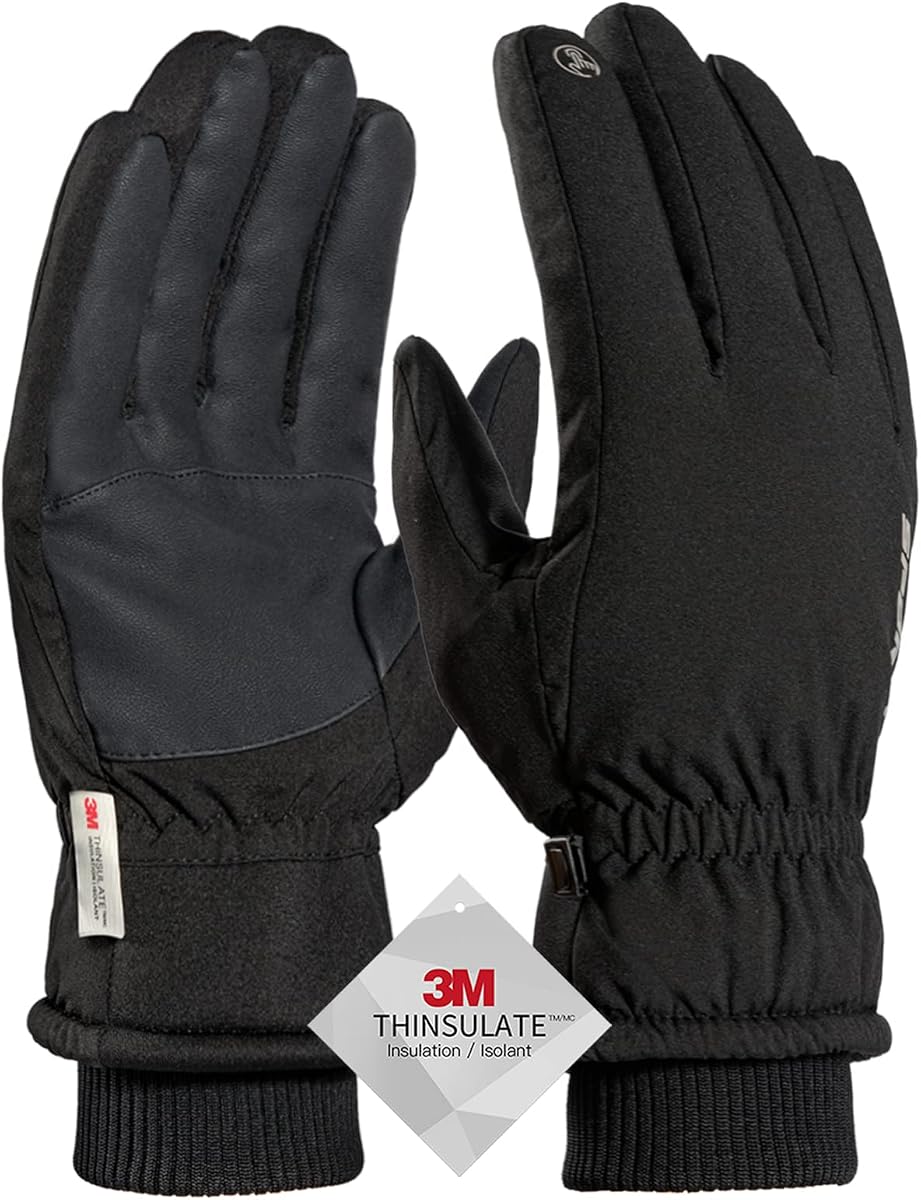 TRENDOUX Winter Gloves for Men — 3M Thinsulate Touchscreen Gloves$19.99
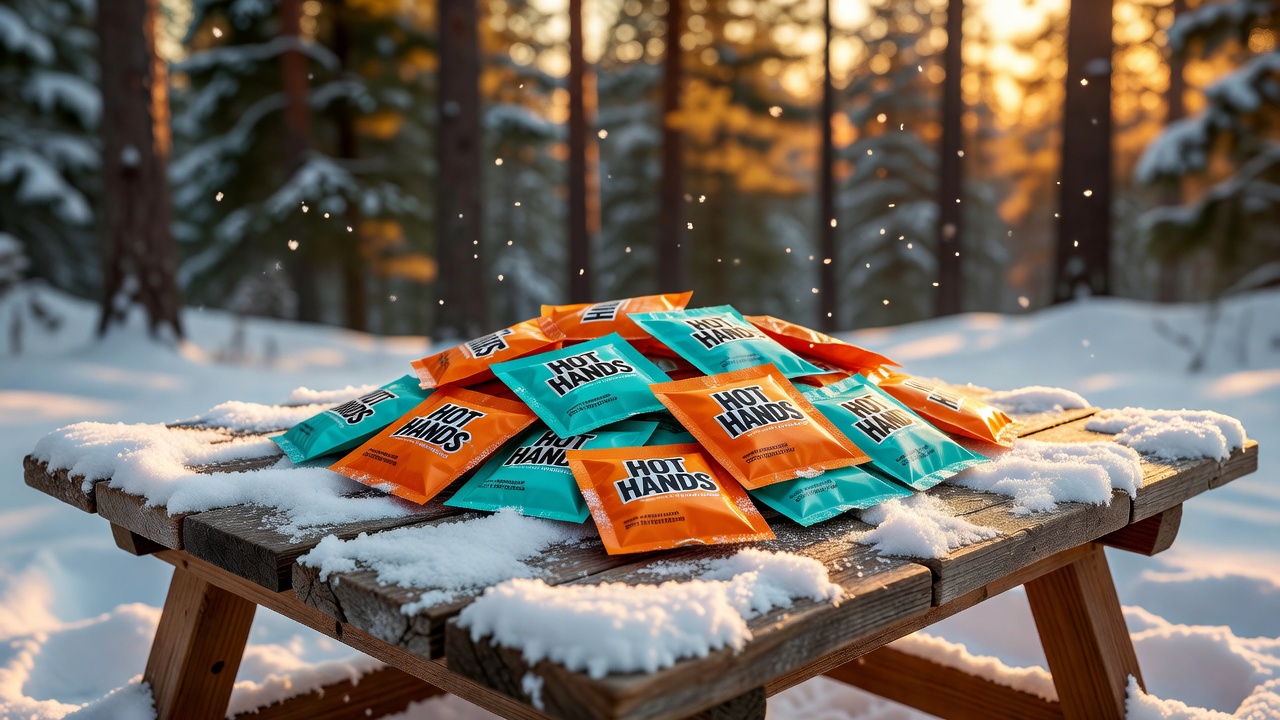 HotHands Hand Warmers Bulk Pack, 40 Pairs — Air-Activated Disposable Warmers (10 Hours of Heat)$29.99
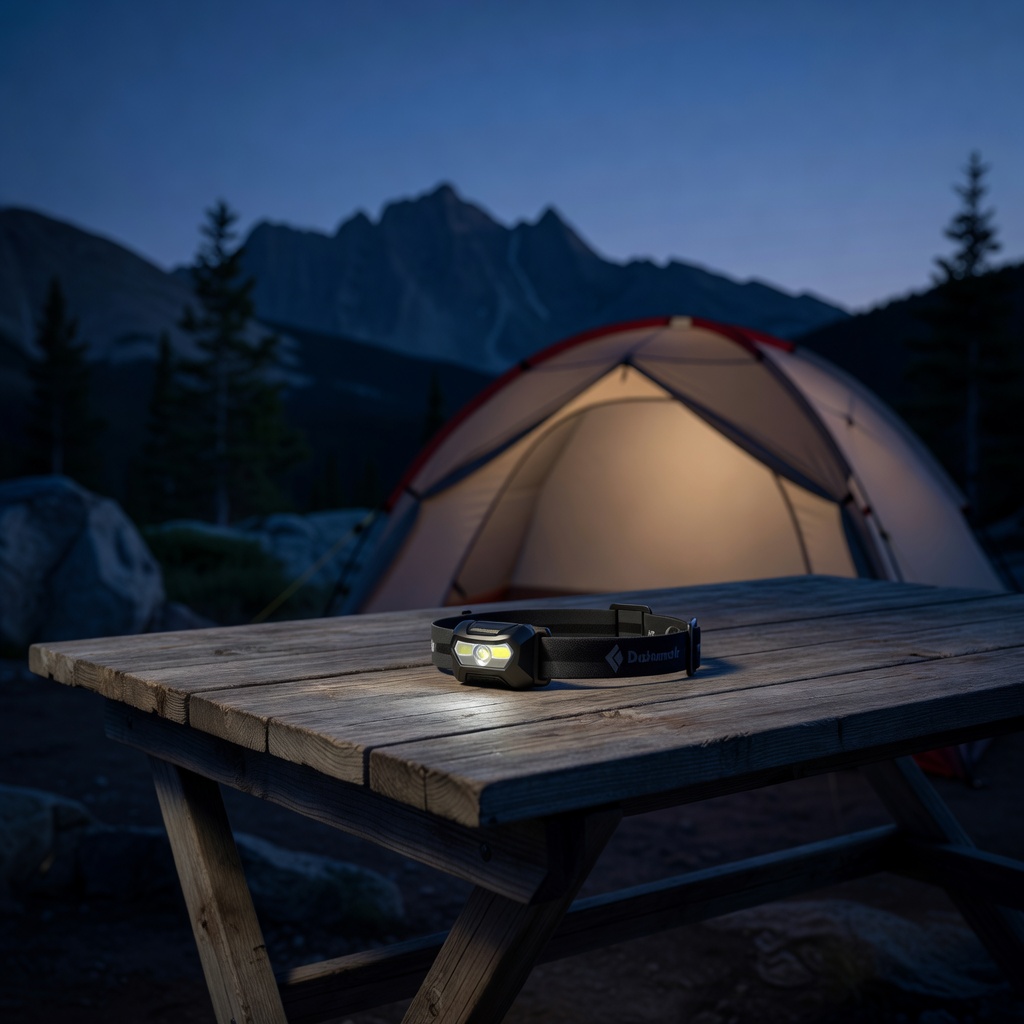 Black Diamond Spot 400 Headlamp — 400 Lumen Waterproof Dual-Fuel Camping Light$39.95
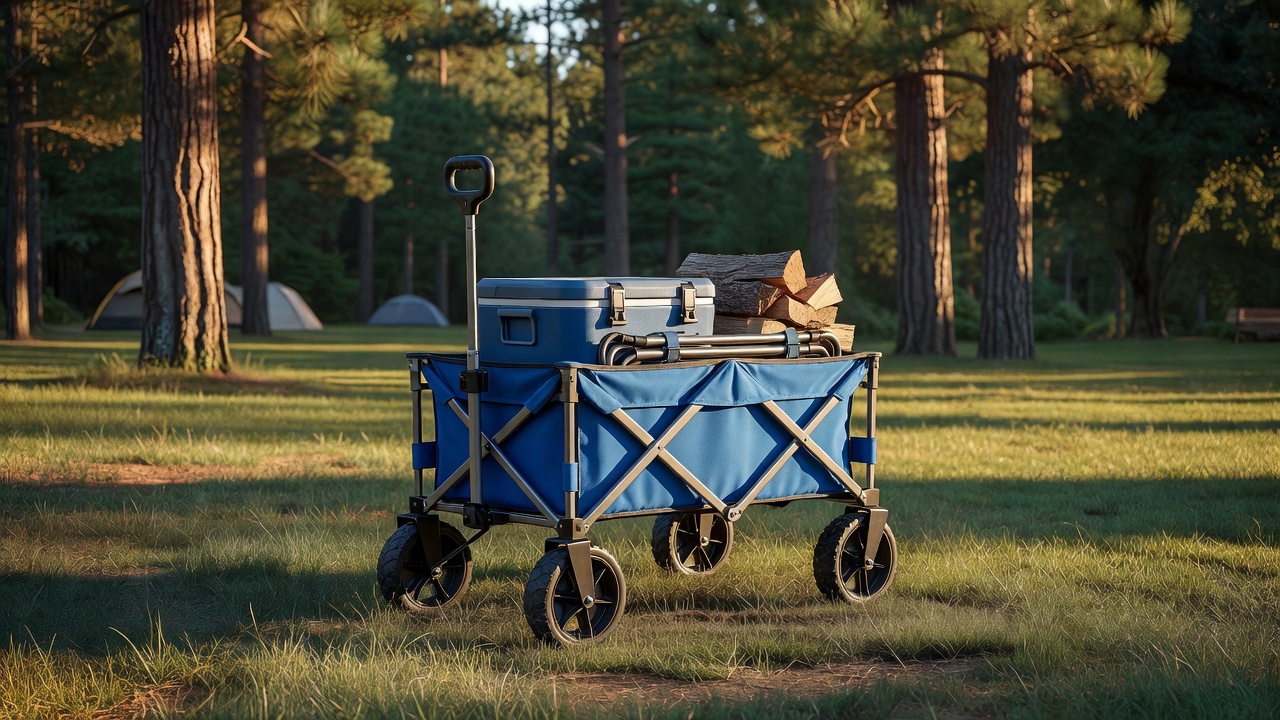 Mac Sports Heavy Duty Steel Frame Collapsible Folding 150 Pound Capacity Outdoor Camping Utility Wagon$100.56
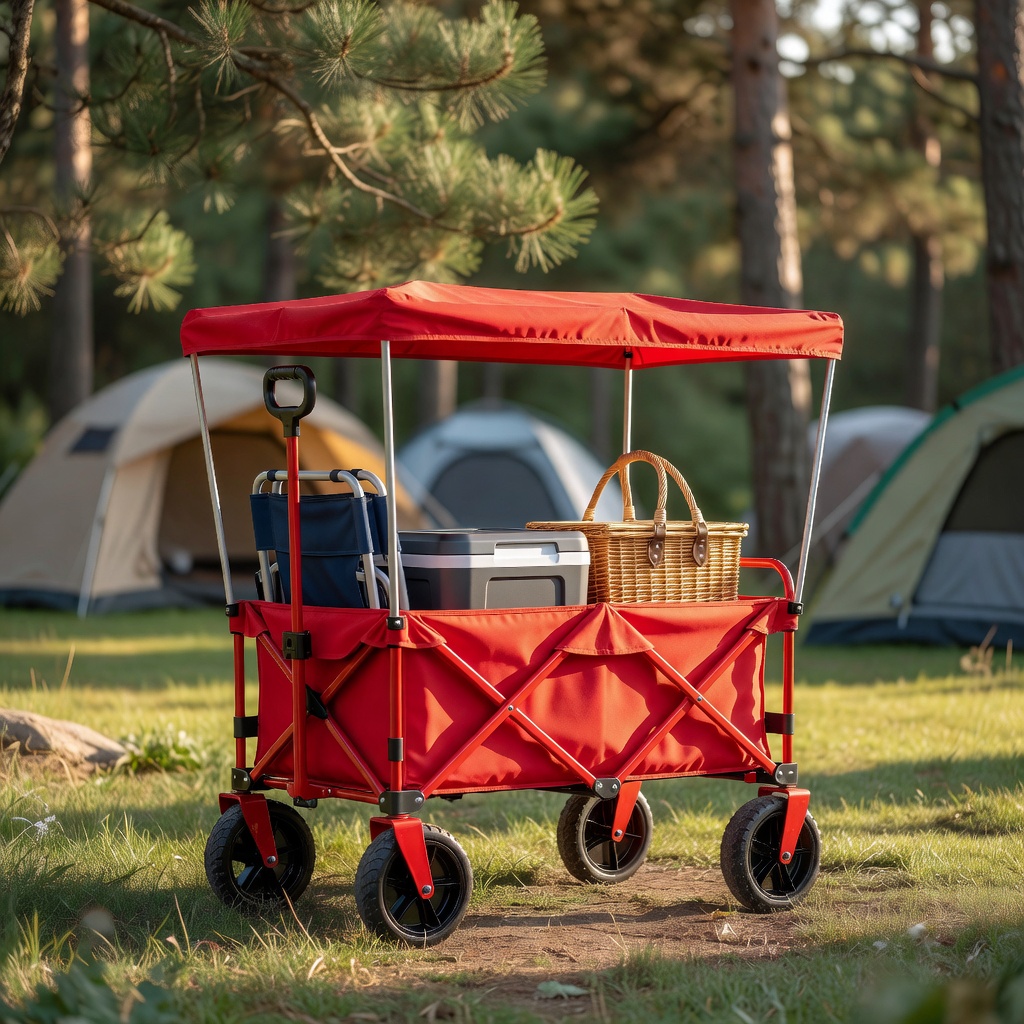 Radio Flyer 3-in-1 EZ Fold Wagon with Canopy, for Kids 1.5+, UV Shade$109.99
In this article · 10 sections
- The Short Version: What a Cut-Your-Own Weekend Looks Like
- National Forest Christmas Tree Permits: The Cheapest Option Nobody Tells You About
- How to Cut Your Own Tree (So It Survives Past New Year's)
- How Long Does a Real Tree Last? (And Real vs. Artificial)
- Dogs, Kids, and the Farm Rules Nobody Puts on the Website
- Christmas Tree Care: The First 48 Hours Decide the Next Five Weeks
- The Campsite Tree: Decorating a Christmas Tree at Camp
- Turning It Into a Weekend: Camping Near the Tree Farm
- The Weekend, Hour by Hour
- Cut-Your-Own Christmas Tree FAQ
The tree lot is the easy version. You drive up, pay $90 for something already cut three weeks ago in North Carolina, and it drops half its needles by mid-December. The other version involves a thermos, a folding saw, a child in snow boots, and a forest where you pick the tree yourself — and it costs about as much as two lattes.
We do this every year now. What started as a one-hour errand turned into a whole weekend: cut the tree Saturday morning, camp that night within an hour of the tree farm, drive home Sunday with the tree strapped to the roof and pine needles in the floor mats. This guide is the version we'd hand to a friend — what a permit actually costs, how the cut works so the tree survives to New Year's, what the farms do and don't allow with kids and dogs, and how to turn it into an actual family camping weekend instead of a chore.
The Short Version: What a Cut-Your-Own Weekend Looks Like
Two routes, two price points, two completely different mornings.
The farm route (choose-and-cut). You drive to a tree farm, they hand you a saw or a staff member cuts it, you pay per tree, and they shake and bale it. Open the day after Thanksgiving through mid-December in most of the country. Zero navigation skill required. This is the right first year.
The national forest route (permit). You buy a $5–$10 permit, drive to a designated cutting area on Forest Service land, hike in, find a wild tree, cut it, tag it, and haul it out. No rows, no staff, no shaking machine — and the tree looks like a tree, not a cone. This is the version our kids remember.
The three things that decide whether the day goes well: you cut before the tree is dry (sooner in the season is better), you protect the cut end on the drive home, and you get the tree in water within a few hours of the second cut. Everything else is logistics.
| Question, as people type it | The answer |
|---|---|
| cut your own christmas tree | Two ways: a choose-and-cut farm (saw provided, $60–$120 for a 6–8 ft tree) or a national forest permit ($5–$10, you bring the saw). Farms are easier with small kids; forests are cheaper and quieter. |
| cut your own christmas tree farm | Search "choose and cut" plus your county rather than "christmas tree farm" — the second term returns mostly pre-cut lots. Call ahead for hours and whether the field is still open; most close when they sell out, often the second weekend of December. |
| u cut christmas tree | Same thing, different regional spelling. "U-cut," "choose-and-cut," and "cut-your-own" are used interchangeably; farms in the Pacific Northwest and New England favor U-cut. |
| u cut christmas trees | Plural is usually a farm listing, not a different question. Confirm whether the price is per tree or per foot — both exist, and per-foot pricing surprises people at the register. |
| u cut christmas tree farm | Bring cash. A surprising number of U-cut farms are cash-or-check only, and the nearest ATM is often fifteen minutes away. |
| places to cut your own christmas tree | Three categories: choose-and-cut farms, national forest permit areas, and Christmas tree plantations that sell a "cut your own" tag for a specific marked tree. The third is the cheapest and the least advertised. |
| places to cut your own christmas tree down | Look up your nearest national forest's Christmas tree page first — if a forest near you sells permits, that is almost always the cheapest and most memorable option, and the cutting areas are mapped. |
| where to cut your own christmas tree | Within about 90 minutes of home is the sweet spot: long enough to feel like a trip, short enough that the tree is in water before dinner. If you are pairing it with a camp night, pick the farm or forest first and the campground second. |
| cost to cut your own christmas tree | Farm: roughly $60–$120 for 6–8 ft depending on region and species. National forest permit: $5–$10 per tree on most forests, plus about $2.50 if you buy online through Recreation.gov. A folding saw is $15–$25 once and lasts a decade. |
| tips for cutting your own christmas tree | Measure your ceiling and your stand before you leave — a 9 ft tree in an 8 ft room is the most common first-year mistake. Bring gloves, a tarp, and two lengths of rope. Cut a tree that is a little smaller than the one you think you want. |
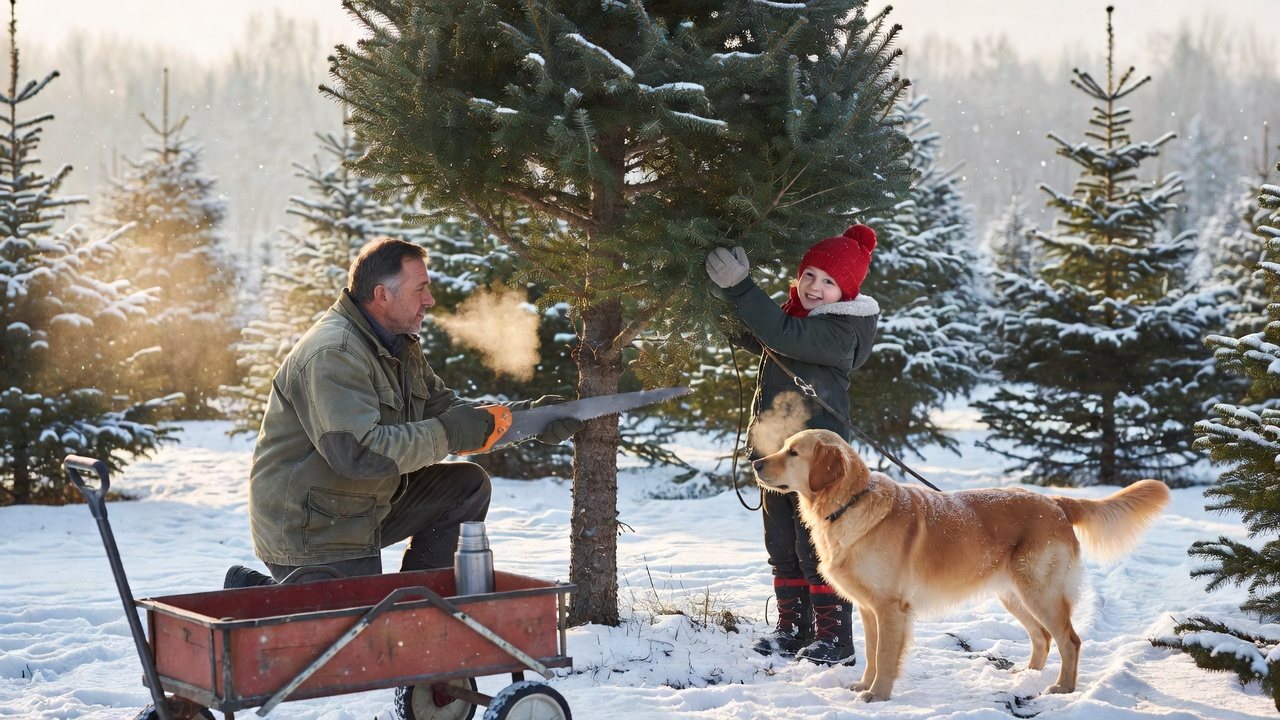
National Forest Christmas Tree Permits: The Cheapest Option Nobody Tells You About
Most national forests sell personal-use Christmas tree permits for $5–$10 per tree, limited to one to three trees per household depending on the forest. Some forests now sell them only online through Recreation.gov (which adds roughly a $2.50 reservation fee); others still sell paper tags at ranger district offices. A handful of forests offer a free tree to Every Kid Outdoors pass holders — the free federal-lands pass for fourth graders — so if you have a nine- or ten-year-old, check that page before you pay.
The rules that actually matter, and that catch people in the field:
- Stump height. Six inches or less is the near-universal rule. Cut low, and don't leave a spike.
- The tag. You must attach the permit tag to the tree trunk before you leave the cutting area, not at the car. Rangers do check.
- Species restrictions. Forests usually name what you may cut — often subalpine fir, white fir, lodgepole pine, or pinyon — and prohibit cutting endangered or rare species and anything in a plantation.
- Where you may not cut. No cutting in wilderness areas, developed campgrounds, timber sale units, or within a set distance of roads, streams, and trailheads. The forest publishes a map; download it before you lose signal.
- No chainsaws in many forests. Hand saws only. A $20 folding saw cuts a 6-inch trunk in under two minutes.
- Height limits. Personal-use trees are commonly capped around 10–12 ft. If you want a 15-footer, you probably need a farm, not a forest.
| Question, as people type it | The answer |
|---|---|
| christmas tree permit national forest | Buy through the specific forest's permit page or Recreation.gov, print the tag, attach it to the trunk in the cutting area, and carry the second copy with you. Permits are per household and sell out in popular forests by mid-November. |
| christmas tree permit us forest service | The Forest Service runs the program forest by forest, not nationally — there is no single national permit. Start at your nearest forest's site, not at a generic "buy a permit" page, because dates, prices, and species lists differ. |
| permit to cut your own christmas tree | Same permit. Expect $5–$10, a one-to-three-tree household limit, a designated cutting area, and a stump height limit of six inches. Some forests also require you to display the tag from the road while transporting. |
| christmas tree cutting national forest | The mechanics: pay, get the map, drive to the cutting area, hike to a tree inside the boundary, cut at six inches or less, tag it, drag it out, and secure it to the roof. Bring rope — forests do not hand out twine. |
| christmas tree permit tahoe national forest | It is a national-forest permit like any other, so the process is identical: buy it online or at a district office, print the tag, cut inside the designated area, and expect the six-inch stump rule. West-coast forests often open sales in early November and close them when the allocation runs out. |
| christmas tree permit stanislaus national forest | Same program, same mechanics. The one thing that varies by forest is the species list and how far in you may drive — some cutting areas are a short walk from a plowed pullout, others are a snowshoe trip. |
| how long does it take to grow a christmas tree | Six to ten years for a 6–7 ft fir. That is why farm prices are what they are, and why "just plant one in the yard" is a decade-long project rather than a workaround. |
How to Cut Your Own Tree (So It Survives Past New Year's)
A tree does not die when you cut it. It dies when the cut end seals over and it can no longer take up water. That single fact drives every step below.
- Pick the tree with the trunk in mind, not just the top. A straight, single-leader trunk that fits your stand matters more than a perfect silhouette. Walk around it — the best-looking side from the path is often the worst from your living room.
- Kneel down and cut low. Six inches above the ground, flat across, with a hand saw. Saw in a steady rhythm rather than jabbing; firs cut fast, pines gum up the blade.
- Do not trim the bottom branches to make it fit. People do this to squeeze a tree into a stand and then wonder why the tree looks bare at the base. Choose a smaller tree instead.
- Shake it, then bale it if you can. Most farms have a mechanical shaker; on forest trees, a firm shake removes the loose interior needles and any occupants.
- Protect the cut end on the drive home. Wrap the base in a damp rag or a plastic bag tied at the trunk. A two-hour drive with the cut end in dry wind is the difference between a tree that lasts five weeks and one that lasts two.
- Recut half an inch at home, then water immediately. A fresh cut within an hour of going into the stand opens the wood so it can drink. Never let it sit dry overnight "until tomorrow."
| Question, as people type it | The answer |
|---|---|
| how to cut a christmas tree | Kneel at the trunk, saw flat and level about six inches above the ground with a hand saw, and keep the blade moving rather than forcing it. Then shake the tree out and protect the cut end for the drive home. |
| how to cut a christmas tree down | Cut from one side until the saw is deep, then finish from the opposite side so the tree falls away from you rather than splitting and pinching the blade. Have someone hold the top once it starts to lean. |
| how to cut a christmas tree trunk | Level cut, six inches up, straight across — not angled. An angled cut makes the tree lean in the stand and exposes less drinking surface, not more. |
| how to cut a christmas tree base | Cut straight across about an inch above the bottom-most whorl of branches so the trunk still fits deep enough into the stand to be stable. Then recut half an inch at home before it goes in water. |
| how to cut a christmas tree bottom | Same cut, said the other way. If the trunk is too thick for your stand, bore a hole or shave the sides — do not shorten the trunk until you have checked the stand's depth. |
How Long Does a Real Tree Last? (And Real vs. Artificial)
A freshly cut tree, kept in water, lasts four to six weeks indoors. That is the whole answer, and it is why the timing of your cut matters more than the species you pick: a tree cut the weekend after Thanksgiving will comfortably reach New Year's, a tree cut December 20 is already three weeks into its clock.
Needle-retention research from the Christmas tree industry is blunt about the first hours: trees that go into water within about two hours of the final cut hold the large majority of their needles at three weeks, while trees that sit dry for half a day lose a third or more. Watering is not optional maintenance; it is the main event. Expect a fresh 6–8 ft tree to drink a quart to a gallon a day for the first week, then taper. Plain tap water is fine — the old aspirin, sugar, and bleach recipes do nothing that a fresh cut does not already do.
| Question, as people type it | The answer |
|---|---|
| how long does a real christmas tree last | Four to six weeks indoors if it is kept in water and away from heat. Cut earlier in the season and it comfortably reaches New Year's; cut mid-December and plan on taking it down the first week of January. |
| how long does a real christmas tree last indoors | Four to six weeks, but the clock starts at the second cut, not the day you bought it. Recut half an inch, get it into water within an hour, and top the stand daily for the first week. |
| how long does a real christmas tree last inside | Same four to six weeks, minus whatever the room does to it. A tree next to a heating vent or a fireplace dries two to three times faster than one in a cool corner. |
| how long does a real christmas tree last in your house | Plan on five weeks. That is why the industry's own guidance is to buy the freshest tree you can as early as you reasonably can — the tree you cut yourself in late November is fresher than anything on a lot in mid-December. |
| how long does a real christmas tree last once cut | Four to six weeks in water, roughly one to two weeks if it never gets water at all. A cut tree with a sealed butt cannot absorb anything, which is why the recut matters. |
| how long does a real christmas tree last with water | The full four to six weeks, provided you check the level every day for the first week. A stand that runs dry for a day seals the cut again and you cannot fix it by refilling. |
| how long does a real christmas tree last without water | A few days to about two weeks before the needles start dropping in volume. In a heated room, a dry tree is also a fire hazard — treat it as kindling, not decor. |
| how long does a real christmas tree last outside | Weeks longer on a porch or in a garage, because cold and humidity slow the drying. That is the trick if you cut early: store it outdoors in water until you are ready to bring it in. |
| real christmas tree vs artificial | Real: better scent, a weekend tradition, grown on US farms, and recyclable into mulch. Artificial: cheaper after four or five years, no watering, no needle drop in the carpet, and the right answer for allergies or apartments. |
| real christmas tree or fake | If you want the family outing and the smell, real. If you want to set it up in twenty minutes and take it down in ten, fake. The honest middle ground is a real tree cut yourself plus a bag to store it in on the way out. |
| real christmas tree vs fake | Same trade-off, one grade less formal: real wins on scent and tradition, fake wins on cost-per-year and convenience. Neither wins on "more Christmassy" — that is a childhood-memory question, not a data question. |
Dogs, Kids, and the Farm Rules Nobody Puts on the Website
Most choose-and-cut farms allow leashed dogs, and a few have a specific "dog field" or a dog-free field. The rule is not published consistently, so the only reliable move is a phone call the week you go — and if the farm says yes, the leash rule still applies in the fields, not just at the parking lot.
What surprises people is the ground. Tree farms are cold, often muddy, and covered in dropped needles and trimmed branch ends. On a 30°F morning, small paws get cold fast and pine sap sticks to fur. A short visit beats a long one, bring a towel and a bowl, and rinse sap off with cooking oil on a rag rather than soap and water — oil lifts pine resin, soap mostly smears it.
Kids need the same kind of planning for different reasons: a folding saw is a real saw, so the adult cuts and the child chooses. Give them the job of picking the tree and holding the measuring stick, and you avoid the ten-minute negotiation at the wrong trunk.
| Question, as people type it | The answer |
|---|---|
| christmas tree farm dogs | Leashed dogs are welcome at many choose-and-cut farms and banned at others, so call first. Bring a towel for muddy paws, a bowl, and cooking oil on a rag for sap — soap mostly smears pine resin. |
| christmas tree farm dogs allowed | Ask two things when you call: whether dogs are allowed at all, and whether they are allowed in the tree field or only in the parking area. The second half is where farms differ, and it is rarely on the website. |
| christmas tree farm dog friendly | "Dog friendly" at a tree farm usually means leashed and in the field; a few farms run a dedicated dog field on a specific weekend. Cold ground is the real constraint — a 30°F morning is hard on small paws. |
| christmas tree farm kids | Give the child the choosing job and the adult the saw. Farms with a barn usually have cocoa, a hayride, and a photo spot, which is what keeps a four-year-old interested for the second hour. |
| christmas tree farm kids activities | Hayrides or wagon rides out to the back fields, hot cocoa and donuts, crafts or a Santa visit at larger farms, and the tree-shaker — which children find far more interesting than the trees. |
| christmas tree farm kid friendly | Almost all are, with two cautions: saws are real saws, and the fields are cold and often muddy. Insulated boots and gloves turn a 40-minute visit into a 90-minute one. |
| christmas tree farm photos | Most farms are happy for you to take family photos in the field; some charge a fee for professional sessions with props and a photographer. Golden hour in late November is roughly 4 p.m., which is also when it gets cold fast. |
| christmas tree farm photos outfits | Practical beats matching: boots, gloves, and a coat you do not mind getting sap on. If you want the coordinated shot, put the matching layers under the outerwear rather than over it. |
| christmas tree farm camping | Camping at the farm itself is rare; camping within an hour of it is easy, because most U-cut farms sit near state parks or national forest land. Cut in the morning, camp that night, drive home the next day. |
| christmas tree farm how long to grow | Six to ten years from planting to a 6–7 ft harvest, which is why a farm plants every year and cuts only part of the field. The trees you walk past that look "too small" are the 2029 and 2031 crops. |
| christmas tree farm hot chocolate | Barns at larger farms sell cocoa, cider, and donuts on weekends, with the longest line mid-morning. A thermos in the car is faster and cheaper, and it is warm when the kids come back from the far rows. |
Christmas Tree Care: The First 48 Hours Decide the Next Five Weeks
Trees fail at home for boring reasons, and almost all of them happen in the first two days. The cut seals within a few hours of being exposed to air, the stand runs dry overnight because nobody checked it, and the tree goes up next to a heating vent because that was the only free corner. Fix those three and a cut tree will hold its needles into January.
The rest is mostly myths. Misting does nothing useful for a cut tree (it is dead wood; the water has to go up the trunk, not onto the branches). Adding sugar, aspirin, or bleach to the stand has no research behind it. And "the tree is dropping needles, it must be dying" is usually the tree drying from the inside out after a dry stand — check the water level before you blame the species.
| Question, as people type it | The answer |
|---|---|
| christmas tree care | Recut half an inch, get it into water within an hour, keep the stand full for the first week, and keep it away from heat and direct sun. That is 90% of it. |
| christmas tree care at home | Four things: fresh cut, constant water, a cool corner away from vents and fireplaces, and lights that do not run hot. Skip misting, sugar, and aspirin — none of them do anything for cut wood. |
| christmas tree care indoors | Indoors means dry air and heat, so the tree drinks more. Expect a quart to a gallon a day for the first week and check twice a day; after that, once a day is enough if the level holds. |
| christmas tree care tips | Set the tree up in a stand that holds at least a gallon, put a plastic sheet or towel under it, water before you decorate (not after), and take the tree down when the needles drop in volume rather than when they drop at all. |
| christmas tree care instructions | Unwrap and recut, place in water within an hour, top up daily for seven days, keep away from heat, and water less as the season goes on. If the stand goes dry for a full day, the cut seals and refilling will not fix it. |
| christmas tree care pruning guide | Do not prune a cut tree. Any trimming should happen at the farm, before you haul it; cutting branches at home leaves gaps where the shape was. Trees still in the ground are a different job, and a spring one. |
| christmas tree care in summer | For a planted or potted living tree, summer care means deep weekly watering, mulch to hold moisture, and shade from the worst afternoon sun. For a cut tree in July, there is nothing to do — it is firewood. |
| can i cut a tree down myself | On your own property, yes, with the landowner's permission and a saw suited to the trunk. On public land, no — national forest cutting is permit-only, inside designated areas, and the rules are enforced. |
| can you cut your own christmas tree | Yes, two legal routes: a choose-and-cut farm (you pay per tree, they hand you a saw) or a national forest permit ($5–$10 per tree, designated cutting areas, six-inch stump rule). |
| christmas tree farm photo ideas | Shoot the choosing, not just the pose: a kid holding the measuring stick, sawdust at the trunk, the wagon in the background. Late November golden hour is around 4 p.m. and the light goes fast. |
| christmas tree farm photography | Family snapshots are welcome at nearly every farm; professional sessions with props sometimes need a paid photography permit. Ask before you set up a tripod and a reflector. |
| christmas tree farm photoshoot | Mornings are emptier and the light is softer through the rows; the last two weekends before Christmas are the busiest. Boots, gloves, and a coat you do not mind getting sap on will look better than anything coordinated. |
| christmas tree farm photos with dogs | Doable at dog-friendly farms: keep the dog on a short leash, wipe paws before the car, and take the shot early — a cold dog is a moving dog, and a 30°F field ends the session quickly. |
The Campsite Tree: Decorating a Christmas Tree at Camp
Plenty of families search this and mean something else entirely: not the eight-foot tree for the living room, but the small one that goes to the campground. Three workable options, in order of how much hassle they add to the car:
- A flat-packing artificial tabletop tree. Folds into a box the size of a cereal carton, needs no water, and cannot be called a fire hazard. This is what we take.
- A small balled-and-burlapped tree. Sold at many farms as a "living tree"; keep it watered and shaded on the trip and plant it when you get home. Skip it if you are camping in a hard freeze — the root ball can freeze solid in a night.
- A branch arrangement. A few trimmed boughs in a bucket of water, decorated with the same lights. Zero setup, smells right, and nothing to haul home.
Decorate with what survives a car ride and a cold night: kid-made salt-dough ornaments, pinecones with ribbon, paper chains, and a battery or USB string of lights clipped to guy lines or draped over the picnic table — never taped to a tent wall, which fails at the first frost. Skip glass and anything sentimental; a campsite tree gets knocked over by a dog at least once.
| Question, as people type it | The answer |
|---|---|
| camping christmas tree | A flat-packing artificial tabletop tree is the practical choice — no water, no needles in the tent, no fire risk. A small balled-and-burlapped tree works if it stays above freezing and gets planted at home. |
| camping christmas tree ideas | Keep it small and weatherproof: boughs in a bucket, salt-dough ornaments, paper chains, one string of battery lights on the picnic table. Nothing glass, nothing that matters emotionally. |
| camping christmas tree decorations | Kid-made ornaments, pinecones, ribbon, and dried orange slices. Avoid anything breakable and anything that needs tape on the tent fabric — tape will not hold below freezing. |
| camping christmas tree ornaments | Salt dough, felt, wood slices, and paper — all survive a cold night and a car ride. Write the year on the back with a Sharpie so the trip has a souvenir built in. |
| camping christmas tree topper | A pinecone with a wire loop, a paper star, or a solar path light with the stake removed. Skip anything electrical that needs an outlet. |
| christmas tree farm prices | U-cut farms price by height and species, commonly $60–$120 for 6–8 ft, with premium firs at the top of the range. Ask for the price list before you walk into the field — per-foot pricing surprises people at the register. |
| christmas tree farm price list | Most farms post one at the barn rather than the website, because it changes with the harvest. Call the week you plan to go and ask for the per-height price and whether the field is still open. |
| christmas tree farm wagon ride | Common at larger farms — a hayride or wagon out to the far fields, sometimes included, sometimes a few dollars. It is also the easiest way to haul small kids and a saw to the back rows. |
| christmas tree farms open before thanksgiving | Many open the weekend before Thanksgiving; a smaller number open November 1 for early cutters. If you want your tree in water before the holiday rush, call and ask specifically about that weekend. |
| christmas tree farm with hot cocoa | Farms with a barn usually sell cocoa, cider, and donuts on weekends, and the line is longest mid-morning. Bring a thermos if you want to skip it — the field is where the kids get cold, not the barn. |
| dog friendly christmas tree farm | Many choose-and-cut farms allow leashed dogs, some have a dedicated dog field, and some prohibit them outright. It is rarely published clearly — call the week you go. Cold ground and pine sap are the two things to plan for. |
| real christmas tree or artificial | Real if you want the outing, the scent, and a tree you cut yourself; artificial if you want a twenty-minute setup and no needle drop. Cost-per-year tips toward artificial around year four or five. |
| realistic christmas tree fake | "Realistic" in artificial trees means PE (polyethylene) molded tips rather than flat PVC needles — look for a PE-and-PVC mix, which reads as a real branch at a fraction of the price of full PE. |
| how long does it take to grow a christmas tree farm | Six to ten years from planting to first harvest for a 6–7 ft fir, so a working farm plants every year and harvests a fraction of the field annually. That is also why farm prices hold while pre-cut lot prices climb. |
Turning It Into a Weekend: Camping Near the Tree Farm
This is the part nobody writes about, and it is the reason we keep doing it. Tree farms cluster in the same rural areas as state parks and national forest land, so an hour's drive from the farm is usually an hour's drive from a campground that stays open year-round.
What is different in late November, compared with a summer trip:
- Dark comes early. Sunset is around 4:45–5:15 p.m. across most of the US, so dinner is a headlamp job. Plan the camp setup for 3:30, not 5:00.
- Nights run 20–30°F in much of the country. That is propane-heater and cold-rated-pad territory, not three-season sleeping bag territory. A 20°F bag or a bag plus a pad with an R-value over 4 is the difference between a great night and a 4 a.m. retreat to the car.
- Water freezes. Fill your bottles from the campground tap before bed and keep one inside the sleeping bag. A frozen filter is a filter you have to thaw.
- Many state parks run a winter loop. One bathhouse stays open, half the sites close, and the reservation calendar has plenty of space. Look for "open year-round" in the campground description rather than assuming.
- Dispersed camping on national forest land is often open and free — and if you are already there for a tree permit, you can camp in the same forest, off a designated road, well away from water and trailheads.
The one hard rule for the tree itself: the tree does not sleep in the tent. A cut tree is dry kindling with resin in it. Keep it on the roof rack or in the bed, strapped and tarped, and bring it inside only at home.
Gear worth having on this trip
- Carhartt waterproof insulated knit-cuff gloves — $32.99. Sawing and dragging a tree is wet, cold hand work; these are the gloves that still work when they are soaked. A cheaper second pair for the kids: the Trendoux 3M Thinsulate touchscreen gloves at $19.99.
- HotHands hand warmers, 40 pairs — $29.99 for the bulk box. One pair per kid pocket converts a whiny tree-selection into an hour of happy wandering.
- Black Diamond Spot 400 headlamp — $39.95. The 4:45 sunset is why this is on the list. Hands-free light for tying a tree to a roof rack in the dark beats a phone in your teeth.
- Mac Sports heavy-duty folding utility wagon — $100.56. The unglamorous hero of farm trips: it hauls the tree from the field, then becomes the gear cart at camp. The Radio Flyer 3-in-1 EZ Fold wagon ($109.99) is the kid-carrying version if you have toddlers.
- Thermos Stainless King 40 oz — $39.99. Hot chocolate that is still hot two hours into a field is the entire morale budget of this trip.
- Arcturus military wool blanket — $42.99. For the camp chair at 20°F, and for wrapping the tree's base on the drive home if you forgot the tarp.
- KEEN Targhee mid waterproof kids' boots — $74.95. Muddy farm lanes and cold campground loops. The Columbia Bugaboot Celsius ($64.99) is the warmer choice if there is snow on the ground.
- Onetigris Bulwark camping tarp — $56.98. Roof-rack wrap for the tree, and a windbreak over the picnic table at camp if the forecast turns.
The Weekend, Hour by Hour
Friday night. Load the car: saw, gloves, tarp, two 10-ft lengths of rope, thermos, a trash bag for needles, and the tree stand so you know the trunk diameter you can accept. Check the farm's or forest's hours one more time — this is the step people skip and then arrive at a locked gate.
Saturday, 8:30 a.m. Farm or cutting area. Measure twice, cut once, drag it out. Get it shaken and baled if the option exists.
Saturday, 11:00 a.m. Tree on the roof, base wrapped damp, straps checked at 20 miles in. Drive to the campground.
Saturday afternoon. Set up camp in daylight. Let the kids decorate the picnic table with the branch trimmings. Dinner early, because it will be dark.
Sunday morning. Break camp, drive home, recut half an inch, water immediately, and stand back to admire the tree you will be explaining to guests for the next five weeks.
Cut-Your-Own Christmas Tree FAQ
Is it cheaper to cut your own Christmas tree?
Usually yes, if you go the national forest permit route: $5–$10 per tree versus $60–$120 at a choose-and-cut farm and $70–$150 at a pre-cut lot. Factor in the saw (one-time, $15–$25) and fuel for the drive, and the forest option is still the cheapest. The farm route is not about price — it is about convenience and a field of trees shaped for living rooms.
What kind of saw do I need to cut a Christmas tree?
A folding pruning saw with a 7–10 inch blade, around $15–$25. It cuts a 6-inch fir trunk in under two minutes and folds into a glovebox. Bow saws work but are awkward to carry. Chainsaws are prohibited on many national forests for Christmas tree cutting, and unnecessary at these trunk sizes.
Can you cut a Christmas tree from a national forest anywhere?
No. You must be inside the specific cutting area shown on the forest's permit map, outside wilderness areas, developed campgrounds, and timber sale units, and usually at least a set distance from roads, streams, and trailheads. The species list matters too — forests name what you may cut and prohibit the rest.
Can you bring a dog to a cut-your-own Christmas tree farm?
Often yes, on a leash, but it varies by farm — some welcome dogs in a dedicated field, some prohibit them entirely, and very few publish the rule clearly. Call the week you plan to go. Expect cold ground and pine sap on paws; bring a towel, a bowl, and cooking oil for cleanup.
Do you need to recut the trunk when you get home?
Yes. A fresh half-inch cut within about an hour of putting it in the stand reopens the wood so it can absorb water. Without the recut, a tree that spent two hours on a roof rack has already sealed over and will never drink properly.
How much water does a cut Christmas tree drink?
A fresh 6–8 ft tree takes a quart to a gallon a day for the first week, then less. Check the stand twice a day for the first three days. Never let it run dry: a sealed cut cannot be fixed by refilling, and the tree starts dropping needles within days.
Should I add anything to the tree water?
No. Plain tap water is what the research supports. Aspirin, sugar, bleach, and commercial "tree life" additives have not been shown to extend needle retention beyond what a fresh cut and steady water already do — and bleach at the wrong concentration damages the trunk.
How do I get pine sap off my hands and the car?
Cooking oil or hand sanitizer on a rag lifts pine resin; soap mostly smears it. For the car roof, prevention beats cleanup — put a tarp down before the tree goes up, and wrap the trunk end so sap does not drip onto paint.
Is a real tree a fire risk in a tent or near a heater?
Yes, seriously. A cut tree is resin-rich kindling, and a dry one ignites fast. Never bring the tree into a tent, never put it next to a camping heater or a tent stove, and keep it away from candles and space heaters at home. If you are camping the same weekend you cut, the tree stays on the car.
How early can you cut a Christmas tree and still have it last?
Cut the weekend after Thanksgiving and it will comfortably reach New Year's if it goes into water promptly and stays watered. Store it somewhere cold — a porch or garage, in a bucket of water — if you cut earlier than you plan to decorate.
<!-- AFFILIATE_DISCLOSURE -->TrailMapz earns a commission on qualifying purchases made through the product links on this page, at no extra cost to you. We recommend gear we would take on our own trips.
Related reading: If you are pairing the tree run with an overnight, our guide to camping in December covers which campgrounds stay open by region, and the Christmas and New Year's camping guide handles the holiday week itself. For the night-time gear math, see what to pack for winter camping and our winter camping with kids guide. The same weekend-outing formula with different scenery: apple picking and pumpkin patch camping trips. Camping with the dog along? Start with camping with dogs.