How to Stay Cool While Summer Camping: Gear and Tips for Beating the Heat
Beat the summer heat at camp with our expert guide to staying cool — from YETI coolers and sun hoodies to hydration tricks and campsite shade strategies for 2026.
There's a moment every summer camper knows too well: you unzip your tent at 7 AM, already drenched in sweat, the sun having turned your shelter into a convection oven while you were still dreaming of alpine meadows. You stumble out, grab a water bottle that's somehow lukewarm, and wonder why you didn't just book a hotel with AC.
I've been there. Multiple times. And over the years, I've learned that staying cool while camping isn't about one magic piece of gear — it's a system. The right cooler, the right clothing, smart campsite choices, and a few field-tested tricks turn a miserable heat-soaked trip into the kind of summer camping that actually feels refreshing.
Here's everything I've learned about beating the heat at camp, from the gear that makes a measurable difference to the low-tech strategies that cost nothing.
The Cooler Is Your Command Center
When it's 95°F and there's no shade in sight, your cooler isn't just for keeping beer cold — it's your cold water source, your food preservation system, and frankly, your morale booster. The difference between a good cooler and a cheap one is the difference between ice that lasts two days and ice that's gone by breakfast on day one.
The Investment Pick: YETI Tundra 45
If you camp regularly in summer conditions, the YETI Tundra 45 Hard Cooler ($325.00) is the gold standard. With up to 3 inches of pressure-injected polyurethane insulation and a freezer-grade gasket that locks out heat, this thing holds ice for days — not hours. The rotomolded construction means bears, raccoons, and your uncle dropping it off the tailgate won't make a dent.
The Tundra 45 holds 28 cans with a 2:1 ice ratio, which is enough for a weekend trip for two people. Yes, $325 feels steep for a cooler. But when you factor in not having to make ice runs every day and not losing half your food to meltwater, it pays for itself in about two seasons.
Budget Alternative: The Titan by Arctic Zone Deep Freeze Cooler ($46.99) uses Deep Freeze insulation with a radiant heat barrier and keeps ice for up to 3 days — impressive at this price. The zipperless lid means no fighting with frozen zippers, and the hardbody liner prevents the sagging that plagues soft coolers. For weekend car campers who don't need bear-proof certification, this is 90% of the YETI experience at 15% of the price.
Cooler management tips
- Pre-chill everything: Put drinks and food in the fridge overnight before packing. A warm six-pack melts more ice than 90°F air does
- Block ice over cubes: Block ice melts slower. Freeze water in milk jugs or buy block ice — you'll get an extra day of cold per block
- Separate coolers: One for drinks (opened constantly), one for food (opened twice a day). Your food cooler ice will last twice as long
- Keep it in the shade: This sounds obvious, but I've seen too many people park their cooler in direct sun next to the picnic table. Even a towel draped over it cuts surface temperature by 15°F
Dress Like You Know the Sun Is Trying to Cook You
July camping in direct sun is not the time for cotton T-shirts and baseball caps. The fabric on your body is your first line of defense, and the right choices make a 10-15°F difference in perceived temperature.
Sun hoodies: the desert secret that everyone should steal
I used to think sun hoodies were overkill for anywhere that wasn't Death Valley. Then I spent a weekend at a lakeside campsite with zero tree cover and discovered that a good sun hoodie is the single most impactful piece of summer camping clothing you can own.
The Outdoor Research Men's Astroman Sun Hoodie ($89.00) is UPF 50+ with a breathable fabric that actively moves moisture away from your skin. The hood covers your neck and ears (areas sunscreen always misses), and the thumb loops keep your hands protected. It weighs almost nothing and stuffs into its own pocket — I keep one in my camp kit year-round now.
Pair it with the G Gradual Men's Cooling Running Shirt ($16.99) for a base layer that wicks sweat and actually feels cool against your skin when damp. At this price, you can grab three and rotate them over a long weekend.
The hat you actually need
Baseball caps leave your ears and neck exposed. A proper sun hat with a 360° brim is not a fashion statement — it's portable shade. The Columbia Unisex Bora Bora Booney UPF 50 Sun Hat ($23.99) covers your whole head, has a moisture-wicking sweatband, and the adjustable chin cord keeps it on when the afternoon wind picks up. I've dunked mine in lake water and worn it wet — instant evaporative cooling that lasts about 20 minutes per soak.
Hydration That Doesn't Turn Lukewarm by 10 AM
You already know you need to drink more water in the heat. But what you drink FROM matters almost as much as how much you drink.
Insulated bottles are non-negotiable in summer
A single-walled Nalgene is great for shoulder season, but in July it's basically a solar water heater. The Owala FreeSip Sway Insulated Water Bottle ($35.99) keeps water cold for 24 hours with triple-layer vacuum insulation. The dual spout — a built-in straw for sipping and a wide opening for chugging — means you actually drink more because it's more convenient. I fill mine with ice water at 7 AM and it's still cold at 7 PM sitting on a picnic table in direct sun.
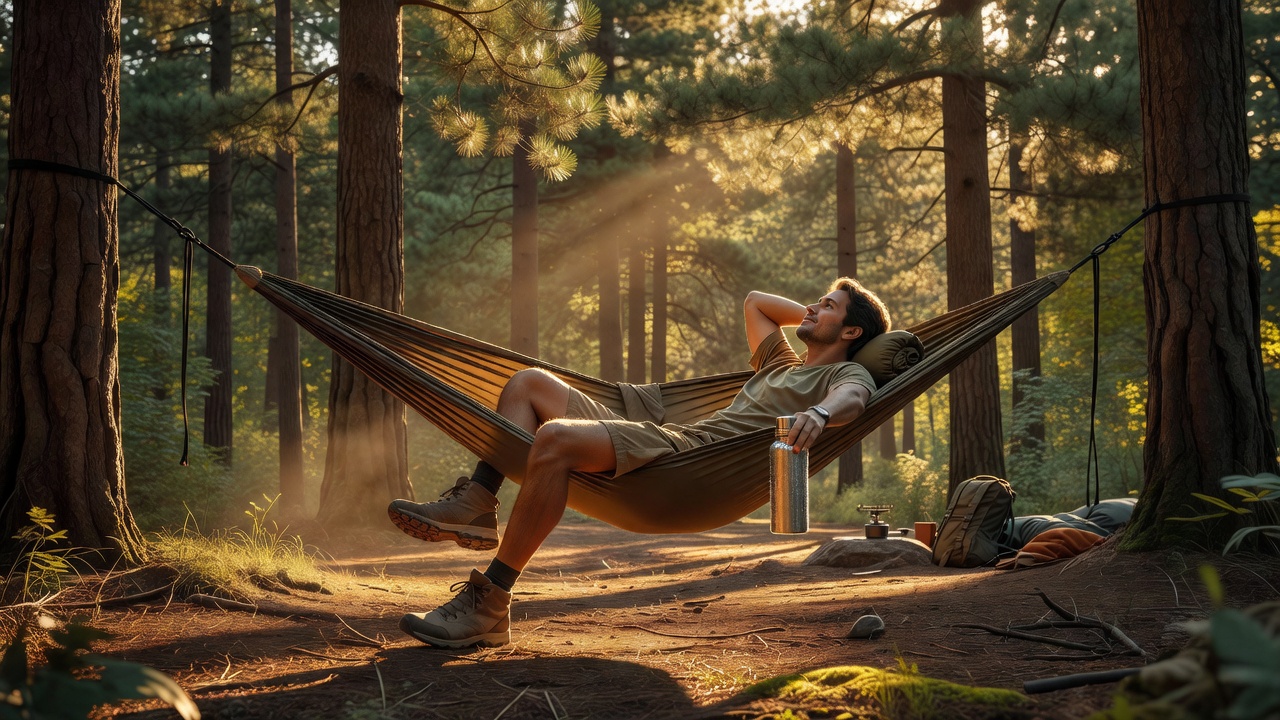
For groups, pre-freeze gallon water jugs the night before. They serve double duty: cold drinking water all day, plus they help keep your cooler cold if you toss one in.
Campsite Strategy: Work With the Sun, Not Against It
Gear matters, but campsite selection and setup are free and often more impactful than spending $300 on a cooler.
Pitch for morning shade
When you arrive at camp, take 60 seconds to observe the sun's path. In the northern hemisphere, the sun rises in the east and tracks south. That means:
- East-facing tent openings catch the morning sun directly — your tent will be unbearable by 7 AM
- West-facing tent openings get blasted by afternoon heat when you're trying to escape it
- North-facing, shaded by trees or your vehicle is ideal
If there's no natural shade, position your vehicle on the east side of your tent. A car casts more shade than you think in the early morning hours.
The tarp trick
A basic blue tarp or reflective tarp pitched ABOVE your tent (not touching it — you need an air gap) reduces tent interior temperature by 10-15°F. Suspend it with trekking poles or tie it to trees, leaving at least 12 inches of airspace between the tarp and your tent fly. This creates a shade canopy with a ventilated gap that prevents heat from radiating down into your sleeping area.
Damp sheet evaporative cooling
This is the oldest trick in the book and it works: soak a thin cotton sheet or bandana in water, wring it out so it's damp but not dripping, and drape it over yourself while sitting in camp. As the water evaporates, it pulls heat from your skin. In low humidity (which is most summer camping conditions), this can feel like portable AC. Re-wet every 20-30 minutes.
High-Tech(ish) Cooling Hacks Worth Knowing
Some gear pulls double duty in ways that aren't immediately obvious:
-
Insulated sleeping pads aren't just for winter: The Klymit Insulated Static V Sleeping Pad ($94.99) has a 4.4 R-value that works both ways — it insulates you from cold ground in winter AND from hot ground in summer when the earth has been baking in sun all day. An uninsulated pad on sun-scorched dirt radiates heat up into you all night.
-
The frozen Nalgene trick: Freeze a water bottle solid and put it in your sleeping bag 30 minutes before bed. It pre-cools your bag and keeps cooling for hours. Wrap it in a thin towel to avoid condensation soaking your sleeping bag.
-
Electrolytes before you're thirsty: By the time you feel thirsty in 95°F heat, you're already 1-2% dehydrated. Pre-load with electrolyte tablets in your first water bottle of the morning. I keep a tube in my cooler and drop one in every other bottle.
Common Summer Cooling Mistakes (Learn From Mine)
-
Setting up on reflective surfaces: Sand and light-colored rock reflect heat upward. If you pitch your tent on a sandy beach or light gravel, you're sleeping on a reflector oven. Look for grass, pine duff, or shaded dirt instead.
-
Closing your tent fly completely: On clear nights with no rain forecast, leave the fly partially unzipped or remove it entirely. The mesh inner tent lets heat escape. Yes, you'll see stars. Yes, you'll sleep better.
-
Drinking alcohol to "cool down": Cold beer feels refreshing but alcohol is a vasodilator — it actually raises your skin temperature and accelerates dehydration. Save the beer for after sunset when temperatures drop.
-
Wearing dark colors: This one seems obvious, but I still see people in black T-shirts at noon. Dark fabric absorbs infrared radiation — light colors reflect it. Your black band T-shirt is literally heating you up.
-
Forgetting to ventilate during midday: If you leave your tent zipped up all day while you're out hiking, you're creating a greenhouse. Unzip the vestibule and at least one window so hot air can escape.
What to Pack: The Summer Cool-Kit Checklist
Here's the complete kit I bring on every summer camping trip:
Core Cooling Gear:
- Cooler with block ice (pre-chilled contents)
- Insulated water bottle (one per person)
- Sun hoodie or UPF long-sleeve shirt
- Wide-brim sun hat
- Reflective tarp with paracord for shade canopy
Supplementary Items:
- Electrolyte tablets or powder
- Light cotton bandana (for evaporative cooling)
- Small spray bottle (misting yourself drops skin temp 5-10°F instantly)
- Battery-powered fan (the little $15 ones run all night on AA batteries)
- Frozen gallon jugs of water
Campsite Items:
- Extra tent stakes (for tarp configurations)
- Reflective sunshade for your car windshield (also works as a ground reflector to bounce heat away from your tent)
Know When to Bail
Some days are just too hot for safe camping. If the forecast calls for 100°F+ with no overnight cooldown below 80°F, and you're camping somewhere without water access for swimming, consider postponing. Heat exhaustion isn't worth the Instagram post. Symptoms to watch for: headache, dizziness, confusion, and suddenly stopping sweating when you should be sweating — that last one is heat stroke and requires immediate evacuation.
For most summer weekends, though, the right gear and a few smart strategies make all the difference between suffering through it and genuinely enjoying it. The campsite that was a sweat-box at 7 AM last year is the one where you're sipping ice-cold water in the shade this year, watching everyone else stumble out of their solar-oven tents while you've been cool since sunrise.
Ready for more? Check out our Summer Hiking Hydration Guide for trail-specific strategies, our Summer Hiking Clothing Guide for full layering breakdowns, and if you're bringing your dog, don't miss our Pet Cooling Safety Guide — dogs overheat faster than humans and can't tell you when they're in trouble.
<!-- AFFILIATE_DISCLOSURE -->