Essential Pet Cooling & Safety Gear for Summer Hiking and Camping (2026)
Keep your dog safe and cool on summer trails with the right cooling gear, hydration strategy, and safety tools. A scene-by-scene guide to hiking and camping with dogs in hot weather.
Why Summer Is the Most Dangerous Season for Trail Dogs
You check the weather, grab your hydration pack, throw on your lightweight hiking jacket, and hit the trail. Your dog is practically vibrating with excitement at the trailhead. Two miles in, you notice they're panting harder than usual, slowing down, looking for shade every hundred feet.
Dogs don't sweat the way we do. Their primary cooling mechanism is panting, and on a 75°F day, the trail surface can hit 120°F+ — hot enough to burn paw pads in under a minute. Add humidity at 60%+ and even fit dogs start struggling within 30 minutes of activity.
Every summer, emergency vets see a spike in heatstroke cases from well-meaning owners who simply didn't know the signs. The good news? A few pieces of specific gear — plus knowing what to watch for — makes summer trail time safe and fun for both of you.
The Cooling Gear Pyramid: What Actually Works
Not all "cooling" products are created equal. Here's the priority stack I use after three summers of trial and error:
Tier 1 — Non-negotiable (every summer hike):
- A properly fitted harness (not a collar — collars restrict panting airflow)
- 1L of water per 20 lbs of dog per 2 hours of hiking
- A collapsible water bowl (your hand as a bowl wastes half the water)
Tier 2 — High heat / long hikes (80°F+ or 5+ miles):
- Cooling vest or bandana (evaporative, not gel-pack)
- Paw wax or boots for rocky/sun-exposed trails
- Shade breaks every 30-45 minutes
Tier 3 — Overnight trips:
- A camp pillow the dog can claim (they will anyway)
- Post-hike paw check and wipe-down
- A way to rinse off sunscreen, bug spray residue, and trail grime
Let's walk through the gear that fills each tier, using real products we've tested on trail.
Harness First: Why Collars Are a Summer Hazard
A flat collar pulls against the trachea when your dog lunges or pulls. In summer, when they're already working harder to breathe, that extra pressure is the last thing they need. A harness distributes force across the chest instead — and a padded, reflective one does double duty in low-light summer evenings.
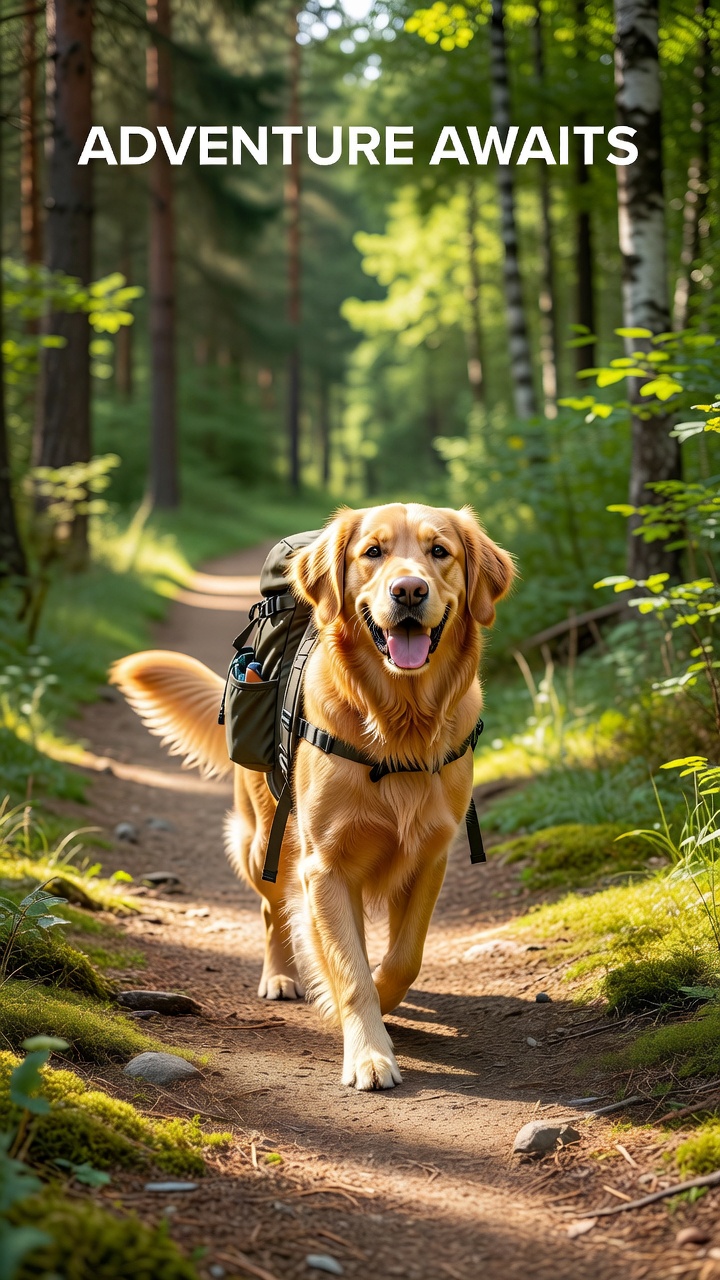
The Ruffwear Front Range Harness ($39.95) has been the gold standard for years. Four points of adjustment, two leash attachment points (chest clip for pullers, back clip for casual walks), and foam-padded chest and belly panels that don't chafe even when wet. The reflective trim is genuinely useful — I've spotted my dog at 50 yards in headlamp-only conditions. If your dog carries their own gear, step up to the Kurgo Baxter Backpack so they can haul their own water and collapsible bowl.
Hydration Math: How Much Water Your Dog Really Needs
Here's the formula that's kept my dog hydrated through 90°F Utah slickrock:
- 1 oz of water per pound of body weight per day (baseline)
- Double it on active hiking days
- A 50 lb dog needs roughly 100 oz (~3 liters) on a full hiking day
That's more than most people carry for themselves. A CamelBak Crux 3L Reservoir ($42) lets you carry your water AND pour some into a collapsible bowl without unpacking your bag. The wide mouth is easy to fill at creeks (filter first — dogs get giardia too), and the bite valve doesn't leak in your pack.
The "nose test" for dehydration: Gently pinch the skin between your dog's shoulder blades. If it doesn't snap back immediately, they're dehydrated. Turn around.
The Smart Collar That Changed My Off-Leash Hikes
I was skeptical about training collars. Most of them are cheap plastic remotes with unreliable range and confusing button layouts. Then I tried the oitickly Smart Dog Training Collar ($39.99) — and it solved the one problem that made off-leash summer hiking stressful.
Here's the summer-specific use case: Your dog spots a deer 80 yards ahead, near a cliff edge or a fast-moving creek. You yell "come" — they're in hunting mode, ears off. The oitickly's 4,500-foot range (nearly a mile) means you can reach them at distances where your voice simply doesn't carry. The voice command mode lets you pre-record "come" and "leave it" — the collar speaks your voice, not a robotic beep, which your dog already associates with you.
For summer specifically, the IP67 waterproof rating matters. River crossings, sudden thunderstorms, mud puddles — the collar keeps working. And at $39.99 vs $80+ for comparable brands, it punches well above its weight class.
The key differentiator:
- Range: 4,500 ft (competitors average 1,000-1,600 ft)
- Voice command: Speaks your pre-recorded voice (competitors use beep/vibrate only)
- Waterproof: IP67 (submersible, not just rain-resistant)
- Battery: 15-day standby on the collar, 30-day on the remote
I use the vibrate mode 90% of the time — it's enough of a "hey, pay attention" without being aversive. The static stimulation has 16 levels and I've never needed above level 4 with my 45 lb trail dog.
Post-Hike Cleanup: The Step Everyone Skips
After a summer hike, your dog is coated in trail dust, possibly poison ivy oils, sunscreen residue (from you applying it then petting them), and whatever they rolled in at mile 4. Wiping them down isn't just about keeping your tent clean — it prevents skin irritation and ingestion when they lick themselves clean.
MRS. MEYER'S Clean Day Dog Shampoo ($10.99) uses plant-derived ingredients and actually smells pleasant — not like the chemical-heavy pet shampoos that leave your dog smelling like a vet clinic. The 3-in-1 formula cleans, conditions, and deodorizes. For car camping, a quick rinse at the campground spigot is enough. For backpacking, bring a small microfiber towel and a few ounces of soap in a travel bottle.
Trail Safety: The Two Tools I Won't Hike Without
Summer brings out wildlife — and more hikers who don't know trail etiquette. Two tools have saved me from genuinely bad situations:
The Gerber Bear Grylls Ultimate Survival Knife ($43) packs a 4.8-inch drop-point blade, a fire starter, and an emergency whistle into the sheath. I've used it to cut tangled leash lines (happens more than you'd think when two dogs meet on trail), trim branches blocking the path, and once to cut away fishing line wrapped around my dog's paw. The whistle alone is worth carrying — three blasts is the universal distress signal.
The UST Monarch 5-in-1 Survival Tool ($29.99) is a pocket-sized fire starter, whistle, compass, signal mirror, and storage capsule. At 2.5 oz, it lives permanently in my dog's pack side pocket. The ferrocerium rod throws sparks in rain and wind (summer thunderstorms are real), and the 110-decibel whistle carries farther than yelling.
The Camp Pillow Your Dog Will Steal
Every dog owner knows this truth: you buy yourself a camp pillow, and within 10 minutes a dog is sleeping on it. Save yourself the fight — get a second one.
The TETON Sports Camp Pillow ($24.99) is soft-brushed flannel on one side and smooth on the other, compresses to the size of a Nalgene, and inflates in 3-4 breaths. At that price, buying two (one for you, one for the dog who'll claim yours anyway) is totally reasonable. The removable cover is machine-washable — critical when your dog drools, sheds, or brings half the forest floor into the tent.
Summer Heat Warning Signs Every Dog Owner Should Memorize
Gear helps, but knowledge saves lives. Here are the stages of overheating:
Stage 1 — Early warning (stop and cool down):
- Excessive panting, tongue fully extended and wide ("spoon tongue")
- Slowing down, lying down frequently
- Seeking shade aggressively
Stage 2 — Heat stress (intervention required):
- Bright red or very pale gums
- Thick, rope-like saliva
- Disorientation, not responding to name
- Heart rate stays elevated even at rest
Stage 3 — Heatstroke (emergency — get to a vet):
- Vomiting or diarrhea (sometimes bloody)
- Collapse or inability to stand
- Seizures
- Body temperature above 106°F
If you hit Stage 2: Get to shade immediately. Pour water over the dog's chest, belly, and paw pads (NOT ice-cold — that constricts blood vessels and traps heat). Offer small amounts of water — gulping can cause bloat. Wet a bandana or shirt and drape it over their neck. Do NOT resume hiking that day even if they seem recovered — internal organ damage can take hours to manifest.
Your Summer Dog Hiking Kit Checklist
Here's everything covered, in packable checklist form:
- Harness: Ruffwear Front Range or equivalent padded harness (no collars for hiking)
- Water: 1L per 20 lbs of dog weight, plus collapsible bowl — CamelBak Crux for the human, Kurgo Baxter Backpack for the dog to carry their share
- Recall safety: oitickly Smart Collar for off-leash distance control — especially near water and cliffs
- Cooling: Evaporative vest or bandana for 80°F+ days
- Paw care: Paw wax for hot rock/sand, post-hike wipe with a microfiber towel
- Trail tools: Gerber Bear Grylls knife and UST Monarch whistle/compass
- Camp comfort: TETON Camp Pillow (×2 — one for the dog)
- Cleanup: MRS. MEYER'S Dog Shampoo + small microfiber towel
Related Reading
If your summer adventures extend beyond day hikes, these guides cover the full picture:
- Camping with Dogs: The Complete Guide — tent setup, sleeping arrangements, campground etiquette
- First Family Camping Trip Checklist — the complete packing list for families bringing kids and dogs for the first time
- Dog-Friendly Camping Gear Checklist — every item your dog needs for overnight trips
- Best Dog Backpacks for Hiking — the Kurgo Baxter vs Ruffwear Approach comparison
- Summer Hiking Hydration Guide — human-focused hydration strategy that applies to dogs too
<!-- AFFILIATE_DISCLOSURE -->
TrailMapz is reader-supported. When you buy through links on our site, we may earn an affiliate commission at no additional cost to you. As an Amazon Associate we earn from qualifying purchases.