30 Camping Hacks & Tips That Actually Work: Field-Tested Tricks for 2026
30 field-tested camping hacks from a decade of outdoor trips. Faster tent setup, smarter cooking, warmer sleeping, and gear tricks that actually solve real problems. No Pinterest fluff.
I've set up tents in the dark with a dead headlamp. I've eaten cold beans because the stove wouldn't light in the wind. I've woken up freezing at 3 AM because my sleeping bag wasn't warm enough and I didn't know the hot-water-bottle trick yet.
Every mistake taught me a hack that I now use on every trip. This isn't a list of Pinterest-worthy aesthetic ideas — these are dirt-under-the-fingernails, field-tested tricks that solve actual campsite problems.
Here are 30 camping hacks that actually work, organized by what you'll be doing at camp.
Shelter & Setup Hacks
1. Practice pitching your tent at home — at night
The first time you pitch a tent shouldn't be in a dark campground with a setting sun. Pitch it in your backyard or living room at least once. Then do it once with a headlamp only. You'll discover: which poles go where, whether you're missing stakes, and whether the EVER ADVANCED 6 Person Blackout Tent ($199.99) really does go up in 60 seconds (spoiler: it does, once you know the sequence).
2. Bring a small welcome mat or scrap of tarp for the tent entrance
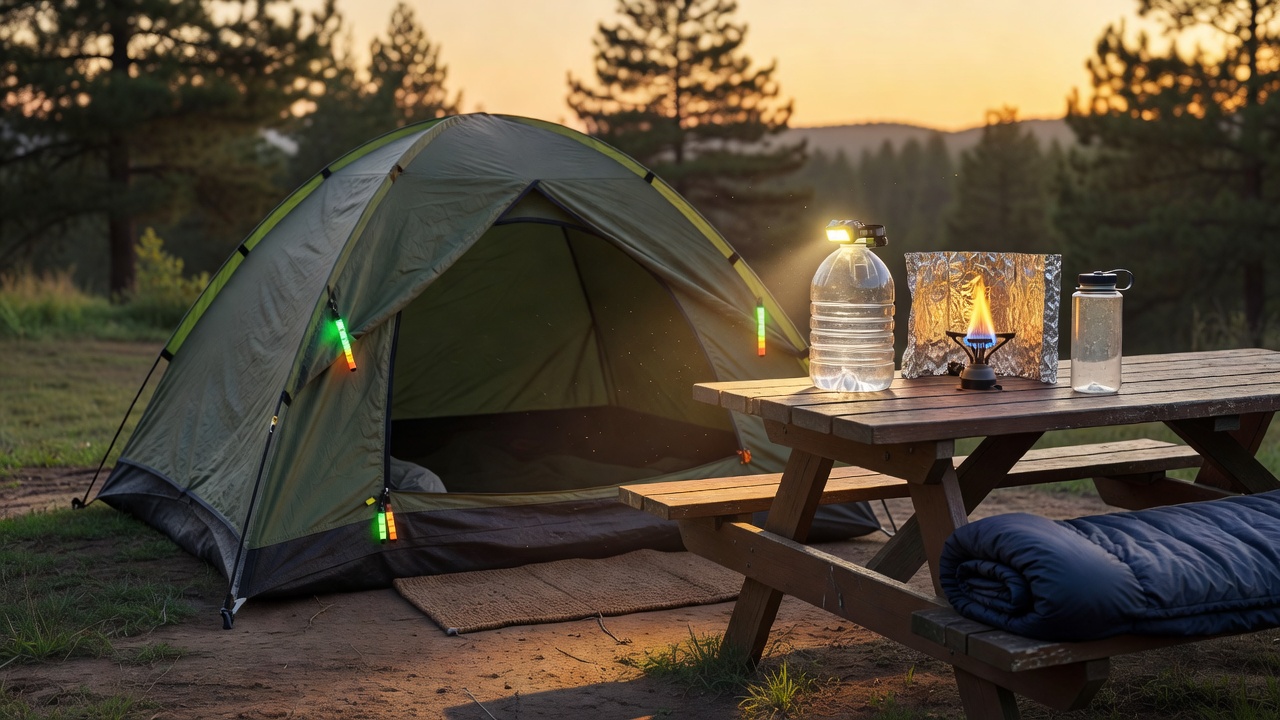
This is the single best hack for keeping dirt out of your tent. A 2×2 foot piece of tarp or an old doormat at the entrance catches 80% of the debris before it enters. Take shoes off on the mat, step into the tent, and your sleeping area stays clean all weekend.
3. Repair tears instantly with Gear Aid Tenacious Tape
Rips happen — tent floors, sleeping pads, rain flies, down jackets. A roll of Tenacious Tape ($6-8 at Amazon) weighs nothing and fixes tears instantly without sewing. It bonds permanently to nylon, polyester, and even down-proof fabrics. I've repaired a 4-inch tent-floor gash at midnight during a rainstorm with this stuff and stayed dry all night.
4. Use pool noodles on tent guylines at night
Trip hazards. Cut a pool noodle into 12-inch sections, slit one side, and wrap them around your tent guylines. They glow in headlamp light, you won't trip over them at 2 AM, and they cost $2 at any dollar store.
5. Pre-attach a glow stick to your tent zipper pulls
Finding the tent zipper in total darkness is maddening. Loop a small glow stick or a piece of reflective paracord through the zipper pull before dark. No more fumbling.
6. Pack tent stakes separately in a labeled stuff sack
Tent bags always seem to swallow stakes. Store stakes in their own small stuff sack, label it, and clip it to the tent bag. You'll never arrive at a campsite without stakes again.
Cooking & Kitchen Hacks
7. Pre-crack eggs into a Nalgene bottle for camp breakfast
Scrambled eggs without carrying a carton that gets crushed. Crack eggs at home, pour into a Nalgene 32 oz Wide Mouth Bottle ($15.99), and refrigerate. At camp, shake and pour straight into the pan. The wide mouth makes pouring easy, and one bottle holds 8-10 eggs for a family breakfast.
8. Use an electric arc lighter — windproof and rechargeable
Matches blow out. Bic lighters struggle in wind. A Flame Bird Electric Arc Lighter ($6.29 for 2-pack) creates a plasma arc that wind can't extinguish. The flexible neck reaches into camp stove burners and lanterns. USB rechargeable — no fuel to carry.
9. Line your camp stove windscreen with aluminum foil
Even quality stoves like the Camp Chef Everest 2X ($189.99) benefit from extra wind protection. Buy a roll of heavy-duty aluminum foil, fold it into a 3-layer windscreen, and place it behind your stove. Reflects heat back toward the pan and blocks gusts. Costs 50 cents and weighs nothing.
10. Freeze water bottles as cooler ice packs that become drinking water
Fill a few Nalgene bottles 3/4 full and freeze them solid at home. They keep your YETI Tundra Haul Cooler ($450) cold for 2-3 days and become cold drinking water as they melt. Zero wasted cooler space on ice packs.
11. Pre-measure and bag dry ingredients for each meal
Pancake mix, oatmeal toppings, pasta seasoning — measure at home into ziplock bags labeled with a Sharpie. At camp, just dump and cook. No measuring cups to lose, no ingredients to forget.
12. Bring a dedicated camp kitchen bin
A medium plastic tote that holds your stove, fuel, utensils, spices, and cleaning supplies. When you arrive, the bin IS your kitchen. No digging through a backpack for the spatula. Pack it last so it's first out of the car.
Sleeping Comfort Hacks
13. Boil water, pour into a Nalgene, and put it in your sleeping bag
The oldest cold-weather camping trick and still the best. Before bed, boil water, fill a Nalgene (tighten the cap HARD), wrap it in a sock, and throw it at the foot of your Coleman Brazos Sleeping Bag ($34.99). It radiates heat for 4-6 hours. I've used this hack in 25°F weather and woke up with the bottle still warm.
14. Put tomorrow's clothes in your sleeping bag
Socks, base layer, tomorrow's shirt — stuff them into the foot of your sleeping bag. They'll be body-warm when you wake up, and putting on cold clothes at 6 AM is no longer a character-building experience.
15. Use a closed-cell foam pad UNDER your inflatable pad
Even a TREKOLOGY ALUFT 2.0 Camp Pillow ($16.99) is enough for your head, but cold ground saps body heat through any inflatable pad. A $15 closed-cell foam pad underneath adds R-value and puncture protection. Stack them: foam on bottom, inflatable on top.
16. Sleep in a clean base layer, not the clothes you hiked in
Sweat-damp clothes make you cold at night. Change into a dedicated sleep layer — lightweight wool or synthetic — before bed. It's cleaner (your sleeping bag stays fresh longer) and warmer.
17. Use earplugs
Wind flapping the rain fly. Raccoons investigating your cooler. The campground neighbor who starts their diesel truck at 5 AM. A pair of foam earplugs weighs half a gram and solves all of this. The most underrated camping gear item.
Lighting & Navigation Hacks
18. Wear your headlamp around your neck at camp
A Petzl ACTIK CORE Headlamp ($79.95) pointed at people's faces is the fastest way to annoy your campmates. Around your neck, the beam points down at your hands and the ground where you need it. Red light mode preserves night vision and doesn't attract bugs.
19. Hang a headlamp on a water jug for instant ambient lantern
Strap your headlamp around a gallon water jug or a translucent Nalgene bottle, beam pointing inward. The water diffuses the light into a soft lantern that illuminates the whole picnic table. Costs nothing, works perfectly.
20. Headlamp in the tent pocket, lens facing up
Always store your headlamp in the same tent mesh pocket with the lens facing up. When nature calls at 3 AM, you find it in one second flat — no fumbling, no waking your partner.
21. Download offline maps BEFORE you leave
Cell service vanishes two miles past the trailhead. Download the area in Google Maps or Gaia GPS at home. Screen-shot the campground map and trail descriptions too. A dead phone without cached maps is a paperweight.
Packing & Organization Hacks
22. Use a BECOJADDE 15L Packable Daypack ($25.99) as your camp-to-trail bag
Your big backpack stays at camp. A packable daypack folds into a fist-sized pouch and deploys for day hikes, water runs, and supply trips. Weighs 6 ounces and earns its place on every trip.
23. Pack by activity, not by category
Everyone packs "clothes in this bag, cooking gear in that bag." Try instead: "Day 1 hike bag" with the day's clothes, snacks, and water filter. "Tonight's camp bag" with sleep clothes, headlamp, and toothbrush. You never dig through four bags to find one thing.
24. Label EVERYTHING with a Sharpie
All your dry bags, stuff sacks, and bins look identical in low light. Write "STAKES," "FIRST AID," "STOVE" in big letters on the outside. You find what you need in seconds, not minutes.
25. Pack a dedicated "first 10 minutes" bag
A small stuff sack with: headlamp, tent stakes, lighter, and one snack. When you arrive at camp after dark or in rain, this one bag gets you shelter and light without unpacking everything. The single biggest quality-of-life upgrade for late arrivals.
Safety & Emergency Hacks
26. Carry a whistle on your pack strap
A whistle carries farther than a shout and costs zero energy. If you get separated from your group or injured on a solo hike, three short blasts is the universal distress signal. Clip it to your sternum strap where you can reach it with either hand.
27. Know the hot water bottle trick for hypothermia
The same Nalgene-as-hot-water-bottle trick from the sleeping section doubles as a hypothermia treatment. If someone is shivering uncontrollably, place hot water bottles at their armpits, groin, and neck — major blood vessels near the surface transfer heat fastest.
28. Bring a backup fire starter
Your lighter fails. Your matches are damp. Always carry two fire-starting methods: primary (arc lighter or Bic) plus backup (stormproof matches in a waterproof case). I've needed the backup exactly twice — both times I was very glad I had it.
29. Carry a small multi-tool
A compact multi-tool with pliers, knife, and screwdrivers solves a surprising number of camp problems: tightening loose stove fittings, cutting cord, opening stubborn packaging, repairing gear. The Crankbrothers M20 ($44.99) packs 20 tools into a bike-friendly size but works just as well at camp.
30. Tell someone your plan and check-in time
Before you leave, text a friend: "Camping at [location], trail [name], back by [time] Sunday. I'll text you by 6 PM." If they don't hear from you by the check-in time, they know to take action. This costs 30 seconds and has saved lives.
The One Hack That Matters Most
You don't need to implement all 30. Start with three: the doormat at your tent entrance (cleaner camp instantly), the frozen water bottle cooler hack (colder food, less waste), and the hot water bottle in your sleeping bag (warmer sleep, zero cost).
After a decade of camping, the best hack I've learned is simpler than any of these: write down what you forgot or what broke, immediately, before you leave camp. A Notes app entry titled "Next Trip" with entries like "more tent stakes" and "replace stove fuel canister" means your next trip is better than your last one.
If you're just getting started, our Family Camping Made Easy Guide walks through the full setup for first-timers. Already know the basics? The Tent Size Guide helps you pick the right shelter for your crew. For backpackers, the Night Cat 2P Tent ($39.99) is a budget-friendly lightweight option that won't break your back or your wallet.
Now get out there — and don't forget the earplugs.
<!-- AFFILIATE_DISCLOSURE -->