How to Keep Bugs Away While Camping and Hiking: 2026 Mosquito Protection Guide
Keep mosquitoes, ticks, and biting flies away on your next camping trip. Compare DEET, Picaridin, and natural repellents from Murphy's Naturals, OFF!, Cliganic, and Babyganics — plus non-chemical strategies that actually work.
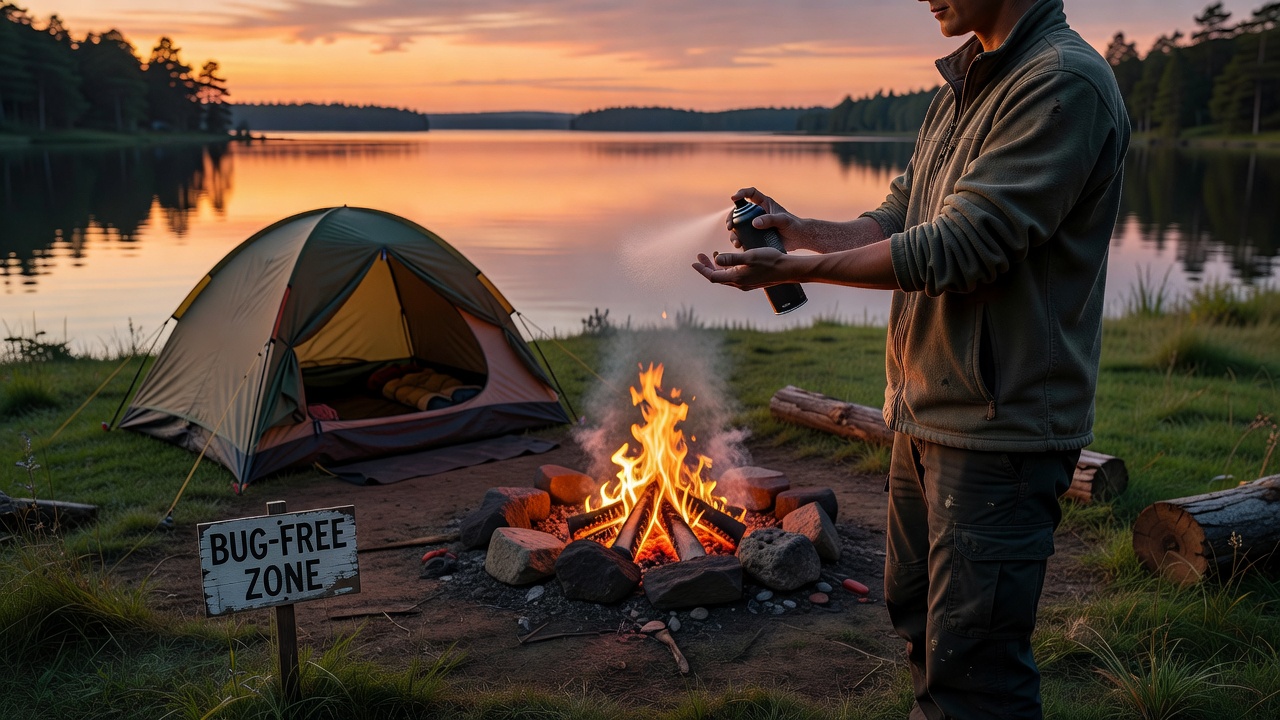
You've found the perfect campsite. The tent is pitched, the fire is crackling, and the sunset is painting the sky in shades of orange and pink. You lean back in your camp chair, cold drink in hand, and take a deep breath of pine-scented air.
Then you hear it. That high-pitched whine near your ear. Followed by another. And another.
Within twenty minutes you've retreated to the tent, zipped every mesh panel shut, and are swatting at the three mosquitoes that somehow got in anyway. The sunset? Forgotten. The relaxation? Gone. The weekend? Now a battle of attrition against tiny winged adversaries.
Bugs don't just ruin the vibe — mosquitoes carry West Nile virus, ticks transmit Lyme disease, and biting flies leave welts that itch for days. A good bug protection strategy isn't optional. Here's everything that actually works, from chemical repellents to campsite tactics, tested in the humid, bug-rich summers of the Midwest and Southeast.
The Four Types of Bug Repellent (And What Actually Works)
Not all repellents are created equal. The active ingredient determines how long protection lasts and which bugs it repels.
DEET (N,N-Diethyl-meta-toluamide)
The gold standard for a reason. Developed by the U.S. Army in 1946, DEET confuses mosquitoes' scent receptors so they can't locate you. Concentrations of 20–30% provide 5–8 hours of protection against mosquitoes and ticks.
Pros: Most effective, longest-lasting, widely available Cons: Can damage synthetic fabrics (nylon, polyester, rayon), feels oily on skin, strong chemical smell
Best for: Deep woods hiking, high bug pressure areas, anyone who wants maximum protection with minimal reapplication.
Picaridin (KBR 3023)
Developed in the 1980s as a DEET alternative. Picaridin works similarly but is odorless, non-greasy, and won't damage synthetic fabrics or plastics. A 20% concentration protects for 8–10 hours — comparable to 30% DEET.
Pros: No odor, no fabric damage, feels clean on skin, equally effective Cons: Slightly more expensive, less widely available
Best for: Hikers who wear expensive technical clothing, anyone who hates the smell and feel of DEET.
Oil of Lemon Eucalyptus (OLE / PMD)
The only plant-based repellent recommended by the CDC for areas with disease-carrying mosquitoes. The active compound (PMD) is extracted from lemon eucalyptus leaves. A 30% OLE formulation protects for up to 6 hours.
Pros: Natural origin, pleasant citronella-like scent, CDC-recommended Cons: Not for children under 3, shorter protection window, needs reapplication
Best for: Anyone who prefers natural products, moderate bug pressure areas, casual hikes and campgrounds.
Other Natural Oils (Citronella, Geraniol, Soybean Oil)
These provide 30 minutes to 2 hours of protection. Better than nothing, but not suitable for serious bug country.
The Repellent Lineup: What to Buy for Your Situation
Best for Families: Murphy's Naturals Mosquito & Tick Repellent Spray
The Murphy's Naturals Mosquito & Tick Bug Repellent Spray ($19.99) uses 30% oil of lemon eucalyptus — the only plant-based active ingredient with CDC backing. No DEET, no synthetic chemicals, no harsh odor.
What we like about it:
- Plant-based but actually effective — not just citronella wishful thinking; the CDC doesn't recommend OLE lightly
- 4-ounce spray bottle — compact enough for a daypack, enough for a weekend trip
- No greasy residue — absorbs cleanly, doesn't leave that DEET slick on your skin
- Made in the USA — Raleigh, NC, a B Corp with transparent sourcing
Limitations: Like all OLE products, it lasts about 6 hours — reapply after a long day hike. Not for kids under 3. The lemon-eucalyptus scent is pleasant but noticeable — if you're hunting (where any scent matters), you'll want unscented Picaridin instead.
Best for Kids: Cliganic Mosquito Repellent Bracelets
Kids hate spray. They squirm, they complain about the smell, and somehow the repellent always ends up in their eyes. The Cliganic 10-Pack Mosquito Repellent Bracelets ($9.99 for 10) solve the application problem entirely.
Each bracelet is infused with citronella, geraniol, and lemongrass oils. Slip one on each wrist and ankle, and you've got 360-degree passive protection without a single spray.
What makes them work for families:
- Zero application friction — kids think they're wearing a cool bracelet, not bug repellent
- DEET-free and DEA-free — no harsh chemicals anywhere near your child's skin
- Individually wrapped — toss a few in your daypack, car glovebox, and camp bin
- 10-pack for $9.99 — at $1 per bracelet, you can outfit the whole family for a weekend
Limitations: Bracelets provide localized protection (wrists and ankles), not full-body coverage. In heavy bug pressure, pair them with a spray repellent. Also, they work best when worn on all four limbs — not just one. And replace them after 4–5 days of continuous use as the oils evaporate.
Best for Babies and Toddlers: Babyganics Insect Spray
For the smallest campers (under 3 years old), options are limited. The CDC says no OLE for kids under 3, and most parents aren't comfortable putting DEET on a toddler. Babyganics Insect Spray ($5.48) fills that gap with a plant-oil formula (soybean, citronella, rosemary, and geranium) that's gentle enough for babies.
- Pediatrician-tested — formulated specifically for sensitive skin
- Plant-based and DEET-free — no synthetic chemicals
- Small 2-oz bottle — TSA-friendly for travel, fits in a diaper bag
Limitations: Shorter protection window (about 2 hours). Reapply frequently. Not as effective in heavy mosquito areas. But it's the best option available for the under-3 crowd.
Best for Heavy Bug Country: OFF! Clean Feel with Picaridin
When you're hiking through standing water, tall grass, or deep woods at dusk — the kind of environment where mosquitoes form a visible cloud — you want maximum protection without the DEET downsides. OFF! Clean Feel Insect Repellent ($11.99) uses 20% Picaridin for 8+ hours of protection.
- 20% Picaridin — comparable to 30% DEET in effectiveness
- Clean, dry feel — no oily residue, no smell, won't melt your $200 rain jacket
- Aerosol application — fast, even coverage. No rubbing in with your hands
- DEET-free — safe for all synthetic fabrics including tent mesh and sleeping bag shells
This is the repellent to bring when bug pressure is high and you don't want to think about it. Spray it on in the morning and hike all day. Reapply after swimming or heavy sweating.
Non-Chemical Strategies That Actually Work
Repellent is your first line of defense, but smart campers layer multiple strategies:
Wear Light-Colored, Loose-Fitting Clothing
Mosquitoes are attracted to dark colors (they stand out against the horizon at dusk) and can bite through tight fabric. Loose, light-colored long sleeves and pants create a physical barrier and make you less visible.
Hikers who spend a lot on technical clothing should be especially careful with DEET-based repellents — DEET dissolves synthetic fibers. Use Picaridin-based spray or apply repellent to exposed skin only and keep it off your clothing.
Time Your Activities Around Bug Prime Time
Mosquitoes are most active during the two hours around dawn and dusk. Plan your hardest hiking for mid-morning to mid-afternoon. Set up camp before 5 PM, get your fire going, and cook dinner while there's still daylight. By the time mosquitoes peak, you're sitting by the fire (smoke repels them) with repellent already applied.
Pick Your Campsite Strategically
- Avoid standing water — camp at least 200 feet from ponds, marshes, and slow-moving streams
- Choose breezy sites — mosquitoes are weak fliers. A steady breeze of 10+ mph keeps them grounded. Ridge sites and open meadows are better than sheltered valleys
- Set up in the sun — mosquitoes avoid direct sunlight and prefer shaded, humid areas. A campsite that gets afternoon sun will have fewer bugs at dusk
Use a Camp Lantern as a Decoy
Here's a clever trick: hang a bright camp lantern ($16.99 for 2-pack) 20–30 feet away from where you're sitting. Many night-flying insects are attracted to light. Give them somewhere to go that isn't your face.
Evening Walks: Headlamp Over Flashlight
If you need to walk around camp after dark, wear a headlamp. A handheld flashlight puts the light source near your body and face — exactly where you don't want bugs. A headlamp on your head directs bugs slightly away from your breathing zone, and keeps both hands free for swatting.
Building Your Bug Protection Kit
Here's what a complete, layered bug protection kit looks like, assembled from the products above:
- Primary repellent: OFF! Clean Feel (Picaridin) for adults, Murphy's Naturals for natural preference
- Kid coverage: Cliganic bracelets on all four limbs
- Baby/toddler: Babyganics spray, reapplied every 2 hours
- Evening gear: Headlamp + camp lantern for light-based decoy
- Campsite strategy: Breezy site, away from water, fire smoke barrier
Total cost for a family of four: approximately $40 for a season's worth of protection. That's less than one urgent care copay for a tick bite you could have prevented.
Related Reading
Bug protection is part of a bigger summer camping system. These guides round out your warm-weather setup:
- Summer Hiking Clothing Guide 2026 — what to wear for hot-weather trails, including bug-resistant long sleeves
- Summer Hiking Hydration Guide — how much water to carry, signs of heat exhaustion, and the best bottles
- Dog-Friendly Camping Guide — keeping your dog safe from ticks, foxtails, and overheating
- Family Camping Checklist — printable gear list covering everything from sunscreen to bug spray
The Bottom Line
Bugs are part of the outdoors. You can't eliminate them — but you can make yourself uninteresting to them. The right repellent, smart clothing choices, and a strategically chosen campsite transform a mosquito-infested nightmare into a peaceful weekend under the stars.
For most campers, a 20% Picaridin spray like OFF! Clean Feel is the best all-around choice — effective as DEET without the downsides. Families with young kids should layer Cliganic bracelets with Murphy's Naturals spray. And everyone should pick a breezy campsite, wear light colors, and keep the fire going at dusk.
The sunset is too good to watch through tent mesh.
<!-- AFFILIATE_DISCLOSURE -->