Solo Female Camping: Safety Tips & Essential Gear Guide for Women Hiking Alone
Practical solo female camping safety strategies — site selection, communication plans, and the essential gear (tent, headlamp, trekking poles, water filter) every woman needs for confident solo trips in 2026.
The first time I camped alone, I spent the first two hours convinced every snapping twig was a bear, a person, or both. By morning, I'd slept better than any group trip I'd ever been on — and I'd learned something that changed how I camp forever: solo camping as a woman isn't reckless. It's one of the most empowering things you can do outdoors. It just requires a different preparation playbook.
Whether you're planning your first overnight or you've been solo-backpacking for years, this guide covers the gear, strategies, and mindset shifts that make solo female camping safe, comfortable, and genuinely fun — not just survivable.
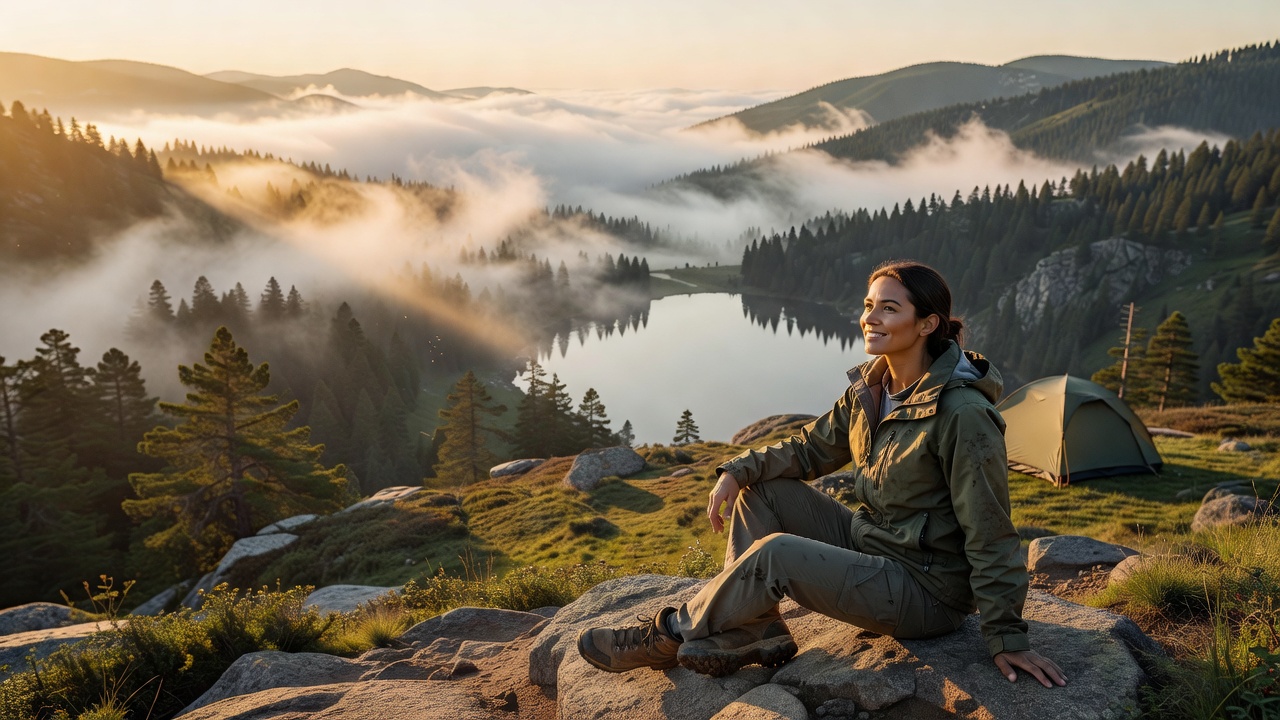
Why Solo Camping Is Different for Women
Let's address the elephant in the tent: the safety concerns are real. Women camping alone face different risk calculations than men — not because the wilderness is more dangerous, but because the consequences of a bad interaction are different, and the "just don't worry about it" advice most camping guides offer doesn't account for that.
The good news: the strategies that make solo camping safer also make it better. Site selection that prioritizes safety also tends to have better views. Communication plans that keep you connected also give your loved ones peace of mind. And gear chosen for self-reliance makes you a more competent camper overall.
This guide assumes you already know the basics — how to pitch a tent, start a fire, and filter water. If those are new, start with our beginner's camping gear guide and solo camping tips, then come back here.
Pre-Trip Safety: The Three Things That Matter Most
Most solo camping safety advice boils down to "tell someone where you're going." That's the bare minimum. Here's what actually works:
1. The Communication Plan (Not Just "Text When You Get There")
Cell service is unreliable in the backcountry. A communication plan needs to account for no-signal windows:
- Share a detailed itinerary with at least two people — trailhead coordinates, campsite GPS waypoints, expected return time, and your vehicle description with license plate
- Set check-in windows, not check-in times. "I'll text you by 9 PM" fails when you're 10 miles from a tower. Instead: "If you haven't heard from me by 10 AM the morning after my return date, start the plan"
- Define the escalation path. Who calls the ranger station? Which ranger station? What's the phone number? Write it down for them — don't make them Google it while panicking
2. Site Selection: Arrive Early, Observe, Trust Your Gut
The single most impactful safety decision happens before you unroll your sleeping pad: where you pitch your tent.
- Arrive with daylight to spare. Scouting in the dark means you miss red flags — broken glass from previous partiers, proximity to a trail that gets night traffic, poor drainage that'll flood if it rains
- Camp away from trailheads and road access. Most problematic encounters happen within a half-mile of where someone can park. Hike in at least a mile
- Trust your gut immediately. If a site feels off — too isolated, too exposed, a strange interaction at the trailhead — leave. You don't need a logical reason. The cost of moving is 20 minutes; the cost of ignoring your instincts can be a sleepless night or worse
- Have a backup site pre-scouted on your map. If Plan A doesn't feel right, you already know where Plan B is
For more on finding the right spot, see our camping trip planning guide.
3. What You Share (and Don't Share) About Your Trip
Posting real-time location updates on social media is a bad idea for anyone camping solo. Share the photos when you're back. While you're out there, the only people who know your exact location are the two you designated in your communication plan.
The Solo Female Camper's Gear Checklist
You don't need different gear because you're a woman — you need gear chosen for self-reliance, because when you're solo, there's no one to borrow from if something fails.
Shelter: A Tent You Can Pitch Alone in the Dark
A solo tent needs to be light enough to carry by yourself, simple enough to pitch with cold hands at dusk, and secure enough that you feel safe inside. Our pick:
Kelty Late Start 2-Person Backpacking Tent ($159.95) — at 4 lbs 11 oz, it's light enough for solo backpacking but spacious enough that you're not pressed against the walls. The color-coded pole clips mean you can pitch it in the dark (a genuinely useful feature when you arrive late), and the full-coverage rainfly means nobody can see inside when it's zipped up. For solo trips, it's a one-person palace with room for your pack inside.
The 2-person rating is key: a 1P tent fits you and nothing else. A 2P tent fits you, your gear, and enough space to sit up and read without your head touching the ceiling.
Sleep System: Warmth Without Bulk
Kelty Cosmic Down 20° Sleeping Bag ($139.95) — 550-fill DriDown stays warm even in damp conditions, rated to 20°F, and compresses to the size of a football. For three-season solo camping, this is the sweet spot: warm enough for mountain nights, light enough to not dominate your pack. (For a detailed side-by-side with the warmer-weather Galactic 30, see our Kelty Cosmic 20 vs Galactic 30 comparison.)
Pair it with a sleeping pad rated R-value 4 or higher — ground insulation matters more than bag rating when you're sleeping directly on cold earth.
Lighting: Redundancy Is Non-Negotiable
When you're alone in the dark, a headlamp failure isn't an inconvenience — it's a genuine problem. Carry two light sources minimum:
Black Diamond Spot 400 Headlamp ($49.95, 400 lumens) — waterproof to IPX8 (submersible), multiple modes including red night-vision, and a lock feature that prevents battery drain in your pack. The 400-lumen max beam reaches 100 meters — enough to scan a dark campsite thoroughly before bed.
Black Diamond Moji Lantern ($27.88, 200 lumens) — clips to your tent's ceiling loop, runs 70 hours on low, and casts warm ambient light that makes a solo tent feel like a tiny home instead of a dark nylon box. Optional but transformative for solo trips. For a complete lighting setup, check our camp lighting guide.
Self-Defense Tools: What Actually Works in the Backcountry
Skip the fantasy scenarios. The most effective self-defense tools for a solo female camper aren't weapons — they're deterrents and escape tools:
- Trekking poles as a visual deterrent. Black Diamond Trail Ergo Cork Trekking Poles ($99.95) serve double duty: they save your knees on descents and, when collapsed to their shortest length, project confidence at trailheads. A person walking with poles looks deliberate and prepared — not like an easy target. The cork grips stay comfortable when your hands sweat, and the FlickLock adjusters won't slip mid-stride
- A loud whistle on your sternum strap. Three blasts is the universal distress signal. Your voice carries maybe 100 yards in the woods; a whistle carries half a mile. Practice using it once before your trip so you know how hard to blow
- Bear spray where it's legal — it works on more than bears. Know your local regulations; some parks prohibit it. If you carry it, practice drawing it from your hip belt once before the trip. In a stressful moment, fine motor skills degrade — you want the motion to be automatic
Water & Hydration: Self-Reliance Means Filtering Your Own
When you're solo, there's no one to run to the stream while you set up camp. Your water system needs to work fast, pack small, and never fail.
Sawyer Squeeze Water Filtration System ($34.95) — the gold standard for a reason. Filters 100,000 gallons (essentially a lifetime), removes 99.99999% of bacteria, and weighs 3 ounces. The squeeze-bag system means you can fill up and filter at the source without carrying a pump. Screw it directly onto a Nalgene 32oz Wide Mouth Bottle ($15.99) or drink straight from the included pouch.
Pro tip for solo campers: Filter extra water before dark. Nothing is more unsettling than realizing you're out of water at 11 PM and the nearest stream is a quarter-mile through unfamiliar woods in the dark.
Clothing: Dress for Independence, Not Fashion
Solo camping means carrying everything yourself, which means every clothing item needs to earn its weight. The core principle: layers that work independently, so you're never caught in a single-bulky-jacket situation.
Feet first: Darn Tough Hiker Midweight Micro Crew Socks ($27.95) — merino wool, lifetime guarantee, no blisters. Worth every penny. Pair with Merrell Moab 3 Hiking Shoes ($109.95) — the Vibram TC5+ outsole grips everything, and the break-in period is essentially zero.
Sun protection: The Outdoor Research Astroman Sun Hoodie ($89.00) gives you UPF 50+ coverage without the sticky sunscreen reapplication cycle. Pair it with a Columbia Bora Bora Booney Sun Hat ($23.99) for full face and neck coverage during midday hiking.
Bug defense: Murphy's Naturals Lemon Eucalyptus Repellent ($19.99) is plant-based and DEET-free — effective for 6 hours without the chemical smell. For stronger protection, OFF! Clean Feel with Picaridin ($11.99) provides 8-hour coverage and won't damage synthetic fabrics like DEET can.
The Campsite Setup Routine
How you arrange your site matters more than what gear you brought. Here's a routine developed through trial and error:
- Arrive, drop your pack, walk the perimeter. Look for: other campsites visible nearby, recent signs of activity (fresh fire rings, trash), and escape routes in multiple directions
- Pitch your tent facing away from the trail. You want to see approach routes from inside, not have your back to them
- Set up your kitchen at least 100 feet from your tent — standard bear-country practice, but also good practice anywhere. Food smells near your sleeping area attract everything from raccoons to curious larger animals
- One last daylight scan. Walk 50 feet from your site and look back. What does the site look like from the trail? Can you see your tent? Is your gear visible? Adjust if needed
- Park your NEMO Moonlite Camp Chair ($169.95) facing the best view with your back to a natural barrier — a boulder, a downed tree, dense brush. It reclines for stargazing and packs to the size of a loaf of bread
The Mindset Shift: From "Staying Safe" to "Being Capable"
The biggest difference between nervous solo campers and confident ones isn't gear — it's the shift from a defensive posture ("how do I stay safe?") to a competence posture ("I can handle what comes up").
Practice skills before you need them. Pitch your tent in your backyard at dusk. Filter water from a questionable source near home. Practice using your trekking poles one-handed while the other holds a headlamp. When these skills are automatic, adrenaline doesn't short-circuit them.
Start small and level up. Your first solo trip doesn't need to be a three-night backcountry expedition. A single night at a established campground 30 minutes from home proves you can do it — and you'll learn more from that one night than from reading 10 articles.
The hardest part is the first hour. Once your tent is pitched, your water is filtered, and you've sat in your camp chair watching the sunset alone, the anxiety typically drops by 80%. The remaining 20% is just awareness — and that's a good thing.
Solo Female Camping Quick Checklist
Print this or screenshot it before your trip:
- Detailed itinerary shared with 2+ people (with GPS coordinates)
- Escalation plan defined (who calls whom, when, and what number)
- Headlamp + backup light source, both with fresh batteries
- Water filter and extra water capacity (2+ liters)
- Trekking poles (mobility + visual deterrent)
- Whistle on sternum strap, accessible without removing pack
- First aid kit with blister care and antihistamines
- Downloaded offline maps (service WILL drop)
- Backup campsite location pre-scouted
- Camp shoes (your feet need to breathe after hiking)
The Bottom Line
Solo female camping isn't about being fearless — it's about being prepared enough that the fear quiets down and the experience takes over. The gear matters, the strategies matter, but at the end of the day, the thing that makes solo camping safe is the same thing that makes it rewarding: knowing you can handle yourself out there.
Start with a single night close to home. Bring the gear on this list. Tell two people where you're going. And then go — because the sunrise you watch alone from your camp chair, knowing you got yourself there, is different from any sunrise you've ever seen.
New to solo camping? Our complete beginner's camping guide covers the full starter setup — tent, sleep system, kitchen, and navigation.
Already comfortable solo? Level up with our wilderness survival skills guide — fire in wet conditions, water purification, signaling, and navigation without a phone.
Bringing a four-legged companion? Our hiking with dogs safety guide covers trail safety, gear, and what to pack for your dog.
Happy trails from the TrailMapz team.
TrailMapz is reader-supported. When you buy through links on our site, we may earn an affiliate commission at no additional cost to you. All prices and ratings are accurate as of June 2026.
<!-- AFFILIATE_DISCLOSURE -->