Camping First Aid Kit & Wilderness Emergency Preparedness: The Complete Guide
Build the ultimate camping first aid kit — what to pack for wilderness emergencies, from blisters to broken bones. Includes waterproof storage, family-specific supplies, and a printable checklist for 2026.
You're 4 miles from the trailhead when your kid trips on a root and opens a gash on their palm. It's not life-threatening, but it's bleeding steadily, everyone's panicking, and you're fumbling through a ziploc bag of expired band-aids.
That moment — not the Instagram sunsets — is when you find out whether you packed a real first aid kit or a "just in case" afterthought.
A proper camping first aid kit isn't just a box of bandages and ibuprofen. It's a layered system: prevention, treatment, and emergency response. Here's how to build one that covers all three, without overpacking.
Why Most Store-Bought First Aid Kits Fail in the Backcountry
Walk into any REI and you'll find "wilderness first aid kits" with 200+ pieces. Open them up and you'll find:
- Tiny gauze pads that can't cover a real wound
- Scissors that can't cut through hiking pants
- So many tiny bandages you'll never use
- Missing the three things that actually matter: bleeding control, weather protection, and communication
The kit you buy at the drugstore was designed for a desk drawer, not a campsite. Build your own — it'll cost less and cover more.
Layer 1: Prevention — Stop Problems Before They Start
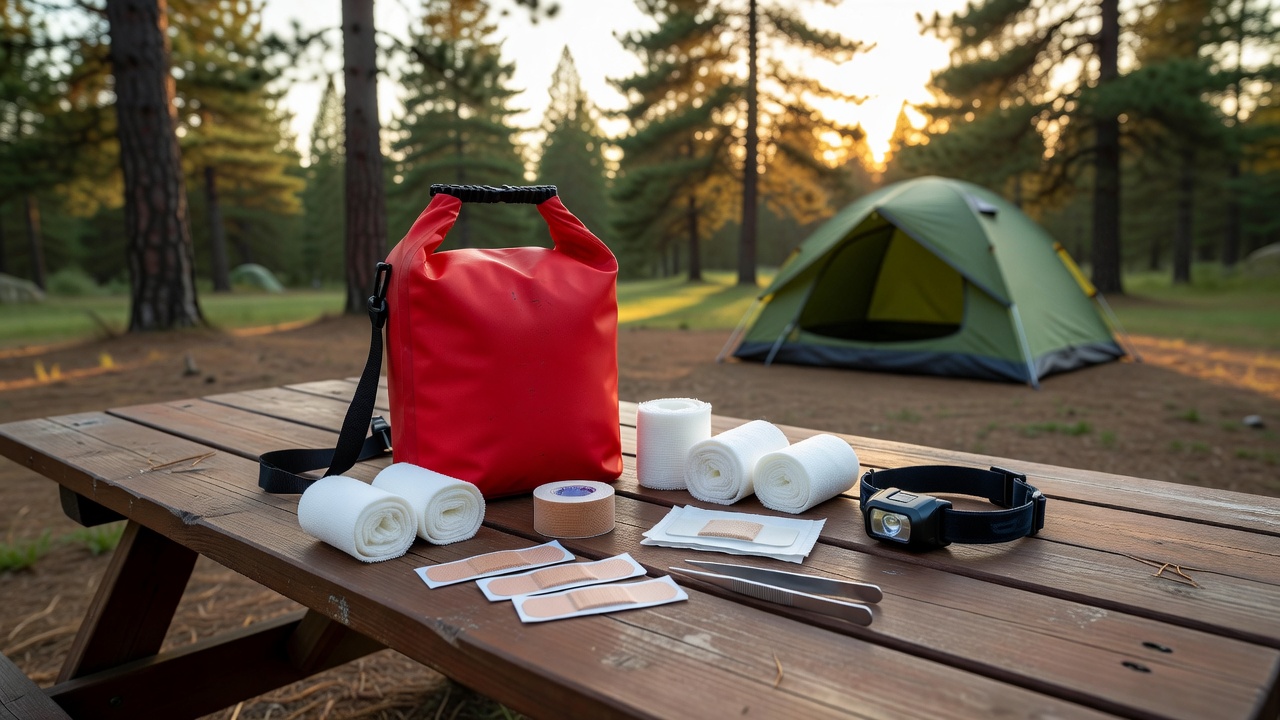
The best first aid intervention is never needing one. A few camping habits dramatically reduce the chance of injury:
Hydration is prevention. Dehydration causes dizziness, bad decision-making, and heat exhaustion — the root cause of many trail accidents. Keep water accessible at all times. The Sawyer Squeeze Water Filtration System ($34.99, 4.5★, 45,000+ reviews) lets you drink safely from any stream or lake — no need to ration your bottles when clean water is always 30 seconds away.
Bug and tick protection. Lyme disease and mosquito-borne illnesses account for more "camping injuries" than broken bones. Apply repellent BEFORE you hit the trail, not after you feel the first bite. Murphy's Naturals Mosquito & Tick Repellent Spray uses oil of lemon eucalyptus (CDC-recommended) without DEET — safe for kids and dogs.
Headlamp, always. Most camp injuries happen after dark — tripping over guy lines, stepping on tent stakes, fumbling with stoves. A headlamp keeps both hands free. The Black Diamond Spot 400 ($49.95, 400 lumens, IPX8 waterproof) has a red night-vision mode that won't blind your tent mates — and waterproofing means it works in the rain when you need it most.
Layer 2: The Core Kit — What Actually Belongs in the Bag
Store everything in a bright red waterproof dry bag (not a ziploc — it WILL get wet). Label it clearly so anyone in camp can find it in an emergency.
Bleeding & Wound Care
- Pressure bandages (2-3 Israeli-style): More useful than 50 tiny band-aids. One pressure bandage stops bleeding from a real cut.
- Gauze rolls (2 rolls, 3-inch): Wrap wounds, make splints, filter debris from water in a pinch.
- Medical tape (1 roll): The duct tape of first aid — secures gauze, tapes moleskin, fixes gear.
- Butterfly closures (6-8): Close gaping wounds without stitches.
- Antiseptic wipes (10+): Clean EVERYTHING before bandaging. Infection turns a 3-day problem into a 3-week one.
- Moleskin (1 sheet): Blisters end more hikes than sprained ankles. Apply at the first hot spot.
Medications
- Ibuprofen (anti-inflammatory + pain): For sprains, fevers, headaches
- Antihistamine (Benadryl/diphenhydramine): Allergic reactions, bee stings, poison ivy
- Anti-diarrheal (loperamide): When you're 8 miles from a toilet
- Hydrocortisone cream: Bug bites, rashes, poison oak
- Electrolyte packets (4-6): Treat dehydration faster than water alone
Tools
- Trauma shears: Cut clothing, webbing, tape — regular scissors can't do this
- Tweezers (fine-tip): Splinters, ticks, cactus spines
- Safety pins (4-6): Secure slings, close torn gear, remove splinters
- Nitrile gloves (2 pairs): Protect yourself and the patient
Weather & Shelter
Hypothermia kills more campers than falls. A compact emergency fire starter ($9.99) works when matches are wet and lighters fail. Practice using it at home — the one time you need it is not the time to learn.
Always pack an emergency blanket (space blanket, 2 oz). It reflects 90% of body heat and folds smaller than a deck of cards. Worth its weight in gold when a storm rolls in faster than forecast.
Layer 3: Emergency Response — The "Oh No" Plan
When to Evacuate
Know the red flags that mean "this trip is over":
- Uncontrolled bleeding
- Suspected head injury with confusion or vomiting
- Severe allergic reaction (swelling of face/throat)
- Inability to bear weight after a fall
- High fever with altered mental state
If you're unsure whether to evacuate, evacuate. No campsite is worth a permanent injury.
Communication
Cell service is unreliable in the backcountry. Before your trip:
- Download offline maps (Google Maps or Gaia GPS)
- Tell someone your exact route and expected return time
- Carry a whistle (3 blasts = international distress signal)
- Consider a satellite messenger (Garmin inReach, SPOT) for trips more than 2 miles from a road
Basic Wilderness First Aid Skills
A kit is useless without knowledge. Before your next trip, learn:
- How to stop bleeding with direct pressure (not a tourniquet — those are last resort)
- How to recognize hypothermia (the "umbles" — mumbles, fumbles, stumbles, grumbles)
- How to splint a suspected fracture (immobilize the joint above AND below)
- How to treat heat exhaustion (shade, cool water, elevate legs)
For a deeper dive into backcountry survival skills — from fire-starting in the rain to emergency shelter construction — our Wilderness Survival Skills Essentials guide covers the full curriculum.
Family Camping: Kid-Specific First Aid
Kids get different injuries than adults — and at higher frequency. Add these to your kit when camping with children:
- Children's ibuprofen and antihistamine (weight-dosed, not adult strength)
- Liquid bandage (kids hate band-aids; this stays on through swimming and sand)
- Thermometer (a fever at 2am in a tent is terrifying without one)
- Pedialyte powder packets (dehydration hits kids faster)
- Tweezers with magnifier (splinters are a daily occurrence)
- Fun band-aids (yes, the cartoon ones — they're 90% psychology, and psychology stops tears)
If this is your family's first time camping together, start with our First Family Camping Trip Checklist — it covers everything from tent setup to meal planning that first-timers often miss.
Camp Kitchen Safety: Burns, Cuts, and Food Safety
The camp kitchen is the #1 injury zone on any trip. Hot stoves, sharp knives, and raw meat in a cooler — it's a perfect storm.
Burn treatment: Cool running water for 10+ minutes (not ice, not butter). Cover with loose sterile gauze. For a deeper guide to setting up a safe outdoor kitchen with stove placement, prep stations, and food storage, read our Camp Kitchen Setup & Outdoor Cooking System guide.
Knife safety: Always cut away from your body. Close folding knives before passing them. Keep a sharp knife — dull blades require more force and slip more often.
Food safety: Raw meat stays in a separate cooler below 40°F. Wash hands before food prep (biodegradable soap + water). Cook ground meat to 160°F internal — the camp stove thermometer isn't optional.
Waterproofing Your Kit (Non-Negotiable)
A first aid kit that gets rained on is a first aid kit that fails when you need it. After every trip:
- Check expiration dates — medications lose potency
- Replace anything you used — even one bandage
- Dry everything completely before repacking (mold grows fast in sealed bags)
- Check your dry bag seal — dunk it in a sink to verify
Common Camping Injuries & Improvised Treatments
| Injury | Immediate Action | Improvised If You're Out of Supplies |
|---|---|---|
| Blister | Moleskin doughnut (donut shape, NOT covering the blister) | Duct tape over a piece of clean cloth |
| Sprained ankle | RICE (Rest, Ice, Compression, Elevation) | Cold stream soak + ace wrap replacement: cut strips from a t-shirt |
| Bee sting | Remove stinger with credit card scrape (not tweezers — squeezes more venom), ice, antihistamine | Mud paste (cooling + draws out venom) |
| Splinter | Sterilize tweezers with alcohol wipe, pull in direction of entry | Sterilized needle + steady hands |
| Tick bite | Fine-tip tweezers, grasp at head, pull straight up — no twisting, no vaseline | Save the tick for testing if rash develops |
| Diarrhea | Loperamide + aggressive hydration (electrolytes, not plain water) | Rice water (boil rice, drink the starchy water) |
| Sunburn | Aloe vera gel, ibuprofen, shade | Cool wet cloth compress, stay hydrated |
Printable Checklist (Screenshot This)
Here's everything in one place. Pack these in your dry bag:
- Pressure bandage (2-3)
- Gauze rolls (2)
- Medical tape (1 roll)
- Butterfly closures (6-8)
- Antiseptic wipes (10+)
- Moleskin (1 sheet)
- Ibuprofen (adult + child if applicable)
- Antihistamine (adult + child)
- Anti-diarrheal
- Hydrocortisone cream
- Electrolyte packets (4-6)
- Trauma shears
- Fine-tip tweezers
- Safety pins (4-6)
- Nitrile gloves (2 pairs)
- Emergency space blanket
- Whistle
- Thermometer (family trips)
- Liquid bandage (family trips)
- Waterproof dry bag (red, labeled)
- Headlamp with fresh batteries
- Fire starter
- Offline maps downloaded
Key Takeaway
The best camping first aid kit is the one you know how to use. Practice your skills, rotate your supplies, and treat prevention as seriously as treatment. Most camping injuries are minor and self-resolving. But the 5% that aren't? That's when the red dry bag earns its place in your pack.
Pack it. Check it. Hope you never need it. Be ready if you do.
<!-- AFFILIATE_DISCLOSURE -->