Hiking With Dogs Safety Guide: Trail Hazards, First Aid & Emergency Prep 2026
Complete dog hiking safety guide covering trail hazards, wildlife encounters, heat safety, first aid, and emergency prep. Keep your trail dog safe on every hike in 2026.
Hiking with your dog is one of the best ways to explore the outdoors — but a trail that's fun for you can be dangerous for a dog who can't tell you something's wrong. Dogs don't complain about hot pavement until their paws are blistered. They don't mention they've been drinking from a creek with giardia for the last mile. And they definitely don't know to back away from a coiled rattlesnake on a sunny rock.
I've hiked thousands of miles with dogs across desert, alpine, and coastal terrain. I've made every mistake on this list at least once. This guide covers the safety knowledge that turns a risky outing into a confident adventure — for both of you.
Trail Hazards Every Dog Hiker Should Know
Wildlife Encounters
Snakes, porcupines, skunks, coyotes, bears — the trail is full of animals your dog wants to investigate and you want them to avoid.
Snakes: Rattlesnakes are most active at dawn and dusk in warm weather. They coil on sunny rocks and trail edges. A curious dog sniffing a bush is a bite waiting to happen. Snake aversion training exists (and works), but the most reliable guard is keeping your dog on a trail-width leash in snake country. If you hike in rattlesnake territory frequently, consider carrying SABRE Frontiersman Bear Spray with Holster ($44.99) — it works on aggressive wildlife at close range and gives you an option besides "grab the dog and run."
Bears: Black bears generally avoid dogs, but a dog that charges a bear can trigger a defensive response — and the bear will chase the dog right back to you. Keep your dog close in bear country. Make noise (talk, sing, attach a bear bell to your pack) so you don't surprise a bear on the trail. Bear spray is mandatory for grizzly country and recommended for black bear territory too.
Porcupines and skunks: The most common wildlife injury I see is a dog who got too curious about a slow-moving porcupine. Quills in the face, mouth, and paws require a vet visit — sometimes sedation. Skunk spray is less dangerous but miserable for everyone in the car ride home. If your dog has a strong prey drive, a long training lead gives them freedom while keeping them within voice-control range.
Pro tip: The best wildlife defense is 100% reliable recall. An oitickly Smart Dog Training Collar ($39.99) with 4,500-foot range and voice command mode gives you an instant stop button — before your dog gets within striking distance of trouble. Train it in a park first, but on the trail it's your most important safety tool.
Terrain Dangers
Paw injuries: Hot rock, sharp scree, broken glass, and hidden thorns are the most common causes of cut pads. On summer hikes, test the ground with the back of your hand — if you can't hold it there for 5 seconds, it's too hot for paws. Hike early or choose shaded trails. For rocky terrain, dog booties take some getting used to but prevent cuts entirely.
Cliffs and drop-offs: Dogs don't always understand heights the way we do. A dog chasing a squirrel near a ledge is a real risk on exposed trails. Keep them leashed on ridge lines and cliff-side sections regardless of how well-trained they are.
Water crossings: Fast-moving water is dangerous even for strong swimmers. A dog can get swept under a log or pinned against rocks. Cross at the widest, slowest point. Unclip the leash so they don't get tangled if they go in — a tangled leash in moving water is a drowning risk.
Toxic Plants and Water
Plants: Foxtails (grass awns) are the #1 hidden danger on dry summer trails. They're barbed seeds that burrow into paws, ears, noses, and skin — and they only move forward, never back out. Check between toes, inside ears, and in armpits after every hike in foxtail season. Learn what they look like in your region.
Water: That clear mountain stream looks pristine, but giardia and leptospirosis don't care about the view. Giardia causes explosive diarrhea that can last weeks. Lepto can cause kidney and liver failure. Carry clean water for your dog — a Nalgene Wide Mouth 32oz ($15.99) is indestructible and easy to pour from, or pack a collapsible dog bowl. For multi-day trips, filter water for both of you with a Sawyer Squeeze Water Filter ($35.95).
Heat Safety: The Silent Killer
Heat stroke kills dogs on trails every summer. Dogs don't sweat — they cool by panting, and on a hot humid day that's barely effective.
Warning signs of heat stress:
- Excessive panting that doesn't slow down with rest
- Bright red or pale gums (normal is bubblegum pink)
- Thick, ropey drool
- Disorientation or stumbling
- Collapse
Prevention rules:
- Hike early — finish by 10 AM on hot days
- Water every 20 minutes — if you're thirsty, your dog already was
- Wet their chest and belly — the major blood vessels are there; wetting cools them faster than drinking
- Rest in shade for 5 minutes every mile on hot days
- Know your breed — flat-faced dogs (bulldogs, pugs, boxers) overheat at temperatures that feel mild to a Labrador
For you: carry more water than you think you'll need. A CamelBak Crux 3L Hydration Reservoir ($37.99) gives you hands-free drinking and enough capacity for both you and your dog on a half-day hike.
If your dog shows heat stress: Stop immediately. Get to shade. Pour water on their chest, belly, and paw pads — not just their back. Offer small amounts of water (gulping cold water can trigger vomiting). Do not resume hiking. Get to the trailhead and a vet if symptoms don't improve in 10 minutes.
First Aid Kit: What to Carry and How to Use It
A human first aid kit doesn't cover dog-specific emergencies. Build a small dog-focused kit that lives in your pack:
Dog First Aid Kit Essentials
- Self-adhering vet wrap (Coban) — for bandaging paws and legs without sticking to fur
- Gauze pads and medical tape — for larger wounds
- Hydrogen peroxide (3%) — ONLY for inducing vomiting if your dog eats something toxic (must be within 2 hours; call your vet first for dosage by weight)
- Tweezers or hemostat — for removing thorns, foxtails, and ticks
- Benadryl (diphenhydramine) — for allergic reactions (bee stings, insect bites). Standard dose: 1 mg per pound of body weight. A 50-lb dog gets one 50 mg tablet
- Styptic powder — stops bleeding from torn nails instantly
- Muzzle — even the sweetest dog may bite when in pain; a muzzle protects you while you help them
- GEAR AID Tenacious Tape ($7.95) — it's gear repair tape, but in a pinch it works for splinting a paw, patching a torn dog pack, or reinforcing a bootie
Common Injuries and Field Treatment
Cut paw pad: Clean with water, apply antiseptic wipe, wrap with gauze, secure with vet wrap (not too tight — you should be able to slide a finger under the wrap). The dog will limp but can walk out. Vet visit for deep cuts.
Torn nail: This bleeds a lot and hurts badly. Pack the nail bed with styptic powder and hold pressure for 2 minutes. Wrap the paw loosely. The dog can walk but avoid rough terrain on the way out.
Porcupine quills: Do NOT cut quills (old myth — it doesn't release pressure, it just makes them harder to grip). Do NOT pull them yourself unless there are only 1-2 in a safe area. Quills have microscopic barbs — pulling tears tissue. Vet visit.
Snake bite: Stay calm. Carry your dog if possible (reduces venom spread). Do NOT apply a tourniquet, do NOT try to suck venom, do NOT ice the wound. Get to a vet immediately. Note the snake's color/pattern if you saw it safely.
Night Hiking and Low-Light Safety
Some of the best summer hiking happens at dawn and dusk — cooler temperatures, better wildlife viewing, no crowds. But low light means low visibility for both of you.
Light your dog: A LED collar or clip-on light makes your dog visible to other hikers, mountain bikers, and you. It also helps you track them if they're off-leash at dusk. A Petzl Actik Core Rechargeable Headlamp ($69.95) gives you 650 lumens with a red light mode that preserves night vision — essential for trail finding and checking your dog after dark.
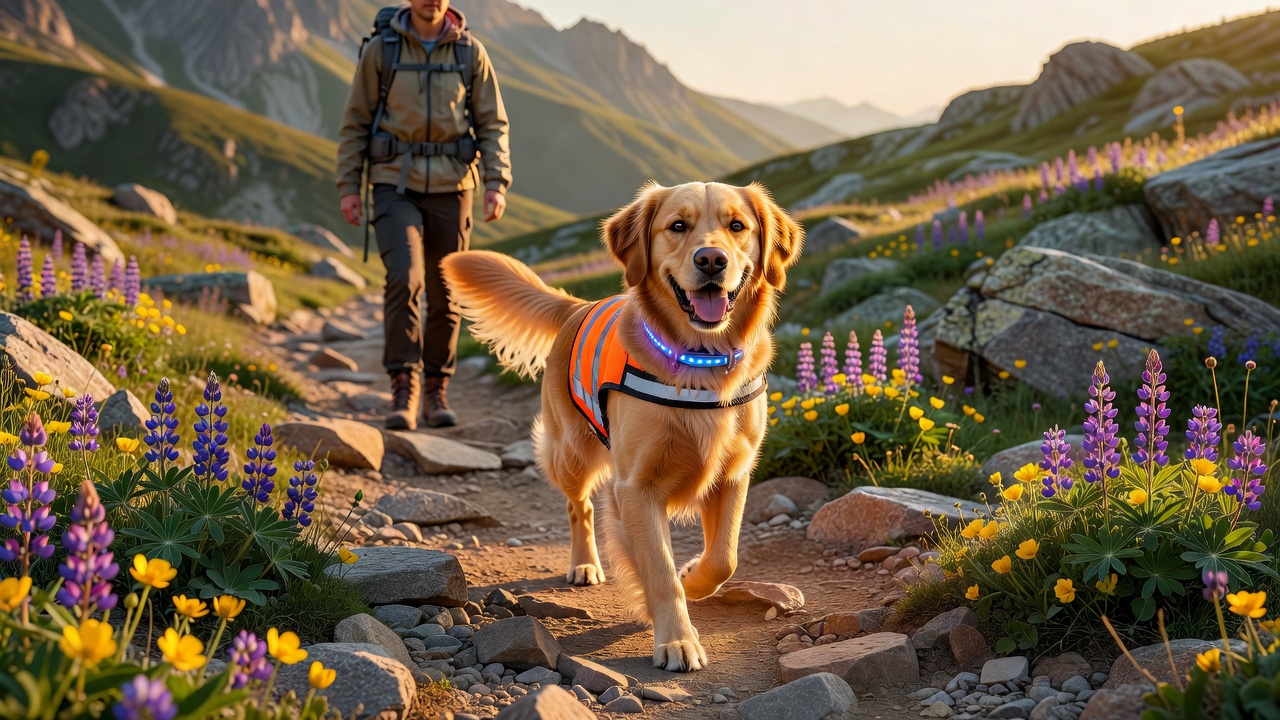
Reflective gear: A reflective vest or harness on your dog catches headlamps and bike lights from hundreds of yards away. This is mandatory if any section of your hike shares trail with mountain bikes.
Emergency Preparedness: When Things Go Wrong
Lost Dog Protocol
If your dog bolts after wildlife and doesn't come back:
- Stay put — most dogs return to the last place they saw you. Moving makes it harder for them to find you
- Call calmly — panic in your voice sounds like you're angry, not lost
- Leave your jacket at the spot you separated — your scent anchors them
- After 30 minutes: start walking the trail backward, calling periodically
- Overnight: leave water and a piece of your worn clothing at the trailhead. Check back every few hours
Carrying an Injured Dog Out
Dogs over 40 pounds are hard to carry more than a few hundred yards. Know your options before you need them:
- Fireman's carry — lift the dog across your shoulders, front legs over one shoulder, hind legs over the other. Works for medium dogs on moderate terrain
- Improvised sling — use a jacket or shirt as a chest sling. Thread it under the belly and hold the sleeves together above their back. Takes weight off injured legs
- Emergency harness carry — wrap a leash or webbing strap around the dog's torso behind the front legs and use it as a handle. Second person supports the hindquarters
When to Turn Back
The most important safety decision is the one most hikers skip: knowing when to bail. Turn back immediately if:
- Your dog is limping or favoring a paw (it won't "walk it off")
- They're panting heavily at rest for more than 5 minutes
- A storm is building (dogs sense barometric pressure drops and get anxious)
- The temperature has risen 10+ degrees since you started
- Water is running low and you're more than halfway from the trailhead
A summit isn't worth an emergency vet bill.
Pre-Hike Checklist (Print This)
Run through this before every hike with your dog:
- Weather checked — no heat advisories, storm warnings, or extreme cold
- Trail researched — dog-friendly confirmed, water sources noted, mileage realistic for your dog's fitness
- Water packed — 1 liter per human per 2 hours + 0.5 liter per dog
- First aid kit in pack — vet wrap, gauze, tweezers, Benadryl, styptic powder
- Leash + backup slip lead — in case of collar/harness failure
- Poop bags — pack out everything (dog waste isn't fertilizer, it's an invasive pollutant)
- Dog ID tag current — with your phone number, not just their name
- Phone charged + trail map downloaded — cell service disappears 10 minutes into most hikes
- Paw check — no cracks, cuts, or overgrown nails
- Told someone your route and expected return time — this saves lives
A safe dog hike happens before you leave the parking lot. The right gear, the right preparation, and the humility to turn around when conditions turn — that's what separates a great story from a scary one.
Ready for more? Read our full dog-friendly camping gear guide for multi-day trip planning, our beach camping gear checklist if the coast is calling, and our voice training collar off-leash guide for building the recall skills that keep your dog safe on every trail.
<!-- AFFILIATE_DISCLOSURE -->TrailMapz is reader-supported. When you buy through links on our site, we may earn an affiliate commission at no additional cost to you. All prices and ratings are accurate as of June 2026.