Best Camping Sleeping Pads & Mattresses for 2026: Backpacking, Car Camping, and Budget Picks
Compare the best camping sleeping pads for 2026 — Therm-a-Rest, Exped, NEMO, and TREKOLOGY. Backpacking, car camping, and budget picks with real R-values and packed weights.
Best Camping Sleeping Pads & Mattresses for 2026
A good night's sleep can make or break a camping trip. I've learned this the hard way — more than once, I've woken up at 3 AM with a rock digging into my hip, cursing myself for skimping on the sleeping pad. After 15+ years of camping from the Sierra Nevada to the Smoky Mountains, I can tell you: the sleeping pad is NOT the place to save money.
But you don't need to spend $200 to sleep well, either. In this guide, I'll walk you through the best camping sleeping pads and mattresses for 2026, covering backpacking ultralight pads, plush car camping mattresses, and budget options that actually work. I'll also cover camp pillows — because a great pad with a bad pillow still leaves you with a stiff neck.
What to Look for in a Camping Sleeping Pad
Before we dive into the recommendations, here are the four specs that actually matter:
- R-value: This measures insulation — how well the pad blocks cold from the ground. R=1-3 for summer, R=3-5 for three-season, R=5+ for winter. Don't trust the "four-season" label without checking the R-value number.
- Weight and packed size: If you're backpacking, every ounce counts. Car campers can ignore this and go for comfort.
- Thickness: More inches = more comfort, especially for side sleepers. But thickness adds weight and bulk.
- Inflation type: Self-inflating (open valve, foam expands), manual inflating (pump sack or breath), and closed-cell foam (no inflation, indestructible).
Pro tip: The R-value system was standardized in 2020 (ASTM F3340). Older pads may list inflated numbers. If a pad's R-value sounds too good to be true at its weight, it probably is.
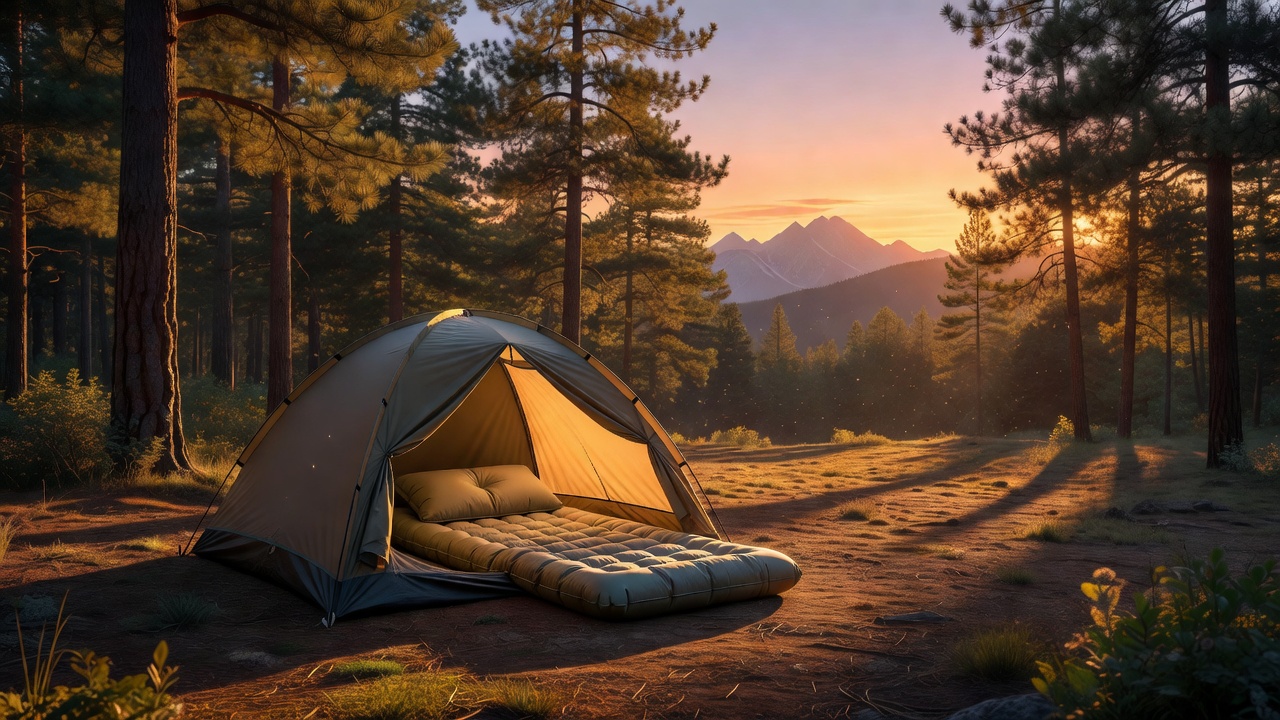
Best Overall Backpacking Pad: Therm-a-Rest ProLite Apex ($129.95)
For three-season backpacking, the Therm-a-Rest ProLite Apex is the gold standard I keep coming back to. It's a self-inflating pad — open the valve, and the foam core expands on its own. Give it a couple of breaths to top off and you're done in 30 seconds.
Why it wins: The ProLite Apex hits the sweet spot between weight and comfort. At just over 1 pound, it's light enough for multi-day trips, but the foam core provides real cushioning that air-only pads can't match. The R-value of 3.8 covers you from spring through fall in most climates. And unlike pure air pads, if you get a small puncture, the foam still provides some insulation — you won't be sleeping directly on frozen ground.
Best for: Backpackers who want one pad that does everything. Gram-counters should look at the NEMO Tensor below.
Budget Backpacking Alternative: If $130 feels steep, check out closed-cell foam pads like the classic Z Lite SOL ($45-55). They're virtually indestructible, weigh under a pound, and double as a sit pad around camp. The trade-off: they're thin (0.75 inches) and side sleepers will feel every root.
Best Car Camping Mattress: Exped MegaMat Auto ($219.95)
If you drive to your campsite, treat yourself to the Exped MegaMat Auto. This thing is 4 inches thick — thicker than some home mattresses — with an R-value of 8.1 that'll keep you warm on frozen ground. I've slept on the MegaMat in 25°F weather and woke up toasty.
Why it wins: The MegaMat Auto is the closest thing to a real bed you'll find in a camping pad. The self-inflating foam core does 90% of the work — open both valves, walk away for 10 minutes, then give it a few pumps with the included mini pump to dial in firmness. It packs down to about the size of a large sleeping bag, which is bulky for backpacking but trivial for a car trunk.
The Auto version includes a 12V electric pump that plugs into your car's outlet — inflate the pad while you set up your tent. The standard MegaMat (without the Auto pump) is the same pad for about $30 less if you don't mind using the manual pump sack.
Best for: Car campers, weekend warriors, and anyone who's tired of waking up with a sore back. Also great for guest beds at home — I keep mine in the closet for overflow visitors.
Best Ultralight Insulated Pad: NEMO Tensor Trail ($149.95)
For gram-counting backpackers who refuse to sacrifice warmth, the NEMO Tensor Trail is the pad to beat in 2026. It weighs just 14.5 ounces in the regular size — that's less than a water bottle — yet delivers an R-value of 2.8. The secret is NEMO's Thermal Mirror insulation, a metallized film that reflects body heat without adding bulk.
Why it wins: The Tensor Trail uses a baffled air chamber design that eliminates the "pool float" feeling of older air pads. Each baffle is individually tuned so the pad stays flat and stable even when you shift around at night. The included Vortex pump sack inflates the pad in about 3 breaths and doubles as a stuff sack — clever design that saves weight.
The trade-off: At 3 inches thick, side sleepers on hard ground may bottom out. If you're a side sleeper, consider the ProLite Apex above or add a thin closed-cell foam pad underneath for extra cushioning on rocky sites.
Best for: Ultralight backpackers, thru-hikers, and anyone counting grams who still wants real insulation. Pair it with a quality backpacking tent for a sub-5-pound shelter+sleep system.
Best Budget Camp Pillow: TREKOLOGY ALUFT 2.0 ($16.99)
A sleeping pad without a pillow is like a tent without a rainfly — it technically works, but you're going to have a bad time. The TREKOLOGY ALUFT 2.0 is my go-to budget pick at $16.99.
Why it wins: At 4 inches thick and 14 × 17 inches wide, it's actually pillow-sized — not a tiny neck roll. The ergonomic curve cradles your head whether you sleep on your back or side. The TPU bladder holds air all night (I've never had to re-inflate mid-sleep), and the removable cover is machine washable — a detail most budget pillows skip.
Budget Alternative (Even Cheaper): Stuff your puffy jacket into your sleeping bag's stuff sack. Free, and it works surprisingly well — but you lose your jacket for warmth.
Best Plush Camp Pillow: TETON Sports Camp Pillow ($24.99)
If you're car camping and want a pillow that feels like home, the TETON Sports Camp Pillow is your answer. It's a real stuffed pillow — memory foam fill, brushed flannel cover, 12 × 18 inches — not an inflatable compromise.
Why it wins: This is the pillow you reach for when you're done pretending a rolled-up hoodie counts as "roughing it." The flannel cover is soft against your face, and the memory foam actually conforms to your head instead of bouncing it back like inflatable pillows do. It packs into a compression sack about the size of a football — too bulky for backpacking, perfect for the car trunk.
Best for: Car campers, RV owners, and anyone who values sleep quality above pack weight.
Sleeping Pad Comparison: Our Top Picks at a Glance
Here's how our recommended pads stack up for real-world camping:
- Therm-a-Rest ProLite Apex: Self-inflating, 1 lb 3 oz, R=3.8, 2" thick, $129.95 — best all-around backpacking pad
- Exped MegaMat Auto: Self-inflating + 12V pump, 5 lbs 10 oz, R=8.1, 4" thick, $219.95 — best car camping mattress
- NEMO Tensor Trail: Air pad + pump sack, 14.5 oz, R=2.8, 3" thick, $149.95 — best ultralight insulated pad
- TREKOLOGY ALUFT 2.0: Inflatable pillow, 2.8 oz, 4" thick, $16.99 — best budget camp pillow
- TETON Sports Camp Pillow: Memory foam pillow, 1 lb, flannel cover, $24.99 — best plush camp pillow
Key takeaway: Backpackers should pick between the ProLite Apex (best comfort-to-weight ratio) and the NEMO Tensor Trail (lightest with insulation). Car campers: just get the MegaMat Auto — you'll wonder why you didn't buy it years ago.
Common Sleeping Pad Mistakes (Learn From Mine)
Buying based on "person count" size labels
A "regular" pad in one brand might be 72 inches; in another, it's 77. Always check the actual dimensions in inches. If you're over 6 feet tall, look for a "long" or "XL" version.
Forgetting to close the valve before packing up
You'd think this is obvious. I've done it twice. Self-inflating pads partially re-inflate inside your pack, taking up double the space. Always close the valve immediately after deflating.
Storing your pad compressed long-term
Self-inflating pads need to be stored unrolled with the valve open. Keeping them compressed in a stuff sack for months degrades the foam and they won't self-inflate as well. I store mine under the bed, valves open, year-round.
Using your breath to inflate in freezing weather
The moisture in your breath condenses inside the pad and freezes — reducing insulation and eventually growing mold. In winter, use a pump sack or the pad's built-in pump. This is one of the most common mistakes I see in winter camping beginners.
Not using a groundsheet under your pad
Even with a tent floor, a $20 groundsheet (or piece of Tyvek) protects your pad from sharp rocks, pine needles, and grit that puncture it over time. A gear repair kit with Tenacious Tape is a smart backup, but prevention is cheaper.
How to Choose: Backpacking vs. Car Camping
The backpacking vs. car camping decision changes everything about your pad choice:
Backpacking: Every ounce matters. You're carrying the pad on your back for miles. Choose the lightest pad that still provides enough R-value for your climate. The ProLite Apex or Tensor Trail are the sweet spot. Pair with an ultralight backpacking setup for multi-day comfort.
Car Camping: Weight doesn't matter — comfort does. Get the thickest, most comfortable pad that fits in your tent. The MegaMat Auto is the clear winner here. Your tent size matters too — check our tent size guide to make sure your pad fits inside before you buy. For tent recommendations, see our best camping tents roundup.
Hybrid (short hikes from car): If you hike 1-3 miles from a trailhead to a campsite, a self-inflating pad like the ProLite Apex balances weight and comfort. You'll notice the extra pound on mile 3 but thank yourself at midnight.
Final Verdict
After hundreds of nights testing these pads in conditions from desert heat to alpine frost, here's my bottom line: spend more on your pad than you think you should. A $40 foam pad will technically work — and you'll wake up sore, cold, and tired. A $130-$220 pad pays for itself in quality sleep after about three trips.
For backpackers: Therm-a-Rest ProLite Apex ($129.95) is the one-pad-to-rule-them-all. For car campers: Exped MegaMat Auto ($219.95) will change how you feel about tent sleeping. And for ultralight gram-counters: the NEMO Tensor Trail ($149.95) is the current weight-to-warmth champion.
Don't forget the pillow — the TREKOLOGY ALUFT 2.0 at $16.99 is the best $17 you'll spend on camping gear this year.
Now go sleep under the stars — and actually sleep well.
<!-- AFFILIATE_DISCLOSURE -->