Ultralight Backpacking for Beginners: How to Hike Farther With Less Weight (2026)
Cut your pack weight in half without sacrificing safety or comfort. Our ultralight backpacking guide covers the Big Three, kitchen & water, lighting, and a sample packing list for first-time lightweight hikers.
I still remember mile three of my first backpacking trip. My shoulders were screaming, my knees were asking questions I couldn't answer, and I was seriously considering whether I actually needed all four of those "just in case" layers. I had packed like I was moving into the woods permanently, and my 42-pound pack let me know about it with every step.
Ultralight backpacking isn't about spending $500 on a dyneema tent or cutting the handle off your toothbrush. It's a mindset: every ounce you don't carry is an ounce you don't have to suffer under. And the best part? You can get started with gear you probably already own, upgrading one piece at a time as budget allows.
This guide walks you through the practical, beginner-friendly approach to lightening your load — starting with the gear that makes the biggest difference and working down to the small stuff that adds up.
The Ultralight Philosophy (It's Not What You Think)
Before we get into gear, let's kill the biggest myth: ultralight doesn't mean unsafe. It doesn't mean you skip the first aid kit, leave the rain jacket at home, or hope the weather holds. It means you carry exactly what you need and nothing you don't.
The standard benchmarks for reference:
| Category | Traditional | Lightweight | Ultralight |
|---|---|---|---|
| Base weight (pack + gear minus consumables) | 20+ lbs | 12-20 lbs | Under 12 lbs |
| Total pack weight | 30-40+ lbs | 20-30 lbs | Under 20 lbs |
You don't need to hit "ultralight" on your first trip. Even dropping from 35 lbs to 25 lbs is a night-and-day difference on trail. Start with the Big Three, and let the rest follow naturally.
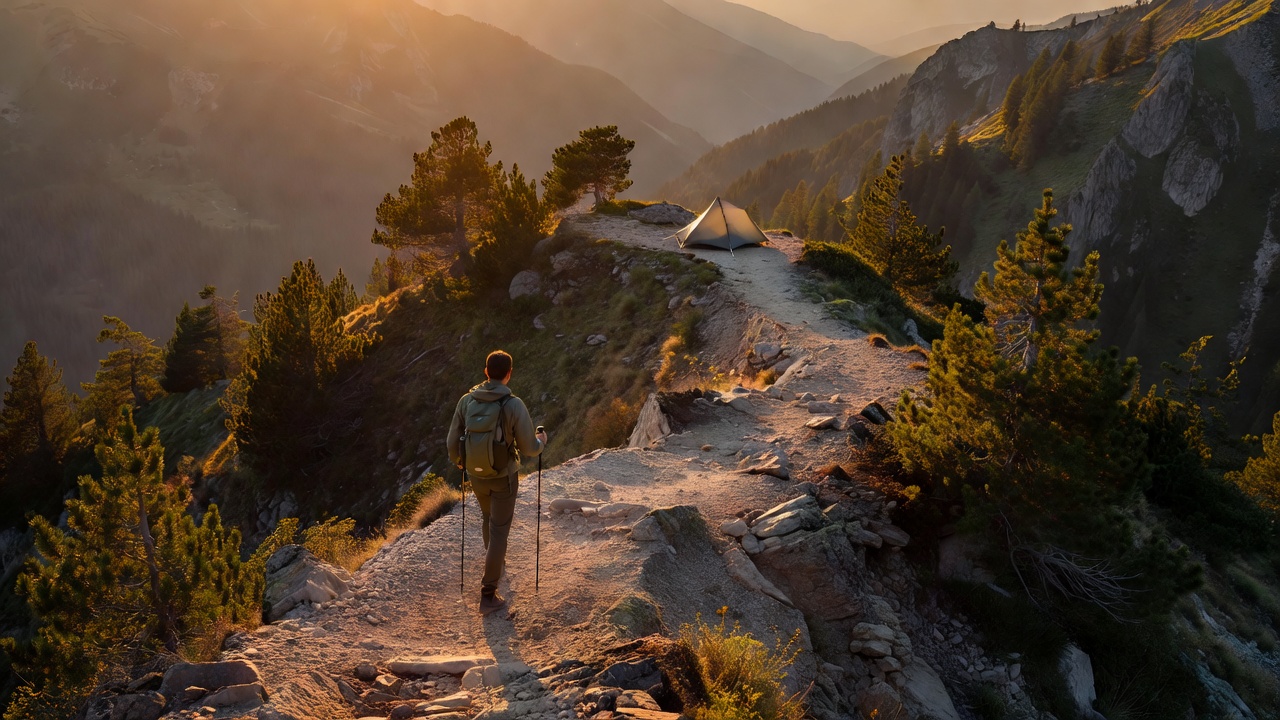
The Big Three: Where Every Ounce Counts
The Big Three — tent, sleep system, and backpack — account for roughly 60% of your total pack weight. This is where your money (and attention) should go first.
1. Shelter: Your Home on the Trail
A traditional 6-person car camping tent weighs 15-20 pounds. That's fine when you're parked next to it. On your back for 10 miles? Not so much.
For solo or duo backpacking, you want something under 4 pounds — ideally under 3.
Kelty Late Start 2P Backpacking Tent — Our top pick for first-time ultralight hikers. At 4 lbs 11 oz, it's on the heavier side of ultralight, but the QuickCorners aluminum pole system means you're not fighting with setup in the dark. Two doors, two vestibules, and full-coverage rainfly. For ~$160, it's the sweet spot between weight savings and livability.
Budget Alternative: Night Cat 1-2 Person Backpacking Tent ($39.99) — weighs just 3.3 lbs. You give up some headroom and the pole system is simpler, but at this price, it's the best entry point into lightweight backpacking. Perfect for fair-weather trips and festival camping.
Pro tip: don't pack the stuff sack. Stuff your tent loose into your pack — it fills gaps and saves you 2-3 ounces of nylon you don't need.
2. Sleep System: Comfort Without the Bulk
Your sleep system is the second heaviest category. A 6-pound synthetic sleeping bag and a 3-pound air mattress are car camping luxuries — not trail companions.
Pillow: TREKOLOGY Aluft 2.0 Inflatable Camp Pillow — 2.8 ounces, packs to the size of a tennis ball, and actually feels like a pillow. The ergonomic curve cradles your neck whether you're a back or side sleeper. At ~$16, this is the single best dollar-to-comfort ratio in ultralight gear.
Sleeping pad tip: If you're upgrading from a traditional air mattress, look for an inflatable pad with an R-value of at least 2.0 for three-season use. The weight savings (3+ lbs vs 1 lb) are enormous, and modern designs are far more comfortable than the thin closed-cell foam pads of decades past.
Sleeping bag tip: Down insulation packs smaller and weighs less than synthetic for the same warmth rating. If you're in a dry climate, down is the clear winner. If you're in the humid Southeast or Pacific Northwest, synthetic handles moisture better. Either way, a 30°F bag covers most three-season backpacking.
3. Backpack: The Container That Holds It All
Your pack itself can weigh anywhere from 5+ pounds (traditional) to under 2 pounds (ultralight frameless). But here's the catch: buy your pack LAST. You need to know how much your gear actually weighs before you know what kind of pack you need.
Osprey Talon 22 Men's Lightweight Hiking Backpack — At 1.5 lbs for 22 liters, this is a perfect day-hike or fast-and-light overnight pack. The AirScape backpanel keeps your back from turning into a swamp, and the Stow-on-the-Go trekking pole attachment means you don't have to stop to stash your poles. For trips where your base weight is already under 10 lbs, this pack carries beautifully.
For multi-day trips with a bear canister and more food, you'll want something in the 40-55L range — but start with the Talon for your first lightweight overnights and build from there.
Kitchen & Water: Eat Well, Carry Less
Food and water are the two heaviest consumables you'll carry. Smart choices here save pounds, not ounces.
Water: Filter, Don't Carry
The old-school approach was to carry all your water from the trailhead. That's 2.2 pounds per liter — and you need 3-4 liters per day in summer. The math is brutal.
Sawyer Squeeze Water Filtration System — The gold standard for backpacking water treatment. Weighs 3 ounces, filters 100,000 gallons, and screws onto standard disposable water bottles (SmartWater bottles are the cult favorite — they're lighter than Nalgene and the threads match perfectly). No pumping, no batteries, no waiting. Scoop from a stream, screw on the filter, squeeze into your clean bottle.
Nalgene Wide Mouth 32oz Tritan Water Bottle — The indestructible classic. At 6.2 ounces it's heavier than a disposable bottle, but it's boil-safe for emergency water purification, wide-mouth for scooping from shallow streams, and will outlive your grandchildren. For winter trips where water freezes, Nalgene is the move — you can pour boiling water directly into it.
CamelBak Crux 3L Hydration Reservoir — For those who prefer sipping on the move. The Crux delivers 20% more water per sip than previous generations, and the wide-mouth opening makes filling and cleaning far less annoying. Pairs well with the Sawyer for filtering on-the-go.
Kitchen: Heat + Eat
Snow Peak Home & Camp Burner GS-600KH — 9.7 ounces including the piezoelectric igniter (no matches needed). This is a canister stove, which means you're using isobutane fuel canisters that screw directly onto the burner. Boils 2 cups of water in about 3 minutes — perfect for freeze-dried meals, morning coffee, and oatmeal.
Stanley Adventure 9-Piece Fry Pan Camp Cook Set — 1 lb 7 oz for a complete two-person kitchen. The set nests inside itself, and the vented lid doubles as a strainer. You get a pot, fry pan, two bowls, two sporks, a cutting board, and a spatula. This is the "I want real food on the trail" setup — add a small canister of olive oil and some spices in a pill bottle, and you're eating better than most car campers.
Ultralight kitchen upgrade: Swap the Stanley pot for a single titanium mug (like the TOAKS 750ml). You save 8 ounces and the mug becomes your pot, bowl, and coffee cup in one. The stove nests inside it with a small fuel canister. This is the thru-hiker setup.
Lighting: See and Be Seen
Your phone flashlight works in a pinch, but a real headlamp is hands-free, weather-resistant, and won't drain the battery you need for navigation.
Black Diamond Spot 400 Headlamp — 400 lumens, IPX8 waterproof (submersible to 1 meter), and 2.6 ounces with batteries. The PowerTap feature lets you instantly toggle to max brightness by tapping the side — perfect for that "what was that noise" moment at 2 AM. Red night-vision mode preserves your eyes' dark adaptation for stargazing.
Petzl Actik Core Headlamp — 650 lumens and rechargeable via micro-USB, with the option to use AAA batteries as backup. The reflective headband makes you visible from behind, and the phosphorescent reflector glows in the dark so you can find it in your tent. At 2.6 ounces, it packs more power per gram than anything else in its class.
Repair & Safety: The Ounces That Save the Trip
Ultralight doesn't mean unprepared. These are the items that weigh almost nothing but can save your trip:
Gear Aid Tenacious Tape Fabric and Vinyl Repair Tape — 1 ounce for a 3" x 20" strip. Repairs torn tent fabric, sleeping pad punctures, ripped rain jackets, and leaky dry bags. It's essentially a peel-and-stick patch that bonds permanently to nylon, polyester, and vinyl. I keep a strip wrapped around my trekking pole for instant access.
Safety essentials (under 8 ounces total):
- Mini first aid kit: blister care (moleskin + Leukotape), ibuprofen, antihistamine, antiseptic wipes
- Emergency fire starter: a mini Bic lighter weighs 0.7 ounces and works when everything else fails
- Headlamp (already covered above — doubles as emergency signal)
- Whistle: built into most backpack sternum strap buckles — check yours
- Emergency blanket: 2 ounces, reflects 90% of body heat, $3
What NOT to Cut Weight On
Some items deserve their weight:
- First aid kit: Bring blister supplies and a few basics. Don't strip it to a single band-aid.
- Rain gear: A 7-ounce emergency poncho is fine for day hikes. For multi-day trips, bring real rain protection. Hypothermia doesn't care about your base weight.
- Navigation: Paper map + compass (3 oz combined) as backup to your phone. Batteries die. Phones break. Maps don't.
- Insulation layer: A puffy jacket (8-12 oz) is mandatory for any trip where temperatures could drop below 50°F at night, even if the forecast says 70.
Sample Ultralight Packing List (3-Season, 2-Day Trip)
Here's what a ~15 lb base weight actually looks like. Everything listed is available on TrailMapz:
Shelter & Sleep (5.5 lbs):
- Kelty Late Start 2P (shared with partner: ~2.4 lbs per person)
- TREKOLOGY Aluft 2.0 pillow (2.8 oz)
- Inflatable sleeping pad (1 lb)
- 30°F down sleeping bag (2 lbs)
Kitchen & Water (2.5 lbs):
- Snow Peak GS-600KH stove (9.7 oz)
- Stanley Adventure cook set (shared: ~12 oz per person)
- Sawyer Squeeze filter (3 oz)
- Nalgene 32oz (6.2 oz) or Smartwater bottle (1.3 oz)
- 4 oz fuel canister (7 oz full)
Clothing (worn + packed, ~3 lbs):
- Hiking shirt, shorts/pants, socks, trail runners (worn)
- Rain jacket (8 oz)
- Puffy insulation layer (10 oz)
- Spare socks + underwear (4 oz)
- Beanie or buff (2 oz)
Tools & Safety (~1.5 lbs):
- Black Diamond Spot 400 headlamp (2.6 oz)
- Gear Aid Tenacious Tape (1 oz)
- Mini first aid kit (4 oz)
- Bic lighter + emergency fire starter (2 oz)
- Paper map + compass (3 oz)
- Sunscreen + bug spray (3 oz)
- Toothbrush + toothpaste (2 oz)
Total base weight: ~12.5 lbs (plus food and water — roughly 2 lbs of food per day and 2 lbs of carried water if filtering at sources). Total trail weight around 18-20 lbs for an overnight trip.
Level Up: The Ounce-by-Ounce Mindset
Once you've dialed in the Big Three, the real ultralight game is playing "what can I leave at home?" Before every trip:
- Lay out everything on the floor. Everything.
- Pick up each item and ask: "Will I use this?" Not "might I use this" — will I.
- If the answer is "maybe" — leave it. You can survive one night without it.
- Weigh your pack with a luggage scale. Write the number down. Next trip, beat it.
The first trip you'll overpack. The third trip you'll still overpack a little. By trip ten, you'll have it down to a science. The joy isn't hitting some magic number — it's the moment on trail when you realize you're not hurting, you're not exhausted, and you're actually enjoying the miles.
Further reading:
- Hiking for Beginners: Complete Guide — build your trail legs and confidence
- Camp Kitchen Setup & Outdoor Cooking System — elevate your trail meals
- Water Purification Guide for Hiking & Camping — deep dive on filters, tablets, and UV
- Camping Tent Size Guide 2026 — how to pick the right shelter for your trip style
Happy trails — and remember, the best ultralight upgrade is the one you leave in the garage.
<!-- AFFILIATE_DISCLOSURE -->