How to Purify Water While Hiking and Camping: Filters, Bottles & Complete Guide for 2026
Learn how to purify water in the backcountry with Sawyer Squeeze filters, Nalgene bottles, CamelBak reservoirs, and more. Complete guide to camping water filtration, purification tablets, and safe hydration for 2026.
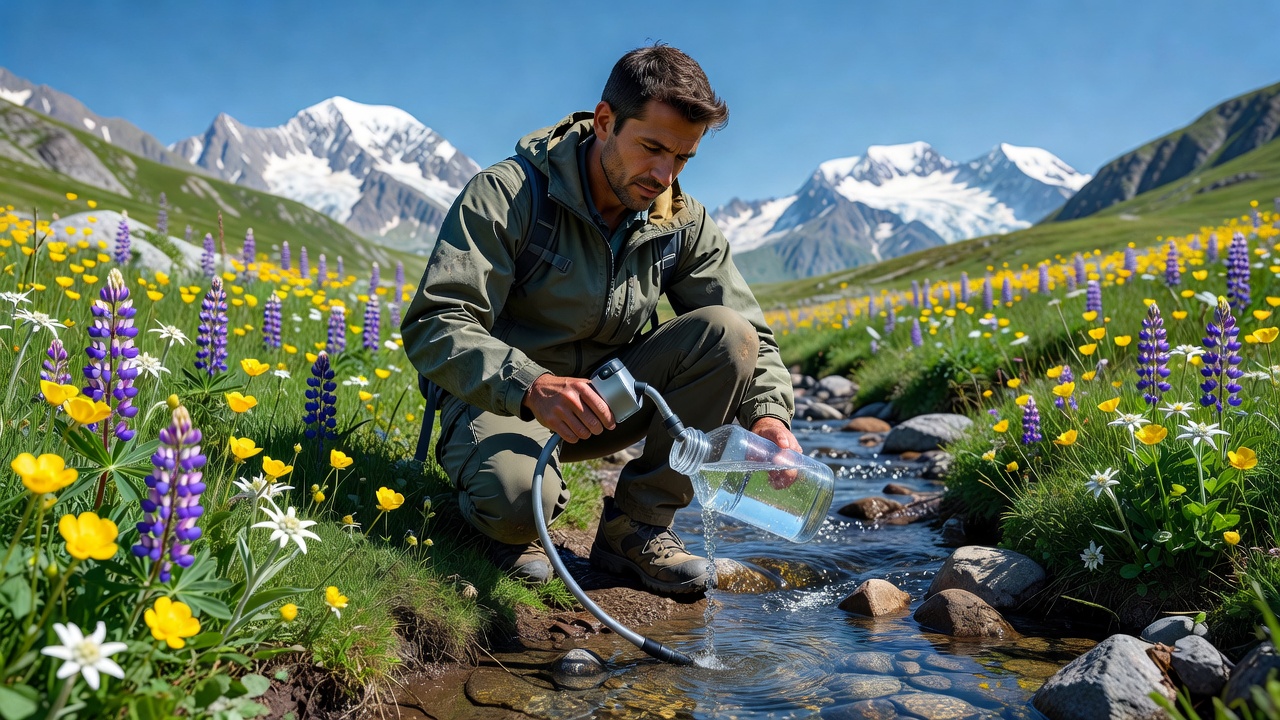
Clean water is the single most important thing you carry into the backcountry — and the one thing most beginners take for granted. That crystal-clear mountain stream might look pristine, but it can harbor Giardia, Cryptosporidium, E. coli, and a dozen other microscopic organisms that will turn your dream trip into a gastrointestinal nightmare.
I learned this lesson the hard way on a three-day backpacking trip in the Sierras. I ran out of filtered water on day two, decided a "clean-looking" alpine spring couldn't possibly be dangerous, and spent the next 36 hours regretting every sip. Here's everything I've learned since about purifying water in the wild — so you can skip the hard part and get straight to safe, cold, delicious mountain water.
How to Purify Water While Hiking: The Four Methods
Not all purification methods are equal, and the right choice depends on your trip type, group size, and how much weight you're willing to carry.
1. Hollow Fiber Filters — The Gold Standard (Sawyer Squeeze)
For 90% of backpackers and campers, a hollow fiber membrane filter is the answer. These filters physically strain out bacteria, protozoa, and microplastics through microscopic pores — 0.1 microns in the case of the Sawyer Squeeze SP129 Water Filtration System ($34.95).
How the Sawyer Squeeze works: Fill the included squeeze pouch with untreated water from a stream or lake, screw on the filter, and squeeze clean water directly into your bottle or mouth. It's dead simple and weighs just 3 ounces. The filter is rated for up to 100,000 gallons — effectively a lifetime of backpacking trips.
Why I recommend the Sawyer Squeeze over gravity filters and pump filters:
- Lighter than pump filters (no moving parts to break)
- Faster than gravity systems (squeeze and drink in 30 seconds vs. waiting 10 minutes)
- Compatible with standard threaded water bottles — you can screw it directly onto a Smartwater bottle if you lose the pouch
- Backflushes clean with the included syringe — takes 30 seconds and restores full flow rate
- $34.95 is the sweet spot: half the price of a Katadyn pump, one-tenth the price of a UV purifier
The only limitation: hollow fiber filters don't remove viruses (hepatitis A, norovirus). In North American backcountry, viruses in water are extremely rare — bacteria and protozoa are the real threats. If you're traveling internationally, pair the Sawyer with purification tablets or boil as a secondary step.
2. Purification Tablets and Drops — Lightest Possible Option
For ultralight backpackers counting every gram, chemical purification is unbeatable. A strip of iodine or chlorine dioxide tablets weighs less than an ounce and can treat dozens of liters. The trade-off is time: most tablets need 30 minutes to 4 hours of contact time depending on water temperature and turbidity.
Chemical purification pros:
- Negligible weight and bulk
- Inexpensive (pennies per liter)
- Kills viruses (which filters don't catch)
- No moving parts to fail
Chemical purification cons:
- Leaves a faint chemical taste (chlorine dioxide is better than iodine here)
- Doesn't remove sediment or floaties — you'll drink cloudy water
- Long wait times, especially in cold water
- Doesn't remove chemical contaminants or heavy metals
I carry a backup strip of chlorine dioxide tablets in my first-aid kit even when I'm using the Sawyer Squeeze. If my filter freezes (frozen hollow fiber membranes can crack and fail invisibly) or I lose the squeeze pouch in a river crossing, the tablets save the trip.
3. UV Purifiers — High-Tech but Fragile
UV purifiers like the SteriPEN use ultraviolet light to scramble the DNA of microorganisms so they can't reproduce. They're fast (90 seconds per liter), leave no taste, and kill viruses along with bacteria and protozoa.
The catch: they're electronic. Batteries die, circuit boards fail when dropped, and they don't work in murky water (UV light can't penetrate sediment). For backcountry reliability, I prefer the zero-electronics Sawyer Squeeze. But for international travel where viruses are a real concern, a UV purifier paired with a pre-filter is a solid system.
4. Boiling — The Oldest and Most Reliable Method
Bring water to a rolling boil for 1 minute (3 minutes above 6,500 feet). Boiling kills everything: bacteria, protozoa, viruses — nothing survives it.
The downside is obvious: boiling consumes stove fuel and time, and you're left with hot water on a 90°F summer hike. I use the MSR PocketRocket 2 Ultralight Backpacking Stove ($49.95) when I'm boiling anyway for a hot meal — it's efficient enough that treating a liter of water costs only pennies in fuel. But as a primary purification method for a multi-day trip, boiling is tedious. I treat it as a backup.
Water sources ranked by safety (before treatment):
- Spring water seeping directly from the ground — lowest risk, but still filter it
- Fast-moving, clear mountain streams above treeline — moderate risk
- Lakes and ponds — higher risk (stagnant water breeds more organisms)
- Desert seeps and potholes — highest risk (animals concentrate around limited water)
- Any water downstream from a beaver pond — treat like radioactive waste (giardia central)
The Complete Purification Gear Setup
Here's what I carry, broken down by trip type.
The Backpacking Kit (lightest, most versatile)
- Sawyer Squeeze SP129 ($34.95) — primary filter, lives in an outside pack pocket
- Nalgene Wide Mouth 32oz ($15.99) — the "dirty" bottle for collecting untreated water. The wide mouth makes it easy to scoop from shallow streams. Mark it with red tape so you never accidentally drink from it.
- CamelBak Crux 3L Hydration Reservoir ($39.99) — for carrying filtered water while hiking. The Crux delivers 20% more water per sip than previous CamelBak reservoirs and the wide-mouth opening is easy to fill from the Sawyer Squeeze output.
- Chlorine dioxide tablets — backup purification, 5 grams total
Why the Nalgene + CamelBak combo works: Fill the Nalgene (dirty) from the stream, screw on the Sawyer Squeeze, and squeeze directly into the CamelBak reservoir (clean). No cross-contamination, no waiting, and you're carrying 3 liters of clean water on your back.
The Car Camping / Group Kit
- Sawyer Squeeze — same filter, still the best option
- RAYMYLO One Gallon Insulated Bottle ($46.99) — one gallon of purified water stays cold all day. At a group campsite, this becomes the communal drinking water source. The triple-wall vacuum insulation means ice water at noon in July.
- CIVAGO 32 oz Insulated Water Bottle ($16.99) — for personal use throughout the day. The straw lid makes it easy to drink one-handed while driving between trailheads or setting up camp.
- Extra Sawyer pouch — the included pouches are durable but having a backup is smart for group trips where you're filtering 5+ liters per day.
Common Water Purification Mistakes (I've Made Them All)
- Drinking from a stream "above the trail" thinking it's safe. Wildlife doesn't stay below the trail. Deer, marmots, and bears wander everywhere — and they defecate everywhere. There is no altitude above which water is "automatically" safe.
- Filtering into the same bottle you scooped with. Cross-contamination is real. Dedicate one bottle to dirty water and one to clean. Label them.
- Letting your filter freeze overnight. Water expands when it freezes, and it takes only one freeze-thaw cycle to crack hollow fiber membranes. The filter will look fine but let bacteria pass through. Sleep with your filter inside your sleeping bag on cold nights.
- Assuming clear water is clean water. Giardia cysts are microscopic — you cannot see them. That pristine alpine lake at 11,000 feet has been visited by hundreds of hikers and countless animals. Filter everything.
- Forgetting to backflush. A clogged filter is useless. Backflush your Sawyer Squeeze with the included syringe after every trip and mid-trip if the flow rate drops. It takes 30 seconds and restores it to like-new performance.
How Much Water Should You Carry While Hiking?
It depends, but here's a practical baseline:
- Day hikes under 5 miles: 1-2 liters per person (the CIVAGO 32oz or Nalgene is perfect)
- Half-day hikes (5-10 miles): 2-3 liters per person (carry the CamelBak Crux 3L)
- Full-day hikes (10+ miles): 3 liters minimum, plus a filter to refill from water sources en route
- Group car camping: 1 gallon per person per day for drinking + cooking (the RAYMYLO gallon jug handles this)
In hot weather, add 50% to all of those numbers. Your body loses water faster than you think when you're sweating on an exposed ridgeline in July.
More Backcountry Hydration Resources
- Summer Hiking Hydration Guide — how to stay hydrated on hot summer trails
- Hiking for Beginners: Complete Guide — everything first-time hikers need to know
- Backpacking vs Car Camping: Which Is Right for You? — compare gear needs and trip styles
The Bottom Line
A $34.95 Sawyer Squeeze, a dedicated dirty-water Nalgene, and a backup strip of chlorine dioxide tablets weigh less than a pound and will keep you safely hydrated on any trip. Purify every drop, keep your filter warm at night, and never trust a clear stream. The convenience of drinking straight from a mountain creek isn't worth the risk — and with modern filters, you're only thirty seconds away from cold, safe water anyway.
<!-- AFFILIATE_DISCLOSURE -->