Night Hiking for Beginners: Essential Gear, Safety Tips, and Best Trails to Start After Dark
Everything you need to know before your first night hike — headlamp recommendations, safety gear, trail selection, and how to read the trail after sunset. Complete night hiking guide for 2026.
The first time I hiked at night, I made almost every mistake you can make. I brought a cheap hardware store flashlight that died 45 minutes in. I wore cotton socks — my feet were cold and blistered by mile two. And I picked a trail I'd never hiked in daylight, which meant every root and rock was a surprise party for my ankles.
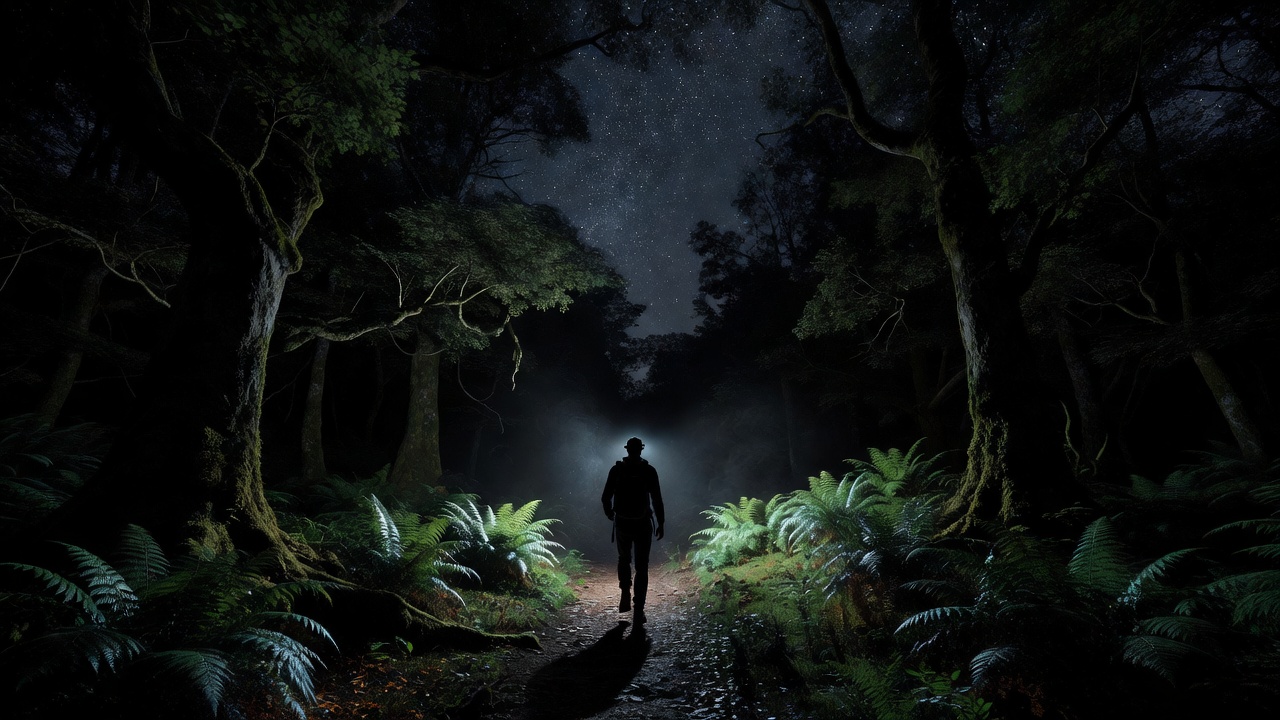
But somewhere around mile three, something shifted. The forest at night isn't just a daytime trail with the lights off — it's a completely different world. Owls you never hear at noon. Stars you can't see from the city. And a kind of quiet that makes you remember why you started hiking in the first place.
Night hiking isn't just for the hardcore. With the right gear and a little planning, it's one of the most rewarding ways to experience the outdoors — and it turns trails you've done a dozen times into brand-new adventures. Here's everything you need to know.
Why Hike at Night? (Besides the Obvious)
There's a practical reason and a spiritual one.
The practical reason: In summer, midday hiking means heat, crowds, and sunscreen reapplied every 45 minutes. A night hike starting at 7 PM gives you sunset views on the way up, cooler temperatures for the climb, and an empty trail. In popular parks like Yosemite or the Smokies, a trail that's a conga line at 2 PM is genuinely empty after dark.
The spiritual reason: Your senses work differently at night. Your hearing sharpens — you'll notice wind through different types of trees, distant streams, and wildlife you'd never pick up during the day. Your night vision develops over 20-30 minutes and you start seeing in shades of silver you forgot your eyes could produce. It's meditative in a way daytime hiking rarely is.
And here's a secret: night hiking makes you a better daytime hiker. You learn to read terrain by feel, to trust your footing without staring at your shoes, and to navigate with peripheral cues instead of just following the person in front of you. These skills transfer directly to technical daytime trails.
Essential Night Hiking Gear: What Actually Matters
You don't need night vision goggles or military-grade equipment. But you do need a few things to be genuinely good at their job.
The Headlamp: Your Most Important Purchase
This is the one piece of gear you cannot cheap out on. A $10 gas station headlamp will — I promise you — fail at the worst possible moment. It'll dim after 45 minutes, the strap will snap, or you'll discover that "water resistant" on the package was a creative writing exercise.
Here are two headlamps that actually deliver:
Black Diamond Spot 400 Headlamp ($49.95) — 400 lumens is the sweet spot for night hiking: bright enough to illuminate the trail 50+ feet ahead without washing out your night vision completely. The red LED mode preserves your night-adjusted eyes for stargazing breaks. Waterproof to IPX8 (submersible to 1 meter for 30 minutes — it'll survive a dunk in a stream or an unexpected downpour). The PowerTap feature lets you toggle between full brightness and dimmed with a finger tap on the side, which is surprisingly useful when you're scrambling over rocks and don't want to fumble with buttons. At 3.1 oz, you forget it's on your head.
Petzl ACTIK CORE Headlamp ($79.95) — 600 lumens with a rechargeable battery (charges via micro-USB, included). The beam pattern is wider than the Spot 400, which is nicer for group night hikes where you want peripheral awareness of who's next to you. The reflective headband is a genuine safety feature — it catches light from other hikers and cars from 300+ feet away. Red light mode included, plus a lock function to prevent it turning on in your pack.
Budget choice: If you're just trying night hiking to see if you like it, borrow a headlamp from a friend. Don't buy a cheap one — a bad headlamp will ruin your entire night and make you think you hate night hiking when you really just hate bad gear.
Secondary Light: Lantern + Backup
A headlamp handles the trail. But when you stop for a break, eat a snack, or check the map, you want ambient light — not a beam bouncing off a map into your face.
Black Diamond Moji Lantern ($19.95) — 200 lumens, weighs 2.7 oz with batteries, and produces a 360-degree glow that lights up a picnic table or small group area. The dimming function is smooth (not stepped), so you can dial it down to a faint glow for stargazing. Runs 70 hours on low. It's small enough to clip onto a backpack strap and use as a walking light if you want to give your headlamp a break.
For an even lighter backup, the Goal Zero Lighthouse Micro Flash ($39.95) is USB-rechargeable, weighs just 2.4 oz, and doubles as a phone charger in a pinch (120 lumens, 7 hours runtime on low).
The rule for night hiking lights: Two is one and one is none. Always carry a backup. A headlamp + lantern covers every scenario.
Footwear: You're Hiking by Feel
At night, you can't see every root and rock before you step on it. Your ankles and soles are doing more work than usual.
Merrell Moab 3 Hiking Shoes ($109.95) — The Vibram TC5+ outsole gives you grip feedback through the sole so your feet know the surface before your eyes confirm it. The protective toe cap saves you from the rock you definitely won't see. And the air-cushioned heel absorbs the 20% more impact your joints take when you're stepping slightly harder at night (most people do — it's subconscious).
Waterproofing note: Night trails collect dew even when it hasn't rained. Within an hour, your shoes will be wet from grass and underbrush. Waterproof or quick-dry footwear is non-negotiable.
Safety Gear You Hope You Won't Need
Night hiking safety is mostly about being visible and being prepared for the one thing you didn't plan for.
Sabre Frontiersman Bear Spray ($39.94) — 7.9 oz canister with a 40-foot range. Bears and mountain lions are more active at dawn and dusk — the exact times you'll be on the trail. This sprays a fog pattern (not a stream), which means you don't need perfect aim when your hands are shaking. The glow-in-the-dark safety clip means you can find it in your pack at night. Keep it in a hip belt pocket or chest strap — not buried in your pack.
MFASCO Travel First Aid Kit ($11.99) — 28 pieces in a compact kit, including bandages, antiseptic wipes, and OTC pain relief. At night, a minor ankle twist can become a major problem because you're harder to find and the temperature is dropping. Treat small injuries immediately.
Other safety items that don't need links:
- A fully charged phone (in airplane mode — searching for signal drains battery in the backcountry)
- A paper map as backup (phones die faster in cold)
- Extra batteries for your headlamp (AAAs weigh almost nothing)
- A space blanket/emergency bivvy (2 oz, could save your life)
Hydration: You Still Sweat at Night
Just because the sun isn't beating down doesn't mean you stop losing water. Night hiking in summer is still 65-75°F with 70%+ humidity in most regions — you're sweating the whole time.
Nalgene Wide Mouth 32oz ($15.99) — The classic for a reason. Wide mouth means you can drop electrolyte tablets in without aiming, the Tritan plastic is indestructible (I've dropped mine off a 20-foot ledge onto granite and it scuffed), and the volume markings are printed into the plastic (not painted on), so you can read them by headlamp without squinting.
The 32oz size is enough for a 3-5 mile night hike in moderate temperatures. For longer routes, carry a second bottle or a hydration reservoir.
How to Pick Your First Night Hiking Trail
Your first night hike should NOT be a trail you've never seen. That's not an adventure — it's a search-and-rescue call waiting to happen.
The "Double-Dip" Rule
Hike the same trail in daylight first. Ideally within a week of your planned night hike — you want recent memory of the terrain. Pay attention to:
- Where the trail gets narrow or exposed
- Sections with loose rock or roots
- Water crossings (they look completely different at night)
- Trail junctions where it's easy to turn the wrong way
- The mile markers or distinctive landmarks you'll use for navigation at night
Trail Selection Criteria for Beginners
| Factor | What to look for |
|---|---|
| Length | 3-5 miles round trip (1.5-3 hours at night pace) |
| Elevation gain | Under 500 feet — you're learning, not suffering |
| Trail surface | Well-maintained dirt or gravel, not technical rock |
| Tree cover | Some open sections for stargazing, some canopy for the full night forest experience |
| Crowds | Popular enough to be well-marked, not so popular you're dodging people in the dark |
| Cell service | Check coverage maps — have service at the trailhead at minimum |
Great Beginner Night Hike Types
Fire roads and forest service roads: Wide, graded, no technical terrain, easy to stay on trail. The trade-off is they're less scenic — but for your first night hike, easy is the point.
Nature center trails: Many state parks have short loop trails near the visitor center. They're well-marked, short (1-3 miles), and often close to your car if something goes wrong.
Lake loops: Trails that circle a lake are hard to get lost on — the water is always on one side. And moonlight reflecting off water is one of the best things you'll ever see on a hike.
What to avoid until you have 3-5 night hikes under your belt: Canyon descents, exposed ridge lines (wind + dark = disorienting), river crossings, and anything with a "strenuous" rating.
Night Hiking Technique: How to Walk in the Dark
Your body already knows how to do this — you just need to get your brain out of the way.
Let Your Eyes Adjust
It takes 20-30 minutes for full dark adaptation (your rods reaching maximum sensitivity). For the first 5 minutes in the dark, you're functionally blind. After 10 minutes, you'll see shapes. After 20, you'll see detail — individual leaves on the trail, the texture of bark, the glint of water.
Do not check your phone during this period. One glance at a screen resets your night vision and you'll need another 20 minutes to recover. If you must use your phone, turn the brightness to minimum and use red-tint mode (iOS: Settings → Accessibility → Display → Color Filters; Android: similar under Accessibility).
The Headlamp Tilt Trick
Angle your headlamp slightly downward — about 15-20 degrees below horizontal. This casts shadows behind trail obstacles (rocks, roots), making them visible as dark shapes against illuminated ground. If the beam is perfectly horizontal, everything looks flat and 2D — you lose depth perception and trip over things that seem to appear out of nowhere.
Pace and Foot Placement
Night hikers naturally slow down by about 20-30%. That's correct — don't fight it. You're processing visual information more slowly and your steps are slightly more deliberate.
The two-step scan: As you walk, scan the ground two steps ahead with your headlamp beam, then glance up to confirm the trail direction, then back to two steps ahead. This creates a rhythm that keeps you oriented without staring at your feet the whole time.
Group Positioning
If you're hiking with others, the person with the brightest headlamp goes in front. The person with the second-brightest goes in back. Everyone in the middle uses red light mode or no light at all (to preserve collective night vision).
Never shine your headlamp in someone's face — it takes them 20 minutes to recover. When you need to talk to someone, look at their feet, not their face.
Reading the Trail at Night: Signs You'd Miss in Daylight
Once you're comfortable with the basics, night hiking reveals things daytime hikers never see:
Animal eyeshine: Hold your headlamp at eye level and scan the trees. You'll see pinpricks of reflected light — deer (greenish), raccoons (yellow-white), spiders (hundreds of tiny green dots in the leaf litter). It's slightly unnerving the first time, then fascinating. Don't stare directly — it can startle the animal.
Thermal pockets: As you hike, you'll walk through distinct temperature zones — cold air pooling in valleys, warm air lingering on hillsides. In daylight you barely notice this. At night, with your other senses heightened, the temperature shifts feel dramatic.
Sound mapping: Close your eyes for 30 seconds and listen. You'll be able to place the stream to your left, the highway 2 miles behind you, and the owl in the oak tree 50 yards ahead. Your brain builds a 3D map from sound alone — it's a skill worth practicing even on daytime hikes.
Common Night Hiking Mistakes (Learn From Mine)
Mistake 1: Starting too late. Night hiking doesn't mean "start at midnight." The best night hikes start 60-90 minutes before sunset. You get golden hour on the way in, sunset from the trail, and by the time full darkness hits, you're warmed up, oriented, and already in the rhythm.
Mistake 2: Overdressing. You'll be cold for the first 10 minutes. Then you'll start hiking and overheat. Wear layers you can strip without stopping — a fleece over a hiking shirt, not a single heavy jacket. Night hiking generates the same body heat as daytime hiking.
Mistake 3: Not telling anyone your plan. This is non-negotiable. Text a friend: trail name, expected return time, and "if you don't hear from me by X, call the ranger station at (number)." Set a phone alarm for your turn-around time — the dark makes it easy to lose track.
Mistake 4: Relying on phone GPS. Phone batteries drain fast in cold weather and poor-signal areas. Your phone is a backup, not your primary navigation. Carry a paper map and know the trail from your daytime scouting trip.
Mistake 5: Skipping the headlamp battery check. Fresh batteries at the trailhead. Always. The headlamp that worked fine on your last trip has been sitting in your pack for two weeks — the button may have been pressed accidentally in transit.
Night Hiking With Your Dog
If you bring your dog, you need a few extras. A light-up collar or clip-on LED light is essential — you need to see where your dog is at all times, especially off-leash. Reflective gear helps other hikers spot your dog from a distance.
For a complete guide to hiking gear for dogs, check out our best dog backpacks for hiking guide — it covers harnesses, cooling vests, and trail-ready dog packs. If you're hiking in summer heat, our pet cooling safety guide has everything you need to keep your dog safe above 80°F.
What to Pack: Night Hike Checklist
On your body:
- Headlamp (fresh batteries, tested at trailhead)
- Hiking shoes with good ankle support
- Moisture-wicking layers (no cotton)
- Reflective vest or reflective strips on your pack
In your pack:
- Backup headlamp or lantern
- Extra batteries (2 sets)
- Paper map + compass
- First aid kit
- Bear spray (if in bear country)
- Water (at least 1 liter per person)
- High-energy snacks
- Space blanket / emergency bivvy
- Fully charged phone (airplane mode)
- Whistle (3 blasts = universal distress signal)
In the car (leave at trailhead):
- Dry clothes and socks
- Thermos of hot tea or coffee (best thing you'll ever taste post-hike)
- Note on your dashboard: trail name and expected return time
After the Hike: The Post-Night-Hike Ritual
There's something about finishing a night hike that makes everything taste better. A thermos of hot coffee at the trailhead at 10 PM hits differently than any café latte ever could. Your body is tired in that satisfied way, your night vision is still partially active so you notice stars you'd normally miss, and you have the quiet satisfaction of having done something most hikers never try.
If you're camping, head back to your site and set up a comfortable sleep system — you've earned it. If you're heading home, the drive back feels different too — quieter, more reflective. You'll sleep better than you have in weeks.
Ready to Try It?
Night hiking isn't an advanced skill reserved for ultralight thru-hikers with $800 headlamps. It's something any hiker can do with a few hours of daylight preparation, a reliable light source, and the willingness to see a trail you've hiked a hundred times as if it's brand new.
Start small. Pick a trail you know. Bring a friend. Pack the essentials. And give yourself permission to turn around if it doesn't feel right — night hiking rewards patience, not pushing through discomfort.
The trail is still there after sunset. It's just waiting for you to see it differently.
More resources for your next adventure:
- Summer Hiking Clothing Guide: What to Wear on the Trail — layer strategy for warm-weather hiking
- How to Use Trekking Poles: Complete Hiking Guide — poles are especially helpful at night for probing terrain
- Wilderness Survival Skills: What Every Hiker Should Know — practical skills that matter when things go sideways
- Hiking for Beginners: The Complete Guide — foundational skills for new hikers
- Camping Trip Planning Guide — from permits to packing lists