Camping With a Baby: The Complete First-Time Parent's Guide (2026)
Everything first-time parents need to camp with a baby — age-appropriate gear, baby sleeping bags, feeding strategies, diapering in the wilderness, and the safety checklist experienced camping parents swear by.
You used to camp. Then you had a baby. Now your tent is in the garage, your sleeping bag hasn't been unrolled in 18 months, and you're wondering if "camping" now means the backyard.
It doesn't. Parents camp with babies all the time — and have genuine fun doing it. The secret isn't "just tough it out" or "wait until they're older." It's having the right gear, the right strategy, and reasonable expectations.
Here's everything you need to know, from when to start to what to pack — built from real trips with real babies.
When Can You Start Camping With a Baby?
Pediatricians generally agree: 6 months is the sweet spot. Here's why:
- Temperature regulation: Before 6 months, babies struggle to maintain body temperature. A 55°F night that's fine for you can be dangerous for a newborn.
- Sleep patterns: By 6 months, many babies have consolidated sleep (fewer night wakings = fewer tent disruptions).
- Head and neck control: Sitting up independently means they can engage with camp — and you're not constantly worried about a floppy head on uneven ground.
- Vaccination schedule: Most of the major early vaccinations are complete by 6 months.
That said, plenty of parents start at 3-4 months for mild-weather car camping. The closer your campsite is to your car, the more flexibility you have. Backpacking with a baby? Wait until 9-12 months minimum — and keep distances short.
The Baby Camping Gear That Actually Matters
You don't need a U-Haul of baby gear. You need the 4 things that solve the 4 problems: sleep, warmth, feeding, and hygiene.
Sleep: The Baby Sleeping Bag (Your #1 Investment)
Adult sleeping bags don't work for babies. They're too long (entrapment risk), too loose (temperature control issue), and not designed for diaper changes at 3am. A dedicated baby camping sleeping bag solves all three.
The Morrison Outdoors Little Mo 40° Baby Sleeping Bag ($89.95) is the gold standard for 6-18 month olds. It's sleeved (arms-out design prevents sliding down inside), uses a two-way zipper for midnight diaper access, and is rated to 40°F — perfect for spring through fall camping. No loose blankets, no suffocation risk, no zipper that digs into a chin.
Why it works at camp: Unzip from the bottom, change the diaper, zip back up — all without fully waking the baby or exposing them to cold air. At home, wash it like any sleep sack.
For toddlers 2-4 years, the Morrison Outdoors Big Mo 40° Kids Sleeping Bag ($99.95) extends the same design with more room. Both bags are EN-rated (independently tested for temperature accuracy), which matters when you're relying on gear to keep a small human warm at 3am.
Warmth: The Sleep System That Prevents 2am Meltdowns
A baby sleeping bag is step one. Step two is what's UNDER the bag — because ground cold comes from below, not above.
Two options, depending on your camping style:
- Car camping: The Exped MegaMat Duo 10 ($349.95, R-value 9.5) is a self-inflating foam mattress that's as comfortable as a home bed. The Duo fits two adults with room for a baby between you. Worth every dollar for the first time you DON'T wake up to a crying baby at 4am because the ground is freezing.
- Budget/lightweight: Layer a closed-cell foam pad (R-value 2.0) under any inflatable pad. The foam blocks ground cold; the inflatable provides comfort. Total cost: ~$60.
Layering rule for babies: Dress in one more layer than you're wearing. If you're in a t-shirt and fleece, baby gets t-shirt + fleece + hat. Check their chest (not hands/feet — those are always cold) to gauge actual temperature. A cold chest means add layers. A sweaty chest means remove one.
Shelter: A Tent That Works for Diaper Changes at 2am
You don't need a mansion. You need standing headroom. Bending over a baby in a 3-foot-tall backpacking tent at midnight turns a simple diaper change into a back spasm.
The Coleman Sundome 4-Person Tent ($79.99, 4.3★, 30,000+ reviews) has a 59-inch peak height — tall enough to kneel upright. It sets up in 10 minutes, the floor is a sturdy bathtub-style polyethylene (no leaks from morning dew), and at under $80, you won't cry when a diaper leaks on it.
Pro tip: Bring a small LED lantern — not just a headlamp. Headlamps shine directly in a baby's eyes during nighttime changes. A dim lantern on the tent floor lights the whole space without blinding anyone. The Black Diamond Spot 400 Headlamp ($49.95, red night-vision mode) works well — use the red mode at night to preserve your baby's (and your) melatonin.
Feeding: Breastfeeding, Formula, and Solids at Camp
Breastfeeding: The easiest option by far. No bottles to sterilize, no formula to mix, no water purity concerns. Bring a nursing pillow (or roll up a jacket) for back support on uneven camp surfaces. Hydrate aggressively — breastfeeding at altitude or in heat burns extra water.
Formula feeding: You need safe water. The Sawyer Squeeze Water Filtration System ($34.99, 4.5★, 45,000+ reviews) filters 99.99999% of bacteria and protozoa from any freshwater source. Fill the squeeze pouch, filter into a clean bottle, boil for 1 minute (at altitude: 3 minutes), then mix formula. This sounds like a lot of steps — in practice it takes 3 minutes and guarantees your baby doesn't drink giardia.
Solids (6+ months): Pre-make pouches of puréed food. Heat them by placing the pouch in a pot of warm (not boiling) water. The Stanley Adventure 9-Piece Camp Cook Set ($44.99) gives you nested pots and a fry pan — small enough for heating baby food, large enough for adult dinner.
One feeding item you'll use constantly: A collapsible wash basin. Fill it with warm water after meals, drop in bottles/spoons/bibs, and everything's clean in 60 seconds. Costs $12. Worth $120.
Diapering in the Wilderness (Less Gross Than It Sounds)
Parents always ask this one. Here's the system:
- Pack twice the diapers you think you need. A weekend trip: 24 diapers minimum. Blowouts happen.
- Bring a dedicated "diaper dry bag." Not the same bag as your clothes. A 10L roll-top dry bag holds wipes, diapers, cream, and used diapers. Seal it tight — raccoons can smell a dirty diaper from 200 yards.
- Pack it out. Even "biodegradable" diapers take years to decompose. Used diapers go in a sealed trash bag, which goes in your car (or bear locker), which goes home with you. No burying. No burning.
- Diaper cream is non-negotiable. Camping means more time in a diaper between changes. A zinc oxide barrier cream prevents the inevitable rash.
- The changing station: A closed-cell foam sleeping pad works perfectly. Wipe it down after each use. Position it inside the tent for nighttime changes, outside (in shade) for daytime.
Safety: The Non-Negotiables
Sun Protection
Babies under 6 months can't wear sunscreen. Their sun protection is physical: shade, hats, long sleeves, and avoiding direct sun between 10am-4pm. A pop-up sun shelter ($30-50) pays for itself on the first trip.
For babies 6+ months, a baby-specific mineral sunscreen (zinc oxide or titanium dioxide) avoids the chemical absorption concerns of adult sunscreens.
Insect Protection
DEET isn't recommended for babies under 2 months. For older infants, use a picaridin-based repellent (less absorption, less irritation) or a plant-based option. The Babyganics Insect Repellent Spray ($9.99) uses plant and essential oils — apply to clothing, not directly to skin, and avoid hands that go into mouths.
For camp-wide protection: a Thermacell device creates a 15-foot mosquito-free zone without DEET or smoke. Worth its weight when you're trying to feed a baby at dusk without feeding the mosquitoes too.
Temperature Monitoring
Babies can't tell you they're too hot or cold. Your job:
- Check their chest every 30 minutes until you're confident in the sleep system
- Cold signs: pale skin, shivering (late sign — act on pale/clammy skin first), fussiness without obvious cause
- Hot signs: flushed face, sweaty chest, rapid breathing, irritability
- At night: If you're comfortable in a 30°F bag, your baby is probably comfortable in their 40°F-rated bag with one extra layer. But check.
The "One Hand On the Baby" Rule
At camp, the baby is either (a) in a contained space (tent, pack-n-play, strapped into a camp chair) or (b) you have one hand physically on them. Campsites have fire pits, tent stakes, cook stoves, and bodies of water — all within crawling distance. This rule sounds paranoid until the first time your crawler makes a beeline for the campfire ring while you're boiling water.
The First Trip: A Realistic 2-Day Plan
Your first camping trip with a baby is NOT the time for a 10-mile hike-in to a remote alpine lake. Start here:
Day 1:
- Arrive by 2pm (leave during morning nap if possible)
- Set up camp while baby is in a portable play yard or being held by your partner
- Unpack, organize the tent, establish the "diaper station"
- Simple dinner (pre-made at home, reheated on the camp stove)
- Bedtime routine: same as home (bath → book → bed becomes wipe-down → story → sleeping bag)
- Adults: campfire, quiet conversation, headlamps only (no phone screens)
Day 2:
- Baby wakes at 5:30am because... camping. Accept this in advance.
- Coffee. Bring a pour-over setup or instant coffee — the Stanley Adventure cook set handles boiling water. Caffeine is essential equipment.
- Short morning hike (30-45 minutes). Bring the baby carrier, not the stroller.
- Break camp during morning nap. Pack while baby sleeps.
- Drive home during afternoon nap. Arrive exhausted but triumphant.
Why this works: Low ambition, high success rate. The goal of Trip #1 is "we did it and nobody cried for more than 10 minutes." Trip #2 can be slightly more ambitious. Trip #10 can be the backpacking trip.
Common Mistakes First-Time Camping Parents Make
Mistake #1: Overpacking Clothes, Underpacking Diapers
Babies don't need outfit changes three times a day at camp — they're crawling in dirt, not attending a wedding. Pack two onesies per day, one warm layer, and one backup outfit. Pack twice the diapers you calculated.
Mistake #2: Arriving After the Baby's Bedtime
Setting up a tent in the dark while holding a screaming, overtired baby is a special kind of hell. Arrive by early afternoon — even if it means the baby skips a nap in the car. You need daylight, calm, and time.
Mistake #3: Forgetting Your Own Comfort
Parents obsess over baby gear and forget themselves. An adult who hasn't slept because the ground was hard is a cranky, impatient parent. Invest in a real sleeping pad. The Therm-a-Rest NeoAir XLite NXT ($209.95, 3 inches thick, R-value 4.5) or the Exped MegaMat Duo for couples — whatever it takes to actually sleep. A well-rested parent is a patient parent.
Mistake #4: Bringing a New Toy
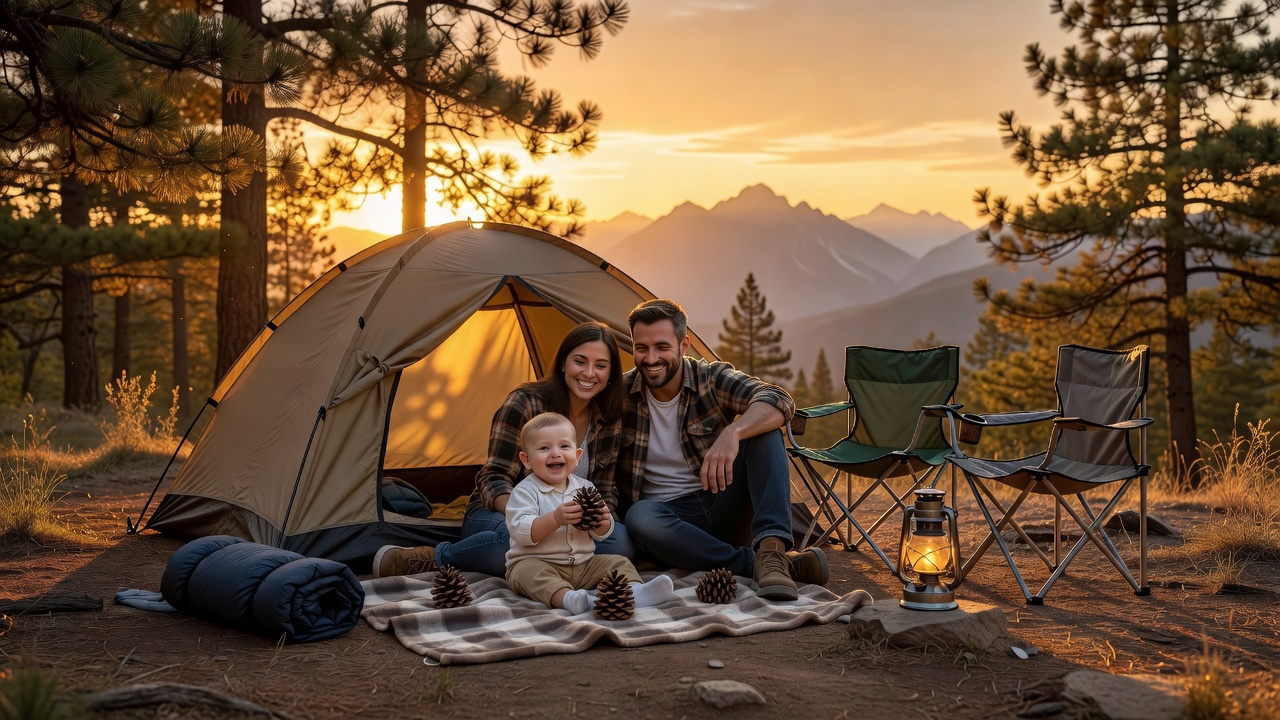
The campsite IS the toy. Sticks, pinecones, leaves, dirt, rocks — babies are fascinated by all of it. Bringing a new toy just adds weight and gets lost in the tent. Let nature entertain them.
Mistake #5: Not Doing a Backyard Trial Run
Set up the tent in your yard (or living room). Put the baby in the sleeping bag. Do one full night. You'll discover problems (the zipper is too loud, the pad is too slippery, the dog is too interested) at home — where you can go inside and fix them — rather than at a campsite 90 minutes from the nearest Target.
Baby Camping Packing Checklist
Here's everything in one place. Adjust quantities for trip length:
- Baby sleeping bag (Morrison Outdoors Little Mo or Big Mo)
- Adult sleeping pad (Exped MegaMat Duo for partners)
- Family tent with standing headroom (Coleman Sundome 4P)
- Diapers (2× normal daily count)
- Wipes (1 full pack)
- Diaper cream (zinc oxide barrier)
- Diaper dry bag (10L roll-top)
- Changing pad (closed-cell foam)
- Baby food/formula + bottles + sterilizing supplies
- Water filter (Sawyer Squeeze)
- Collapsible wash basin
- Camp stove + cook set (Stanley Adventure)
- Onesies (2 per day) + warm layer + hat + socks
- Sun hat + mineral sunscreen (6+ months)
- Baby-safe insect repellent (Babyganics)
- Pop-up sun shelter
- Baby carrier (not stroller)
- Headlamp with red mode (Black Diamond Spot 400)
- Dim LED lantern for tent
- Baby first aid: infant ibuprofen, thermometer, liquid bandage, tweezers
- Thermacell (or similar area repellent)
- Extra blankets (one for warmth, one for ground play)
- Portable play yard or pack-n-play
- Trash bags (for dirty diapers)
- Hand sanitizer
- Coffee setup (you deserve it)
For a complete first aid guide that covers everything from infant fevers to wilderness wound care, read our Camping First Aid & Wilderness Emergency Preparedness Guide. For the full family packing list — clothes, kitchen, shelter, and entertainment — our First Family Camping Trip Checklist covers it.
Key Takeaway
Camping with a baby is not a vacation. It's an adventure — messy, unpredictable, and genuinely wonderful. The baby who wakes up in a tent, watches tree shadows on nylon walls, and falls asleep to crickets is learning that the outdoors is their home too.
Start small. Pack the right gear. Expect the 5:30am wake-up. And know that the second trip is always easier than the first.
You've got this. The baby will be fine. And you'll have stories to tell for years.
<!-- AFFILIATE_DISCLOSURE -->