Beginner's Guide to Your First Family Camping Trip (2026)
Everything first-time campers need to know — choosing a tent, packing gear, planning meals, and keeping kids and dogs happy on your first family camping adventure.
I still remember our first family camping trip. We arrived at the campground after dark, rain starting to spit, with a tent we'd never set up before, two hungry kids, and a dog that had already rolled in something questionable. It was, in a word, chaos.
But here's the thing: we survived. Our kids still talk about that trip years later — not the parts that went wrong, but the marshmallows, the morning birdsong, and the time Dad tripped over a guyline and landed in the dirt. That's the secret nobody tells you about camping for beginners: the disasters make the best memories.
This guide is everything I wish someone had handed me before that first trip. I've made every mistake so you don't have to. Whether you're planning your first family camping trip with toddlers, school-age kids, or even a four-legged family member, I'll walk you through exactly what you need — and what you absolutely don't.
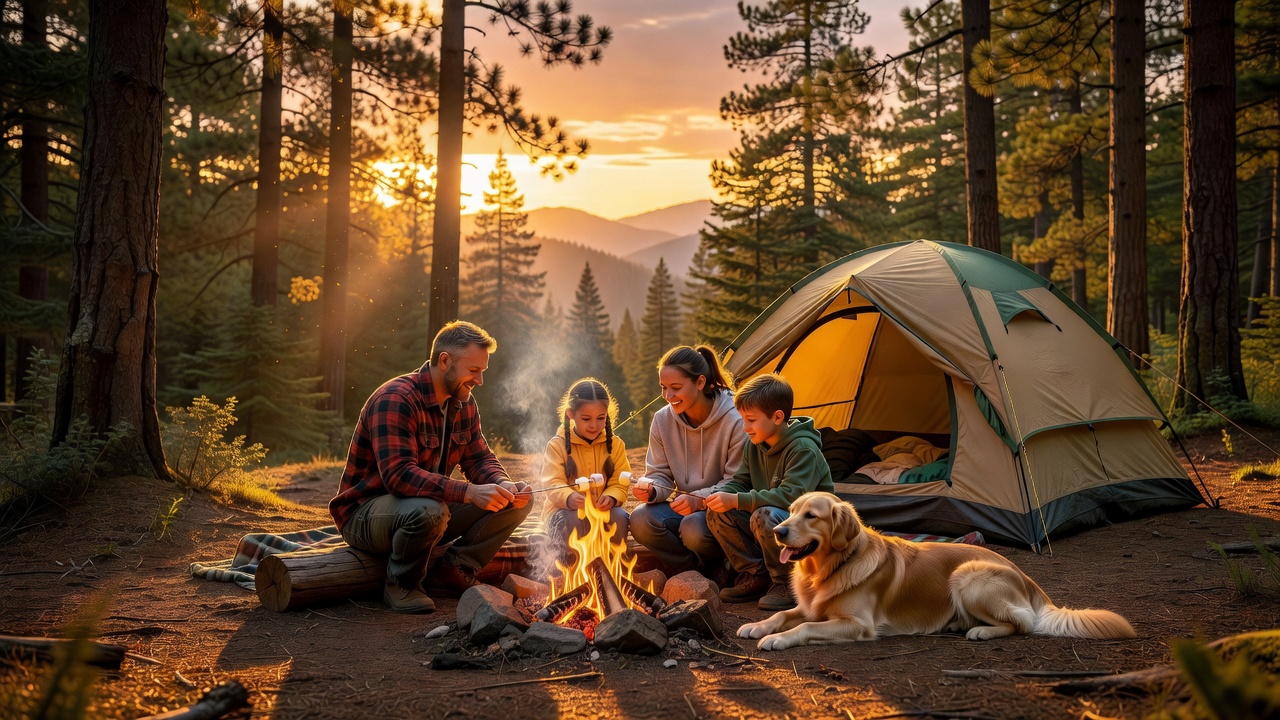
Why Your First Family Camping Trip Doesn't Have to Be Perfect
Let's get one thing straight right now: your first trip won't look like those Instagram-perfect camping photos. And that's completely fine. The goal of your first family camping trip isn't to prove anything — it's to have an adventure together and come home wanting more.
Start Small and Close to Home
The single biggest mistake first-time campers make? Driving six hours to a remote campsite with no cell service and no backup plan. Don't do that. Pick a campground:
- Within 90 minutes of home
- That offers potable water and flush toilets (yes, really — save the pit toilets for trip three)
- With a nearby town or ranger station in case you need to bail
- At a state park or established campground with friendly, helpful hosts
My first recommendation: read through our Camping Trip Planning Guide before you book anything. It walks through the pre-trip decisions most beginners never think about until they're already halfway up a mountain. And for a step-by-step walkthrough of that very first overnight, our First Camping Trip Planning Guide covers everything from arrival to breaking camp.
Car Camping Is Not Cheating
Some outdoor purists will tell you that "real" camping means backpacking ten miles into the wilderness. Ignore them. Car camping — where you park next to your campsite — is the perfect entry point for families. You can bring proper bedding, a cooler full of real food, and the option to retreat to the car if weather turns nasty. We're going for fun, not suffering.
Choosing the Right Campground for Beginners
Not all campgrounds are created equal, especially when you're learning. Here's what to look for:
- Reservable sites. Nothing kills the vibe like driving around at 7pm with tired kids, hoping Site 14 is still open. Book ahead — ideally through Recreation.gov, state park websites, or private campground booking platforms.
- Amenities that matter. Running water, flush toilets, and showers are worth their weight in gold on your first trip. If a campground lists "vault toilets," that means a glorified hole in the ground. Fine for seasoned campers — potentially trip-ending for a potty-training three-year-old.
- Designated fire rings and picnic tables. These seem basic, but you'd be surprised how many "campgrounds" don't have them. A picnic table means you're not eating off your lap; a fire ring means you can roast marshmallows without starting a forest fire.
- Level tent pads. You do not want to discover at 11pm that your tent is pitched on a slight incline, causing everyone to slide downhill into a pile at the bottom. Gravel pads or designated grassy tent areas are your friend.
- Proximity to attractions. A short hike to a waterfall, a lake for swimming, or even a playground gives everyone something to do during the long afternoon stretch between lunch and campfire.
Call ahead if you're unsure. Most campground hosts are happy to answer questions from new campers — they'd rather help you pick the right site than deal with a frustrated family at midnight.
The Family Tent: Your Home in the Woods
If you get one thing right on your first trip, make it the tent. A bad tent experience — leaks, impossible setup, claustrophobia — can sour the whole family on camping forever.
How to Choose a Family Tent
We've done extensive testing, and our full Best Camping Tents 2025 guide has the complete breakdown. But for beginners, here are the non-negotiables:
- Go bigger than you think. A "4-person tent" fits four people like a Tetris puzzle with zero room for gear. For a family of four, look at 6-person or even 8-person tents. Our Camping Tent Size Guide explains sizing in detail, but the short version: double the listed capacity if you want comfort.
- Instant or easy-up design. Wrestling with poles in the dark while your spouse holds a flashlight and your kids whine? Avoid that. Instant tents and cabin-style tents with pre-attached poles are worth every extra dollar.
Two Family Tents We Recommend
The Coleman Instant Tent 4-10 Person ($199.99) lives up to its name — genuinely setup in about a minute. The pre-attached poles unfold and lock into place. It's weather-resistant, has decent ventilation, and fits a queen-size air mattress with room to spare. For first-timers, this is the tent that turns tent setup from a marital stress test into a 60-second magic trick.
If you're looking for something with blackout fabric for nap-friendly darkness, the EVER ADVANCED 6 Person Tent ($169.99) keeps the interior dark enough that your early-rising toddler might actually sleep past 5:30am. It also sets up quickly and has a room divider for a little privacy.
Practice At Home First
I cannot stress this enough: set up your tent in the backyard before you leave. At minimum, do it in the living room. You need to:
- Confirm all poles, stakes, and rainfly pieces are actually in the bag
- Learn how the setup works without YouTube and cell service
- Waterproof the seams if the tent isn't factory-sealed (spray sealant is cheap insurance)
- Let the kids play in it — familiarity reduces first-night anxiety
Essential Beginner Camping Gear: What You Actually Need
Walk into any outdoor store and you'll be convinced you need $3,000 worth of gear. You don't. Here's what matters for your first trip, broken down by category.
Shelter & Comfort
Beyond the tent itself, a few comfort items make the difference between a pleasant night and one spent calculating how early you can pack up and leave.
- Sleeping pads or air mattresses. The ground is harder and colder than you remember. Sleeping pads provide insulation and cushioning. For car camping, a double-height queen air mattress (with a battery-powered pump) is pure luxury.
- Camp chairs. You will spend hours sitting around the fire. The ALPS Mountaineering King Kong Chair ($59.99) is absurdly sturdy — rated for 800 pounds — with a built-in cup holder and side pocket. It's the chair you'll fight your kids over.
- Headlamps and lanterns. One headlamp per person (kids love wearing them), plus a battery-powered lantern for the picnic table. Flashlights are fine, but hands-free light is better.
For detailed gear recommendations across all shelter categories, check out our Best Shelter Gear Guide.
Cooking & Food
Cooking at a campsite shouldn't feel like an episode of a survival show. A little planning and the right gear turns it into one of the best parts of the trip.
- A proper camp stove. Cooking over a campfire is romantic in theory and maddening in practice — uneven heat, soot-covered pots, and 45 minutes to boil water. The 2-Burner Camping Stove with Windshield ($69.99) puts out 24,000 BTUs across two burners with a windshield to keep the flame steady. You can cook pasta on one burner and heat sauce on the other, just like at home.
- A cookware set. Don't bring your kitchen pots. The GSI Outdoors Bugaboo Cookset ($89.95) packs a 3L pot, 2L pot, and a 9-inch fry pan — all with ceramic non-stick coating — into a compact nesting kit. It also includes plates, mugs, and a cutting board.
- A cast iron workhorse. The Lodge Cast Iron Combo Cooker ($49.97) is a 3.2-quart deep pot with a lid that doubles as a 10.25-inch skillet. It's bombproof, works on stoves and over fires, and you'll use it at home too.
- Clean water. Unless your campground has verified potable water, bring a filtration system. The Katadyn BeFree 10L Water Filter ($44.95) filters 10 liters at a time — enough for a family's drinking, cooking, and coffee needs without constant refilling.
For a complete rundown of camp cooking gear, see our Best Cooking Gear Guide.
Clothing & Footwear
Camping clothing isn't about fashion — it's about staying dry, warm, and comfortable when conditions shift.
- Proper hiking shoes. Sneakers work for paved campground loops. Anything beyond that, and you want real hiking shoes. The Merrell Moab 3 Hiking Shoes ($109.95) are legendary for a reason — comfortable out of the box, excellent traction, and durable enough to last years.
- Layer up. Mornings are cold, afternoons are hot, evenings bring bugs and chill. A wicking base layer like the Columbia PFG Tamiami II Shirt ($44.99) handles heat and sun while drying fast if you sweat.
- Rain gear, always. I don't care if the forecast says sunny. Bring a packable rain jacket. The Columbia Watertight II Rain Jacket ($49.99) is waterproof, breathable, and stuffs into its own pocket. It weighs nothing and will save a trip.
All our clothing recommendations live in the Best Clothing Gear Guide.
Daypack & Extras
- A daypack for adventures. The Osprey Daylite Plus Daypack ($74.95) is a 20-liter pack that holds water bottles, snacks, sunscreen, bug spray, and a first-aid kit for short hikes from camp. Comfortable enough for adults, versatile enough that kids won't complain about carrying it (much).
Check our Best Mobility Gear Guide for daypacks, coolers, and everything that gets you and your gear from car to campsite.
Camping With Kids: Keeping Little Adventurers Happy
Kids are natural campers — they love dirt, fire, and food on sticks. But they also have very low tolerance for boredom, hunger, and discomfort. Here's what works.
Give Them Jobs
Kids who feel useful don't complain. Assign age-appropriate tasks:
- Ages 3-5: Collect kindling (small sticks), pump up the air mattress, hand you tent stakes, set the picnic table with plastic plates.
- Ages 6-9: Help pitch the tent, fill water bottles, organize the tent interior, be the "official fire watcher" (from a safe distance).
- Ages 10+: Help cook (supervised), plan a short hike route, keep younger siblings occupied.
Bring the Boredom Busters
- Glow sticks (dollar store — buy a tube of 50)
- A deck of cards or Uno
- A nature scavenger hunt list (find: a Y-shaped stick, three different leaves, something smooth, a feather)
- Audiobooks or downloaded podcasts for the drive
- A simple journal and colored pencils for the "camp journal"
Manage Sleep Expectations
Kids may not sleep well on night one. New sounds, different light, and the general excitement of being in a tent make it hard to settle. Bring their favorite pillow, a familiar stuffed animal, and maintain as much of the bedtime routine as possible (same pajamas, same books, same tooth-brushing song). If they're young enough for white noise, a battery-powered sound machine or a phone app works wonders against owl hoots and rustling leaves.
Bringing the Family Dog Along
Camping with your dog is one of life's great joys — watching them sprint through a meadow or curl up by the fire is pure happiness. But dogs need their own preparation.
Our complete Camping With Dogs Guide covers everything from campsite etiquette to emergency preparedness. Here are the essentials:
- Check campground pet policies first. Some don't allow dogs at all. Some limit them to certain loops. Some require proof of rabies vaccination.
- Keep them leashed. Even the best-trained dog can bolt after a deer or squirrel in unfamiliar territory. A reliable collar with ID tags is non-negotiable. The oitickly Smart Dog Training Collar ($39.99) adds a 4,500-foot range and voice command functionality — useful for recall training before and during your trip.
- Bring a tie-out or long line. A 30-50 foot cable lets your dog roam the campsite while staying safely attached.
- Pack for the dog. Food, water bowl, poop bags, a towel for muddy paws, their bed or a familiar blanket, and a first-aid kit that includes tick removal tools.
- Check for ticks thoroughly. Every night. Dogs pick up ticks in tall grass and underbrush. Bring a tick key and know how to use it.
Planning Meals That Won't End in Disaster
Camp cooking doesn't have to be elaborate. The best camping meals are:
- Prepped at home. Chop vegetables, marinate meat, and pre-measure dry ingredients before you leave. You want to cook at camp, not prep.
- One-pan or one-pot. Fewer dishes, less cleanup. Think: chili, pasta, foil-packet dinners, breakfast burritos.
- Crowd-pleasers, not experiments. Your first camping trip is not the time to try that gourmet campfire recipe you saw on social media. Bring food you know your family eats.
Sample First-Trip Meal Plan
- Breakfast: Pre-made pancake mix (just add water), pre-cooked bacon you only need to warm, and instant coffee. Or go simpler: oatmeal packets and hard-boiled eggs you made at home.
- Lunch: Sandwiches, wraps, or cheese-and-cracker plates — no cooking required, minimal cleanup.
- Dinner, Night 1: Foil-packet hobo dinners (ground beef or sausage, diced potatoes, onions, carrots, salt and pepper — wrap in heavy foil and toss on the camp stove or coals for 20 minutes).
- Dinner, Night 2: Pre-made chili or stew, frozen flat and thawed during the day. Heat and serve with tortilla chips or bread.
- Snacks: Trail mix, granola bars, apples, string cheese, and — crucially — s'mores supplies. Do not forget the s'mores.
The First Night: Managing Expectations
The first night is almost always the hardest. The tent feels strange. Someone will forget their pillow. The air mattress might develop a slow leak (bring a patch kit). A raccoon might investigate your cooler at 2am.
Here's how to handle it:
- Get the tent up early. Set it up as soon as you arrive, not after dark. Lay out sleeping bags and pads immediately so the tent feels like a bedroom, not an afterthought.
- Do a camp walk. After setup, walk the family around the campground loop. Point out the bathroom, the water spigot, the trailhead. Familiarity reduces anxiety.
- Have a bedtime wind-down ritual. Hot chocolate by the fire, one chapter of a read-aloud book, stargazing for five minutes. The routine signals "sleep time" even in an unfamiliar place.
- Keep expectations low for sleep quality. If everyone sleeps terribly, you join a long and noble tradition of campers who watched the sunrise because they were already awake anyway. The coffee will taste better for it.
Final Family Camping Checklist
Print this, check it off as you pack. I've left off obvious items like clothes and toothbrushes — you know those.
For a more detailed printable packing list with 50+ items organized by category — including a meal planner, weather prep guide, and what to stash in your car vs. campsite — check out our Complete First Family Camping Trip Checklist.
Shelter:
- Tent (poles, stakes, rainfly — check the bag!)
- Footprint or tarp for under the tent
- Sleeping pads or air mattress (with pump)
- Sleeping bags or blankets and pillows
- Camp chairs
- Lantern and headlamps (with fresh batteries)
Kitchen:
- Camp stove (with fuel canisters — count how many you need, then bring one more)
- Cookset, utensils, cutting knife, can opener
- Cooler with ice (pre-chill the cooler the night before)
- Matches or lighter (waterproof, in a ziplock bag)
- Biodegradable soap, sponge, dish towel
- Trash bags (bring more than you think)
Clothing extras:
- Rain jacket for every person
- Extra socks (wet socks equal misery)
- Warm layers for evening
- Hat and sunscreen, bug spray
Kids & Dog:
- Entertainment (cards, glow sticks, scavenger hunt list)
- Favorite comfort items (stuffed animal, blanket, pacifier)
- Dog food, leash, tie-out, bowls, towel, tick key, waste bags
First Aid & Safety:
- Basic first-aid kit (bandaids, antiseptic, tweezers, pain relievers)
- Sunscreen and insect repellent
- Prescription medications
- Printed directions and campground reservation confirmation (phones die)
Go Make Some Memories
Your first family camping trip won't be perfect. Something will go sideways — the tent will take longer than expected, dinner will burn slightly, a kid will melt down, or it'll rain on the last morning. That's okay. That's camping.
What you'll remember isn't the flawless execution. It's your kid's face the first time they roast a marshmallow over real fire. It's the way coffee tastes in the morning chill. It's your dog discovering that sticks exist in unlimited supply. It's your spouse admitting, as you finally kick back in your camp chair, that this was actually a good idea.
Pack the gear, load the car, and go. The woods are waiting.
Disclosure: TrailMapz is reader-supported. When you buy through links on our site, we may earn an affiliate commission at no extra cost to you.