How to Stay Clean While Camping: The Complete Backcountry Hygiene Guide (2026)
From solar showers to biodegradable soap — a practical guide to staying fresh, clean, and healthy on your next camping trip. Covers backcountry washing, Leave No Trace hygiene, and the best camp shower gear for 2026.
Staying clean while camping sounds like an oxymoron to a lot of people. You're sleeping on the ground, cooking over a fire, and hiking through dirt — how clean can you really be?
Pretty clean, actually. And more importantly: clean enough to stay healthy, comfortable, and not drive your tent-mate insane.
I've camped in everything from developed campgrounds with hot showers to remote backcountry sites where the nearest running water was a creek half a mile away. Here's what I've learned about staying fresh without a bathroom.
Why Camping Hygiene Actually Matters
It's not just about smelling decent (though your tent-mate will appreciate that). Poor hygiene in the backcountry leads to real problems:
- Skin infections from scratches that don't get cleaned
- Gastrointestinal issues from unwashed hands before meals
- Chafing and rashes from sweat and dirt buildup on long hikes
- Attracting wildlife — food smells on your hands and clothes are a bear magnet
A little hygiene effort each day prevents all of this. You don't need a full shower — you need a system.
The 5-Minute Camp Hygiene System
Here's the routine I use on multi-day trips. It takes less than five minutes and keeps me from feeling like I rolled in dirt (even when I basically did).
Morning: Face + Hands + Teeth
- Face: Splash with filtered water from your bottle. If you're at a developed campground, use the spigot. If you're in the backcountry, pour a small amount into your cupped hand — don't dunk your whole face into a shared water source.
- Hands: Wash with biodegradable soap and water BEFORE breakfast. This one habit prevents 90% of camp illnesses.
- Teeth: Brush with a tiny dab of toothpaste. Spit into a cat hole or scatter widely — don't spit near water sources. Mint toothpaste smells attract animals, so do this away from your tent.
Midday: The Quick Wipe-Down
After a morning hike or before lunch, do a quick wipe-down with a damp bandana or biodegradable wet wipe. Focus on:
- Face and neck (sunscreen buildup feels gross)
- Armpits
- Groin area (chafing prevention)
Pack out all wipes — even "biodegradable" ones take months to break down in soil.
Evening: The Full Refresh
This is your main hygiene window. If you have access to a camp shower, use it. If not, the evening wipe-down with warm water does wonders:
- Heat a small pot of water on your camp stove (you don't need much — 2 cups is plenty)
- Mix with cool water in your bottle until it's pleasantly warm
- Use a small microfiber towel or bandana to wipe down
- Change into clean sleeping clothes (keep one set of clothes JUST for sleeping — never wear daytime sweat into your sleeping bag)
Camp Shower Options: From Simple to Luxury
Not every campsite has a shower house. Here are your options ranked from simplest to most luxurious.
The Bandana Bath (Free, Zero Gear)
Requires: water, a bandana or small towel, and privacy. Pour water onto the bandana, wipe down one section at a time, rinse the bandana, repeat. It's not glamorous, but it works.
Solar Shower Bag ($15–$30)
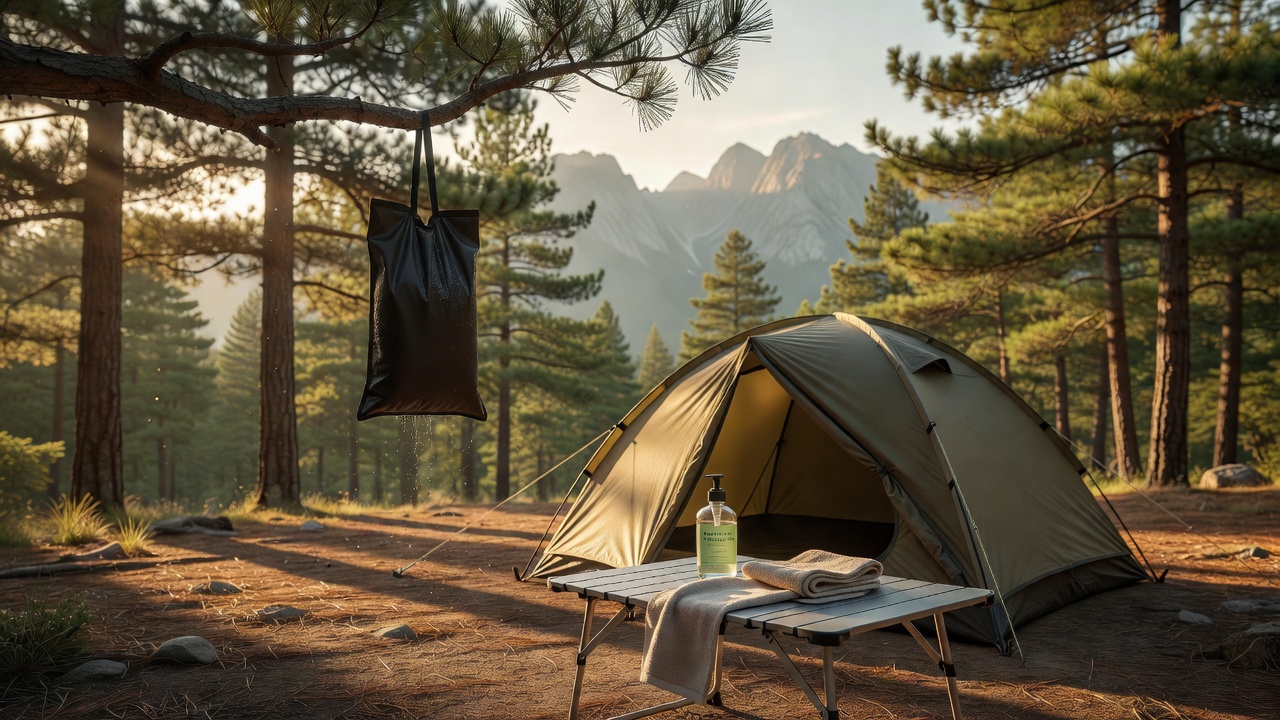
A solar shower bag is the sweet spot for car camping. Fill it with water in the morning, lay it in the sun, and by late afternoon you've got 5 gallons of warm water. Hang it from a tree branch or roof rack and you've got a real shower.
We tested the Advanced Elements 5 Gallon Summer Shower — it's the Wirecutter pick for a reason. The 5-gallon capacity is enough for two quick showers, the hose has an on/off switchable shower head, and the black PVC material heats water fast in direct sun. On an 80°F day, the water reaches shower temperature in about 2–3 hours.
Pro tip: Fill it in the morning and leave it on your dashboard while you hike. The greenhouse effect inside your car heats it faster than laying it on the ground.
Pressurized Camp Shower ($30–$80)
These use a foot pump or battery-powered pump to give you actual water pressure. They're heavier and bulkier, but if you're base-camping for a week, the upgrade is worth it.
Campground Shower House (Varies)
Most developed campgrounds in national parks and state parks have coin-operated showers. Bring quarters ($1–$2 gets you 4–8 minutes). Bring flip-flops — campground shower floors are not something you want to stand on barefoot.
Water Carrying and Filtration for Hygiene
You need water for drinking AND washing. On a multi-day trip, that means carrying more water or filtering from natural sources.
For day hikes and short trips, a large water bottle covers both needs. The Hydro Flask Wide Mouth 32oz keeps water cold all day, and the wide mouth makes it easy to pour into a cook pot for heating wash water. The vacuum insulation means your wash water stays warm longer if you pre-heat it.
For backcountry trips where you're filtering stream or lake water, the Sawyer Squeeze Water Filter is the gold standard. It filters down to 0.1 microns (removes 99.99999% of bacteria) and weighs just 3 ounces. You can filter wash water through it just like drinking water — fill the pouch, screw on the filter, and squeeze into your pot or bottle.
For more detail on backcountry water, see our complete water purification guide.
Leave No Trace Hygiene: Soap, Waste, and Gray Water
Being clean shouldn't mean trashing the environment. Follow these LNT hygiene rules:
Biodegradable Soap — Still Use It Away From Water
Even biodegradable soap (Dr. Bronner's, Campsuds) needs soil bacteria to break down. If you dump it directly into a lake or stream, it pollutes the water before it degrades. The rule: carry wash water 200 feet away from any water source, dig a small sump hole, and pour it there. The soil microbes do the rest.
Gray Water Disposal
Gray water is the soapy water from washing dishes, hands, or yourself. Three rules:
- Strain out food particles (pack them out)
- Broadcast the water widely — don't dump it all in one spot
- Stay 200 feet from water sources
Feminine Hygiene
Pack out ALL products in a sealed bag. Never bury them — animals will dig them up. A dedicated odor-proof bag (like an OPSAK) works well for this.
Toilet Paper and Wipes
Pack it out. Yes, even toilet paper. In dry climates, buried TP can sit undecomposed for years. Bring a dedicated ziplock bag, wrap it in duct tape so you don't have to see the contents, and pack it home.
For more on minimizing your impact, read our Leave No Trace camping guide.
Hand Sanitizer vs. Soap and Water: When to Use Each
Hand sanitizer is convenient, but it's not a magic bullet:
- Use soap and water: Before eating, after using the bathroom, after handling raw meat for cooking
- Use hand sanitizer: Quick clean between tasks, after touching shared surfaces (picnic tables, pump handles)
Sanitizer doesn't remove dirt, grease, or certain pathogens (norovirus, Cryptosporidium). If your hands feel gritty or greasy, only soap and water will actually clean them.
What to Pack: Camp Hygiene Kit Checklist
Here's everything I bring in my hygiene kit, broken down by trip length:
Weekend Car Camping
- Solar shower bag (Advanced Elements or similar)
- Biodegradable soap (2 oz travel bottle)
- Microfiber quick-dry towel
- Toothbrush + toothpaste
- Hand sanitizer (2 oz)
- Biodegradable wet wipes (1 pack)
- Deodorant (travel size)
- Flip-flops for shower house
- Small mirror
- Trash bag for packing out wipes/TP
Weeklong Backpacking
- Bandana (doubles as washcloth)
- Biodegradable soap (1 oz dropper bottle)
- Toothbrush (cut handle short) + toothpaste dots
- Hand sanitizer (1 oz)
- Wet wipes (ration to 2 per day)
- P-style or female urination device (for women — game changer)
- Dedicated sleep clothes (base layer kept clean)
- Ziplock bags for waste
Pro Tip: Toothpaste Dots
Instead of bringing a whole tube of toothpaste backpacking, squeeze pea-sized dots onto a piece of foil or parchment paper at home. Let them dry overnight. In the morning, you've got lightweight toothpaste tablets. Pop one in your mouth, add a drop of water, and brush. Saves weight and eliminates leaky tube disasters.
Common Camp Hygiene Mistakes (Learn From Mine)
"I'll Just Jump in the Lake"
I get it. The lake looks clean and refreshing. But lake water has bacteria, algae, and whatever the local wildlife left behind. If you swim, rinse off with filtered water afterward. And never use soap in the lake — even biodegradable soap.
Sleeping in Hiking Clothes
Your daytime clothes are full of sweat, dirt, and sunscreen residue. Bringing that into your sleeping bag means you're marinating in it for 8 hours. Keep one set of clothes — base layer top and bottom — that NEVER gets worn except in your sleeping bag. It stays clean, you stay comfortable, and your sleeping bag stays fresh.
Not Washing Hands Before Cooking
This is the #1 cause of camp stomach bugs. Wash before every meal, no exceptions. If you're filtering water for cooking anyway, filter a little extra for hand washing.
Using Too Much Soap
You need way less soap than you think — a few drops in a pot of water is enough for a full body wipe-down. Too much soap means more rinsing, more water used, and more gray water to dispose of.
First Aid and Hygiene Go Together
A small cut or blister that doesn't get cleaned becomes a much bigger problem by day three of a trip. Your hygiene kit and first aid kit should live next to each other. Alcohol wipes from your first aid kit double as quick hand cleaners. Antibiotic ointment treats both cuts and chafing.
For a complete wilderness first aid setup, check our camping first aid and emergency preparedness guide.
The Bottom Line
Camping hygiene isn't about staying spotless — it's about staying healthy and comfortable enough to enjoy your trip. A 5-minute evening wipe-down, clean sleep clothes, and washed hands before meals will get you 90% of the way there.
Add a solar shower for car camping and a water filter for backcountry trips, and you've got a complete system that works anywhere.
Now go get dirty — just clean up before dinner.
<!-- AFFILIATE_DISCLOSURE -->