Leave No Trace Camping: 7 Principles Every Outdoor Beginner Needs to Know (2026)
Master the 7 Leave No Trace principles for camping and hiking — from campsite selection to waste disposal. Practical gear picks that help you minimize impact (Sawyer Squeeze, Nalgene, MSR PocketRocket).
The first time I went camping, I dug a trench around my tent "for drainage," tossed orange peels into the bushes ("it's biodegradable!"), and built a fire ring out of whatever rocks I could find. I thought I was being resourceful. I was actually being the kind of camper that gets trails closed and campsites shut down.
Leave No Trace isn't about guilt-tripping. It's a set of practical habits that keep the outdoors open for everyone — and honestly, most of them make your trip better anyway. Who wants to camp next to someone's half-buried trash?
Here are the 7 principles, translated from ranger-speak into real-world decisions — with gear picks that make low-impact camping easier, not more complicated.
1. Plan Ahead and Prepare
Half of LNT violations happen because someone showed up unprepared and made bad decisions under pressure. You didn't bring a stove, so you built a fire where fires aren't allowed. You didn't check the weather, so you camped in a fragile meadow to escape the wind.
What actually works:
- Check fire restrictions BEFORE you leave. Most national forests post them online. No stove? Grab the MSR PocketRocket 2 ($49.95) — it weighs 2.6 oz, boils water in 3 minutes, and means you never need a fire to eat.
- Repackage food into reusable containers at home. Less packaging = less trash to pack out.
- Bring a map. Relying on your phone in the backcountry leads to "creative" route-finding that tramples vegetation. Phones die. Paper doesn't.
2. Travel and Camp on Durable Surfaces
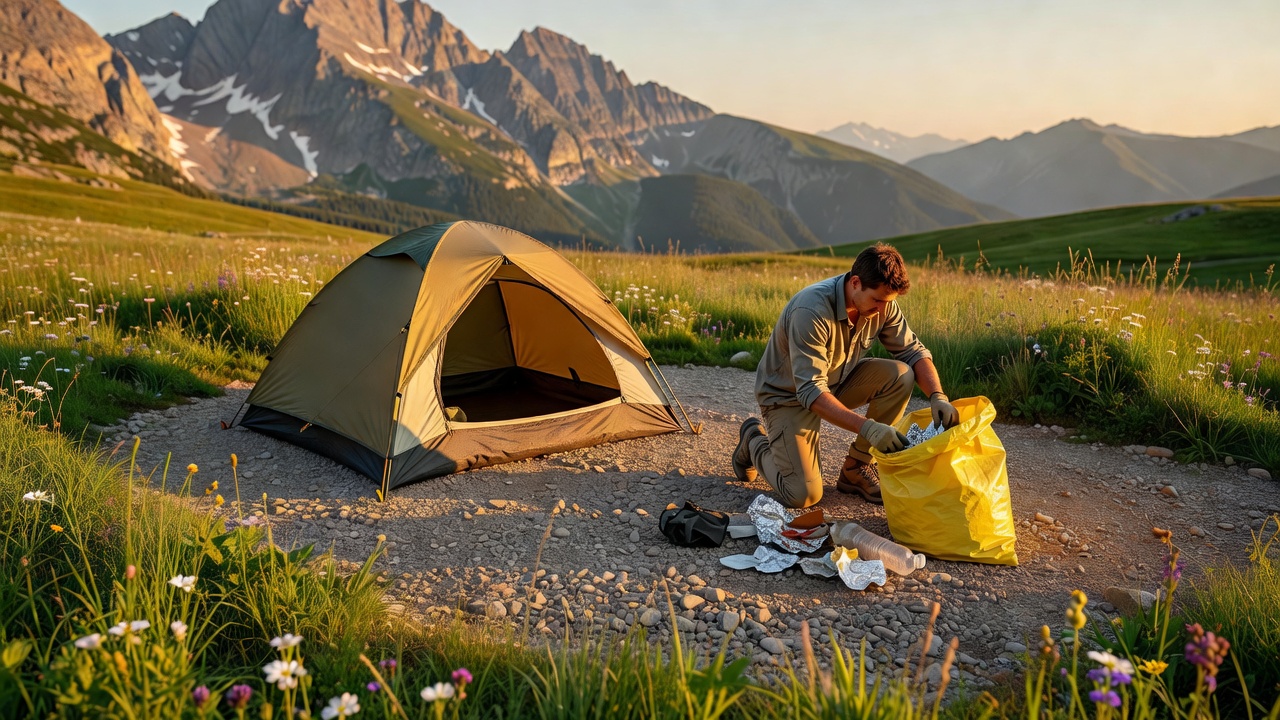
The classic mistake: pitching your tent on that gorgeous patch of alpine meadow because the views are incredible. That meadow took decades to grow. Your tent footprint kills it in one night.
Where to set up:
- Established campsites: gravel, packed dirt, designated tent pads. The Coleman Instant Cabin 4-Person Tent ($99.99) sets up in 60 seconds, so you won't be tempted to clear a "better" spot when you're tired.
- Dispersed camping: rock, sand, dry grass — surfaces that won't show your presence 24 hours later.
- In popular areas: camp at least 200 feet from water sources. That lakeside spot everyone wants? It's also where wildlife drinks. Give them space.
Pro tip: If you can see where someone camped before you, camp there. Concentrating impact on already-used sites is better than creating new ones.
3. Dispose of Waste Properly
"Pack it in, pack it out" sounds simple. The execution is where people get sloppy.
The stuff people get wrong:
Trash: Orange peels take 6 months to decompose in the desert. Apple cores attract wildlife that then becomes habituated to humans. Everything you brought in — food scraps, tea bags, toilet paper — comes back out with you. Bring a dedicated trash bag. Double-bag it.
Human waste: Dig a 6-8 inch cathole, at least 200 feet from water, camp, and trails. Pack out your toilet paper — it doesn't decompose nearly as fast as you think, especially in arid or alpine environments. Carry a small trowel. Carry a ziplock for used TP. Sorry, but this is the price of admission.
Gray water: Strain food particles from dishwater and pack them out. Scatter strained water widely, 200 feet from water sources. Better yet: minimize dishwater by planning meals that don't need much cleanup. The Sawyer Squeeze Water Filter ($34.95) means you can drink directly from streams — so you're not carrying water just for washing dishes.
Dishwashing gear that helps: A Nalgene 32oz Wide Mouth ($15.99) doubles as a measuring cup and dishwater container. Skip the camp sink setup — it creates more gray water than you think.
4. Leave What You Find
This one hurts because it goes against every human instinct. You see a perfect pinecone. A cool rock. An antler. Your kid's eyes light up. You want to take it home.
The rule: Leave rocks, plants, artifacts, and natural objects where they are. That antler is calcium for rodents. That wildflower's seeds won't spread if you pick it. That "cool rock" is someone's microhabitat.
What you CAN take: Photos. Memories. The satisfaction of knowing the next person gets to see the same thing.
The exception: Trash left by other people. If you find someone else's litter, packing it out is fair game and actively good. I carry a spare grocery bag for this — the trail karma is real.
Gear repair, not replacement: When your tent or jacket rips, fix it instead of trashing it. Gear Aid Tenacious Tape ($7.95) patches tents, sleeping pads, rain jackets, and down jackets in 30 seconds. A $8 roll has saved me from replacing $200+ worth of gear.
5. Minimize Campfire Impacts
Campfires are the emotional center of camping — and the #1 source of long-term site damage. Scarred rocks, half-burned trash, and fire rings that multiply every season.
The modern approach:
- Use a camp stove for cooking. The MSR PocketRocket 2 boils water faster than a fire, costs nothing in firewood, and leaves zero trace.
- If you must have a fire: use established fire rings. Keep it small. Burn only dead and downed wood you can break by hand — no axe work, no cutting standing trees.
- Burn it to ash: Stop adding wood 30 minutes before you plan to leave. Let it burn completely to white ash. Scatter cold ash widely.
- Never burn trash: Food wrappers release toxic fumes. Aluminum doesn't burn. Glass doesn't burn. Plastic melts into a toxic blob that the next camper finds.
Morning coffee without a fire: The AeroPress Go ($34.95) makes excellent coffee with just hot water from your stove. No fire needed, no grounds to scatter, and it packs into its own cup.
6. Respect Wildlife
The Instagram problem: someone gets too close to a bison for a selfie, and suddenly we have a new entry in the "tourists vs. nature" hall of shame. But there's a subtler version that's more common: well-meaning campers leaving food "for the animals."
What actually protects wildlife:
- Store food properly at night: Bear canisters in grizzly country. Bear hangs elsewhere. Your car if allowed. Never in your tent — you don't want to be the thing between a raccoon and a Clif Bar.
- Observe from distance: The rule of thumb: if your outstretched thumb covers the animal, you're far enough away. Binoculars are better than getting closer.
- Never feed wildlife — ever: A fed bear is a dead bear. Rangers don't relocate habituated animals; they euthanize them. Your granola bar isn't kindness — it's a death sentence.
- Control your dog: Off-leash dogs harass wildlife, trample nests, and stress animals that are already struggling. A good training collar ($39.99) gives your dog off-leash freedom while keeping wildlife safe.
Bear country essentials: Carry bear spray ($39.94) and know how to use it. Keep it accessible — not buried in your backpack. A bear encounter is not the time to dig through your gear.
7. Be Considerate of Other Visitors
The seventh principle is the simplest and the most often ignored: other people are out here for the same reason you are. Don't ruin it.
The basics that somehow need saying:
- Keep noise down: Your Bluetooth speaker does not improve anyone else's wilderness experience. If you must have music, use headphones.
- Yield on the trail: Hikers going uphill have the right of way. Step aside for horses. Mountain bikers yield to both.
- Take breaks off-trail: Don't block the path with your group photo op. Step onto durable surfaces (rock, dirt) when you stop.
- Camp out of sight and sound of others: If you can see another campsite, they can see you. Move.
Bug pressure without the chemical cloud: Murphy's Naturals repellent ($19.99) uses lemon eucalyptus oil instead of DEET. It works — and it doesn't leave a chemical slick on the water when you swim. Win for you, win for the ecosystem.
The One Sentence Version
If you remember nothing else: leave every place exactly as you found it — or better. Pick up one piece of trash that isn't yours. Scatter your fire ash. Fill your cathole. The cumulative effect of 50 million campers doing slightly better is the difference between trails that stay open and trails that get closed.
Common LNT Mistakes I've Made (Learn From Them)
- "It's just one orange peel": Multiplied by the 100 people who camp at that site each year. Now there's a fruit salad decomposing in the bushes.
- "I'll just wash my dishes in the stream": Soap — even "biodegradable" soap — doesn't biodegrade in cold stream water. It sits there. Fish don't love it.
- "This spot looks unused, I'll camp here": It looked unused because previous campers did the right thing and camped elsewhere. I was the first one to break the streak.
- "The fire ring is already here, so fires must be fine": Check restrictions first. Established rings in areas under a fire ban are a trap for people who don't check before they burn.
Quick Checklist: LNT Gear Loadout
- Water: Sawyer Squeeze filter + Nalgene 32oz bottle
- Stove: MSR PocketRocket 2 — no fire needed for meals
- Trash: Dedicated stuff sack + spare grocery bag for trail litter
- Repair: Gear Aid Tenacious Tape — fix gear instead of trashing it
- Wildlife: Bear spray in bear country, stored accessible
- Bug protection: Murphy's Naturals repellent — effective without the chemical load
- Trowel: For catholes. Yes, really. Deuce of Spades or similar UL trowel works.
Further Reading
If you're planning your first low-impact trip, our camping trip planning guide covers permits, weather prep, and site selection in detail. Bringing the whole family? The first family camping trip checklist walks through gear, meals, and keeping kids engaged without trashing the site. And if things go sideways (they do), our wilderness survival essentials guide covers fire-starting, shelter-building, and navigation — all with low-impact methods.
Good campsites are not found. They're left behind by the people who came before you. Be one of the good ones.
<!-- AFFILIATE_DISCLOSURE -->