4-Season Tent Buying Guide 2026: Do You Actually Need a Winter Tent?
Most campers don't need a 4-season tent. Here's how to decide, what makes a tent winter-rated, and our top picks for everything from shoulder-season camping to true alpine conditions. Includes 3-season alternatives that handle cold weather surprisingly well.
A 4-season tent sounds like the ultimate camping shelter — bombproof, snow-ready, built for anything. And for mountaineers camping above treeline in February, it is. But for the vast majority of campers, a 4-season tent is overkill that costs twice as much, weighs more, and ventilates worse than a good 3-season tent with the right setup.
This guide cuts through the marketing to answer the question that actually matters: do YOU need a 4-season tent, or is a well-chosen 3-season tent the smarter buy?
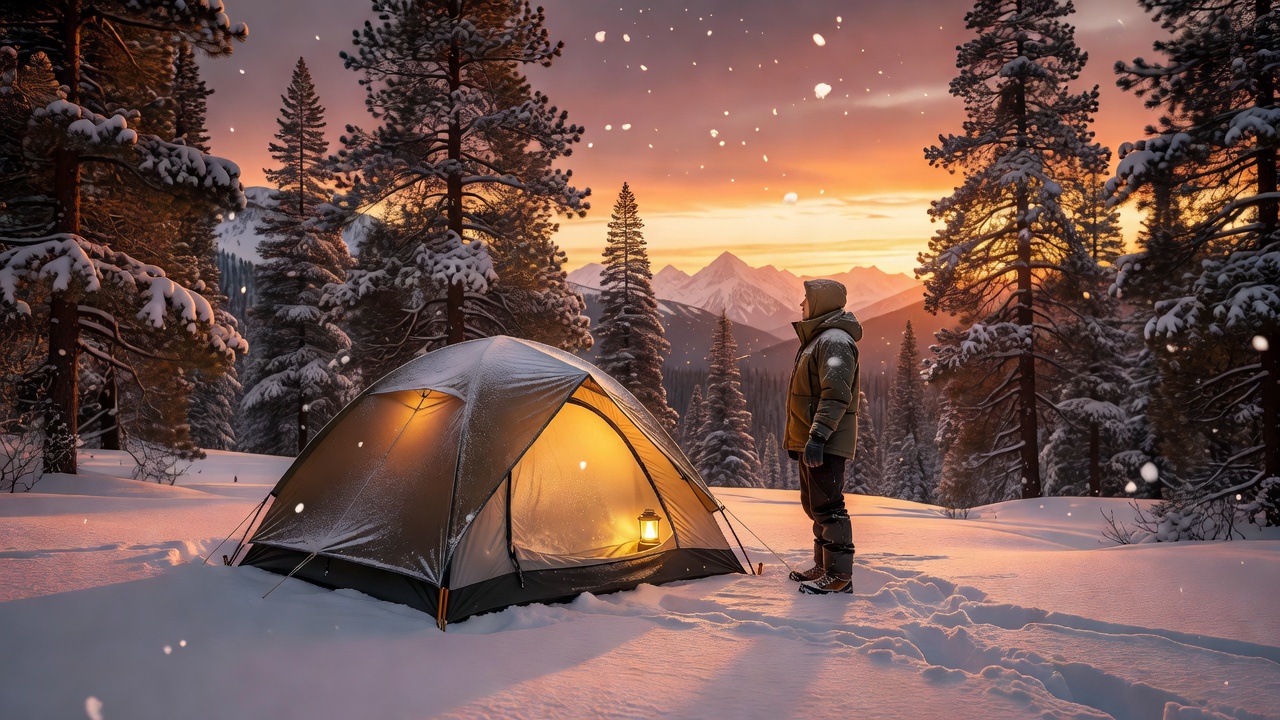
What Makes a Tent "4-Season"?
The term "4-season" isn't a regulated standard — it's a manufacturer claim. But tents marketed as 4-season share a few design differences from 3-season models:
Stronger poles: 4-season tents use thicker aluminum poles (often 8.5mm to 9.5mm vs 7.9mm to 8.5mm on 3-season tents) or composite poles designed to flex under snow load without snapping. A 4-season tent's pole structure is rated to hold several inches of wet snow overnight.
Less mesh, more fabric: 3-season tents maximize mesh for airflow in summer heat. 4-season tents swap large mesh panels for solid ripstop nylon with smaller, closable vents. This blocks wind-driven snow and retains warmth, but it also means more condensation inside. You trade comfort in August for survival in January.
Full-coverage rainfly: A 3-season fly often stops a few inches above the ground for ventilation. A 4-season fly extends to the snow line, sometimes with a snow skirt (an extra fabric flap you bury in snow to seal out spindrift).
Steeper wall angles: 4-season tents use steeper walls and stronger pole geometry to shed snow rather than letting it accumulate. A dome tent that handles rain fine can collapse under six inches of wet snow if the walls are too shallow.
Guy-out points everywhere: 4-season tents have double or triple the guy-line attachment points of a typical 3-season tent. In 40 mph winds above treeline, those extra anchors are the difference between a noisy night and a destroyed shelter.
For most campers reading this: a 3-season tent with a full rainfly, good stakes, and proper guying handles wind and light snow better than you'd expect. If you're still figuring out what size tent you need, start with our tent size guide — the capacity math matters more than the season rating for 90% of trips.
Do You Actually Need a 4-Season Tent?
Here's the honest decision flow:
You probably DON'T need a 4-season tent if:
- You camp March through October in most of North America
- Your winter camping means clear nights in the 20s and 30s (°F), not snowstorms
- You car camp — you can always bail to the vehicle if weather turns
- Your campsites are below treeline with natural wind breaks
- You're a beginner or intermediate camper building your gear kit
A quality 3-season tent with a full rainfly and good stakes handles wind and light snow surprisingly well. The Coleman Skydome 4-Person Tent ($129.99) has near-vertical walls and a full-coverage fly that's kept families dry through spring thunderstorms and fall windstorms. For couples, the Golabs 2/3/4 Person Pop Up Tent ($30.66) sets up in a minute and the four-side mesh doors handle cross-ventilation brilliantly — just add a tarp for unexpected rain.
You DO need a 4-season tent if:
- You camp above treeline where wind is relentless and there's no natural shelter
- You intentionally winter camp in snow — ski touring, ice climbing, winter mountaineering
- Your trips involve multi-day snowstorms where snow load is a real risk
- You camp in exposed coastal or desert environments with sustained high winds
- You're building a basecamp above 8,000 feet in any season (weather changes fast)
If you check any of those boxes, a 4-season tent isn't optional — it's safety equipment.
Key Features to Compare When Shopping for 4-Season Tents
When comparing 4-season tent specs, these are the numbers and features that separate the serious shelters from the marketing claims:
Pole diameter and material: Look for DAC Featherlite NFL or Easton Syclone poles. Both use proprietary aluminum alloys that flex under load and spring back. Thicker isn't always better — a well-engineered 8.5mm pole can outperform a generic 9.5mm pole. The spec that matters is the tent's wind rating, not pole diameter alone.
Free-standing vs semi-free-standing: A true free-standing 4-season tent pitches on rock, ice, or snow without stakes. Semi-free-standing models need stake-out points for full structural integrity. If you camp on platforms or solid rock, free-standing is non-negotiable.
Vestibule size: In winter, you're hauling bulky gear — skis, boots, thick sleeping pads, a stove for melting snow. A generous vestibule stores all of it outside your sleeping area but under cover. Look for at least 10 square feet per vestibule; 15 is better for two people.
Ventilation design: The best 4-season tents have closable mesh panels behind solid fabric windows, plus peak vents that stay open in snow. Without proper venting, condensation freezes on the inner walls and rains down when the tent warms up in the morning.
Packed weight and size: A 4-season 2P tent runs 4.5 to 7 pounds vs 2.5 to 4 pounds for a 3-season 2P. That weight penalty only makes sense when you need the protection. For ski touring or splitboarding, every pound counts double.
Our Top 3-Season Picks That Handle Cold Weather
For campers who push into late fall and early spring but skip full winter camping, a well-built 3-season tent with the right accessories handles shoulder-season conditions. Here are our in-catalog picks:
Coleman Skydome 4-Person
- Price: $129.99
- Floor: 96 × 72 inches (48 sq ft), 59" peak height
- Why it works: The full-coverage fly blocks wind-driven rain from all angles, and the near-vertical cabin walls give you real standing room when bad weather traps you inside. Pre-attached poles mean setup in under a minute, which matters when it's 35°F and getting dark at 4:30 PM.
- Best for: Car campers stretching the season into late fall. Family trips where speed and space matter more than alpine-grade engineering.
Golabs Pop Up 2/3/4 Person
- Price: $30.66
- Floor: Compact pop-up design, instant setup
- Why it works: At this price, it's the buy-it-and-forget-it option for festival campers, backyard adventures, and anyone who wants a backup shelter in the car. The four-side mesh doors make it a summer-first tent, but paired with a tarp and warm sleeping bags, it handles crisp fall nights fine.
- Best for: Budget campers who won't camp below freezing. Festival-goers and spontaneous weekenders.
4-Season Tent Recommendations (Amazon Direct Links)
If you've decided a true 4-season tent is right for your trips, here are the models that consistently earn top marks from winter campers and mountaineers:
Budget Pick — ALPS Mountaineering Tasmanian 2-Person: $169.99. Full-coverage fly, aluminum poles, two vestibules. The specs read like a tent twice the price. Not the lightest at 6 lbs 10 oz, but for car-based winter camping and shoulder-season backpacking, it's the best value 4-season tent on the market.
Mid-Range All-Arounder — Marmot Fortress 3-Person: $379.00. The Fortress bridges the gap between 3-season and 4-season with a full-coverage fly, steep walls, and bomber pole structure that handles wind like a mountaineering tent. It ventilates better than most true 4-season models, making it the pick for campers who want four-season capability without four-season condensation.
Premium Mountaineering — MSR Access 2-Person: $699.95. Weighs just 4 lbs 1 oz, which is unheard of for a 4-season tent. The central-support frame sheds snow brilliantly and the Easton Syclone poles are effectively unbreakable under normal loads. This is the tent you bring when you're skiing into your campsite and every ounce matters. The steep price reflects real R&D — the Access is the result of MSR's decades of winter expedition design.
Heavy-Duty Basecamp — Mountain Hardwear Trango 2: $750.00. The benchmark for decades. Four poles, a brow pole for vertical walls, and fabric that's been tested on Everest. Weighs 9 lbs 10 oz — this is not a backpacking tent. It's a shelter you set up once and live in for a week. If you're building a winter basecamp or camping in consistently brutal conditions, the Trango is what professional guides use for a reason.
Cold-Weather Camping System: The Tent Is Only Part of It
A 4-season tent without proper insulation underneath you is a miserable experience. Cold radiates up from the ground through your sleeping pad, and a tent with solid fabric walls won't save you from a sleeping bag rated for summer.
Sleeping Bags for Cold Nights
Your sleeping bag's temperature rating matters more than your tent's season rating. A 20°F bag in a 3-season tent will be warmer than a 40°F bag in a 4-season tent.
For shoulder-season camping (30°F to 45°F nights), the Coleman Brazos 20/30°F Sleeping Bag ($34.99) is an affordable workhorse with a no-snag zipper and machine-washable shell — perfect for car campers who want warmth without the premium price.
For colder trips and backpackers counting ounces, the Kelty Galactic Down 30° Sleeping Bag ($169.95) uses 550-fill duck down that compresses to the size of a football and keeps you warm into the high 20s. Pair it with a sleeping bag liner for an extra 10-15°F of warmth on especially cold nights.
The Layer System for Winter Camping
Winter camping warmth comes from layers, not any single piece of gear. Your sleep system has three layers: sleeping pad (insulation from the ground), sleeping bag (insulation around your body), and clothing (base layers you sleep in). If any layer is under-specced, you'll be cold regardless of the other two.
Sleeping pad R-value: Summer pads have an R-value of 1 to 2. For shoulder-season camping, aim for R-value 3+. For true winter camping, R-value 5+. Two stacked pads (a closed-cell foam pad under an inflatable pad) combine R-values and are lighter than a single expedition pad.
Bag liner: A $20 fleece or silk liner adds 10-15°F to your bag's rating and keeps the inside of your expensive down bag clean. It's the cheapest warmth upgrade in camping.
Hot water bottle: Boil water before bed, pour it into a Nalgene (BPA-free Tritan won't crack in boiling water), and throw it in the foot of your sleeping bag. It'll radiate heat for hours and you'll have unfrozen drinking water in the morning.
Ventilation, not sealing: The instinct in cold weather is to zip everything shut, but your breath contains a pint of water vapor overnight. Without ventilation, that moisture condenses and freezes on the tent walls and your bag. Crack a vent and sleep warmer — counterintuitive but true.
For more on staying warm while camping, our cold weather camping system guide covers clothing layers, pad stacking, and the tricks that make winter camping genuinely comfortable, not just survivable.
Camp Lighting for Short Winter Days
Winter camping means 14+ hours of darkness. A reliable light source isn't a luxury — it's safety equipment. The Black Diamond Moji Lantern ($24.95) runs 70 hours on low, clips to ceiling loops, and is dimmable for reading or bright enough for cooking. At 200 lumens, it lights a 4P tent completely. Waterproof to IPX4, so melting snow dripping off the fly won't kill it. For the full lighting setup including headlamps and area lights, see our camp lighting guide.
The Bottom Line
A 4-season tent is a specialized tool for specialized conditions. If you're camping in snow, above treeline, or in sustained high winds, buy one — the weight and cost penalty is worth the safety. For everyone else, a quality 3-season tent with a full rainfly, good stakes, and proper guying handles more than you think.
The gear that makes a bigger difference for cold-weather camping than your tent's season rating: your sleeping bag's temperature rating, your sleeping pad's R-value, and a lantern for those 14-hour winter nights. Spend your budget there first, then upgrade to a 4-season tent only when your trips demand it.
For help picking the right size tent regardless of season, start with our complete 2P vs 4P vs 6P tent size guide. For the full shelter lineup including sleeping bags, camp chairs, and accessories, browse our shelter buying guide.
<!-- AFFILIATE_DISCLOSURE -->TrailMapz is reader-supported. When you buy through links on our site, we may earn an affiliate commission at no additional cost to you. All prices and ratings are accurate as of June 2026. Amazon direct links use the trailmapz2026-20 affiliate tag.