RV Camping vs Tent Camping: Which Is Right for Your First Trip?
RV vs tent camping comparison: real costs, comfort, gear needs, and campsite differences. Beginner's guide to picking the right camping style for your family, budget, and adventure level in 2026.
Your first camping trip shouldn't start with buyer's remorse. Yet every year, people drop $30,000 on an RV they use twice, while others spend three rainy nights in a $40 tent wondering why they didn't just book a hotel. The RV camping vs tent camping question isn't about which is "better" — it's about which fits YOUR trip, budget, and tolerance for sleeping on the ground.
I've done both: tent camping in the Rockies with nothing but a backpack, and RV camping along the California coast where my biggest concern was whether the microwave would fit all the leftovers. Here's the real comparison no one tells you upfront.
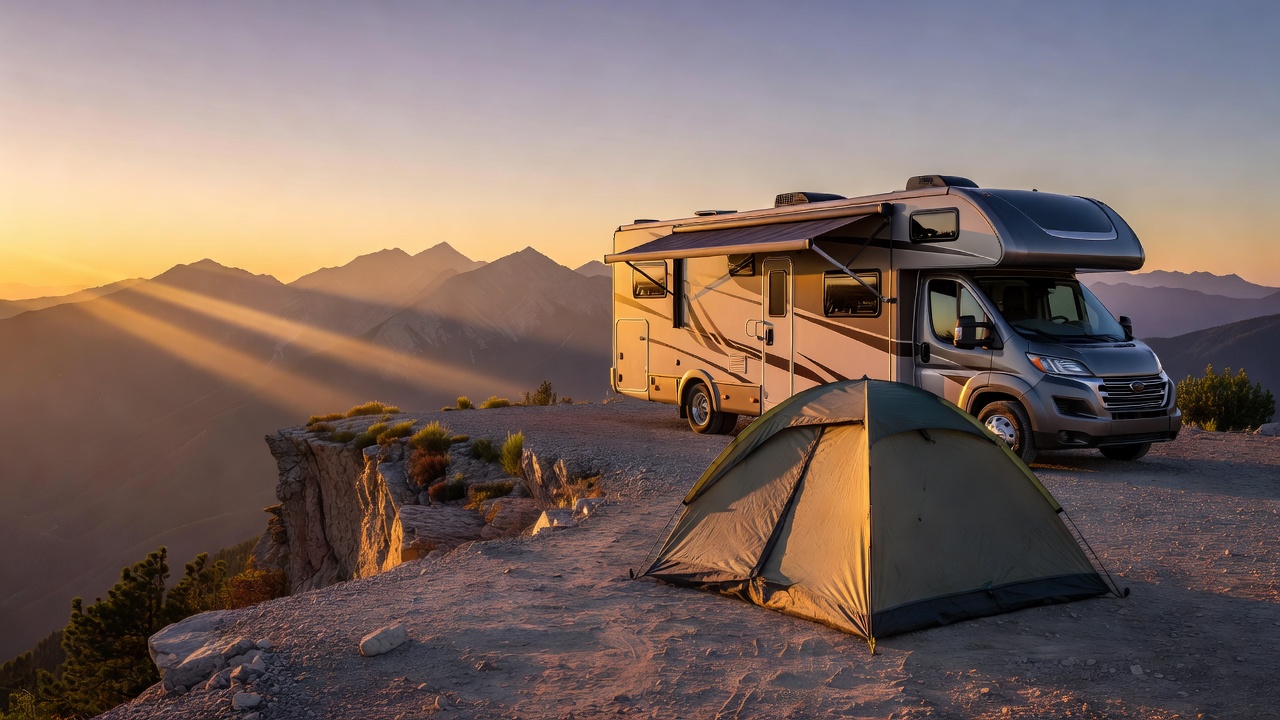
The Real Cost Difference (It's Not Just the Vehicle)
The sticker price is only the beginning. Here's how the numbers actually shake out for a weekend trip:
Tent Camping Costs
| What You Need | Typical Cost |
|---|---|
| Quality family tent (6P) | $120–$200 |
| Sleeping bags (×4) | $160–$400 |
| Sleeping pads | $80–$160 |
| Camp stove + fuel | $40–$100 |
| Cooler | $60–$300 |
| Camp chairs, lantern, misc | $100–$200 |
| Total startup | $560–$1,360 |
| Per-trip cost | $25–$60 (campsite + food + fuel) |
RV Camping Costs
| What You Need | Typical Cost |
|---|---|
| Used travel trailer | $8,000–$25,000 |
| Or new Class C RV | $60,000–$150,000 |
| Insurance | $500–$1,500/year |
| Storage (if no driveway) | $600–$1,800/year |
| Maintenance | $500–$2,000/year |
| Total startup | $8,000–$150,000 |
| Per-trip cost | $50–$120 (hookup campsite + fuel + propane) |
The takeaway: tent camping costs less than a single RV annual insurance payment to get fully outfitted. But cost isn't why people buy RVs.
Comfort: When Sleeping on Dirt Gets Old
Tent Comfort
A good tent with quality sleeping pads and bags is genuinely cozy — on fair-weather nights. A 6P cabin tent like the EVER ADVANCED 6-Person Blackout Tent ($169.99) gives you 90 square feet of floor space and full standing height. For families, it's a portable playroom.
But when it rains for six hours straight, everyone's trapped in a nylon room with dripping gear and no escape. Your back learns what a tree root feels like at 3 AM. The bathroom is a 200-yard walk in the dark.
RV Comfort
An RV has actual walls, a real mattress, climate control, and a toilet you don't need a headlamp to find. Rain becomes cozy instead of catastrophic. You can store food in a real fridge, cook on a real stove, and sleep in the same bed every night.
The trade-off: you give up the sound of wind through pines for the hum of a generator. You trade waking up to a mountain sunrise for waking up to your neighbor's slide-out mechanism at 7 AM.
For families with young kids: RVs win on sleep quality and bathroom access. Tent camping wins on adventure and cost. If you're tent camping with kids, pack the TETON Sports Celsius Junior Kids Sleeping Bag ($59.99) — kid-sized bags keep little ones warmer than swimming in adult bags.
Essential RV Gear Most Beginners Overlook
If you go the RV route, these are the items first-timers learn about the hard way:
-
Water pressure regulator: RV plumbing can't handle campground water pressure spikes. The Camco 40064 Brass Water Pressure Regulator ($42.99) prevents blowouts that cost hundreds in repairs. The built-in gauge tells you if the hookup is safe before you connect.
-
Water filters: Campground water is unpredictable. The Camco TastePURE RV Water Filter 2-Pack ($44.99) removes sediment, chlorine, and taste — everything that makes campground water taste like hose water. For longer trips, the Camco EVO Premium Filter ($48.46) handles higher flow rates.
-
Surge protector: Campground electrical pedestals are notoriously unreliable. One power surge fries your RV's entire electrical system. The Camco Power Defender 30-Amp ($69.99) or Camco 50-Amp Power Grip ($147.06) shuts off power when voltage drops or spikes — cheaper than replacing an air conditioner.
-
Sewer hose: Nobody wants to talk about it, but everyone needs one. The Camco RhinoFLEX 20-Foot RV Sewer Hose Kit ($42.99) has reinforced coils that don't collapse mid-dump — trust me, you do not want to learn this lesson firsthand.
-
RV toilet treatment: Dump station odor is the RV newbie's worst surprise. Camco TST MAX Drop-Ins ($14.67 for 30) break down waste and eliminate odor. Drop one in after every dump and your RV doesn't smell like an outhouse by day three.
-
Leveling blocks: An unlevel RV means your fridge doesn't work, your bed slopes downhill, and everything rolls off the counter. Tri-Lynx Lynx Levelers 10-Pack ($44.99) snap together like LEGO blocks — drive onto the stack until you're level and call it done.
Cross-reference these with our full camping trip planning guide for the complete pre-trip checklist.
Tent Camping Gear That Makes the Difference
If you stay with tents, the gear gap between "miserable" and "comfortable" comes down to a few key items:
-
A tent you can stand up in: Nothing makes tent camping feel small faster than crawling around on your knees. A 6P cabin tent with 72-inch peak height transforms the experience. For luxury car camping, the Coleman Instant 4P ($199.99) goes up in under 60 seconds with pre-attached poles.
-
Real hydration: A Nalgene Wide Mouth 32oz Bottle ($12.99) is indestructible and wide enough to fit ice cubes — a small luxury that makes camp hydration feel civilized.
-
A proper cooler: You don't need a $400 rotomolded cooler, but if your camping involves multi-day trips in summer heat, the YETI Tundra Haul Wheeled Cooler ($450) keeps ice for 5+ days and has wheels — your back will thank you hauling it from the car.
For the full tent camping gear list by trip style, check our camping styles compared guide.
Common RV Camping Mistakes (Learn From Mine)
I've made every mistake in the RV book so you don't have to:
-
Forgetting to check hookup voltage: The surge protector saves your RV. Plug it in FIRST, check the LED indicators, THEN connect your RV. Campground pedestals with reversed polarity or open grounds are more common than you'd believe.
-
Arriving at a campsite after dark: Setting up an RV at 10 PM with only headlights and a fading phone flashlight is a marital stress test. Aim to arrive by 3 PM — you'll need the daylight for leveling, hookups, and awning setup.
-
Not dumping the black tank before departure: The dump station at your next campground might be closed. Or uphill. Or a 45-minute drive away. Always dump before you leave.
-
Skipping the water filter: "Campground water is fine" is the famous last words of every first-time RVer who spent their trip drinking metallic-tasting water. A $45 filter solves it permanently.
-
Underestimating fuel costs: An RV or truck+tow vehicle gets 8–12 MPG. A 200-mile trip can cost $80–$120 in fuel alone. Budget fuel separately from campsite fees.
Campsite Differences: Where You Can Actually Stay
Tent-only sites are cheaper ($20–$40/night), more secluded, and often closer to trailheads and water access. They're the reason people camp in the first place — tucked into trees with no RV generators within earshot.
RV sites ($40–$80/night with hookups) are typically in busier loops with electrical, water, and sometimes sewer connections. You'll have neighbors closer than in tent loops, but you'll also have A/C, a fridge, and hot water.
The compromise: Many campgrounds offer RV sites adjacent to tent loops. Book an RV site and pitch a tent next to it — best of both worlds if your group has mixed preferences.
For finding the right campground by style, refer to our family camping made easy guide or our beginner's first family camping trip guide.
The Decision Matrix: Which Should YOU Choose?
Follow this decision path and you'll land on the right choice in 30 seconds:
-
Solo camper or couple, love hiking, want simplicity? → Tent. A 2P backpacking tent, sleeping bag, and camp stove gets you into backcountry sites no RV can reach.
-
Family with kids under 8? → RV makes bedtimes, bathrooms, and weather days survivable. If the budget stretches, it's genuinely transformative. If not, a large cabin tent + good sleeping pads gets you 80% there.
-
Camping more than 20 nights a year? → RV. The per-night math starts to work, and setup/teardown fatigue is real at that frequency.
-
Want to reach remote, quiet sites? → Tent. RVs are restricted to developed campgrounds and wide roads. The best campsite I've ever had was a tent-only site 3 miles from the nearest parking lot.
-
Budget under $2,000 all-in? → Tent, no question. You can outfit a family of four with quality gear for well under $2,000. That doesn't cover the first month of RV ownership.
-
Camping in variable weather (mountains, shoulder season)? → RV's climate control and insulation win. If you're tent camping in these conditions, invest in quality sleeping bags rated 10–15 degrees below your expected low.
For all the gear you'll need either way, browse our complete camping and outdoor gear guide.
<!-- AFFILIATE_DISCLOSURE -->
The Bottom Line
The RV vs tent camping debate isn't about which is superior — it's about who you're camping with and what kind of trip you want.
Tent camping is cheaper, more adventurous, and gets you into places no RV can go. It's the right call for solo campers, couples, backpackers, and anyone who wants to wake up with the woods, not a parking lot.
RV camping is more comfortable, more predictable, and dramatically easier with young kids or in bad weather. It's the right call for families, extended trips, and anyone who values sleep quality and bathroom access above the "authentic" experience.
Start with tents. If you love camping but hate the discomfort, upgrade to an RV. If you love the discomfort too, you're a tent camper for life. Either way, you're outside — and that's the part that matters.
Until next time, happy camping from the TrailMapz team.
TrailMapz is reader-supported. When you buy through links on our site, we may earn an affiliate commission at no additional cost to you.