Complete Car Camping Setup for Beginners: Everything You Need for Your First Trip (2026)
Build your first car camping setup from scratch — tent, kitchen, shelter, and gear checklist for under $500 total. No gatekeeping, just what actually works.
Car camping is the gateway drug to the outdoors. You drive up, pop a tent, cook a meal, and wake up somewhere beautiful — no backpacking suffering required. But walking into REI for the first time is overwhelming. Everything looks essential and somehow costs $200.
Here's the truth: you can build a complete, comfortable car camping setup for under $500. Not "survival mode" camping — actual comfortable camping with hot meals, cold drinks, and a decent night's sleep.
I've made every mistake in the book (including the classic "bought a palace-sized tent that takes 45 minutes to pitch"). Here's exactly what you need, what you can skip, and what order to buy it in.
Shelter: Your Home in the Woods
The Tent — Start Here
The tent is your biggest purchase and the one that makes or breaks a trip. For car camping beginners, prioritize setup speed over weight or technical features. A tent that takes 30 minutes to pitch kills the vibe before you've even opened a beer.
The Coleman 4-Person Instant Cabin Tent ($109.99) is the undisputed beginner champion. The pre-attached poles mean setup takes literally 60 seconds — unfold, extend, click. It fits a queen air mattress with room to stand. For couples or solo campers who like space, this is the sweet spot.
If you're camping solo or on a tighter budget, the Night Cat 1-2 Person Backpacking Tent ($39.99) is a shockingly capable tent for the price. It's lightweight enough to backpack with but spacious enough for car camping. Clip-pole setup takes under 5 minutes. Perfect if you're not sure camping is "your thing" yet and don't want to commit $100+.
What to skip: Don't buy a $400+ expedition tent for car camping. You don't need 4-season ratings or ultralight Dyneema fabric. Save that money for a better sleeping pad and a good camp stove.
Sleeping — Don't Skimp Here
A bad night's sleep ruins a camping trip faster than rain. Your sleeping setup has three layers:
-
Sleeping pad — This is insulation from the cold ground, not just cushioning. Even in summer, the ground pulls heat from your body. A basic self-inflating pad ($30-50) is fine for car camping. If you're sharing a tent, a queen air mattress with a battery pump is luxury-level comfort.
-
Sleeping bag — Match the temperature rating to your actual conditions. A 30°F bag handles most 3-season camping. Don't buy a 0°F bag for July trips — you'll sweat through it.
-
Pillow — Yes, a real pillow. You're car camping, not summiting Everest. Bring the one from your bed.
Camp Furniture — The Comfort Multiplier
The Windhike Blackdog IGT Table ($89.99) is a game-changer for camp kitchen organization. Adjustable legs handle uneven ground, the aluminum top is easy to clean, and it folds flat for storage. Pair it with a couple of camp chairs and you've got a proper outdoor living room.
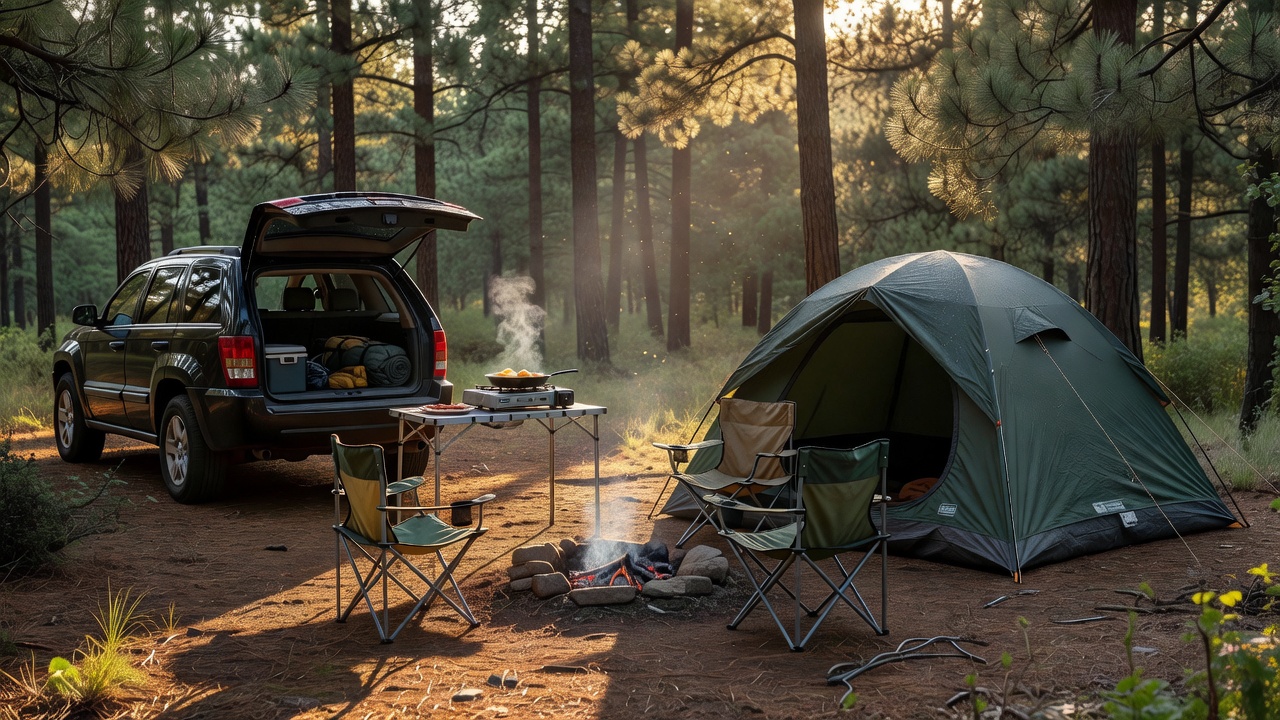
Camp Kitchen: Eating Well Outdoors
Car camping cooking is where you go from "surviving" to "thriving." You're not limited by weight — bring the cast iron, the spices, and the fresh ingredients.
The Stove — Your Camp Kitchen MVP
The Coleman Tabletop 2-in-1 Grill & Stove ($89.99) does double duty: a grill grate on one side for burgers and steaks, a burner on the other for boiling water and cooking in pots. One propane canister powers both. This is the setup for weekend warriors who want grilled food without hauling a full-size grill.
Budget alternative: A basic single-burner butane stove ($25) handles coffee, oatmeal, and one-pot meals. It's all you need for simple breakfasts and rehydrating backpacking meals. Upgrade to the 2-in-1 when you're ready to get serious about camp cooking.
If menu planning feels overwhelming, I wrote a complete Weekend Car Camping Meal Plan that covers Friday dinner through Sunday breakfast — every meal, no planning required. And for stove deep-dives, check out the Best Camp Stove for Car Camping guide.
Cooler Strategy — Two Coolers, Zero Spoiled Food
The two-cooler system is the secret to camping food that doesn't get soggy:
-
Drinks cooler — Gets opened 20 times a day. Every opening lets warm air in. Put only drinks here so you don't care when the ice melts faster.
-
Food cooler — Opens 3 times a day (breakfast, lunch, dinner). Pack in reverse order: Friday dinner on top, Sunday lunch at the bottom. Pre-freeze water bottles as ice blocks — they melt slower than loose ice and give you cold drinking water.
The Titan by Arctic Zone Deep Freeze Cooler ($129.99) uses a zipperless lid and "deep freeze" insulation that genuinely keeps ice solid for 2-3 days. It's the value pick between $30 igloo coolers (ice melts in 8 hours) and $400 Yeti rotomolded tanks.
Hydration — One Bottle, All Day
A single CIVAGO 32 oz Insulated Water Bottle ($24.99) does double duty: cold water all day on the trail, hot coffee at camp. The 3-lid system (straw, spout, handle) means you're not committed to one drinking style. 24-hour cold retention / 12-hour hot retention is the real deal — tested.
If you prefer a straw-first design, the Owala FreeSip Sway ($27.99) has a patented dual-drink spout that lets you sip through the straw or chug from the wide mouth. Both are BPA-free stainless steel. Bring a 1-gallon jug for camp water refills and you're set.
Lighting & Navigation: Don't Get Lost in the Dark
Headlamp — Hands-Free Light
The Black Diamond Spot 400 Headlamp ($44.95) is the industry standard for good reason: 400 lumens, waterproof to IPX8 (submersion-rated), and a red night-vision mode that won't blind your campmates. The PowerTap feature lets you toggle between full brightness and dimmed with a finger tap. Bring spare AAA batteries.
Phone flashlight is not a substitute. You need both hands for tent setup, cooking, and midnight bathroom trips.
GPS Watch — Optional but Addictive
If you hike from camp, the Garmin Instinct 2S Solar ($399.99) is a splurge that pays for itself in peace of mind. Solar charging means you'll rarely plug it in, GPS breadcrumb tracking means you'll never get lost, and the rugged build shrugs off rain, mud, and rock scrapes. It's overkill for pure car camping — but if you're trail running or day-hiking from base camp, it's the best companion watch on the market.
The $500 Starter Build
If I had to build a car camping kit from zero with $500, here's exactly what I'd buy:
| Item | Pick | Price |
|---|---|---|
| Tent | Coleman Instant Cabin 4P | $110 |
| Sleeping pad | Self-inflating (basic) | $40 |
| Stove | Coleman 2-in-1 Grill/Stove | $90 |
| Cooler | Titan Deep Freeze | $130 |
| Table | Windhike IGT | $90 |
| Headlamp | Black Diamond Spot 400 | $45 |
| Total | $505 |
If that's too steep, swap the Coleman stove for a $25 butane single-burner and the cooler for a $35 igloo — you're at $345 and still fully functional. You can always upgrade piece by piece after your first trip.
Common Car Camping Mistakes (Learn From Mine)
I've made every one of these so you don't have to:
- Not testing gear at home first. Pitch the tent in your living room. Fire up the stove on the patio. Discover that the propane canister doesn't fit at 3 PM on a Tuesday, not at 8 PM on a Friday in the dark.
- Over-packing food. First-timers bring enough groceries for a week. You'll cook half of it. Plan exact meals.
- Forgetting fire starters. Wet wood + no fire starter = cold dinner. Bring dryer lint in a ziplock — it's free and catches instantly.
- Arriving after dark. Setting up a tent you've never used, in the dark, is a special kind of miserable. Aim to arrive by 3 PM.
- No camp chair. Sitting on a cooler or the ground gets old by hour two. Bring chairs.
- Leaving food in the car overnight. Bears in bear country, raccoons everywhere else. Lock food in the car or use a bear box.
Your First Trip Checklist
Shelter & Sleep:
- Tent + footprint/groundsheet
- Sleeping pad or air mattress
- Sleeping bag (temperature-appropriate)
- Pillow (real one)
- Camp chairs (1 per person)
Kitchen & Food:
- Camp stove + fuel canisters
- Lighter / waterproof matches
- Cookware (1 pot, 1 pan minimum)
- Plates, cups, utensils (1 set per person)
- Cooler(s) + ice / frozen water bottles
- Trash bags (multiple — double-bag food waste)
- Paper towels
Clothing & Personal:
- Layers (it gets colder than you think at night)
- Rain jacket (even if forecast is clear)
- Hiking shoes / boots (broken in before the trip)
- Sunscreen + bug spray
- Headlamp + spare batteries
- First aid kit (band-aids, ibuprofen, antihistamine)
Extras That Feel Like Luxury:
- Camp table (cooking on the ground sucks)
- French press or AeroPress Go for coffee
- Camp lantern for ambient light
- Bluetooth speaker (quietly — respect your neighbors)
- Deck of cards or board game
The Bottom Line
Your first car camping trip doesn't need a $1,000 REI shopping spree. Start with the core four — tent, sleeping pad, stove, cooler — and borrow or improvise the rest. Every trip teaches you what you actually need. By your third trip, you'll have a dialed-in setup that fits exactly how you camp.
Two weeks from now, you won't remember what you spent on gear. You'll remember sitting around a campfire, cooking a meal you made yourself, and waking up to birds instead of an alarm clock.
That's worth $500. Every time.
<!-- AFFILIATE_DISCLOSURE -->TrailMapz is reader-supported. When you buy through our links, we may earn an affiliate commission at no extra cost to you.