Bike Camping for Beginners: Your First Overnight Bikepacking Trip in 2026
Everything you need for your first bike camping trip: gear checklist, route planning, packing tips, and the best budget cycling gear that won't let you down on the trail.
Bike Camping for Beginners: Your First Overnight Bikepacking Trip in 2026
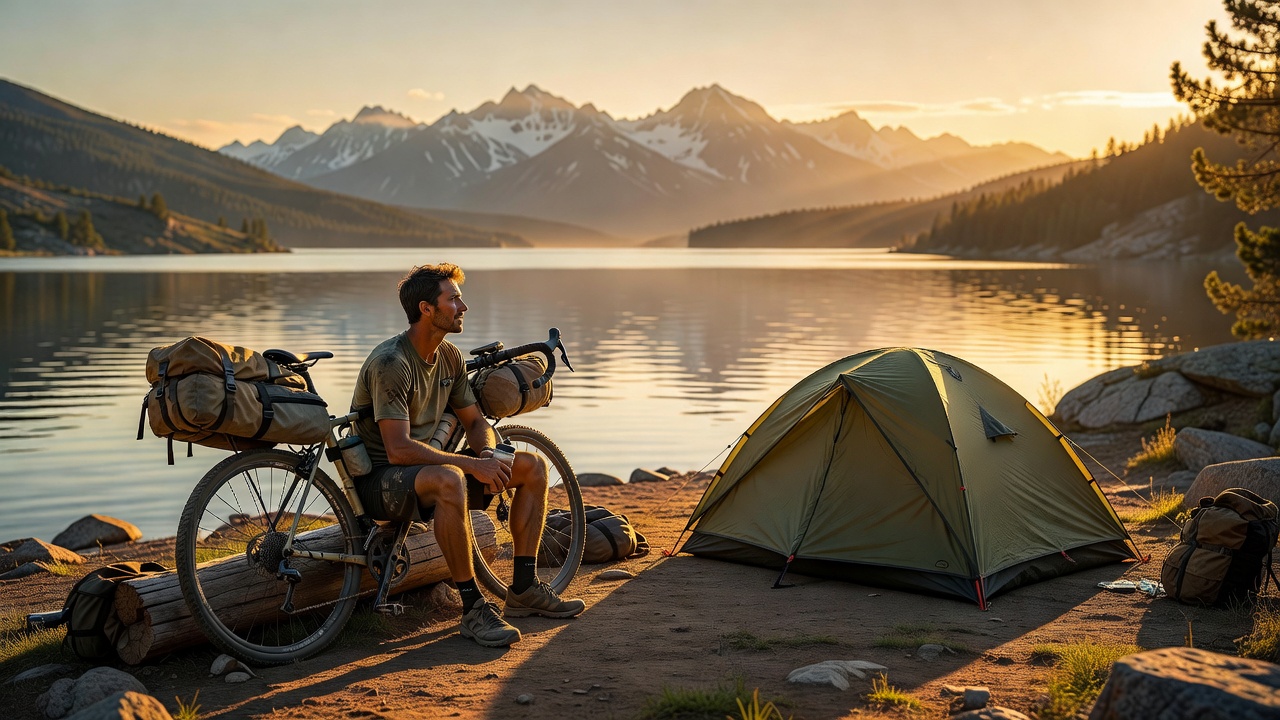
Your legs are burning. You've been pedaling for three hours, and the campsite is still 10 miles away. But then you crest the hill, and there it is — a lakeside clearing with nobody around, just you, your bike, and a sunset that makes the whole day worth it.
Bike camping — also called bikepacking — is the sweet spot between cycling and camping. You get the freedom of covering real distance by bike, plus the reward of sleeping under the stars. No car required. No hiking with 40 pounds on your back. Just you, two wheels, and the open road (or trail).
But your first overnight bike trip can go sideways fast if you pack wrong. This guide covers exactly what you need, what to skip, and how to set up your first trip without spending a fortune.
What Is Bike Camping (and Why It's Different from Regular Camping)
Bike camping sits between traditional car camping and ultralight backpacking. You carry everything on your bike — tent, sleeping bag, food, tools, clothes — but unlike a backpack, your bike frame takes most of the weight.
The big advantage over backpacking: you can cover 40-60 miles in a day instead of 10-15. That means you can reach campsites that hikers can't touch, and you're not limited to trailheads with parking lots.
The big advantage over car camping: no car. No traffic jams at national park gates, no circling for parking spots, no "sorry, campground full" sign. On a bike, you slip past all of that.
Gear Checklist: What You Actually Need
You don't need a $3,000 ultralight setup. For your first trip, borrow what you can and buy the essentials. Here's the real list:
The Bike
Any functional bike works — hybrid, mountain, gravel, or even a sturdy commuter. You don't need a dedicated touring bike for your first overnight. What matters more than the bike itself is having a helmet that fits well and doesn't fog up on climbs — the Giro Fixture II MIPS helmet is a solid budget pick with MIPS rotational protection that's saved more than a few riders from concussions.
Sleeping System (the "住" quadrant)
- Tent: A 1-2 person backpacking tent under 4 pounds. The Kelty Late Start 2-person tent packs small enough to strap to handlebars and sets up in under 5 minutes — crucial when you roll into camp at dusk.
- Sleeping bag: Temperature-rated 10-15°F below your expected lows. A 20°F bag covers most 3-season trips.
- Sleeping pad: Don't skip this — the ground sucks heat from your body even in summer. Inflatable pads pack smaller than foam.
- Camp pillow: Your neck will thank you. The Trekology ALUFT 2.0 weighs 2.8 ounces and inflates in two breaths.
Cooking & Hydration (the "食" quadrant)
- Stove: A compact canister stove beats a full-size camp stove when every ounce counts.
- Water: Carry at least 2 liters. The CamelBak Crux reservoir slips into a daypack or frame bag and lets you drink while riding.
- Food: First trip? Pack a sandwich and snacks. Don't try to cook a 3-course meal your first trip — you'll be too tired to enjoy it. Save the cast-iron cooking for car camping. When you're ready to level up to car camping with a real kitchen setup, we've tested the best camp stoves for car camping — from compact butane burners to full-size propane grills.
Clothing (the "衣" quadrant)
- Rain jacket: Non-negotiable. Mountain weather turns in 10 minutes.
- Cycling gloves: Your hands are your contact points. After 4+ hours of riding, unpadded palms go numb. The Giro Jag gloves have gel padding where you need it and cost less than a tank of gas.
- Layers: A moisture-wicking base layer + mid-layer fleece + wind shell covers 90% of conditions.
Bike Safety Gear
- Front light: Even if you plan to finish before dark, plans change. The Cygolite Metro 800 throws 800 lumens — enough to light a dark country road at 15 mph.
- Tail light: Drivers need to see you from behind. The Cygolite Hotrod 50 has a pulsing daytime mode that's visible from half a mile away.
- Lock: You'll need to leave your bike to use a restroom or grab supplies. A U-lock like the Kryptonite Evolution Mini-7 is heavy but the peace of mind is worth the weight.
Tools & Miscellaneous
- Multi-tool with hex keys (your bike uses them everywhere)
- Spare tube + tire levers + mini pump
- First aid kit (blister treatment especially)
- Sunscreen and bug spray
- A folding knife like the CIVIVI Praxis — weighs 3.2 ounces and handles everything from food prep to cutting cord
Packing Strategy: Where to Put Everything
Don't wear a heavy backpack while riding — it shifts your center of gravity, traps sweat, and makes your lower back ache after 90 minutes. Instead, distribute weight on the bike:
- Handlebar roll: Tent + sleeping pad (light, bulky items)
- Frame bag: Tools, snacks, phone, wallet
- Seat pack: Sleeping bag + clothes (heavier, compressible items)
- Fork cages or small panniers: Water, stove, food
If you're on a budget, dry bags strapped with Voile straps work fine — you don't need $200 bikepacking-specific bags to get started.
Total pack weight target: 20-30 pounds of gear. Any more than that and you'll feel it on every climb.
Route Planning: Pick the Right First Trip
Your first bike camping trip should be ambitious enough to feel like an adventure but short enough that you can bail if things go wrong.
The ideal first route:
- 20-30 miles each way (or a 30-mile loop)
- Mostly paved or well-graded gravel — save singletrack for trip #3
- A known campground at the midpoint (check reservations in advance)
- Less than 1,500 feet of total elevation gain
- Cell service along most of the route
- A bailout option (a town or pickup point within 10 miles)
Where to find routes:
- Rails-to-trails paths are perfect: flat, car-free, and often pass through small towns
- State park campground-to-campground loops
- Gravel roads through national forests (check motor vehicle use maps)
Start with a supported trip if you're nervous: ride to a campground where a friend meets you with a cooler and extra supplies. No shame in a halfway-supported first attempt.
The Ride: What Nobody Tells You
You'll go slower than you think. Loaded bikes are 25-40 pounds heavier than unloaded ones. That 15 mph cruising speed becomes 11-12 mph. Plan for 8-10 mph average speed including rest stops.
Eat before you're hungry. On a loaded bike, you're burning 400-600 calories per hour. If you bonk 15 miles from camp, it's a long, miserable grind. Stop every 10 miles for a snack break.
Water is your heaviest item. Plan your route around refill points — gas stations, park visitor centers, campground spigots. A water filter lets you refill from streams and lakes, saving you from carrying 6+ pounds of water all day.
Your butt will hurt. Even with padded shorts, your first long day on a loaded bike will leave you sore. Chamois cream helps. Stand up and pedal for 30 seconds every 15 minutes. It gets better on trip #2.
Evening at Camp: The Reward
This is why you do it. You roll into camp tired but buzzing. You set up the tent while the stove heats water for dinner. You watch the sunset from a campsite you earned with your own legs. No car engine, no parking lot, no crowds.
One tip: set up camp while there's still light. Nothing's worse than pitching a tent by headlamp after a long day. Aim to arrive at camp by 5 PM — it gives you a 3-hour buffer before sunset.
Safety Notes
- Tell someone your route and expected return time
- Check the weather forecast morning-of — don't ride into thunderstorms
- Bring a portable battery pack for your phone
- Know how to fix a flat tire before you leave (practice in your driveway)
The Bottom Line
Your first bike camping trip will have some rough moments — a wrong turn, a sore muscle, maybe a flat tire. But you'll also have that moment around the campfire when you realize you got yourself there entirely under your own power. That feeling is worth every pedal stroke.
Start small. Borrow gear if you can. Pick an easy route. And don't overthink it — the best bike camping trip is the one you actually go on.
Ready to start? Check out our bike camping gear picks for tested, budget-friendly options that'll get you rolling.
<!-- AFFILIATE_DISCLOSURE -->