Stargazing While Camping: The Complete Night Sky Guide (Gear + Best Spots)
Everything you need for a perfect night under the stars: best headlamps with red light mode, hammocks for zero-gravity stargazing, warm sleeping bags, and Dark Sky Park recommendations. $49–$170 gear picks.
There's a kind of camping trip that starts at dusk instead of dawn. You hike in while the sun drops, set up camp by headlamp, and wait. Not for sunrise — for the Milky Way to rotate into view.
Stargazing camping is its own discipline. It has different gear requirements than daytime camping, different timing, and it rewards preparation in ways that a regular weekend trip doesn't. Below is everything I've learned about doing it right, from the red-light headlamp that won't blind you to the hammock that makes zero-gravity Milky Way watching possible.
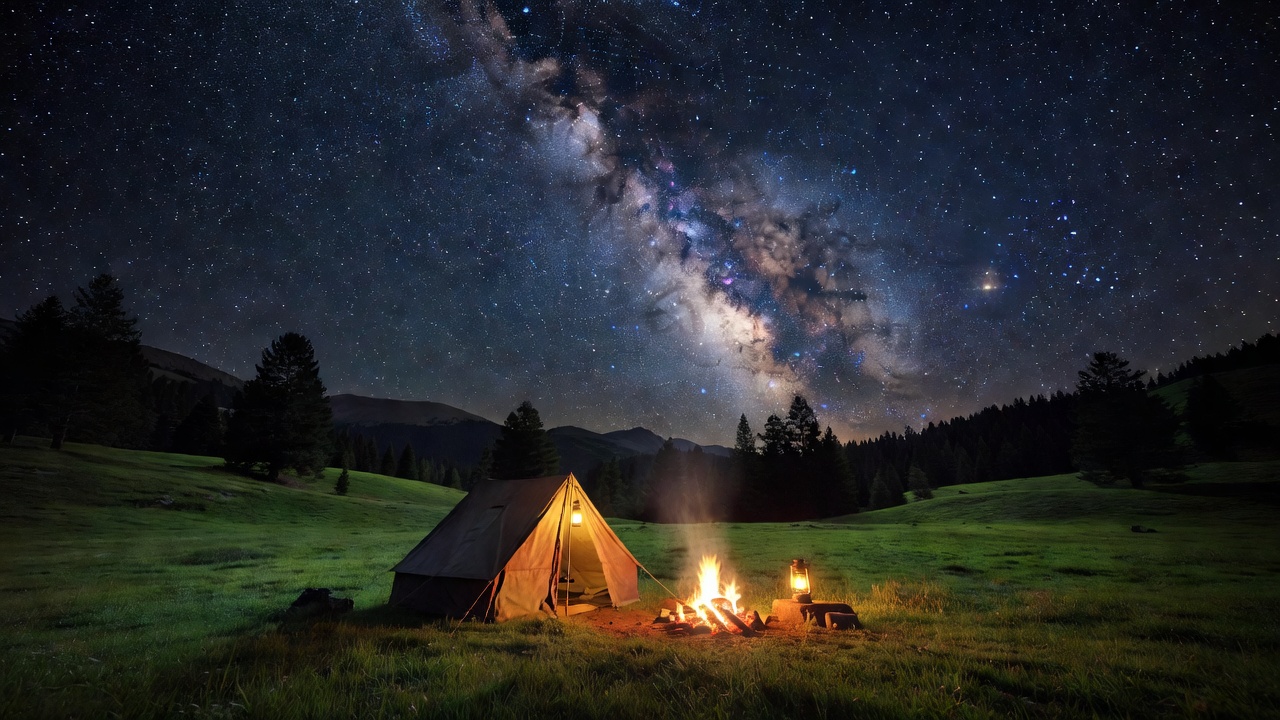
Why Stargazing Camping Is Different
Regular camping gear optimizes for daylight. You want a bright headlamp to cook by, a tent that blocks morning sun, and a chair that faces the fire. Stargazing inverts every priority:
- Light discipline matters more than brightness — a 400-lumen white beam destroys night vision for 20+ minutes. Red light preserves it instantly.
- Your sleeping setup is your observatory — you're not just sleeping in that bag, you're spending 2-3 hours lying still in it at 40°F while staring up
- The tent is optional — some of the best stargazers sleep in hammocks or on open groundsheets, no canopy between them and the sky
- Timing is everything — moon phase, Milky Way season (March–October in the Northern Hemisphere), and light pollution maps dictate whether you see 50 stars or 5,000
The Stargazing Gear Kit
1. Headlamp With Genuine Red Light Mode
This is non-negotiable. White light at a stargazing campsite is the equivalent of someone shining high beams into a movie theater. The Black Diamond Spot 400 Headlamp ($49.95) has a dedicated red LED mode that you can activate without cycling through white — a small detail that matters enormously when you need to check your star chart without resetting everyone's night vision.
The Spot 400 also has a "night vision" dimming feature and PowerTap technology that lets you instantly toggle between full and dimmed with a finger tap. For stargazers, the dim red beam is the default setting — you'll use it 90% of the night, reserving the 400-lumen spot for the hike back if you stay out past midnight.
What to avoid: Headlamps that make you cycle through white → red → strobe. In the dark, you WILL accidentally flash white at your group. Get one with separate button access to red mode.
2. The Hammock — Zero-Gravity Stargazing
If you've never watched the Milky Way from a hammock, you haven't really stargazed. A tent puts a mesh ceiling between you and the sky; a sleeping pad on the ground limits your field of view. A hammock suspends you in open air with an unobstructed 180° dome.
The ENO DoubleNest Hammock ($69.95) is 9'4" wide — wide enough to lie diagonally (the correct way to sleep flat in a gathered-end hammock) with room to wrap yourself like a cocoon. At 19 oz, it packs to the size of a grapefruit. Paired with a sleeping bag (see below), it's the warmest stargazing platform you can carry without a full tent setup.
Pro tip: Set the hammock's foot end 6-8" higher than the head end. This keeps you from sliding into a U-shape and puts your eyeline directly at the sky's zenith. Use the REDCAMP Waterproof Tent Footprint ($19.99) underneath as a gear staging area — it's 95"×87", waterproof, and costs less than replacing a headlamp you dropped in dew-soaked grass.
3. Sleeping Bag — Your 2-Hour Observatory
Stargazing is a stationary activity. You're not generating body heat from hiking, and nighttime temperatures drop 15-25°F from the daytime high. A 40°F-rated bag on a 50°F night will leave you shivering within 30 minutes.
The TETON Sports Celsius XXL 0°F Sleeping Bag ($79.99) is overkill for summer stargazing — and that's exactly the point. Unzip it fully and use it as a quilt; zip it halfway when the temperature drops at 1 AM. The oversized cut (90"×39") leaves room for layers underneath. At $80 for a 0°F-rated bag, it punches well above its weight class.
If you're bringing kids, the TETON Sports Celsius Junior 20°F ($59.99) uses the same double-layer offset-stitch construction in a 66" length.
4. Tent Selection — Mesh Matters
If you prefer a tent (wind protection, bugs, rain possibility), the roof geometry and mesh density determine what you'll actually see. Avoid tents with rainfly-only ventilation — you want a full mesh canopy that lets you unzip the fly and stargaze through the tent body.
The EVER ADVANCED 6-Person Instant Cabin Tent ($169.99) has a near-vertical wall design and a mesh ceiling that spans most of the roof area. The "blackout" fabric is a mixed blessing for stargazers — great for sleeping past sunrise, but you'll want the rainfly off entirely for night sky viewing. The instant-pole design means you can pitch it in 60 seconds even in the dark (practice once at home with a headlamp).
For solo stargazers, the Night Cat Backpacking Tent ($39.99) is a 1-2 person ultralight with a full mesh upper. At 4.5 lbs, it's light enough to hike into a remote dark-sky spot, and the mesh canopy gives you an almost unobstructed view when the fly is off.
For quick-setup trips, the Coleman 4-Person Instant Cabin ($109.99) deploys in literally one minute and the pre-attached poles mean no headlamp fumbling with pole sleeves in the dark.
5. Navigation & Timing Tools
Stargazing rewards precision. The Milky Way core rises at different times depending on the month; meteor showers peak on specific nights; and the difference between a Bortle 2 and Bortle 4 sky is the difference between seeing the Andromeda Galaxy naked-eye and barely spotting Polaris.
The Garmin Instinct 2S Solar GPS Watch ($199.99) has an astronomical calendar and sun/moon rise-set data baked into the interface. More practically for stargazers: it has a dedicated "night vision" mode that switches the display to a dim green-on-black palette that won't wreck your dark adaptation. Solar charging means it'll run indefinitely on multi-day dark-sky trips.
6. Comfort & Sustenance
Stargazing sessions run 2-4 hours. You need warmth, hydration, and snacks within arm's reach — breaking your night vision to rummage through a cooler at 1 AM is a crime against your own retinas.
The YETI Tundra Haul Wheeled Cooler ($450) is the splurge pick, but for multi-night dark-sky trips where you're not near a store, ice retention measured in days (not hours) becomes a logistics feature, not a luxury. Pre-stage drinks and snacks before sunset so you're not opening the cooler lid in total darkness.
Best Stargazing Camping Spots in the U.S.
Gear gets you comfortable. Location determines whether you see anything worth the trip. Use a light pollution map to find Bortle Class 2 or darker skies within driving distance.
| Dark Sky Park | State | Bortle Class | Best Season |
|---|---|---|---|
| Big Bend National Park | Texas | 1-2 | Spring/Fall |
| Great Basin National Park | Nevada | 1-2 | Summer |
| Cherry Springs State Park | Pennsylvania | 2 | Year-round |
| Death Valley National Park | California | 1-2 | Winter |
| Natural Bridges National Monument | Utah | 1 | Summer |
Moon Phase Is Non-Negotiable
Check the lunar calendar before booking. A full moon washes out all but the brightest stars. Target the new moon window (±3 days) for Milky Way photography or meteor showers. A crescent moon is acceptable for casual stargazing — it sets early and leaves dark skies for the rest of the night.
Common Stargazing Mistakes (Learn From Mine)
I've made every one of these so you don't have to:
- Bringing a white-light-only headlamp — I blinded my entire group three times before someone threw a jacket over my head. Get a red-light headlamp. The Black Diamond Spot 400 (linked above) has a dedicated red button.
- Forgetting the Milky Way is seasonal — The galactic core is only visible March–October in the Northern Hemisphere. Showing up in January expecting Instagram-worthy arch shots is a setup for disappointment.
- Underestimating nighttime temperature drop — A 75°F day can become a 45°F night at elevation. The TETON Celsius XXL (0°F rated) is overkill until 2 AM rolls around and you're grateful for it.
- Using phone screens — Even in "night mode," a phone screen is a photon cannon at a dark-sky site. Set your star app (SkySafari or Stellarium) to red filter mode AND lowest brightness before sunset. Better yet: bring a red-filtered flashlight and a printed star chart.
- Not scouting the horizon during daylight — Trees, ridgelines, and cliffs block sections of sky you'll want to see. Arrive early, identify the southern horizon (where the Milky Way core rises), and pitch accordingly.
Quick Start: Your First Stargazing Camping Trip
You don't need everything on this list to start. Here's the minimum viable kit for one night at a dark-sky campground within 2 hours of home:
- Red-light headlamp — Black Diamond Spot 400 ($49.95)
- Hammock or sleeping pad + warm bag — ENO DoubleNest ($69.95) + TETON Celsius XXL ($79.99)
- Groundsheet — REDCAMP Footprint ($19.99)
- Star app with red mode — SkySafari or Stellarium (free), configured before sunset
- Moon phase check — New moon preferred. No moon = maximum stars.
Total gear cost for a life-changing night under the Milky Way: about $220. The view is free.
Clear skies and dark sites. See you under the Milky Way.
<!-- AFFILIATE_DISCLOSURE -->