Outdoor & Camping Photography Guide: Capture the Wild Like a Pro (2026)
Master outdoor and camping photography with gear protection tips, timing strategies, and the camping essentials that make every shoot better. Complete guide to capturing the wild in 2026.
You've hiked four miles before sunrise, set up at the overlook, and the alpenglow hits the peaks just right. You reach for your camera — and the lens is fogged, your battery died from the cold, and your tripod is buried at the bottom of your pack under the tent.
Outdoor photography and camping are a natural pair, but they're also a logistics puzzle. The best landscape shots happen at the edges of the day — sunrise, sunset, blue hour — which means you're either hiking in the dark, sleeping where you shoot, or both. This guide covers the camping gear and field strategies that make the difference between a keeper and a wasted 4 AM wake-up call.
Why Camp at Your Photo Location
Driving to a trailhead at 4 AM, hiking in the dark, shooting sunrise, then hiking back to the car works exactly once. By the second day, you're exhausted, your gear is scattered, and you're making lazy compositions because all you can think about is the drive home.
Camping where you shoot changes everything: you wake up already on location, you can shoot golden hour in the evening AND the morning, and you have a base camp to stash extra lenses, charge batteries, and actually enjoy a hot meal between sessions. The tradeoff is you need camping gear that protects your camera equipment from weather, dust, and the chaos of camp life.
Camera Gear Protection in the Backcountry
Your camera is the most fragile, expensive thing you're carrying. Treat it accordingly.
Rain Protection That Actually Works
A sudden mountain squall can soak through a "weather-resistant" camera bag in minutes. The Outdoor Research Men's Helium Rain Jacket ($159.00) isn't just for you — it's your emergency camera cover too. At 6.3 ounces, it packs smaller than a dedicated camera rain sleeve and actually keeps things dry when the sky opens up. Toss it over your camera bag on the hike out, or wear it and keep shooting through light rain with the hood as a lens shield.
For budget-conscious shooters, the baleaf Men's Rain Jacket ($36.99) is waterproof and windproof at a quarter of the price. It won't breathe like the Helium during a steep ascent with a 20-pound camera bag, but for short hikes to a photo blind or car-camping shoots, it's more than enough.
The Backpack That Doesn't Fight Your Camera
The Osprey Daylite Plus Commuter Backpack 20L ($75.00) is the sweet spot for photo day hikes: big enough for a camera cube, extra lens, water, and layers, but not so big you're tempted to overpack. The hydration sleeve doubles as a laptop/tablet slot if you're editing on the go. Unlike dedicated camera backpacks that scream "expensive gear inside," the Daylite looks like a regular daypack — and the ventilated back panel means you won't be a sweaty mess when you reach the viewpoint.
Don't Let Your Feet End the Shoot
A blister at mile two means you're hobbling back to the car instead of catching the cloud inversion at the summit. The Merrell Moab 3 Waterproof Hiking Shoes ($129.95) have been the standard for a reason: they're comfortable out of the box, have Vibram soles that grip on wet rock (crucial when you're scrambling to a tripod position), and the waterproof membrane keeps creek crossings from ruining your day.
Pair them with the Darn Tough Vermont Hiker Midweight Micro Crew Socks ($27.95). Merino wool wicks moisture, doesn't stink after three days of camping (your tent mate will thank you), and the lifetime warranty means you replace them once and never again. For cold-weather shoots where you're standing still for hours waiting on light, the KEEN Targhee 3 Low Height Waterproof Hiking Shoes ($139.95) add insulation that the Merrells don't have.
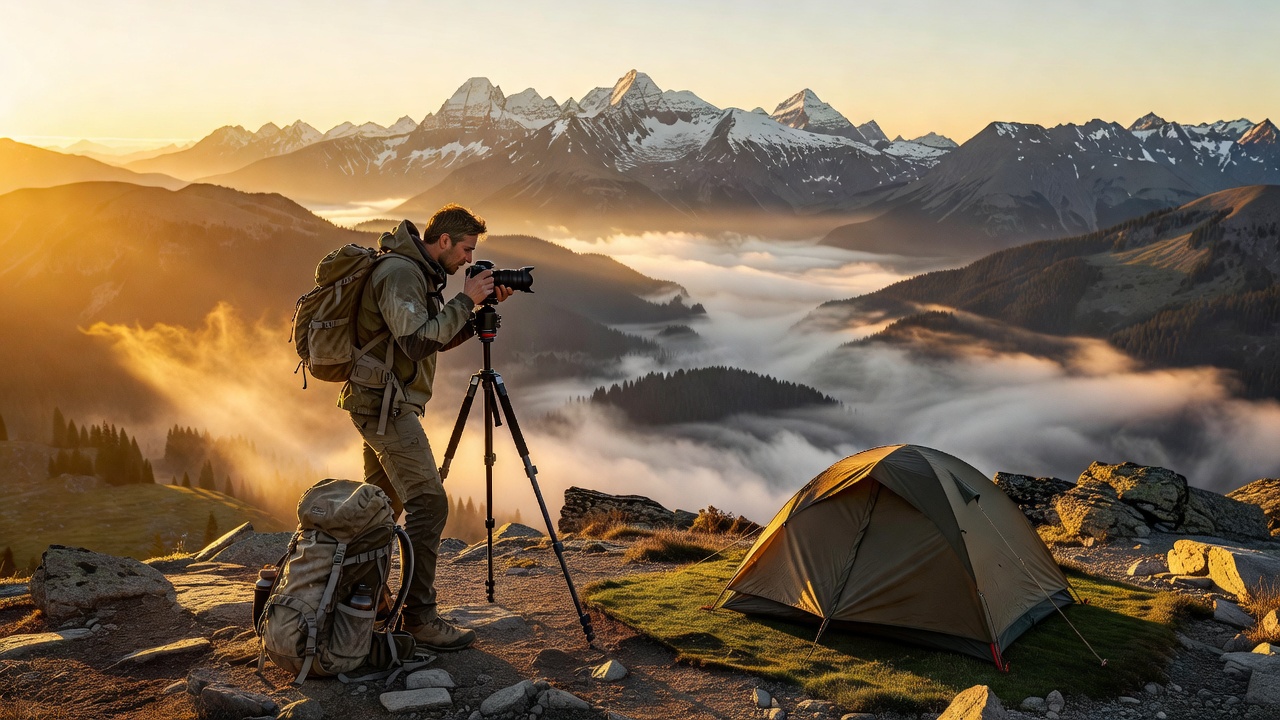
Timing the Light: Headlamps Are Your Secret Weapon
Golden hour starts roughly 30 minutes before sunrise. That means you're setting up in the dark — fumbling with tripod legs, swapping lenses, and trying to find the remote shutter release by feel.
The Petzl Actik Core Headlamp ($79.95) solves this entirely. The 650-lumen max beam lets you scout compositions 100 yards out, but the killer feature for photographers is the red light mode. Red light preserves your night vision — you can check camera settings without ruining your eyes' dark adaptation, which matters if you're shooting astrophotography or waiting for the first crack of dawn. It's also USB rechargeable, so you can top it off from the same power bank charging your camera batteries.
Pro tip: Wrap the headlamp around your tripod center column at camp. It becomes an instant area light for cooking dinner or reviewing images on your camera's LCD after dark.
Staying Hydrated on All-Day Photo Treks
You're carrying 15-20 pounds of camera gear. You're hiking at odd hours. You're focused on finding compositions, not drinking water. Dehydration sneaks up and kills your creative energy by mid-morning.
The Owala FreeSip Sway Insulated Water Bottle ($35.99) has a dual drinking mode — sip through the built-in straw (no tilting, no spilling on your camera) or tip to chug when you're genuinely thirsty. The insulation keeps water cold for 24 hours, which matters more than you think on a 90-degree summer hike when every other bottle in your pack is lukewarm.
For multi-day photo trips, the CamelBak Crux 3L Hydration Reservoir ($39.99) slides into the Osprey Daylite and lets you drink while walking — no stopping, no unpacking, no missing the cloud formation that's about to light up.
The Home Base: Camping Gear for Photo Locations
Camp Where the Light Is
The GOLABS Pop-Up Camping Tent ($30.66) sets up in 60 seconds — which matters when you roll into camp at 11 PM after shooting the Milky Way and just want to sleep. It's compact enough to carry alongside camera gear, and the mesh sides mean you can check the sky from inside your sleeping bag to see if the clouds are clearing for astro.
Dress for Standing Still
Photography isn't like hiking. You hike in, then you stand in one spot for two hours waiting for the light. Your body temperature drops fast. The Columbia Men's Silver Ridge Convertible Pants ($49.99) convert to shorts for the approach hike, then zip back to pants when you're stationary at the viewpoint. UPF 50 fabric means you're not burning through sunscreen on exposed ridgelines.
Common Outdoor Photography Mistakes (Learn From Mine)
- Not checking condensation: Bringing a cold camera into a warm tent creates instant lens fog. Leave your camera bag in the vestibule overnight — it'll match the outside temperature and be ready to shoot at dawn.
- Forgetting spare batteries: Cold drains lithium batteries fast. Keep spares in an interior pocket close to your body heat.
- Tripod as an afterthought: If your tripod is at the bottom of your pack, you'll skip shots you should take. Strap it to the outside of the Osprey Daylite.
- Shooting mid-day only: The light at noon is flat and harsh. The best camping photos — tents glowing at sunrise, campfire embers at dusk — happen when most hikers are already back at the car.
- No weather backup plan: Rain kills more photo trips than anything else. The OR Helium jacket in your pack turns a washout into moody mist-and-fog shooting conditions.
- Overpacking lenses: Bring two lenses max. A wide zoom (16-35mm equivalent) and a telephoto (70-200mm equivalent) cover 90% of outdoor scenes. Everything else is weight you'll regret on mile four.
Quick Reference: Photo Camping Kit
Before dawn, you need: Headlamp (Petzl Actik Core), camera with charged batteries, tripod accessible, water (Owala FreeSip), rain layer (OR Helium or baleaf) accessible on top of pack.
Base camp at the photo location: Tent (GOLABS Pop-Up), extra layers (Columbia convertible pants), meal supplies, power bank for recharging.
The approach hike: Osprey Daylite 20L with camera cube, Merrell Moab 3 or KEEN Targhee 3 shoes, Darn Tough socks, CamelBak Crux for hands-free hydration.
What to Shoot: Scenes Worth Camping For
- Alpine sunrise: Set up camp near a high-elevation lake. The reflection doubles your composition, and the alpenglow on peaks lasts roughly 8-12 minutes — be ready before it starts.
- Desert night sky: Camp at a designated site with low light pollution. The Petzl's red light preserves your night vision between test exposures.
- Fall foliage: Set up camp in a valley surrounded by color. Shoot at sunrise when the light back-lights the leaves at a low angle.
- Coastal fog: Camp above the fog line. When the marine layer rolls in below you, it looks like an ocean of clouds from your tent door.
The payoff isn't just the photos — it's the experience of being in the right place at the right time, fully equipped, watching the world light up while everyone else is still asleep at home.
<!-- AFFILIATE_DISCLOSURE -->