Beach Camping with Your Dog: The Complete Coastal Adventure Guide
Take your dog beach camping like a pro — gear checklist, safety tips, dog-friendly beach rules, and the best coastal camping setup for you and your trail buddy. $39.99 smart collar included.
There's nothing quite like watching your dog sprint across an empty beach at sunrise, sand spraying behind them, pure joy radiating from every bound. Beach camping combines two of the best things in life — the ocean and your dog — but it also introduces challenges that mountain and forest camping don't. Salt water in the fur, sand in the tent, sun exposure with limited shade, and leash laws that vary wildly from beach to beach.
I've done a dozen coastal camping trips with my golden retriever, and every single one taught me something new. Here's the gear, the strategy, and the mistakes to avoid.
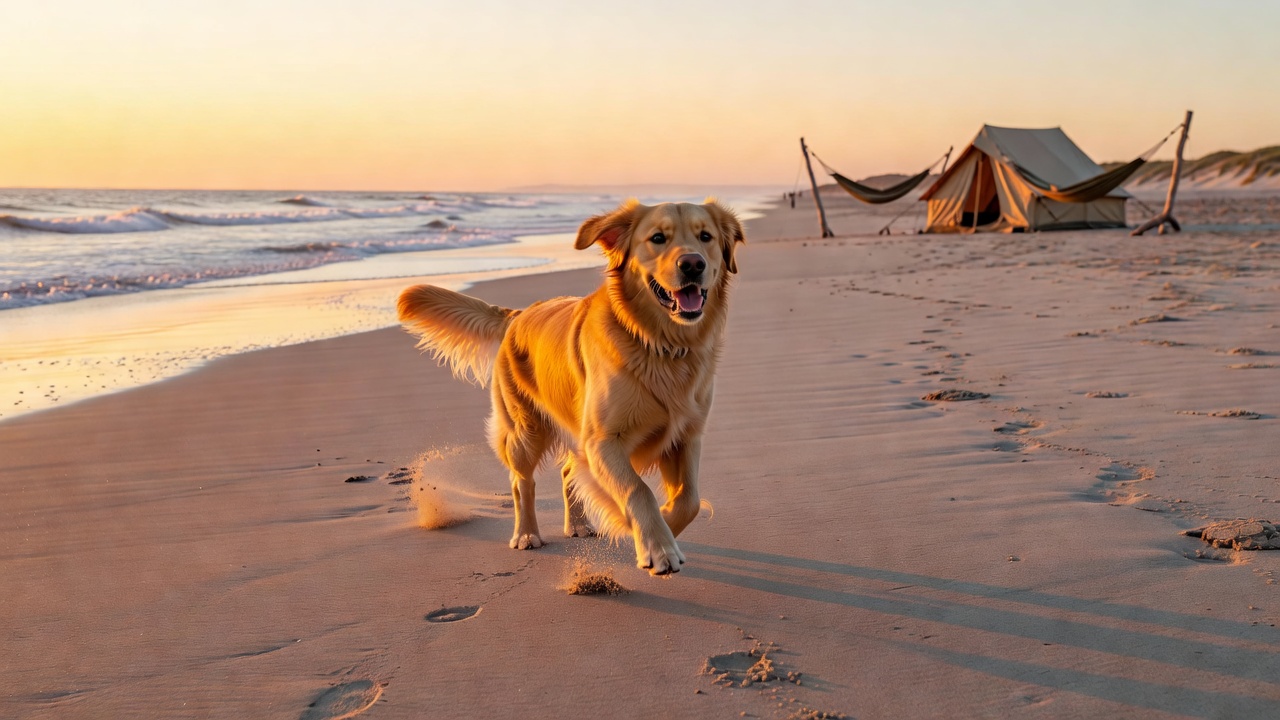
Why Beach Camping Hits Different with a Dog
Forest camping is about the trail. Desert camping is about the stars. Beach camping is about space — the wide-open kind that lets a dog run without the anxiety of losing them in the trees. The sand is softer on paws than granite. The constant ocean breeze keeps bugs down during the day (dusk is another story — more on that later). And there's a specific kind of exhaustion a dog gets after a day of swimming and sprinting on sand that makes them sleep like a rock through the night.
But beaches also have rules. Many coastal campgrounds require dogs to be leashed at all times. Some beaches ban dogs entirely during certain seasons (shorebird nesting, sea turtle hatching). Always check the specific beach's regulations before you go — a quick call to the park ranger station saves a ruined trip.
The Gear That Actually Makes a Difference
Shelter: Hammocks Over Tents (When You Can)
Beach camping changes the shelter game. Sand makes tent stakes unreliable — they pull out in wind unless you use specialized sand stakes or bury deadman anchors. The alternative that I've come to prefer: a hammock.
The ENO DoubleNest Hammock sets up in under two minutes between any two sturdy points (driftwood posts, parking barriers, even your vehicle's roof rack if you get creative). It keeps you off the sand entirely — no sand-in-sleeping-bag situation, no damp groundsheet. At $69.95, it's the single best beach comfort upgrade I've made.
If you need a full tent for weather protection or privacy, the Coleman Sundome 4-Person Tent at $79.99 handles coastal wind surprisingly well for a budget tent — just pack actual sand stakes, not the included wire pegs. And bring a TREKOLOGY Ultralight Inflatable Pillow ($16.99) — your neck will thank you after a day of looking down at tide pools.
When the sun sets, the Etekcity Camping Lantern 2-Pack at $16.99 gives you 12+ hours of light. Beach campsites are often far from electrical hookups, and your phone flashlight is not a campsite lighting solution.
Cooking: Beach BBQ and Morning Coffee
There's a specific joy in brewing coffee while watching the tide come in. The AeroPress Go Travel Coffee Press at $39.95 makes a genuinely excellent cup with minimal cleanup — no French press sediment, no pour-over technique required on uneven sand. One filter, one plunge, done.
For actual meals, the Coleman RoadTrip 225 Portable Grill ($124.99) is the beach MVP. It folds into a carry-able unit, runs on small propane canisters, and the griddle surface means you can cook bacon and eggs without losing them through the grates. Pro tip: bring a small windscreen — beach gusts can kill a flame in seconds.
Hydration in direct sun is non-negotiable. The Owala FreeSip Insulated Water Bottle keeps water cold for hours even in direct sunlight. $44.99 feels steep for a water bottle until you experience ice water at 2 PM on a 90-degree beach.
Mobility: Carrying Gear Across Sand
Sand is the ultimate resistance workout. Every step takes more effort, and carrying a standard backpack across a quarter mile of soft sand will gas you before you even set up camp. Lightweight is the rule.
The WATERFLY Packable Crossbody Sling Bag at $25.49 is my beach-day carry — it holds a water bottle, collapsible bowl, treats, sunscreen, and phone, weighs almost nothing, and doesn't dig into your shoulder like a heavier daypack. For longer treks to remote beach campsites where you need real capacity, the Kurgo Baxter Dog Backpack ($44.99) lets your dog carry their own food, collapsible bowls, and a toy — which sounds like a joke until you realize a 60-pound dog carrying 6 pounds of gear is the equivalent of you carrying 18 pounds. It adds up.
Dog Gear: The Stuff That Prevents Problems
Three items I won't beach camp without:
The Ruffwear Front Range Dog Harness ($39.95) is padded where it matters, has a front clip for pullers, and the reflective trim actually shows up in headlamp light — critical when your dog decides to investigate a noise at the waterline at 10 PM.
The oitickly Smart Dog Training Collar at $39.99 is the piece of gear I didn't know I needed until I used it. On a beach, your voice gets swallowed by wind and waves. A dog 100 yards down the shoreline chasing gulls literally cannot hear you shouting. The voice command feature cuts through — and the 4,500-foot range means you can recall them from way farther than you'd think. It's waterproof (obvious beach requirement), and the vibration mode works as a gentle reminder without the shock. For beach recall specifically, this punches way above its $39.99 price.
Bug repellent ($19.99) and mosquito bracelets ($9.99 for 10-pack) are non-negotiable at dusk. Beach mosquitoes breed in the marshy areas behind dunes and they are aggressive. DEET-free options work fine if you reapply — the bracelets help with the dog's ears and neck where you can't spray.
The Beach-Specific Safety Checklist
Sand Temperature Test
Place the back of your hand on the sand for 7 seconds. If it's too hot for you, it's too hot for paw pads. Morning and evening walks solve this, but midday means booties or carrying your dog across hot stretches. Dark sand absorbs more heat — a black sand beach at noon can hit 140°F.
Salt Water and Digestion
Dogs drink salt water when they're thirsty and it's the only water they see. Salt water causes vomiting and, in sufficient quantity, sodium poisoning. Bring double the fresh water you think you need and offer it frequently. A collapsible silicone bowl clipped to your belt makes this automatic.
Rinse, Rinse, Rinse
Salt water dries into crystals in fur that cause skin irritation. Sand gets everywhere — ears, between toes, under collars. Bring a gallon of fresh water just for post-beach rinsing before bed. A microfiber towel dries a wet dog 3x faster than cotton and doesn't become a heavy, sandy mess.
Tides
The most embarrassing camping mistake I've made: setting up a tent below the high tide line because it "looked flat and nice." Check tide charts before you go. Many beach campgrounds have tide lines marked — if you see a line of dried seaweed and driftwood, that's the high tide mark. Set up above it.
Four Dog-Friendly Beach Camping Spots Worth the Drive
These are West Coast spots I've personally camped at with a dog:
-
Jalama Beach, California — County park south of Vandenberg. On-leash beach, full hookup and primitive sites, genuinely dog-welcoming staff. The grill at the camp store makes a solid burger for after you've been in the sun all day.
-
Kalaloch Campground, Olympic National Park, Washington — Dogs allowed on beach and trails (rare for a national park). The driftwood-strewn beaches are surreal. Book 6 months out — it fills instantly.
-
Beverly Beach State Park, Oregon — Miles of dog-friendly beach, forested campsites that block the wind, and you're 15 minutes from Newport's seafood. The yurts are excellent if you don't want to tent camp.
-
Pismo State Beach, California — One of the few California beaches where dogs can be off-leash in designated areas. The Oceano Dunes section lets you drive on the beach, which means you can bring way more gear than you can carry.
What I'd Do Differently Next Time
I've made every mistake in this guide at least once. Forgot the dog first aid kit — had to drive 40 minutes to a vet for a cut paw pad. Set up below the high tide line — woke up with water lapping at the tent floor at 3 AM. Didn't bring enough fresh water — dog drank from a tide pool and spent the night vomiting.
The pattern across all these failures is the same: I treated beach camping like regular camping with sand. It's not. The ocean is a different environment with different rules, and dogs need different preparation. But once you dial it in — the sunrise sprint, the exhausted dog sleeping through the sound of waves, the coffee tasting better than it has any right to — it's the best kind of camping there is.
Now go check the tide chart.
<!-- AFFILIATE_DISCLOSURE -->