Beach Camping Ultimate Guide 2026: Gear, Tips & Packing List for Your Coastal Adventure
Everything you need for a perfect beach camping trip — tent setup on sand, wind-proof cooking, sun protection gear, and the packing list that actually works. No fluff, just real experience.
Beach camping is one of those things that sounds idyllic — falling asleep to crashing waves, waking up to golden sunrise over the ocean, coffee in hand with your toes in the sand. And it is. But it's also one of the most punishing environments for camping gear. Sand gets everywhere. Wind destroys cheap tents. Salt air corrodes metal faster than you'd believe. UV exposure is relentless with no tree cover.
I've done beach camping from the Oregon coast to Florida's Gulf shore, and I've ruined enough gear to know what actually holds up. Here's the real guide — no Instagram fantasy, just what works.
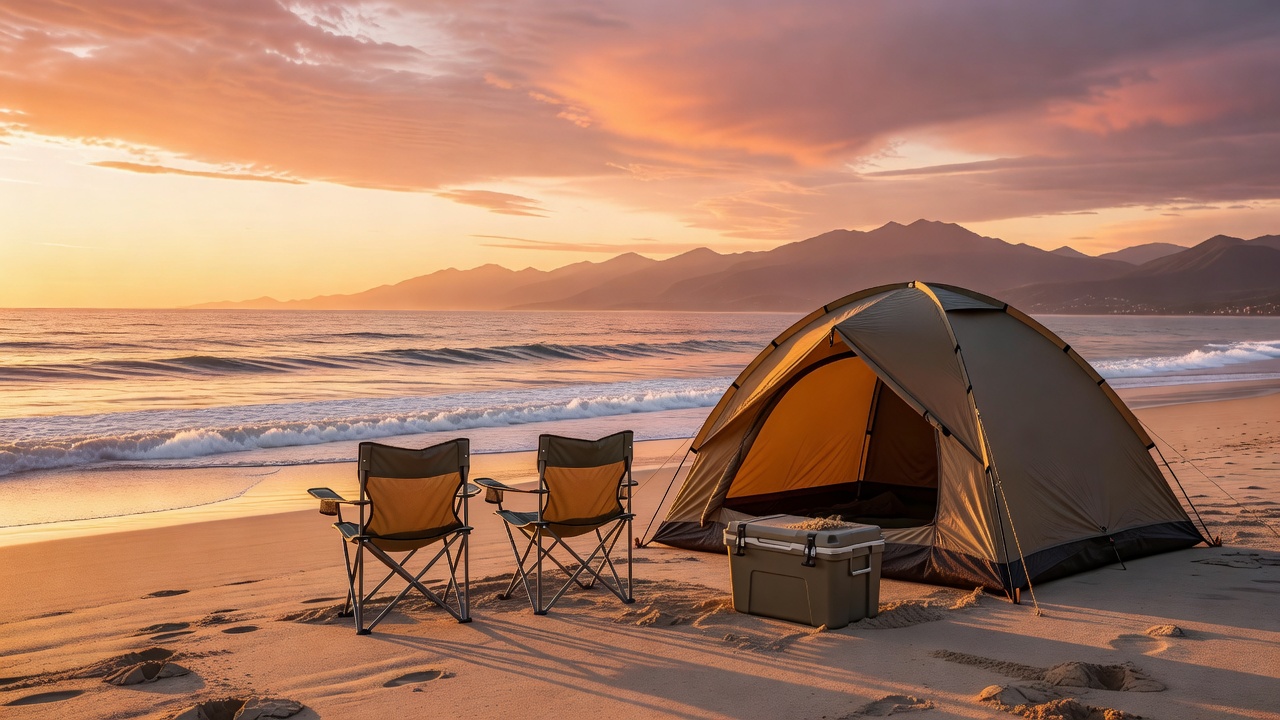
Why Beach Camping Is Different (and Harder Than You Think)
Inland camping gives you trees for shade, windbreaks, and soft ground for stakes. Beach camping gives you… none of that. Here's what you're actually dealing with:
- Sand stakes are useless — regular tent stakes pull right out of loose sand. You need sand-specific anchors or deadman techniques.
- Wind is your real enemy — coastal winds routinely hit 20-30 mph. A tent that's fine in the forest becomes a kite on the beach.
- Salt ruins everything — zippers seize up, aluminum poles pit, and anything steel rusts in a single trip if you don't rinse it.
- Sun exposure has no mercy — no shade means your tent becomes an oven by 8 AM and your skin cooks if you're not covered up.
The good news? With the right gear and a few technique adjustments, beach camping is absolutely worth it. Let's go through it quadrant by quadrant.
⛺ Shelter: Pitching on Sand Without Losing Your Mind
The Tent That Won't Fly Away
For beach camping, you want a tent with a strong pole structure and a full-coverage rainfly that doubles as a windbreak. The Coleman 10-Person Instant Tent is a solid choice for families — the instant-setup design means fewer loose parts to chase in the wind, and the pre-attached poles lock into a dome shape that handles gusts better than cabin-style tents. The darkroom technology also helps with the early-morning sun problem.
If you're solo or with a partner, the Kelty Late Start 2-Person Tent is lighter and faster to pitch. The freestanding design doesn't require perfect staking — important when your "ground" is 12 inches of loose sand. Use sand stakes or tie guy lines to buried driftwood or filled stuff sacks (the "deadman anchor" technique).
Sand staking pro tip: Don't bother with regular stakes. Fill four stuff sacks with sand, bury them 12 inches deep, and attach your guy lines. In 50+ beach camp nights, I've never had one pull out. Costs zero dollars.
Sleeping Without Sand in Your Bag
A Therm-a-Rest Z Lite SOL Sleeping Pad is ideal for beach camping because it's closed-cell foam — sand doesn't stick to it the way it does to inflatable pads, and you can't puncture it. The reflective coating adds warmth without bulk.
Light When the Sun Goes Down
The Petzl Actik Core Rechargeable Headlamp gives you 600 lumens of hands-free light for late-night beach walks or digging through your cooler for that last s'more ingredient. Rechargeable via USB so you're not carrying spare batteries.
The Chair Situation
Beach camping without a proper chair means sitting in wet sand. The Alps Mountaineering King Kong Chair is overbuilt in the best way — 800-pound capacity, wide seat, powder-coated steel frame that actually survives salt exposure if you rinse it after trips. Worth the extra weight when you're posted up watching the sunset.
🍳 Cooking: Beach Meals That Don't End in Disaster
Wind is the number one camp cooking killer on the beach. A breeze that feels pleasant on your face will blow out a stove flame instantly. You need a stove built for it.
Wind-Proof Cooking Setup
The 2-Burner Camping Stove with Windshield puts out 24,000 BTU across two burners with integrated wind shields — critical when the afternoon sea breeze kicks up. The shields actually work, unlike the flimsy side flaps on cheaper stoves that fold over in anything above a light breeze.
Pair it with the Lodge Cast Iron Combo Cooker — a 3.2-quart deep pot and 10.25-inch skillet that doubles as a lid. Cast iron on the beach is actually perfect: it won't blow away, it holds heat in the wind, and the sand just brushes off. Fry fresh-caught fish in the skillet, then use the deep pot for clam chowder.
Keeping Things Cold
Beach camping means your cooler is sitting in direct sun all day. The Canyon Coolers Outfitter 55QT is rotomolded with up to 2 inches of insulation — it'll hold ice for 5-7 days even in beach conditions. The white color reflects heat instead of absorbing it. Bear-resistant certification is a bonus if you're camping anywhere with wildlife.
Cooler strategy: Freeze half your water bottles solid and use them as ice blocks. They keep food cold, don't waterlog everything when they melt, and you drink them on day 3-4. Two birds, one stone.
👕 Clothing: Sun, Wind, and Salt Protection
Beach camping clothing is about two things: sun protection and wind resistance. You're not hiking miles, so skip the heavy-duty boots. You ARE sitting in direct UV for 8+ hours.
The Sun Shirt You'll Actually Wear
The Columbia PFG Tamiami II Long Sleeve Shirt is UPF 40, vented, and light enough that you forget you're wearing long sleeves in 85°F heat. The roll-up sleeve tabs let you convert to short sleeves when the sun dips. It's cut loose so you get airflow — critical when there's no shade and you're between ocean dips.
The Wind Shell That Packs to Nothing
The Columbia Watertight II Jacket stuffs into its own pocket and weighs under 13 ounces. Keep it in your daypack — when the ocean breeze turns cold at sunset (and it always does), you'll be glad you have it. Waterproof-breathable means it blocks wind without turning into a sweatbox. At its price point (around $50-60), it's one of the best value wind layers in outdoor gear.
🚲 Mobility: Getting There and Carrying Your Kit
Beach camping sites often require hauling gear from a parking lot across sand — sometimes a quarter mile or more. You need a pack that handles the load.
The Daypack That Does Everything
The Osprey Daylite Plus Daypack is 20 liters of perfectly organized space. The mesh shoulder straps don't trap sand the way padded straps do, and the external hydration sleeve means you're not opening the main compartment with sandy hands every time you want water. It also attaches to larger Osprey packs if you're backpacking to a remote beach site.
Hydration That Actually Works on the Beach
The CamelBak Crux Reservoir delivers 20% more water per sip than previous CamelBak designs. The big-deal feature for beach camping: the bite valve cover keeps sand out. Nothing worse than a mouthful of grit when you're thirsty. The 3-liter size keeps you hydrated through a full beach day without refilling.
Getting the Bikes There
If your beach camping trip involves bikes — and the best ones do — the Saris Bones EX 3-Bike Trunk Rack is the play. Made in USA, rust-free injection-molded arms (no metal to corrode from salt spray), and the arc-shaped design separates bikes so they don't bang together on the drive. Universal fit works on almost any vehicle including sedans — no hitch required.
The Beach Camping Packing List (What Actually Matters)
Here's the no-fluff list. Print it, use it, add your own specifics.
Shelter & Sleep:
- Tent with full rainfly/windfly (sand stakes or deadman anchors)
- Closed-cell foam sleeping pad (foam > inflatable for sand)
- Sleeping bag rated 10°F below expected low (beach nights are colder than inland)
- Camp chair (sand is cold and wet — ground-sitting gets old fast)
- Headlamp with red mode (preserve night vision for stargazing)
Cooking & Food:
- Wind-resistant stove with integrated shields
- Cast iron cookware (heavy enough to not blow away, holds heat in wind)
- Rotomolded cooler (white or light color — reflects sun)
- Extra fuel (wind makes stoves burn faster)
- Trash bags (pack it out — beach ecosystems are fragile)
Clothing:
- UPF 40+ long-sleeve sun shirt
- Packable wind/rain shell
- Wide-brim hat (baseball caps leave your ears and neck exposed)
- Water shoes or sandals (beach sand gets HOT — flip flops aren't enough at noon)
- Extra socks (sand will find its way in, dry feet = happy camper)
Miscellaneous:
- Sunscreen SPF 50+ (reapply every 2 hours — the ocean breeze fools you into thinking you're not burning)
- Baby powder (dust it on sandy feet before getting in the tent — sand falls right off)
- Small broom or brush (sweep tent floor before sleeping)
- Zip-lock bags (for phone, wallet, anything that shouldn't get sandy)
- First aid kit with tweezers (for sea urchin spines and shell fragments)
Know Before You Go: Beach Camping Regulations
Most beaches that allow camping fall into one of three categories:
-
Designated campgrounds (e.g., Assateague National Seashore, Jalama Beach) — these have marked sites, usually with fire rings and sometimes picnic tables. Book months in advance for summer weekends.
-
Dispersed beach camping (e.g., Padre Island National Seashore, parts of Olympic National Park) — free or permit-based, no facilities. You're on your own for everything including bathroom solutions. Pack it ALL out.
-
State park beaches (varies by state) — California state beaches almost never allow overnight camping. Florida and Texas are much more permissive. Always check the specific park website.
Tide check is non-negotiable: Know the high tide line before you pitch. The ocean doesn't care about your tent. I've seen people wake up in 6 inches of seawater. Check tides at tidesandcurrents.noaa.gov before you go, and pitch well above the debris line (the line of seaweed and driftwood marking the highest recent tide).
The Bottom Line
Beach camping is one of the best outdoor experiences you can have. The sound of waves, the salt air, the insane star visibility with no light pollution — it's worth every grain of sand in your gear. The key is knowing that beach camping isn't just "regular camping with a better view." It's its own discipline with its own gear requirements.
Start with a wind-proof tent, a sun shirt you'll actually wear, a cooler that doesn't quit, and a stove that won't blow out. Everything else you can figure out. The beach will still be there.
Happy camping. Rinse your zippers when you get home.
<!-- AFFILIATE_DISCLOSURE -->