My dog Luna looks like someone assembled her from spare parts. One ear stands up, the other flops. She’s got the body of a small deer, the snout of a fox, and the energy of a toddler who just discovered espresso. Every single person who meets her asks the same question: “What is she?”
For three years, my answer was “um, good question.” I told people she was a “designer blend” with a straight face. A vet once guessed “maybe some terrier?” with the confidence of someone who absolutely was not sure at all.
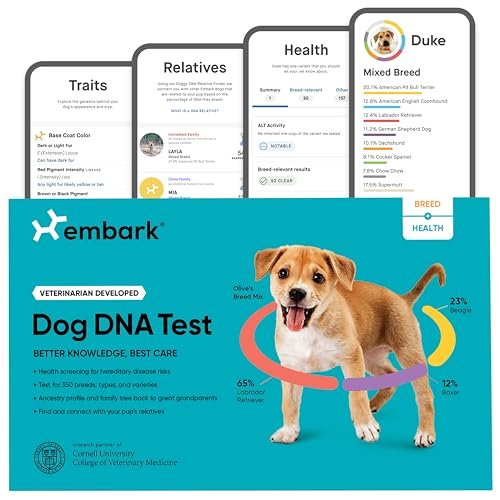
So I finally decided to settle this the way we settle everything in 2026 — with science. I got the Embark Breed & Health Dog DNA Test, swabbed the inside of Luna’s cheek (she was suspicious but cooperative), mailed it off, and waited. What came back was not what I expected.
Here’s the Thing Nobody Tells You About Dog DNA Tests
The reason this stuff matters isn’t just curiosity. Like, sure, it’s fun to know your “labradoodle” is actually 40% golden retriever, 30% poodle, and 30% “we have no idea.” But the real value is in the health screening.
The Embark test checks for 270+ genetic health conditions. That’s not a typo. It screens for everything from degenerative myelopathy to drug sensitivities (like the MDR1 gene mutation, which can make certain medications dangerous for your dog). And here’s the stat that got me: 37% of dog owners changed how they care for their dog after getting results.
My friend’s rescue tested positive for a copper storage condition. Now she feeds him a special diet, and he’s thriving. Without the test, she’d never have known until it became a serious problem. That alone justifies the price tag.
What You Actually Get
The Embark test covers a ridiculous amount of ground:
- Breed identification across 400+ breeds (including coyotes, wolves, and dingoes — yes, dingoes)
- Health screening for 270+ genetic conditions
- Allergy risk scores — this is new, and it covers environmental, food, contact, and flea allergies
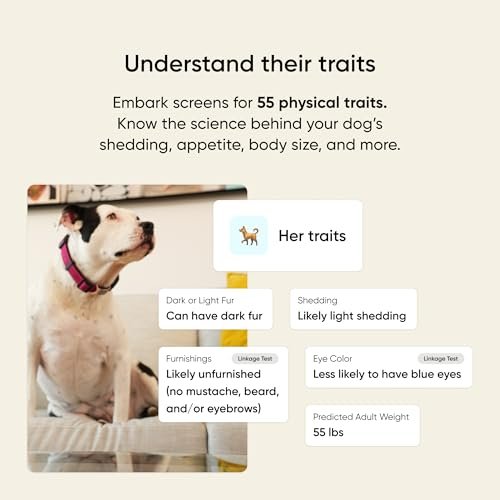
- 55 physical traits — size, coat type, shedding level, and more
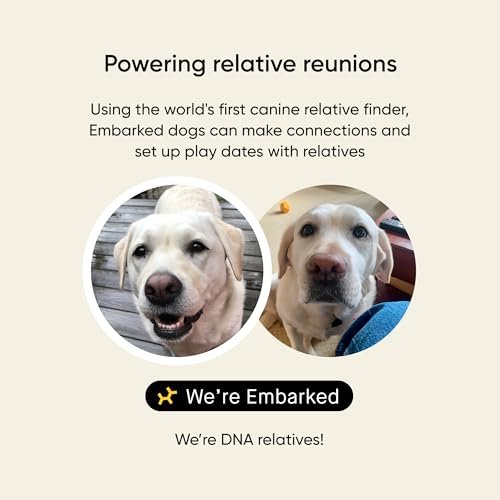
- A relative finder that literally connects you with your dog’s biological family members
That last one is wild. Nearly a million messages have been exchanged between dog owners who found out their pups are siblings, cousins, or parents. It’s like ancestry.com but everyone has four legs and terrible impulse control. If you want to understand how tech is changing pet care, we also reviewed the Tractive GPS dog tracker — another eye-opener for keeping tabs on your pup.
The Good
- Results in 2-4 weeks with email updates the whole way
- Cornell University-backed genotyping — this is legitimate science, not a BuzzFeed quiz
- The relative finder feature is genuinely heartwarming
- Free access to vets and geneticists who can explain your results
- The new allergy risk scoring is genuinely useful, not fluff
The Not-So-Good
- At $118, it’s not cheap. Though it’s cheaper than a single vet emergency
- 2-4 week wait feels like forever when you’re checking your email every 12 minutes
- The personality quiz feature is fun but definitely the least useful part
- If your dog is a purebred, the breed ID part is a bit anticlimactic
Who This Is For (And Who It’s NOT)
This is for you if: You’ve got a rescue or mutt and genuinely want to know their background. You care about proactive health screening. You want to find your dog’s long-lost siblings. You enjoy showing people a pie chart of your dog’s breed makeup at parties (no judgment, I do this).
Skip it if: You’ve got an AKC-registered purebred and already know the lineage back six generations. You’re on a very tight budget and your dog is healthy. You expect instant results — patience required.
Also, if you’re the type who loves keeping your dog mentally sharp, we also looked at the Potaroma electronic dog puzzle — another solid investment for keeping your pup engaged.
The Verdict
Luna is 34% American Pit Bull Terrier, 18% German Shepherd, 15% Husky, and 33% “supermutt” (a real scientific term they use for DNA that’s too mixed to pin down). She has zero genetic health red flags. She’s apparently at low risk for environmental allergies. And — this is the best part — she has a half-sister named Daisy who lives two cities over. We’re planning a playdate.
Is the Embark Dog DNA Test going to change your life? Maybe not. But it might change how you care for your dog. It might catch something early. It might connect you to a community of people whose dogs share the same weird ears as yours. And at minimum, it’ll finally give you an answer to that question everyone asks.
Grab yours on Amazon. Your dog’s genetic secrets are worth $118.









Must log in before commenting!
Sign Up